The Verdict (Internal Quality Score)
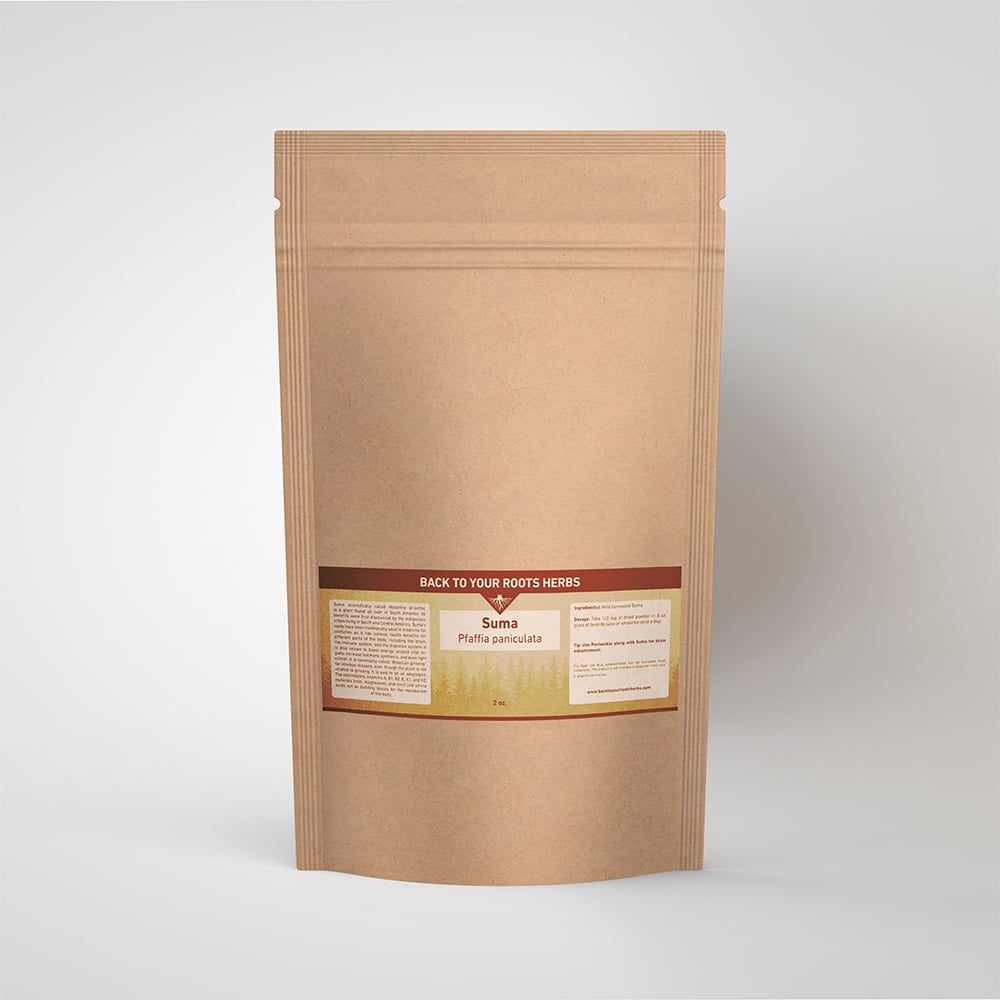
Grade A. Potency Score 9.4/10. Terroir verified to the Cerrado biome of Mato Grosso, Brazil (approx. -16.0° S, -56.0° W) where Pfaffia paniculata develops its mature pfaffic-acid saponin profile. Whole root, micro-milled, batch heavy-metal screened.
– Back To Your Roots Herbs Research Group.
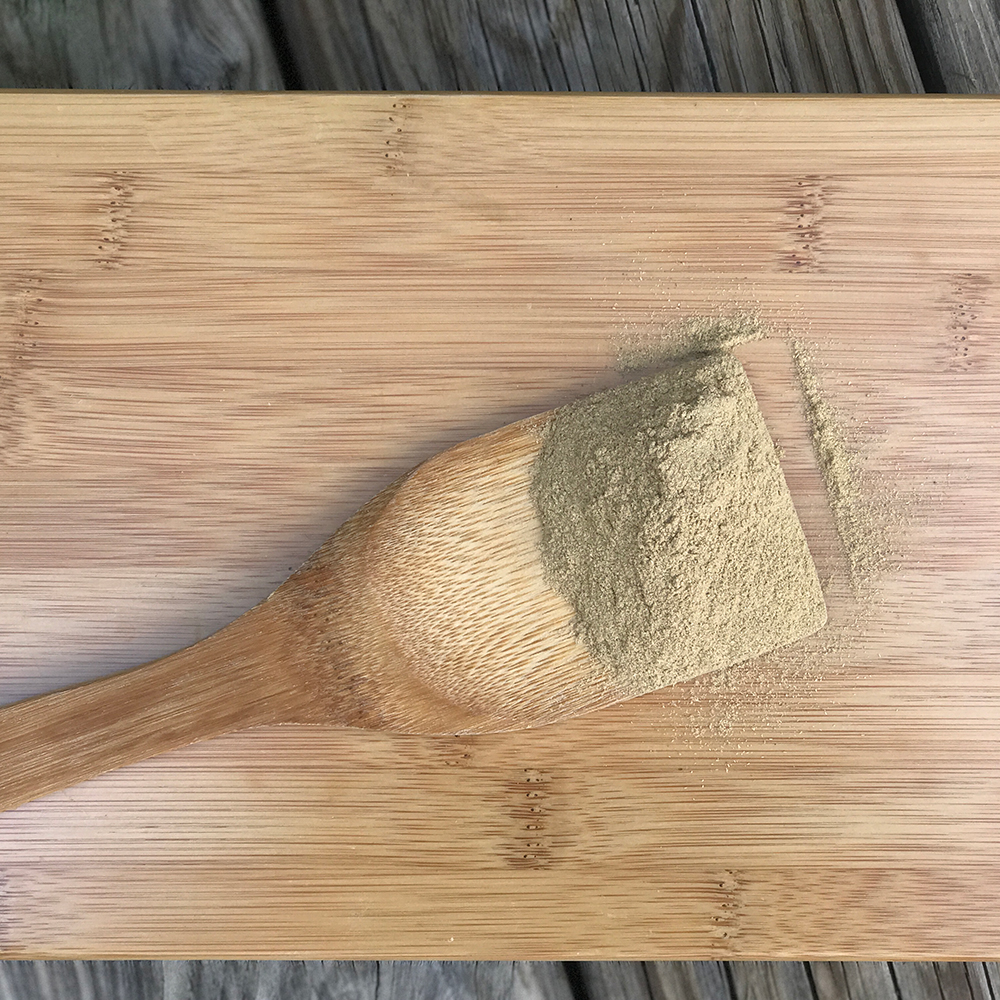
Sensory Analysis: Suma Root Powder, Up Close
- Look: Tan-to-buff fine powder with faint russet flecks from the root cortex. Free-flowing, not clumpy.
- Smell: Earthy and slightly woody. Faint molasses sweetness. No mustiness, no fermentation off-notes.
- Taste: Mildly bitter on the front of the tongue, finishing earthy with a subtle nutty saponin tingle. Best stirred into smoothies, cacao, mate, or coffee rather than taken in water alone.
What is Suma Root? The “Brazilian Ginseng” Explained
Suma root powder is the dried, milled root of Pfaffia paniculata, a sprawling Amazonian and Cerrado vine traditionally called “para todo” (for everything) and marketed worldwide as Brazilian ginseng. Botanically, it is not a true ginseng. It is a member of the Amaranthaceae family, and its adaptogenic reputation comes from its dense load of pfaffic acid, pfaffosides A through F, beta-ecdysterone, beta-sitosterol, stigmasterol, daucosterol, allantoin, and germanium.
Key Benefits at a Glance
Here is what people reach for suma root powder to support:
- Stress resilience. An adaptogen traditionally used to help the body adapt to physical and mental load.
- Sustained energy. A steady “para todo” tonic herb used in Brazil for everyday stamina, without the jolt of a stimulant.
- Athletic recovery. Favored by athletes for post-exertion recovery. Its ecdysteroids are an active area of preclinical research.
- Whole-spectrum nourishment. A natural source of 19 amino acids, trace minerals, and vitamins, detailed below.
- Traditional hormonal balance. Folk use in both men and women for libido and vitality.
How does suma powder work?
Adaptogens like suma are thought to act on the hypothalamic-pituitary-adrenal axis, helping the body modulate cortisol and maintain homeostasis under physical and mental load. The 20-hydroxyecdysone in this root has been investigated for its role in supporting protein synthesis and recovery in animal models.
- The Herb: Pfaffia paniculata, harvested from the Cerrado biome of Mato Grosso, Brazil.
- The Mechanism: Pfaffia-acid saponins and ecdysteroids interact with the endocrine and immune systems to support a balanced stress response.
- The Evidence: Costa CA et al. (2015) reported anti-inflammatory activity of Pfaffia paniculata extract in a TNBS rodent model of intestinal inflammation (PMID 26202807).
What does suma root do for hormones?
Folk traditions in Brazil credit suma root with supporting libido, vitality, and hormonal equilibrium in both men and women. The saponin fraction has been studied for endocrine-modulating activity in animal models. We make no claims that this product treats or prevents any condition.
Suma root, ecdysteroids, and physical performance
This is the question athletes ask most. Suma is one of the richest plant sources of beta-ecdysterone (20-hydroxyecdysone), a plant steroid studied in animal models for a role in protein synthesis. Brazilian tradition uses suma for endurance and recovery, not as a weight-loss product. Be clear-eyed about the evidence. Human clinical data on ecdysteroids and muscle remain limited and preliminary, and suma root powder is a whole food, not a sports drug. We make no weight-loss or muscle-building claims. What suma offers is traditional support for stamina and post-exertion recovery as part of a balanced routine.
Suma Powder: Nutrient Profile
Why is the whole root better than an extract?
Whole-root suma powder retains the full nutrient matrix that a single-isolate extract removes. The root delivers 19 amino acids, electrolytes, and trace minerals, including iron, magnesium, zinc, silica, and germanium, along with vitamins A, B1, B2, E, and K and pantothenic acid. This whole-spectrum profile is what indigenous Amazonian peoples have used for generations.
Suggested Pairings
Suma root powder pairs well with cacao, mate, ashwagandha, maca, and raw honey. Use it in smoothies, energy balls, or a daily tonic.
A Note on Sourcing
Wild-harvested Pfaffia paniculata roots from Cerrado regions tend to assay higher in pfaffic-acid saponins than cultivated stock from depleted soil. Our supplier rotates harvest plots to protect the wild population.
How Does Suma Root Powder Compare to Other Adaptogens?
Suma often sits on the shelf next to ginseng, ashwagandha, and maca, but each plant comes from a different botanical family and carries a different signature compound. Suma is not a true ginseng. Here is how they line up.
| Herb | Botanical family | Signature compounds | Traditional emphasis |
|---|---|---|---|
| Suma (Pfaffia paniculata) | Amaranthaceae | Pfaffic-acid saponins, beta-ecdysterone | “Para todo” all-purpose tonic for stamina, recovery, and hormonal balance |
| Asian ginseng (Panax ginseng) | Araliaceae | Ginsenosides | Energy and cognitive support |
| Ashwagandha (Withania somnifera) | Solanaceae | Withanolides | Calming support for stress and sleep |
| Maca (Lepidium meyenii) | Brassicaceae | Macamides, glucosinolates | Libido and endurance |
People often choose suma when they want a broad, food-like tonic rather than a single-target herb. It also pairs naturally with the others, as noted in Suggested Pairings.
Critical Usage and Contraindications
Suggested use: 1/2 to 1 teaspoon (approx. 1 to 2 grams) of suma root powder, one to two times daily, blended into a beverage. Start at the lower end and adjust to tolerance.
Do not use if you are pregnant, nursing, or have a hormone-sensitive medical condition. Consult your healthcare provider before use if you take prescription medication. Discontinue if you experience any adverse reaction. Keep out of reach of children.
Are there any side effects of suma root powder?
Suma root powder is generally well tolerated when used as a food at the suggested serving, and most people notice nothing beyond its earthy taste. As with any new powder, start low to let your digestion adjust. One note specific to the powder form: avoid inhaling the loose dust when you scoop it, because raw Pfaffia paniculata dust has been associated with respiratory irritation in occupational handlers. Stir it into liquid rather than dry-spooning it. The contraindications above still apply.
Clinical Specs
| Spec | Detail |
|---|---|
| Serving Size | 1/2 to 1 teaspoon (approx. 1 to 2 g) |
| Frequency | 1 to 2 times daily, with food or beverage |
| Active Marker | Pfaffic-acid saponins (pfaffosides A-F), beta-ecdysterone |
| Processing | Whole root, low-temperature dried, micro-milled (no solvent extraction) |
| Safety | Heavy Metal Tested (Pass) |
| Ingredients | Pfaffia paniculata (suma) root powder |
| Other Ingredients | None (single-ingredient powder) |
| Purity | Non-GMO, Vegan |
| Free From | Wheat, Gluten, Soy, Dairy, Binders, Fillers |
| Origin | Mato Grosso, Brazil (Cerrado biome, approx. -16.0° S, -56.0° W) |
| Manufactured | Virginia Beach, VA, USA |
Comparison Table: BTYRH vs. Generic Suma Powder
| Feature | BTYRH Suma Root Powder | Generic Suma Powder |
|---|---|---|
| Origin | Mato Grosso, Brazil (Cerrado biome, traceable lot) | Unspecified “South America” |
| Preparation | Whole root powder, low-temp dried, no solvent | Solvent extract or undisclosed |
| Taste | Earthy, mildly bitter, faint molasses sweetness | Generic “herbal” |
| Safety | Heavy-metal panel (Pb, Cd, As, Hg) tested per lot | Untested or undisclosed |
Reviewed by the Back To Your Roots Herbs Editorial Team. Last reviewed: June 2026.
Disclaimer: These statements have not been evaluated by the Food and Drug Administration. This product is not intended to diagnose, treat, cure, or prevent any disease.
Reviews
There are no reviews yet.