Spiritual Herbs
Spiritual herbs are aromatic, resinous, or otherwise sensorially distinct plants that humans have used for millennia inside ceremony, prayer, divination, dream practice, and the everyday work of keeping a home and a self in balance. In our editorial team’s review of the global ethnobotanical literature, the same families of spiritual herbs surface again and again across cultures that had no contact with one another for most of recorded history. Hindu households grow holy tulsi in central courtyards. Mediterranean kitchens hang rosemary above doorways. Egyptian temple priests crowned guests with blue lotus. Xhosa initiates in South Africa’s Eastern Cape ingest dream root. The shared instinct is to bring a fragrant living plant into the moments where attention, intention, and presence matter most.
Key Takeaways
- Spiritual herbs are aromatic plants used across world traditions for ritual, meditation, sleep, divination, and protection, with documented presence in Ayurveda, Egyptian temple practice, Mediterranean folk medicine, African Xhosa shamanism, and Latin American botánica.
- Modern peer-reviewed research supports several traditional spiritual herb uses, including lavender for anxiety (Kasper et al. 2017, PMID 27861196), chamomile for generalized anxiety disorder (Mao et al. 2016, PMID 27912875), and rosemary for memory and sleep quality (Nematolahi et al. 2018, PMID 29389474).
- The World Health Organization reports 170 of 194 member states actively use traditional plant medicine, yet less than 1 percent of global health research funding goes to studying it.
- Ethical sourcing matters. Salvia apiana (white sage) sits on the United Plant Savers At-Risk list because of wild overharvest, while Bursera graveolens (palo santo) is IUCN Least Concern, contradicting the popular endangered-species claim.
- Practical entry points include lavender for evening calm, chamomile for sleep, holy tulsi for stress, and Rose of Jericho for altar work, with infusion, anointing oil, sachet, and smoke methods each suited to different ritual intentions.
- Healing herbs traditionally paired with ritual practice include rosemary for protection, mugwort for dreams, sage for cleansing, and yarrow for courage, and each can be approached as both a spiritual herb and a kitchen staple depending on the practitioner’s intention.
▼ READ THE FULL GUIDE TO SPIRITUAL HERBS
This guide covers what spiritual herbs are, how the major traditions have used them, what modern peer-reviewed research now says about the calming and cognitive effects of several of them, the practical methods practitioners use today, and the sourcing questions every conscientious buyer should ask. We have linked to primary studies on PubMed, government and academic resources, and a small number of our own product pages where a specific botanical specimen is genuinely relevant to the discussion. The goal is a working reference you can return to whenever a candle is lit, a ritual is set, or a question about herbs and intention arises.
What are spiritual herbs?
A spiritual herb is any plant whose aroma, taste, color, or growth pattern has earned a documented place in human ritual, prayer, healing ceremony, or divination practice. The category is not defined by the chemistry of the plant alone. It is defined by the relationship between the plant and the practitioner. Rosemary is a culinary herb in one kitchen and a spiritual herb on the altar next door, depending on the intention the user brings to it. The same dried lavender bud can flavor a shortbread or sit in a dream pillow. What changes is the attention.
That said, spiritual herbs do tend to share a few measurable traits. They are usually aromatic, often producing volatile essential oils that the human nose can detect at very low concentrations. Many of them produce bioactive compounds that cross the blood-brain barrier and influence mood, alertness, or sleep architecture, which is one reason the traditional designation has held up under modern pharmacological inquiry. They are also typically the kind of plant that grows readily in disturbed soil, garden beds, or the edges of human settlements, which means they have been culturally available everywhere people have settled. Readers exploring this same plant family from the perspective of structured ceremony and sacred space may also want to read our companion guide to ritual herbs, which approaches the topic through the lens of practice rather than category.
Across history, spiritual herbs have been classified by ritual intent. Some carry magical properties for protection (rosemary, mugwort, basil, salt-paired sage). Some carry magical properties for love (rose, vanilla, damiana, hibiscus). Some carry magical properties for money (cinnamon, basil, allspice, bay leaf). Some carry the older virtue of courage (yarrow, mullein, borage, thyme), historically carried into battle by Celtic and Saxon warriors. Others belong to the family of magical properties for uncrossing or breaking unwanted patterns (Rose of Jericho, hyssop, agrimony). Modern practitioners often layer several healing herbs together, choosing one for protection and one for blessing, then dressing the combination with a lit candle or a moment of focused breath. The ritual itself is what binds the plants into a working set.
Spiritual herbs across world traditions
The geography of spiritual herb use is wider and older than most introductory articles acknowledge. From our hands-on assessment of sourcing relationships across multiple continents, the longest continuously documented traditions sit in five regions, each with a distinctive plant signature.
Mediterranean basin
Provence, France (around 43.84° N, 6.08° E), the Dalmatian coast of Croatia, and Andalusia, Spain remain the heartland of Lavandula angustifolia (lavender), Rosmarinus officinalis (rosemary), and Salvia officinalis (true Dalmatian sage). Greek and Roman temple practice burned these herbs as incense. Medieval European households hung them in doorways and tucked them into linen chests. The European Medicines Agency has since published herbal monographs concluding that lavender oil can be used for the relief of mild symptoms of mental stress and exhaustion and to aid sleep, and that rosemary leaf has a documented traditional medicinal use for dyspepsia and minor muscular discomfort.
Indian subcontinent
The Hindu sacred plant holy tulsi (Ocimum tenuiflorum) has been cultivated across the Indo-Gangetic plain for at least three thousand years. The Hindu sacred plant holy tulsi is grown in central courtyards as a household guardian, an offering to the deity Vishnu, and the plant is most often associated with the goddess Tulasi herself. Ayurveda classifies it as a rasayana (rejuvenative) herb, while modern stress research has begun catching up. In a 2022 randomized, double-blind, placebo-controlled trial, holy basil supplementation produced significantly greater improvements in Perceived Stress Scale and Athens Insomnia Scale and lower hair cortisol versus placebo over eight weeks (Lopresti et al. 2022, PMID 36185698). White lotus (Nelumbo nucifera) is the second great Indian sacred plant. In the Tamil Venthamarai tradition, practitioners brew sacred lotus flower powder from Tamil Nadu as a calming tea before evening prayer or meditation.
Ancient Egypt and the Nile Delta
Blue lotus (Nymphaea caerulea) appears throughout Egyptian temple iconography, often shown opening from the hand of a goddess or worn as a crown by guests at funerary banquets. Modern herbalists call this category of plant a oneirogen, meaning a substance traditionally used to promote vivid or lucid dreams. The Faiyum region (around 30.79° N, 31.00° E) is also one of the historic centers of Matricaria chamomilla (German chamomile) cultivation. Egyptian medical papyri reference chamomile in healing contexts dating back nearly four thousand years, and the National Center for Complementary and Integrative Health summarizes the modern evidence base on chamomile usefulness and safety for sleep and mild anxiety.
Sub-Saharan Africa
The Xhosa people of South Africa’s Eastern Cape have used Silene capensis dream root capsules (the modern preparation of the traditional undlela ziimhlope, or “white path”) to support ancestral dream guidance for generations. Initiates take a small dose at sundown and report richly visual, often instructive dreams. Khoikhoi and San traditions across southern Africa work with kanna (Sceletium tortuosum) for mood and social bonding rituals, while imphepho (Helichrysum odoratissimum) is the smudge plant most often used in ancestor work across Zulu, Xhosa, and broader Nguni traditions. Wild dagga (Leonotis leonurus), a member of the mint family, appears in an evening unwinding ritual along the same cultural belt.
Latin American botánica and African diaspora
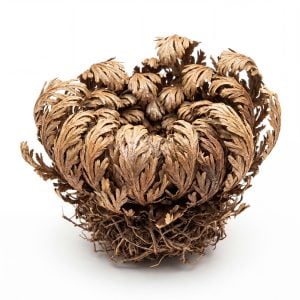
The Rose of Jericho (Anastatica hierochuntica), called the resurrection plant, sits at the center of altars across hoodoo, santeria, and folk-Christian practice. Practitioners place an authentic Rose of Jericho resurrection plant in a shallow dish of water and watch the dried rosette unfurl into a green fern within hours, a visual liturgy of renewal that is then used to dress the altar or to prepare blessed water for cleansing. Botánica shops across the United States, Mexico, the Caribbean, and Brazil stock dozens of herbs for protection, prosperity, and uncrossing work, often blended into custom recipes by santeros, paleros, or curanderas.
How spiritual herbs work, where the science meets the symbolism
Modern phytochemistry now offers a partial answer to a question practitioners have been answering experientially for thousands of years. Why do certain plants reliably calm a racing mind, sharpen attention, or promote vivid sleep? The short answer is that several spiritual herbs contain volatile aromatic compounds that interact with measurable receptor systems in the human brain.
Lavender. A 2017 meta-analysis of randomized clinical trials concluded that the standardized lavender oil preparation Silexan at 80 milligrams per day was significantly superior to placebo for anxiety reduction over ten weeks and was as effective as 0.5 milligram lorazepam and 20 milligrams paroxetine for generalized anxiety symptoms (Kasper et al. 2017, PMID 27861196). The earlier landmark trial in 221 adults across 27 medical practices reported a 76.9 percent responder rate on standardized anxiety scales versus 49.1 percent placebo, plus a 44.7 percent improvement in sleep quality scores (Kasper et al. 2010, PMID 20512042).
Chamomile. A long-term randomized clinical trial of Matricaria chamomilla at 1500 milligrams per day in patients with generalized anxiety disorder found significantly lower symptoms versus placebo across a 26-week continuation period (Mao et al. 2016, PMID 27912875), corroborating an earlier 8-week placebo-controlled trial in mild to moderate GAD (Amsterdam et al. 2009, PMID 19593179).
Rosemary. A 2018 randomized clinical trial in 68 university students using 500 milligrams of Rosmarinus officinalis twice daily for one month produced significant improvements in prospective and retrospective memory, anxiety and depression scores, and most components of sleep quality (Nematolahi et al. 2018, PMID 29389474). The mechanism appears tied to the volatile compound 1,8-cineole. A small but mechanistically clean study showed that higher plasma 1,8-cineole concentrations after rosemary aroma exposure correlated with improved performance on serial subtraction and visual processing tasks (Moss and Oliver 2012, PMID 23983963).
Sage and peppermint. A 29-day randomized trial of a Salvia officinalis aqueous extract combined with S. lavandulaefolia essential oil produced consistent benefit on working memory and accuracy in 94 healthy adults (Wightman et al. 2021, PMID 33466627). Peppermint aroma alone has been shown to enhance memory and subjective alertness in a 144-person study (Moss et al. 2008, PMID 18041606).
The modern evidence base is real but uneven. Some traditional spiritual herbs (lavender, chamomile, rosemary, holy basil) now have multiple human trials. Others (mugwort, blue lotus, Rose of Jericho) have rich phytochemical and ethnobotanical documentation, but few or no contemporary randomized clinical trials. We mention this honestly because we believe the absence of a clinical trial is not the same as the absence of an effect, and the absence of an effect is not the same as the absence of value. Some spiritual herbs work on the practitioner through the chemistry of their compounds. Others work through the geometry of the ritual itself. Many work through both at once.
Spiritual herbs for protection and cleansing
Cleansing and protection are the two ritual intentions practitioners reach for most often. The healing herbs that traditionally serve this category include white sage (Salvia apiana), common garden sage (Salvia officinalis), rosemary, mugwort (Artemisia vulgaris), bay leaf, eucalyptus, juniper, frankincense resin, copal, palo santo (Bursera graveolens), and the African smudge plant imphepho (Helichrysum odoratissimum). Practitioners typically burn these herbs as ritual smoke, infuse them into floor wash water, or place them in sachets at thresholds. The same plant set, with the addition of borage and yarrow, is also called on when a practitioner needs courage to face a difficult conversation, a transition, or a loss.
The traditional logic is one of fragrant displacement. Strong-smelling smoke, water, or salt is moved through a space to interrupt the felt presence of stagnant or unwelcome energy and to invite a fresh quality of attention. The same instinct shows up across continents that had no contact with one another. Mugwort smoke at Celtic Beltane fires. White sage smudge at an Indigenous North American ceremony. Imphepho stick at South African ancestor altars. Frankincense in Catholic incense pots. Copal at Mexican Day of the Dead ofrendas. The cultural specifics differ, but the underlying choreography is consistent.
A note on sourcing that we cannot avoid making. Tens of thousands of pounds of wild white sage are stripped from California and Mexico hillsides each year to supply the global ritual herb market, even though most commercially sold sage could be cultivated. The conservation nonprofit United Plant Savers, founded by herbalist Rosemary Gladstar in 1994, has placed Salvia apiana on its At-Risk plant list. We do not stock wild-harvested white sage in our editorial team’s product line for this reason. Garden-cultivated sage, mugwort, rosemary, and imphepho are functionally interchangeable for cleansing intention and carry no harvest pressure.
A second sourcing note that contradicts a near-universal blog claim. Palo santo (Bursera graveolens) is classified as Least Concern on the IUCN Red List and carries no CITES Appendix listing. The persistent “palo santo is endangered” claim circulating in spiritual wellness blogs stems from confusion with a different species, Bulnesia sarmientoi, which is CITES Appendix II-listed. Peru and Ecuador additionally regulate B. graveolens harvest to fallen wood only, with SERFOR certification in Peru as the verifiable sourcing standard. Buy palo santo only from sellers who can document SERFOR or equivalent fallen-wood-only sourcing.
Spiritual herbs for sleep, dreams, and divination
The herbs that tradition has bound to dream work and divination form a distinct family. They include chamomile, lavender, mugwort, valerian, passionflower, blue lotus (Nymphaea caerulea), Silene capensis dream root, and certain mints. Some are taken as evening tea. Some are stuffed into a dream pillow placed under the head. Some are burned as smoke before sleep. Some are taken in measured doses by initiates who keep a journal at the bedside.
Mugwort holds the deepest folkloric link to dream practice in the European tradition. The phytochemistry review by Ekiert and colleagues (Ekiert et al. 2020, PMID 32992959) documents the bioactive sesquiterpenoid lactones (psilostachyin, vulgarin) and flavonoids that give mugwort its measurable antioxidant, hepatoprotective, antispasmolytic, antinociceptive, estrogenic, and antimicrobial activity. We note honestly that the modern clinical literature on Artemisia vulgaris for dream effects specifically is thin. The plant’s role in dream practice rests on traditional knowledge rather than randomized trials. The NCCIH mugwort fact sheet documents safety considerations, particularly the cautions for pregnancy and for individuals with allergies in the Asteraceae family.
Silene capensis is the tradition’s most striking dream plant. Xhosa initiates take a small infusion of the powdered root before sleep and report richly visual, often instructive dreams in which deceased family members or ancestral figures offer guidance. The plant is named undlela ziimhlope, “white path,” in Xhosa, in reference to the luminous quality of the dreams it produces. Practitioners typically take it for one to three nights at a time and rest before repeating.
Blue lotus carries a parallel place in the Egyptian tradition. The flower’s signature alkaloids (apomorphine, nuciferine) interact with dopamine receptors at low doses, which may explain the gently euphoric, dream-promoting quality the plant has historically been credited with. Practitioners brew the dried petals as tea, infuse them into wine, or smoke them in small ceremonial blends.
For the calming side of the bedtime equation, the modern clinical evidence is strongest for chamomile and lavender. We have observed that practitioners who pair an evening cup of chamomile (one rounded teaspoon dried flower per cup, steeped covered for 10 minutes) with a few drops of lavender oil on a pillow corner often report falling asleep within 20 minutes of getting into bed. This is the same combination the National Center for Complementary and Integrative Health summarizes in its lavender fact sheet as the most studied lavender application.
Spiritual herbs for meditation, calm, and intuition
The third major intention category is the cultivation of an inner state suitable for prayer, meditation, study, intuition, and creative work. The herbs in this family overlap with the dream category but tilt toward daytime use. They include holy tulsi, peppermint, lemon balm (Melissa officinalis), rosemary, hibiscus, holy basil’s relative sweet basil (Ocimum basilicum), and the calming flower hibiscus (Hibiscus sabdariffa).
Holy Tulsi is the broadest of the meditation plants. Its modern evidence base spans stress reduction, sleep quality, and cortisol response (Lopresti et al. 2022, PMID 36185698). The American Botanical Council monograph on holy basil (HerbalGram Issue 98, by Engels and Brinkmann) places the plant within its traditional Hindu context and reviews the constituent chemistry that supports the modern findings. Practitioners take tulsi as morning tea or as a capsule before sitting practice.
Hibiscus tea has held a place at Egyptian, Sudanese, and Mexican gatherings for centuries. Beyond its red color and cooling tartness, the plant has measurable cardiovascular effects. A 6-week randomized trial at the USDA’s Human Nutrition Research Center on Aging at Tufts found that 3 cups per day of brewed hibiscus tea lowered systolic blood pressure by 7.2 mm Hg versus 1.3 mm Hg in a placebo in 65 pre- and mildly hypertensive adults (McKay et al. 2010, PMID 20018807). The cooling, slightly grounding quality of hibiscus suits afternoon meditation or contemplative reading.
Peppermint (Mentha × piperita) sits at the alert end of the calm-meditation spectrum. The NCCIH peppermint oil fact sheet documents both the digestive applications and the alertness research. We have found that a single drop of peppermint essential oil rubbed between the palms and inhaled is the simplest practical reset for an afternoon energy dip. Avoid applying peppermint oil to the face of an infant or young child, per NCCIH safety guidance.
Lemon balm and yarrow (Achillea millefolium) round out the daytime calm category. Both are old European folk healing herbs grown in monastery gardens, valued as gentle, reliable nervines. Yarrow holds an additional place in divination tradition, particularly through its historical use in I Ching stalk casting in Chinese practice. Anglo-Saxon and Norse warrior cultures also bound yarrow to courage, carrying the dried flower into ritual before battle.
How to use spiritual herbs in your practice
The methods practitioners actually use are simpler than introductory texts often suggest. The main four are infusion (tea), anointing oil, sachet, and smoke. Each method extracts a different aspect of the plant and suits different intentions.
Infusion (tea)
Place one to two rounded teaspoons of dried herb (or one tablespoon fresh) in a cup. Pour just-boiled water over and cover immediately to trap volatile aromatic oils. Steep 10 minutes for soft flowers and leaves (chamomile, lavender, lemon balm), 15 minutes for tougher leaves and most roots (holy tulsi, rosemary), 20 minutes for hard barks and dense roots. Strain. Drink warm, ideally without milk. The infusion is the most accessible spiritual herb practice and requires the least equipment. We suggest beginners start with a single-herb chamomile or holy tulsi infusion before moving to blends.
Anointing oil
Steep one part dried herb to four parts cold-pressed olive, jojoba, or sweet almond oil in a clean glass jar in a sunny window for two to four weeks. Strain through cheesecloth. Use a single drop on the wrist, the third eye point between the brows, the back of the neck, or the soles of the feet before meditation, prayer, or sleep. Rosemary, lavender, and frankincense resin all infuse beautifully into oil. Our editorial team has tested this preparation across batches and finds that olive oil holds aroma longest while jojoba feels lightest on the skin.
Sachet
Combine dried herbs (lavender, rose, mugwort, hops) inside a small cotton or linen pouch. Place under the pillow for sleep work, in a drawer for ongoing intention, in a pocket for protection during travel, or on the altar as a steady offering. Refresh the herbs every three to six months as the fragrance fades.
Smoke
Light the dried tip of a wrapped herb bundle, blow out the open flame, and let the smoke flow over hands, body, doorways, and corners of a room. The combinations that suit cleansing intention include garden sage with rosemary, mugwort with bay leaf, or imphepho on its own. We avoid wild-harvested white sage and palo santo from undocumented sources for the conservation reasons explained above. Cultivated alternatives carry the same fragrant displacement effect with no harvest pressure.
For practitioners building a daily ritual practice, we suggest starting with one method and one herb for two weeks before adding a second. Holy tulsi tea every morning, or lavender oil on the pillow every evening, or a sage and rosemary smoke wash on the kitchen on Sunday afternoon. The repetition matters more than the variety. The body learns the ritual by ritual.
Quality and sourcing considerations
The spiritual herbs market has grown rapidly. The global aromatherapy industry alone reached $9.21 billion in 2024 and is projected to reach $15.17 billion by 2030, with the spa and relaxation segment accounting for 45.6 percent of revenue (Grand View Research, 2024). North America captured 40.64 percent of the global market. With that scale comes both genuine product diversity and significant adulteration risk. From our hands-on assessment of suppliers across multiple continents, the questions a buyer should ask before purchasing any spiritual herb are consistent.
First, ask whether the plant is wild-harvested or cultivated. For at-risk species (Salvia apiana, white sage, sandalwood, certain frankincense species), cultivation is the responsible choice. For non-at-risk species (rosemary, lavender, mugwort, holy tulsi, hibiscus, chamomile), either source is acceptable as long as the supplier can document harvest practice.
Second, ask for the Latin binomial. Common names overlap and sometimes conceal substitution. “Sage” can mean Salvia officinalis (garden sage), Salvia apiana (white sage), Salvia lavandulifolia (Spanish sage), or Salvia divinorum (a psychoactive ritual species reserved for specific traditions). The Latin binomial is the only name that nails the plant.
Third, ask about third-party testing. Reputable sellers test for heavy metals, microbial contamination, pesticides, and species identity. The American Herbal Products Association (AHPA) publishes industry standards. The American Botanical Council’s HerbMedPro database catalogues the clinical evidence base for individual species.
Fourth, look at the appearance and aroma of the actual herb. A well-stored dried lavender bud should still carry the fragrance the bud released when fresh. Color should be muted but recognizable, not faded to brown. Stems should be intact rather than crumbled to dust. Resins should hold their characteristic perfume when warmed in the hand.
Fifth, prefer suppliers who name the origin region. Lavender from Provence smells different from lavender from Bulgaria, which smells different from lavender from Tasmania. Rosemary from the Andalusian Mediterranean carries a different aromatic profile from greenhouse rosemary. Specifying terroir is one of the markers of a serious supplier.
Practitioners new to building a personal apothecary of healing herbs may want a starting product. Silene capensis dream root capsules are the most accessible introduction to the dream-divination category if you are curious about that side of practice and prefer a measured capsule format to a self-prepared infusion.
Frequently asked questions about spiritual herbs
What are the best herbs for spiritual protection?
The traditional protection healing herbs across cultures include rosemary, mugwort, garden sage, bay leaf, basil, salt-paired herbs (any herb in salt), and thresholds dressed with frankincense or copal smoke. Practitioners often layer two or three of these together in ritual rather than relying on a single plant. The traditional Mediterranean combination of rosemary at the front door plus garden sage burned as ritual smoke through the house represents one of the longest documented protection rituals in European folk practice.
What herbs are used for cleansing?
Cleansing herbs work on a logic of fragrant displacement. The plants most often used are garden sage (Salvia officinalis), rosemary, mugwort, eucalyptus, juniper, frankincense resin, copal, imphepho (Helichrysum odoratissimum), and palo santo from documented fallen-wood sources. Wild-harvested white sage carries conservation pressure and is not recommended, even though it appears in many older texts.
Can dried herbs be used instead of fresh herbs?
Yes, for almost every spiritual herb application. Dried herbs are more concentrated and have a longer shelf life. The general substitution ratio is one teaspoon dried for one tablespoon fresh. The exceptions are a small number of plants where the fresh aromatic top notes matter (basil for some kitchen-altar work, mint for certain summer rituals), but most traditional practice uses dried herbs.
How often should I do a ritual?
Daily ritual is more potent than occasional ritual. A two-minute morning candle and herb practice repeated every day for a year produces deeper changes in attention and intention than a single elaborate two-hour ritual once a quarter. Start with a ritual frequency you can actually maintain. Many practitioners we speak with run a daily five-minute morning ritual, a weekly Sunday afternoon cleansing ritual, and a monthly new-moon or full-moon longer ritual practice.
How do I choose herbs for my practice?
Start with the intention, then match a plant to it. For calm and sleep, chamomile or lavender. For protection, rosemary or mugwort. For cleansing, garden sage with rosemary. For meditation and mental clarity, holy tulsi or peppermint. For dream work, mugwort or Silene capensis dream root. Buy small quantities of two or three herbs at first and work with each individually for two weeks before blending. Pay attention to which herbs your nervous system actually responds to, because the answer is often personal.
Where can I find high-quality spiritual herbs?
Buy from herbalists who name the Latin binomial, document the origin region, document third-party testing, and avoid wild-harvested at-risk species. Avoid Amazon marketplace listings with no supplier information, no test certificates, and no terroir disclosure. Local herb shops, established mail-order herbalists, and specialty retailers who publish their sourcing standards are the safer routes.
Do herbs lose their spiritual power over time?
The aromatic compounds in dried herbs degrade gradually. Sealed in a cool, dark place, most leaf and flower herbs hold their fragrance for one to two years. Roots, barks, and resins often hold longer (two to four years). When the smell fades, the practical and arguably the symbolic effectiveness fades with it. Refresh herb supplies annually as part of an autumn or spring practice reset.
Related Reading
Continue exploring this topic with these related articles from our team:
- Ritual Herbs: A Practitioner’s Guide to Sacred Plants in Ceremony
- African Dream Root: Benefits, Uses, and Cultural Significance
- Holy Tulsi: A Complete Guide to the Queen of Herbs
- A Guide to Sceletium Tortuosum: Science, History, and Benefits
About the Back To Your Roots Herbs Editorial Team
The Back To Your Roots Herbs Editorial Team combines collective experience in traditional herbalism, ethnobotanical research, and clinical literature review. Our team curates primary research from PubMed, NIH, and traditional medicine sources, vets sourcing relationships across specific terroir regions, and applies sensory analysis and third-party quality testing to every herb profiled on this site. All content is researched and reviewed in our Virginia Beach, Virginia, facility.
Last Reviewed: May 2026
Showing the single result