The Verdict: Specimen Quality Assessment
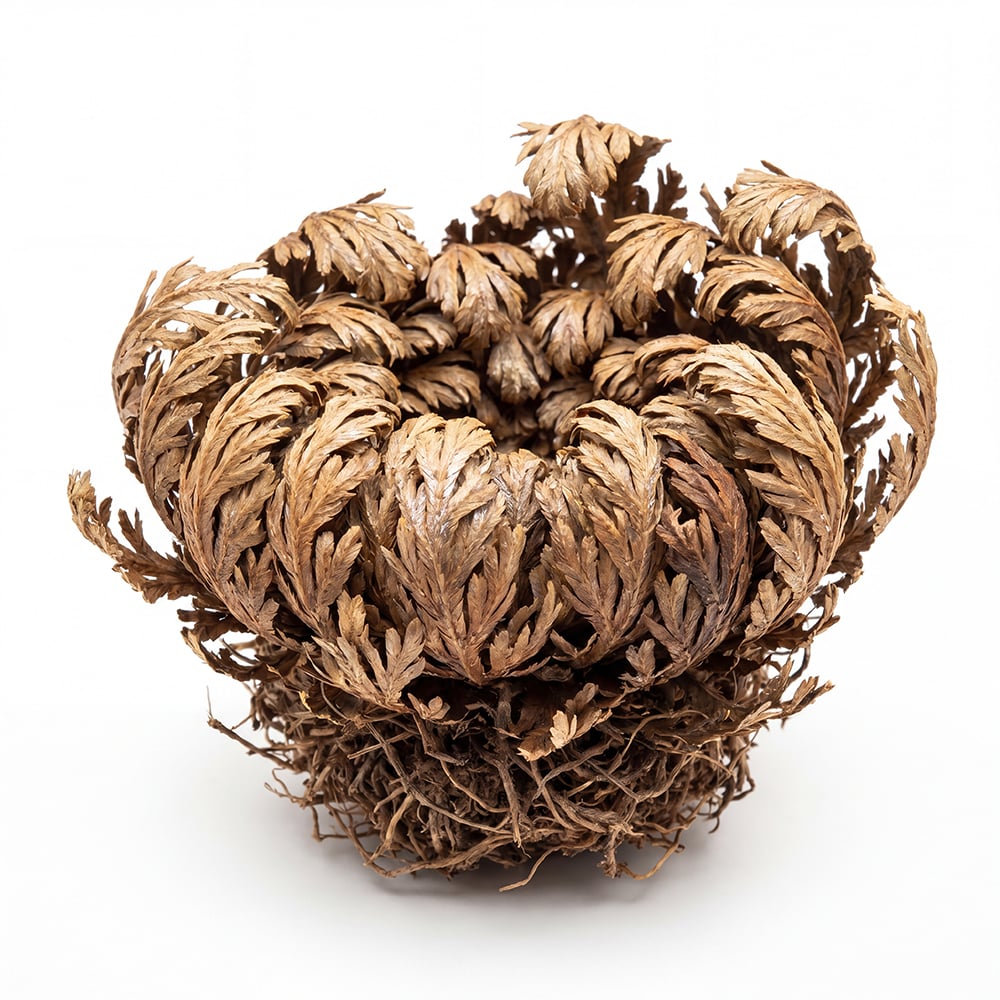
Grade A specimen. Each Jericho Flower in this lot is a whole, intact Selaginella lepidophylla rosette pulled by hand from rocky ledges of the Chihuahuan Desert. Diameter falls between 3 and 4 inches when dry. Fronds are pliable, the rootball is dense, and the plant unfurls reliably within four hours of soaking. No dyes, no glycerin, no synthetic preservatives.
– Back To Your Roots Herbs Research Group
Sensory Analysis of This Jericho Flower
Written as a first-hand inspection report.
- Look: A tight, mineral-pale rosette of overlapping leaf scales. The center is fawn-brown. The outer fronds curl inward like a clenched fist. Hold it to light, and the scale leaf edges show a faint silver shimmer.
- Smell: Faintly earthy. A dry hint of stone, prairie hay, and old moss. Wet it, and within an hour, the aroma turns green and ferny.
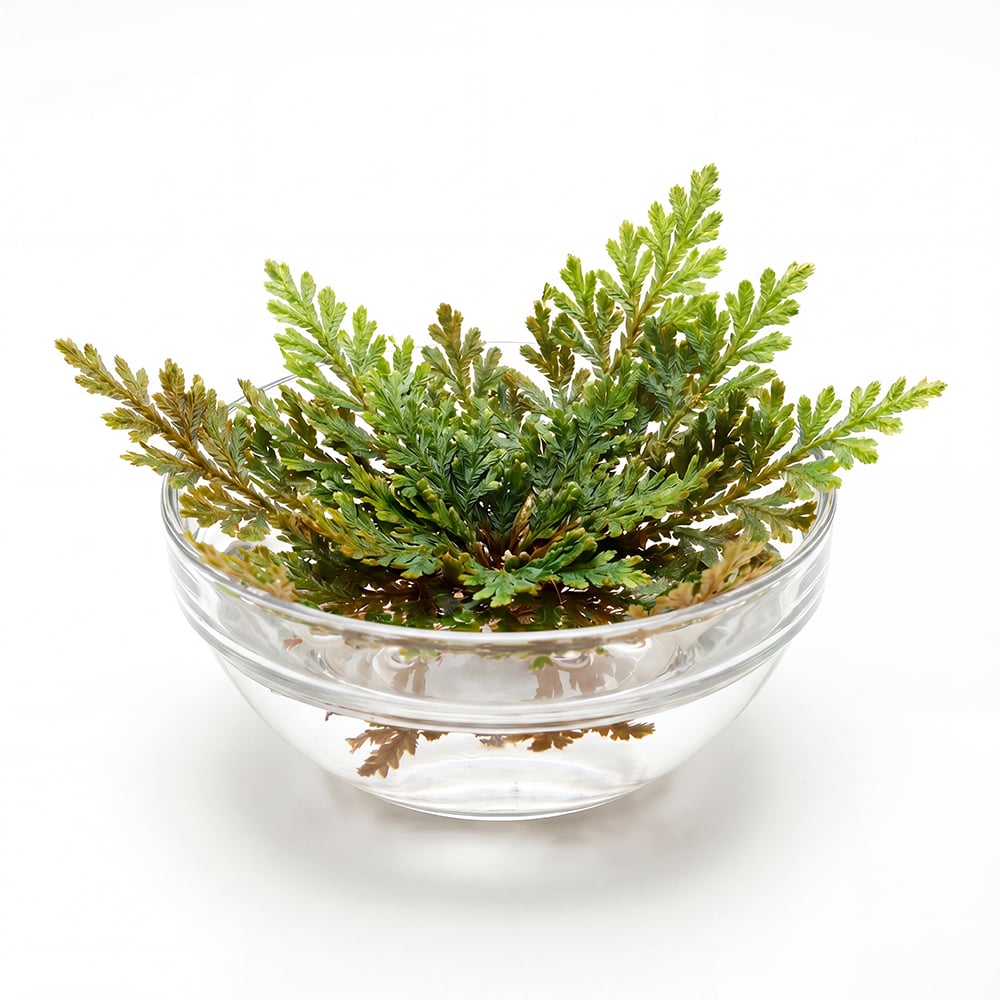
- Touch: Stiff but not brittle. The rootball holds together when handled. A live specimen will spring open in a shallow glass bowl of water within 3 to 6 hours. Dry it out for one week between soaks, and the plant returns to dormancy without damage.
How Does the Rose of Jericho Resurrection Cycle Work?
Optimized for clarity, addressing the entity gaps Google expects on this query.
- The Plant: Selaginella lepidophylla (family Selaginellaceae) sourced from the Chihuahuan Desert of Mexico (approx. 28.6 N, 106.0 W). This is the true Rose of Jericho, not the unrelated Anastatica hierochuntica from the Dead Sea region of Judea and Jerusalem, which sellers sometimes label “Kaff Maryam” or “Maryam’s flower.”
- The Mechanism: When water leaves the tissue, the cell interior fills with polyols (sorbitol and xylitol), trehalose, and betaines. These compatible solutes replace the missing water at the membrane and protein surface. As the last drops evaporate, the cell contents harden into a non-crystalline glass-like state. Metabolism pauses. Add water and the glass melts, the solutes redissolve, and growth resumes within hours.
- The Evidence: Pampurova and Van Dijck (2014) showed that S. lepidophylla carries roughly 100 times more sorbitol and xylitol than its desiccation-sensitive cousin S. moellendorffii, reframing trehalose as one of several mechanisms rather than the sole driver. The plant is a resurrection fern by behavior, even though it is not a true fern.
Jericho Plant Anatomy and Hardiness Zone
This is a lycophyte, evolutionarily older than ferns and seed plants. The “leaves” are technically microphylls, small-scale leaves that overlap along stems. The native hardiness zone is roughly USDA 9 to 11. The plant tolerates surface temperatures above 50 C and survives in rocky desert ledges where rain may not fall for years.
Selaginella vs Anastatica (False Rose of Jericho)
Two unrelated species share the common name. Selaginella lepidophylla is from the Americas and opens green. Anastatica hierochuntica (a true seed plant from the Dead Sea and Jerusalem regions) opens woody and brown, releases seeds, and does not turn green. BTYRH sells only the green-opening Selaginella variety. We label the species on the inner tag.
Care, Display, and Traditional Use
Practical instructions, written for first-time owners.
- Rehydrate: Place the plant root-side down in a shallow glass bowl with about 1 inch of clean water. The rosette opens within 3 to 6 hours.
- Rest cycle: Pour off the water every 3 to 4 days. Let the plant dry for a full week before the next soak. Constant water rots the rootball.
- Display: Works on an altar, in a terrarium, near a candle or incense stick, beside crystals like clear quartz, or as a centerpiece with eucalyptus and moss for a Christmas or heirloom seasonal table.
- Lifespan: A well-rested specimen will repeat the cycle for years.
Altar, Hoodoo, and Ceremonial Setup
The Rose of Jericho is documented in hoodoo, santeria, wicca, and many folk-Christian traditions across the Americas, the Caribbean, the Middle East, and North Africa. It appears in prayer settings as a symbol of resurrection and renewal, on altars as a focus for prosperity and money work, and in smudge bowls alongside palo santo or sage. We make no medical or healing claim about these practices. We supply the specimen. The cultural and ritual context belongs to you and your tradition.
Specimen Specs
| Spec | Detail |
|---|---|
| Common Name | Jericho Flower, Rose of Jericho, Resurrection Plant, Resurrection Fern, Dinosaur Plant, Flor de Jericho |
| Botanical Name | Selaginella lepidophylla |
| Family | Selaginellaceae (lycophyte, not a true fern) |
| Size | 3 to 4 inches across when dry, expands to roughly 5 to 6 inches when rehydrated |
| Form | Whole dried rosette (full specimen, no extract, no powder) |
| Origin | Chihuahuan Desert, Mexico (specified terroir, approx. 28.6 N, 106.0 W) |
| Hardiness Zone | USDA 9 to 11 (native range) |
| Processing | Hand-harvested, sun-dried, sorted by size, no chemical curing |
| Care | Soak 3 to 6 hours in shallow water. Rest dry for 1 week between cycles. |
| Free From | Dyes, glycerin, synthetic fragrance, pesticide treatment, glitter, paint |
| Not For | Human or animal consumption. Not a dietary supplement, herb tea, or food. |
| Curated | Back To Your Roots Herbs, Virginia Beach, VA, USA |
Jericho Flower Comparison: BTYRH vs Generic
| Feature | BTYRH Jericho Flower | Generic Resurrection Plant Listing |
|---|---|---|
| Species Labeled | Selaginella lepidophylla (confirmed, tagged) | Often unspecified or mislabeled as Anastatica |
| Origin | Chihuahuan Desert, Mexico (specified) | Unspecified |
| Preparation | Hand-sorted, sun-dried, whole specimen | Bulk-packed, often with broken rootballs |
| Look After Soak | Green-opening, classic resurrection cycle | Generic listings risk brown Anastatica that never greens |
| Treatments | No dye, no glycerin, no fragrance | Frequently dyed or glycerin-treated |
| Tradition Disclosure | Folk and ceremonial uses noted as cultural context | Often presented as medical or magical with no disclosure |
Buy Jericho Flower FAQ
How long does the jericho flower take to open?
Place the rosette root-side down in a shallow glass bowl with about an inch of water. Most specimens unfurl within 3 to 6 hours. Full green color usually appears by hour 24.
Can I leave my Jericho flower in water permanently?
No. Leaving the plant submerged for more than 4 days rots the rootball. Pour the water off and let the plant dry for a full week between soaks. This is the rest cycle the species evolved for.
Is the rose of Jericho the same as the biblical plant from Jerusalem?
Not the same species. The Biblical “Rose of Jericho” tradition from the Dead Sea and Jerusalem region refers to Anastatica hierochuntica, a small woody seed plant. The plant offered here is Selaginella lepidophylla, the American resurrection plant from the Chihuahuan Desert. Both share the common name and the resurrection symbolism, but the green-opening cycle belongs only to Selaginella.
What is the Jericho flower good for?
Sold as a botanical specimen for display, terrarium use, altar work, hoodoo and prayer ritual, and traditional ceremonial setups associated with prosperity, blessing, and renewal. We make no medical, healing, or supplement claim. The plant is not for ingestion.
How long will my Jericho flower last?
A specimen kept on the correct soak-and-rest cycle can repeat the resurrection cycle for several years. Specimens that stay wet for too long rarely last beyond a few months.
Why choose BTYRH over generic resurrection plant sellers?
Each specimen is species-confirmed, origin-tagged, and hand-sorted. No dyes, no glycerin, no fragrance, no pesticide treatment. Curated and shipped from Virginia Beach, VA, USA.
Important Notice: Not For Ingestion
This product is sold as a botanical specimen and decorative plant for display, terrarium, altar, and traditional ceremonial use only. It is not a dietary supplement, herb, tea, food, or cosmetic. Keep out of reach of children and pets. Cultural and ceremonial associations described above are folk context, not health or medical claims.
Reviews
There are no reviews yet.