The Verdict (Internal Quality Score)
Grade A (Clinical Standard). These red reishi mushroom capsules contain 100% mature Ganoderma lucidum fruiting body grown on native hardwood logs in the Dabie Mountains of central China (31.25°N, 115°E). The substrate density forces the fungi to express high concentrations of defense compounds. The resulting reishi mushroom extract profile is high in triterpenes and low in starch. No mycelium-on-grain. No fillers. No shortcuts.
– Back To Your Roots Herbs Research Group
Sensory Analysis: First-Hand Lab Notes on Our Reishi Mushroom Capsules
We emptied a capsule onto a clean white tray and put the powder under inspection. Here is what we documented.
Visual Inspection
Fine, dark cocoa-colored dust. Not the pale tan of oat-fed mycelium. The deep brown color signals a high concentration of water-soluble polysaccharides typical of mature fruiting body powder.
Form
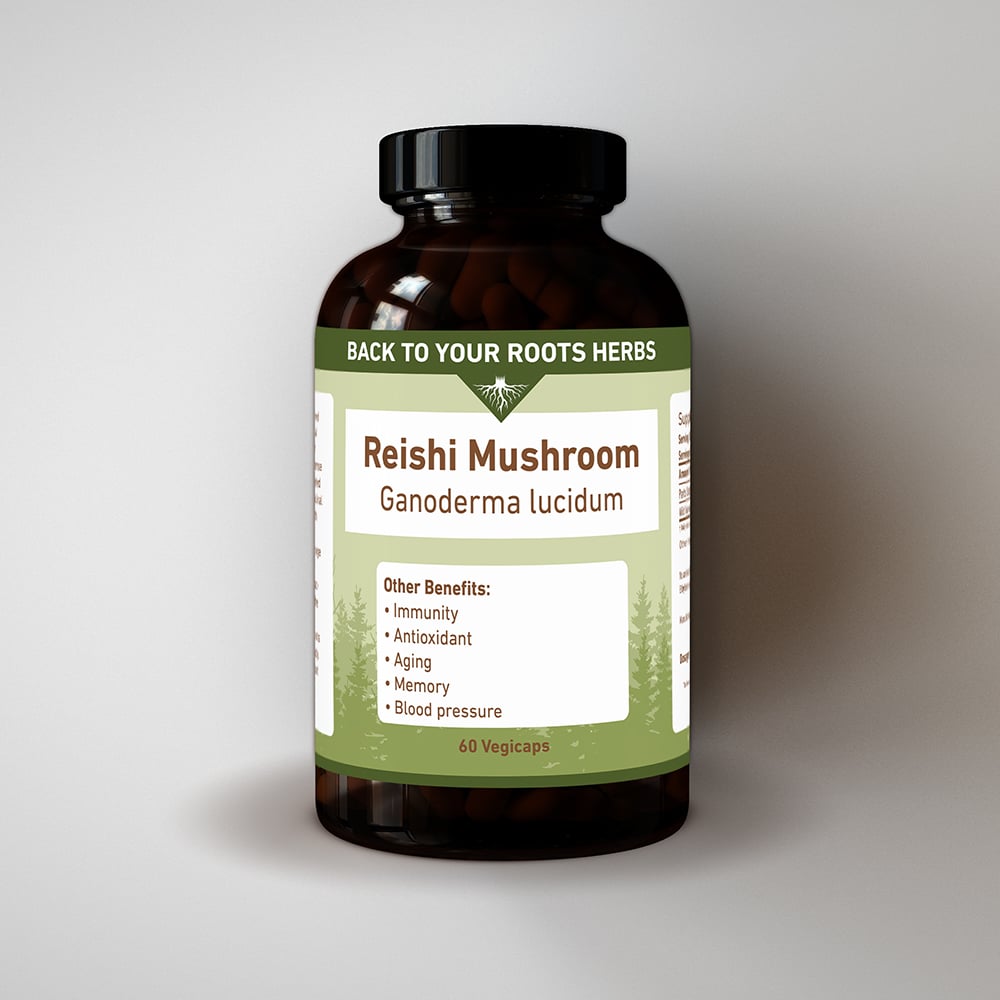
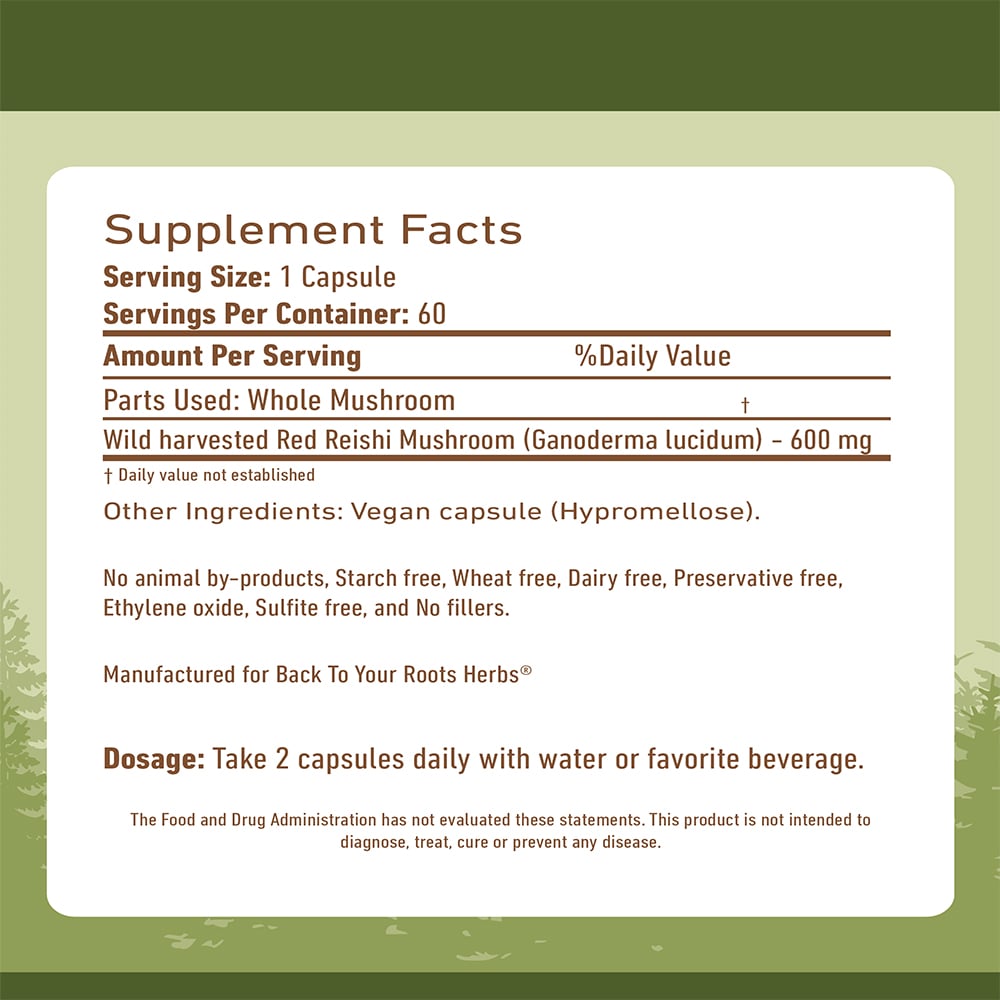
Micronized whole-powder fill inside a vegan vegetable cellulose capsule. 600 mg per capsule.
Aroma Profile
Pungent and woody. Damp forest soil. Wet hardwood bark. The aroma carries the resinous note that signals intact triterpene content.
Active Compound Marker
If your reishi mushroom capsules smell like nothing, they are likely starch-padded with grain.
Taste Profile
Sharply bitter. Bitter is the quality marker for ganoderic acids in red reishi mushroom extract. If your reishi capsules taste sweet or bland, the contents are mostly grain.
Sweet vs. Bitter
Sweetness in mushroom capsules indicates carbohydrate fill from the cultivation substrate. Bitterness indicates the lanostane-class triterpenes that define authentic red reishi.
How Do Red Reishi Mushroom Capsules Work?
Red reishi (Ganoderma lucidum) is one of the most studied adaptogenic mushrooms in modern medicinal mushroom research. Here is the working mechanism in plain language.
The Herb (Ganoderma lucidum)
Ganoderma lucidum, traditionally called Lingzhi in Chinese herbal medicine and known as the spirit mushroom, is a hardwood-decay fungus belonging to the polypore family. The red-capped variety used in these reishi mushroom capsules grows on dead and dying hardwood trees in subtropical mountain forests. Our material is sourced from the Dabie Mountains, a recognized terroir for premium Ganoderma cultivation referenced in the classical Compendium of Materia Medica.
Origin
Dabie Mountains, central China. Approx. 31.25°N, 115°E. Subtropical hardwood-forest terroir bordering Hubei, Anhui, and Henan provinces.
The Mechanism (Gut-Brain Axis)
The active compounds in red reishi modulate the gut-brain axis. Beta-glucans and other polysaccharides feed specific gut bacteria. The resulting microbiota signal travels along the vagus nerve to the hypothalamus, which regulates serotonin (5-HT) and dopamine signaling. This is the proposed mechanism by which red reishi supports restful sleep, calm mood, and a balanced stress response.
The Evidence
Yao et al. (2021), published in Scientific Reports (PMID: 34211003), confirmed that the acidic alcohol extract of Ganoderma lucidum mycelia shortened sleep latency and prolonged sleep duration in pentobarbital-treated mice. The researchers documented increased levels of the sleep-promoting neurotransmitter 5-hydroxytryptamine and increased Tph2, Itpr3, and Gng13 transcripts in the serotonergic synapse pathway in the hypothalamus. The effect required an intact gut microbiota.
Reference
Yao C, Wang Z, Jiang H, et al. Sci Rep. 2021. Vol 11(1):13660. PMID 34211003.
The Active Compounds in Our Red Reishi Mushroom Capsules
Polysaccharides and Beta-Glucans
The polysaccharide fraction in our red reishi mushroom extract centers on β-1,3-D-glucopyranan backbones with β-1,6-linked monoglucosyl side chains. These beta-glucans support the body’s natural immune response and feed beneficial gut microbiota. We standardize for greater than 15% beta-glucans by weight.
Standardization
Beta-glucan content verified by enzymatic assay on every production lot. Minimum specification >15% w/w.
Triterpenes and Ganoderic Acids
More than 140 triterpenoids have been identified in Ganoderma. Total triterpene content in G. lingzhi fruiting bodies ranges from 1.66% to 10.56%, depending on cultivation method, with log-grown specimens at the upper end of the range. Ganoderic acids carry the carboxyl group on the lanostane side chain that gives reishi its characteristic bitterness.
Substrate Note
Hardwood-log Duanwood cultivation pushes triterpene expression toward the top of the species range.
Why Log-Grown Reishi Mushroom Supplements Beat Grain-Based Mushroom Capsules
The USP Authentication Investigation
The United States Pharmacopeial Convention (Wu et al., 2017, Scientific Reports) tested 19 reishi dietary supplements collected in the United States. Only 5 (26%) passed authentication. Starch-like polysaccharides were detected in 13 of 19 samples (68.4%), indicating the products were primarily mycelium grown on grain rather than an authentic fruiting body. The researchers concluded that quality consistency in the U.S. reishi capsules market was extremely poor.
Investigator Quote
“The composition of mycelium polysaccharides varies depending on the cultivation medium, and cultivation on starch-containing biomass is quite common.”
Fruiting Body vs. Mycelium
Mycelium is the root-thread network of the fungus. The fruiting body is the mature mushroom. The triterpene profile that gives red reishi its therapeutic identity lives in the fruiting body, not the mycelium. When you grow mycelium on oats or rice, the final powder is largely grain. Our red reishi mushroom capsules use 100% fruiting body. No mycelium. No grain. No starch fillers.
Hardwood Substrate Density (Duanwood Method)
Reishi mushrooms grown on hardwood logs (the traditional Chinese cultivation method called Duanwood) face a denser, lignin-rich substrate. The fungus expresses higher concentrations of defensive secondary metabolites, including ganoderic acids and beta-glucans, to digest the wood. The result is a more potent reishi mushroom supplement with a deeper triterpene profile than mycelium-on-grain mushroom extract capsules.
Substrate
Native hardwood logs (oak, chestnut, persimmon). Inoculated, fruited once, and returned to the forest floor as decomposing organic matter.
How to Use These Red Reishi Mushroom Capsules
Daily Dosage
Take 2 reishi mushroom capsules (1200mg total) once per day with water. The 90-count bottle delivers a 45-day supply. Like other premium herbal supplements, consistency matters more than quantity.
Serving
2 vegan capsules. 600mg of red reishi mushroom powder per capsule. Each serving delivers a verified 1:1 reishi extract concentration.
Best Time to Take
Most users prefer evening dosing, taken about one hour before bed, to align with the body’s circadian rhythm. Some users split the dose, taking 1 capsule in the morning for adaptogenic support and 1 capsule in the evening for sleep support.
Storage
Cool, dry, dark cabinet. Keep the desiccant pack sealed inside.
How Long Until Effects Are Noticeable?
Adaptogenic mushrooms typically build up in the system over 2 to 4 weeks of consistent daily use. Mushroom benefits compound with regular use. Like most herbal supplements, the cumulative response often outpaces the acute response. Be patient.
Who Should Avoid Red Reishi?
Anticoagulant Therapy
Red reishi has mild anticoagulant (blood-thinning) properties. Consult your hematologist before use if you are taking warfarin, heparin, aspirin, or any other anticoagulant medication.
Pregnancy and Lactation
Insufficient safety data exist for use during pregnancy or breastfeeding. We recommend avoiding these reishi mushroom capsules during these life stages.
Surgery Preparation
Discontinue use at least 2 weeks before any scheduled surgical procedure to allow normal clotting function to return.
Red Reishi Mushroom Capsules: Clinical Specs
| Spec | Detail |
|---|---|
| Serving Size | 2 Vegicaps (1200mg) |
| Frequency | 1 serving per day (45-day supply) |
| Active Marker | Beta-Glucans > 15% |
| Processing | Hot Water Extracted (1:1) |
| Safety | Heavy Metal Tested (Pass) |
| Ingredients | 100% Red Reishi (Ganoderma lucidum) Fruiting Body |
| Other Ingredients | Vegetable Cellulose (Capsule) |
| Purity | Certified Organic, Non-GMO, Vegan |
| Free From | Wheat, Gluten, Soy, Dairy, Binders, Fillers, Grain Substrate |
| Origin | Dabie Mountains, China (31.25°N, 115°E) |
| Manufactured | Virginia Beach, VA, USA |
How Do BTYRH Red Reishi Mushroom Capsules Compare?
| Feature | BTYRH Red Reishi Mushroom Capsules | Generic Mushroom Capsules |
|---|---|---|
| Origin | Dabie Mountains (31.25°N, 115°E) | Unspecified |
| Preparation | 100% Fruiting Body, Hot Water Extracted | Mycelium on Grain |
| Taste | Sharply Bitter (Triterpene Marker) | Sweet / Starchy (Filler Marker) |
| Beta-Glucan Spec | >15% Verified | Often Unspecified |
| Safety | Heavy Metal Tested per Lot | Unknown / Untested |
| Authentication | Certificate of Analysis on Request | No COA |
Frequently Asked Questions About Red Reishi Mushroom Capsules
What is the difference between red reishi mushroom capsules and reishi mushroom powder?
Capsules are pre-measured, tasteless, and travel-friendly. Reishi mushroom powder lets you adjust the dose and brew tea, but exposes you to the bitter taste. Same source, same standardization, different delivery format.
Are these reishi mushroom capsules certified organic and vegan?
Yes. The fruiting body is certified organic, and the capsule shell is vegan vegetable cellulose. No animal-derived gelatin. No GMO inputs.
How are these red reishi mushroom capsules different from other mushroom supplements?
Three things separate our reishi mushroom capsules from generic mushroom supplements. We use 100% fruiting body, not mycelium-on-grain. We disclose the specific terroir (Dabie Mountains, 31.25°N, 115°E). We standardize beta-glucans above 15%, with the bitterness profile that confirms triterpene content.
Can I take these reishi capsules with other mushroom extracts?
Yes. Reishi mushroom supplements pair well with lion’s mane, cordyceps, chaga, and turkey tail mushroom capsules. Stagger the dosing across the day for receptor availability.
Do red reishi mushroom capsules really support sleep?
The Yao 2021 study (PMID: 34211003) documented improved sleep latency and duration via gut-mediated serotonin signaling in animal models. Human users typically report a calmer wind-down within 2 to 3 weeks of nightly use. Individual response varies.
Why do these reishi mushroom capsules taste bitter when opened?
Bitterness is the quality marker for ganoderic acids. Sweet or bland reishi capsules signal a high-starch, low-triterpene product (likely mycelium-on-grain). Our capsules taste of bark and resin because the contents are mature fruiting body, not filler.
Sustainability Statement
Our hardwood substrate is sourced under sustainable forestry practices. Logs are inoculated, used for one fruiting cycle, and returned to the forest floor as decomposing organic matter that supports the next generation of native trees.
Sourcing Transparency
Every batch ships with a Certificate of Analysis disclosing beta-glucan content, heavy metal screening (lead, arsenic, cadmium, mercury), and microbial limits. Available on request via customer service.
Lab Test Schedule
Each lot is screened in-house and confirmed by an ISO 17025-accredited third-party laboratory before release.
Disclaimer:
These statements have not been evaluated by the Food and Drug Administration. This product is not intended to diagnose, treat, cure, or prevent any disease. Consult your healthcare provider before using any dietary supplement, especially if you are pregnant, lactating, taking prescription medication, or have a diagnosed medical condition.
Reviews
There are no reviews yet.