What Are Maral Root Capsules?
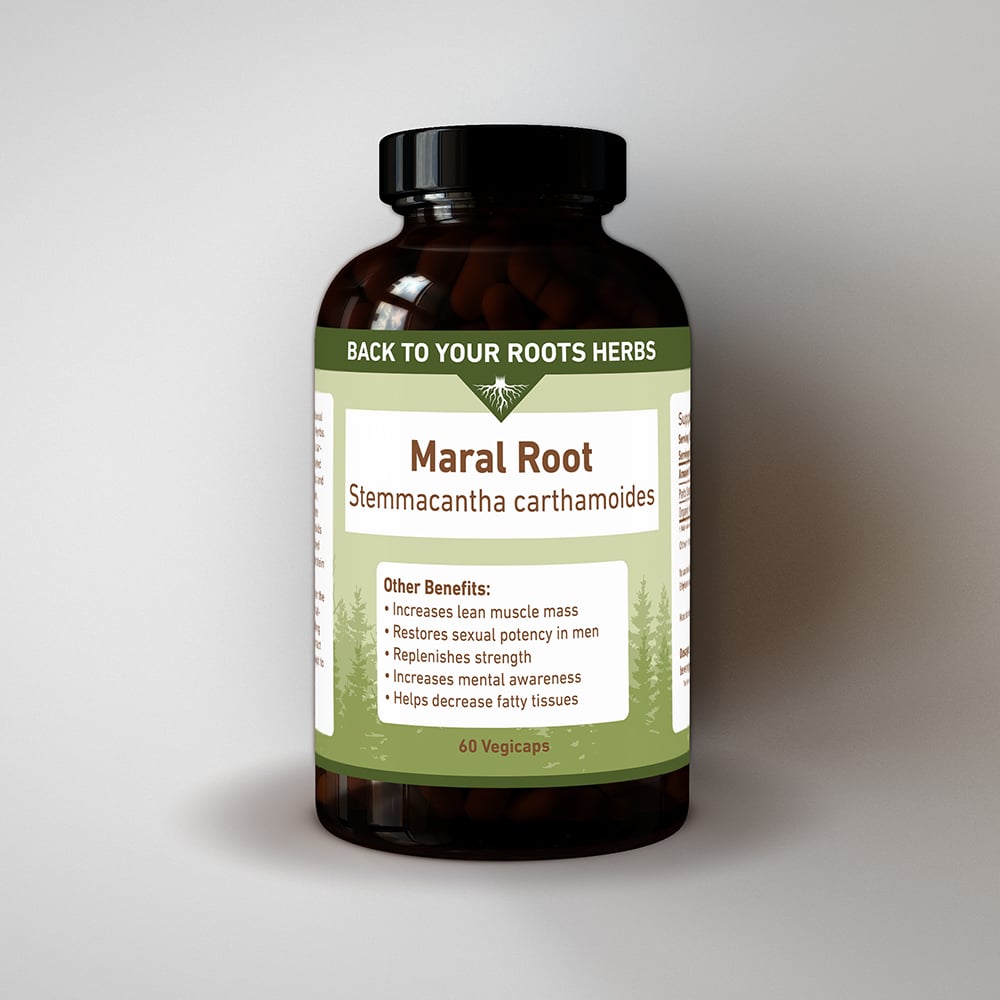
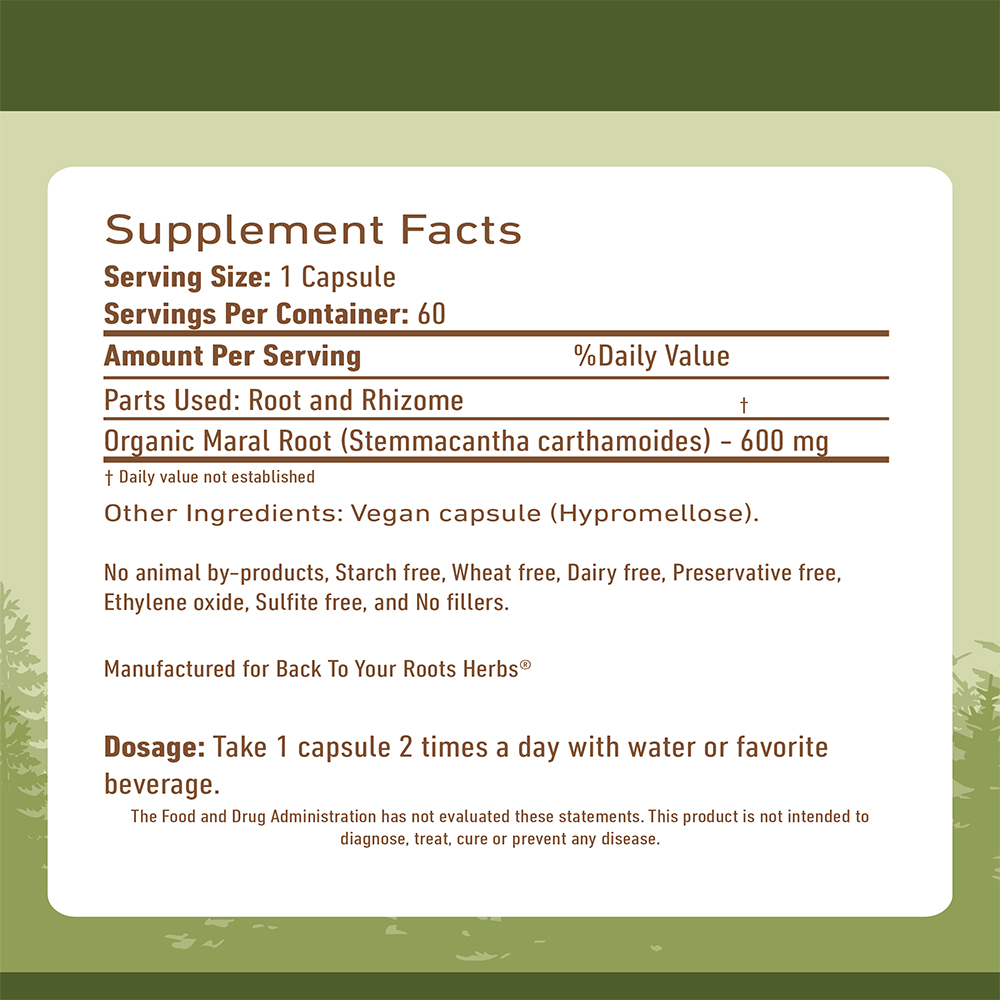
Maral Root Capsules are a whole-root herbal supplement made from the dried root and rhizome of Rhaponticum carthamoides, a flowering perennial native to the Altai Mountains of Southern Siberia. Each capsule contains milled maral root powder inside a starch-free vegicap. No solvent wash, no ethanol extraction, and no standardized isolate are used. What you get is the plant itself, air-dried and finely milled so that the natural profile of phytochemicals remains intact. A serving of two capsules delivers 600 mg of whole maral root. A bottle holds 60 vegicaps, which yields a 30-day rotation at two capsules daily or a 60-day rotation at one capsule daily.
The plant: Rhaponticum carthamoides
Rhaponticum carthamoides (also classified as Leuzea carthamoides) is a member of the Asteraceae family. In Siberian and Eastern European herbal traditions, the root of this plant has been valued for more than two centuries. Russian ethnobotanical records first documented its use in 1879. The common name “maral root” comes from the Maral deer, which reportedly sought out the plant during the mating season in Altai pastures. The Latin name appears across ethnobotany texts, pharmacopeias, and peer-reviewed chemistry papers, and it remains the authoritative botanical name for this herbal supplement.
Traditional use in Siberian herbal practice
Traditional Siberian practitioners have used maral root as an adaptogenic tonic. In folk practice, the root was prepared as a dry powder, a water decoction, or a tincture. The category of adaptogen was later defined by Russian pharmacology in the mid-20th century, and maral root sits alongside rhodiola rosea, ashwagandha, eleuthero, and panax ginseng in that class of plants studied for their role in supporting a normal, balanced response to physical and mental stress.
Why Altai Republic Sourcing Matters
Our maral root is sourced from the Altai Republic, a mountain region of Southern Siberia that sits between roughly 50 and 52 degrees north latitude and 85 to 87 degrees east longitude. The Altai Mountains reach elevations above 2,000 meters, and Rhaponticum carthamoides grows wild in the subalpine meadow belt, typically at 1,400 to 2,200 meters above sea level. Short summers, heavy winter snow cover, intense ultraviolet exposure, and mineral-rich mountain soils all shape the chemistry of the plant. The region is a protected terroir where the same wild populations described in the Russian and Kazakhstani ethnopharmacology literature still grow today.
Altai terroir and the subalpine growth zone
The alpine and subalpine meadows of the Altai Republic are part of the Altai alpine meadow and tundra ecoregion. Plants in this zone face large swings in temperature, high solar radiation, and a very short active growing window. Research on elevation and slope exposure has shown that Rhaponticum carthamoides abundance correlates with specific microclimates in this high-mountain belt. Roots that develop under these conditions accumulate a characteristic set of phytoecdysteroids and flavonoid compounds.
Root and rhizome harvest standards
Our maral root capsules are made from both the primary root and the rhizome, because the two tissues carry complementary phytochemistry. Roots are dug at maturity, cleaned of field soil, air dried at controlled temperature, and milled. We do not add fillers, flow agents, or excipients. Every lot is traceable to a harvest window, and each batch passes identity confirmation before milling. This process keeps the natural full-spectrum profile of the maral root extract powder intact, rather than stripping it down to a single compound.
How Maral Root Capsules Fit a Daily Routine
Many people who add maral root capsules to their routine are looking for a measured, steady herbal ally, not a stimulant spike. Maral root does not contain caffeine. It is used in structure-and-function terms to support the body during stress-heavy weeks, training blocks, or transitional seasons. Used consistently over four to eight weeks, the goal is a supported sense of stamina rather than a sharp burst of energy.
Support for physical stamina and healthy stress response
As an adaptogenic herbal supplement, maral root is traditionally used to support the body’s healthy response to physical and mental stress. In modern structure-and-function language, that means supporting normal stamina during sustained exertion and supporting healthy stress resilience when routines are demanding. Our capsules are designed to slot into that daily practice.
Support for training and post-exercise recovery
Athletes in the former Soviet sports programs were among the first to study maral root extract in a structured way. Today, the product is used by lifters, endurance athletes, and active adults as part of a supported recovery routine. The maral root capsule format gives a pre-measured 600 mg serving that travels well, which makes it easy to keep a consistent rotation across a training block.
Maral root, athletic performance, and post-exercise recovery
Maral root earned its modern reputation in the training hall. Soviet sports scientists studied Rhaponticum carthamoides through the 1970s and 1980s as a recovery aid for weightlifters and endurance athletes. The interest centers on the root’s phytoecdysteroids, led by 20-hydroxyecdysone. These plant compounds are not anabolic steroids, and they do not bind mammalian androgen receptors. In structure-and-function terms, athletes use maral root capsules to support normal post-exercise recovery and steady training stamina across a hard block, not as a stimulant and not as a substitute for sleep, food, or programming. A pre-measured 600 mg serving keeps the rotation consistent on heavy days and travel days alike. The National Institutes of Health Office of Dietary Supplements is a useful starting point for understanding how whole-food supplements fit an athletic routine (ods.od.nih.gov).
Phytochemistry of Maral Root
The chemistry of Rhaponticum carthamoides has been studied for decades. A 2009 review in the peer-reviewed ethnopharmacology literature cataloged the main compound classes of the plant, and subsequent chromatographic work has refined that profile further. The two most discussed groups are phytoecdysteroids and phenolic compounds.
Phytoecdysteroids including 20-hydroxyecdysone
The most studied phytoecdysteroid in maral root is 20-hydroxyecdysone, often abbreviated 20E and sometimes called ecdysterone. Other ecdysteroids reported in the root include ponasterone and turkesterone. These are plant molting hormones, not anabolic steroids, and they do not bind mammalian androgen receptors. Laboratory work has used high-performance liquid chromatography with photodiode array detection to quantify these compounds and confirm the identity of Rhaponticum carthamoides root material.
Flavonoids and phenolic compounds
Beyond ecdysteroids, the root contains flavonoids, phenolic acids, polyacetylenes, sesquiterpene lactones, and triterpenoid glycosides, along with a small fraction of essential oil. Together, these compounds are the reason researchers describe Rhaponticum carthamoides as a full-spectrum botanical and why whole-root capsules are different from a single-compound isolate.
What the Research Shows
We reference scientific work to help you make an informed choice. This product is a food-grade dietary supplement and is not a medicine.
A 2025 stress resilience study in Caenorhabditis elegans
A 2025 paper in the International Journal of Molecular Sciences (PubMed PMID 40332350, PMC12027862) titled “Maral Root Extract and Its Main Constituent 20-Hydroxyecdysone Enhance Stress Resilience in Caenorhabditis elegans” reported that maral root extract supported healthspan and stress resilience in the nematode model, with improved thermotolerance at a 50 microgram per milliliter dose. 20-hydroxyecdysone, the most abundant compound in the extract, mirrored that stress response support. Model organism data do not automatically transfer to humans, yet the paper adds to a decades-long body of adaptogen research on this plant.
Chemistry and pharmacology review
The 2009 review “Chemistry and pharmacology of Rhaponticum carthamoides: a review” (PubMed PMID 19457517) summarized the chemical, pharmacological, and toxicological data on the plant and concluded that the species supports its reputation as an effective adaptogenic herb. A 2018 chromatography paper (PubMed PMID 30303602) standardized how ecdysteroids in maral root are separated and identified in the lab, which helps verify identity and potency from batch to batch.
Clinical Specs
| Specification | Value |
|---|---|
| Botanical name | Rhaponticum carthamoides (syn. Leuzea carthamoides) |
| Common name | Maral Root (Russian Leuzea, Siberian Maral) |
| Plant part | Whole root and rhizome, air dried and milled |
| Origin | Altai Republic, Southern Siberia (approx. 50.46° N, 86.13° E), subalpine meadow zone, 1,400 to 2,200 m above sea level |
| Extraction | None. No alcohol, no glycerite, no solvent wash. Whole-root powder only. |
| Serving size | 2 vegicaps (600 mg maral root per serving) |
| Servings per bottle | 30 at 2 capsules daily, or 60 at 1 capsule daily |
| Capsule count | 60 vegicaps per bottle |
| Capsule shell | Hypromellose vegicap (plant cellulose). Starch-free, gluten-free, vegan. |
| Other ingredients | None. No fillers, no flow agents, no magnesium stearate. |
| Active marker compounds | Naturally occurring phytoecdysteroids (including 20-hydroxyecdysone), flavonoids, phenolic acids |
| Dietary flags | Non-GMO, gluten-free, vegan, kosher-suitable, no added sugar, no added caffeine |
| Sensory profile | Woody, earthy, slightly resinous aroma of raw root |
| Storage | Store tightly sealed in a cool, dry place away from sunlight |
| SKU | MARACAP100 |
| Net weight | Approximately 5.7 oz gross (bottle and contents) |
Comparison Table: Maral Root Capsules vs. Common Adaptogens
| Attribute | Maral Root Capsules (BTYRH) | Ashwagandha Root | Rhodiola Rosea | Panax Ginseng | American Ginseng |
|---|---|---|---|---|---|
| Botanical | Rhaponticum carthamoides | Withania somnifera | Rhodiola rosea | Panax ginseng | Panax quinquefolius |
| Origin of this batch | Altai Republic, Southern Siberia | India (typical) | Arctic Scandinavia or Siberia | Korea or China | Wisconsin or Canada |
| Primary active markers | 20-hydroxyecdysone and related phytoecdysteroids, flavonoids | Withanolides | Rosavins and salidroside | Panaxosides (ginsenosides Rg family) | Panaxosides (ginsenosides Rb family) |
| Traditional use category | Siberian adaptogen for stamina and physical stress | Ayurvedic rasayana for calm | Nordic and Russian adaptogen for fatigue | Warming tonic for vitality | Cooling tonic for daily balance |
| Typical profile | Stamina leaning, non-sedating | Calming leaning | Mental stamina leaning | Warming, stimulating | Milder, balanced |
| Form | Whole-root powder in vegicap | Root extract or powder | Standardized extract common | Extract or sliced root | Extract or sliced root |
| Serving in this product | 600 mg whole root per 2 caps | Varies, 300 to 1,000 mg common | Varies, 200 to 600 mg common | Varies, 200 to 1,000 mg common | Varies, 200 to 800 mg common |
| Caffeine | None | None | None | None | None |
How To Take Maral Root Capsules
Daily use during a four to eight-week rotation is the most common routine among maral root users. Keep a simple log of how you feel at week two and week four. Consistency matters more than dose size.
Serving size and frequency
Take two vegicaps daily for a standard 600 mg serving, or one vegicap daily for a lighter serving. Do not exceed the recommended serving. If you are new to maral root, start with one capsule a day for the first week, then step up to the full serving as tolerated.
Timing with food
Take your maral root capsules with food and a full glass of water. Morning or early afternoon works well because the herb is not sedating. Do not take late at night if you find adaptogenic herbs activating for you.
Who Is Maral Root Capsules For?
These maral root capsules are designed for healthy adults who want a traceable, whole-root adaptogenic option that is not standardized to a single molecule.
Training and recovery
Lifters, runners, cyclists, and recreational athletes who use adaptogenic herbs to support normal stamina and a steady recovery routine often rotate maral root alongside or in place of ashwagandha or rhodiola. The 600 mg serving is pre-measured, which is convenient on heavy training days.
Stress-heavy routines
Adults moving through stress-heavy seasons, high workload periods, or demanding travel schedules have historically used maral root to support a healthy response to physical and mental stress. Use it as part of a broader routine that includes sleep, food, and movement.
Midlife maintenance and healthy aging
Researchers in the aging and healthspan field have become interested in phytoecdysteroids for their role in supporting normal cellular stress response. If you are building a midlife maintenance stack that includes sleep hygiene, a protein-forward diet, and resistance training, maral root capsules fit that framework as an herbal supplement.
Maral Root vs. Other Adaptogens
Choosing between maral root, ashwagandha, rhodiola, and ginseng is a matter of the routine you want to support.
Maral root vs. ashwagandha
Ashwagandha root is often described as calming and evening-leaning. Maral root is usually described as stamina-leaning and daytime-friendly. Many users rotate the two across a week or across a training cycle.
Maral root vs. rhodiola rosea
Rhodiola rosea is another northern adaptogen with a long research history. Its active markers are rosavins and salidroside, while maral root is characterized by its phytoecdysteroid profile. Both are used to support resilience during fatigue-prone weeks, though their phytochemistry differs.
Maral root vs. Panax ginseng and American ginseng
Panax ginseng and American ginseng belong to a different botanical family and are rich in ginsenosides rather than ecdysteroids. Traditional practitioners often rotate maral root into a routine during a season where a ginseng preparation feels too warming or too stimulating.
Sourcing, Quality, and Testing
Every lot of our maral root capsules is traceable from field to bottle. Raw roots come from wild-crafted and sustainably cultivated populations in the Altai Republic. Identity is confirmed by botanical inspection and by chromatographic assay work consistent with published high-performance liquid chromatography methods for Rhaponticum carthamoides. We operate under good manufacturing practice (cGMP) principles for dietary supplements in a US-based facility, and we do not add fillers, flow agents, or synthetic excipients. No GMO inputs are used. The vegicap shell is derived from plant cellulose and is starch-free and gluten-free.
Where Maral Root Capsules Fit Among Root Supplements
The root supplement category has grown steadily as more adults turn to plant roots for daily support. Traditional root supplement options include ashwagandha root, valerian root, maca root, marshmallow root, and yucca root. Each root supplement brings a different traditional use and a different phytochemistry. Our maral root supplement sits inside the adaptogen group of that larger root supplement family.
Maral root supplement vs. generic root supplement blends
A generic root supplement blend may combine two, three, or five different roots at sub-therapeutic amounts. A single-herb maral root supplement keeps the serving focused on one plant and one dose, which makes it easier to assess how your body is responding. When you rotate in a maral root supplement alongside an ashwagandha root supplement or a rhodiola root supplement, keep a simple log so you know which herb is doing what for you.
Why a whole-root maral root supplement
A whole-root maral root supplement, such as these maral root capsules, keeps the natural balance of phytoecdysteroids, flavonoids, and phenolic compounds of the plant intact. Standardized extract products isolate a marker compound and can miss the co-factors that the Siberian tradition valued for 200 years. That is why Back To Your Roots Herbs built this maral root supplement as a pure whole-root capsule, not a concentrated extract.
Maral Root Capsules: Side Effects, Safety, and Tolerability
Honest safety information builds trust, so here is the plain version. Maral root has a long record of traditional use and a growing research base, and most healthy adults tolerate a whole-root serving well. Every botanical still deserves respect. The notes below help you decide whether maral root capsules belong in your routine.
Is maral root generally well tolerated?
At the labeled serving of two vegicaps (600 mg of whole root), maral root is generally well tolerated by healthy adults. Because it is a non-sedating adaptogen, some people find it activating if they take it late in the day, which may make sleep harder to settle into. Taken on an empty stomach, a concentrated botanical can cause mild digestive upset in sensitive individuals. Starting with one capsule daily for the first week, then taking it with food and a full glass of water, smooths the introduction. Maral root is a food-grade dietary supplement, not a medicine, and the phytoecdysteroids it contains are plant molting compounds rather than anabolic steroids.
Who should talk to a healthcare provider before using maral root?
Some groups should check with a qualified healthcare provider first. Rhaponticum carthamoides belongs to the Asteraceae, the daisy family, so anyone with a known allergy to ragweed, chrysanthemums, marigolds, or related plants may react and should be cautious. People who are pregnant or nursing should not use maral root, because its use in these situations has not been studied. Adults with a hormone-sensitive condition, those taking prescription medication, and anyone scheduled for surgery should review maral root with their provider before starting. Keep the product out of reach of children. The NIH National Center for Complementary and Integrative Health offers a balanced primer on using herbs safely (nccih.nih.gov).
Maral root interactions and sensible stacking
Many people rotate maral root with other adaptogens such as ashwagandha or rhodiola. Stacking several stimulating herbs at once can be more activating than any single herb, so add one botanical at a time and keep a short log of how you feel. If you take prescription medication, ask your pharmacist or physician about possible interactions before combining it with any herbal supplement. Stay within the recommended serving and do not treat more as better. If you notice any reaction that concerns you, stop use and consult your healthcare provider.
Frequently Asked Questions
What is maral root used for?
Traditionally, maral root has been used in Siberian herbal practice as an adaptogenic tonic to support the body’s healthy response to stress and to support normal stamina during demanding periods. In a modern routine, it is used as a daily or cyclical herbal supplement alongside food, sleep, hydration, and movement.
Does maral root contain caffeine?
No. Maral root capsules contain only milled whole-root Rhaponticum carthamoides in a vegicap. There is no added caffeine, no added stimulant, and no added sugar.
How long does it take for maral root to work?
Adaptogenic herbs are typically used over weeks rather than hours. Many people run a four to eight-week rotation, assess how they feel, and then continue or pause. Individual responses vary, and this product is a dietary supplement, not a medicine.
Is this the same as maral root extract powder or maral root tincture?
No. Our capsules contain whole-root maral root powder, not a standardized maral root extract, and not a maral root tincture (such as a glycerite or alcohol-free liquid). The whole-root approach keeps the full natural profile of the plant intact.
Can maral root be taken daily?
Most users take maral root capsules daily for a defined rotation of four to eight weeks, then assess. Always follow the serving on the label and consult your healthcare provider before use if you are pregnant, nursing, taking medication, or have a medical condition.
Is this product vegan, gluten-free, and non-GMO?
Yes. Our maral root capsules are vegan, gluten-free, non-GMO, and Kosher-suitable. The vegicap shell is plant cellulose. No animal-derived ingredients, no wheat, no soy, and no dairy are used.
Does maral root have any side effects?
Maral root is generally well tolerated at the labeled serving. The most common reports are mild and tied to timing or an empty stomach, such as feeling activated late in the day or light digestive upset. Taking the capsules with food earlier in the day usually resolves both. Maral root is a dietary supplement, not a medicine. If you experience any reaction that concerns you, stop use and consult your healthcare provider.
Who should not take maral root capsules?
Avoid maral root if you are pregnant or nursing. People with a known allergy to ragweed or other Asteraceae (daisy family) plants should be cautious, because Rhaponticum carthamoides is part of that family. Anyone with a hormone-sensitive condition, taking prescription medication, or preparing for surgery should consult a qualified healthcare provider before use. Keep out of reach of children.
Can maral root capsules help with muscle recovery and athletic performance?
Athletes have used maral root since the Soviet sports era to support normal post-exercise recovery and training stamina. Its phytoecdysteroids, including 20-hydroxyecdysone, are plant compounds, not anabolic steroids, and they do not bind androgen receptors. Maral root is traditionally used to support a steady recovery routine alongside sleep, nutrition, and sensible programming, rather than as a stimulant or a performance drug.
Disclaimer: These statements have not been evaluated by the Food and Drug Administration. This product is not intended to diagnose, treat, cure, or prevent any disease. Always consult your healthcare provider before starting a new dietary supplement, especially if you are pregnant or nursing, taking prescription medication, or living with a chronic health condition. Keep out of reach of children.
Reviews
There are no reviews yet.