Fingerroot Verdict (Internal Quality Score)
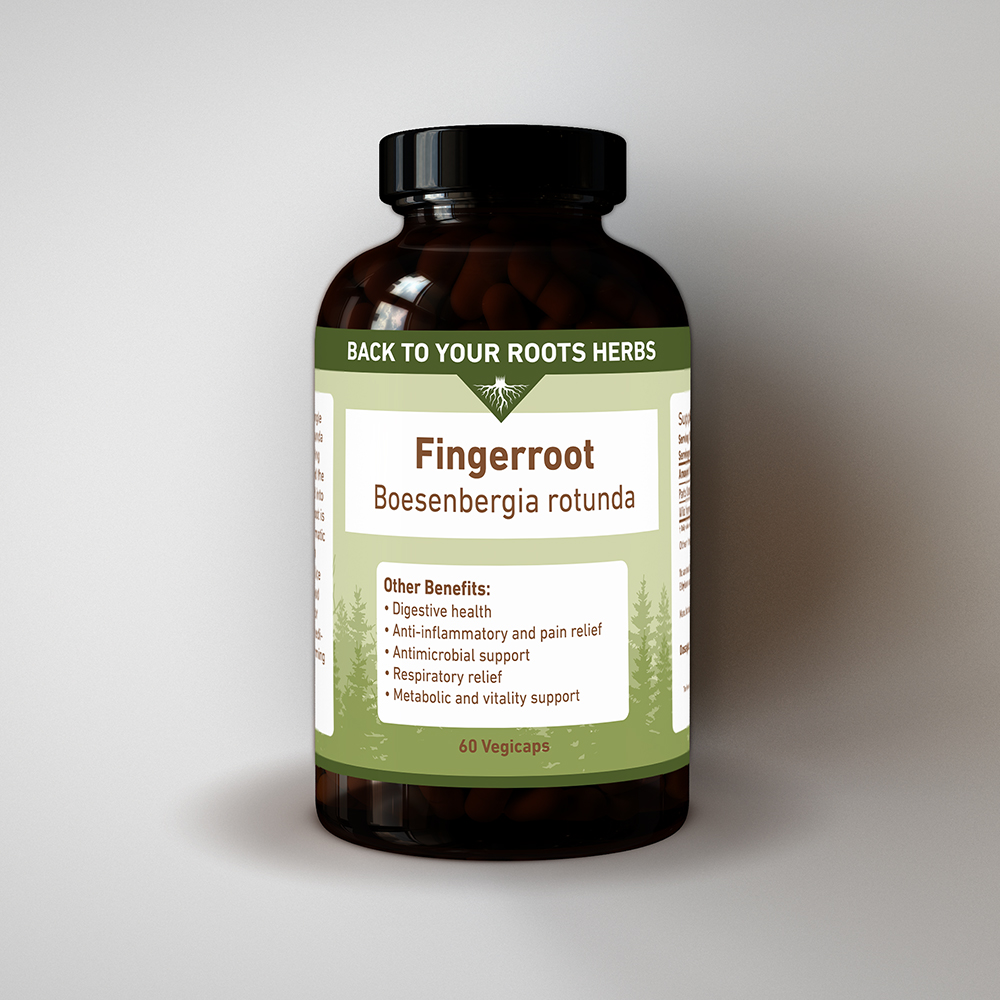
Grade A. These fingerroot capsules hold a single ingredient: whole Boesenbergia rotunda rhizome from Thailand, a shade-loving crop lifted after the rainy season and the same krachai root Thai cooks pound into curry paste. No fingerroot extract, no carriers, no fillers. The pinostrobin, pinocembrin and panduratin A stay in the ratio the plant made, and every fingerroot lot is heavy metal tested before we encapsulate it in Virginia Beach, Virginia.
– Back To Your Roots Herbs Research Group
Jump to a Fingerroot section:
- Fingerroot root powder sensory notes
- How a fingerroot capsule works
- Fingerroot capsules dosage and safety
- Fingerroot capsules clinical specs
- Fingerroot FAQ
Sensory Analysis: Thai Fingerroot Powder, Aroma and Taste
We opened a capsule and checked the powder by sight, smell, and taste. Real krachai root has a profile that cheap ginger blends cannot fake.
- Look: A finely ground fingerroot powder, pale gold to light tan, flecked with darker bits of rhizome skin. Not the hard orange of turmeric root. Not the deep purple of black ginger.
- Smell: Earthy and peppery, with a cool camphor note and a faint citrus lift from the root’s essential oil. The aroma reaches you the moment the cap comes off.
- Taste: Milder than ginger root. An earthy flavor first, then gentle pepper warmth, then a slightly bitter, subtly sweet finish. Very little burn.
- Texture: Dry, light, and faintly fibrous between the fingers, like the finger root it came from.
What Is Fingerroot (Boesenbergia rotunda)?
Fingerroot is Boesenbergia rotunda (L.) Mansf., a medicinal plant and culinary herb in the ginger family, Zingiberaceae. The USDA GRIN taxonomy record for fingerroot (Boesenbergia rotunda) gives its native range as southern China (Yunnan), Indochina, Thailand, and the Malay Peninsula, lists its English name as Chinese keys, and records its use as a food flavoring. Its taxonomical classification has shifted over the years, so older nomenclature calls the same plant Boesenbergia pandurata or Kaempferia pandurata.
The name fingerroot is literal. Each plant grows a bundle of slender, finger-shaped tubers hanging from a central knob, like a small hand or a ring of keys. English labels write it as one word or two, finger root. Thai cooks say krachai (also krachay or kra chai), Malay and Indonesian kitchens say temu kunci, and Chinese texts use ao chun jiang. Trade names such as lesser galangal and Chinese ginger only add confusion, so our label always carries the binomial.
In Thai cooking, fingerroot is a culinary spice, seasoning, and aromatic herb first. Cooks pound the root with other aromatics into curry pastes, slice it into Thai curries, soups, and seafood dishes, and juice it into a cold drink or herbal beverages. Thai traditional medicine regards the same root as a warming kitchen tonic for digestive comfort.
How Does a Fingerroot Capsule Work?
Each capsule delivers the whole root, so the flavonoids and essential oil arrive in their natural ratio, not a lab-picked fraction.
- The Herb: Boesenbergia rotunda rhizome grown in Thailand, where natural fingerroot is a kitchen crop and a traditional digestive support herb.
- The Mechanism: Acts as a warming, aromatic digestive herb to support digestive comfort after meals. In rat research, its best-studied flavonoid, panduratin A, stayed mostly in the digestive tract rather than the bloodstream (see the pharmacokinetic study below).
- The Evidence: Research by Techapichetvanich et al. (2024) confirmed no deaths, no clinical signs of toxicity, and no clinically significant findings in rats given a fingerroot rhizome extract formulation at up to 100 mg/kg per day for 90 days (fingerroot extract 90-day safety study, PMID 38328737).
Fingerroot Flavonoids: Pinostrobin, Pinocembrin, and Panduratin A
Fingerroot is a favorite subject for natural products chemists, and pinostrobin leads its phytochemical profile. A 2025 Rangsit University survey of 33 Thai fingerroot samples (PDF) measured about 0.2% to 1.7% pinostrobin by dry weight, 64% to 69% of the four flavonoids in its HPLC assay. Panduratin A, the compound most fingerroot extract studies chase, made up only about 10% to 16%. Cardamonin and boesenbergin A add smaller amounts.
Why the Rhizome Matters
A 2025 study of 32 fingerroot samples cultivated across Thailand found more pinocembrin, pinostrobin, and panduratin A in the rhizomes than in the thin roots (fingerroot flavonoids by Thai province). Surat Thani, Nong Bua Lamphu, Kalasin, and Sisaket formed the high-flavonoid cluster. Every capsule we fill uses the rhizome, not the hair-like root fibers.
How Harvest Season Shifts the Flavonoid Profile
Growers plant at the start of the rainy season, April to May, and the crop grows through October. JIRCAS research on Thai market fingerroot found early dry-season rhizomes (November to December) richer in pinocembrin and pinostrobin, while hot-season stock (February to March) shifted toward cardamonin. Same plant. Different chemistry.
Research Snapshot: What the Studies Measured
Most published work tests concentrated fingerroot extract, not whole root powder. Here is what the strongest studies measured.
Fingerroot Extract Studies in Rats and Humans
Boesenbergia rotunda 90-Day Safety Study (2024)
In this safety evaluation, Wistar rats received a fingerroot rhizome extract formulation (29% panduratin A, 32% pinostrobin) at 25, 50, or 100 mg/kg per day for 90 days. No deaths, no clinical signs of toxicity, and no clinically significant blood, necropsy, or histopathological findings. The authors declared no conflicts of interest.
Randomized Clinical Trial in Chiang Mai (2021)
In a randomized, double-blind, placebo-controlled clinical trial at Chiang Mai University, 160 adult patients were randomized to 350 mg of fingerroot extract powder or placebo three times daily for 4 weeks. The extract was well tolerated, with few adverse events (Chitapanarux et al., 2021, PMID 32998148).
Extract Dose vs Whole Rhizome Dose
Those doses were from concentrated extract. A 2-capsule serving here supplies 1,200 mg of whole fingerroot rhizome, which carries far less panduratin A gram for gram. We cite these papers for safety context only. They do not show that this product treats, cures, or prevents any condition.
Panduratin A Pharmacokinetic Study in Rats (2024)
Taken by mouth, about 9% of pure panduratin A and 6% of the panduratin A in fingerroot extract reached plasma. Most of the measured compound sat in the gastrointestinal organs, with the highest tissue-to-plasma ratio in the stomach (fingerroot extract absorption study, PMID 39011542). That gut-heavy pattern fits the long kitchen role of this root as a digestive herb.
Quality Benchmarks: Arsenic, Moisture and Ash
Fingerroot pulls more arsenic from soil than most Thai rhizomes. Across 96 samples of six ginger-family plants, krachai averaged 103.5 ng/g total arsenic against 61.7 ng/g for turmeric, though every sample stayed below Thai FDA limits (arsenic levels in Thai fingerroot and other rhizomes). That is why every fingerroot lot we bottle is heavy metal tested. Thai pharmacognosists have also proposed quality limits for dried fingerroot: moisture no more than 9%, total ash no more than 7%, and volatile oil at least 2%.
Critical Usage: Fingerroot Capsule Dosage and Safety
Whole root powder works best with food and steady daily use.
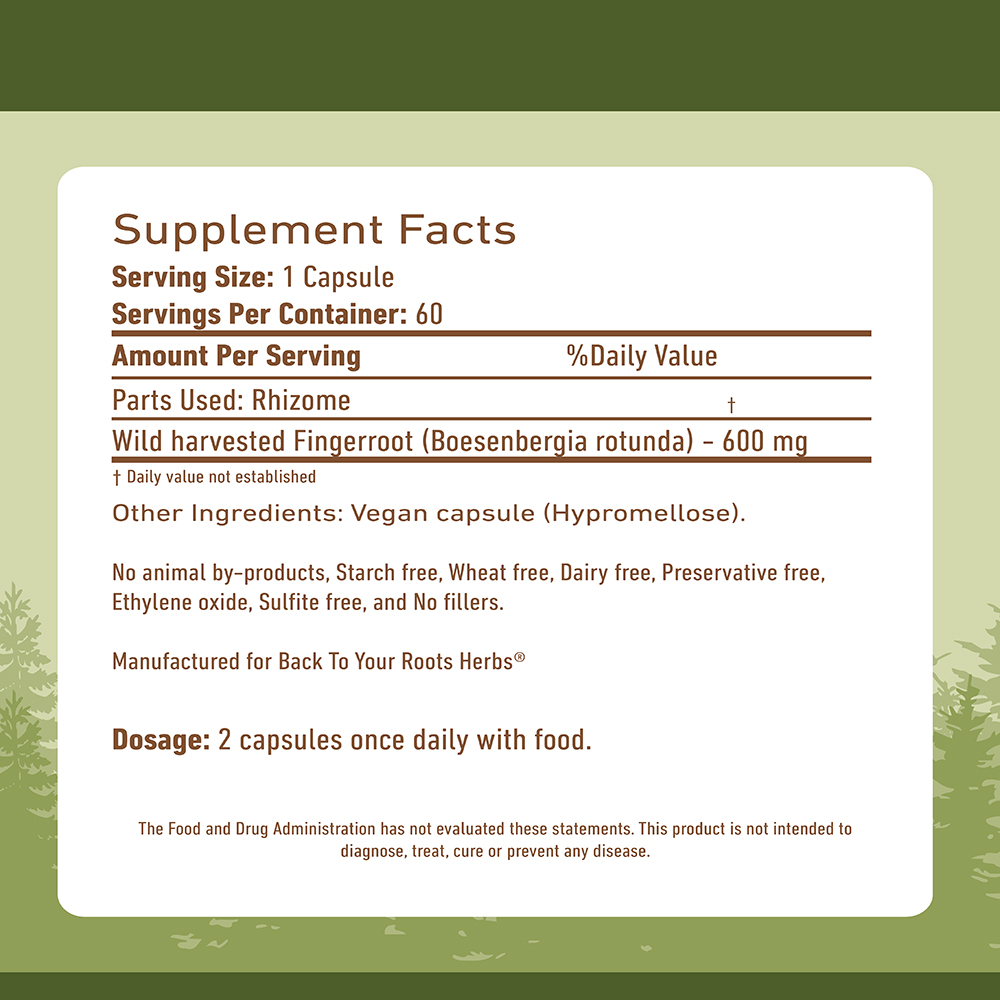
- Serving: Take 2 fingerroot capsules (1,200 mg) once daily with a meal and a full glass of water. Do not exceed the serving on the label.
- Kitchen option: Twist open one of the veggie caps and stir the root powder into a curry, a soup or a warm herbal infusion.
- Storage: Close the cap tightly after you take each capsule and keep the amber bottle in a cool, dry cupboard.
Who should skip this fingerroot supplement:
- Pregnant or breastfeeding? Skip fingerroot. Safety data for pregnancy and lactation are lacking.
- Taking prescription medication? Talk with your physician or pharmacist before adding fingerroot or any herbal product.
- Sensitive to ginger root, turmeric, or galangal? Skip fingerroot, which belongs to the same plant family.
- Under 18? This fingerroot root powder is for adult use only.
Clinical Specs: Fingerroot Capsule Facts (60 Count)
One herb, one root, 600 mg per capsule. Each amber bottle holds 60 vegan capsules, about 36 grams of fingerroot powder in total.
| Spec | Detail |
|---|---|
| Serving Size | 2 Capsules (1,200 mg) |
| Frequency | Once daily with a meal |
| Active Marker | Pinostrobin, Pinocembrin, Panduratin A (naturally occurring, not standardized) |
| Processing | Whole rhizome, dried and finely milled. No solvent extraction. |
| Safety | Heavy Metal Tested (Pass) |
| Ingredients | Fingerroot (Boesenbergia rotunda) Rhizome Powder |
| Other Ingredients | Vegetable Cellulose (Capsule) |
| Purity | Organic, Non-GMO, Vegan |
| Free From | Wheat, Gluten, Soy, Dairy, Binders, Fillers |
| Origin | Thailand (Thai-grown Boesenbergia rotunda rhizome) |
| Manufactured | Virginia Beach, VA, USA |
Comparison Table: BTYRH Whole Rhizome vs Generic Fingerroot Extract
Fingerroot Extract vs Whole Rhizome Powder
Fingerroot extract is a solvent concentrate, usually made with ethanol, that pulls selected flavonoids out of the rhizome and leaves the fiber and much of the aroma behind. One 2025 tablet formula packed 120 mg of extract, carrying 23 mg pinostrobin and 11.27 mg panduratin A, into each 600 mg tablet. Whole root powder takes the opposite approach: lower concentration, nothing removed, an earthy flavor you can still smell. Pressed fingerroot pills and other herbal pills need binders. Each vegetable capsule here holds loose powder. Compared with fresh krachai root, a capsule trades some volatile aroma for shelf life and a measured serving.
| Feature | BTYRH Fingerroot Capsules | Generic Fingerroot Extract Capsules |
|---|---|---|
| Origin | Thailand, single-herb Boesenbergia rotunda rhizome | Unspecified |
| Preparation | Whole rhizome, dried and finely milled (full spectrum) | Solvent extract, often blended with carriers or flow agents |
| Taste | Earthy, peppery, subtly sweet, slightly bitter | Muted or masked |
| Safety | Every lot heavy metal tested | Unknown/Untested |
FAQ: Questions Shoppers Ask About Krachai, Ginger and Galangal
What Is Finger Root, and Why Is It Called That?
Finger root is the common name for Boesenbergia rotunda, a Thai culinary and medicinal herb in the ginger family. The root, botanically a rhizome, grows as a bundle of slender, finger-shaped tubers joined at a central knob. English speakers also call it Chinese keys.
Is Fingerroot the Same as Ginger, Galangal or Black Ginger?
No. All four belong to Zingiberaceae, but the chemistry differs. Ginger is Zingiber officinale. Galangal is Alpinia galanga, sold as our galangal root capsules (Alpinia galanga). Black ginger, or krachai dam, is Kaempferia parviflora, sold as our black ginger capsules (Kaempferia parviflora). Fingerroot, plain krachai, is Boesenbergia rotunda.
What Does Krachai Taste Like?
Fingerroot tastes earthy and peppery, with a subtly sweet, slightly bitter finish and far less heat than ginger root. In Thai cuisine, it seasons fish curries without taking over the dish.
How Is Krachai Cultivated in Thailand?
Thai farmers plant fingerroot rhizome pieces in April or May. The plant prefers partial shade, like its wild relatives on the tropical rainforest floor, and harvest begins in the early dry season from November.
Can I Take Krachai With Prescription Medication or During Pregnancy?
Skip fingerroot during pregnancy and breastfeeding, because safety data are lacking. If you take prescription medication, check with your physician or pharmacist before adding fingerroot. The NIH guide to using dietary supplements wisely explains what information to share with your care team.
Fingerroot research cited on this page (each PMID checks out on NCBI PubMed):
- Techapichetvanich et al., Oral sub-chronic toxicity of fingerroot (Boesenbergia rotunda) rhizome extract formulation in Wistar rats, Toxicology Reports, 2024 (PMID 38328737)
- Monton et al., Cluster analysis of fingerroot cultivated in different regions across Thailand, Food Research International, 2025 (PMID 39967104)
- Kongratanapasert et al., fingerroot extract pharmacokinetics, Drug Design, Development and Therapy, 2024 (PMID 39011542)
- Chitapanarux et al., fingerroot extract clinical trial, Digestion, 2021 (PMID 32998148)
- Ubonnuch et al., arsenic in Thai rhizomes, Evidence-Based Complementary and Alternative Medicine, 2013 (PMID 23690845)
Browse more fingerroot research on Google Scholar or read the 2025 review of fingerroot traditional uses and pharmacological activities.
DISCLAIMER: These statements have not been evaluated by the Food and Drug Administration. This product is not intended to diagnose, treat, cure, or prevent any disease. Consult a physician before using this fingerroot product if you are pregnant, nursing, taking medication or managing a health condition.
Fingerroot capsule page written by the Back To Your Roots Herbs Research Group | Fact-checked October 2026.
Reviews
There are no reviews yet.