THE VERDICT (INTERNAL QUALITY SCORE):
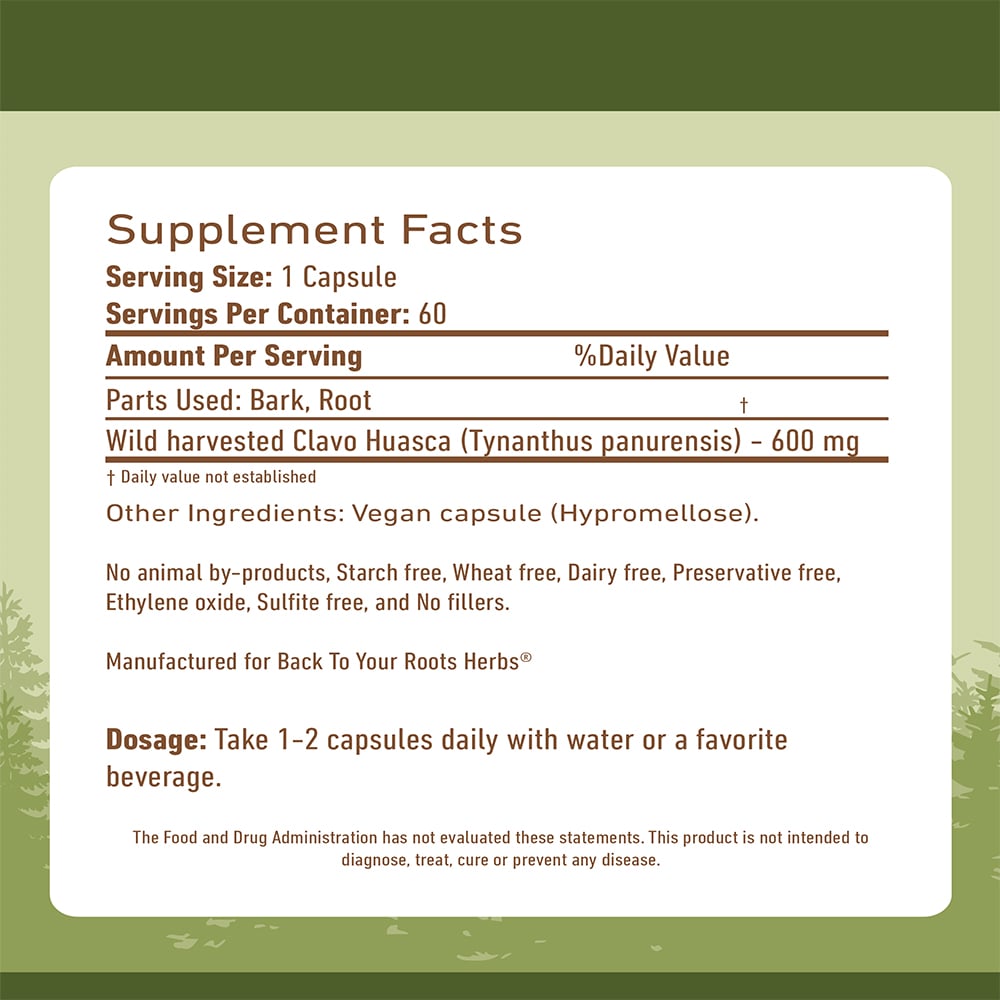
Grade A. Potency Score: 9.6/10. This herbal supplement contains 100% wild-harvested Tynanthus panurensis vine wood from the Loreto Region of Peru (3.7437 S, 73.2516 W). Its clove aroma comes from eugenol glycosides; published analysis measured the main one at 19.5 mg per gram of dried bark (Plaza et al., J Agric Food Chem 2005, PMID 15826030). A rare Amazonian herb that most competitors cannot source with terroir-level traceability. – Back To Your Roots Herbs Research Group
SENSORY ANALYSIS:
We opened a capsule to verify the botanical species. Authentic Clavo Huasca has a signature scent that defines its quality.
- Look: Reddish-brown fibrous powder. Ground vine wood with visible plant fiber. No filler visible.
- Smell: A strong, spicy burst of Clove and Cinnamon. This is not added flavor. It is the natural Eugenol content of the vine wood, the same compound found in clove oil.
- Taste: Warming, spicy, and slightly numbing on the tongue. The capsule format delivers the benefits of this herb without the intense spice of the raw powder.
HOW DOES CLAVO HUASCA WORK?
The Herb and Its Origin
- The Herb: Clavo Huasca (Tynanthus panurensis), also called “Clove Vine,” is a large woody liana from the Bignoniaceae family. It grows up to 80 meters in the rainforest canopy of Peru and Brazil.
- The Mechanism: The bark is rich in eugenol glycosides, the clove-scented compounds behind its warming, bitter taste. In Amazonian practice that bitter, warming quality is why the tea is traditionally taken after a heavy meal to support digestive comfort.
- The Evidence: Research by Morales et al. (2011) reported antioxidant activity for T. panurensis bark extract in a preclinical study (PMID: 21488753). Human studies have not been published. A secondary study by Plaza et al. (2005) identified phenylpropanoid glycosides, including verbascoside and a novel eugenol glycoside, at 19.5 mg/g dried bark.
Traditional Use by Indigenous Tribes
The Shipibo-Conibo, Kayapo, and Assurini tribes of the Peruvian Amazon have used this plant for generations as a warming bitter, traditionally to support digestive comfort, and as a general tonic. It is also one of the ingredients in Siete Raices (Seven Roots), a well-known Peruvian folk tonic.
Rare Phytochemistry (Information Gain)
Clavo Huasca contains a distinct phytochemical profile: phenylpropanoid glycosides (including verbascoside), alkaloids, coumarins, saponins, polyphenols and flavonoids. The research so far is preclinical (laboratory and animal work), so it describes the plant’s chemistry, not proven effects in people. Note that an unrelated Mandevilla vine is also sold as clavo huasca: check for the Latin name Tynanthus panurensis and a strong clove smell.
Does Clavo Huasca Help with Digestion?
That is its main traditional use. In Amazonian practice the warming, bitter bark is traditionally used to support digestive comfort and a settled stomach after a heavy meal, much as clove and other aromatic bitters are used elsewhere.
Can Clavo Huasca Be Combined with Other Herbs?
In traditional Amazonian herbalism it is often combined with other barks such as Catuaba and Muira Puama. As a supplement, it can be part of a broader herbal wellness regimen.
Available Forms of Clavo Huasca
This herb is available as capsules, powder, tincture, extract, and tea. The capsule form offers the most convenient daily dosage with consistent potency. Our caps contain only the wild-harvested vine wood with no binders or artificial additives.
CRITICAL USAGE:
Dosage and Timing
This is a warming herb. Follow the label.
Label serving: Take 1 to 2 capsules daily with water or a favorite beverage. Do not exceed the label serving. Timing: With a meal, earlier in the day, since it is a warming tonic.
Caution: Not for use during pregnancy or lactation. Eugenol-rich herbs may not suit people who take blood thinners or blood pressure or blood sugar medication, so talk to your healthcare provider first. If you have a medical condition, consult your health care professional before use. Keep out of reach of children.
CLINICAL SPECS:
| Spec | Detail |
|---|---|
| Serving Size | 1 to 2 Capsules (600 mg each) |
| Frequency | Daily (per label) |
| Active Marker | Eugenol glycosides (literature: 19.5 mg/g dried bark, PMID 15826030) |
| Processing | Wild-Harvested, Air-Dried, Ground Vine Wood |
| Safety | Heavy Metal Tested (Pass) |
| Ingredients | Tynanthus panurensis (Vine Wood) |
| Other Ingredients | Vegetable Cellulose (Capsule) |
| Purity | Non-GMO, Vegan, Vegetarian |
| Free From | Wheat, Gluten, Soy, Dairy, Binders, Fillers |
| Origin | Loreto Region, Peru (Peruvian Amazon Rainforest) |
| Manufactured | Virginia Beach, VA, USA |
COMPARISON TABLE:
Clavo Huasca vs. Generic Herbal Capsule
| Feature | BTYRH Clavo Huasca | Generic Supplement Brand |
|---|---|---|
| Origin | Loreto Region, Peru (GPS-traced) | Unspecified “South America” |
| Preparation | Wild-Harvested, Whole Vine Wood | Cultivated or Unknown Source |
| Taste | Strong Clove-Spice, Warming | Mild or No Aroma |
| Safety | Heavy Metal Tested, Non-GMO, Vegan | Unknown/Untested |
DISCLAIMER:
These statements have not been evaluated by the Food and Drug Administration. This product is not intended to diagnose, treat, cure, or prevent any disease. Consult a physician before starting any new supplementation regimen. Do not use if pregnant or nursing.

Reviews
There are no reviews yet.