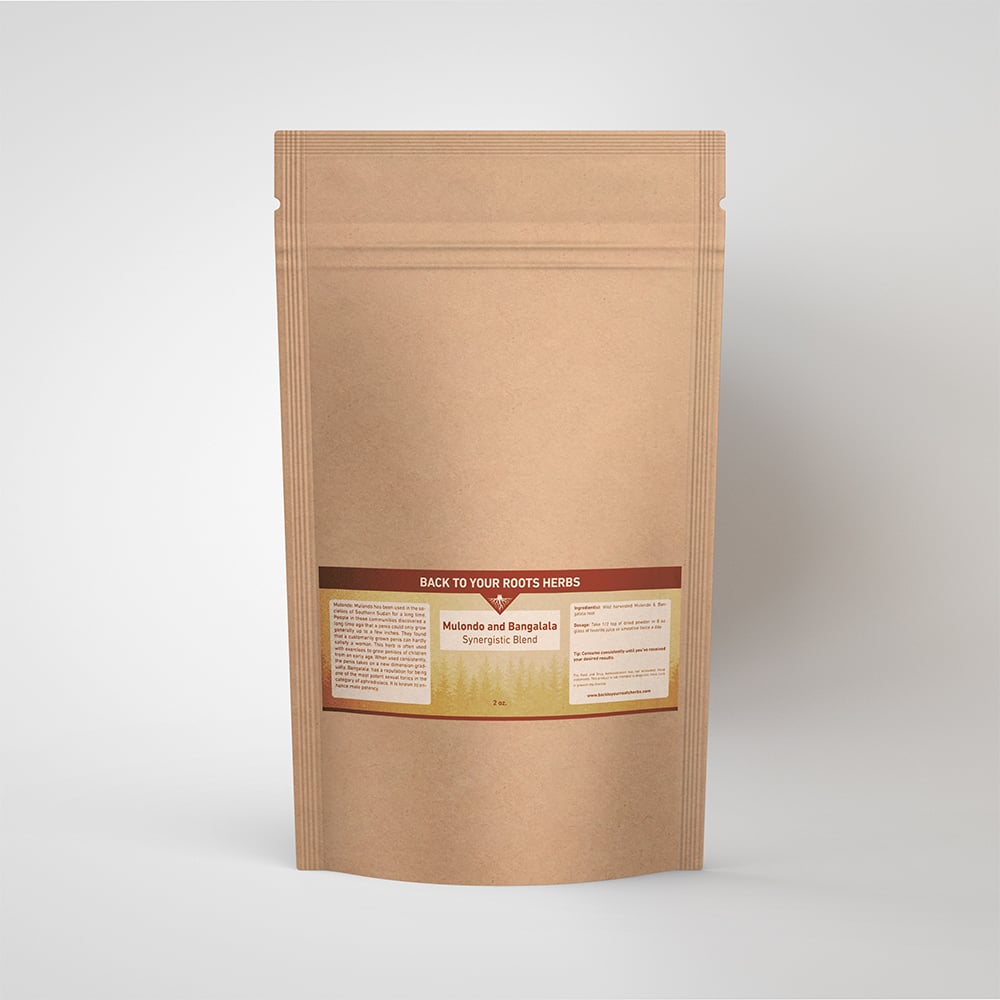
The Bangalala and Mulondo Powder Verdict
Grade A Southern-African Tonic. Our sourcing team verifies this Mulondo and Bangalala powder is a 50/50 whole-root blend of Mondia whitei (Mulondo) and Eriosema kraussianum (Bangalala), wild-harvested in KwaZulu-Natal, South Africa (approximately 29.6 S, 30.4 E). Unlike capsules or a tincture extract, the raw bangalala and mulondo powder allows the traditional milk decoction, which supports extraction of Kraussianins while buffering the stomach lining. Graded by our sourcing team for authentic KwaZulu-Natal terroir.
– Back To Your Roots Herbs Research Group
Sensory Analysis of Mulondo and Bangalala Powder
We cupped the raw bangalala and mulondo powder in our Virginia Beach lab to verify the traditional “Spiced Milk Tea” profile. These are our first-hand notes on the blend of bangalala powder and mulondo powder, not a copy of a supplier spec sheet.
The Aroma
Sweet vanilla and warm ginger notes from the Mulondo (Mondia whitei) lead, with a grounded, rooty base from the Bangalala. No rancidity, no mustiness, no off-scent. The aroma is closer to a vanilla chai than to a bitter herbal tea or tincture.
The Taste
Brewed in warm milk, the bangalala and mulondo powder drinks like a spiced chai or vanilla latte. It is significantly more palatable than bangalala powder taken alone. The finish is lightly earthy, clean, and does not linger.
The Texture
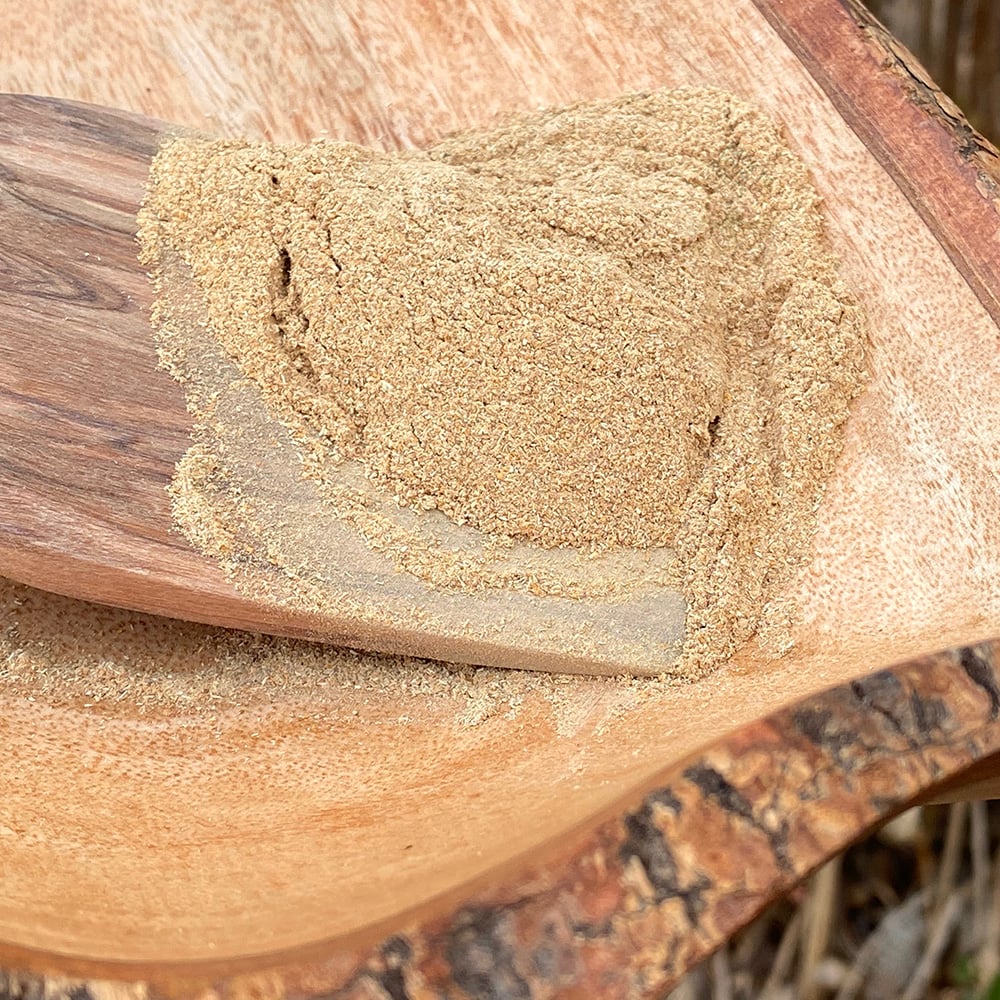
Fibrous, lightly gritty, which confirms whole-root milling. The bangalala extract compounds are not separated out or standardized. There are no binders, no flow agents, no silica, and no anti-caking agents in this powder.
How Mulondo and Bangalala Powder Works
Traditionally, this two-root tonic is used to support libido, daily energy, and physical stamina. Mulondo brings the bright, stimulating layer. Bangalala brings the grounding, blood-flow layer. The two roots are used together because each plays a different traditional role.
The Mulondo and Bangalala powder is a two-herb tonic. Each root plays a different traditional role, which is why the blend is stronger than either the mulondo powder or the bangalala powder taken alone.
Mulondo (Mondia whitei)
Mulondo is the sweet, vanilla-scented root used as a daily tonic across Uganda, Kenya, and Tanzania. In our blend, it provides the “spark” layer of the mulondo powder.
Nitric Oxide Support
Mondia whitei contains compounds traditionally associated with nitric oxide pathway support and dopamine signaling. This is the stimulating layer of the mulondo powder, and why chewable Mulondo root is used as a midday tea across East Africa.
Androgenic Markers in Research
Watcho and colleagues (2004) reported that a chronic aqueous extract of Mondia whitei root was associated with increased testicular weight, testicular and serum testosterone, protein content, and sperm density in male rat models (PMID: 15273878, Journal of Ethnopharmacology). This is animal data, not a human clinical claim, and is shared here as research context.
Bangalala (Eriosema kraussianum)
Bangalala is the South African legume-family root traditionally used by Zulu households as a men’s tonic. It brings the “flow” layer of the bangalala powder in this blend.
Kraussianins
Bangalala powder provides a class of pyrano-isoflavones called Kraussianins. Zulu traditional practitioners have used the bangalala root as a decoction to support healthy blood flow and smooth-muscle relaxation. These are structure and function concepts, not disease claims.
Research Grounding
Drewes and colleagues (2002) isolated pyrano-isoflavones from Eriosema kraussianum rootstock and recorded relaxant activity in an isolated smooth-muscle (in vitro) bioassay (PMID: 11909631, Phytochemistry). This is a laboratory finding on isolated tissue, not a human clinical outcome. For home use, our product is a raw bangalala extract prepared by the customer as a milk decoction, not an isolated pharmaceutical compound.
What Does the Research Say About Mulondo and Bangalala?
The research on both roots is early-stage. Most of it is laboratory or animal work, not human clinical trials. We share it here as research context, not as a promise of results.
Mondia whitei (Mulondo) studies
- In a male-rat study, an aqueous Mondia whitei root extract taken over eight days was associated with increased testicular weight, higher serum and testicular testosterone, and greater sperm density (PMID: 15273878, animal study).
- In a laboratory study, an aqueous Mondia whitei extract enhanced total and progressive human sperm motility in a time-dependent way (PMID: 18570264, in-vitro study).
Eriosema kraussianum (Bangalala) studies
- Pyrano-isoflavones called kraussianones, isolated from the rootstock, recorded relaxant activity in an isolated smooth-muscle bioassay (PMID: 11909631, in-vitro study).
- Two kraussianone extractives produced vasorelaxant and blood-sugar-lowering effects in experimental rat models (PMID: 16434072, animal study).
- Follow-up phytochemistry mapped the structure and activity of the minor pyrano-isoflavones in the root (PMID: 15280002, laboratory study).
These findings describe isolated compounds and animal models. Our powder is a whole-root food preparation, not a standardized drug. Individual results vary, and none of these studies establish a human treatment effect. For a deeper look at the plant chemistry, see our guide to bangalala plant extracts.
Critical Usage for Bangalala and Mulondo Powder
Milk Decoction Method
Do not take this bangalala and mulondo powder with plain water. Bangalala can be irritating to the stomach lining when consumed raw. Mix 1 teaspoon (about 3 to 5 g) of the powder into a cup of warm dairy or plant milk, then simmer gently for 5 minutes, or stir it into hot milk with honey and a pinch of ginger. The milk fats aid the absorption of lipophilic compounds, and the milk proteins buffer the stomach.
Dosage
Start with 1/2 teaspoon daily for the first three days. Work up to 1 teaspoon once per day. Do not exceed 2 teaspoons in any 24-hour period. Cycle 5 days on, 2 days off.
Contraindications and Side Effects
Not for pregnant or breastfeeding women. Not for anyone taking nitrate medications, PDE-5 inhibitors, or blood-pressure medication. Not for those with a known legume-family allergy (Bangalala is in the Fabaceae family). Speak with a qualified practitioner before combining this bangalala and mulondo powder with yohimbe, butea superba, epimedium sagittatum, hydrilla, nettle, or pygeum africanum. Not evaluated for use alongside sickle cell medications. Keep out of reach of children.
Most people tolerate the milk decoction well. Taken raw with water instead of milk, the bangalala root can cause mild stomach upset, so always prepare it as a milk decoction. Start at the low end of the dose, and stop use if you notice any adverse reaction such as digestive discomfort, headache, or restlessness; then speak with a qualified practitioner.
Clinical Specs of Mulondo and Bangalala Powder
| Spec | Detail |
|---|---|
| Serving Size | 1 Teaspoon (approximately 3 to 5 g) |
| Frequency | 1 time per day, with warm milk |
| Active Marker | Kraussianins (pyrano-isoflavones) from Bangalala |
| Processing | Whole Root Powder (No Extract, No Standardization) |
| Safety | Heavy Metal Tested (Pass) |
| Ingredients | Mondia whitei (Mulondo) root powder, Eriosema kraussianum (Bangalala) root powder, 50/50 blend |
| Other Ingredients | None (no capsules, no fillers, no binders) |
| Purity | Non-GMO, Vegan, Vegetarian, Kosher, and halal-friendly by ingredient |
| Free From | Wheat, Gluten, Soy, Dairy, Nut, Seed-Oil Carriers, Binders, Fillers |
| Origin | KwaZulu-Natal, South Africa (wild-harvested) |
| Manufactured | Virginia Beach, VA, USA |
Ergogenic Profile: Traditionally consumed across South Africa for stamina and endurance during physical work. This bangalala and mulondo powder is not a caffeinated pre-workout, not a nootropic, and not a meal replacement. It is a traditional herbal tonic used alongside normal nutrition, exercise, and stress management.
Mulondo and Bangalala Powder vs Capsules
| Feature | BTYRH Mulondo and Bangalala Powder | Generic Mulondo and Bangalala Capsules |
|---|---|---|
| Origin | KwaZulu-Natal, South Africa (specified terroir) | Unspecified |
| Preparation | Whole root, milled, milk decoction ready | Pre-encapsulated, often blended with flow agents |
| Form Factor | Loose powder (also available as oil, tincture, or tea infusion at BTYRH) | Fixed capsules only |
| Taste | Vanilla, ginger, earthy finish (Spiced Milk) | Neutral (hidden in capsule shell) |
| Stomach Comfort | High (milk decoction buffers bangalala) | Medium (depends on meal) |
| Safety Testing | Heavy-metal tested, identity verified | Often unknown or untested |
Traditional Use in South Africa and East Africa: Across South Africa, Zulu households have used the bangalala root as a men’s tonic for generations. Mondia whitei, known as Mulondo in Uganda and Mukombero in Kenya, has been chewed as a root and brewed as a tea across East Africa for stamina and general well-being. Our bangalala and mulondo powder blend honors both traditions in one cup.
Mulondo and Bangalala Powder vs Other Men’s Tonics
African and Asian herbal traditions use several different roots as men’s tonics. They are not interchangeable. Here is how the Mulondo and Bangalala pairing differs from the other roots people often ask about.
| Tonic | Botanical | Tradition | Typical preparation | Active compound class |
|---|---|---|---|---|
| Mulondo + Bangalala | Mondia whitei + Eriosema kraussianum | East and Southern Africa | Warm milk decoction | Coumarins plus pyrano-isoflavones (Kraussianins) |
| Mpesu | Securidaca longipedunculata | Southern Africa (Venda) | Water infusion or tea | Saponins (a different root and tradition) |
| Tongkat Ali / Fadogia | Eurycoma longifolia / Fadogia agrestis | Southeast Asia / West Africa | Capsule or extract | Quassinoids/glycosides |
| Butea superba | Butea superba | Thailand | Capsule or extract | Flavonoids |
A common question is how Mulondo compares with Mpesu, since both are African roots. They come from different plant families and different regions. For a full side-by-side, see our guide on mulondo vs mpesu. This page stays focused on the Mulondo and Bangalala powder blend.
Where to Buy Authentic Bangalala and Mulondo Powder (Sourcing and Quality)
Authentic bangalala and mulondo powder is a specialty Southern-African botanical. It is wild-harvested in KwaZulu-Natal, milled whole, and heavy-metal tested for identity and purity. It is sold direct from Back To Your Roots Herbs and is not usually stocked in local retail health stores. When buying bangalala powder anywhere, check for a specified origin, whole-root processing, and third-party heavy-metal testing, since unspecified “male enhancement” powders often skip identity verification.
Bangalala and Mulondo Powder FAQ
What are the health benefits of mulondo powder?
Traditionally, mulondo powder is used to support libido, daily energy, stamina, and appetite. Research on Mondia whitei has reported effects on androgenic markers in rat models (PMID: 15273878). Our product is a dietary supplement and is not intended to diagnose, treat, cure, or prevent any disease.
How does the mulondo and bangalala powder work?
The mulondo and bangalala powder works as a two-phase traditional tonic. Mondia whitei is traditionally used to support dopamine and nitric oxide pathways (the “spark”). Eriosema kraussianum is traditionally used to support smooth-muscle relaxation via Kraussianins (the “flow”). It is best brewed as a milk decoction.
Can vegetarians and vegans use bangalala powder?
Yes. The raw bangalala powder in this blend is 100% plant-based, vegan, and vegetarian. It is delivered as a loose powder with no capsules, no gelatin, and no dairy. It is kosher and halal-friendly by ingredient (we do not claim third-party kosher or halal certification).
How long does bangalala take to work?
Prepared as a milk decoction, the bangalala extract compounds are lipophilic, so many users report effects within 45 to 60 minutes. For daily stamina and libido support, a 2 to 4 week course is traditional. Individual results vary.
Is mulondo powder safe for daily use?
For healthy adults, traditional use is daily at 1 teaspoon in warm milk, cycled 5 days on and 2 days off. It is not for pregnant or breastfeeding women, not for anyone on nitrate or PDE-5 medication, and not for anyone with a legume allergy. Stop use if you notice any adverse reaction and consult a qualified practitioner.
Can women take bangalala and mulondo powder?
This blend is prepared and sold as a traditional men’s tonic, and our usage guidance is written for men. It is not for women who are pregnant or breastfeeding. Any woman considering a Mondia whitei or Eriosema kraussianum preparation should speak with a qualified healthcare practitioner first. We do not make female-specific benefit claims for this product.
Disclaimer: These statements have not been evaluated by the Food and Drug Administration. This product is not intended to diagnose, treat, cure, or prevent any disease. Consult a qualified healthcare practitioner before starting any new supplementation, especially if you are pregnant, breastfeeding, taking medication, or managing a health condition. Written by the Back To Your Roots Herbs Research Group. Fact-checked against primary literature. Last Reviewed: June 2026.
lanzastar911 (verified owner) –
I received this product in a timely manner. It was well packaged. It is too early to leave a progress report, but I believe this product to be of good quality. One thing I did notice is upon taking the capsules, I experienced rather strong heartburn. Is this something that can occur? It happened twice. Just curious. Thank you.
Admin –
Good to hear you are satisfied with your order. In regards to your experience with heartburn, Bangalala does improve blood circulation as well as unclogging arteries, etc., which may be the effect you are feeling. Remember, a burning sensation may indicate a possibility of inflammation. We encourage you to perform our Parasite and Worms formula (full body cleanse) to address the cause of your heartburn.
Jeff –
Really does what it is advertised.
George Henderson –
Wonderful combination!