THE VERDICT
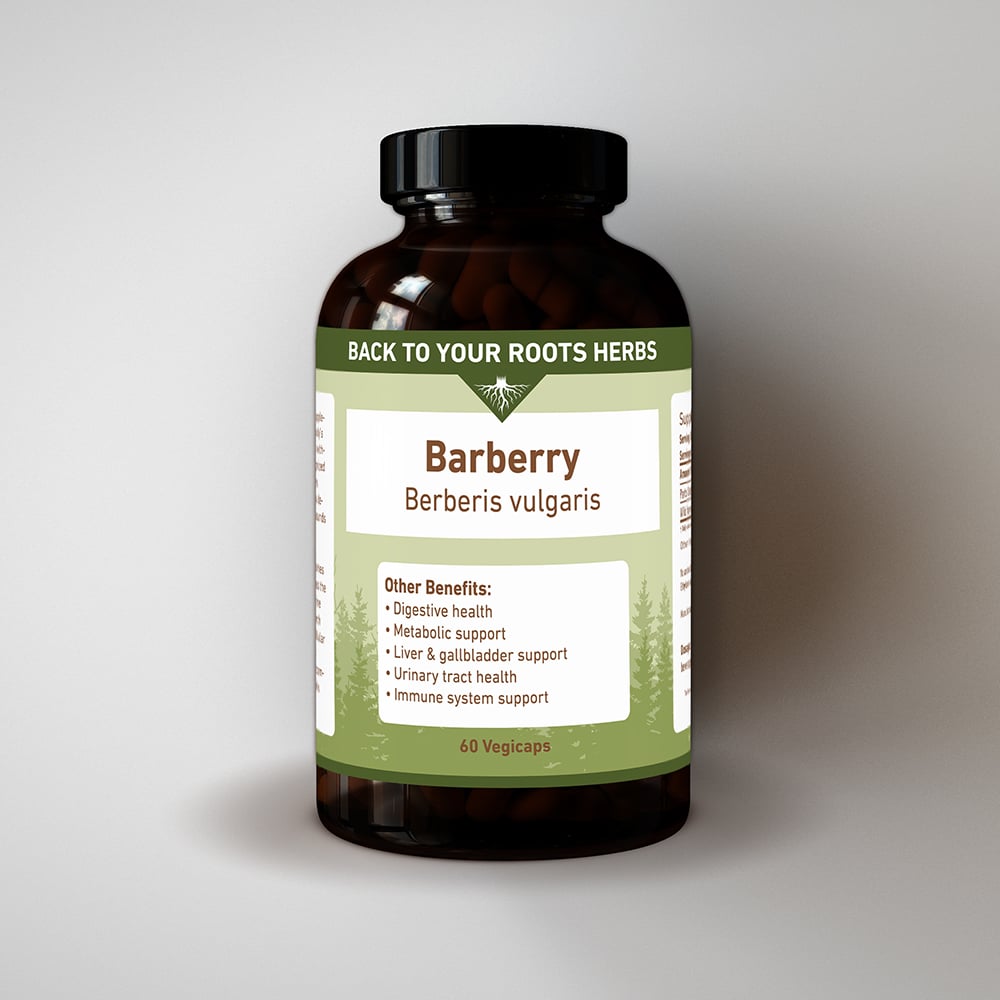
“The ‘Metabolic’ Master Switch. Our analysis confirms these capsules contain 100% Wildcrafted Berberis vulgaris root bark. Distinct from isolated salts, this whole root powder delivers the complete alkaloid profile including Berberine for glucose control and Berbamine for renal support. Our internal sensory and provenance review grades this lot full-spectrum for metabolic-support alkaloid content.”– Back To Your Roots Herbs Research Group
SENSORY ANALYSIS: The Physical Profile
We opened a capsule to verify the root authenticity.
Authentic Barberry Root has a striking visual signature.
- The Look: The powder is a vibrant Neon Yellow color. This pigmentation is the physical manifestation of the alkaloids (Berberine). If your powder is brown or beige, it is low quality.
- The Taste: If opened, it is Intensely Bitter. In herbal medicine, this “Bitter Principle” is what stimulates bile flow and liver detoxification. The capsule format allows you to bypass this challenging flavor while retaining the benefits.
How does Barberry regulate Metabolism?
Research suggests it activates the AMPK pathway.
- The Herb: Barberry (Berberis vulgaris).
- The Mechanism: The alkaloids activate AMPK (Adenosine Monophosphate-Activated Protein Kinase). Scientists call this the “Metabolic Master Switch.”
- The Outcome: When AMPK is activated, the body supports healthy Glucose Disposal (moving sugar from the blood into muscle cells), supports normal fat metabolism, and supports healthy lipid metabolism already within a normal range. (Source: Lee et al., Diabetes, 2006, PMID 16873688.)
What about metabolism and weight? Many people research barberry for metabolism and weight. Berberine is traditionally associated with supporting a healthy metabolism when blood sugar is already within a normal range. It is not a weight-loss drug, and results depend on diet and activity. In a 2008 human trial, berberine’s effect on fasting glucose was studied in adults with elevated blood sugar (Yin et al., Metabolism, 2008, PMID 18442638).
What is the “Whole Root” Advantage?
Synergy beyond Berberine.
While many supplements provide only isolated Berberine HCl, Whole Barberry Root contains Berbamine.
- Berbamine: A secondary alkaloid shown to support immune health and protect kidney cells from oxidative stress.
- The Benefit: You get a multi-targeted approach to metabolic health that supports the liver and kidneys, not just blood sugar.
Root Powder vs. Root Bark: What Is in the Capsule?
The powder in this capsule is milled root bark.
People often ask how barberry root powder differs from barberry root bark. For Berberis vulgaris, the answer is simple.
- Same material: The yellow isoquinoline alkaloids (berberine, berbamine, oxyacanthine) concentrate in the inner bark of the root. Our “root powder” is that wildcrafted root bark, cleaned and milled to a fine powder for encapsulation.
- Not a lesser grade: Root powder here is not sapwood or filler. It is the alkaloid-rich bark itself, which is why the powder runs neon yellow.
- A note on the kitchen: The medicinal part is the bitter root bark, not a culinary spice. The edible part of the plant is the dried red berry (Persian zereshk), used in cooking. Do not cook with these capsules.
CRITICAL USAGE: Dosage & Timing
To mimic clinical results, consistency is required.
- Standard Dosage: Take 2 Capsules (approx. 900mg) with your largest meal of the day.
- Advanced Dosage: Take 2 Capsules with Lunch and 2 Capsules with Dinner (Total 4 daily).
- The “Carb Rule”: Always take this supplement with a meal containing carbohydrates to maximize the glucose-disposal effect.
- Gut Comfort: Berberine-rich herbs can cause GI upset. Taking with food minimizes this risk.
What Are the Side Effects of Barberry Root Capsules?
Most side effects are digestive and dose-related.
Barberry is well tolerated by most healthy adults when taken with food. Because it is rich in berberine, the most common complaints involve the gut.
- Digestive upset: Cramping, gas, loose stools, or mild nausea can occur, usually at higher servings. Taking capsules with a meal reduces this.
- Start low: Begin with one capsule a day for a few days, then build to the standard serving so your gut can adjust.
- Bitter aftertaste: If a capsule is opened, the intense bitterness can cause a brief aftertaste. The intact capsule avoids this.
- Harmless color note: Berberine is a natural yellow pigment and may tint urine. This is expected and not a cause for concern.
Stop use and talk with your healthcare provider if you have persistent stomach pain, or signs of low blood sugar such as shakiness, sweating, or dizziness.
Who Should NOT Take Barberry? (Pregnancy, Nursing, Infants & Pets)
It is a potent biological regulator.
- Pregnancy: Do NOT use. It stimulates the uterus and is contraindicated. Berberine can also cross the placenta.
- Nursing: Avoid while breastfeeding. Berberine can pass to the infant through breast milk.
- Infants and Newborns: Never give to infants. Berberine can displace bilirubin from albumin and raise the risk of jaundice-related complications in newborns (Chan, 1993, PMID 8513024).
- Hypoglycemia: It lowers blood sugar. If you are already on insulin or Metformin, monitor your levels closely to avoid drops.
- Liver Enzymes: It inhibits CYP450 enzymes, meaning it can make other drugs stay in your system longer. Consult a doctor.
- Pets: Talk with your veterinarian before giving any berberine-containing herb to animals. Dosing and safety differ by species and weight.
Barberry, Berberine & Drug Interactions to Know
Berberine can change how your body handles certain medications.
If you take prescription drugs, talk with your pharmacist or provider before starting barberry. The key pathways are well documented.
- CYP3A4 and P-glycoprotein: Berberine inhibits the CYP3A4 enzyme and the P-glycoprotein transporter. This can raise blood levels of drugs cleared by these routes.
- Immunosuppressants: Berberine raised blood levels of cyclosporine A in transplant patients by inhibiting CYP3A4 (Wu et al., Eur J Clin Pharmacol, 2005, PMID 16133554). Do not combine without medical supervision.
- Blood-Sugar-Lowering Agents: Used with insulin, Metformin, or sulfonylureas, berberine may add to the glucose-lowering effect. Monitor closely.
- Blood-Pressure Medication: Berberine may add to blood-pressure-lowering effects. If you take antihypertensives, monitor and consult your provider.
- Anticoagulants: Berberine may affect how blood thinners are processed. Ask your provider before combining.
CLINICAL SPECS & DOSAGE
Wildcrafted from Natural Habitats.
| Specification | Detail |
|---|---|
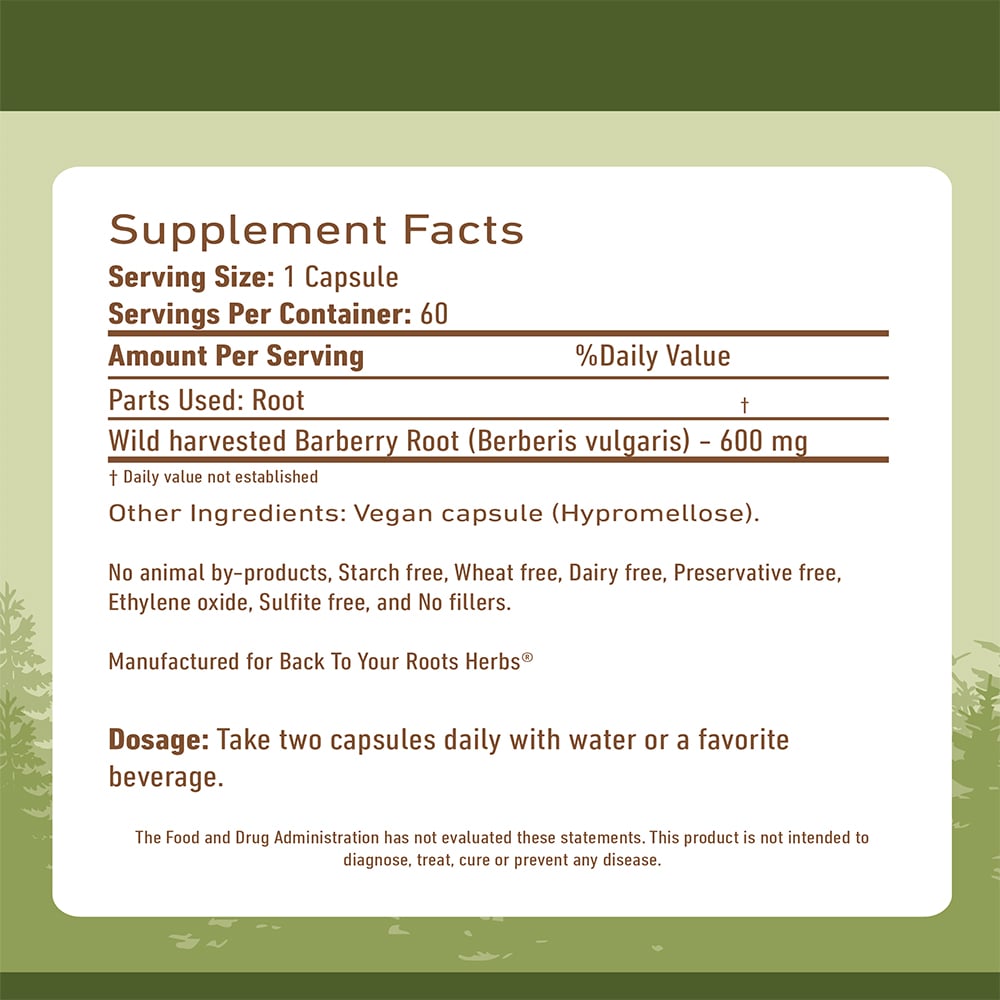
| Serving Size | 2 Capsules (900mg) |
| Frequency | 2-3 Times Daily (With Meals) |
| Active Ingredient | Berberis vulgaris Root Bark |
| Key Compounds | Berberine, Berbamine, Oxyacanthine |
| Primary Action | AMPK Activation (Metabolism) |
| Color Profile | Neon Yellow (High Alkaloid) |
| Allergen Status | Hypoallergenic (No corn, soy, wheat, dairy) |
COMPARISON: Whole Root vs. Berberine HCl
Full Spectrum vs. Isolate.
| Feature | Barberry Whole Root | Berberine HCl (Isolate) |
|---|---|---|
| Composition | Complex (Berberine + Berbamine) | Single Molecule |
| Kidney Support | High (Berbamine) | Low |
| Absorption | Slower (Fiber Matrix) | Fast |
| Gut Impact | Prebiotic Fiber | Can be harsh |
| Best Use Case | Daily Metabolic Health | Acute Glucose Spike |
Want the berberine-versus-Metformin research in depth? Read our full guide to berberine benefits and side effects.
Barberry vs. Other Berberine Sources (Goldenseal, Oregon Grape, Berberine HCl)
Barberry is one of several plants that carry berberine.
Shoppers often compare barberry root to other berberine supplements. Here is how the common sources differ.
- Barberry (Berberis vulgaris) root bark: Whole-plant form. Berberine plus berbamine and oxyacanthine, with natural root fiber.
- Goldenseal (Hydrastis canadensis): Also berberine-bearing, plus hydrastine. Goldenseal is heavily wild-harvested and conservation-listed, so sourcing pressure is high.
- Oregon Grape (Mahonia aquifolium): A close cousin of barberry with a similar alkaloid profile, often used for the skin.
- Berberine HCl (isolate): A single purified molecule. Fast and standardized, but without the companion alkaloids or root fiber found in whole barberry.
Barberry root gives you the berberine people seek alongside its natural plant companions, which is the whole-root approach this product is built on.
DISCLAIMER
Legal Information: These statements have not been evaluated by the Food and Drug Administration. This product is not intended to diagnose, treat, cure, or prevent any disease. Consult your healthcare provider before use, especially if you are pregnant, nursing, taking medication, or have a medical condition. Monitor blood sugar if diabetic.
Written by the Back To Your Roots Herbs Research Group. Fact-checked against primary literature (PMID 16873688, 18442638, 16133554, 8513024). Last Reviewed: June 2026.
Reviews
There are no reviews yet.