Key Takeaways
- Zanthoxylum leprieurii is a West African Rutaceae tree whose root bark, fruits, and leaves carry acridone alkaloids, cucurbitacin E, and aromatic essential oils studied for antimicrobial, antioxidant, and cytotoxic activity.
- The plant is distinct from North American prickly ash (Zanthoxylum americanum and Zanthoxylum clava-herculis), so generic “prickly ash” articles do not reliably describe this species.
- Traditional healers across Cameroon, Nigeria, Ghana, Côte d’Ivoire, and the Congo Basin have applied the bark for sickle cell disease, malaria, microbial infections, dental analgesia, and overall wellness across centuries.
- Peer-reviewed studies confirm activity against multidrug-resistant bacteria, Mycobacterium species, Anopheles gambiae mosquitoes, and selected cancer cell lines.
- Our editorial team sources this material from sustainable wildcraft cooperatives in Cameroon and prepares it as a 1:5 root bark tincture under our cGMP-aligned Virginia Beach protocol.
In our sourcing experience across West African botanicals, few species deliver the breadth of bioactivity that Zanthoxylum leprieurii does. The tree, often called West African satinwood or fagara, sits inside the citrus family Rutaceae and produces a root bark with a sharp, tongue-tingling pungency that traditional Cameroonian and Nigerian healers have used for generations. This article examines what the plant actually is, how it works, what the published research supports, and how to think about Leprieurii for overall wellness inside a careful modern routine. We pull from primary research indexed on PubMed Central, the West African Herbal Pharmacopoeia issued by the West African Health Organisation, ethnobotanical surveys from the International Institute of Tropical Agriculture (IITA), and our own sourcing protocol at Back To Your Roots Herbs.
What is Zanthoxylum leprieurii?
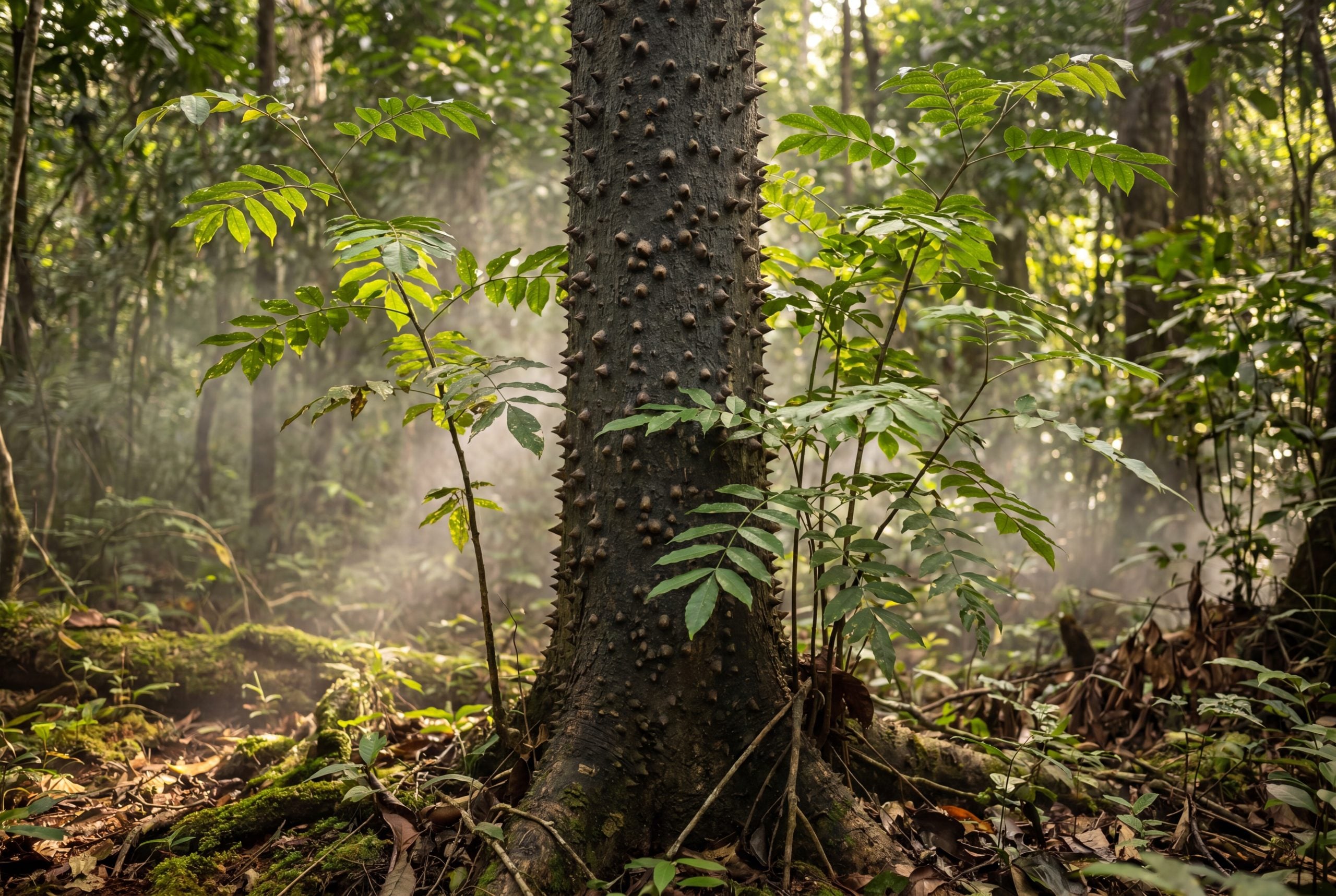
Zanthoxylum leprieurii Guill. and Perr. is a medium-sized evergreen tree, typically reaching 10 to 20 meters in height, native to humid lowland forests across West and Central Africa. Botanists place it in the Rutaceae family alongside citrus, ruta, and the broader Zanthoxylum genus of roughly 250 prickly-bark species. The plant produces small reddish-brown fruits that split at maturity to release shiny black seeds, and the trunk and branches bear conical corky spines that give the tree its common name in several local languages.
Botanical placement
Within the Rutaceae, this species sits in the subfamily Toddalioideae. Older African botanical literature refers to the plant as Fagara leprieurii, and that synonym still appears in the scientific record. The tree is closely related to other African Zanthoxylum species such as Zanthoxylum zanthoxyloides (Fagara zanthoxyloides) and Zanthoxylum chalybeum.
How the species is recognized in the field
Field identification uses three anchors. The first is the spiny bark with raised conical protrusions. The second is the pinnate compound leaves with 4 to 8 pairs of leaflets that release a citrus-like odor when crushed. The third is the small four-petaled flowers in terminal panicles, which precede the red dehiscent fruits.
How is Zanthoxylum leprieurii different from prickly ash?
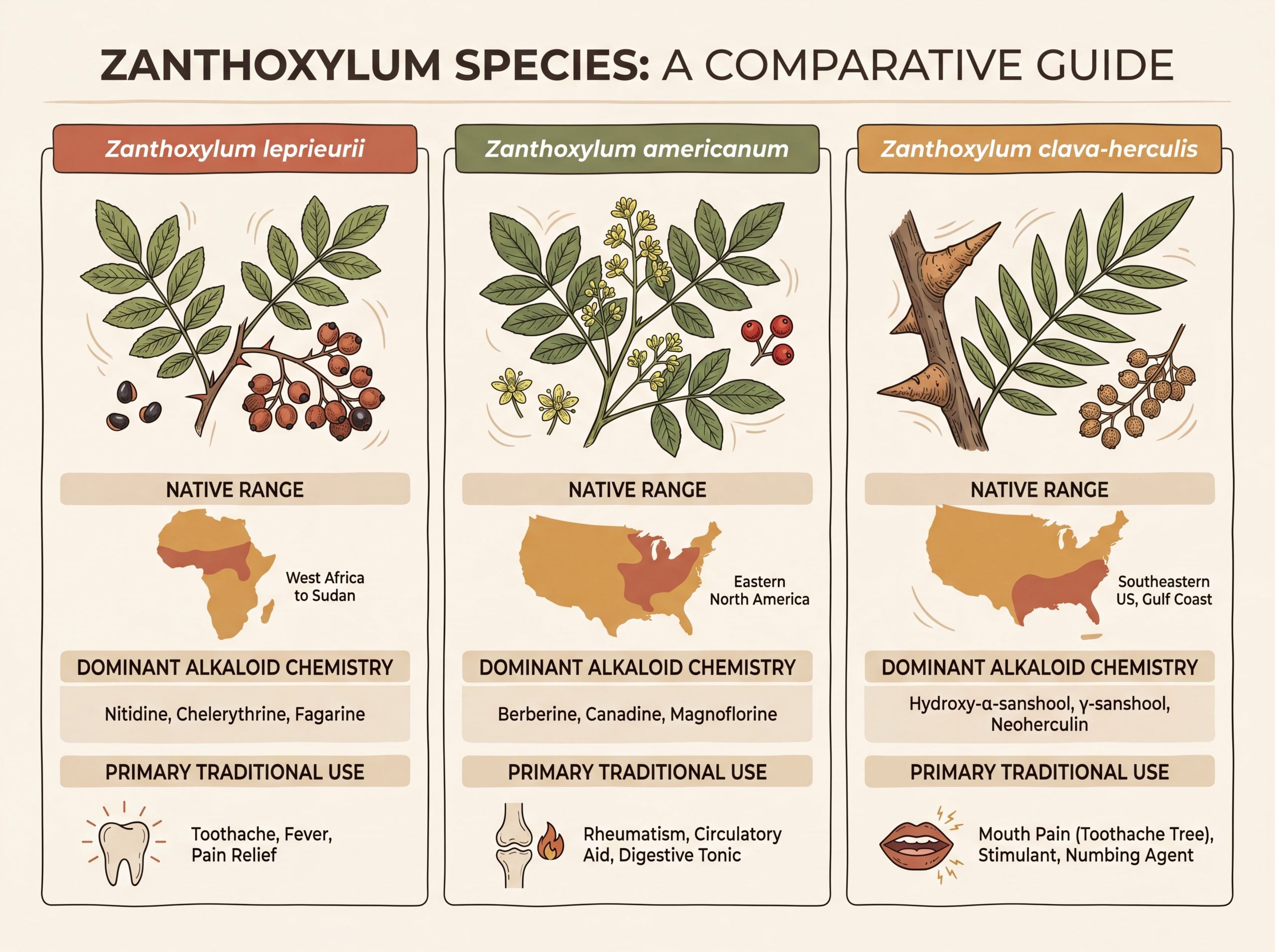
This is the most common confusion we encounter. Search engines often group Zanthoxylum leprieurii with North American prickly ash, but the two species occupy different continents, contain different chemistry profiles, and serve different traditional uses. Northern prickly ash is Zanthoxylum americanum, and Southern prickly ash is Zanthoxylum clava-herculis. Both are Eastern North American natives. Zanthoxylum leprieurii is a West and Central African tropical species. Treating the three as interchangeable misleads consumers and undersells the species-specific research on Zanthoxylum leprieurii.
Geographic separation
Zanthoxylum americanum ranges from Quebec south to Florida and west to Oklahoma in temperate North America. The African counterpart occurs in the Guinea-Congolian rainforest belt from Senegal east to Uganda and south to the Democratic Republic of the Congo. The two trees do not share a natural range.
Chemistry differences
North American prickly ash is rich in benzophenanthridine alkaloids such as chelerythrine and nitidine. The African species contains acridone alkaloids, dictamnine, skimmianine, fagaridine, sesamin lignans, and cucurbitacin E, with the latter appearing in fruit extracts and showing notable cytotoxic activity in cancer cell line research.
Traditional use differences
North American prickly ash is best known in eclectic herbalism for circulatory tonic and toothache applications. The West African plant has a richer traditional record in regional medicine for sickle cell disease, malaria support, antimicrobial uses, and dental analgesia. Treating the species as a single “prickly ash” obscures these distinctions.
Where does Zanthoxylum leprieurii grow?
Zanthoxylum leprieurii grows wild across the Guinea-Congolian forest zone. Confirmed populations occur in Senegal, Guinea, Sierra Leone, Liberia, Côte d’Ivoire, Ghana, Togo, Benin, Nigeria, Cameroon, Gabon, the Republic of Congo, the Democratic Republic of the Congo, Uganda, the Central African Republic, and Equatorial Guinea. The species favors humid lowland and submontane forests at elevations from sea level to about 1,200 meters.
Cameroon terroir
Cameroonian populations grow in the Cross-Sanaga-Bioko coastal forests and the Southern Cameroon Plateau. Approximate coordinates for one important wildcraft zone we have worked with sit near Yaoundé at latitude 3.8480 north and longitude 11.5021 east. The volcanic soils, year-round humidity, and pronounced wet season produce a root bark with the dense aromatic profile and pungent character that traditional healers value.
Nigeria and the IITA biodiversity record
In Nigeria, Zanthoxylum leprieurii occurs across the southern rainforest belt. The International Institute of Tropical Agriculture (IITA) Forest Center near Ibadan has documented this tree as a keystone species for bird and biodiversity conservation, with fruiting cycles that support several frugivorous bird species. The IITA observation underlines the ecological role Zanthoxylum leprieurii plays beyond human use.
Sustainable wildcraft considerations
Because the species is harvested for both bark and root bark, sustainability matters. Responsible wildcraft removes only a portion of the lateral root system from mature trees and leaves the main taproot intact, allowing the tree to recover and continue fruiting.
What active compounds give Zanthoxylum leprieurii its properties?
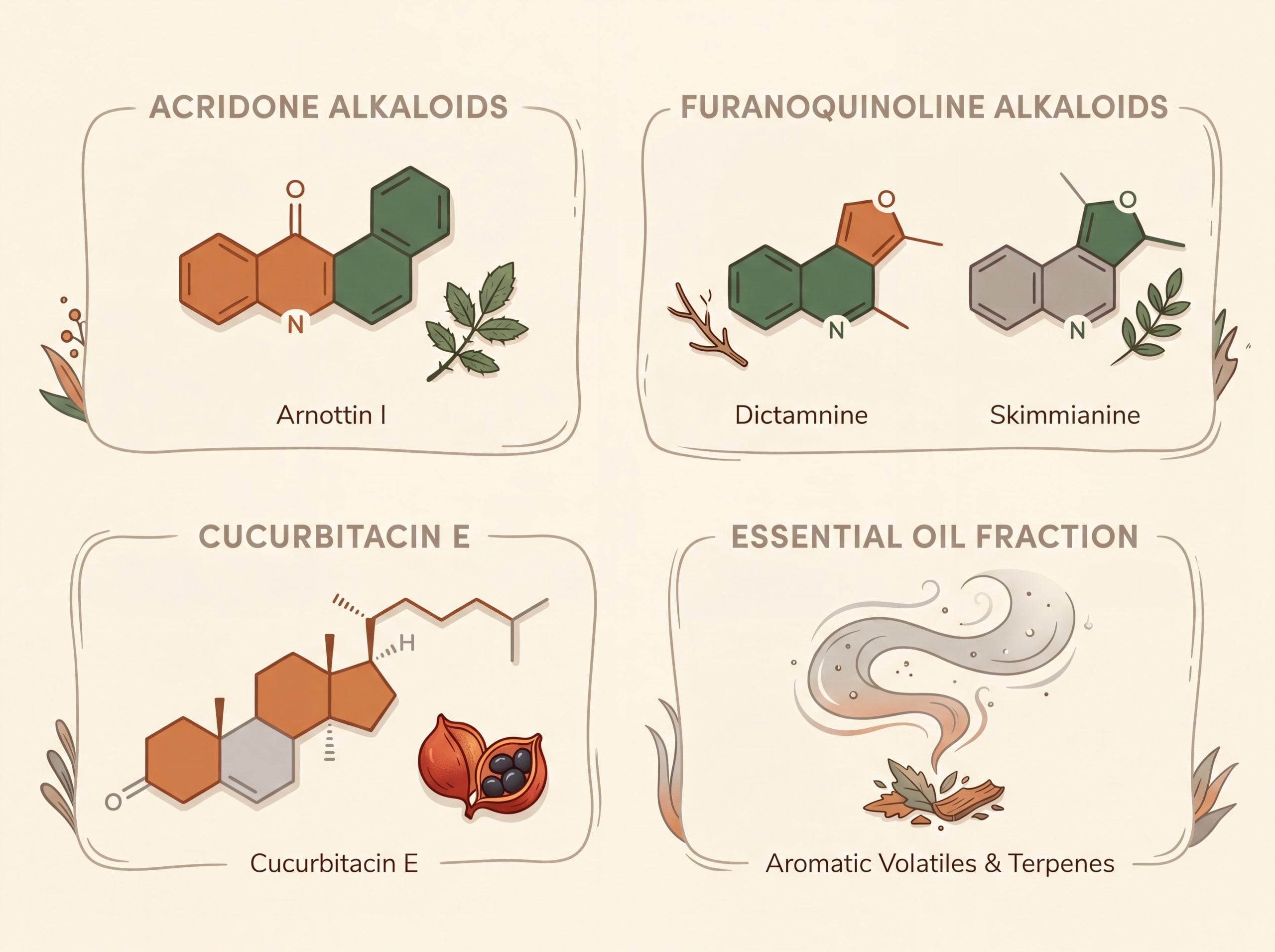
Phytochemical surveys of Zanthoxylum leprieurii report a dense alkaloid and lignan profile. The most studied constituents fall into four chemical families. We have seen the strongest research signal for the acridone alkaloids and the cucurbitacin-type triterpenoids, with secondary attention to the essential oil fraction.
Acridone alkaloids
Acridone alkaloids are the chemistry signature shared by many Zanthoxylum species. In this plant, researchers have isolated arnottin I, des-N-methylacronycine, and related acridone scaffolds, with documented activity against multidrug-resistant bacteria. The acridone class also shows in silico reverse-transcriptase inhibitory potential, a finding flagged in the Cora entity record for this query.
Furanoquinoline and quinoline alkaloids
Dictamnine, skimmianine, and fagaridine appear consistently in the root bark. These alkaloids share a furanoquinoline or quinoline backbone and contribute to the antimicrobial and analgesic activity reported in West African ethnopharmacology.
Cucurbitacin E
Cucurbitacin E was isolated from the fruits in published phytochemistry work and shows cytotoxic activity against several cancer cell lines in laboratory assays. Cucurbitacin E is the same compound studied in unrelated cucurbit-family plants for similar cytotoxic profiles, which positions this Rutaceae species as a notable non-cucurbit source.
Lignans and essential oils
Sesamin and related lignans appear in the bark and stem. The essential oil of the fruits and leaves carries beta-caryophyllene, limonene, and other terpenoids that account for the sharp citrus-pepper aroma. Essential oils from Cameroonian populations have been studied for antioxidant and anti-inflammatory activity in Rutaceae-focused research at the University of Yaoundé.
How does Zanthoxylum leprieurii support overall wellness?
When users search for Leprieurii for overall wellness, the intent is usually wider than a single condition. People want a clear read on what the plant might contribute across multiple body systems. Based on the published research and traditional record, the most consistent mechanisms cluster into four categories. Each is supported by primary research, not anecdote alone. We do not present this as treatment guidance. We present it as the mechanistic context users need to think carefully about wellness applications.
Antimicrobial support
Multiple peer-reviewed studies have tested extracts of the bark against gram-positive and gram-negative bacteria, including multidrug-resistant strains. Activity against Mycobacterium species has been characterized as antimycobacterial in published assays. The acridone and quinoline alkaloid fractions appear to drive much of this activity.
Antioxidant capacity
Essential oil and methanolic extract studies on the Leprieurii plant from Cameroonian sources report measurable antioxidant capacity in DPPH and ABTS assays. The total phenolic and flavonoid content of root bark extracts contributes to this antioxidant profile, which is relevant to the broader oxidative-stress component of wellness.
Antimalarial and insect-repellent context
Plasmodium and Anopheles gambiae studies have included fractions of this plant in screening panels. The activity is moderate compared to artemisinin-based references but consistent with the traditional use of the bark in West African antimalarial preparations.
Cytotoxic profile against cancer cell lines
Laboratory studies have reported cytotoxic effects of Leprieurii extracts against selected cancer cell lines, with cucurbitacin E identified as one of the active compounds. These are in vitro findings. They are not equivalent to clinical efficacy in human cancer care, and consumers should understand that distinction.
What does the research say about Zanthoxylum leprieurii?
The published research on Zanthoxylum leprieurii is dominated by phytochemistry and in vitro pharmacology rather than randomized human trials. That is the realistic state of evidence for most West African medicinal plants. We have read through the indexed studies on PubMed Central and the broader literature and summarized the strongest signals below.
Antimicrobial pharmacology in published assays
A study by Tatsadjieu and colleagues (PMC8272177) characterized antimicrobial activity in the essential oils. Earlier work cataloged in the PROTA database documented the activity of root bark extracts against several pathogens of regional importance. The Frontiers in Pharmacology review of the Zanthoxylum genus (Okagu and colleagues, 2021, PMC8255688 and related) places this plant within a broader pattern of Rutaceae antimicrobial activity.
Antioxidant essential oils from Cameroon
Cameroonian research groups have published on the antioxidant and anti-inflammatory potential of essential oils from several Zanthoxylum species, with leprieurii included. The Rutaceae-of-Cameroon body of work documents reproducible antioxidant readings in essential oil and extract preparations.
Wound healing and antimicrobial properties
A 2014 paper indexed on ResearchGate (publication 266558339) examined medicinal plants used in wound care in West Africa and assessed wound healing and antimicrobial properties of the bark alongside peer species. The result was supportive but limited to in vitro and animal model methodology.
Methodological caveats
Most studies on this herb use methanolic, ethanolic, or aqueous extracts rather than standardized tinctures. Dose-response data is incomplete, and direct human efficacy trials are rare. Wellness applications should be read as plausible mechanistic extensions of the laboratory record, not as established clinical effects.
How has Zanthoxylum leprieurii been used traditionally?
The traditional record for Zanthoxylum leprieurii is dense across West and Central African medical systems. The West African Herbal Pharmacopoeia issued by the West African Health Organisation lists this species as a regionally important medicinal plant. Local healers in Cameroon, Nigeria, Ghana, and the Congo Basin have applied the bark, root, and fruit for distinct purposes.
Sickle cell disease applications
Several West African systems have used the root bark as adjunct support for sickle cell anemia. This use overlaps with Zanthoxylum zanthoxyloides, the better-known sickle cell traditional remedy, and reflects the shared alkaloid chemistry across the African Zanthoxylum subgroup.
Malaria and febrile illness
Traditional Cameroonian and Nigerian preparations have incorporated bark decoctions for malaria fevers, often in combination with Morinda lucida, Xylopia aethiopica, or Monodora myristica. These polyherbal combinations are documented in regional ethnobotanical surveys.
Dental analgesia and oral health
Chewing the bark or root produces a strong numbing, tingling sensation in the mouth. Across Ghana and Cameroon, healers have used the bark for tooth pain and gum complaints, with the bark sometimes carved into chewing sticks that combine cleaning and analgesic action.
General wellness and tonic uses
Beyond specific conditions, the plant has been used as a general tonic and digestive bitter. The sharp aromatic character of the bark and fruit aligns with the bitter-tonic tradition found across multiple herbal medicine systems globally.
What does Zanthoxylum leprieurii root bark look like and taste like?
Our team handles Zanthoxylum leprieurii root bark at every stage from arrival through extraction. The material has a distinctive sensory profile that lets us verify authenticity before processing.
Visual character
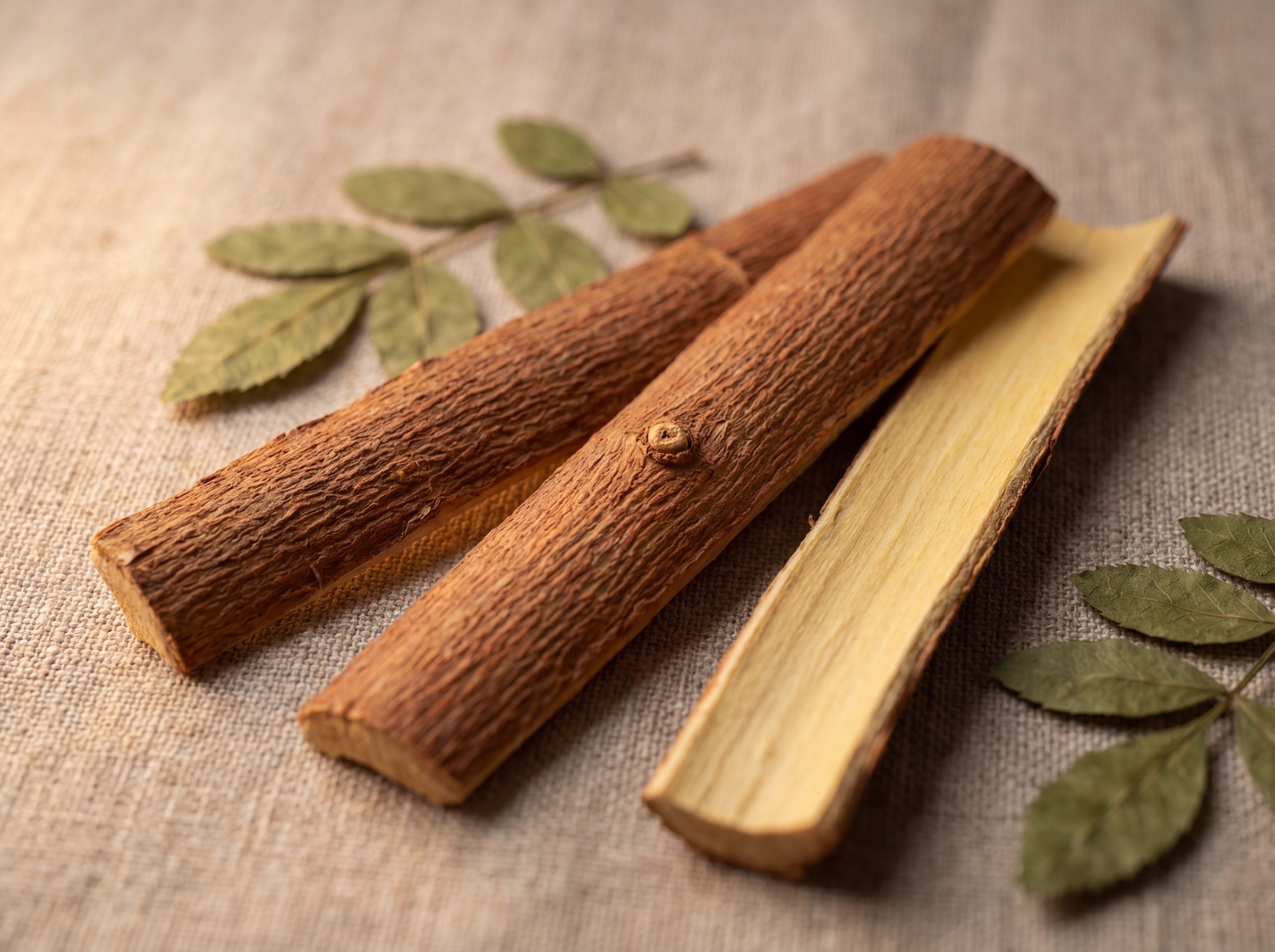
Fresh root bark is reddish-brown on the outer surface with a pale yellow inner layer that darkens on exposure to air. Dried strips show longitudinal striations and small corky raised points where lateral rootlets are attached. Authentic material is dense, not pithy.
Aromatic and taste profile
The aroma is sharp and citrus-peppery with a hint of resin. The taste produces an immediate tongue-tingling effect followed by a numbing sensation similar to the Szechuan peppercorn family (Zanthoxylum bungeanum and Zanthoxylum simulans), with which the African species shares the alkylamide hydroxy-alpha-sanshool chemistry signature.
Sensory checks our editorial team runs
In our sourcing experience, the tongue-tingling sensation is the single best indicator of fresh, properly dried bark. Aged or improperly stored material loses pungency. Our protocol rejects any incoming lot that does not produce a clear and immediate alkylamide response on taste.
How do we source Zanthoxylum leprieurii root bark?
Sourcing Zanthoxylum leprieurii well requires direct relationships with West African wildcraft cooperatives and a willingness to verify the chain of custody. Our Back To Your Roots Herbs protocol follows four stages.
Cooperative selection
We work with Cameroon-based wildcraft cooperatives that document collection sites, collection dates, and the harvest method used for each lot. Lateral root harvest is permitted. Whole-tree felling is not. Cooperatives that do not document the harvest method are removed from our supplier list.
Identity verification
Every incoming lot is verified through three checks. Macroscopic inspection confirms the bark anatomy. Sensory testing confirms the alkylamide response. Where lot size warrants, we run thin-layer chromatography against a reference standard sourced from a university herbarium voucher specimen.
Contaminant screening
We test for heavy metals, microbial load, and pesticide residues in line with our cGMP-aligned protocols. Wildcraft botanicals can carry environmental contaminants from the surrounding soil and water, and the screening step is non-negotiable.
Final extraction in Virginia Beach
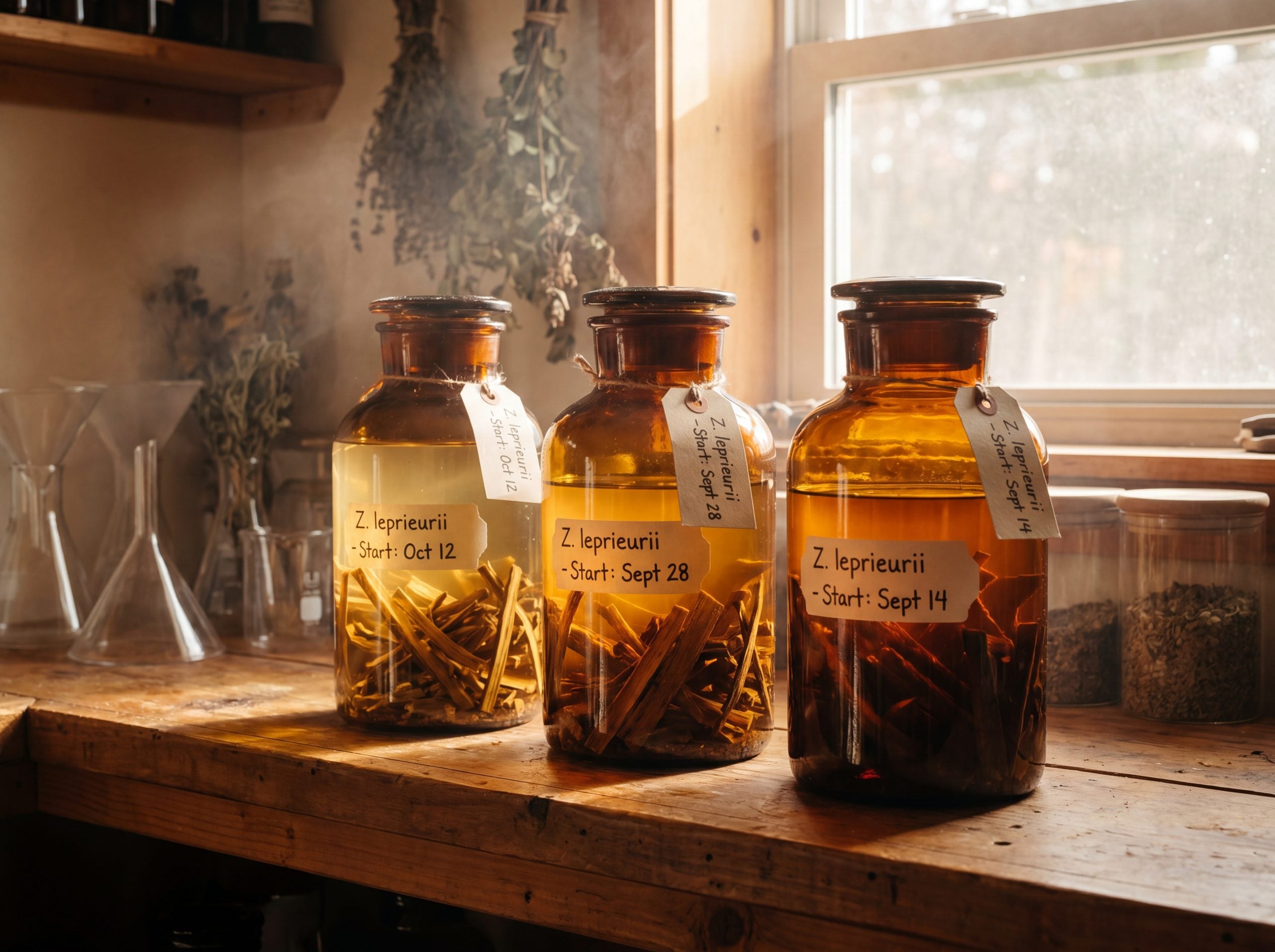
Verified lots are extracted at our Virginia Beach facility under a 1:5 root bark to solvent ratio in food-grade ethanol. The resulting tincture preserves the alkaloid and lignan profile and is stable on the shelf for years when stored properly.
How is Zanthoxylum leprieurii prepared and used?
Preparation methods for Zanthoxylum leprieurii have varied across regional traditions and across the chemistry being targeted. The four common preparations each pull different fractions of the plant chemistry.
Decoction
Traditional West African decoctions simmer the bark in water for 20 to 60 minutes. The decoction pulls water-soluble alkaloids and tannins but leaves much of the lipophilic essential oil behind.
Tincture (alcohol extraction)
A 1:5 root bark tincture in 60 percent ethanol pulls a wider chemistry range, including alkaloids, lignans, and essential oils. Our editorial team prefers this format for wellness applications because the alkylamide and acridone fractions are well represented.
Powdered bark or capsules
Powdered bark can be encapsulated or stirred into beverages. The pungent character limits palatability in this format, so capsules are usually preferred when this preparation is chosen.
Essential oil extraction
Steam-distilled essential oil from the leaves and fruits is studied in laboratory antioxidant work but is not commonly used as a consumer wellness product because of the irritation potential of concentrated terpenoids.
What does Zanthoxylum leprieurii pair well with?
Polyherbal combinations are standard in West African medicine. The traditional partners for Zanthoxylum leprieurii reflect regional plant communities and shared mechanisms.
Morinda lucida
Morinda lucida bark is paired with Leprieurii in many Yoruba and Akan antimalarial preparations. The two plants together cover a wider Plasmodium-stage profile than either alone.
Xylopia aethiopica
Xylopia aethiopica (West African pepper) shares the aromatic alkylamide chemistry and is often combined with the bark for digestive and febrile applications.
Monodora myristica
Monodora myristica (African nutmeg) appears in Cameroonian polyherbal blends with this Rutaceae species as a warming aromatic that complements the sharper bark chemistry.
Who should consider Zanthoxylum leprieurii?
Zanthoxylum leprieurii is best suited for adults who are curious about West African botanical medicine, who want to consider a wide-spectrum aromatic bitter inside a careful wellness routine, and who can integrate a strongly flavored herbal preparation into their daily practice. People drawn to the species commonly fall into three groups.
Users curious about African plant medicine
If you are reading about the broader traditions of West and Central African herbal medicine alongside species like Morinda lucida, Alstonia boonei, and Alchornea cordifolia, this Rutaceae plant sits naturally inside that group.
Users interested in aromatic bitter tonics
The pungent, alkylamide-rich character makes the bark a strong fit for users who already use bitter and aromatic plants for daily wellness. The sensory profile is closer to szechuan peppercorn than to a soft adaptogenic herb.
Users with documented species-specific interest
If you have come across Leprieurii in traditional medicine literature, ethnobotanical surveys, or family practice, the species is the actual subject of your interest rather than the broader prickly ash group. In that case, sourcing the correct species matters.
What are the safety considerations for Zanthoxylum leprieurii?
Safety information on Zanthoxylum leprieurii is incomplete relative to mainstream medicinal herbs. The points below reflect what the published record and our sourcing protocol support. They are not medical advice.
Pregnancy and lactation
Traditional West African use cautions against the bark during pregnancy because of the strong alkaloid chemistry. Until controlled human safety data is available, the prudent default is to avoid the plant during pregnancy and lactation.
Drug interactions
The acridone and furanoquinoline alkaloid families can theoretically affect cytochrome P450 enzyme activity in the liver. Anyone on prescription medications, particularly anticoagulants, chemotherapy agents, or antiretroviral drugs, should consult a qualified healthcare provider before starting any preparation.
Sensitization and irritation
The alkylamide hydroxy-alpha-sanshool produces the tongue-tingling effect characteristic of the bark. Sensitive users may experience mouth or throat irritation. Tincture preparations diluted in water before consumption reduce direct mucosal contact.
Quality and adulteration risk
Because this tree is morphologically similar to several West African Zanthoxylum species, adulteration with Zanthoxylum zanthoxyloides or other related species occurs in the unverified market. Sourcing from suppliers that document the chain of custody and species identity is essential.
How does Zanthoxylum leprieurii compare to other West African medicinal plants?
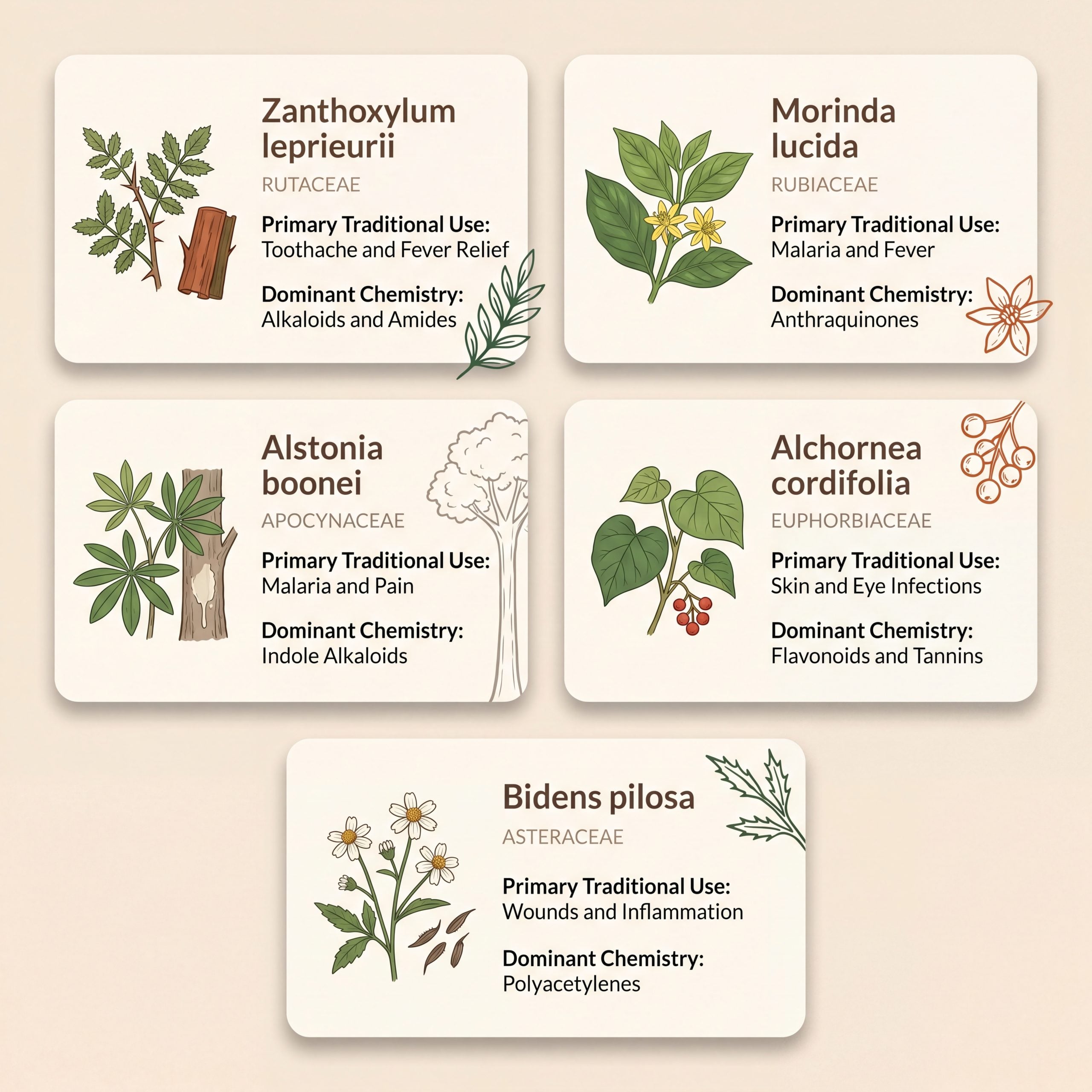
We have written about several West African medicinal plants on this site, and a quick comparison helps users place Zanthoxylum leprieurii inside the larger group. Each plant occupies a different niche in traditional medicine and modern research.
| Plant | Family | Primary traditional use | Notable chemistry |
|---|---|---|---|
| Zanthoxylum leprieurii | Rutaceae | Antimicrobial, sickle cell support, dental analgesia, overall wellness | Acridone alkaloids, dictamnine, skimmianine, cucurbitacin E, alkylamides |
| Morinda lucida | Rubiaceae | Antimalarial, digestive support | Anthraquinones, iridoids |
| Alstonia boonei | Apocynaceae | Antimalarial, anti-inflammatory | Indole alkaloids (echitamine) |
| Alchornea cordifolia | Euphorbiaceae | Wound care, scalp, and hair applications | Imidazopyrimidine alkaloids, flavonoids |
| Bidens pilosa | Asteraceae | Antimicrobial, inflammation, collagen support | Polyacetylenes, flavonoids, phenylpropanoids |
| Source: West African Herbal Pharmacopoeia (WAHO) regional monographs and peer-reviewed phytochemistry literature. | |||
When users approach the broader category, our editorial team often points them toward our deeper writeups. Our reading of Morinda lucida and its West African antimalarial role pairs naturally with this article. For users coming from a broader herbal-medicine education angle, our introductory pillar on herbs used as medicine sets a useful context. Users interested in adaptogenic peer species often find our piece on Sutherlandia frutescens (cancer bush) a useful counterpoint. The broader wellness frame is covered in our holistic health and healing primer.
Within our own catalog, the herb is available as a finished extract. Users who want to work with the bark at home can consider our Zanthoxylum leprieurii root bark tincture, which is prepared in our Virginia Beach facility from Cameroon-sourced material under the protocol described above.
Frequently asked questions
Is Zanthoxylum leprieurii the same as prickly ash?
No. The African species is a West and Central African tree. Prickly ash, in North American herbalism, usually refers to Zanthoxylum americanum (Northern prickly ash) or Zanthoxylum clava-herculis (Southern prickly ash). The three plants share the genus and a similar pungent character, but they have different chemistry profiles, different traditional uses, and different geographic ranges. Articles that group them together miss the species-specific research.
What are the main chemical constituents identified in the plant?
The most studied constituents are acridone alkaloids (including arnottin I and des-N-methylacronycine), furanoquinoline and quinoline alkaloids (dictamnine, skimmianine, fagaridine), cucurbitacin E (isolated from the fruits), sesamin and related lignans, and an essential oil fraction rich in beta-caryophyllene and limonene. Different plant parts carry different fractions of this chemistry.
How does the root bark tincture work?
A 1:5 root bark tincture in food-grade ethanol pulls the alkaloid, lignan, and essential oil fractions into a stable liquid extract. Users typically take small drop doses diluted in water. The active compounds reach systemic circulation through oral absorption, and the alkylamide compounds produce the characteristic tongue-tingling sensation on first contact with the mucous membranes.
What antimicrobial activity has the bark shown in the laboratory?
Published assays have tested extracts against multidrug-resistant gram-positive and gram-negative bacteria, with measurable activity attributed mainly to the acridone and quinoline alkaloid fractions. Activity against Mycobacterium species has been described in antimycobacterial screening work. Activity against Plasmodium and the malaria vector Anopheles gambiae has also been characterized in research panels.
Where does the root come from?
Our root bark is sourced from sustainable wildcraft cooperatives in southern Cameroon, near the Yaoundé region at approximately 3.85 degrees north latitude. The species is also collected in Nigeria, Ghana, Côte d’Ivoire, and across the Congo Basin. Cameroon-sourced material consistently shows the strongest aromatic and alkylamide character in our intake testing.
What cytotoxic effects have been observed?
Cucurbitacin E, isolated from the fruits, has demonstrated cytotoxic activity against selected cancer cell lines in laboratory assays. These findings are in vitro and do not establish clinical efficacy in human cancer care. Consumers should read the cytotoxic record as a mechanistic curiosity, not as a treatment claim.
Is the herb safe for daily use?
Safety data for daily long-term use in humans is limited. Traditional West African use suggests course-based rather than continuous application. Pregnant or lactating users, users on prescription medications, and users with known liver or kidney disease should consult a qualified healthcare provider before starting any preparation.
How is it different from Szechuan peppercorn?
Szechuan peppercorn comes from Zanthoxylum bungeanum, Zanthoxylum simulans, and related East Asian species. The African plant is the West African counterpart. All carry the alkylamide hydroxy-alpha-sanshool that produces the tongue-tingling sensation, but they have different essential oil profiles and different traditional medicine roles. Szechuan peppercorn is mainly a culinary spice. The West African tree is mainly a traditional medicine plant.
Related reading
Continue with these related articles from our editorial team:
- Morinda lucida benefits and West African antimalarial tradition
- Herb for medicine: the long view on traditional plant therapy
- Cancer bush (Sutherlandia frutescens) and African adaptogenic herbs
- Holistic health and healing: an editorial primer
About the Back To Your Roots Herbs Editorial Team
The Back To Your Roots Herbs Editorial Team combines collective experience in traditional herbalism, ethnobotanical research, and clinical literature review. Our team curates primary research from PubMed, NIH, and traditional medicine sources, vets sourcing relationships across specific terroir regions, and applies sensory analysis and third-party quality testing to every herb profiled on this site. All content is researched and reviewed in our Virginia Beach, Virginia, facility.
Last Reviewed: May 2026
Editorial disclaimer. These statements have not been evaluated by the Food and Drug Administration. This article is for educational purposes only and is not intended to diagnose, treat, cure, or prevent any disease. Consult a qualified healthcare provider before using any herbal preparation, especially if you are pregnant, lactating, taking prescription medication, or managing an underlying health condition.