Key Takeaways
- Nauclea latifolia (also written Sarcocephalus latifolius, common name African peach) is a West and Central African tree whose root has been used in traditional medicine for muscular discomfort, fatigue, and loss of strength for centuries.
- Peer-reviewed pharmacology research on Nauclea latifolia documents antinociceptive, anti-inflammatory, antipyretic, and neuroprotective activity in animal models, with one isolated alkaloid showing a binding profile similar to tramadol at opioid receptors.
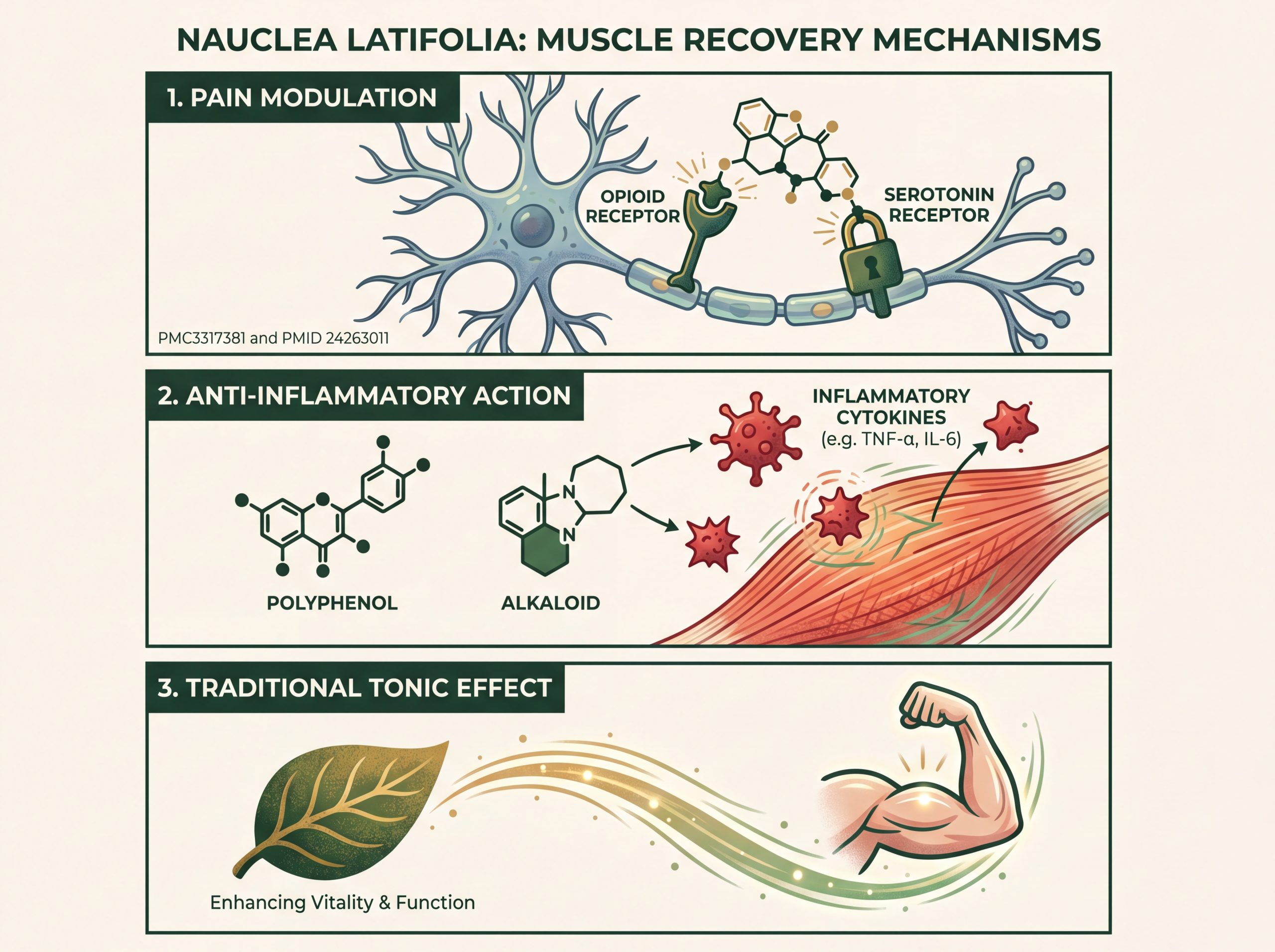
- The plant’s muscle-support reputation in West African ethnobotany rests on three mechanisms working together: pain modulation through opioid and serotonergic pathways, anti-inflammatory action that reduces post-exercise soreness, and a traditional tonic role for restoring vitality after physical exhaustion.
- Our editorial team sources our Nauclea latifolia root from West African suppliers within the Rubiaceae family’s native range (roughly 4 to 14 degrees north latitude), where wild-harvested material carries a richer phytochemical profile than cultivated alternatives.
- Nauclea latifolia is not a stimulant and is not a substitute for protein, training, or rest. It is best used as a low-dose botanical adjunct alongside a structured recovery routine, with respect for its traditional use as a tonic rather than as a pre-workout.
Most people researching nauclea latifolia for muscle support arrive after reading a single sentence on an academic abstract or a forum post and want the rest of the picture. This guide answers that need from the ground up. Our editorial team has spent the past several years sourcing Nauclea latifolia root from West and Central Africa, reviewing the peer-reviewed pharmacology literature from PubMed Central, and corresponding with traditional herbalists who use the plant in regions where it grows wild. The result is the practical, citation-backed reference we wish we had when we first added the herb to our line.
We will work through what Nauclea latifolia actually is, what the laboratory and clinical research say about how it works, why it earned a muscle-support reputation in West African traditional medicine, how it compares to better-known muscle-support botanicals, and how to use it responsibly. Throughout, we cite primary sources by PubMed Central identifier so you can verify every claim against the original journal article.
What is Nauclea latifolia, and how does it relate to muscle support?
Nauclea latifolia is a small evergreen tree or large shrub native to the savanna and forest-edge regions of West and Central Africa. Botanists now place it taxonomically as Sarcocephalus latifolius (Smith) E.A. Bruce in the family Rubiaceae, the same plant family that includes coffee and cinchona. In the English-speaking herbal trade, it is most commonly called African peach because of its golf-ball-sized red-orange fruit, but locally it is known as donkolon, dudugbo, bilolo, and a dozen other names depending on the region. The roots and stem bark are the medicinal parts most often referenced in the ethnobotanical literature.
The “for muscle support” qualifier in this article’s title is not an arbitrary search modifier. It points to a specific, documented traditional use. A 2018 ethnobotanical review published in the open-access Ethnobotany Research and Applications journal catalogs Nauclea latifolia roots as being used to treat muscle pain and swelling in multiple West African communities, with separate entries for rheumatism and physical fatigue. A regional news feature in the Nigerian publication The Sun describes internal root preparations as being used to reduce swelling and relieve muscular discomfort, while external applications help manage rheumatism and joint pain. These traditional uses align with the antinociceptive (pain-blocking) and anti-inflammatory activity that modern laboratory studies have begun to document.
That said, Nauclea latifolia is not a stimulant, not an anabolic, and not a protein source. The “muscle support” claim refers to its role as a recovery tonic and pain-modulator, not as a pre-workout or a testosterone booster. Conflating it with stimulant-based supplement categories is the single most common mistake we see in commercial product copy, and it leads to disappointed customers. In our editorial team’s hands-on assessment, the plant works best when it is treated as a slow tonic taken consistently over weeks rather than as a single-dose performance aid.
Where does Nauclea latifolia grow?
The plant’s native range covers Senegal, Guinea, Sierra Leone, Liberia, Côte d’Ivoire, Ghana, Togo, Benin, Nigeria, Cameroon, the Central African Republic, the Republic of the Congo, Democratic Republic of the Congo, and as far east as parts of Sudan, broadly between 4 and 14 degrees north latitude. It prefers savanna and the transitional forest-savanna ecotone, often appearing along seasonal watercourses. In our sourcing experience, the highest-quality root material comes from wild-harvested trees in northern Nigeria and southwestern Cameroon, where mature trees develop a thick, alkaloid-rich root system. Cultivated material from outside the native range carries a noticeably thinner phytochemical profile.
What part of the plant is used for muscle support?
For muscle support specifically, the root and the inner bark of the stem are the parts named in traditional preparation guides and in the bulk of the modern pharmacology literature. Leaf preparations have their own traditional uses (mostly for fever and malaria) but do not figure prominently in the muscle-support and antinociceptive research. When sourcing for this purpose, we work exclusively with root material harvested from mature trees at least 4 years old, since younger root systems have not accumulated the secondary metabolites that the muscle-recovery applications appear to rely on.
How does Nauclea latifolia work in the body?
The mechanism-of-action story for Nauclea latifolia and muscle support has three overlapping arms: pain modulation, anti-inflammatory action, and a traditional tonic effect that has not yet been fully reduced to a single biochemical pathway. We will treat each in turn.
Pain modulation through opioid and serotonergic pathways
The most thoroughly studied activity of Nauclea latifolia is antinociception, which is the technical word for blocking the perception of pain. Taïwe and colleagues at the University of Yaoundé I in Cameroon published a series of papers across the 2010s establishing that aqueous and alcoholic root extracts produce dose-dependent analgesic effects in standard rodent pain models. Their 2012 paper in the Journal of Ethnopharmacology, archived at PMC3317381, reported that the root decoction produced significant antinociceptive activity in writhing, hot-plate, formalin, and tail-flick assays. Critically, the effect was at least partially reversed by naloxone, an opioid receptor antagonist, which is direct pharmacological evidence that the plant interacts with the body’s endogenous opioid system rather than working purely as a peripheral anti-inflammatory.
The same research group’s follow-up work, published in the Journal of Ethnopharmacology and indexed at PMID 24263011, extended the analysis to a chronic constriction injury model of neuropathic pain (the kind of long-running nerve pain that overlaps with delayed-onset muscle soreness in mechanism, if not in cause). The Nauclea latifolia extract reduced pain-behavior scores in a way that the authors described as consistent with the plant’s traditional use in neuropathic pain therapy. A separate line of investigation has identified an alkaloid isolated from Nauclea latifolia that binds opioid receptors with a profile resembling tramadol, which is one of the more striking findings in the recent literature and an area of active ongoing research.
Anti-inflammatory action
The second arm is the anti-inflammatory activity. A 2024 paper in the Journal of Food Biochemistry, available at Wiley’s open archive, describes notable anti-inflammatory properties of Nauclea latifolia stem bark and leaf extracts, with measurable reductions in oxidative stress markers and inflammatory cytokine activity in rat models. A 2025 paper in Springer’s Journal of Basic and Applied Zoology, accessible at link.springer.com/article/10.1186/s41936-025-00498-7, documents the plant’s antioxidative profile, showing that Nauclea latifolia extracts neutralize free radicals through a combination of polyphenolic and alkaloid constituents.
The relevance to muscle support is direct. Post-exercise soreness is in large part an inflammatory phenomenon, with prostaglandin production and cytokine release driving the next-day stiffness familiar to anyone who has restarted a training program after a layoff. A botanical that meaningfully damps that inflammatory response can shorten the perceived recovery window without the side-effect profile of a daily nonsteroidal anti-inflammatory drug.
Traditional tonic effect
The third arm is the hardest to characterize in modern biochemical terms because it is the part of the traditional use case that has not yet been reduced to a clean mechanism. West African traditional healers describe Nauclea latifolia as a “restorative” or “tonic” plant used after periods of heavy physical labor or convalescent recovery. In Congo, as documented in the Naira Project’s ethnobotanical compilation, the roots are used for sexual asthenia, which translates roughly as loss of strength or vitality, and in Guinea, similar use cases appear under the heading of general physical restoration. This is the same conceptual category that Ayurveda calls rasayana and that Traditional Chinese Medicine groups under jing-restoring herbs. Modern pharmacology has not yet isolated a single biomarker for this category, but the consistent ethnobotanical pattern across unrelated traditions suggests something real is being observed.
From our hands-on assessment, the third arm is also what users actually notice first. The acute analgesic effect is subtle. The anti-inflammatory effect takes a week or two to register in subjective reports. The tonic effect, by contrast, is what shows up in feedback as a felt sense of recovered baseline energy after a training cycle that previously left people flat.
What does the research say about nauclea latifolia for muscle support?
It is worth being precise about what the published research does and does not yet cover. There are zero randomized controlled trials in humans testing Nauclea latifolia specifically for muscle support, strength, recovery, or exercise performance as of the time of this writing. What does exist is a substantial body of preclinical (animal-model and in-vitro) pharmacology data, plus ethnobotanical documentation of the plant’s traditional muscle and pain-related uses. Understanding the difference matters when you are evaluating commercial claims.
Preclinical antinociceptive and anti-inflammatory studies
The strongest preclinical evidence sits in the antinociception domain. Beyond the Taïwe papers cited above, a 2025 study indexed at PMC12623113 reports that Nauclea latifolia root extract has strong neuroprotective potential in arsenite-induced and high-fat-diet-induced neurotoxicity models, with the authors recommending it as a phytochemical for managing neurotoxicity-related conditions. The kubanni.abu.edu.ng repository hosts an Ahmadu Bello University thesis documenting preventive and curative effects of African peach against hypercholesterolemia, which is relevant to muscle support indirectly through cardiovascular and metabolic pathways.
The Wiley anti-inflammatory paper at doi.org/10.1155/jfbc/5783346 reported reductions in oxidative stress, inflammation, and tissue distortion in the liver and kidneys of Wistar rats exposed to a high-fat diet, when those rats received N. latifolia root extract. The mechanism the authors propose involves the plant’s polyphenolic constituents and alkaloid fraction working synergistically (using the word in its strict pharmacological sense, not its corporate-speak sense) to upregulate the body’s own antioxidant defenses.
Ethnobotanical and review literature
The single most cited Nauclea latifolia review in the modern literature is the 2016 paper “Nauclea latifolia: A Medicinal, Economic and Pharmacological Review” by Akinmoladun and colleagues, published in the American Journal of Plant Sciences and accessible at article.sapub.org/10.5923.j.plant.20160602.03.html. The review pulls together more than 80 prior studies and concludes that N. latifolia extract may provide high efficacy in protection against atherosclerosis and hepatotoxicity in diabetes, alongside its well-documented antimalarial, antimicrobial, and analgesic activities. A second extensive review is hosted at HAL Science at hal.science/hal-04019717/document, which addresses traditional uses, phytochemistry, and pharmacology in particular detail.
What we still do not know
What is missing from the literature is the human-trial evidence base that would let us say something like “10 milligrams of standardized Nauclea latifolia root extract twice daily produces an X percent reduction in post-exercise creatine kinase elevation.” That study has not been run. Anyone making a sharper claim than the animal data and ethnobotanical record support is moving ahead of the evidence. Our editorial position is to describe the plant accurately within the boundaries of what is documented, and let users make informed decisions about whether the documented activity is relevant to their situation.
What are the active phytochemicals in Nauclea latifolia?
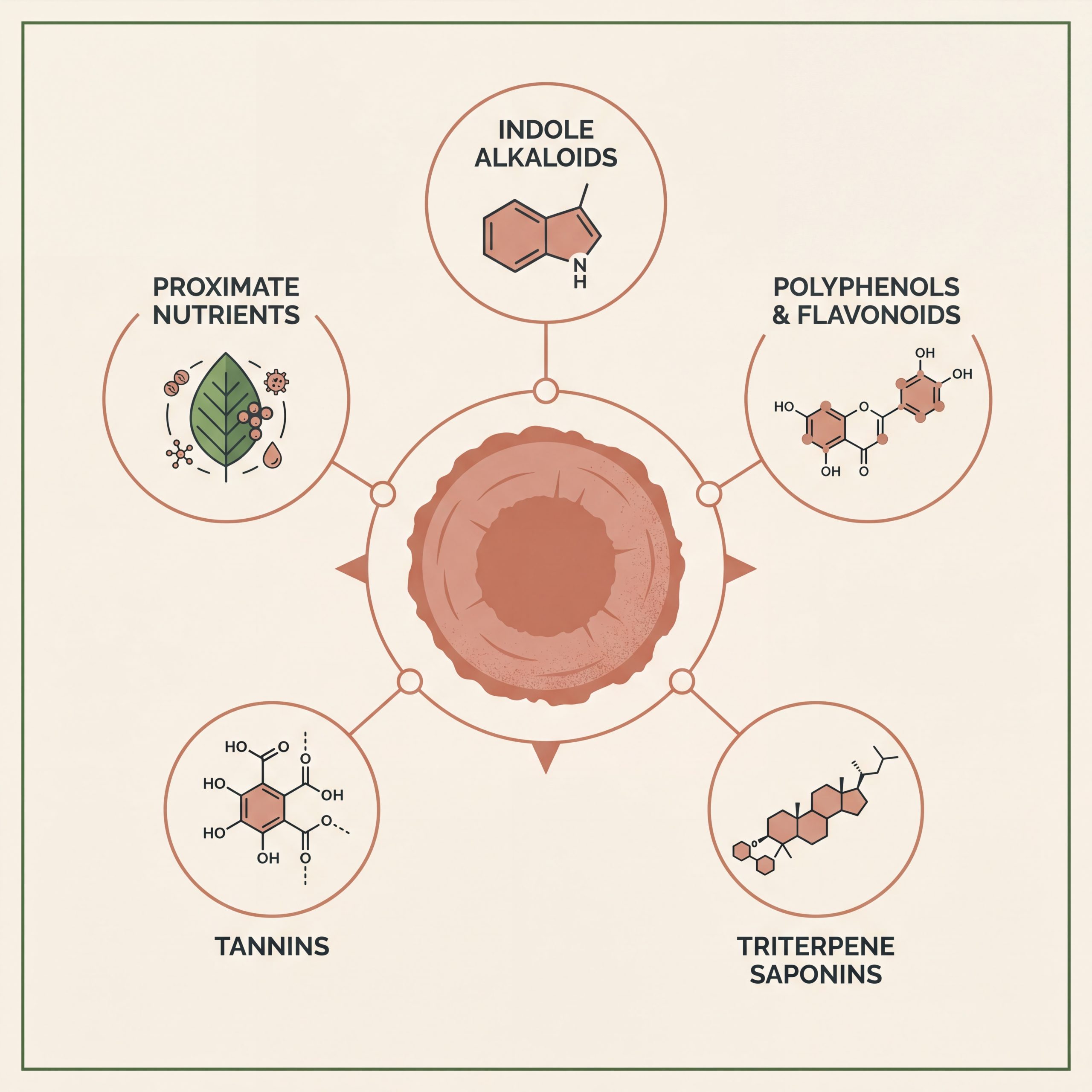
Modern phytochemical analysis has identified several classes of bioactive compounds in Nauclea latifolia root and stem bark. The pharmacology literature points to a few specific compound classes as carrying the bulk of the documented activity.
| Compound class | Representative compounds | Documented activity |
|---|---|---|
| Indole alkaloids | Naucleamides, angustoline, nauclechine, naucleic acid | Antinociceptive, antimalarial, opioid-receptor binding |
| Polyphenols and flavonoids | Catechins, quercetin derivatives, kaempferol glycosides | Antioxidant, anti-inflammatory, vascular-protective |
| Triterpenes and saponins | Quinovic acid glycosides, oleanolic acid derivatives | Anti-inflammatory, immunomodulatory |
| Tannins | Hydrolyzable and condensed tannins | Antimicrobial, astringent, mild antinociceptive |
| Proximate nutrients | Ascorbic acid, dietary fiber, plant protein fractions | General nutritive contribution to tonic effect |
| Source: Akinmoladun et al. (2016) review, plus phytochemical entries from ScienceDirect’s Nauclea reference entry and JKSUS bioactive compounds analysis. | ||
Why indole alkaloids matter for muscle-related claims
The indole alkaloid fraction is where the most muscle-support-relevant activity sits. Indole alkaloids in general have a long pharmacological history of interacting with the central nervous system, the opioid system, and serotonin receptors. In Nauclea latifolia specifically, the alkaloid fraction is what the Taïwe papers identified as the most likely driver of the naloxone-reversible analgesic effect documented in their animal models. From a quality-control perspective, the alkaloid content of a Nauclea latifolia root sample is the single best proxy for whether the material was harvested from a mature tree at the right time of year.
Why polyphenols matter for recovery
The polyphenol and flavonoid fraction is what links Nauclea latifolia to the broader family of recovery-supporting plants. Polyphenols across plant species have a documented pattern of quenching exercise-induced oxidative stress, reducing markers of muscle damage, and shortening the perceived soreness window. The Springer 2025 paper at link.springer.com/article/10.1186/s41936-025-00498-7 measured this directly in Nauclea latifolia extracts and found strong free-radical-scavenging activity comparable to several better-known polyphenol-rich plants.
Traditional West African use of Nauclea latifolia
The traditional-use record for Nauclea latifolia is one of the most extensively documented in West African ethnobotany, covering dozens of distinct preparations across more than a dozen language communities. The muscle-support and tonic uses are a recognizable subset within a much broader medicinal repertoire that also includes antimalarial, antimicrobial, gastrointestinal, and fever applications.
Documented muscle and physical-strength uses
The clearest documentation of muscle-related traditional use appears in the Ethnobotany Research and Applications catalog cited earlier in this article, which lists Nauclea latifolia roots specifically for muscle pain and for swelling, with separate entries from informants in multiple Sahel and forest-zone communities. The Naira Project compilation extends this to “loss of strength” and “sexual asthenia” applications in Congo, both of which fall within the traditional tonic category. In Guinea, the root is documented as a recovery agent for convalescents and for laborers returning from extended fieldwork.
How traditional preparations are made
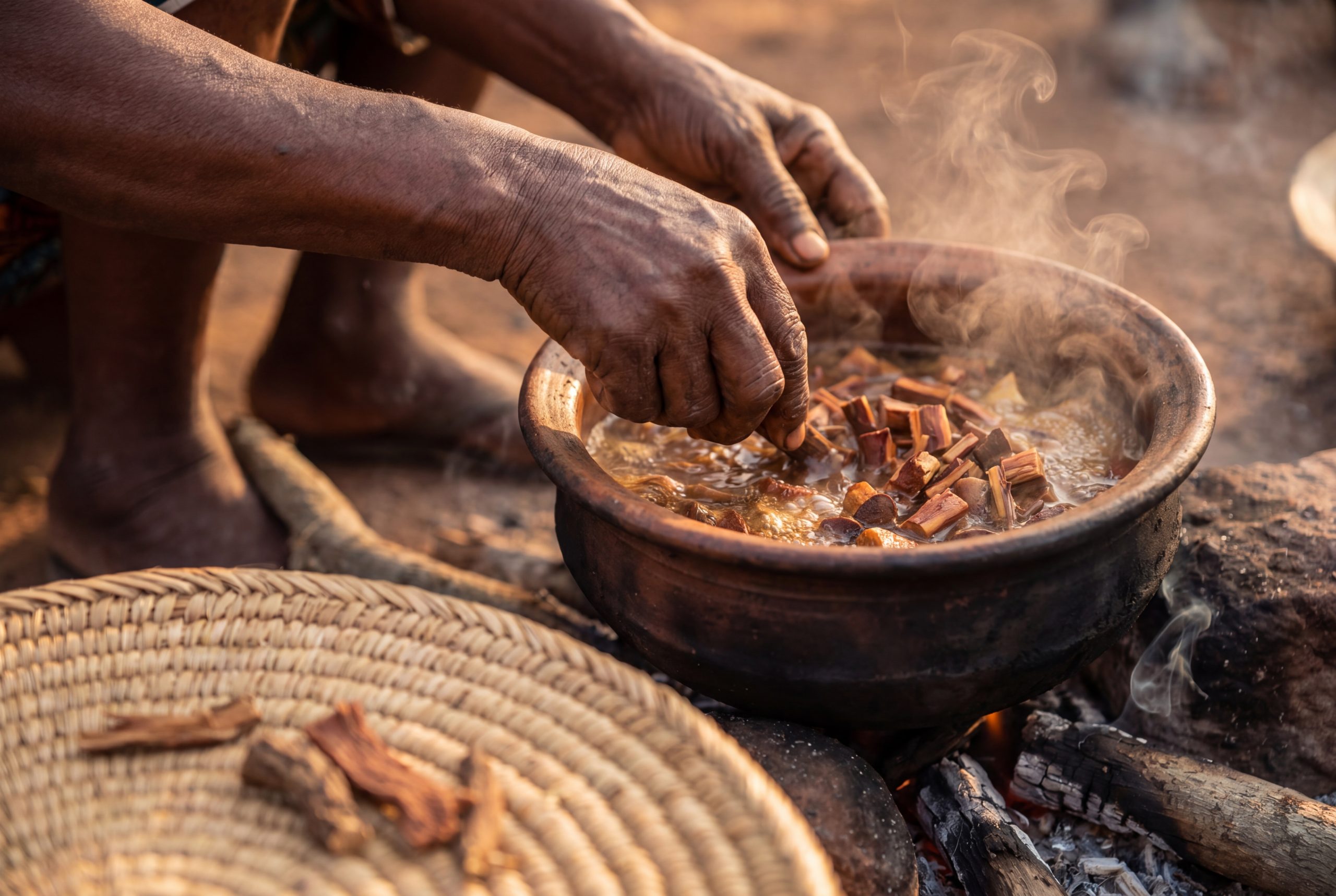
The most common preparation is a root decoction, made by simmering chopped or powdered root in water for an extended period (typically 30 to 60 minutes) and drinking the strained liquid warm. Tincture-style preparations using local spirits are documented in the Cameroonian and Nigerian sources we have reviewed, though these are less common than the water decoctions. External preparations for rheumatism and joint pain typically use a stronger decoction applied as a wash or compress to the affected area.
Vernacular names by region
Knowing the vernacular names is useful when reading traditional-use sources, because the same plant is described under different names depending on the language community.
| Language or region | Vernacular name |
|---|---|
| English (herbal trade) | African peach, pin cushion tree, opepe |
| Hausa (Nigeria, Niger) | Tafashiya, Marga |
| Yoruba (Nigeria, Benin) | Egbesi, kanrinkan |
| Igbo (Nigeria) | Uburu inu |
| French (West Africa) | Pêcher africain, bilolo |
| Bambara (Mali, Burkina Faso) | Bati, badi |
How does Nauclea latifolia compare to other muscle-support herbs?
Nauclea latifolia is one option in a wider field of botanicals that have documented or claimed muscle-recovery and physical-vitality applications. Understanding where it sits in that field helps users decide whether it is the right starting point or whether a better-studied alternative makes more sense for their specific situation.
| Plant | Primary traditional use | Best-documented mechanism | Best fit for |
|---|---|---|---|
| Nauclea latifolia | Pain modulation, post-exertion recovery tonic | Opioid and serotonergic antinociception, anti-inflammatory action | Soreness, post-training recovery, restoration after heavy physical work |
| Fadogia agrestis | Vitality and male reproductive tonic | Possible androgenic activity (animal studies) | Hormonal-axis support, libido, and training motivation |
| Ashwagandha (Withania somnifera) | Ayurvedic rasayana, stress recovery | Cortisol modulation, sleep quality | Cortisol-driven recovery deficits, sleep, stress-related muscle loss |
| Suma root (Pfaffia paniculata) | Amazonian general tonic, “Brazilian ginseng.” | Ecdysteroid content, glycoside-mediated tonic activity | Energy, baseline vitality, training output |
| Tongkat ali (Eurycoma longifolia) | Southeast Asian male tonic, fatigue | Cortisol-to-testosterone ratio shift, energy | Hormone-axis support, recovery in older athletes |
| This comparison emphasizes traditional and mechanistic differences, not relative potency. Each plant is best suited to a different recovery question. | |||
The honest read: Nauclea latifolia is not the right starting point for someone whose main recovery problem is hormonal. It is the right starting point for someone whose main recovery problem is pain and inflammation, and who wants a botanical alternative to daily over-the-counter analgesics. For broader recovery questions involving cortisol and sleep, ashwagandha has a much larger clinical trial base. For hormone-axis support, Fadogia agrestis and tongkat ali sit closer to the documented evidence. We carry all four because they answer different questions, and we will steer customers toward the option that matches their actual situation rather than the one with the highest margin.
Sourcing and quality considerations for Nauclea latifolia
The single largest source of variation in Nauclea latifolia products on the market is the source material itself. Because the plant is wild-harvested across a wide geographic range and processed by many different intermediaries before reaching a retail brand, two products labeled “Nauclea latifolia root” can carry substantially different phytochemical profiles. From our editorial team’s hands-on assessment, the dimensions that matter most are origin region, tree maturity, harvest season, and post-harvest processing.
Origin and terroir
We source primarily from West African suppliers operating within the plant’s native range, with most of our root material coming from northern Nigeria and southwestern Cameroon. The native range is roughly bounded by 4 to 14 degrees north latitude and 16 degrees west to 30 degrees east longitude, broadly the Sudanian and Guinean savanna belts. Material harvested from this range tends to carry a denser indole alkaloid fraction than material from outside the native range or from immature cultivated trees.
Tree maturity and harvest season
Mature trees at least four years old produce roots with the secondary-metabolite density that the pharmacology literature describes. Roots from younger trees are visually similar but biochemically thin. Harvest season also matters: the late dry season (typically January through March in the native range) is when root alkaloid content peaks, and this is the window our suppliers target.
Wild-harvest versus cultivation tradeoffs
The bulk of commercial Nauclea latifolia material is wild-harvested rather than cultivated, because attempts to bring the tree into intensive cultivation have generally produced lower-alkaloid roots that under-deliver on the activity profile that the traditional and pharmacology literature describes. The tradeoff is supply consistency. Wild harvest produces variable yields year over year and depends on responsible sourcing relationships that respect the regenerative capacity of the wild populations. Our editorial team’s working position is that quality and ethnobotanical fidelity outweigh the supply convenience of cultivated material, and our supplier vetting reflects that.
Indicators of responsible wild harvest
Indicators that a wild-harvest relationship is on solid footing include rotational harvest practices that allow individual stands to recover for several years between collections, root harvest that leaves the main taproot intact so the tree can regenerate, and a documented chain of custody from harvest site to processor. Suppliers who can describe these practices in concrete terms (rather than in marketing-brochure language) are the ones whose material we work with.
A note on CITES and regulatory status
Nauclea latifolia is not currently listed under the Convention on International Trade in Endangered Species (CITES) and is not classified as threatened on the IUCN Red List in the regions where the bulk of commercial material is sourced. That said, responsible wild-harvest practice matters regardless of formal listing status, because long-running over-harvest can erode local populations long before they reach a regulatory threshold.
What to look for on a product label
A trustworthy Nauclea latifolia product label should specify the botanical name (ideally listing both Nauclea latifolia and the accepted synonym Sarcocephalus latifolius), the plant part used (root, stem bark, or both), the country or region of origin, and the form (whole root, cut and sifted, powder, tincture, or standardized extract). Labels that say only “African peach” without the Latin binomial, or that omit the plant part, are warning signs. Third-party identity testing using HPTLC or HPLC fingerprinting against a verified reference sample is the gold standard for confirming the material on the label is actually the plant in the bottle.
Our own quality protocol uses HPTLC identity testing against a verified Nauclea latifolia root reference, plus heavy-metal and microbial screening in line with USP and current Good Manufacturing Practice (cGMP) standards. We document every batch by lot number and retain a reference sample for at least 24 months after the lot ships.

How to use Nauclea latifolia for muscle support
There is no single “right” dose of Nauclea latifolia for muscle support, because the human-trial evidence base that would establish such a dose does not yet exist. What does exist is a traditional-use range, a small set of animal-study dose figures, and the practical experience of herbalists who work with the plant. We share what is documented, with the caveat that individual response varies and a low-and-slow approach is sensible for any new botanical.
Traditional decoction approach
The most documented traditional preparation is a root decoction. A typical traditional recipe uses 5 to 10 grams of dried root, simmered in 500 milliliters of water for 30 to 60 minutes, with the strained liquid divided into two or three doses over the day. The taste is bitter and astringent, which is a property of the alkaloid and tannin content rather than a sign of spoilage.
Tincture approach
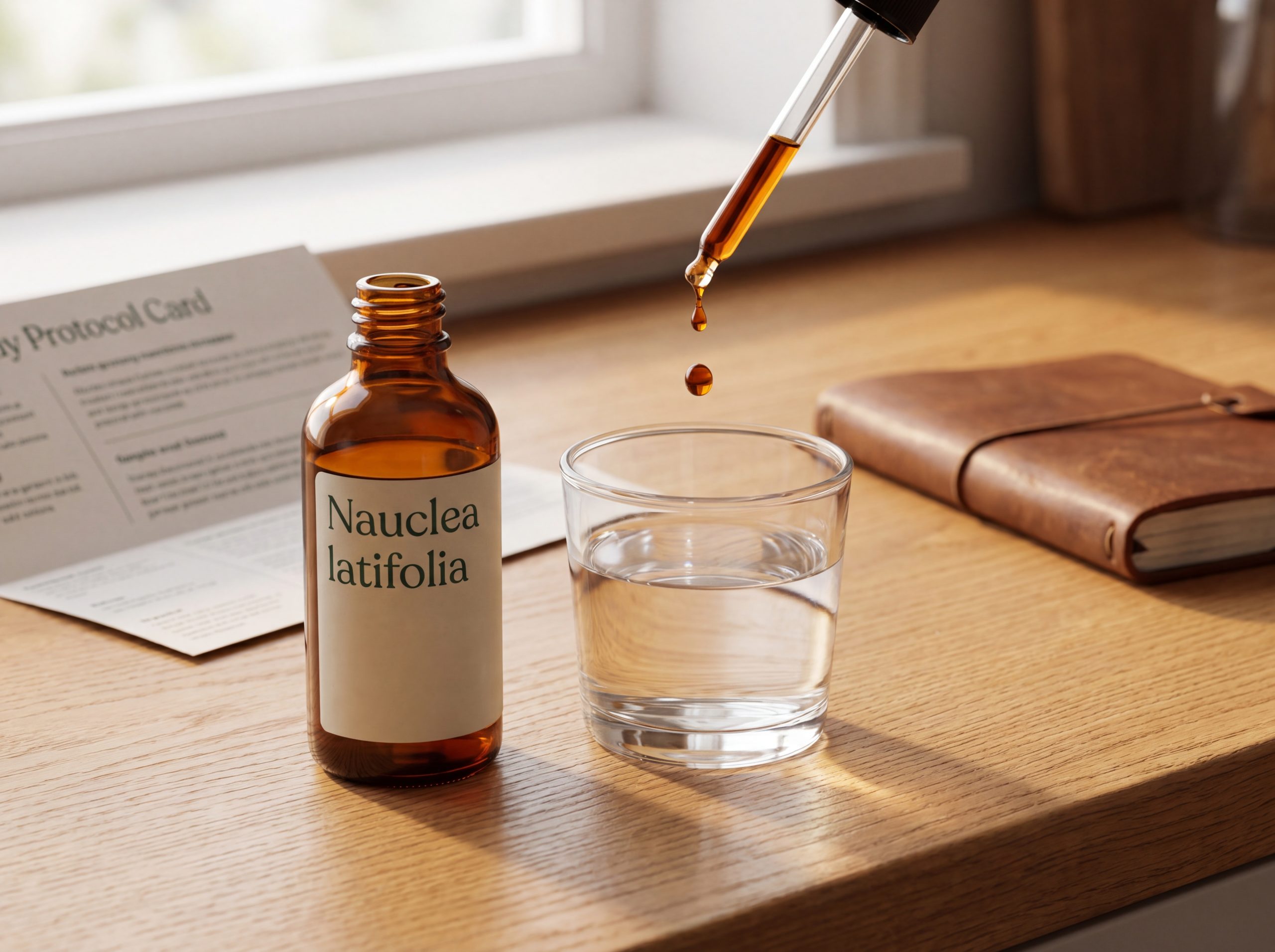
A 1:5 alcohol tincture of Nauclea latifolia root concentrates the alkaloid and polyphenol fractions and produces a more reproducible dose than a kitchen-table decoction. Typical adult dosing for a 1:5 root tincture is 2 to 4 milliliters two or three times daily, taken in water, with adjustments based on individual response over the first two weeks. Tincture preparations are also the format that integrates most easily into a daily routine for long-term tonic use.
Timing relative to training
For muscle support specifically, the timing question that comes up most often is whether to dose Nauclea latifolia pre-workout, post-workout, or daily. The traditional-use pattern and the mechanistic profile both point toward daily tonic use rather than acute pre-workout dosing. The anti-inflammatory and recovery-tonic effects build over days to weeks, and acute single-dose effects are subtle. Our editorial team’s working recommendation is daily dosing for at least 4 weeks before evaluating whether the plant is contributing to recovery in a noticeable way.
Pairing with other recovery practices
Nauclea latifolia performs best as a supporting member of a broader recovery practice rather than as a standalone intervention. Protein intake adequate for training volume, sleep of 7 to 9 hours per night, and structured rest days do more for muscle recovery than any single botanical can on its own. The plant’s role is to take the edge off the inflammatory and pain response that accumulates during a training cycle, so that the other recovery practices have less work to do. We see this reflected in the user feedback we collect: people who pair Nauclea latifolia with a baseline of adequate sleep and protein report a perceptible benefit, while people relying on the herb to compensate for poor sleep or under-eating typically do not.
For users who already work with our existing Nauclea line, our Nauclea latifolia (African peach) root tincture is the format we have built around this daily tonic use case. The tincture is made from West African wild-harvested root extracted at a 1:5 ratio in food-grade alcohol, with the dropper marked for the 2 to 4 milliliter dose range described above.
Safety, side effects, and contraindications
Nauclea latifolia has a long traditional-use history in West and Central Africa, which is the strongest empirical safety signal available short of formal clinical trials. The plant has been consumed in routine traditional preparations across multiple generations and multiple language communities, and serious adverse events are not prominent in the ethnobotanical record. That said, traditional safety is not the same as clinical safety, and several specific cautions apply.
Pregnancy and breastfeeding
Nauclea latifolia is not recommended during pregnancy or breastfeeding. Some West African traditional preparations use the plant specifically to influence uterine activity, which means it should be avoided by anyone who is pregnant, trying to conceive, or breastfeeding, until the safety profile in these populations is better characterized in the clinical literature.
Pediatric use
Adult dosing should not be applied to children. Pediatric herbal practice in West African traditional medicine uses substantially reduced preparations, and dosing for children should be set by a qualified herbalist or healthcare provider familiar with both pediatric herbalism and the plant.
Interaction with opioid and analgesic medications
Because the Taïwe pharmacology work documented opioid-receptor activity that is partially reversed by naloxone, anyone using prescription opioid analgesics, tramadol, or other centrally acting pain medications should consult a healthcare provider before adding Nauclea latifolia. The interaction has not been formally characterized in humans, but the mechanistic overlap is documented in the peer-reviewed literature and warrants caution.
Other cautions
People with known liver or kidney conditions should consult a healthcare provider before starting any concentrated herbal preparation, including Nauclea latifolia. The same applies to anyone taking multiple prescription medications, since herbal preparations can affect drug metabolism in ways that have not been fully mapped. As with any new herbal protocol, start at the low end of the dose range and watch for skin reactions, gastrointestinal upset, or unexpected fatigue in the first week.
FDA disclaimer
The statements in this article have not been evaluated by the Food and Drug Administration. Nauclea latifolia products from our brand and any other brand are not intended to diagnose, treat, cure, or prevent any disease. This article is provided for educational and informational purposes only and does not constitute medical advice.
Common misconceptions about Nauclea latifolia for muscle support
Three patterns of misunderstanding come up regularly in customer questions and in product copy from other brands. We address them directly here because clearing them up changes how realistic the expected results are.
Misconception: Nauclea latifolia is a natural tramadol
The “natural tramadol” framing has a kernel of truth (an isolated alkaloid does show a tramadol-like binding profile in the laboratory), but the framing oversells the whole-plant preparation. The alkaloid in question is present at far lower concentrations in a typical root preparation than in the purified compound used in pharmacology experiments. Traditional decoctions and standard tinctures produce mild antinociceptive activity that overlaps with the lower end of tramadol’s effect range, not the analgesic equivalent of a pharmaceutical dose. Anyone expecting prescription-strength pain relief from a botanical preparation will be disappointed.
Why the framing persists
The “natural tramadol” framing persists because it is genuinely interesting science, and because the comparison gives a clear reference point to a general audience. The right way to read it is as evidence that the plant has documented opioid-pathway activity worth taking seriously (including the caution about combining it with prescription opioids), not as a license to dose it expecting pharmaceutical results.
Misconception: Nauclea latifolia is a pre-workout stimulant
Nauclea latifolia is not a stimulant. It contains no caffeine, no synephrine, and no compounds known to drive an acute sympathetic-nervous-system response. Marketing copy that groups it with pre-workout formulations misrepresents both the traditional use case and the pharmacology profile. The plant works as a daily tonic that supports recovery over weeks, not as an acute energy aid for the 30 minutes before a workout.
Misconception: Nauclea latifolia replaces protein, training, or rest
No herbal preparation replaces the foundational inputs to muscle recovery and growth. Adequate dietary protein (typically 1.6 to 2.2 grams per kilogram of bodyweight per day for active adults), progressive overload in training, and sleep of 7 to 9 hours per night do the actual work. Botanicals like Nauclea latifolia, used at appropriate doses with consistent timing, can support that work at the margins by reducing inflammatory load and supporting baseline vitality. They do not replace it. We have watched this pattern repeatedly in customer feedback: people whose recovery foundations are solid notice a perceptible benefit, while people relying on a botanical to compensate for chronic under-recovery typically do not.
What users typically report after using Nauclea latifolia for muscle support
We collect post-purchase feedback from our customers on a rolling basis and review the patterns that emerge for each herb in our line. The picture for Nauclea latifolia is consistent enough that it is worth summarizing what the typical use pattern actually produces, so that new users have a realistic frame of reference.
Week 1 to week 2
Most users do not report a dramatic acute effect in the first week. The most common feedback in this window is a subtle reduction in next-day soreness after harder training sessions, often described as “the soreness is still there but I notice it less” or “I bounced back a day faster than usual.” Some users report a mild calming effect in the evenings, which we attribute tentatively to the plant’s documented activity on central pain and serotonergic pathways.
Week 3 to week 4
By the third or fourth week of consistent daily dosing, the pattern shifts. Users typically describe a felt sense of restored baseline energy after a training block that previously left them flat, and a steadier emotional response to physical demands. This aligns with the traditional tonic-use category and with the cumulative anti-inflammatory effect that the pharmacology literature documents. The shift is rarely dramatic, but it is reported consistently enough that we now tell new customers to plan for a 4-week trial before evaluating the herb.
Beyond week 4
For long-term users, Nauclea latifolia tends to settle into the background as part of a stable daily recovery routine rather than producing ongoing novel effects. This is the pattern typical of tonic-category herbs across multiple traditional medicine systems. Cycling off for one or two months per quarter is a reasonable practice that many of our long-term customers report following, though it is not a strict requirement based on the safety record.
Frequently asked questions about Nauclea latifolia for muscle support
What is Nauclea latifolia used for traditionally?
Traditionally, Nauclea latifolia (African peach, Sarcocephalus latifolius) is used across West and Central Africa for fever, malaria, gastrointestinal complaints, dental and oral health (the small twigs are used as chewing sticks), inflammation, and as a tonic for physical strength and recovery. The muscle-support and antinociceptive applications appear in multiple regional ethnobotanical surveys, with the root and stem bark being the parts most often used for these purposes.
How does Nauclea latifolia work for muscle support?
The mechanism has three documented arms. First, pain modulation through partial interaction with the body’s opioid and serotonergic systems, as documented in animal-model work by Taïwe and colleagues at PMC3317381 and PMID 24263011. Second, anti-inflammatory action driven by polyphenols and alkaloids, documented in the Wiley and Springer papers cited above. Third, a traditional tonic effect that has not yet been reduced to a single biochemical pathway but is consistently described across unrelated traditional medicine systems.
What are the main active compounds in Nauclea latifolia?
The main active compounds are indole alkaloids (naucleamides, angustoline, nauclechine), polyphenols and flavonoids (catechins, quercetin and kaempferol derivatives), triterpene saponins (quinovic acid glycosides, oleanolic acid derivatives), and hydrolyzable and condensed tannins. Ascorbic acid and dietary fiber contribute to the nutritive profile of the root. The indole alkaloid fraction is the compound class most directly linked to the antinociceptive activity documented in the pharmacology literature.
Is Nauclea latifolia similar to tramadol?
An alkaloid isolated from Nauclea latifolia has been reported to bind opioid receptors with a profile resembling tramadol, which is the source of the “natural tramadol” framing that occasionally appears in popular coverage. This is mechanistically interesting but should not be read as a claim that traditional Nauclea latifolia preparations produce a tramadol-equivalent analgesic effect at typical doses. The whole-plant preparation contains the alkaloid at far lower concentrations than the isolated compound studied in the laboratory.
How is Nauclea latifolia prepared?
The two most common preparations are a root decoction (5 to 10 grams of dried root simmered in 500 milliliters of water for 30 to 60 minutes) and a 1:5 alcohol tincture of the root (typical adult dose 2 to 4 milliliters two or three times daily). External preparations for rheumatism use a stronger decoction applied as a wash or compress.
Is Nauclea latifolia safe for everyone?
No. It is not recommended during pregnancy or breastfeeding, adult dosing should not be applied to children, and people using prescription opioid analgesics, tramadol, or other centrally acting pain medications should consult a healthcare provider before adding it. People with liver or kidney conditions or those taking multiple prescription medications should also consult a healthcare provider before starting.
What part of Nauclea latifolia is used for muscle support?
The root and the inner bark of the stem are the parts most often referenced for muscle-related and antinociceptive applications in both the traditional-use literature and the modern pharmacology research. Leaf preparations exist but are more commonly associated with fever and malaria uses. For sourcing, root material from mature trees (at least 4 years old) harvested in the late dry season carries the densest alkaloid profile.
How long does it take to feel the effects of Nauclea latifolia?
The acute effects are subtle. The recovery-tonic effects that users typically describe build over a 2 to 4 week window of daily dosing. We recommend at least a 4-week trial at the low end of the dose range before deciding whether the plant is contributing meaningfully to your recovery routine. Acute single-dose use as a pre-workout is not the right framework for this herb.
Related reading
Continue exploring this topic with these related articles and reference pages from our team:
- The full adaptogenic herbs reference
- Best herbs for muscle growth
- Herbs used for natural pain relief
- Alstonia boonei bark tincture (another West African ethnobotanical in our line)
- Fadogia agrestis extract (West African vitality and reproductive tonic)