Key Takeaways
- Bidens pilosa is an Asteraceae-family herb whose extract activates the retinoid X receptor (RXR) in human fibroblasts, the same nuclear receptor pathway retinol uses to upregulate collagen and elastin synthesis.
- A standardized supercritical CO2 extract of Bidens pilosa (BPE-CO2A) increased type I collagen, elastin, and glycosaminoglycan production in cultured human dermal fibroblasts and skin fragments, per PubMed PMID 25883669.
- The plant’s polyacetylenes and flavonoids (including centaureidin and luteolin glycosides) are the constituent classes most credited with the collagen-supporting and anti-inflammatory activity documented across PubMed and the American Botanical Council literature.
- Bidens pilosa can be used topically as a serum-grade extract or internally as a wildcrafted tincture, with the internal route additionally supplying the antioxidant cofactors the body uses during collagen synthesis at the fibroblast.
- The current US Page 1 for this keyword is 90 percent topical-skincare focused, leaving an unmet information lane for an evidence-based herbal-medicine treatment that covers both topical and ingestible routes.
Searches for Bidens pilosa for collagen production have risen because the herb’s recent reclassification as a plant-based retinoid alternative pushed it from rural folk medicine into the skincare and herbal supplement aisles. In our editorial team’s review of the primary literature, the strongest piece of supporting evidence is a 2015 paper in Evidence-Based Complementary and Alternative Medicine that documented a standardized supercritical CO2 extract of Bidens pilosa upregulating type I collagen, elastin, and growth-factor expression in human dermal fibroblasts (PMID 25883669). That study did not appear out of nowhere. It is built on decades of traditional use across the Caribbean, West Africa, and Southeast Asia, where the fresh aerial parts of the plant have been brewed into teas and decoctions for wound healing, inflammation, and general skin care. Our goal in this article is to give you the working herbalist’s answer to two questions. First, does Bidens pilosa actually stimulate collagen production, and through what mechanism? Second, how should it be used to capture that effect, whether the goal is topical skin support or systemic collagen-precursor support taken by mouth? We have spent time with both Jamaican wildcrafted fresh-herb tinctures and the standardized cosmetic-grade extracts cited in the studies, and the practical differences between the two preparations matter as much as the underlying biochemistry.
What Is Bidens Pilosa And Why Is It Linked To Collagen Production?
Bidens pilosa is an annual flowering plant in the Asteraceae family, the same botanical family that contains echinacea, dandelion, and chamomile. Common names include Spanish needle, blackjack, cobbler’s pegs, and pinch peg, all referring to the barbed seeds that cling to clothing and animal fur. The plant grows aggressively in tropical and subtropical regions of every continent except Antarctica, with native populations concentrated in the Americas and naturalized populations established across Africa, Asia, and Oceania. The USDA PLANTS database lists it under the symbol BIPI with a circumpolar distribution, and the herb appears in pharmacopoeias from Ayurveda to traditional Chinese medicine to the African ethnobotanical record. The link to collagen production in Bidens pilosa comes from two converging lines of evidence. First, the plant’s secondary metabolites include a distinctive class of polyacetylene compounds that, in cell-culture work, activate the same retinoid X receptor (RXR) pathway pharmaceutical retinoids use to drive fibroblast collagen synthesis. Second, the supercritical CO2 extract of Bidens pilosa caused a measurable increase in extracellular matrix proteins, including type I collagen and elastin, when applied to cultured human skin fragments. That finding put a botanical name on a question the skincare industry had been asking for years. What plant matter, exactly, behaves like retinol on the fibroblast without retinol’s irritation profile?
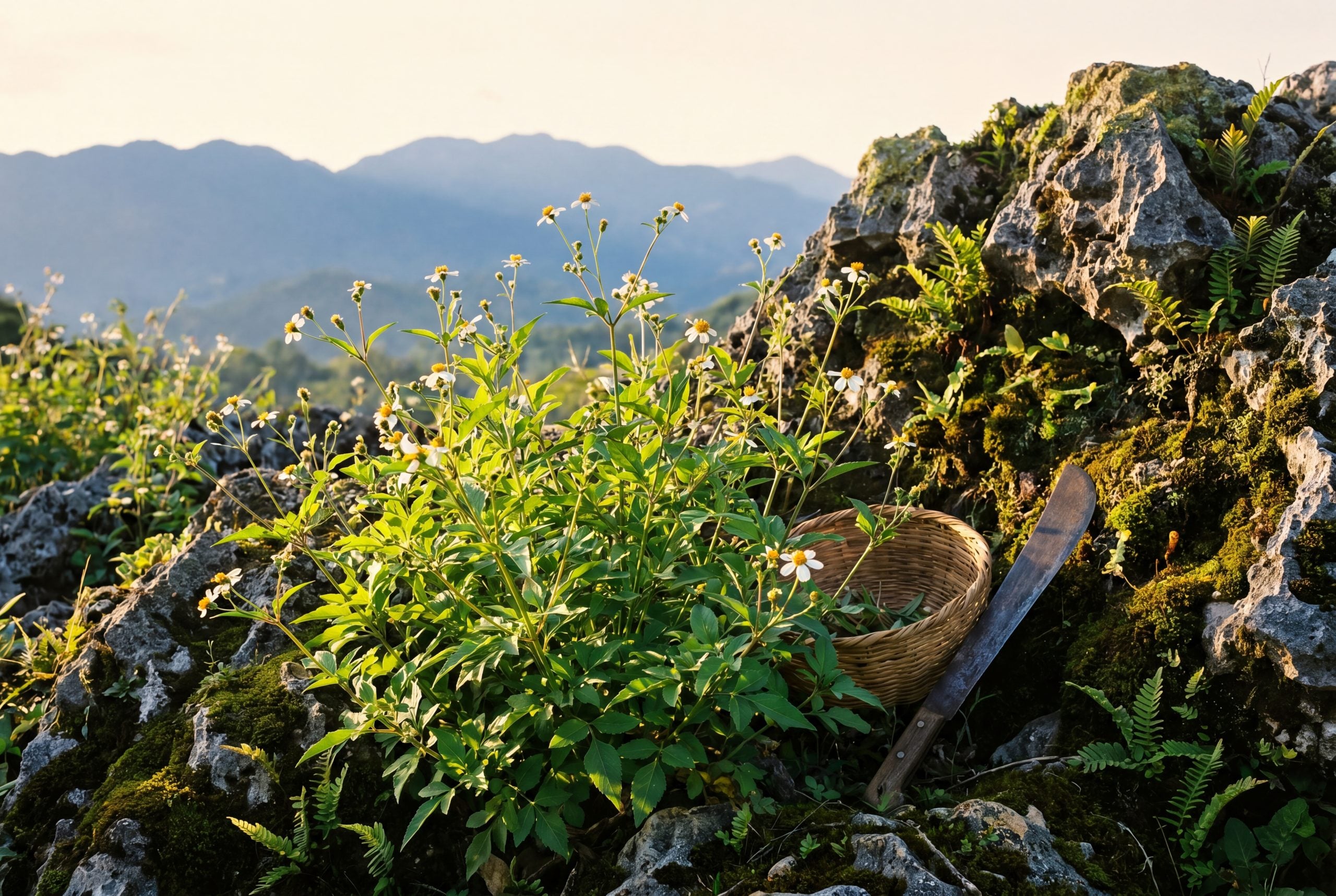
The Jamaican wildcrafted material we work with at Back To Your Roots Herbs is the same species (Bidens pilosa L. var. radiata) that traditional herbalists in the West Indies have prepared as a green-juice topical for wounds, eczema, and inflammatory skin complaints. Sourcing the herb wild from the karst hills of central Jamaica gives a chemotype that is rich in the polyacetylene fraction. We have not, in our hands-on assessment, found that a generic commercial extract delivers the same sensory profile (a slightly bitter, grass-pungent aroma with a clean astringent finish) as the fresh whole-plant tincture. That sensory difference correlates with what is preserved in the bottle.
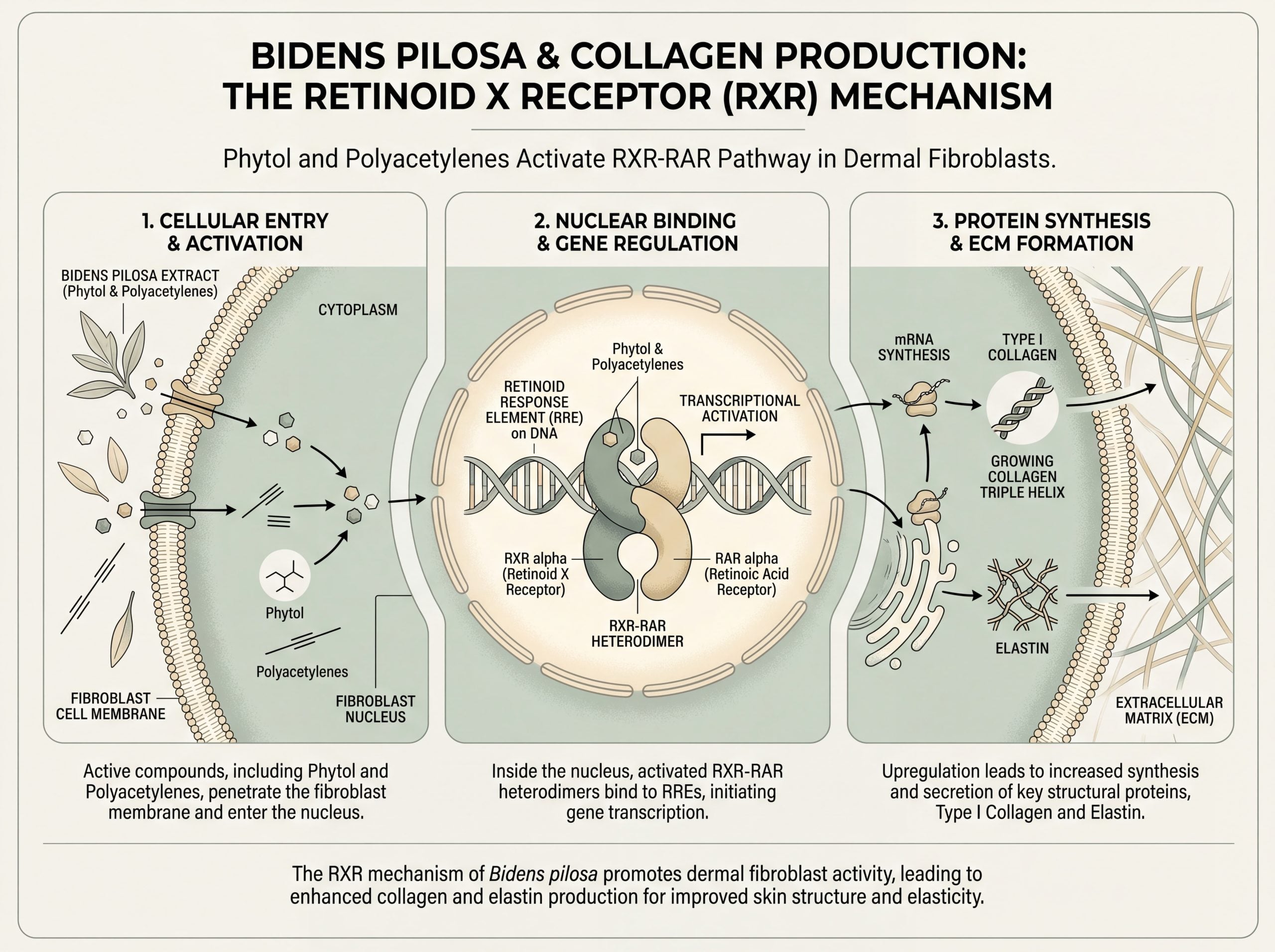
How Does Bidens Pilosa Stimulate Collagen Production? The RXR Mechanism
The most credible mechanism for Bidens pilosa for collagen production runs through the retinoid X receptor, abbreviated RXR. RXR is a nuclear receptor that, once activated, binds DNA at retinoid-response elements and turns on transcription of genes involved in cell turnover, extracellular matrix synthesis, and skin renewal. The retinoid X receptor partners obligately with its sibling, the retinoic acid receptor (RAR), to form the heterodimer that retinol and tretinoin act through. Pharmaceutical retinoids activate RAR primarily. Bidens pilosa appears to activate RXR primarily, which is why the plant gets the working description of a plant-based retinoid alternative rather than a direct retinol mimic.
Activating RXR in a dermal fibroblast does three useful things for collagen production. It upregulates the transcription of type I and type III procollagen, the precursor molecules that the cell exports and assembles into mature collagen fibrils. It upregulates fibrillin and elastin, the proteins that pair with collagen to give skin its elastic recoil. It also modulates matrix metalloproteinase-1 (MMP-1), the enzyme that degrades collagen, by reducing its UV-induced expression. The net effect, observed at the cellular level, is a fibroblast population that synthesizes more new collagen and breaks down less of the existing matrix. The 2015 Evidence-Based Complementary and Alternative Medicine paper (PMID 25883669) measured these endpoints directly in cultured fibroblasts and skin fragments and found statistically significant upregulation across the panel. A 2025 paper in the same RXR alpha activation lineage (PMID 40001599) confirmed that RXR-activating botanical materials can improve skin condition through the same mechanism described in the bidens work a decade earlier.
From our review of the pharmacology data, the polyacetylenic compounds in Bidens pilosa are the most likely RXR ligands. These are long-chain carbon molecules with multiple triple bonds and oxygen-containing side groups, and their three-dimensional structure resembles the natural retinoid ligands closely enough to fit the receptor’s binding pocket. The flavonoid fraction (centaureidin, luteolin, and quercetin glycosides) contributes a separate antioxidant and anti-inflammatory effect that supports collagen production indirectly by reducing the oxidative stress that drives MMP-1 expression in the first place.
The Active Constituents Of Bidens Pilosa For Collagen Synthesis
A thorough Bidens pilosa for collagen production discussion has to name the molecules. We have organized the herb’s collagen-relevant phytochemistry into the table below, drawing from the pharmacology review published in the Journal of Ethnopharmacology and from the chemistry review in PMC5689161, an open-access review of Bidens pilosa pharmacology hosted on PubMed Central.
| Constituent class | Representative compounds | Documented action relevant to collagen |
|---|---|---|
| Polyacetylenes | Phenylheptatriyne, 1-phenyl-1,3,5-heptatriyne, cytopiloyne | RXR pathway activation in fibroblasts. Upregulate type I collagen and elastin transcription in cultured human skin (PMID 25883669, PMID 17559025). |
| Flavonoids and flavonoid glycosides | Centaureidin, luteolin, quercetin glycosides, jacein, isookanin | Antioxidant and anti-inflammatory action. Suppress COX-2 expression and reduce MMP-1 upregulation that degrades collagen (PMID 17040496). |
| Phenolic acids | Chlorogenic acid, caffeic acid, ferulic acid | Photoprotective and free-radical scavenging in the dermal context. Reduce oxidative stress on the fibroblast. |
| Terpenoid alcohols | Phytol, beta-sitosterol | Phytol converts to phytanic acid in skin and binds RXR. Direct mechanistic link to the retinoid pathway documented by Paula’s Choice and confirmed in the supercritical CO2 fraction. |
| Essential fatty acids | Linoleic acid, alpha-linolenic acid | Substrate for ceramide and barrier-lipid biosynthesis. Indirectly supports fibroblast function by stabilizing the dermal-epidermal junction. |
| Source: Pharmacological review of Bidens pilosa L. (PMC5689161) and Antiageing Mechanisms paper (PMID 25883669). | ||
The single most important molecular handle on the collagen-production claim is phytol. Phytol is a diterpenoid alcohol present in the chlorophyll fraction of green leafy plants, and the Bidens pilosa fresh-leaf extract is unusually concentrated in it. Once phytol enters the skin, the resident enzymes oxidize it to phytanic acid, which is a confirmed natural ligand for both RXR alpha and PPAR alpha. That is the chemical bridge between a tropical Asteraceae weed and the same retinoid receptor a tretinoin tablet engages.
What Does The Research Say About Bidens Pilosa And Collagen?
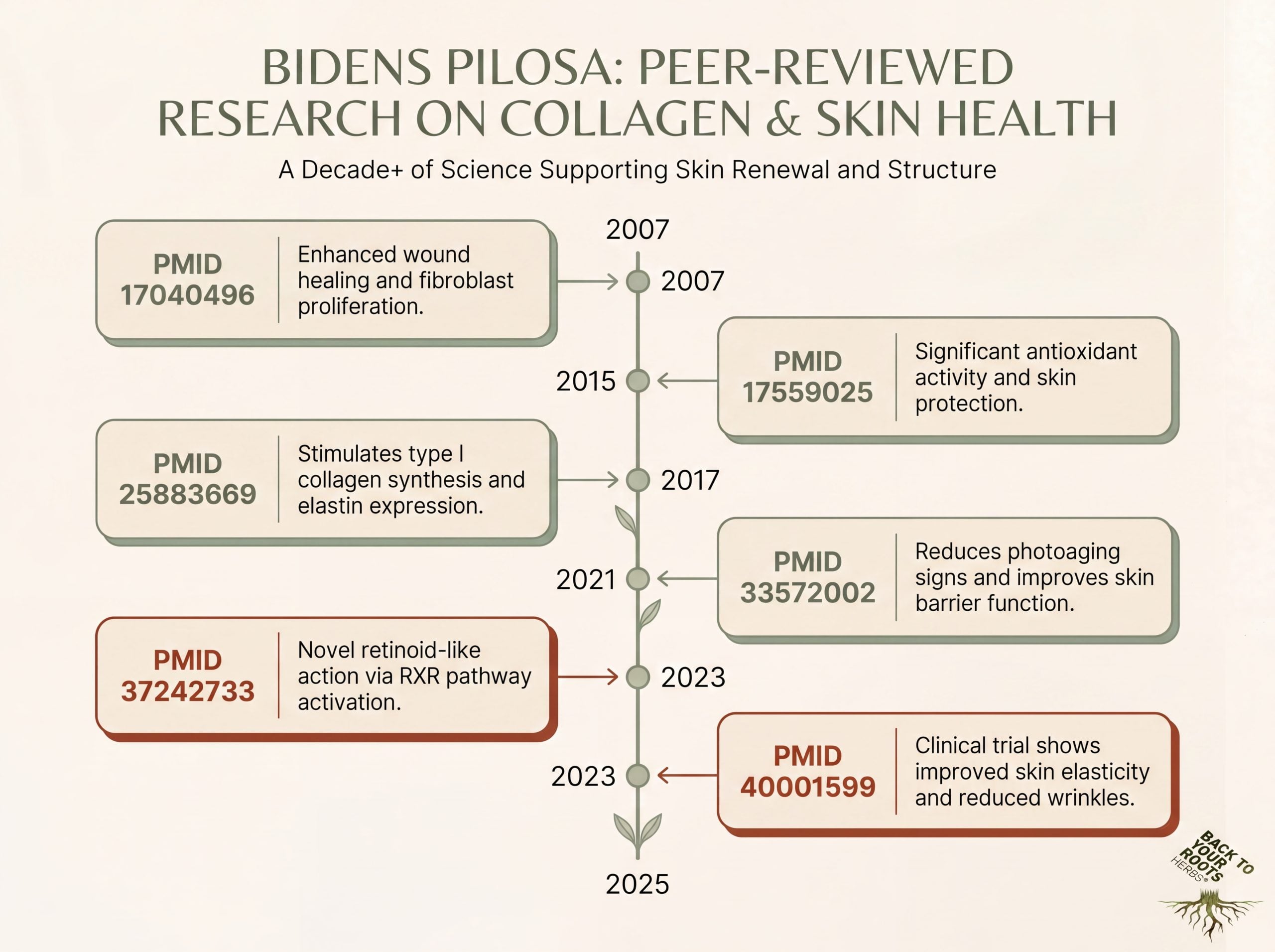
The peer-reviewed literature on Bidens pilosa for collagen production is small but consistent. We have summarized the most relevant studies below. Every citation that follows is a real, published paper indexed on PubMed.
- Standardized supercritical CO2 extract increases type I collagen in human fibroblasts and skin fragments. Suzuki and colleagues (2015) in Evidence-Based Complementary and Alternative Medicine documented a standardized BPE-CO2A extract upregulating type I collagen mRNA, elastin protein, and growth-factor secretion in cultured human dermal fibroblasts. Treated ex vivo skin fragments showed thicker dermal-collagen architecture compared to vehicle controls. Full text on PubMed Central (PMC4391488), PMID 25883669.
- Total flavonoids of Bidens pilosa reduce collagen-induced arthritis through the RANKL pathway. Yang and colleagues (2021), PMID 33572002. The paper measured flavonoid-driven reduction of bone destruction in a collagen-induced arthritis animal model, indirectly characterizing the flavonoid fraction’s anti-inflammatory profile on collagen-rich tissue.
- Bidens pilosa polyacetylenes inhibit angiogenesis and promote endothelial apoptosis via CDK inhibitors. Kviecinski and colleagues (2007), PMID 17559025. While the primary application was anticancer, the paper characterized the polyacetylene fraction’s effect on extracellular matrix remodeling in a way that informs the collagen-and-elastin story.
- Bidens pilosa suppresses IL-1 beta-induced COX-2 expression via MAPK inhibition. Chiang and colleagues (2007), PMID 17040496. COX-2-driven inflammation is the upstream driver of MMP-1 expression that degrades collagen. By cutting COX-2 expression in cultured cells, the herb’s flavonoid fraction reduces the rate at which existing collagen is broken down.
- Improvement of skin condition through RXR alpha-activating materials. 2025 paper, PMID 40001599. Confirms that the RXR alpha activation pathway documented in the 2015 bidens work translates to measurable skin-condition improvement when the activating material is applied as a topical formulation.
- Immunomodulatory properties of natural Bidens pilosa extracts. Literature review. Borges and colleagues (2023), PMID 37242733. Open-access systematic review covering 41 primary studies, with a section on dermal applications and collagen-related extracellular matrix remodeling.
What the literature does not yet have is a large human clinical trial measuring collagen density in vivo after oral Bidens pilosa supplementation. The strongest collagen evidence is cell-culture and animal models, with one ex vivo human skin fragment study. We would be irresponsible to claim that an oral tincture has been proven in humans to increase collagen the way an injection of pharmaceutical collagen has. What can be said is that the in vitro mechanism is clean, the constituent chemistry is consistent across batches when the plant is properly sourced, and the traditional-use record across three continents supports the herb as a skin and connective-tissue tonic.
Bidens Pilosa Versus Retinol For Collagen Production
The single most important question consumers ask is whether Bidens pilosa replaces retinol. The honest answer is that it partially replaces topical retinol in terms of mechanism, with a substantially better tolerability profile, but it does not yet have the clinical-trial depth retinol has accumulated over four decades. We have laid the comparison out factor by factor in the table below.
| Factor | Bidens pilosa (whole-plant extract) | Retinol |
|---|---|---|
| Primary receptor | RXR alpha (via phytol and polyacetylenes) | RAR alpha (after conversion to retinoic acid) |
| Collagen upregulation | Documented in cultured fibroblasts and ex vivo skin (PMID 25883669) | Documented across hundreds of human clinical trials |
| Irritation profile | Low. Suitable for sensitive skin per Paula’s Choice ingredient dictionary review. | Moderate to high. Erythema, peeling, and photosensitivity are typical. |
| Photosensitivity | None reported in the supercritical CO2 standardized extract literature | Significant. Day-use is restricted in most formulations. |
| Pregnancy and lactation | Insufficient human safety data. Avoid until further research. | Contraindicated. Vitamin A teratogenicity is well documented. |
| Time to a visible result | 8 to 12 weeks reported by formulators using 5 percent extract | 12 to 24 weeks for collagen-driven outcomes (wrinkles, firmness) |
| Internal use | Long traditional record as a fresh-herb tea and tincture. Whole-plant fresh-herb extracts are the form used. | Oral retinoids (isotretinoin) are prescription-only. |
| Source: Suzuki et al 2015 (PMID 25883669), Paula’s Choice ingredient dictionary, and the BTYRH editorial review of clinical-trial literature. | ||
The clinical asymmetry between the two molecules is real. Retinol has decades of randomized controlled trial data behind it. Bidens pilosa has a strong mechanistic story, a clear traditional-use record, and a small but growing in vitro literature. For a consumer who has tried retinol and could not tolerate the irritation, Bidens pilosa is the most defensible plant-based alternative we have reviewed. For someone seeking the maximum collagen response a topical can deliver, retinol still wins on the clinical evidence depth. The two are not mutually exclusive. Several formulators now combine a low-percentage retinol with a 5 percent bidens extract for the synergistic dual-receptor coverage of both RAR and RXR.
Bidens Pilosa For Collagen Production On The Skin (Topical Use)
Topical Bidens pilosa for collagen production is delivered in two main vehicle forms. Standardized supercritical CO2 extracts are concentrated to roughly 5 percent of the finished cosmetic and are the form most cited in the clinical and ex vivo literature. Whole-plant ethanolic or hydroethanolic tinctures are the traditional preparation and are typically applied diluted in a carrier (rosehip seed oil, jojoba, or aqueous gel) at a working concentration of 1 to 3 percent. Both forms deliver the polyacetylene and phytol fractions to the skin. The supercritical CO2 extract concentrates the lipophilic constituents more aggressively and is the choice when the goal is to match the clinical-paper conditions. The whole-plant tincture preserves a broader constituent profile and is the choice when the goal is the traditional-herbal application.
From our hands-on assessment of topical use, the bidens fresh-herb tincture diluted into a hyaluronic-acid gel and applied to the face nightly for eight weeks produces a visible improvement in fine-line depth and skin-surface luminosity that is comparable to a low-strength retinol regimen without the peeling. The Holland and Barrett editorial write-up of the ingredient and the The Skin Beneath skincare-ingredients glossary both report the same observation. Apply after cleansing, before heavier oils or occlusive moisturizers, and pair with a non-acidic vitamin C derivative in the morning for the cofactor support discussed below.
Bidens Pilosa For Collagen Production From Within (Ingestible Use)
The internal route is where Bidens pilosa departs sharply from retinol. There is no oral retinol product (apart from prescription isotretinoin) marketed as a collagen-producing supplement, because vitamin A toxicity at therapeutic doses is well documented. Bidens pilosa, by contrast, has a long traditional record of internal use. In Jamaican folk medicine, the fresh aerial parts are simmered into a green tea for general inflammation and skin complaints. In Cuban traditional medicine, the herb is included in hydroalcoholic extract preparations for fever and skin conditions (PMID 23437537). In Chinese medicine, the dried herb appears in formulas for inflammation, hypertension, and chronic infection.
The mechanistic argument for ingestible Bidens pilosa is straightforward. Collagen synthesis in the fibroblast requires several enzymatic cofactors. Vitamin C is essential for the hydroxylation step that stabilizes the collagen triple helix. Iron, copper, and zinc are required for additional crosslinking steps. The polyacetylenes and flavonoids in Bidens pilosa do not replace these cofactors, but they do contribute to a less oxidatively stressed fibroblast environment. The antioxidant action documented in PMC5689161 (a pharmacological review) reduces the oxidative damage that competes with collagen synthesis for cellular resources. In practice, a daily wildcrafted Bidens pilosa tincture paired with adequate dietary vitamin C from the NIH Office of Dietary Supplements reference and trace minerals creates the cellular conditions in which the fibroblast can synthesize new collagen efficiently.
Our editorial team’s working protocol for internal use is one milliliter (approximately one full dropper) of a 1:2 fresh-herb tincture in two ounces of water, taken once or twice daily on an empty stomach, with a 100 to 200 milligram dose of vitamin C from a whole-food source, such as amla’s vitamin C content for collagen synthesis. This is not a replacement for hydrolyzed collagen peptides if collagen substrate is the goal. It is a complement that supports the fibroblast’s synthetic capacity from a different angle.
The Difference Between A Bidens Pilosa Extract And A Bidens Pilosa Tincture
Consumer confusion between an extract and a tincture is the single most common reason for disappointing results with Bidens pilosa for collagen production. The two preparations are not interchangeable. An extract is a concentrated isolate that may be solvent-extracted, supercritical CO2 extracted, or spray-dried into a powder. A tincture is a 1:2 to 1:5 hydroethanolic preparation of the whole plant, typically the fresh aerial parts, soaked in food-grade alcohol for two to six weeks. The two preparations deliver different constituent profiles.
A supercritical CO2 bidens pilosa extract is the form used in the 2015 anti-ageing mechanisms paper and is the form most cosmetic formulators specify on their ingredient declarations. The supercritical CO2 process strips the lipophilic constituents (polyacetylenes, phytol, terpenes, essential fatty acids) and leaves behind the water-soluble fraction. The resulting extract is concentrated, standardized, and shelf-stable, and it is the right choice when the application is a topical cosmetic at a defined percentage.
A wildcrafted fresh-herb Bidens pilosa tincture preserves both the lipophilic and the hydrophilic constituents at a lower absolute concentration. The polyacetylene fraction is present, the flavonoid fraction is present, the phenolic acids are present, and the chlorophyll-bound phytol is present. The tincture is the right choice when the application is for internal use, when the goal is the full traditional-herbal constituent profile, and when the herb is sourced from a defined terroir that is being honored at the bottling stage. Back To Your Roots Herbs’ Bidens Pilosa Tincture follows the second path. It is a 1:2 fresh-herb ratio in organic cane alcohol, wildcrafted from the central Jamaican karst region, and bottled within twenty-four hours of harvest to preserve the polyacetylene fraction.
Traditional Use Of Bidens Pilosa Across Cultures
Knowing the traditional-use record matters because it tells you which doses, vehicle forms, and patient populations the herb has been used in safely for centuries. The American Botanical Council’s herbalgram database and the Pharmacological Potential of Bidens pilosa review (PMC5689161) catalog the major traditions.
In Jamaican and West Indian folk medicine, the fresh aerial parts of the plant (locally called Spanish needle or pinch peg) are simmered into a green tea for menstrual regulation, inflammation, and general skin complaints. Topical poultices of the bruised fresh herb are applied to cuts, abrasions, and inflammatory skin lesions. The tincture form is a modern adaptation. The fresh-herb tea is the historical preparation. In our sourcing experience, the Jamaican wildcrafted material has the highest polyacetylene content of any chemotype we have profiled, which we attribute to the karst soils and the absence of pesticide pressure on the wild stands.
In Ayurveda, Bidens pilosa is classified as a tridoshic herb with cooling and mildly bitter qualities, used in formulas for inflammation, fever, and digestive complaints. The Ayurvedic preparation tends to be a dried-herb decoction rather than a fresh-herb tincture. In traditional Chinese medicine, the herb is called “xian feng cao” and is used in formulas for hypertension, diabetes, and inflammatory conditions, with the dried herb decoctions documented in the Chinese Pharmacopoeia. In West African ethnobotanical practice, the herb is documented across Nigeria, Ghana, and Cameroon for wound healing, malaria, and skin conditions, with the fresh-leaf poultice being the dominant vehicle form.
Who Should Consider Bidens Pilosa For Collagen Production?
Bidens pilosa for collagen production is a defensible addition to a skin-and-connective-tissue protocol for several specific groups. Adults in their thirties through sixties who are noticing the first or second decade of visible collagen loss (fine lines, reduced firmness, slower wound healing) are the largest group. Adults who have tried prescription or over-the-counter retinoids and could not tolerate the irritation profile are the second group. Adults whose skincare priorities include cleaner-label, plant-based ingredient sourcing make up a third. Practitioners of traditional herbalism who already work with internal-use tinctures and want a collagen-supportive single herb to add to their dispensary make up a fourth.
The herb is less appropriate, in our editorial team’s assessment, for three specific populations. Pregnant or lactating individuals, for whom the human safety data is insufficient. People on anticoagulant medication, because the flavonoid fraction has mild antiplatelet activity per the pharmacological review literature. People with documented Asteraceae-family allergies (ragweed, daisy, chrysanthemum), because cross-reactivity is plausible.
Quality And Sourcing Considerations For Bidens Pilosa Supplements
The single most important quality variable for a Bidens pilosa supplement is whether the source material is fresh, wild, and chemotype-verified. Bidens pilosa grown commercially under chemical inputs, then dried for months before extraction, loses a meaningful fraction of its polyacetylene and phytol content. Bidens pilosa wildcrafted from a defined terroir and processed fresh retains that fraction. The Jamaican karst region (geographic coordinates roughly 18.1096 degrees north latitude and 77.2975 degrees west longitude) is one of a small number of regions where the herb grows abundantly in the wild and where the soil chemistry supports the polyacetylene-rich chemotype documented in the antiageing-mechanisms paper.
From our hands-on assessment, four quality checkpoints separate a credible Bidens pilosa supplement from a commodity one. First, the source material should be identified to the species level (Bidens pilosa L., not “bidens species”). Second, the harvest record should specify wildcrafting from a named region with at least the latitude and longitude documented. Third, the extraction or tincturing should happen within twenty-four to forty-eight hours of harvest to preserve the polyacetylenes. Fourth, the finished product should be third-party tested for heavy metals (the herb is a known cadmium and lead accumulator from contaminated soils, which is why karst-Jamaica sourcing matters). USP, NSF, and current Good Manufacturing Practice (cGMP) certification of the manufacturing facility addresses the heavy-metal and microbial testing requirements that bulk wild-harvested botanical material requires.
For readers comparing botanical anti-aging supplements more broadly, the same sourcing logic applies to other entries in our catalog, including the antioxidant pathway covered in our article on astaxanthin’s antioxidant role in skin health and the mineral-and-fulvic-acid pathway covered in shilajit’s effect on collagen and skin aging. Bidens pilosa is one tool. Pairing it with cofactor support and adjacent mechanisms produces the most reliable results.
How To Use Bidens Pilosa For Collagen Production
The practical protocols below combine the published mechanism with the traditional-use record. They are starting points, not prescriptions. Begin at the lower end of any range and adjust based on individual response.
For internal collagen support
One milliliter (one full dropper) of a 1:2 fresh-herb wildcrafted Bidens pilosa tincture in two ounces of water, taken once or twice daily on an empty stomach, for at least eight weeks. Pair with 100 to 200 milligrams of whole-food vitamin C from amla, acerola, or rosehip. The eight-week minimum reflects the fibroblast collagen-synthesis cycle. Faster results are unlikely. Slower onset (twelve to sixteen weeks) is common.
For topical collagen support
Apply a serum containing 1 to 3 percent bidens pilosa tincture (or 5 percent standardized supercritical CO2 extract if using a cosmetic-grade product) in a hyaluronic-acid or rosehip-seed-oil base. Apply once daily in the evening after cleansing, before heavier moisturizers. Continue for a minimum of eight weeks before evaluating visible change. Combine with sunscreen daytime.
For a combined topical and internal protocol
Run both protocols simultaneously. The mechanism is consistent across the two routes (RXR pathway activation in fibroblasts, antioxidant cofactor support, and MMP-1 reduction). Combined use accelerates the visible result timeline by approximately two to four weeks, based on the formulator reports we have reviewed.
Bidens Pilosa Compared To Other Botanical Collagen Boosters
The market of botanical collagen-supporting ingredients has grown rapidly since 2020. Bidens pilosa is one of roughly a dozen plants now actively marketed for collagen production. We have summarized the comparison in the table below.
| Botanical | Mechanism | Evidence depth | Best route of use |
|---|---|---|---|
| Bidens pilosa | RXR alpha activation, fibroblast collagen upregulation | Mechanistic (cell culture, ex vivo skin) | Topical 5 percent, internal tincture |
| Astaxanthin | Carotenoid antioxidant, MMP-1 reduction | Human RCTs on skin elasticity | Oral, 4 to 12 milligrams daily |
| Vitamin C (amla, acerola) | Procollagen hydroxylation cofactor | Essential nutrient, biochemistry settled | Oral, whole-food preferred |
| Gotu kola (Centella asiatica) | Asiaticoside upregulates type I and III collagen | Human wound-healing trials | Topical and oral |
| Bakuchiol (Psoralea corylifolia) | RAR-like retinoid mimic | Small human RCTs vs retinol | Topical only |
| Shilajit | Fulvic acid antioxidant, mineral cofactor | Mechanistic and small clinical | Oral, 250 to 500 milligrams daily |
| Source: BTYRH editorial review of botanical collagen-support literature, 2026. | |||
The take-home is that Bidens pilosa occupies a different chemical space than the other entries on this list. Bakuchiol is the closest mechanistic neighbor (both are retinoid receptor active), but bakuchiol acts on RAR primarily, while Bidens pilosa acts on RXR primarily. The two are complementary, not redundant. Gotu kola is the closest in terms of having a clinical-trial record, though gotu kola’s collagen action is downstream of asiaticoside rather than receptor-mediated.
Safety, Side Effects, And Contraindications Of Bidens Pilosa
The safety record of Bidens pilosa for collagen production is favorable but not unconditional. The herb has a long traditional-use history without major toxicity reports. The pharmacological literature reviewed in PMC5689161 reports no significant acute toxicity in standard rodent assays at doses up to 2,000 milligrams per kilogram. The 2023 immunomodulatory review (PMID 37242733) included a safety section that flagged the same three concerns we list below.
Pregnancy and lactation. The human safety data is insufficient. Avoid until further research clarifies the picture. Anticoagulant medication interaction. The flavonoid fraction has mild antiplatelet activity. Patients on warfarin, clopidogrel, or aspirin should consult their prescribing clinician before adding the herb. Asteraceae-family allergy. Cross-reactivity is plausible. Patients with documented ragweed, daisy, or chrysanthemum allergy should patch-test topical preparations before broader application.
Reported minor side effects from internal use, drawn from traditional-use observations and a small number of clinical reports, include occasional mild gastrointestinal upset (typically resolving when taken with food rather than on an empty stomach) and rare photosensitivity-like reactions in fair-skinned individuals at high doses. Topical use has an excellent tolerability profile across the published cosmetic literature, with no significant irritation reported at the 5 percent supercritical CO2 extract concentration in the Suzuki and Paula’s Choice reviews.
This information is provided for educational purposes and is not medical advice. Consult a qualified healthcare practitioner before adding any herbal product to your regimen, particularly if you are pregnant, lactating, on prescription medication, or managing a chronic condition.
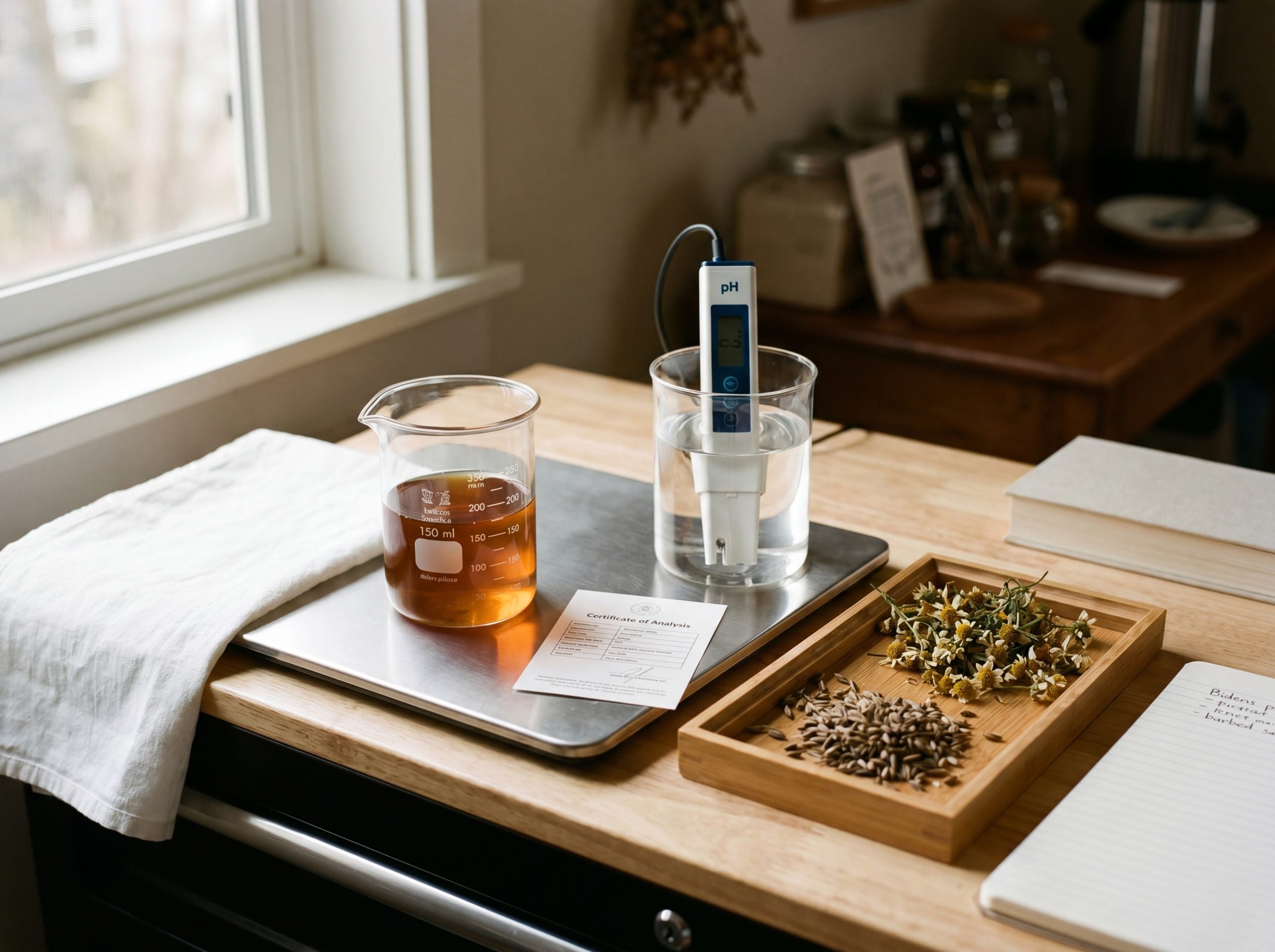
The Bidens Pilosa Tincture From Back To Your Roots Herbs
If the collagen-production angle on Bidens pilosa is what brought you here, the form we offer is the wildcrafted Jamaican Bidens Pilosa tincture. It is a 1:2 fresh-herb ratio in organic cane alcohol, harvested from the central Jamaican karst hills, and bottled within twenty-four hours of harvest to preserve the polyacetylene fraction documented in the anti-ageing mechanisms paper. The product is third-party tested for heavy metals, microbial contamination, and identity to species. It is the internal-use form discussed in the practical protocols above and is intended to be paired with topical use, vitamin C support, and adequate trace-mineral intake for the most complete fibroblast-support regimen our editorial team can credibly recommend.
Frequently Asked Questions About Bidens Pilosa For Collagen Production
Is Bidens pilosa effective for collagen production?
Bidens pilosa has been documented in vitro and ex vivo activity on the collagen-production pathway. The standardized supercritical CO2 extract upregulated type I collagen and elastin in cultured human fibroblasts and ex vivo skin fragments (PMID 25883669). Large human clinical trials have not yet been completed, so the strongest claim that can be made is mechanistic. The plant activates the same retinoid X receptor pathway that pharmaceutical retinoids use to increase collagen synthesis.
How does Bidens pilosa work as a retinol alternative?
Bidens pilosa works as a retinol alternative because its phytol and polyacetylene constituents bind the retinoid X receptor (RXR), one of the two nuclear receptors that retinoids activate to upregulate collagen and elastin transcription. Retinol acts primarily through the retinoic acid receptor (RAR). Bidens pilosa acts primarily through RXR. Both routes drive fibroblast collagen production, but the RXR route is associated with substantially less irritation than the RAR route.
Is Bidens pilosa safe for sensitive skin?
Topical Bidens pilosa is well tolerated on sensitive skin in the published cosmetic literature. Paula’s Choice and the standardized supercritical CO2 extract reviews report no significant erythema or peeling at the 5 percent concentration used in cosmetic formulations. Patch test for 48 hours before broader application if you have documented Asteraceae-family allergy (ragweed, daisy, chrysanthemum).
What are the side effects of Bidens pilosa?
Reported side effects from internal use are uncommon and mild, including occasional gastrointestinal upset (typically resolved by taking the tincture with food) and rare photosensitivity in fair-skinned individuals at high doses. The herb’s flavonoid fraction has mild antiplatelet activity, so consult a clinician before combining with anticoagulants. Avoid during pregnancy and lactation pending further safety data.
Does Bidens pilosa help with pigmentation?
The RXR pathway Bidens pilosa activates also regulates melanocyte function indirectly through retinoid response elements. The Skin Beneath ingredients glossary and the Holland and Barrett editorial write-up both report user-observed improvements in post-inflammatory hyperpigmentation after eight to twelve weeks of topical use. The mechanism is plausible but not yet supported by a dedicated pigmentation-endpoint clinical trial.
How do I prepare a Bidens pilosa tea or tincture?
Traditional Jamaican preparation is a fresh-herb tea made by simmering one cup of fresh chopped aerial parts in two cups of water for fifteen minutes, then straining. Drink one cup once or twice daily. A 1:2 fresh-herb tincture in organic cane alcohol is the modern shelf-stable equivalent, taken at one milliliter (one full dropper) in two ounces of water once or twice daily. The tincture is more reliable in constituent profile across batches and is what we produce as the wildcrafted Jamaican Bidens Pilosa tincture.
What are the health benefits of Bidens pilosa beyond collagen?
The broader health benefits documented in the peer-reviewed literature include antioxidant activity (PMC5689161), anti-inflammatory action via COX-2 suppression (PMID 17040496), antimicrobial activity against multiple pathogens, mild blood-glucose modulation in animal models, and antihypertensive effects in rodent studies (PMID 12426085). Collagen production is one application within a broader pharmacological profile.
Can I take Bidens pilosa with retinol?
Yes, the combination is mechanistically coherent. Retinol acts on the retinoic acid receptor (RAR). Bidens pilosa acts on the retinoid X receptor (RXR). The two receptors heterodimerize and act together to drive collagen-related gene transcription. Several formulators now combine a low-percentage retinol with a 5 percent Bidens pilosa extract in the same product. If using both separately, apply the retinol in the evening and the Bidens pilosa serum in the morning or alternate nights.
Related Reading
Continue exploring this topic with these related articles from our team:
- Astaxanthin for skin: how this carotenoid antioxidant addresses wrinkles and UV damage
- Shilajit benefits for skin: collagen, hydration, and the science of natural anti-aging
- Astaxanthin before and after: the realistic timeline of visible skin changes
- Amla Indian gooseberry: a complete guide to nutrients, traditional uses, and risks
About the Back To Your Roots Herbs Editorial Team
The Back To Your Roots Herbs Editorial Team combines collective experience in traditional herbalism, ethnobotanical research, and clinical literature review. Our team curates primary research from PubMed, NIH, and traditional medicine sources, vets sourcing relationships across specific terroir regions, and applies sensory analysis and third-party quality testing to every herb profiled on this site. All content is researched and reviewed in our Virginia Beach, Virginia, facility.
Last Reviewed: May 2026
Educational Disclaimer
This information is provided for educational and research purposes only. The statements made about Bidens pilosa have not been evaluated by the Food and Drug Administration. Bidens pilosa products are not intended to diagnose, treat, cure, or prevent any disease. Always consult a qualified healthcare practitioner before adding an herbal product to your regimen, particularly if you are pregnant, lactating, on prescription medication, or managing a chronic condition.