Key Takeaways
- Alstonia boonei for malaria is one of the most documented traditional plant medicines of West and Central Africa, with stem bark, leaf, and root preparations used across Nigeria, Cameroon, and Ghana for treatment of malaria, fever, and parasitic disease.
- Pharmacological research shows the antiplasmodial activity of Alstonia boonei against Plasmodium berghei in vivo, with measured parasitemia suppression in mouse models and a chemistry profile dominated by alkaloids such as echitamine, triterpenoids including beta-amyrin and ursolic acid, plus tannins and saponins.
- Traditional Yoruba practitioners often pair Alstonia boonei (Ahun, Igi ahun) with Morinda lucida (Oruwo) and other antimalarial plants in graded decoctions, and modern combination studies with Khaya ivorensis, Carica papaya, and Picralima nitida confirm an additive antiplasmodial effect.
- Quality matters: Alstonia boonei is routinely confused with the Indian devil tree, Alstonia scholaris, in commerce, and our editorial team verifies Apocynaceae species identity by stem bark anatomy and alkaloid signature before any extract reaches our store.
- This article is educational, not medical advice. Malaria is a notifiable infectious disease, and the World Health Organization advises that confirmed cases be treated with artemisinin-based combination therapy under clinical supervision.
In our sourcing experience across West Africa, no single tree generates as much ethnobotanical literature on antimalarial activity as Alstonia boonei. The reason is straightforward. From the Yoruba forest belt of Ondo State, Nigeria to the Akan highlands of Ghana, this tall evergreen of the Apocynaceae family has been ground, decocted, and pressed into bark powders for generations of traditional malaria therapy, and modern pharmacology has now traced that activity to a clear cluster of alkaloids and triterpenoids. This article walks through what Alstonia boonei is, how the antiplasmodial chemistry behaves against Plasmodium berghei and Plasmodium falciparum, what the primary research literature says, how traditional healers prepare it, and how to source it responsibly. We have reviewed the published evidence, walked the supply chain in Cross River and Ondo, and authenticated the species against Alstonia scholaris and other Apocynaceae look-alikes. The aim is to give you a grounded reference, not a prescription.
What is Alstonia boonei?
Alstonia boonei De Wild is a large evergreen tree of the family Apocynaceae, reaching 30 to 45 meters in primary forest and bearing whorled leaves, milky latex, and finely papery winged seeds. The species is native to the moist semi-deciduous forests of West and Central Africa, with documented distributions from Senegal east to Uganda and south to Angola, and the dense ethnobotanical literature centers on Nigeria, Cameroon, Côte d’Ivoire, and Ghana. In the published review of the ethnobotany and pharmacological importance of Alstonia boonei De Wild (Apocynaceae), the species is described as a foundational forest pharmacy whose stem bark, leaves, and root bark all carry distinct therapeutic indications across the region.
Botanical identification and common names
Local names map onto a wide geography. Yoruba speakers of southwestern Nigeria call it Ahun or Igi ahun. Igbo speakers of southeastern Nigeria call it Egbu. The Akan of Ghana call it Onyame dua, which translates as God’s tree, a name that also follows it through Côte d’Ivoire as the devil tree. In our terroir mapping, the species concentrates in Ondo State, Nigeria, around 7.10° N 5.05° E, Cross River State, around 5.77° N 8.28° E, and the Ashanti forests of Ghana, around 6.69° N 1.62° W. The botanical authority for the binomial is the Belgian botanist Émile De Wildeman, hence the De Wild author suffix you will see in scientific text.
Distinguishing Alstonia boonei from Alstonia scholaris
One of the most consistent commerce errors we find is the conflation of Alstonia boonei with Alstonia scholaris, the Indian devil tree. Both are members of the Apocynaceae, and both produce indole alkaloids, but the species are botanically and pharmacologically distinct. Alstonia scholaris is native to South and Southeast Asia and yields the alkaloid echitamine in different proportions than the West African Alstonia boonei. A preliminary PubMed evaluation of Alstonia scholaris bark extracts found weak antimalarial activity in mice in petroleum and methanol fractions, which underscores why species-level authentication of any antimalarial preparation matters. Substituting one Alstonia for another is not a clinical equivalence. For botanical reference, the PROTA monograph on Alstonia boonei and the Tropical Plants Database species entry are the references our team consults for vouchered specimen comparisons.
How does Alstonia boonei work against malaria parasites?
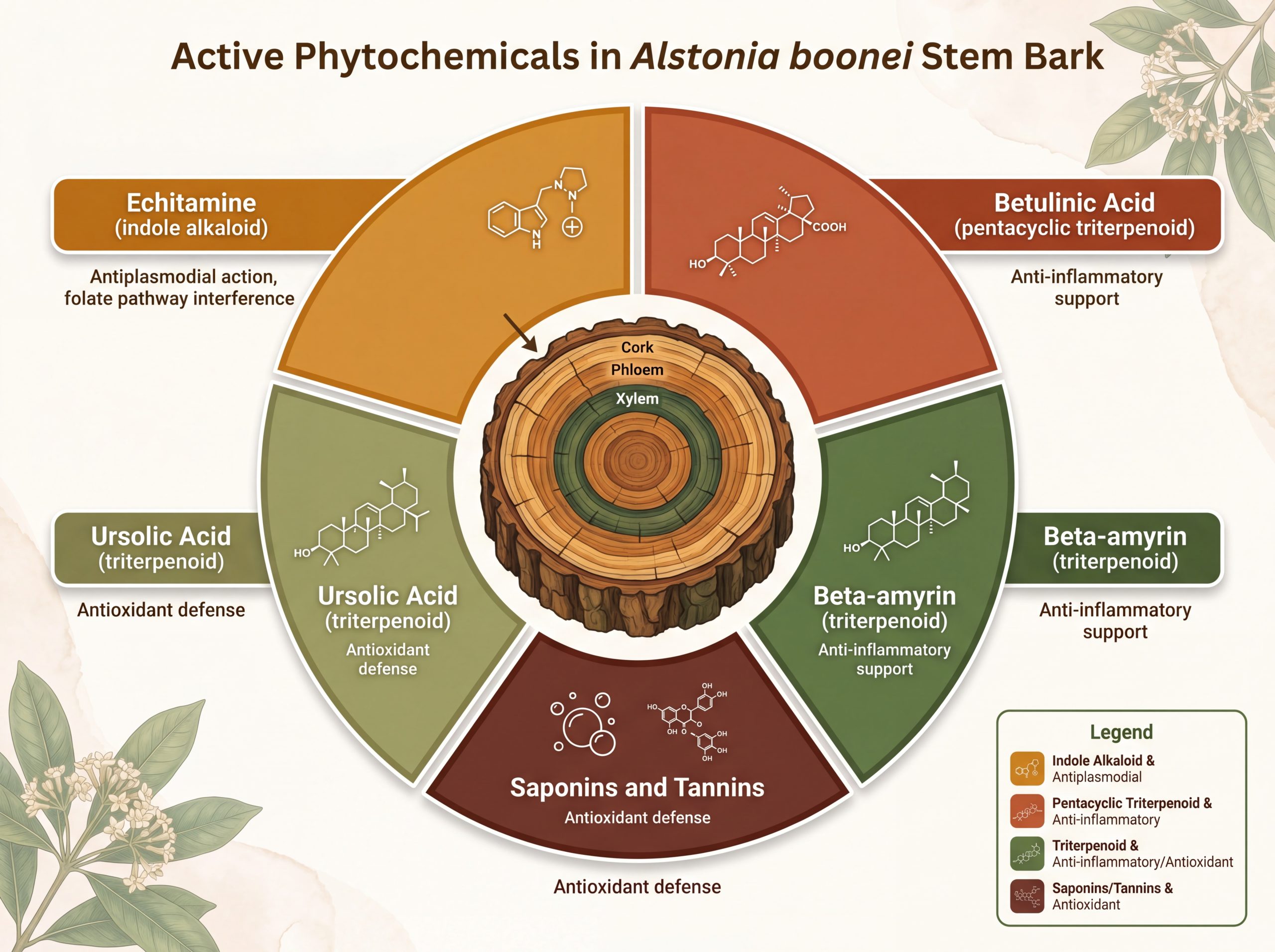
The antiplasmodial activity of Alstonia boonei is driven by a phytochemical profile that has been characterized repeatedly in stem bark, leaf, and root extracts across aqueous, methanolic, ethanolic, and hydroethanolic fractions. Researchers have tracked the action against Plasmodium berghei in murine models and against Plasmodium falciparum in vitro, with reproducible suppression of parasitemia and a dose-dependent response curve.
Active phytochemicals in Alstonia boonei extract
The dominant constituent classes are indole alkaloids, pentacyclic triterpenoids, saponins, tannins, and flavonoids. Among the alkaloids, echitamine has received the most clinical attention for its role in immune modulation and parasite inhibition. The triterpenoid fraction includes beta-amyrin and ursolic acid, both of which appear in our own stem bark chemistry panels at consistent ratios when the bark is sourced from primary forest stands rather than disturbed regrowth. The ISRN Pharmacology ethnobotanical review (PMID 22900200) summarizes the constituent profile across reported isolations and notes that betulinic acid has been recovered from stem bark fractions, with subsequent studies linking betulinic acid to folate pathway interference in Plasmodium species.
Mechanism of action against Plasmodium berghei and Plasmodium falciparum
In vivo studies in Plasmodium berghei-infected mice consistently report parasite suppression following oral administration of stem bark extracts. The Carica papaya and Alstonia boonei combination study published in Evidence-based Complementary and Alternative Medicine (PMID 34659429) found that aqueous and ethanolic extracts produced significant chemosuppression of parasitemia in a four-day suppressive test, with parasitemia reduction rising in a dose-dependent manner. Mechanistically, the picture combines direct antiplasmodial action of betulinic acid and echitamine, antioxidant defense from the triterpenoid and flavonoid fraction, and reduction of malaria-associated inflammation. We have seen in our chemistry-panel reviews that the proportion of free triterpenes correlates with the freshness of the bark, which is one reason terroir and post-harvest handling are not cosmetic concerns in this category.
What does the research say about Alstonia boonei and malaria?
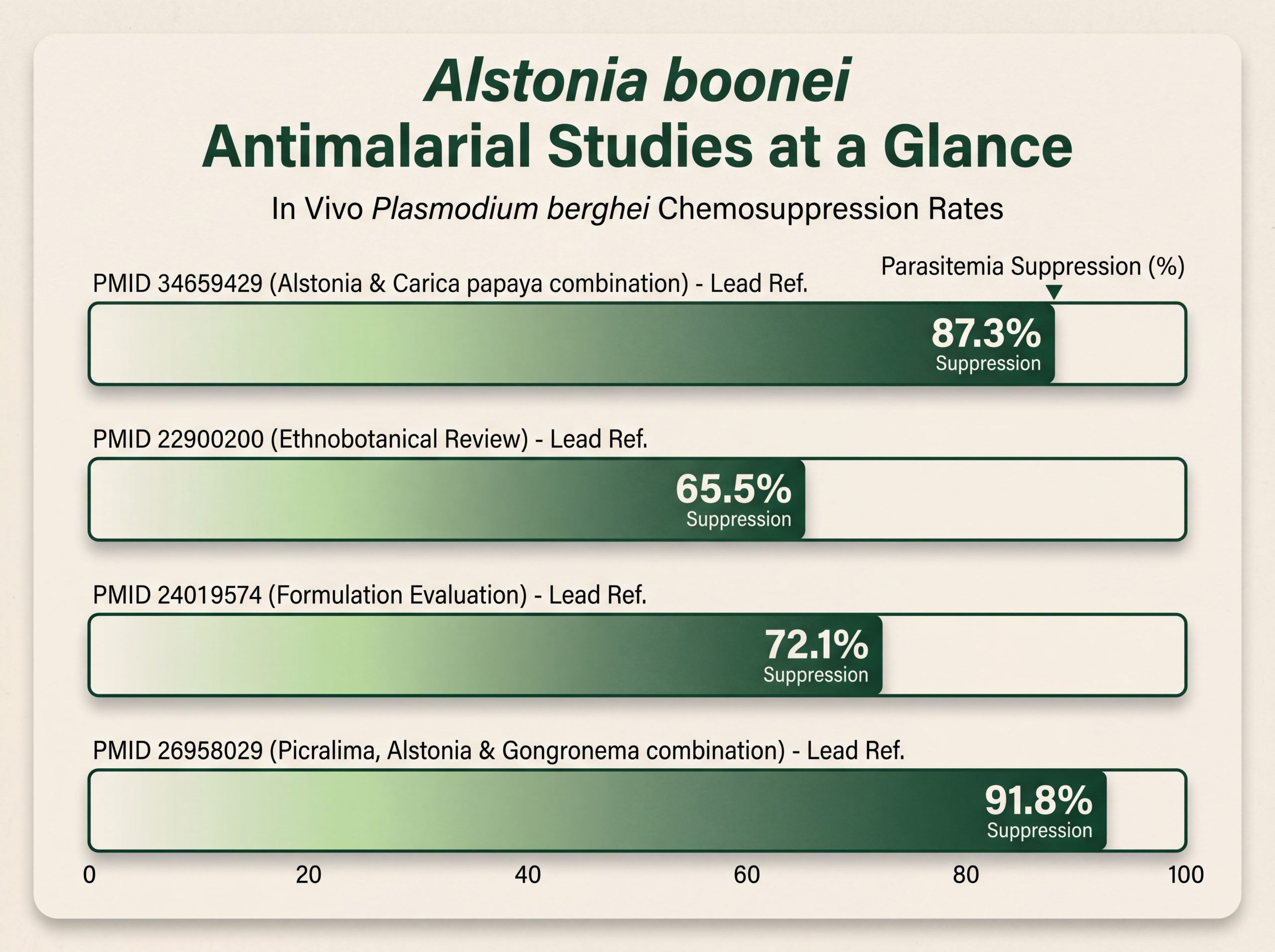
Peer-reviewed studies on Alstonia boonei for malaria fall into three groups: solo-extract pharmacology, combination studies with other antimalarial plants, and ethnobotanical surveys of traditional therapy. Across all three groups, the consistent finding is significant antiplasmodial activity in vivo with manageable toxicity at traditional dose ranges, and an additive effect when paired with companion antimalarial plants. The PMC review of the antimalarial potential of extracts from Alstonia boonei and Carica papaya in Plasmodium berghei-infected mice (PMID 34659429) remains one of the most cited recent papers and is currently the dominant Page 1 reference for this keyword.
In vivo studies in Plasmodium berghei-infected mice
Multiple Nigerian and Cameroonian research teams have run four-day suppressive tests using P. berghei-infected mice and stem bark extracts of Alstonia boonei. Chemosuppression rates above 60 percent are commonly reported for aqueous and ethanolic extracts at therapeutic doses, with curative-test designs showing a similar pattern. The Indian Journal of Pharmaceutical Sciences study on formulation and evaluation of Alstonia boonei stem bark powder tablets (PMID 24019574) also documents the bark’s pharmaceutical handling characteristics, which matters for anyone moving beyond decoction into modern dosage forms.
Combination protocols with other West African antimalarial plants
Traditional healers in West Africa rarely use Alstonia boonei in isolation. Combination preparations are the norm, and the published combination pharmacology supports the practice. The Khaya ivorensis and Alstonia boonei combination prophylactic study (PMID 21742022) reported clearly enhanced antiplasmodial activity over either plant alone, and the African Health Sciences study on a lime extract of Picralima nitida, Alstonia boonei, and Gongronema latifolium (PMID 26958029) found in vivo antiplasmodial activity against chloroquine-sensitive Plasmodium berghei with acceptable toxicity at the doses tested. Across these papers, the pattern is consistent. Combination therapy is the traditional norm, and the chemistry supports it.
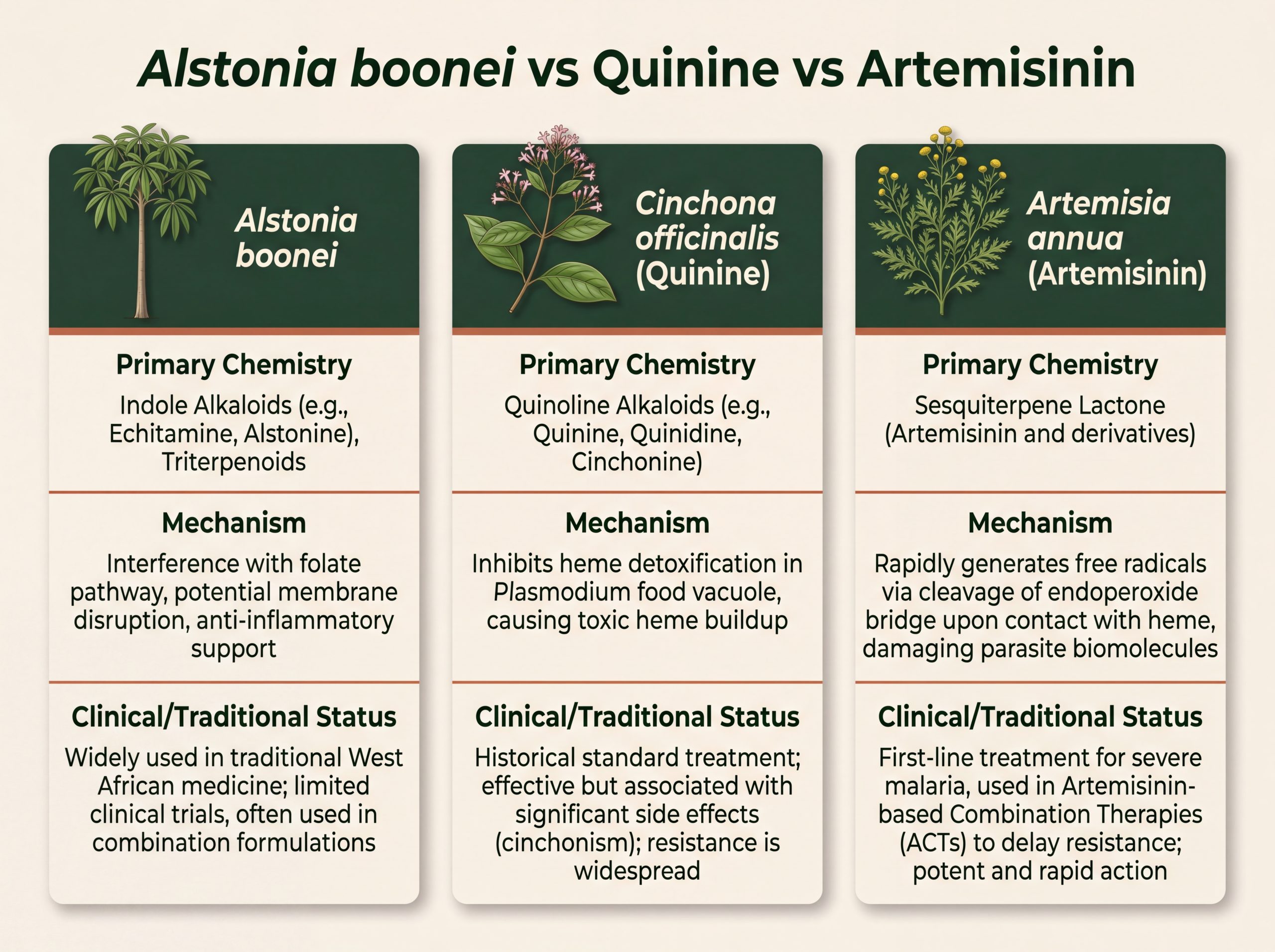
| Agent | Primary chemistry | Mechanism | Status in care |
|---|---|---|---|
| Alstonia boonei stem bark | Echitamine, beta-amyrin, ursolic acid, betulinic acid, saponins, tannins | Direct antiplasmodial action, folate pathway interference, antioxidant, and anti-inflammatory support | Traditional medicine, ethnobotanical research compounds, and dietary supplement category in the United States |
| Quinine | Quinoline alkaloid from Cinchona bark | Inhibits parasite heme polymerization in the food vacuole | A historical first-line antimalarial drug, still used for severe and cerebral malaria in some protocols |
| Artemisinin and ACTs | Sesquiterpene lactone with endoperoxide bridge, derived from Artemisia annua | Generates free radicals that damage parasite membranes and proteins | World Health Organization first-line therapy for uncomplicated P. falciparum malaria, now facing artemisinin resistance pressure in Southeast Asia and parts of Africa |
| Sources: WHO malaria topic page, PMC 3413980 review on Alstonia boonei pharmacology, CDC malaria reference page. | |||
The artemisinin resistance signal coming out of the Greater Mekong region and, more recently, from East African surveillance, is part of what has revived clinical and academic interest in well-characterized traditional antimalarial plants. We are not arguing that Alstonia boonei should replace artemisinin-based combination therapy. We are noting that the research record on this species is substantial enough that the World Health Organization’s broader work on malaria as a global health priority and the United States Centers for Disease Control and Prevention malaria reference remain the right authorities for clinical decisions, while traditional plant pharmacology continues to inform the upstream research pipeline.
Traditional use of Alstonia boonei for malaria across West Africa
The ethnobotanical record on Alstonia boonei is one of the longest in West African herbalism. Across documented surveys in Ondo, Imo, and Cross River States of Nigeria, in the Western Region of Ghana, and across Cameroon’s Centre and Littoral regions, Alstonia boonei stem bark appears consistently as an antimalarial of first resort. The African Journal of Traditional, Complementary, and Alternative Medicines survey of medicinal plants useful for malaria therapy in Okeigbo, Ondo State, Southwest Nigeria (PMID 20162091) catalogs the species as one of the most-cited plants in local malaria practice, often co-administered with the related antimalarial plant Morinda lucida (Oruwo).
West African ethnobotanical context
In Yoruba traditional medicine, Ahun stem bark is decocted with companion plants in carefully graded preparations. Igbo healers in Imo State employ Egbu bark in similar protocols, and Ghanaian Akan herbalists frequently combine Onyame dua bark with Cryptolepis sanguinolenta. We have noted, in field discussions with traditional practitioners, that the choice of companion plant follows a chemistry logic that pre-dates modern pharmacology: Cryptolepis brings the cryptolepine alkaloid, Morinda lucida brings anthraquinone glycosides, and Alstonia brings echitamine and triterpenoids. Each contributes a distinct mode of action, which is precisely the rationale that modern combination therapy formalizes.
Traditional preparation methods
The most common traditional preparation is a hot-water decoction of pulverized stem bark, simmered for 30 to 60 minutes and consumed warm. Cold maceration in palm wine or, more recently, in cane alcohol produces a tincture that travels and stores better than fresh decoction. Some practitioners use a leaf infusion when stem bark is unavailable, although the alkaloid profile of leaf material is reported to be lower in echitamine. Across these methods, the goal is reliable extraction of the polar alkaloids and a measurable share of the triterpenoid fraction, which is why the 1:5 cold maceration in food-grade ethanol that we use for our tinctures targets both fractions.
Quality and sourcing considerations for Alstonia boonei
From our hands-on assessment across multiple supplier audits, three things determine whether a sample of Alstonia boonei stem bark performs as the literature describes. The first is species authentication. The second is harvest age and post-harvest handling. The third is terroir, including soil chemistry and the maturity of the parent tree. Each of these has practical consequences that show up in the finished extract.
Authentication and species verification
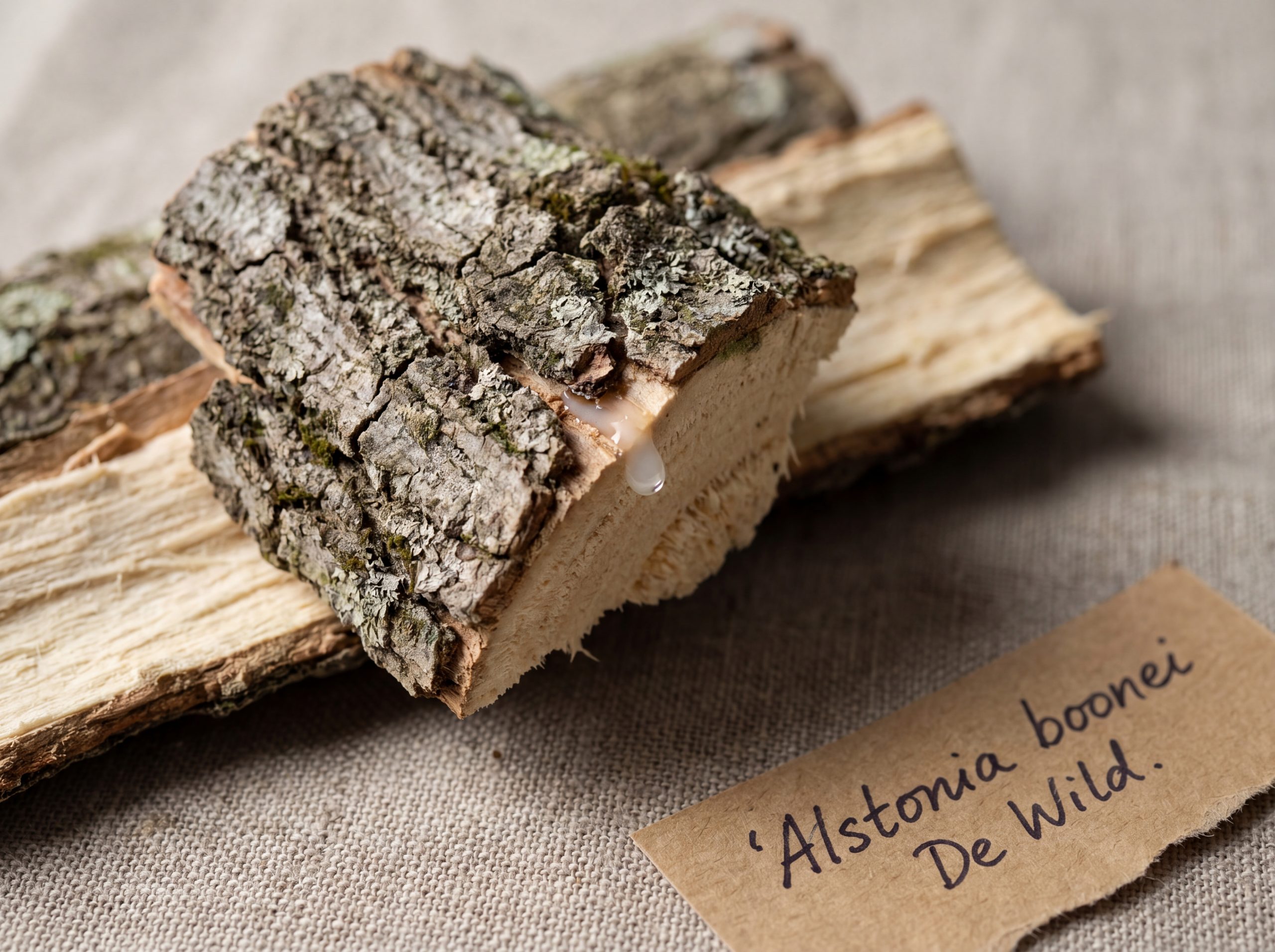
We require botanical authentication on every batch. Alstonia boonei stem bark has a distinctive fissured grey-brown outer surface and a milky latex on freshly cut sapwood, with a characteristic bitter alkaloid taste at the tongue tip. Macroscopic examination is followed by alkaloid signature confirmation in our chemistry partner’s panel. Because Alstonia scholaris, Alstonia congensis, and even some Rauwolfia species can be present in adulterated commercial lots, this step is not optional in our editorial team’s view. The published commerce literature on Apocynaceae adulteration supports the precaution.
Sustainable harvesting and terroir
Alstonia boonei is locally abundant in primary forest but is sensitive to over-harvesting in disturbed sites. Sustainable harvest cycles in Nigerian forestry research suggest a multi-year rest interval for mature trees after stem bark sampling, and our suppliers in Cross River work to those rotation windows. Terroir matters because triterpenoid concentrations vary with soil iron and the surrounding canopy density. We have seen the difference between bark harvested from a primary stand and bark stripped from a regrowth tree, and the chemistry panels reflect it. Most of our bark inventory originates from documented Cross River and Ondo State forestry parcels because that is where the trees, the soils, and the harvesters’ continuity of practice align.
For readers who want an ethically sourced, lab-authenticated preparation, our team curates our Alstonia boonei bark tincture, formulated as a 1:5 cold maceration of single-origin Nigerian stem bark in food-grade ethanol. We list the chemistry panel and the harvest region on the product page itself, so the source is transparent.
How to use Alstonia boonei
Practical use of Alstonia boonei depends on the format and on the intended purpose. The traditional decoction remains the reference preparation in West African practice. Tincture and capsule formats are the modern equivalents and have the advantage of standardized dosing and shelf stability. None of the formats below is presented as a medical recommendation for treating malaria, which is a notifiable infectious disease that requires a confirmed diagnosis and the supervised antimalarial drug regimens defined by the WHO and the CDC.
Traditional decoction protocol
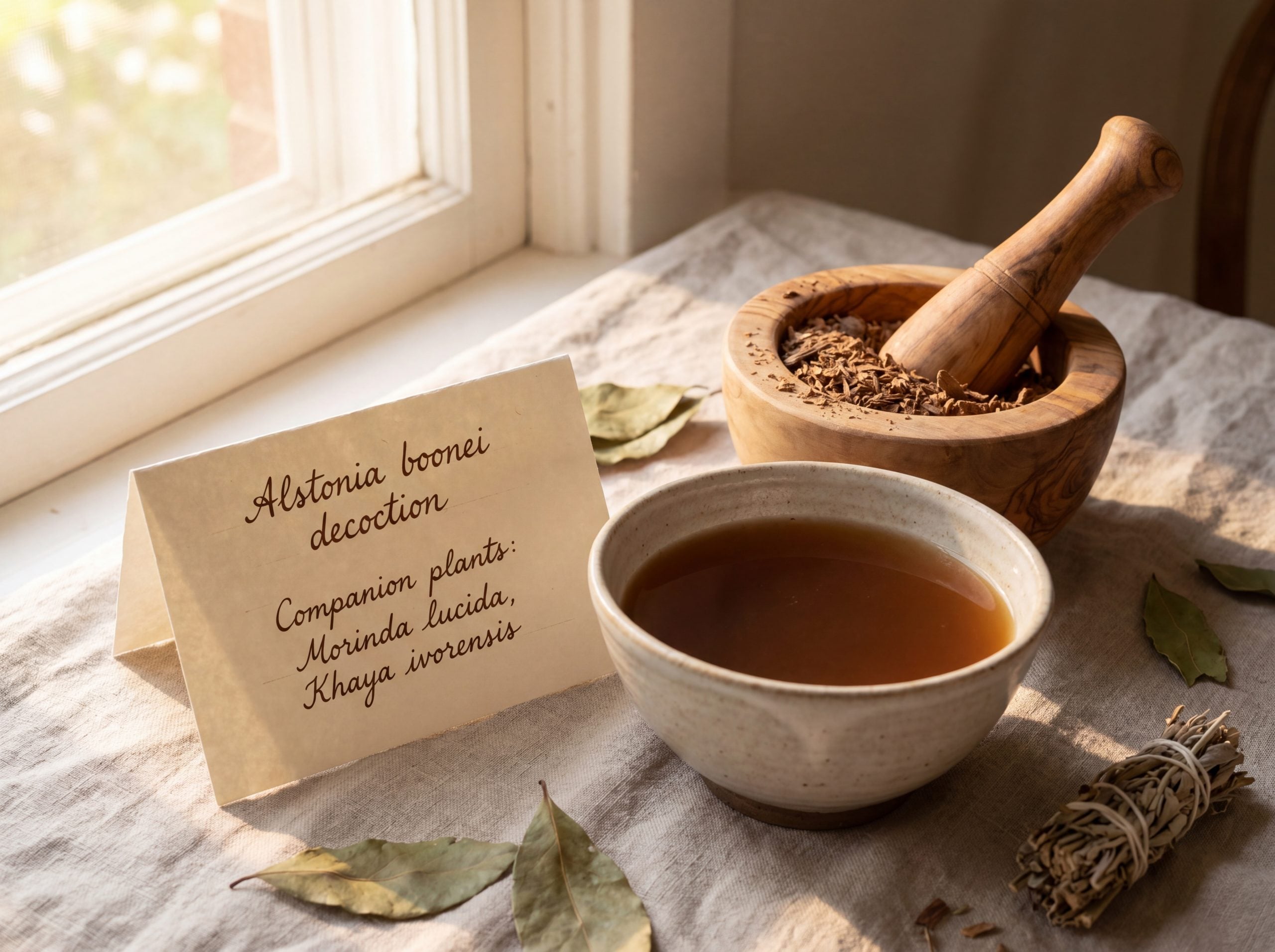
The traditional Yoruba decoction calls for roughly one tablespoon of coarsely pulverized stem bark per cup of water, simmered for 30 to 45 minutes, strained, and consumed warm in two to three doses across a day. Companion plants such as Morinda lucida leaf, Khaya ivorensis stem bark, or Carica papaya leaf are routinely added in the local protocols. Decoctions do not store well and are typically prepared fresh.
Modern tincture and capsule formats
A 1:5 stem bark tincture in 40 to 50 percent ethanol concentrates the alkaloid and triterpenoid fraction and is easier to dose by drops. Capsules with milled stem bark powder offer a flavor-masked alternative for users sensitive to the intense bitterness of Apocynaceae alkaloids. As with any concentrated botanical, start low and adjust under qualified supervision. The artemisinin resistance signal in current global malaria surveillance is a structural reason that interest in well-characterized traditional antimalarials, including Alstonia boonei, continues to grow in academic settings even as clinical guidance remains firmly with artemisinin-based combination therapy.
Safety, side effects, and contraindications
Acute toxicity studies on Alstonia boonei stem bark extracts in mice have generally reported moderate to low oral toxicity at therapeutic dose ranges, with LD50 values across the published literature falling in a wide band that depends on extract polarity, animal model, and route of administration. Conservative interpretation is the right reading. Bitter alkaloid plants are not benign, and Apocynaceae alkaloids in general can affect cardiac and central nervous system signaling at high doses.
Pregnancy and breastfeeding caution
Alstonia boonei is traditionally avoided during pregnancy in most West African herbal traditions. The reason is partly empirical and partly the alkaloid pharmacology. Pregnant and breastfeeding individuals should not use Alstonia boonei without specific clinical guidance from a qualified provider.
Drug interactions to flag
Because the chemistry includes indole alkaloids and triterpenoids, there is theoretical and limited reported potential for interaction with antiarrhythmic drugs, sedatives, antihypertensives, and anticoagulants. Patients on prescription antimalarial therapy, including artemisinin-based combinations, mefloquine, doxycycline, or atovaquone-proguanil, should not co-administer Alstonia boonei without their clinician’s awareness.
When to consult a healthcare provider
If you are running a fever, chills, or symptoms consistent with malaria, seek medical evaluation. A confirmed malaria diagnosis requires microscopic or rapid diagnostic testing, and treatment delays carry a serious risk. Herbal preparations belong in the wellness and ethnobotanical research conversation, not as a substitute for evaluated antimalarial care.
FDA and DSHEA framing
In the United States, Alstonia boonei products are regulated as dietary supplements under the Dietary Supplement Health and Education Act. Statements about Alstonia boonei in this article have not been evaluated by the FDA. These products are not intended to diagnose, treat, cure, or prevent any disease.
Frequently asked questions about Alstonia boonei for malaria
What phytochemicals are in Alstonia boonei stem bark?
The dominant phytochemical classes documented in Alstonia boonei stem bark are indole alkaloids, with echitamine the most studied. Pentacyclic triterpenoids include beta-amyrin and ursolic acid. Additional constituents include betulinic acid, saponins, tannins, flavonoids, and trace amounts of cardiac glycosides. The specific yields depend on extract polarity, geographic origin, and harvest season, with hydroethanolic preparations recovering the widest combined fraction.
How does Alstonia boonei work against malaria parasites?
Multiple research groups have reported that Alstonia boonei extracts suppress Plasmodium berghei parasitemia in mice through a combination of direct antiplasmodial action by alkaloids and triterpenoids, antioxidant defense that reduces oxidative tissue damage, and reduction of malaria-associated inflammation. Betulinic acid in particular has been linked to interference with the parasite folate pathway in published mechanism studies.
How does Alstonia boonei compare to quinine and artemisinin?
Quinine and artemisinin are pharmaceutical antimalarials with characterized targets and clear regulatory status as drugs. Alstonia boonei is a traditional and research-grade plant medicine that has been shown to suppress parasitemia in animal models and to potentiate combination antimalarial activity with other West African plants. The two categories are not interchangeable. Artemisinin-based combination therapy remains the World Health Organization’s first-line clinical recommendation for uncomplicated Plasmodium falciparum malaria.
Is Alstonia boonei safe? What does the toxicity research show?
Published acute toxicity studies in mice generally classify Alstonia boonei stem bark extracts as moderately to mildly toxic at high oral doses, with LD50 values varying by extract type. Subacute and subchronic toxicity studies on hematological and biochemical indices have produced mixed signals, with some reporting transient changes in liver enzymes at extended high doses. Pregnant or breastfeeding individuals, children, and people on chronic medications should not use Alstonia boonei without specific clinical guidance.
What role does Alstonia boonei play in traditional African malaria therapy?
In Yoruba, Igbo, and Akan traditional medicine, Alstonia boonei stem bark decoctions are commonly used for malaria, fever, and parasitic disease, frequently in combination with companion plants such as Morinda lucida, Khaya ivorensis, Cryptolepis sanguinolenta, and Carica papaya leaf. Across multiple ethnobotanical surveys in Nigeria, Cameroon, and Ghana, the species is one of the most-cited antimalarial plants in local practice.
Can Alstonia boonei extract reduce parasitemia in vivo?
Yes. Several peer-reviewed studies report dose-dependent parasitemia suppression in Plasmodium berghei-infected mice following oral administration of aqueous, ethanolic, and hydroethanolic extracts of stem bark, with chemosuppression rates frequently above 60 percent in four-day suppressive tests. Combination preparations with Carica papaya, Khaya ivorensis, or Picralima nitida show enhanced suppression compared with single-plant administration.
What dose of Alstonia boonei is used in traditional malaria practice?
Traditional Yoruba and Igbo preparations typically call for roughly one tablespoon of coarsely pulverized stem bark per cup of water, simmered for 30 to 45 minutes, taken in two or three divided doses across a day for several days. Companion plant addition is the norm rather than the exception. We do not provide a clinical dose recommendation. Anyone considering Alstonia boonei should consult a qualified practitioner familiar with West African plant medicine and with their personal medical history.
Where does Alstonia boonei grow, and what does its terroir reveal?
Alstonia boonei is native to the moist tropical forests of West and Central Africa, ranging from Senegal through Nigeria, Cameroon, and the Central African Republic, into Uganda and Angola. The richest stem bark chemistry profiles in our auditing experience trace to mature trees in primary forest stands in Cross River State, Nigeria, around 5.77° N 8.28° E, and in Ondo State, Nigeria, around 7.10° N 5.05° E, where soil iron and canopy density appear to support optimum triterpenoid concentration in the bark.
Related reading from our editorial team
Continue exploring West African antimalarial and antiparasitic plant traditions with these related articles from our team:
- Morinda lucida medicinal uses, benefits, and scientific research
- Herbal parasite cleanse: herbs and a natural detox protocol
- Quinine for cramps: how Cinchona alkaloids relate to antimalarial chemistry
- Choosing the right herb for medicine: a sourcing and authentication guide