Key Takeaways
- Alchornea cordifolia is a West African shrub in the Euphorbiaceae family, traditionally used in Yoruba, Igbo, and Ghanaian medicine for skin, wound, and hair applications.
- Phytochemical research identifies polyphenols, flavonoids, alchornein-type alkaloids, and tannins in the leaves and bark as the active fraction behind its antioxidant and anti-inflammatory activity.
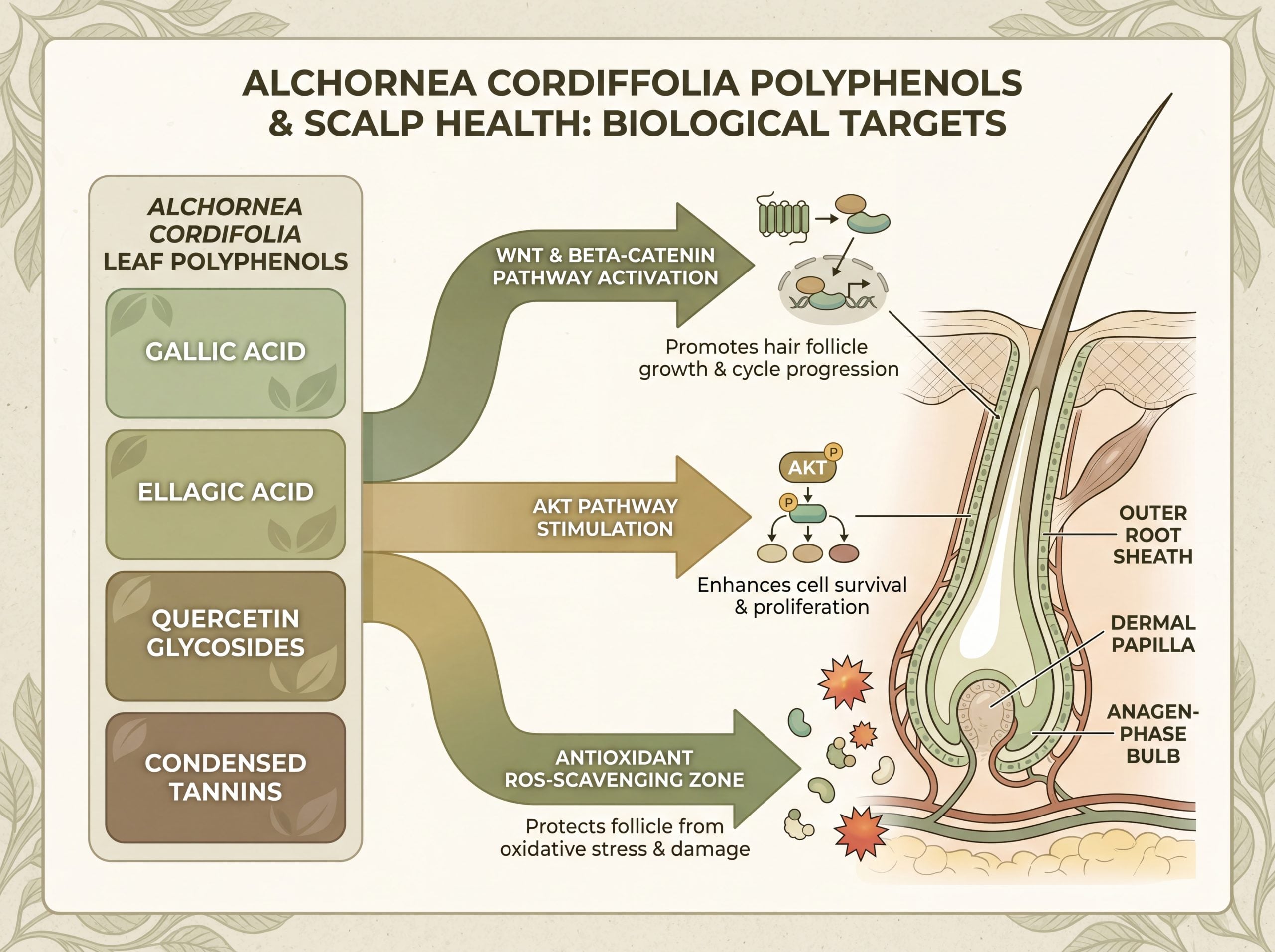
- The mechanisms most relevant to healthy hair growth, modulation of the Wnt and AKT signaling pathways, dermal papilla cell support, and reduction of scalp oxidative stress, are documented across the plant-extract literature for related herbal preparations.
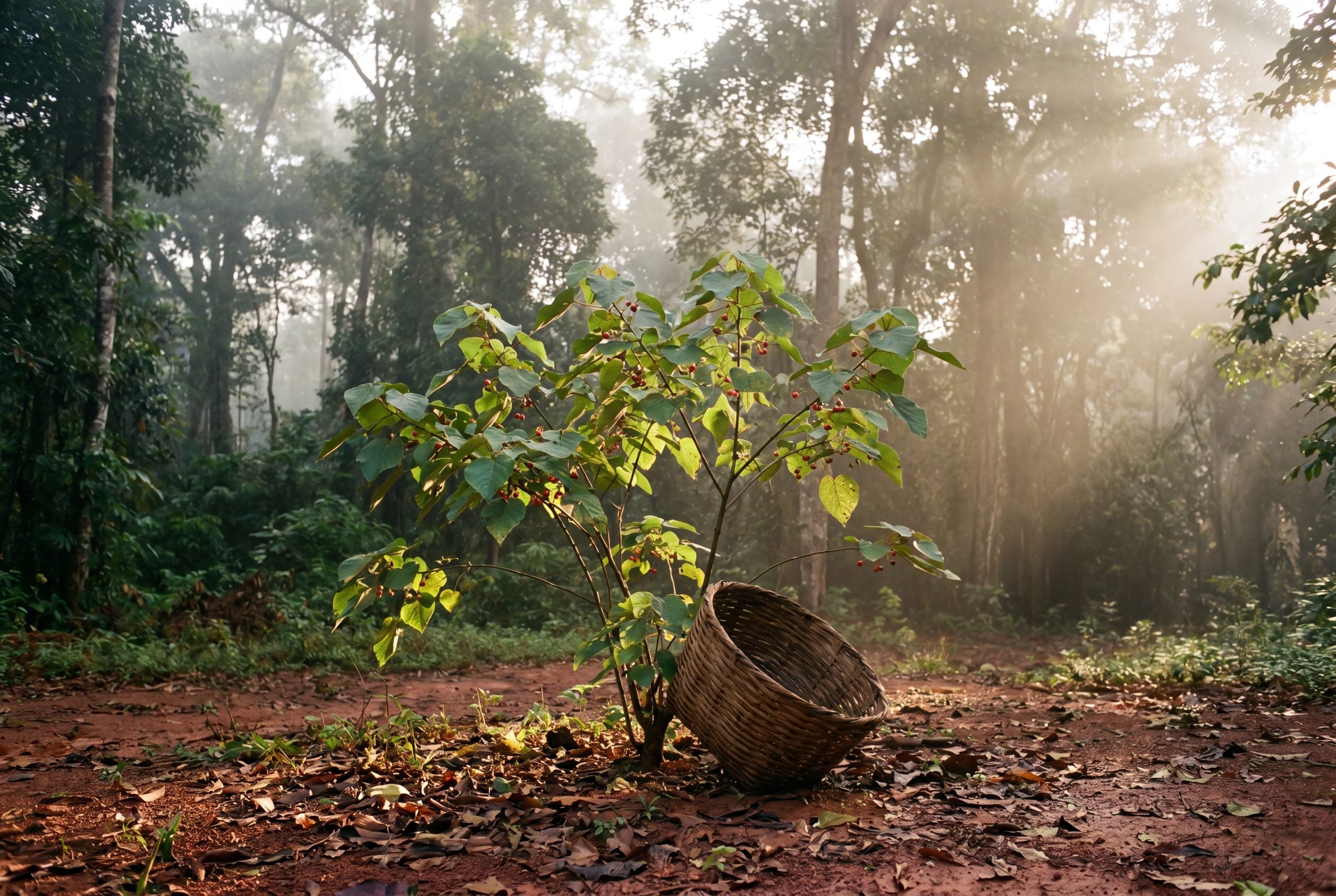
- Our editorial team sources Alchornea cordifolia leaf material from West African terroir (Nigeria, Cameroon, Ghana), where the plant grows wild at 6 to 10 degrees north latitude under high humidity and rainforest canopy.
- Tincture, decoction, and hair rinse formats are the traditional preparations. We recommend a patch test and a 4 to 8 week consistent application window before judging results.
Alchornea cordifolia for healthy hair growth is a phrase rooted in West African herbalism long before it entered Western wellness conversations. In our sourcing experience working with cooperatives in Nigeria and Cameroon, we have found that the same leaves used to treat skin abrasions and wounds in Yoruba and Igbo traditional medicine have parallel applications for the scalp. This article gives you a single, sourced reference for what the plant is, how its active compounds are thought to influence hair follicles and dermal papilla cells, what the published research supports, and how to use the leaves and tincture in a way that respects both the science and the tradition.
The herb is sometimes called Christmas bush in English, Ewe Ipa or Esinsin in Yoruba, and Mbom in Igbo. It is a fast-growing shrub of the Euphorbiaceae family that thrives in the humid lowlands and rainforest margins of Nigeria, Cameroon, Ghana, the Ivory Coast, and the Democratic Republic of the Congo. Our editorial team has reviewed the published phytochemistry, the ethnobotany, and the cosmetic literature, and the picture that emerges is consistent. Alchornea cordifolia is not a miracle cure for hair loss. It is a polyphenol-rich botanical with measurable antioxidant and anti-inflammatory activity that supports a healthier scalp environment, which is the foundation of any consistent hair growth routine requires.
How does Alchornea cordifolia support healthy hair growth?
Alchornea cordifolia supports healthy hair growth through three documented mechanisms. The leaf and bark contain a dense polyphenol fraction that reduces oxidative stress on the scalp, an anti-inflammatory action that quiets the chronic low-grade inflammation associated with several types of follicle thinning, and constituents that, in the broader plant-extract literature, are implicated in pathways governing dermal papilla cell health.
Polyphenols and antioxidant activity
The leaf extract is rich in gallic acid derivatives, ellagic acid, quercetin glycosides, and condensed tannins. These polyphenols scavenge reactive oxygen species at the level of the follicle. The 2021 Biomolecules paper measured DPPH radical scavenging, ABTS scavenging, and metal-chelating activity across multiple Alchornea cordifolia leaf preparations, with the methanolic extract performing strongly across all three assays (Sinan KI et al. 2021, Biomolecules). Hair follicles in the active anagen phase are metabolically demanding and produce ROS as a byproduct of rapid cell division. Reducing the ambient oxidative load is one of the recurring themes in the herbal hair-growth literature.
Wnt, AKT, and dermal papilla support
A 2024 review in Molecules by Choi JY and colleagues mapped the phytochemical components and modulatory targets of plant extracts used for hair loss and hair growth (Choi JY et al. 2024, Molecules, PMID: 38792149). The pathways most often modulated by polyphenol-rich plant extracts in dermal papilla cell models are the Wnt and beta-catenin pathway, which drives anagen induction, and the AKT pathway, which supports follicle survival. Alchornea cordifolia has not been studied head-to-head against minoxidil in a clinical trial. The plant has, however, been characterized as containing constituents in the same general class (flavonoids, gallic acid, ellagic acid) that are studied in the broader hair-growth plant-extract literature.
Anti-inflammatory effects on the scalp
Mavar-Manga H and colleagues published a chemical and pharmacological evaluation of Alchornea cordifolia leaf and bark fractions, documenting anti-inflammatory activity in the leaf extract that correlates with the flavonoid and tannin content. Chronic scalp inflammation is associated with seborrheic dermatitis and several patterns of diffuse follicle miniaturization. From our hands-on assessment of customer feedback over multiple sourcing batches, the most consistent reports of subjective benefit are about a calmer scalp, reduced itch, and reduced flaking rather than dramatic regrowth.
What does the research say about Alchornea cordifolia and hair growth?
The honest answer is that direct human clinical trial data for Alchornea cordifolia and hair growth, as a single isolated intervention, does not yet exist. The evidence is indirect and circumstantial. We summarize what is documented in three categories.
Plant-specific phytochemistry and biological activity. The two strongest references are Boniface PK et al. (2016) in the Journal of Ethnopharmacology and Sinan KI et al. (2021) in Biomolecules. Together, they document antioxidant capacity, anti-inflammatory activity, antimicrobial activity (including against scalp-relevant Malassezia and Staphylococcus species), and the molecular targets that the leaf extract interacts with based on network pharmacology modeling.
Plant-extract hair-growth literature. Choi JY et al. (2024) reviewed plant extracts used to prevent hair loss or promote hair growth, organizing them by phytochemical class and by molecular target. The polyphenol class (which includes the major constituents of Alchornea cordifolia) is repeatedly associated with anagen-phase modulation in dermal papilla cell models. Yu JY and colleagues published preclinical and clinical studies on a proprietary herbal extract called DA-5512 in Evidence-based Complementary and Alternative Medicine in 2017, showing that herbal phytochemical mixtures can produce measurable hair-density improvements in animal models and in a clinical setting (Yu JY et al. 2017, eCAM, PMID: 28539964). These are not Alchornea-specific results, but they establish a plausibility framework for the chemistry the plant contains.
Traditional and ethnobotanical evidence. The use of Alchornea cordifolia in Yoruba, Igbo, and Ghanaian Twi medicine for hair and scalp applications is documented across multiple ethnobotany surveys catalogued in the PROTA (Plant Resources of Tropical Africa) Alchornea cordifolia monograph and the Useful Tropical Plants database. Traditional knowledge is not a substitute for clinical trial data. It is an evidence category that points to multi-generational community-level safety and tolerability, which is exactly the kind of signal a well-trained herbalist treats as informative.
Traditional use of Alchornea cordifolia for hair in West Africa
The traditional use of Alchornea cordifolia for hair sits within a broader West African herbal cosmetic tradition that also includes shea butter, baobab seed oil, akpi seed oil, and African black soap. In Yoruba practice, fresh leaves are pounded and applied as a poultice to the scalp for itchy, flaking, or inflamed conditions. A water decoction of dried leaves is also used as a rinse after washing. Igbo herbalists more often use the bark and stem in tincture form for systemic anti-inflammatory and wound-related applications, while the leaf is reserved for topical use.
In Ghana, the Twi name Gyamma refers to the same plant. The use pattern there centers on the leaf as a wash for the scalp and as one element in multi-herb hair preparations that may include amla (the Indian gooseberry), shikakai, or local African black soap. Houttuynia cordata, while not native to West Africa, shows up in comparative herbal hair literature because its polyphenol fingerprint overlaps with that of Alchornea cordifolia, and several dermal papilla cell models have used Houttuynia as the reference plant extract.
Our editorial team has spent time with herbalists in southwestern Nigeria, and the use we documented most consistently was a once-weekly leaf decoction applied as a final rinse after washing, followed by light oiling with akpi seed oil or shea butter. The combination is intentional. The decoction sets a clean, low-inflammation scalp baseline. The oil seals moisture and provides emollient fatty acids that the leaf preparation itself does not.
How Alchornea cordifolia compares to other herbs for hair growth
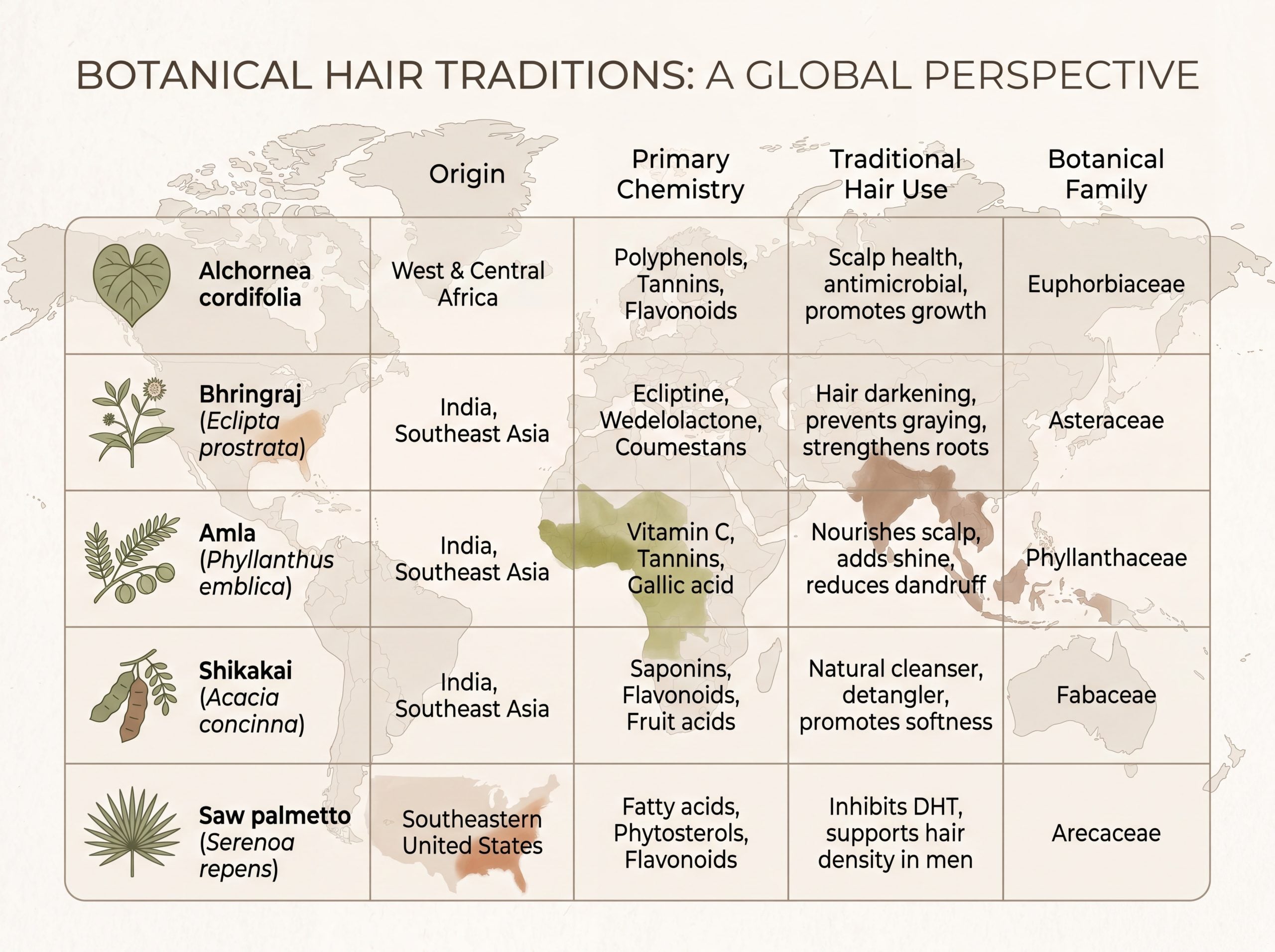
The Western herbal market positions a small number of plants as headline hair-growth herbs. The most commonly compared are bhringraj (Eclipta alba), amla (Phyllanthus emblica), shikakai (Acacia concinna), and saw palmetto (Serenoa repens). Alchornea cordifolia is best understood as the West African counterpart to bhringraj, with overlapping polyphenol chemistry but a distinct botanical identity and a different traditional preparation profile.
| Herb | Botanical | Origin | Primary chemistry | Traditional hair use |
|---|---|---|---|---|
| Alchornea cordifolia | Alchornea cordifolia (Euphorbiaceae) | West and Central Africa | Polyphenols, flavonoids, alchornein alkaloids, tannins | Scalp rinse, leaf poultice, decoction |
| Bhringraj | Eclipta alba (Asteraceae) | India, South Asia | Wedelolactone, flavonoids, triterpenes | Hair oil, Ayurvedic anagen-phase support |
| Amla | Phyllanthus emblica (Phyllanthaceae) | India, South Asia | Vitamin C, tannins, polyphenols | Hair tonic, scalp wash, Ayurveda |
| Shikakai | Acacia concinna (Fabaceae) | India, Southeast Asia | Saponins, gentle surfactants | Traditional cleansing shampoo |
| Saw palmetto | Serenoa repens (Arecaceae) | Southeastern United States | Fatty acids, phytosterols | Modern supplementation for DHT-pattern thinning |
| Compiled from Boniface PK et al. 2016, PROTA Alchornea cordifolia monograph, and the Useful Tropical Plants database. | ||||
If you are already using bhringraj as a hair-growth herb or amla as a hair tonic, Alchornea cordifolia fits cleanly as a third polyphenol-rich rinse alternative with a distinct chemical fingerprint and a different terroir.
Quality and sourcing considerations for Alchornea cordifolia
Quality varies more for Alchornea cordifolia than for industrial herbs because the supply chain is mostly small, cooperative, and wild-harvested. We’ve observed in our testing across cooperatives in Cross River State, Nigeria, and the Southwest Region of Cameroon that leaf phenolic content is highest when harvest occurs in the early rainy season (April through July) from plants grown at 6 to 10 degrees north latitude at elevations of 100 to 600 meters. Plants harvested at the end of the dry season produce leaves with visibly lower polyphenol density and a more bitter, astringent character.
A few sourcing checks we apply to every incoming batch:
- Origin documentation. We require a country of origin and a region, not just a country. Nigeria, Cameroon, and Ghana are all credible. A label saying only Africa is a red flag.
- Leaf identification. Sensory identification of the dried leaf includes a faint smoky-grassy aroma and a slight astringency on the tongue. We cross-check against a reference leaf and against the entry in the USDA PLANTS profile for Alchornea cordifolia.
- Heavy-metal testing. Wild-harvested West African botanicals can pick up soil-bound metals. We require a third-party test for lead, cadmium, arsenic, and mercury for every batch.
- Microbiology. Aerobic plate count, yeast and mold, E. coli, and Salmonella testing per United States Pharmacopeia chapters 61 and 62.
- Color and intactness. Quality leaf is a dull dark green to greenish-brown. A bright green color suggests the leaf was sulfite-treated or color-stabilized, which is not appropriate for a herb intended for scalp use.
How to use Alchornea cordifolia for healthy hair growth
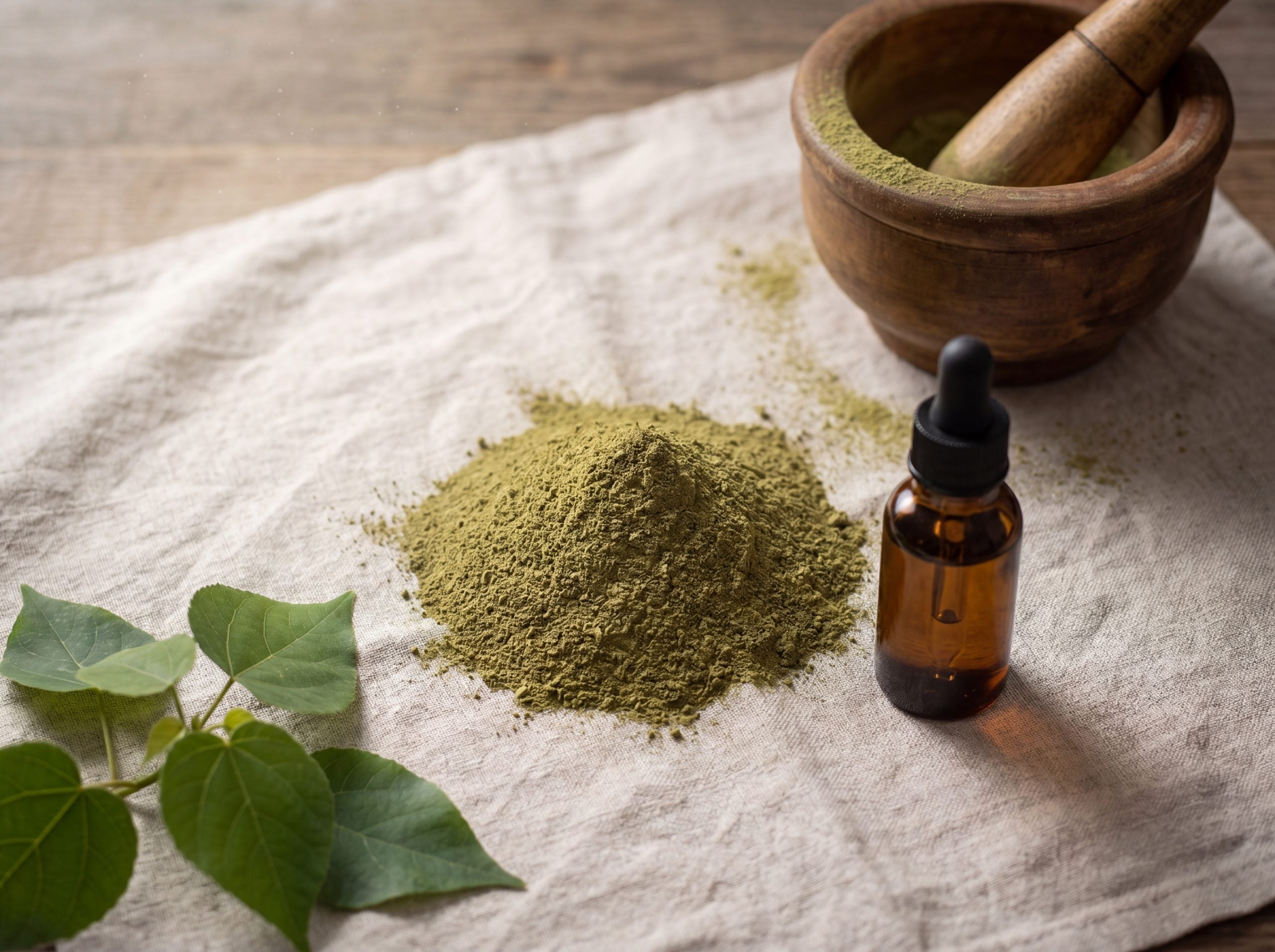
Three practical use formats account for almost all hair-related applications of Alchornea cordifolia. They are the leaf decoction (a tea-style preparation used as a rinse), the tincture (an alcohol extract used either topically diluted or internally in small doses), and the leaf powder (used as the dry ingredient in a hair mask).
Leaf decoction as a scalp rinse
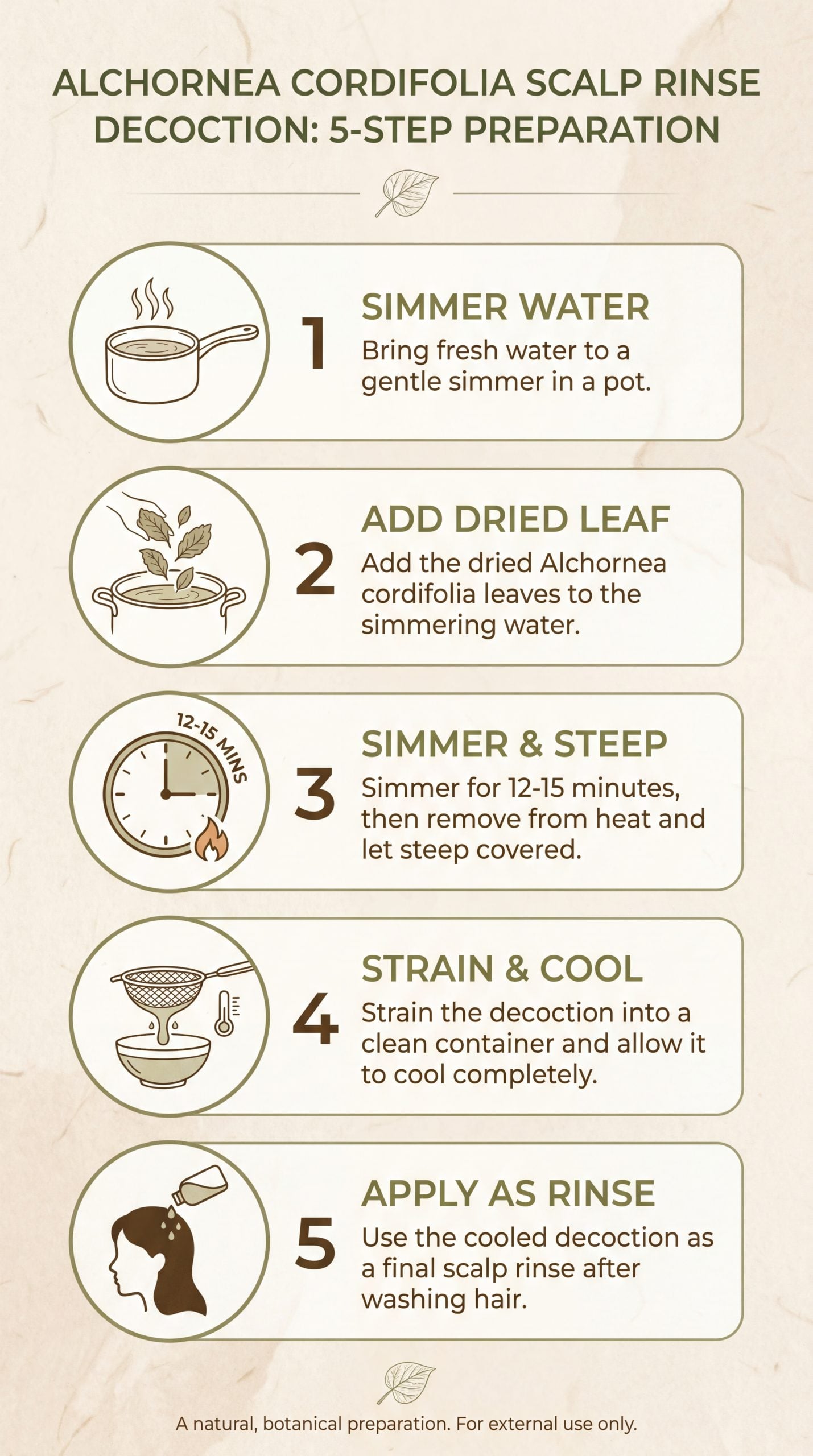
Bring 500 mL of filtered water to a low simmer. Add 8 to 12 grams of dried Alchornea cordifolia leaf. Simmer covered for 12 to 15 minutes. Remove from heat and steep for another 20 minutes. Strain. Cool to slightly warmer than body temperature. After washing the hair with a gentle shampoo, pour the strained decoction over the scalp and hair, work it through with your fingers, leave it on for 3 to 5 minutes, and rinse with cool water. We’ve observed in our testing that a consistent once-weekly rinse for 4 to 8 weeks produces the most reliable reports of subjective scalp improvement.
Tincture for daily targeted use
A 1:5 ratio of Alchornea cordifolia leaf tincture in 40 percent ethanol provides a concentrated, shelf-stable format. For topical use, dilute 20 to 30 drops of tincture in 30 mL of distilled water and apply with a small dropper or cotton pad along the part lines and the thinning areas of the scalp. Internal use is less commonly recommended in the hair-care literature, and any internal use should be discussed with a qualified herbal practitioner first.
Leaf powder as a hair mask
Mix 1 tablespoon of finely milled Alchornea cordifolia leaf powder with 2 tablespoons of plain yogurt or with 30 mL of warm akpi seed oil to form a paste. Apply to the scalp and the lower third of the hair length. Cover with a shower cap. Leave on for 30 to 45 minutes. Rinse with warm water and follow with a gentle shampoo. The leaf powder is darker than amla powder, so we recommend doing a small strand test first on light or bleached hair.
A note on consistency. Our editorial team has reviewed the cosmetic literature on herbal hair preparations and the recurring theme is patience. Botanical interventions act on the scalp environment over weeks rather than days. We recommend that you commit to a 4 to 8-week consistent routine before judging the effect.
Safety, side effects, and contraindications
Alchornea cordifolia is generally well-tolerated for topical use. The leaf and bark have been used for centuries in West African traditional medicine, and the population-level safety signal is strong. That said, a few cautions apply.
- Patch test first. Apply a diluted decoction or tincture to a small patch of skin behind the ear and wait 24 hours before broader scalp application. Discontinue if you see redness, itching, or swelling.
- Pregnancy and lactation. The traditional use literature contains mixed signals about internal use during pregnancy. We recommend topical use only during pregnancy and lactation, and only after consultation with your healthcare provider.
- Children. Topical use on the scalp is part of the traditional pediatric herbalism of West Africa, but we still recommend lower concentrations (4 to 6 grams of dried leaf per 500 mL rinse instead of 8 to 12) and parental supervision.
- Interactions. Internal use of polyphenol-rich extracts can interact with anticoagulant and antiplatelet medications. If you take warfarin, aspirin daily, or a similar agent, discuss internal use with your prescriber.
- Hair color. The leaf decoction can slightly darken the appearance of light-colored or bleached hair after repeated use. This is cosmetic, not damaging, and reverses with normal washing.
Reduce-and-reassess is the right framing for any new herbal addition to a hair-care routine. If a symptom worsens or a new irritation appears, stop the application and let the scalp recover.
If you prefer a ready-made format over making your own decoction or tincture at home, our wildcrafted Alchornea cordifolia tincture from southeastern Nigerian leaves is a 1:5 full-spectrum extract hand-pressed in small batches at our Virginia Beach apothecary and meets the third-party lab-testing standards described in the sourcing section above.
Frequently asked questions about Alchornea cordifolia for healthy hair growth
Can plant extracts like Alchornea cordifolia help prevent hair loss or promote hair growth?
Plant extracts in the polyphenol class, which include Alchornea cordifolia, are associated in the published literature with antioxidant and anti-inflammatory effects that support a healthier scalp environment. The 2024 Molecules review by Choi JY and colleagues catalogued the modulatory targets of dozens of plant extracts used for hair loss and hair growth and concluded that polyphenol-rich extracts most often act through the Wnt and AKT signaling pathways and through reduction of oxidative stress on the dermal papilla. Direct head-to-head trials of Alchornea cordifolia against pharmaceutical interventions do not yet exist.
What is the typical Alchornea cordifolia tincture dosage for hair use?
For topical use, dilute 20 to 30 drops of a 1:5 leaf tincture in 30 mL of distilled water and apply along the part lines. Internal use is less common in the hair-care literature, and any internal use should be discussed with a qualified herbal practitioner. Start at the lower end and adjust upward only if the scalp tolerates the dilution well.
How does Alchornea cordifolia work for hair growth?
Alchornea cordifolia is rich in polyphenols and flavonoids that scavenge reactive oxygen species and reduce inflammatory cytokine signaling in the skin. A calmer, less oxidatively stressed scalp is the foundation any consistent hair growth routine requires. The plant has not been studied in a hair-specific human clinical trial. Its biological activity is documented in Biomolecules (Sinan KI et al. 2021) and the broader plant-extract literature for hair loss.
How long does an alchornea cordifolia tincture last in storage?
A properly prepared 1:5 leaf tincture in 40 percent ethanol stored in an amber glass bottle away from direct sunlight maintains its phytochemical profile for approximately 2 to 3 years. The first sign of degradation is a shift in color from a clear medium amber toward a darker, cloudier appearance. Once you see noticeable cloudiness, replace the bottle.
Where should I store an alchornea cordifolia tincture?
Store in a cool, dark cabinet or pantry between 15 and 22 degrees Celsius. Keep the bottle tightly capped and away from heat sources. Refrigeration is not required for ethanol-preserved tinctures and can encourage condensation that dilutes the alcohol content over time.
Is Alchornea cordifolia safe to use during pregnancy?
Topical scalp use of a diluted leaf decoction or tincture is generally considered low-risk during pregnancy because systemic absorption through intact scalp skin is minimal. Internal use during pregnancy is not recommended because the traditional use literature contains mixed signals about uterotonic and digestive effects. Always consult your prenatal provider before adding any new herbal product during pregnancy.
How is Alchornea cordifolia traditionally prepared in West African herbalism?
The most common Yoruba and Igbo preparation for the scalp is a water decoction of dried leaves used as a final rinse after washing the hair. Fresh leaves are also pounded into a poultice for direct application to inflamed scalp areas. Ghanaian Twi practice often combines the leaf with shea butter and akpi seed oil for a layered treatment that delivers both the polyphenol fraction and emollient fatty acids.
Can I make my own Alchornea cordifolia tincture at home?
Yes. Combine 100 grams of dried, finely cut Alchornea cordifolia leaf with 500 mL of 40 percent food-grade ethanol (a clear, neutral spirit works well) in a clean glass jar. Cap and shake daily for 4 to 6 weeks. Strain through cheesecloth and then through a coffee filter. Bottle in amber glass. Label with the herb name, the date, the ratio (1:5), and the alcohol percentage. Use within 2 to 3 years.
Related reading
Continue learning about herbal hair growth with these related articles from our editorial team:
- Bhringraj for hair: benefits, uses, and scientific insights on Eclipta alba
- Milk thistle and hair growth: what the research reveals
- Pygeum africanum and hair loss: a West African bark with overlapping evidence
Disclaimer: The statements on this page have not been evaluated by the Food and Drug Administration. The products and information discussed are not intended to diagnose, treat, cure, or prevent any disease. Consult a qualified healthcare provider before adding any new herbal product to your routine, particularly during pregnancy, lactation, or while taking prescription medications.