Key Takeaways
- Wild lettuce (Lactuca virosa) has a long record of traditional use for pain and restlessness, but no controlled human trial has ever tested it for pain relief.
- Its bitter sesquiterpene lactones, lactucin and lactucopicrin, produced measurable analgesic and sedative effects in mice at 15 to 30 mg/kg (Wesolowska et al., 2006, PMID: 16621374).
- Those mouse results do not establish a human dose, a human effect, or a human safety margin. The gap between animal data and clinical evidence is the whole story here.
- Documented toxicity is real. Eight patients were hospitalized after consuming wild lettuce, one requiring 48 hours in intensive care (Besharat et al., 2009, PMID: 21686920).
- It is sold as dried leaf, powder, capsules, tinctures, and concentrated lactucarium extract, none of which are standardized to a known active-compound content.
For centuries, people have turned to the natural world seeking remedies for discomfort and ailments. Among the many plants investigated for their properties is Wild Lettuce, particularly the species Lactuca virosa. Often mentioned in historical texts and traditional herbal practices, it has garnered attention for its potential calming and pain-relieving effects.
However, understanding its actual effectiveness, safety profile, and appropriate use requires a careful look at both traditional knowledge and modern scientific understanding.
This article provides an informational overview of Lactuca virosa, examining its history, botany, active compounds, purported benefits, scientific evidence regarding pain relief, and significant safety considerations.
What is Wild Lettuce (Lactuca virosa)?
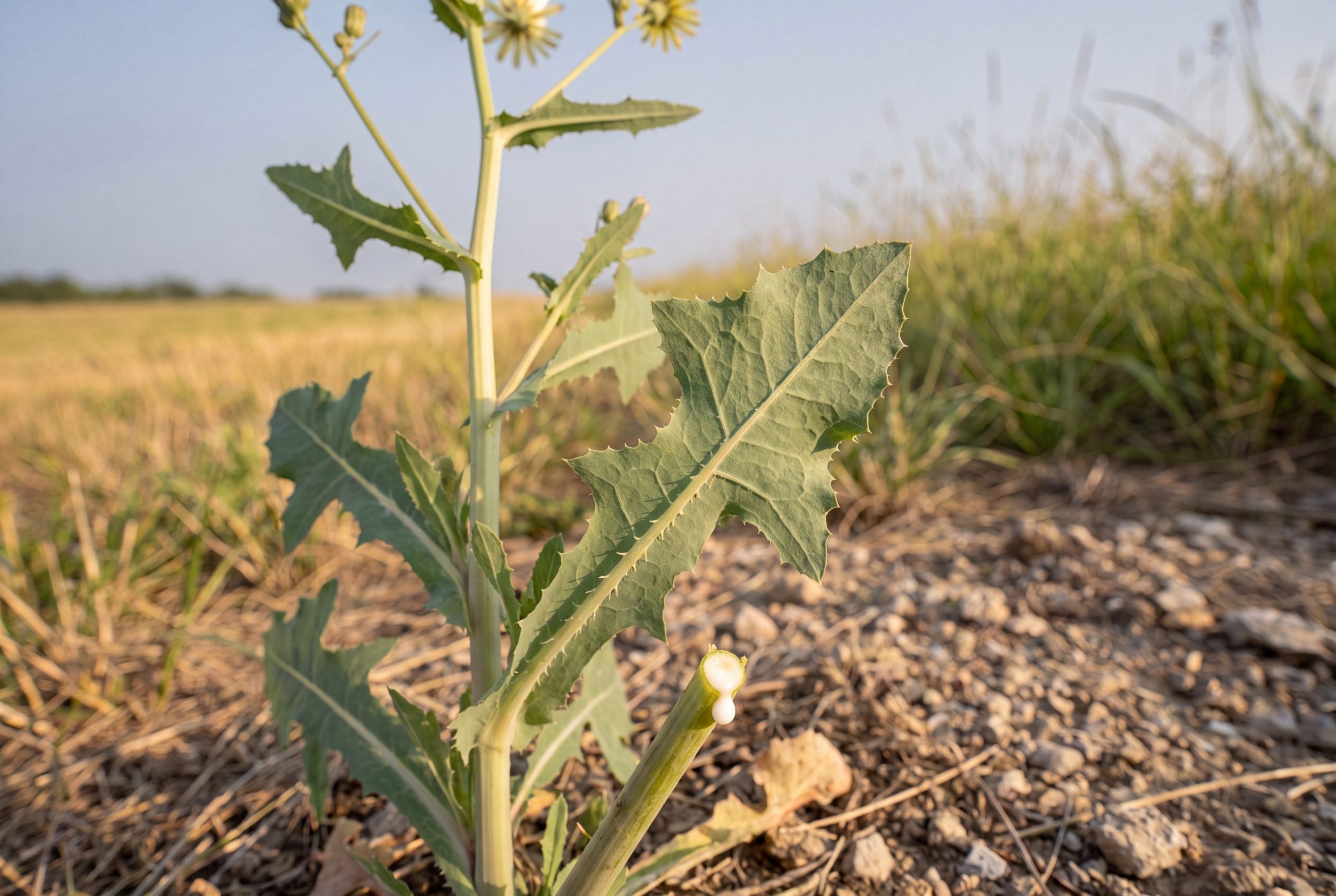
Wild Lettuce (Lactuca virosa) is a biennial plant belonging to the Asteraceae family, which also includes daisies, sunflowers, and dandelions. Native to parts of Europe, North Africa, and Western Asia, it has naturalized in other regions, including North America. It typically grows tall (up to 6 feet or more) with prickly or spiny leaves arranged along a central stem. When the stem or leaves are broken, they exude a milky white latex, known as lactucarium. This substance is historically the part most associated with the plant’s medicinal use.
It’s important to distinguish Lactuca virosa from common garden lettuce (Lactuca sativa) and other related wild species like Prickly Lettuce (Lactuca serriola), as their properties and safety can differ.
Historical Context and Traditional Applications
The use of Lactuca virosa stretches back through history. Ancient Egyptians may have used it, and Greek physicians like Dioscorides documented its use in the 1st century AD. Throughout Roman times and the Middle Ages, it was recognized in herbals for its potential properties.
During the 19th century, physicians and herbalists, particularly within the Eclectic medical movement in the United States, used lactucarium prepared from Lactuca virosa as a mild sedative and anodyne (pain reliever). Wild lettuce has been used for conditions like coughs, insomnia, anxiety, and various types of pain. It was sometimes seen as a milder, non-addictive alternative to opium, leading to the common, though potentially misleading, nickname “Opium Lettuce.” It is crucial to understand that Lactuca virosa is botanically unrelated to the opium poppy (Papaver somniferum) and does not contain opiate alkaloids like morphine or codeine.
Botany and Safe Identification
- Appearance: Lactuca virosa typically has a tall, erect stem that can reach heights of 2-7 feet (0.6-2+ meters). The leaves are often large, oblong or lobed, with spiny margins and a prominent spiny midrib on the underside. The plant produces numerous small, pale yellow flowers resembling dandelion flowers.
- Habitat: It favors disturbed ground, roadsides, riverbanks, and open fields, often in sunny locations.
- Latex: The defining feature is the milky white latex (lactucarium) exuded from cut stems and leaves.
The Critical Importance of Correct Identification
Warning: Foraging for wild plants carries significant risks. Misidentification of Lactuca virosa with toxic look-alikes can lead to severe poisoning. Some potentially dangerous plants may resemble wild lettuce at certain growth stages. Never consume a wild plant unless you are 100% certain of its identification. If considering using wild lettuce, consulting with an experienced botanist or trusted herbalist for identification is essential, or obtaining it from a reputable, verified source. Relying solely on photos or descriptions for identification is unsafe.
The identification problem is not academic when the end goal is a pain preparation. Lactuca virosa is routinely confused with prickly lettuce (Lactuca serriola), and both are confused with unrelated plants sold or shared under the loose label “wild lettuce.” The species differ in latex yield and in sesquiterpene lactone content, so two foragers following the same recipe can end up with preparations of very different strength. Genomic work published in 2023 found that L. virosa carries a 3.7 Gbp genome against 2.5 Gbp in cultivated lettuce (Lactuca sativa), placing it in the tertiary lettuce gene pool rather than beside the salad crop most people picture (Xiong et al., 2023, G3, PMID: 37740775). In our editorial team’s review of the foraging literature, this is the most common point at which safety guidance breaks down.
For a full side-by-side breakdown of the lookalikes, see our guide to how wild lettuce differs from dandelion and its lookalike Lactuca species. The USDA PLANTS Database profile for Lactuca virosa (LAVI2) is the authoritative reference for range and botanical description.
Active Compounds and Potential Mechanisms
The primary compounds thought to be responsible for the effects of Lactuca virosa are sesquiterpene lactones found within the lactucarium. The most studied of these are:
- Lactucin: A bitter compound that has shown sedative and analgesic (pain-relieving) activity in some animal studies.
- Lactucopicrin: Another bitter sesquiterpene lactone, often present in higher concentrations than lactucin. Research, primarily in animals or isolated cells, suggests it may possess analgesic and sedative properties. Some preliminary studies hint it might act as an acetylcholinesterase inhibitor, a mechanism different from opioids.
It is important to stress that most research on these compounds has been conducted in vitro (in test tubes or on isolated cells) or in animal models. How these findings translate to humans, especially when consuming the whole plant or its preparations, is not well established. The exact mechanism by which these compounds might relieve pain or induce sedation in humans requires much more investigation.
The compounds in question are guaianolide-type sesquiterpene lactones, the same bitter chemical class found in chicory (Cichorium intybus). Three have been isolated and tested directly: lactucin, lactucopicrin, and 11-beta,13-dihydrolactucin. Their concentration in the plant is not fixed. Work on Lactuca virosa tissue culture confirmed that sesquiterpene lactone production varies with the tissue and the growing conditions (Stojakowska et al., 1994, Planta Medica, PMID: 17236022). That variability is the practical reason no two batches of dried leaf or lactucarium can be assumed equivalent, and it is a limitation the plant shares with most unstandardized botanicals.
In our own sourcing and testing work across bitter Asteraceae species, we have found that the compounds responsible for a plant’s traditional reputation are frequently the same compounds that make dosing unpredictable. Wild lettuce is a clear example. The bitterness is the activity, and the bitterness is not consistent.
Examining Potential Benefits: Focus on Pain
Traditionally, wild lettuce is a plant that is turned to for natural pain relief. Historical accounts and anecdotal reports suggest its use for various types of discomfort, including:
- Muscular aches and pains
- Nerve pain
- Headaches
- Menstrual cramps
- Pain associated with coughs or respiratory irritation
Other traditional uses include promoting sleep and easing anxiety, likely linked to its purported sedative properties. People looking into wild lettuce for pain are often seeking alternatives to conventional painkillers.
Effectiveness: Evaluating the Scientific Evidence
While traditional use provides a historical basis for interest in Lactuca virosa, rigorous scientific evidence supporting its effectiveness for pain relief in humans is currently lacking.
- Human Trials: There is a significant absence of high-quality, double-blind, placebo-controlled clinical trials investigating the effects of wild lettuce or its extracts on human subjects for pain management.
- Animal/In Vitro Studies: As mentioned, some animal studies using isolated compounds like lactucin and lactucopicrin have shown potential analgesic and sedative effects. However, results from animal models do not always predict human responses accurately. Dosage, metabolism, and mechanisms can differ significantly.
- Anecdotal Evidence: Many reports of benefit are anecdotal or based on traditional practices. While valuable, this type of evidence is not a substitute for controlled scientific investigation to confirm efficacy and safety.
Therefore, while Lactuca virosa has a long history of use, claims about its definitive ability to treat pain effectively in humans are not currently supported by robust scientific data. More research is needed.
It is worth being precise about what the animal evidence does and does not show, because this is where most writing on wild lettuce goes wrong. The single most-cited study is Wesolowska and colleagues, published in the Journal of Ethnopharmacology in 2006 (PMID: 16621374). Working in mice, the team tested lactucin, lactucopicrin, and 11-beta,13-dihydrolactucin against two standard pain models. In the hot plate test, lactucin and lactucopicrin at 15 and 30 mg/kg produced an analgesic effect similar to ibuprofen at 30 mg/kg. In the tail-flick test, 30 mg/kg was comparable to ibuprofen at 60 mg/kg. Lactucopicrin was the most potent of the three. Lactucin and lactucopicrin, but not the dihydro form, also reduced spontaneous locomotor activity, which is the sedative signal.
That is a real result, and it is worth taking seriously. It is also a mouse result, delivered as isolated purified compounds at controlled milligram-per-kilogram doses by researchers who knew exactly what they were administering. None of those three conditions apply to a person drinking a tea or taking an unstandardized capsule. Our editorial team has reviewed the indexed literature on Lactuca virosa and found no randomized controlled trial in humans testing it for any pain indication. Not a small one. Not an underpowered one. None.
The historical record runs deeper than most sources acknowledge. A paper on Lactuca virosa appeared in Medico-Chirurgical Transactions in 1815 (PMID: 20895259), meaning the plant has been in the Western medical literature for more than two centuries. Two hundred and ten years of documented interest, and still no controlled human trial for pain. That absence is itself a finding.
Wild Lettuce and Conventional Analgesics: What the Evidence Actually Shows
People arrive at this question honestly. If a mouse study put lactucopicrin in the same range as ibuprofen, does that mean wild lettuce works like ibuprofen? No. And the reason why is the most useful thing on this page.
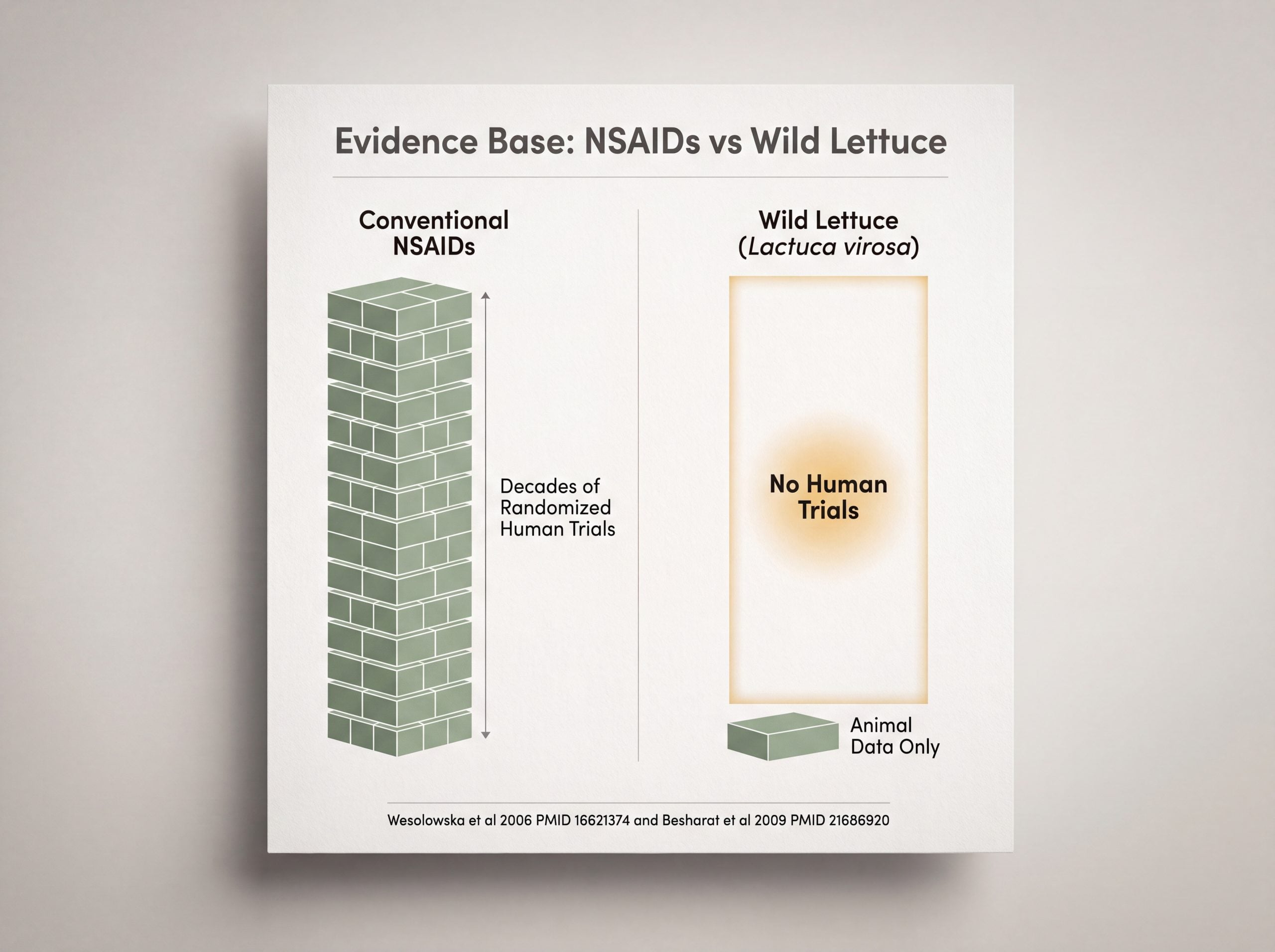
Ibuprofen has been through decades of randomized controlled trials in humans, with a characterized mechanism (COX inhibition), a known dose-response curve, a known onset time, a known duration, a known interaction profile, and a known adverse-event rate at population scale. Wild lettuce has animal data on isolated compounds, a body of traditional use, and a set of hospital case reports. These are not two competing answers to the same question. They are two completely different quantities of evidence, and the honest comparison is between the evidence itself, not between the substances.
| Evidence type | Conventional NSAIDs (e.g. ibuprofen) | Wild lettuce (Lactuca virosa) |
|---|---|---|
| Randomized human trials for pain | Extensive, spanning decades | None identified |
| Animal analgesia data | Yes, plus human confirmation | Yes, in mice, isolated compounds only (PMID: 16621374) |
| Characterized mechanism | COX enzyme inhibition | Proposed central nervous system action, not confirmed in humans |
| Standardized dose | Yes, per milligram | No. Active compound content varies by plant, part, season, and preparation |
| Documented adverse events | Well characterized at population scale | Hospital case reports, including intensive care admission (PMID: 21686920) |
| Long-term or chronic-pain data | Available | None. No study has assessed wild lettuce for chronic pain management in humans |
| Sources: Wesolowska et al. (2006), J Ethnopharmacol, PMID 16621374. Besharat et al. (2009), BMJ Case Rep, PMID 21686920. | ||
What about chronic pain?
This comes up constantly, and the answer is short. No published human study has evaluated Lactuca virosa for chronic pain management. The mouse experiments measured acute thermal withdrawal reflexes over minutes, which is a fundamentally different phenomenon from persistent pain lasting months. Anyone managing an ongoing pain condition should be working with a healthcare provider, and should tell that provider about any botanical they are taking or considering. The National Center for Complementary and Integrative Health maintains plain-language summaries of herbs and their evidence base that are a reasonable place to start that conversation.
Safety, Side Effects, and Toxicity Concerns
Using wild lettuce is not without risks. The lack of standardization in preparations and dosage makes safe use challenging. Potential side effects and safety issues include:
| Potential Issue | Description |
|---|---|
| Drowsiness/Sedation | Due to potential sedative effects, avoid driving or operating heavy machinery after consumption. |
| Dizziness | Some users report feeling dizzy. |
| Blurred Vision | May occur, potentially linked to anticholinergic effects. |
| Mild Euphoria | Occasionally reported, though less common. |
| Nausea/Vomiting | It can occur, especially with higher doses or sensitivity. |
| Allergic Reactions | Individuals allergic to plants in the Asteraceae family (ragweed, daisies, marigolds, chamomile, chrysanthemums) may react to wild lettuce. |
| Toxicity | Excessive doses or highly concentrated extracts have been linked to toxic effects, including potential respiratory depression and cardiac issues. Reports of poisoning exist, often related to very high intake. |
The concentration of active compounds can vary significantly based on the plant’s growing conditions, age, time of harvest, and preparation method. This variability makes consistent and safe dosing extremely difficult.
The documented toxicity cases
The risk here is not theoretical. A case series published in BMJ Case Reports documented eight patients admitted to a hospital affiliated with Golestan University of Medical Sciences in northern Iran after consuming wild lettuce, most of them unaware of its adverse effects. One patient required 48 hours in the intensive care unit. All eight recovered with conservative treatment, vital sign monitoring, and management of agitation, and no chronic complications were reported (Besharat et al., 2009, PMID: 21686920). The full case series is freely readable on PubMed Central, and we would encourage anyone considering wild lettuce to read it rather than take our summary of it.
Separately, a case report in the French journal Presse Medicale documented misuse of Lactuca virosa, and is indexed under substance-related disorders (Spadari et al., 2003, PMID: 12762295). The pattern across the published cases is consistent. The people who ran into trouble were not taking a measured, standardized preparation. They were taking an unknown quantity of an unknown concentration, which is the default condition for this plant.
Contraindications and Potential Interactions
Certain individuals should avoid using wild lettuce:
- Pregnancy and Breastfeeding: Safety has not been established. Avoid use.
- Glaucoma: Potential anticholinergic effects could worsen narrow-angle glaucoma by increasing eye pressure. Avoid use.
- Benign Prostatic Hyperplasia (BPH): Potential anticholinergic effects could cause urinary retention. Avoid use.
- Allergy: Known allergy to the Asteraceae/Compositae family.
- Surgery: Due to potential sedative effects, discontinue use at least two weeks before scheduled surgery.
Wild lettuce may interact with:
- CNS Depressants: Alcohol, benzodiazepines, barbiturates, narcotic painkillers, other sedatives. Combining them could lead to excessive drowsiness and respiratory depression.
- Anticholinergic Drugs: Medications used for allergies, depression, Parkinson’s disease, etc. Combining them could increase anticholinergic side effects (dry mouth, blurred vision, constipation, urinary retention).
Always consult a qualified healthcare professional before using wild lettuce, especially if you have any underlying health conditions or are taking any medications or other supplements. They can help you assess potential risks and interactions specific to your situation.
Forms, Preparation, and Dosage Considerations
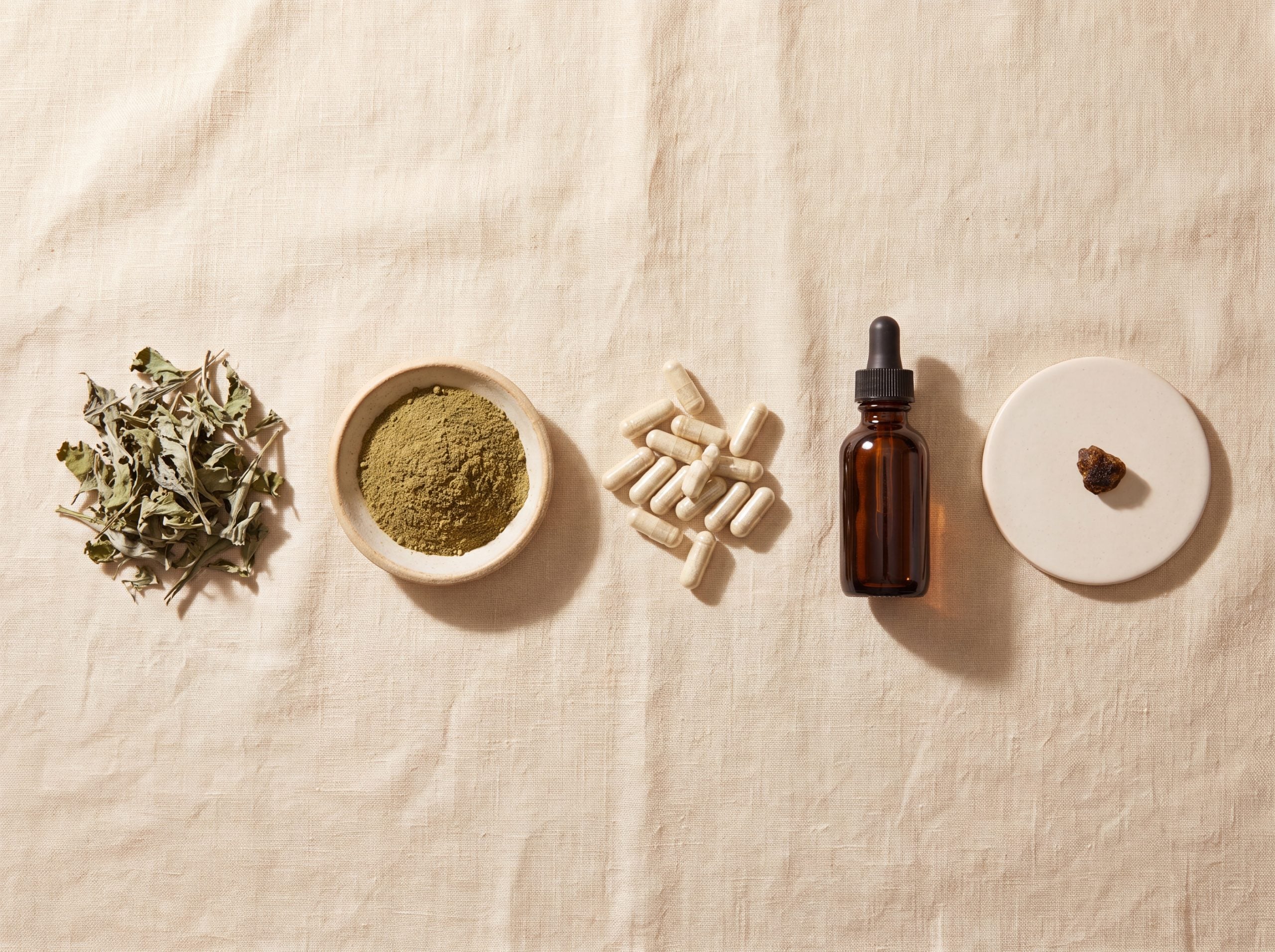
Wild lettuce has been prepared and used in various forms:
- Dried Leaf/Stem: Often used to make tea. The leaves are steeped in hot water. The taste is typically quite bitter.
- Tincture: An alcohol-based extract of the plant material.
- Extracts: Concentrated forms, available as liquids or powders. Potency can vary widely.
- Lactucarium: The dried latex. Historically collected, but preparation is laborious and potentially risky due to concentration variability.
| Form | How it is made | Consistency of active compounds | Traditional context |
|---|---|---|---|
| Dried leaf and stem (loose tea) | Aerial parts cut and dried, then steeped in hot water | Low. Bitter lactone content varies with harvest timing and plant part | The oldest and simplest preparation. Notably bitter |
| Powder | Dried aerial parts milled to a powder | Low to moderate. Milling evens out plant-to-plant variation within a batch but does not standardize compound content | Blended into liquids or encapsulated at home |
| Capsules | Powder or a concentrated extract measured into shelf-stable capsules | Moderate by weight, but weight is not the same as active-compound content | The most common modern retail form. Removes the bitterness problem |
| Tincture and liquid extract | Plant material macerated in alcohol to draw out the bitter lactones | Variable. Depends on plant part, alcohol percentage, ratio, and maceration time | The traditional herbalist’s preparation. Faster onset than dried leaf |
| Lactucarium (dried latex) | Milky latex collected from cut stems and dried into a resinous solid | Highly variable and the most concentrated form. The riskiest by a wide margin | Historically the most prized and the most misused preparation |
| No commercially available form of wild lettuce is standardized to a stated lactucin or lactucopicrin content. Consistency of active compounds is an estimate of batch-to-batch reliability, not a measure of effectiveness. | |||
The distinction that matters most across these forms is not potency. It is predictability. In our sourcing experience, the two forms customers ask about most often are also the two that behave most differently: capsules give a consistent weight per serving, while tinctures and lactucarium give a consistent nothing. We supply wild lettuce capsules and wild lettuce powder from a single verified botanical source, which controls for species identity and for adulteration. It does not, and cannot, control for the underlying variability in the plant’s own chemistry. No supplier can honestly claim otherwise.
Dosage: A Major Uncertainty
There is no scientifically established safe or effective dose for wild lettuce or its preparations. Traditional dosage recommendations vary widely and lack scientific validation. Due to the variability in plant chemistry and the potential for toxicity:
- Extreme caution is advised.
- If considering use (after consulting a healthcare professional), starting with an extremely low amount of any preparation is prudent to assess tolerance.
- Avoid highly concentrated extracts or attempting to prepare lactucarium without expert guidance due to the increased risk of adverse effects.
Historical herbal texts do record quantities, and we mention them here only so the record is complete. Nineteenth- and early twentieth century Western herbal and Eclectic sources described dried leaf infusions in the range of roughly 1 to 2 grams of plant material, and lactucarium in far smaller quantities on the order of tens of milligrams, reflecting how much more concentrated the dried latex is. Those figures come from an era with no analytical chemistry, no standardization, no adverse-event reporting, and no way to verify what the plant in front of the writer actually contained.
None of these historical quantities constitutes a dosing recommendation, and we are not offering one. They are a description of what people did, not evidence of what is safe or effective. The mouse data that generated modern interest used purified compounds at 15 to 30 mg/kg of body weight (PMID: 16621374), a figure that cannot be converted into a human dose of whole dried plant by any legitimate method. Anyone weighing wild lettuce should have that conversation with a qualified healthcare provider who knows their full medication list.
How Wild Lettuce Tincture Is Traditionally Prepared
This is the question we see asked more than any other about wild lettuce, so it deserves a direct answer alongside a direct warning. What follows is a description of the traditional method as recorded in the herbal literature. It is not a protocol, not a recommendation, and not a dosing guide.
Which part of the plant is used
Tinctures are made from the aerial parts, meaning the leaves and the upper stems, and the material is traditionally gathered when the plant is in flower, which is when the milky latex runs most freely. That latex, lactucarium, is where the bitter sesquiterpene lactones concentrate. A separate and much older practice involved scoring the standing stems, letting the latex bead up, and collecting and drying it directly. That method yields a far more concentrated material and carries correspondingly higher risk. It is the preparation most associated with the documented toxicity cases.
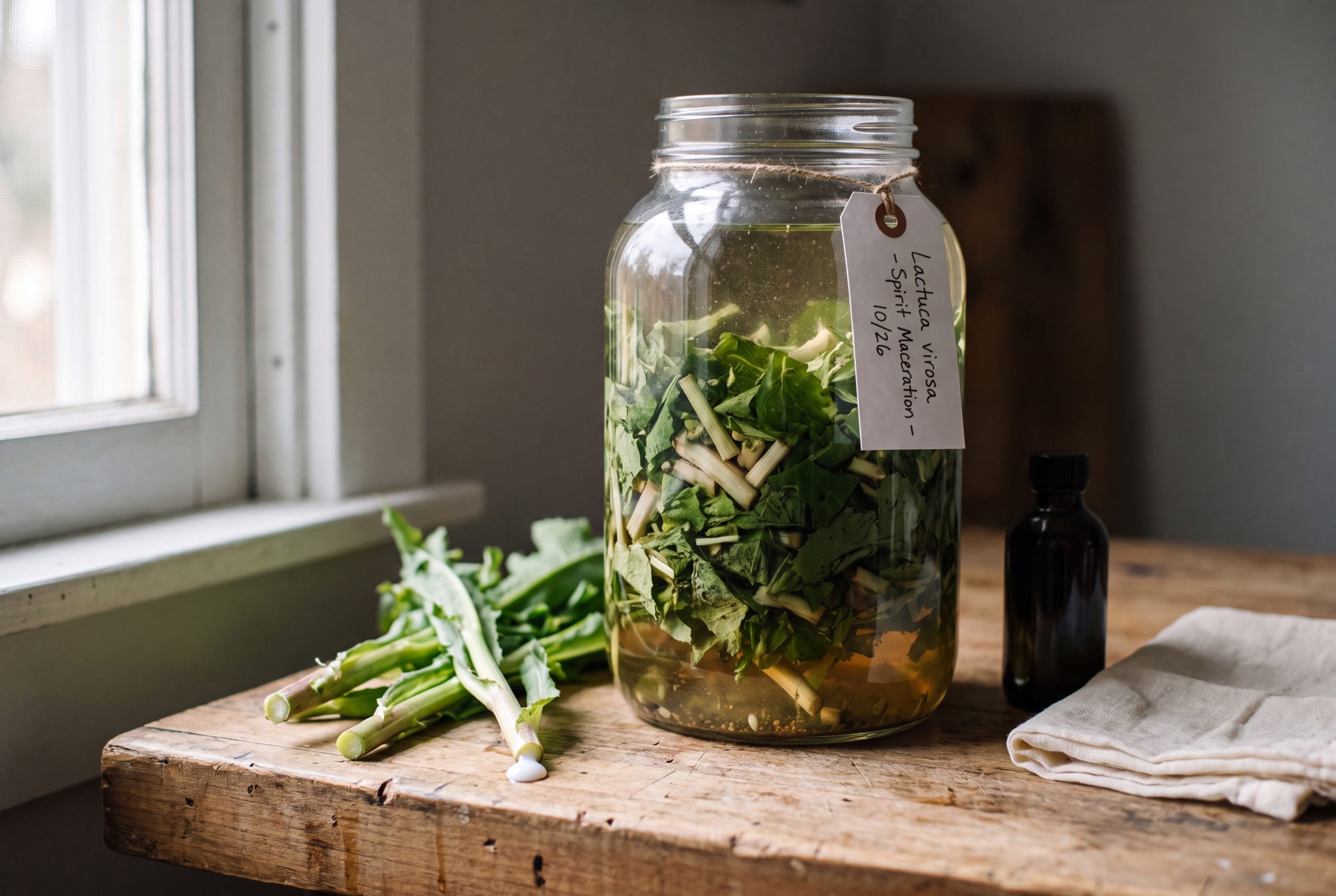
The traditional maceration method, in outline
- Aerial parts are harvested at flowering and either used fresh or dried, with fresh material yielding more latex and dried material being easier to weigh.
- The plant material is chopped and packed into a glass jar.
- The jar is filled with alcohol at a percentage high enough to extract the bitter lactones, and food-grade alcohol is used rather than any other kind.
- The jar is sealed, kept out of direct light, and shaken periodically over a period of several weeks.
- The liquid is strained off the plant material and stored in a dark bottle away from heat and light.
Precautions specific to tinctures
Alcohol extraction concentrates the plant’s compounds, which is the entire point of the method and also its central hazard. A homemade tincture has no label, no assay, and no batch record. Two jars made in the same kitchen from plants pulled a week apart can differ substantially in strength, because sesquiterpene lactone content shifts with the plant part, the season, and the growing conditions (Stojakowska et al., 1994, PMID: 17236022). Add to that the identification problem covered earlier, and a home tincture is an unknown concentration of an unverified species.
Our editorial team’s position is straightforward. Anyone determined to prepare wild lettuce at home should be certain of the species from a verified source, should never treat a homemade tincture as interchangeable with a commercial one, should avoid concentrated lactucarium entirely without expert supervision, and should tell their healthcare provider what they are doing. The published case series exists because people did not do those things.
Legal Status
The legality of Lactuca virosa can vary. For example, in Louisiana, USA, it is reportedly illegal to grow or possess. Laws regarding herbal substances can change. It is advisable to check the current regulations in your specific state or country before acquiring or using wild lettuce.
Wild Lettuce vs. Opium: An Important Clarification
The nickname “Opium Lettuce” frequently causes confusion. To reiterate:
- Lactuca virosa is not related to the opium poppy (Papaver somniferum).
- It does not contain opium alkaloids (morphine, codeine).
- Its potential analgesic and sedative effects are attributed to different compounds (lactucin, lactucopicrin) with likely different mechanisms of action than opioids.
- Its effects, if any, are generally considered much milder than those of true opiates. The term “opium lettuce” is more reflective of its historical use as a mild sedative or pain reliever rather than its chemical composition or potency.
One clarification is worth adding, because “not opium” is sometimes misread as “therefore harmless.” Lactuca virosa contains no opiate alkaloids and is not chemically related to Papaver somniferum. It has still been the subject of a published case report on misuse, indexed under substance-related disorders (Spadari et al., 2003, Presse Medicale, PMID: 12762295). Those two facts sit together without contradiction. A plant does not need to contain morphine to be misused, and the absence of an opiate alkaloid is not a safety guarantee. The nickname is misleading in both directions.
Frequently Asked Questions About Wild Lettuce for Pain
Is wild lettuce actually effective for pain relief?
No controlled human trial has ever tested wild lettuce for pain, so effectiveness in people has not been established. The interest comes from a 2006 mouse study in which the isolated compounds lactucin and lactucopicrin produced analgesic effects at 15 and 30 mg/kg comparable to ibuprofen (PMID: 16621374). Animal results with purified compounds do not demonstrate that a tea, powder, or capsule works in humans, and the honest answer today is that we do not know.
How do I identify wild lettuce vs prickly lettuce?
Wild lettuce (Lactuca virosa) and prickly lettuce (Lactuca serriola) are closely related and routinely confused. They differ in leaf shape, stem characteristics, and the volume of milky latex they release when cut, and the two species carry different sesquiterpene lactone content. Because misidentification is the point at which most safety guidance fails, we cover the lookalikes in detail in our wild lettuce species comparison guide. Never rely on photographs alone, and use a verified source rather than foraging on your own judgment.
What part of wild lettuce is used for tinctures?
Tinctures are traditionally made from the aerial parts, meaning the leaves and upper stems, gathered when the plant is in flower and the milky latex runs most freely. That latex, called lactucarium, is where the bitter compounds concentrate. Lactucarium can also be collected and dried on its own, producing a far more concentrated material that carries substantially higher risk and is the preparation most associated with documented toxicity cases.
Are there any risks or side effects of wild lettuce?
Yes, and they are documented rather than theoretical. A BMJ Case Reports series described eight patients hospitalized after consuming wild lettuce, one of whom required 48 hours in intensive care, though all recovered (PMID: 21686920). Reported effects include dizziness, drowsiness, agitation, and anticholinergic-type symptoms. Because no preparation is standardized to a known active-compound content, the amount taken is effectively unknown. People who are pregnant or breastfeeding, who have allergies to the Asteraceae family, or who take sedating medications should avoid it.
How do you make wild lettuce pain tincture?
The traditional method macerates chopped aerial parts in food-grade alcohol in a sealed glass jar, kept out of direct light and shaken periodically over several weeks, after which the liquid is strained and stored in a dark bottle. We describe this because it is the most-asked question about the plant, not as a recommendation. A homemade tincture has no assay and no batch record, its strength varies with plant part and season, and it should never be treated as equivalent to a standardized product. Speak with a qualified healthcare provider before using any wild lettuce preparation.
Final Thoughts and Recommendations
Lactuca virosa is a plant with a rich history of traditional use, particularly sought after for its potential calming and pain-relieving properties. The compounds lactucin and lactucopicrin show some promise in preliminary research. However, the bridge between traditional application and confirmed scientific efficacy in humans remains largely unbuilt due to a lack of rigorous clinical trials.
While some individuals may find relief using wild lettuce Lactuca virosa, significant safety concerns exist. These include potential side effects, toxicity at high doses, interactions with medications, and the inherent risks associated with plant identification and the lack of standardized preparations. The benefits of wild lettuce must be carefully weighed against these risks.
If you are considering wild lettuce pain medicine alternatives, like this herbal remedy, prioritizing safety is paramount.
- Consult Healthcare Professionals: Always discuss the use of wild lettuce with your doctor or a qualified healthcare provider before trying it, especially if you have health conditions or take medications. They can provide guidance tailored to your specific health profile.
- Verify Identification: Never use a wild plant you cannot identify with absolute certainty. Seek expert help or purchase from highly reputable sources specializing in organic or properly identified plants.
- Start Low: If choosing to proceed after professional consultation, use extremely small amounts initially.
- Be Aware of Risks: Understand the potential side effects, interactions, and contraindications.
- Do Not Replace Conventional Treatment: Do not use wild lettuce to replace prescribed medications or delay seeking medical attention for significant pain or health issues.
Exploring natural healing options requires diligence and caution. While Lactuca virosa holds historical interest, its role as a reliable and safe pain reliever awaits confirmation through robust scientific research.
Related Reading
Continue with these related guides from our team:
- Wild Lettuce vs Dandelion: Species, Uses, and Safety Differences
- Wild Lettuce Capsules
- Wild Lettuce Powder
Disclaimer
These statements have not been evaluated by the Food and Drug Administration. This product is not intended to diagnose, treat, cure, or prevent any disease. Consult your healthcare provider before use.
This article is intended for informational purposes only and does not constitute medical advice. Always seek the advice of your physician or other qualified health provider with any questions you may have regarding a medical condition.