Key Takeaways
- Baobab is the fruit of Adansonia digitata, one of nine tree species in the genus Adansonia, native to mainland Africa, Madagascar, the Arabian Peninsula, and northwestern Australia.
- The fruit dries naturally on the branch into a chalky pulp, so the powder reaches you without heat processing or pasteurization.
- Analysis of 20 pulp samples from Angola measured vitamin C up to 288.9 mg per 100 g and fibre up to 56.62 g per 100 g, with values varying by growing region (Monteiro et al. 2022, Plants, PMID: 36079651).
- A randomized human trial found baobab fruit extract reduced rapidly digestible starch and lowered glycemic response when taken with white bread (Coe et al. 2013, Nutrition Research, PMID: 24176228).
- Every part of the tree has a traditional use. Leaves are eaten as a vegetable, seeds are roasted or pressed for oil, and bark fibre is woven into rope and cloth.
The baobab is one of the most recognizable trees on earth, and one of the least understood outside the regions where it grows. Most articles about it cover the fruit powder and stop there. That misses what people are actually asking, which is what the tree is, where it grows, why it earned the name Tree of Life, and what the measured nutrition data actually shows.
This guide answers those questions with numbers attached to sources. In our sourcing work with African botanicals, baobab stands out because the harvest requires no processing infrastructure. The fruit does the drying itself, on the branch, in the sun. That single botanical quirk shapes everything about how the powder is made and why its nutrient profile survives the journey.
What is baobab?
Baobab is the fruit of Adansonia digitata, a deciduous tree in the Malvaceae family and the most widely used of the nine species in the genus Adansonia. The fruit hangs in hard, velvet-shelled pods and dehydrates on the branch into a dry, chalky pulp that is milled into powder without heat or pasteurization. Analysis of 20 pulp samples from Angola’s Namibe province measured vitamin C content reaching 288.9 mg per 100 g (Monteiro et al. 2022, Plants, PMID: 36079651).
The genus name honours Michel Adanson, the French naturalist who produced the first detailed botanical description of the tree in the eighteenth century. The common name applies to all nine species, though when a wellness product says baobab, it almost always means Adansonia digitata, the African baobab.
What does a baobab tree look like, and where does it grow?
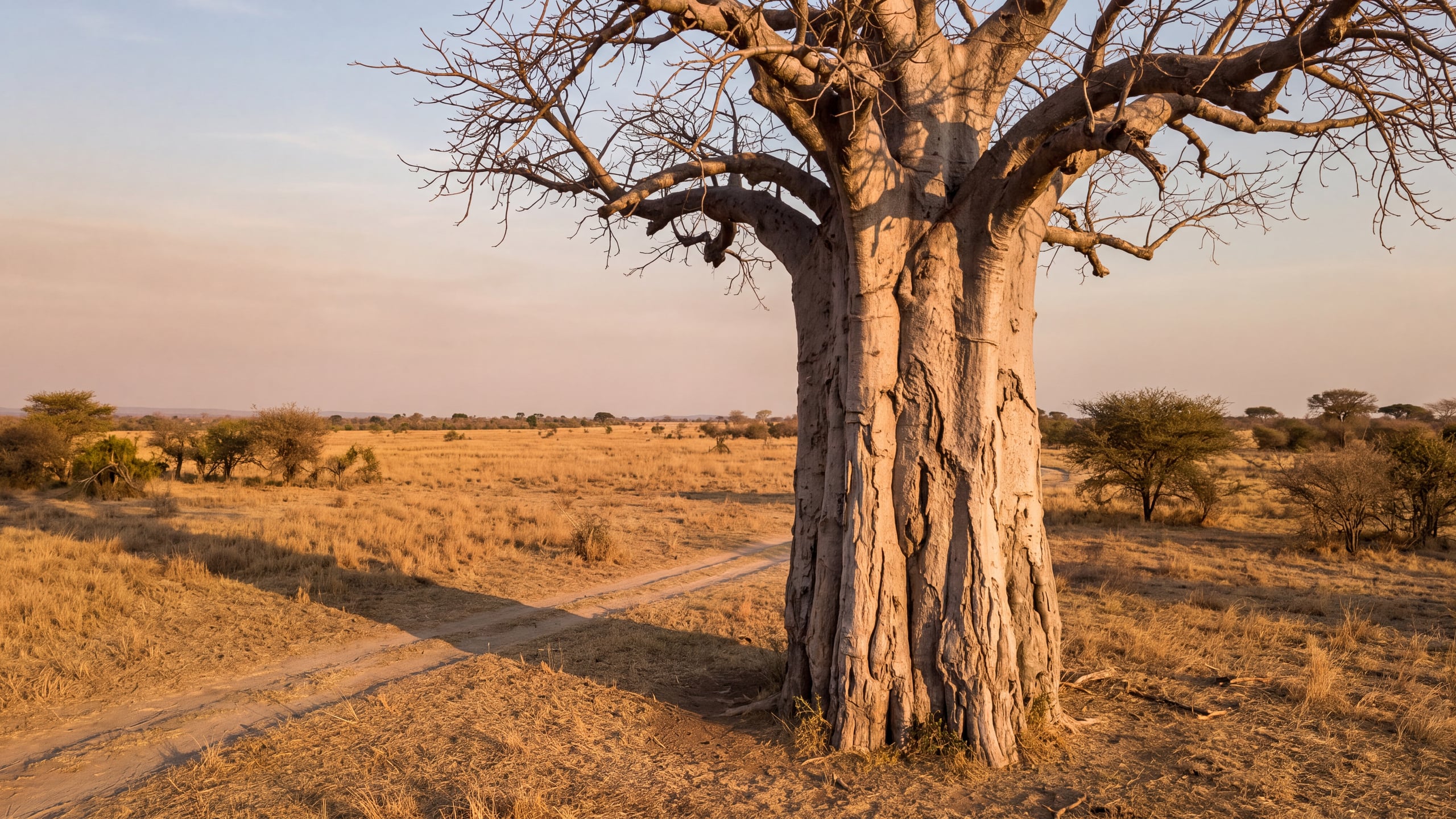
A mature baobab is unmistakable. The trunk is disproportionately thick relative to the crown, and the bare branches in the dry season look like roots reaching upward, which is where the folklore about an upside-down tree comes from.
- Trunk diameter on mature specimens can exceed 10 metres.
- The trunk stores thousands of litres of water, which carries the tree through long dry seasons.
- Radiocarbon dating has placed some individual trees past 2,000 years of age.
- The African baobab is native across at least 37 African countries.
- The fruit ripens and dries on the branch rather than falling and rotting.
Where do baobab trees grow naturally?
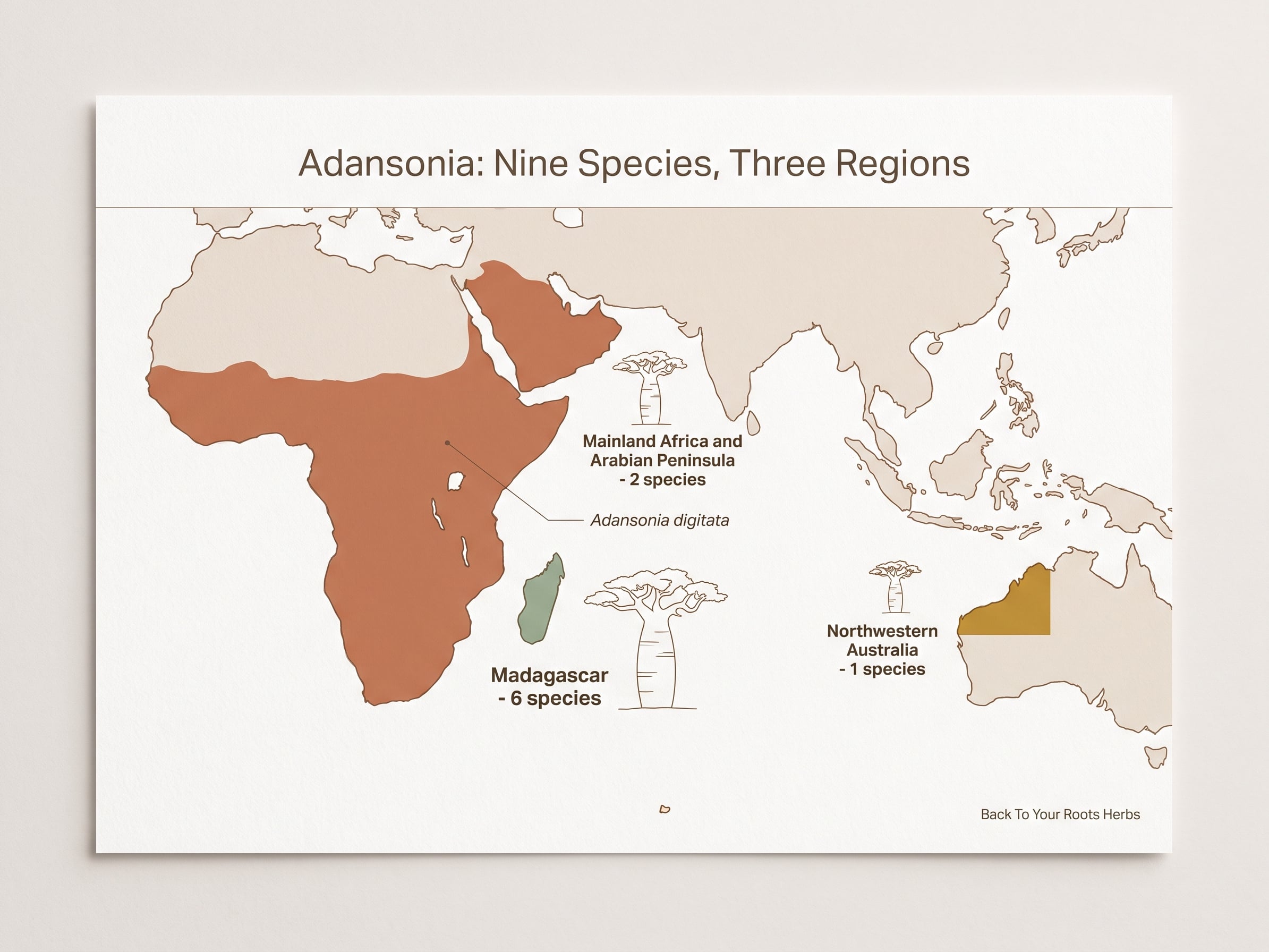
The nine Adansonia species split unevenly across three regions. Six species are endemic to Madagascar and grow nowhere else. Two grow across mainland Africa and the Arabian Peninsula, including Adansonia digitata. One species is native to northwestern Australia. That distribution pattern, with the majority of species concentrated on one island, is part of why Madagascar’s baobab populations are a conservation priority.
The growing region matters nutritionally, not just geographically. In the Angolan sampling work, pulp from the Camucuio municipality carried the highest fibre and vitamin C values, while pulp from Virei showed the strongest antioxidant activity at 1,936 mmol TE per 100 g and the highest potassium at 42.4 mg per g. Same species, different terroir, measurably different composition.
Why is the baobab called the Tree of Life?
The baobab earned the name Tree of Life because a single tree supplies water, food, and material in dry country where all three are scarce. Its trunk holds thousands of litres of water through the dry season. Its fruit, leaves, and seeds are all edible. Its bark yields fibre for rope and cloth, and it regenerates after harvesting rather than killing the tree.
The name is descriptive rather than poetic. In arid savanna, a mature baobab functions as a landmark, a water source, a food store, and a shelter, often for generations of the same community. Hollow trunks have historically been used for water storage and temporary shelter by both people and animals.
What is in baobab fruit powder?
This is where most baobab content goes vague. Nutrient names get listed with no numbers behind them. The measured data is available, so here it is.
| Component | Measured value (peak) | Role in the body |
|---|---|---|
| Vitamin C | 288.9 mg per 100 g | Antioxidant that supports immune function and collagen synthesis |
| Dietary fibre | 56.62 g per 100 g | Soluble and insoluble fractions supporting digestive regularity |
| Antioxidant capacity | 1,936 mmol TE per 100 g | Contributes to the body’s antioxidant defenses |
| Total phenolic compounds | 972 mg GAE per 100 g | Plant polyphenols associated with antioxidant activity |
| Potassium | 42.4 mg per g | Electrolyte involved in nerve signaling and fluid balance |
| Calcium | 3.80 mg per g | Supports bone structure, muscle function, nerve signaling |
| Carbohydrates | 28.1 g per 100 g | Largely fibre rather than free sugars |
| Source: Monteiro et al. (2022), Plants, PMID: 36079651. Values are regional peaks across 20 samples, not a single averaged product specification. | ||
Two things are worth pulling out of that table. First, the fibre figure is unusually high for a fruit, and it is the reason baobab behaves more like a functional fibre ingredient than a fruit powder. Second, the vitamin C figure varies substantially by growing region, which is why we treat origin as a specification rather than a marketing detail.
Separate laboratory work profiling six commercial baobab pulp powders found a shared bioactive compound zone across all six, tentatively identified as a group of coeluting fatty acids including palmitic, stearic, oleic, linoleic, and linolenic acids (Azadniya et al. 2023, Journal of Chromatography B, PMID: 37725851). The physico-chemical profiles were broadly comparable across the six products, with moderate differences in intensity.
What are the health benefits of baobab?
The functional interest in baobab comes from three properties working together, which are the vitamin C content, the fibre fraction, and the polyphenols. Below is what the published research supports, and where it stops.
Supports immune function
Baobab pulp is a meaningful dietary source of vitamin C, a nutrient the body requires for normal immune cell function and cannot manufacture on its own. Vitamin C contributes to the production and function of white blood cells and helps protect those cells from oxidative damage. Because vitamin C is water-soluble and not stored, regular dietary intake matters more than any single large dose.
Promotes digestive health
The soluble fibre fraction in baobab, largely pectin, behaves as a prebiotic. Prebiotic fibres are not digested in the small intestine. They reach the colon intact, where resident bacteria ferment them. That fermentation supports the populations of beneficial bacteria that make up a healthy gut microbiome. Given the measured fibre content, a single tablespoon contributes a substantial share of a day’s fibre target.
May support a healthy glycemic response
This is the best-evidenced claim in the baobab literature, and it comes from human trials rather than test tubes. In a randomized study at Oxford Brookes University, baobab fruit extract baked into white bread at 1.88 percent significantly reduced the amount of rapidly digestible starch released during digestion. When participants drank baobab extract in water alongside white bread, both an 18.5 g and a 37 g dose significantly reduced glycemic response compared with control (Coe et al. 2013, Nutrition Research, PMID: 24176228).
A follow-up crossover trial found that white bread enriched with baobab fruit extract significantly reduced total and segmental insulin area under the curve, meaning less insulin was required for a given blood glucose response (Coe and Ryan 2015, Nutrition Research, PMID: 26612114). Both studies were conducted in healthy adults. Neither examined a clinical population, and neither tested baobab as a management strategy for any diagnosed condition.
Contributes to healthy skin
Vitamin C is a required cofactor for the enzymes that synthesize collagen, the structural protein that gives skin its firmness and elasticity. The polyphenol fraction contributes antioxidant activity that helps protect skin cells against oxidative stress from environmental exposure. This is a nutritional contribution to skin structure rather than a topical or cosmetic effect.
How does baobab compare to other vitamin C superfoods?
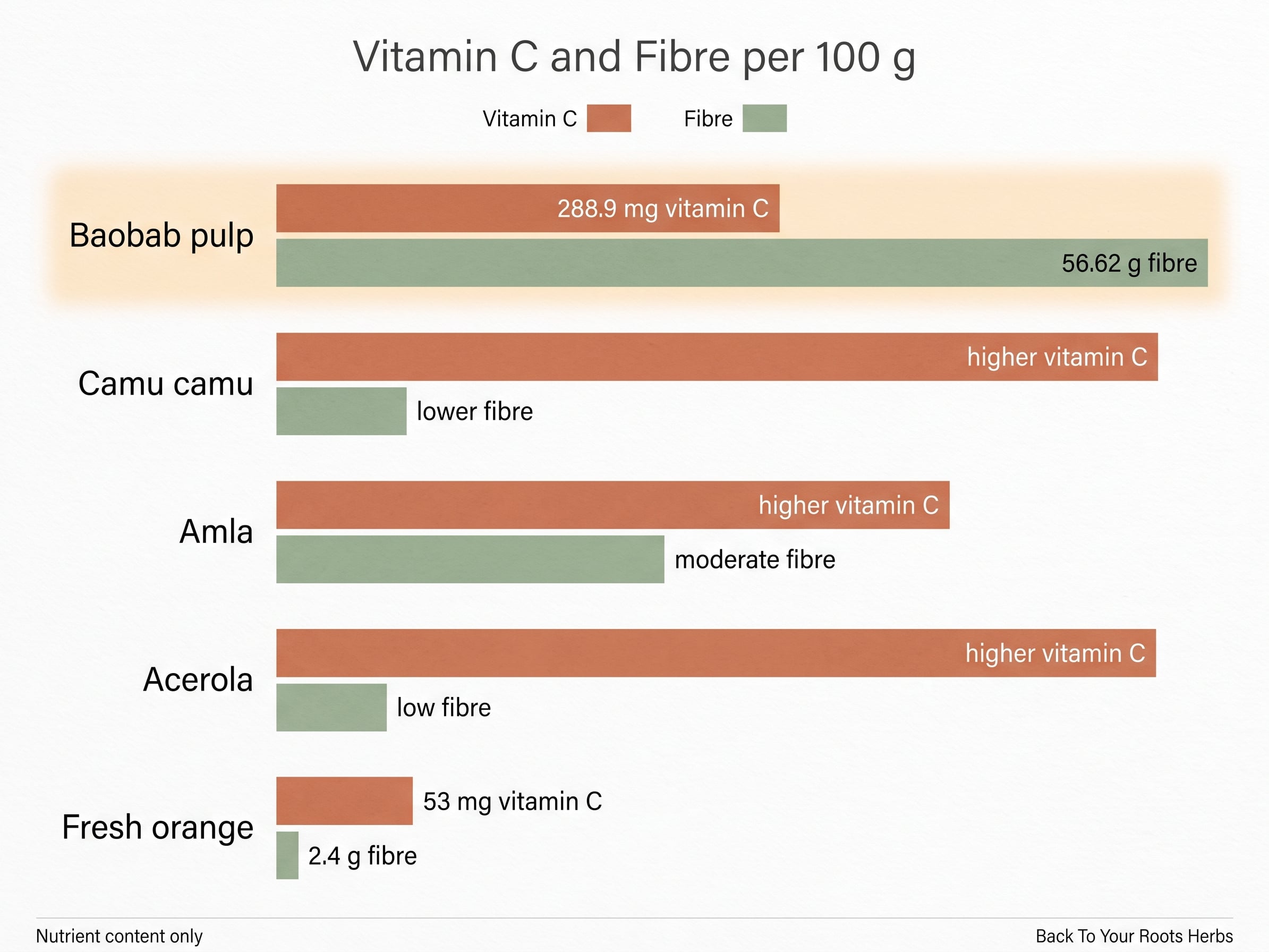
Baobab gets marketed as a vitamin C leader, and the honest answer is that it is high but not the highest. Here is how the measured content compares against the other fruits people most often ask about.
| Food | Vitamin C (mg per 100 g) | Dietary fibre (g per 100 g) | Notable compounds |
|---|---|---|---|
| Baobab pulp (Adansonia digitata) | up to 288.9 | up to 56.62 | Pectin, polyphenols, potassium, tartaric acid |
| Camu camu powder (Myrciaria dubia) | substantially higher | lower | Ellagic acid, anthocyanins |
| Amla powder (Phyllanthus emblica) | higher | moderate | Tannins, gallic acid |
| Acerola powder (Malpighia emarginata) | substantially higher | low | Carotenoids, anthocyanins |
| Fresh orange | approximately 53 | approximately 2.4 | Hesperidin, folate |
| Baobab values from Monteiro et al. (2022), PMID: 36079651. Comparison figures are typical published ranges and vary by cultivar, harvest, and processing. Dried powders are compared against fresh fruit on a per-100 g basis, which favours the powders. This table compares nutrient content only. | |||
What separates baobab in this group is not the vitamin C number. It is the combination of appreciable vitamin C with a fibre content no other fruit powder on that list approaches. Camu camu and acerola are vitamin C specialists. Baobab is a fibre-and-vitamin-C hybrid, which is why it behaves differently in food and in digestion.
What are baobab leaves, seeds, and bark used for?
The fruit powder is what reaches export markets, but within the tree’s native range, the fruit is only one of four harvested parts. This is the piece most baobab articles leave out entirely.
| Part | Preparation | Use |
|---|---|---|
| Fruit pulp | Dried on the branch, milled to powder | Mixed into water or milk as a drink, stirred into porridge, used as a souring agent |
| Leaves | Eaten fresh, or dried and ground | Cooked as a leafy vegetable much like spinach, or used dried to thicken soups and sauces |
| Seeds | Roasted, pressed, or milled | Eaten as a roasted snack, pressed into cooking and cosmetic oil, ground into flour |
| Bark fibre | Stripped and woven | Rope, baskets, cloth, fishing nets and musical instrument strings |
Baobab seeds deserve a note of their own. They contain carbohydrate, fat, and a protein fraction reported to carry all eight essential amino acids, which is uncommon in a single plant source. Seed oil is pressed for both culinary and skincare use.
The bark point matters for sustainability. Baobab bark regenerates after stripping, so fibre harvesting does not require felling the tree. That regenerative quality is part of why the species has supported continuous human use across so many centuries.
How is baobab used in traditional African medicine?
Ethnopharmacological reviews document a long record of traditional preparation across the baobab’s range. Communities have historically prepared aqueous infusions from the bark, the leaves, and the fruit pulp, and the American Botanical Council’s ethnopharmacological review of the species catalogues these practices alongside the tree’s food and material uses. Published work on the plant’s bioactive compounds notes that the tree carries traditional names including magic tree and chemist tree, reflecting the breadth of its documented traditional applications.
Two points of framing matter here. First, this is a historical and ethnobotanical record, not a set of clinical findings. The traditional use of a plant tells you what people have done with it, not what it does. Second, the modern research base on baobab is concentrated on nutrition and glycemic response, not on the traditional preparations. Those are different questions with different evidence behind them, and we keep them separate for good reason.
How do you use baobab powder?
Baobab powder dissolves readily and does not need cooking. In our team’s kitchen testing, the most common mistake is adding it to something hot and expecting it to behave like a neutral thickener. It is acidic, and that acidity has consequences.
What does baobab taste like?
The flavour reads as a cross between pear, grapefruit, and vanilla, with a tangy sherbet quality. It is mildly sour without being sharp. The acidity comes largely from tartaric acid, the same compound behind cream of tartar, which is why baobab has historically been used as a souring and raising agent in baking.
Practical ways to use it
- Smoothies and juices. A tablespoon blends into any fruit smoothie and brightens the flavour rather than muting it.
- Yogurt, oatmeal, and chia pudding. Stirred in cold, it adds a citrus note and a substantial fibre contribution.
- Water and cold tea. Whisked into cold water, it makes a tart drink that needs no sweetener for most palates.
- Baking. Because baobab is acidic, it reacts with baking soda. In muffins, pancakes, and energy bars, this can work in your favour for lift, but if a recipe already uses buttermilk or vinegar, you may need to reduce the other acid to keep the crumb from turning coarse.
- Salad dressing. Substituting a teaspoon of baobab for part of the vinegar gives an acid note with fibre attached.
How much baobab powder per day?
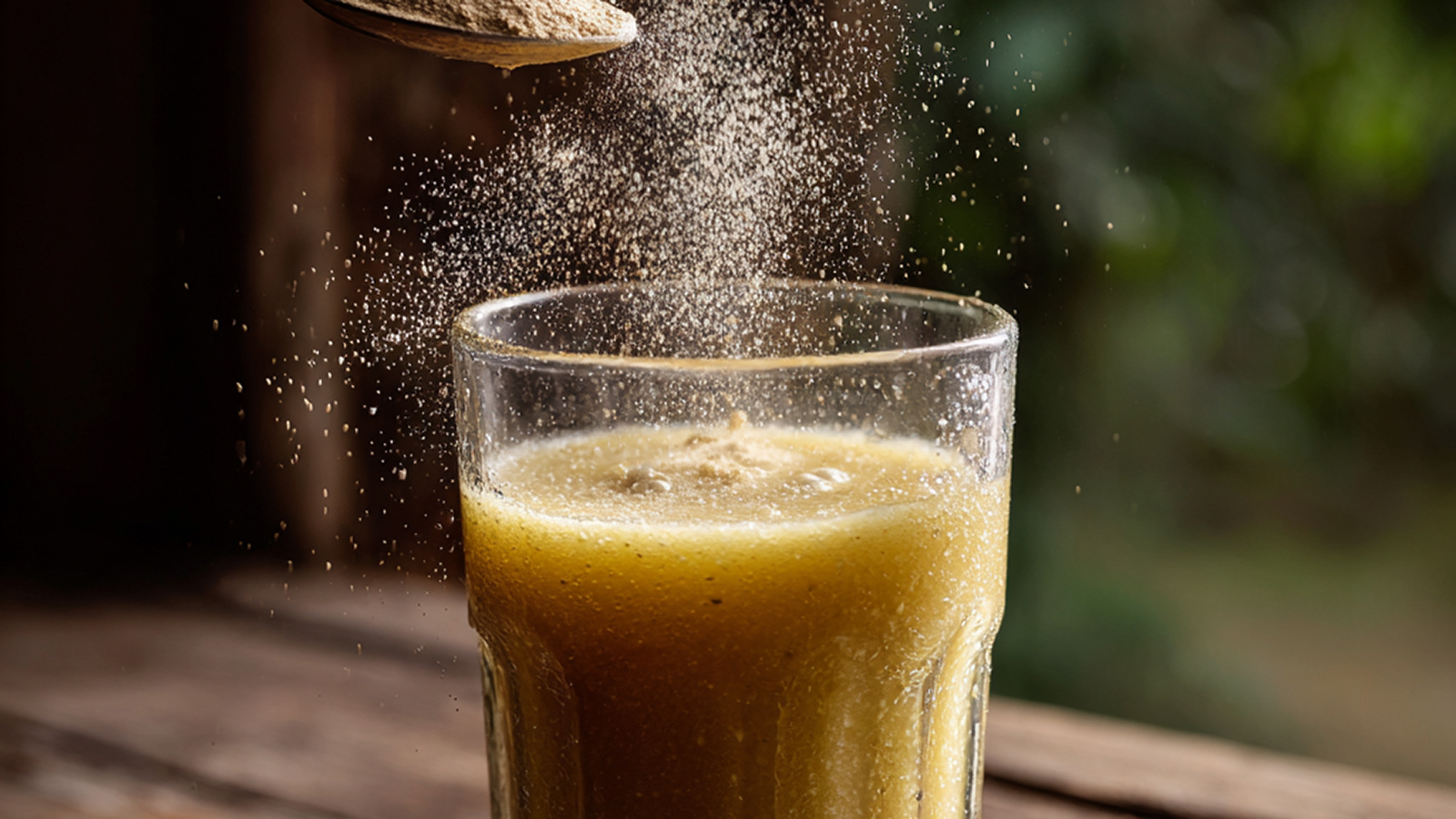
Customary culinary use is one to two teaspoons up to a tablespoon daily, added to food or drink. There is no established therapeutic dose, and the figure above describes how the powder is conventionally used as a food rather than a recommendation for any health purpose. Given the fibre content, starting at the lower end and increasing over several days is the sensible approach.
Organic versus non-organic baobab: does it matter?
Baobab is almost entirely wild-harvested. There is very little cultivated baobab in commercial supply, because the trees take decades to reach fruiting maturity and the wild population across the tree’s range is already substantial. Fruit is gathered from trees growing without agricultural inputs.
That makes organic certification a documentation question more than an agricultural one. Certification verifies the supply chain, the harvest area, and the absence of prohibited substances in handling and processing. It does not change the growing method, because there was no conventional growing method to change. In our sourcing experience, the more informative specifications for baobab are the harvest region, the confirmation that no heat or pasteurization step was applied, and third-party testing for microbial load and heavy metals.
Myths and legends of the baobab
The best-known baobab legend explains its silhouette. In versions told across several African cultures, the tree was vain about its appearance, or complained about its lot, and was uprooted and replanted upside down so that its roots waved in the air where its branches had been. The bare dry-season canopy does look convincingly like a root system, which is why the story travels so well.
Other traditions treat individual baobabs as meeting places and hold that community gatherings held beneath a mature tree carry particular weight. Hollow trunks have served as shelters, storerooms, and, in a few documented cases, small buildings. These stories are worth knowing because they explain why a baobab is rarely felled even when land around it is cleared.
Safety, side effects, and who should be cautious
Baobab fruit pulp is a food with a long dietary history and is generally well tolerated. The considerations below are practical rather than alarming.
- Introduce it gradually. The fibre content is high. Adding a large quantity suddenly can cause bloating or loose stools, the same as with any concentrated fibre source.
- Seeds and leaves contain antinutrients. Phytates and related compounds in the seed and leaf fractions bind minerals and reduce their absorption. Traditional roasting and cooking methods reduce these. This is a consideration for whole-seed and leaf preparations, less so for pulp powder.
- Acidity. People who find acidic foods aggravating may prefer baobab mixed into yogurt or oatmeal rather than taken in water on an empty stomach.
- Pregnancy, nursing, medication, or a managed health condition. Speak with a qualified healthcare provider before adding baobab or any new supplement to your routine.
Our editorial team has reviewed the available human trial literature and found no reports of significant adverse events in the published baobab studies, though those trials were small and short in duration.
Both our whole-fruit baobab powder and our baobab fruit capsules are milled from pulp that dried naturally on the branch, with no heat step applied after harvest.
Frequently Asked Questions
What does baobab do for the body?
Baobab contributes vitamin C, dietary fibre, polyphenols, and minerals including potassium and calcium. The vitamin C supports normal immune cell function and collagen synthesis. The soluble fibre acts as a prebiotic that feeds beneficial gut bacteria. In human trials, baobab fruit extract taken with a starchy meal reduced glycemic response in healthy adults (PMID: 24176228).
Is baobab good for your stomach?
Baobab is high in prebiotic fibre, largely pectin, which supports a healthy gut microbiome by feeding beneficial bacteria in the colon. Because the fibre content is high, introducing it gradually rather than all at once helps avoid temporary bloating while your digestion adjusts.
What is the best way to take baobab?
There is no single best method. Powder blends into smoothies, yogurt, oatmeal, and cold water without cooking, and works in baking where its acidity reacts with baking soda. Capsules suit people who want the fibre and vitamin C contribution without the tart flavour. Choose based on whether you want baobab in your food or alongside it.
Who should not take baobab?
Baobab is generally well tolerated as a food. People sensitive to acidic foods or to rapid increases in dietary fibre should start with a small amount. Anyone who is pregnant, nursing, taking medication, or managing a health condition should speak with a qualified healthcare provider before adding baobab or any new supplement.
What does baobab fruit taste like?
Most people describe it as a blend of pear, grapefruit, and vanilla with a tangy, sherbet-like finish. The sourness comes largely from tartaric acid. It is mild enough that it brightens smoothies and yogurt rather than overpowering them.
How does baobab compare to other superfoods?
On vitamin C alone, camu camu, acerola, and amla measure higher. What distinguishes baobab is that it pairs appreciable vitamin C with a fibre content those fruits do not approach, measured at up to 56.62 g per 100 g in Angolan samples (PMID: 36079651). It functions as both a vitamin C source and a fibre source rather than specializing in one.
Can you use baobab powder in baking?
Yes. Baobab is naturally acidic from its tartaric acid content, so it reacts with baking soda and can assist with lift in muffins, pancakes, and quick breads. If your recipe already contains buttermilk, yogurt, or vinegar, reduce that acid slightly to keep the texture from becoming coarse.
Are baobab leaves and seeds edible?
Both are eaten traditionally across the tree’s range. Leaves are cooked fresh as a leafy vegetable or dried and ground to thicken soups. Seeds are roasted as a snack, pressed for oil, or milled into flour, and are reported to contain all eight essential amino acids. Both contain phytates, which traditional roasting and cooking methods reduce.
Related Reading
Continue with our guides to gut health and immunity, the best herbs for the immune system, and the whole-fruit vitamin C profile of camu camu powder.
Important: This article is for educational and informational purposes. The statements have not been evaluated by the Food and Drug Administration. The herbs and herbal products discussed are not intended to diagnose, treat, cure, or prevent any disease. Speak with a qualified healthcare provider before starting any new herbal regimen, especially if you are pregnant, nursing, taking medication, or managing a health condition.