Key Takeaways
- Vitamin B6 (pyridoxine) improves how much dream content you recall on waking, but it does not make dreams more vivid, bizarre, or colorful.
- The largest trial gave 100 adults 240 mg of pyridoxine hydrochloride before bed for five consecutive nights (Adventure-Heart et al., 2018, Perceptual and Motor Skills, PMID: 29665762).
- No controlled study shows that vitamin B6 directly triggers lucidity. Any connection runs indirectly, through better recall.
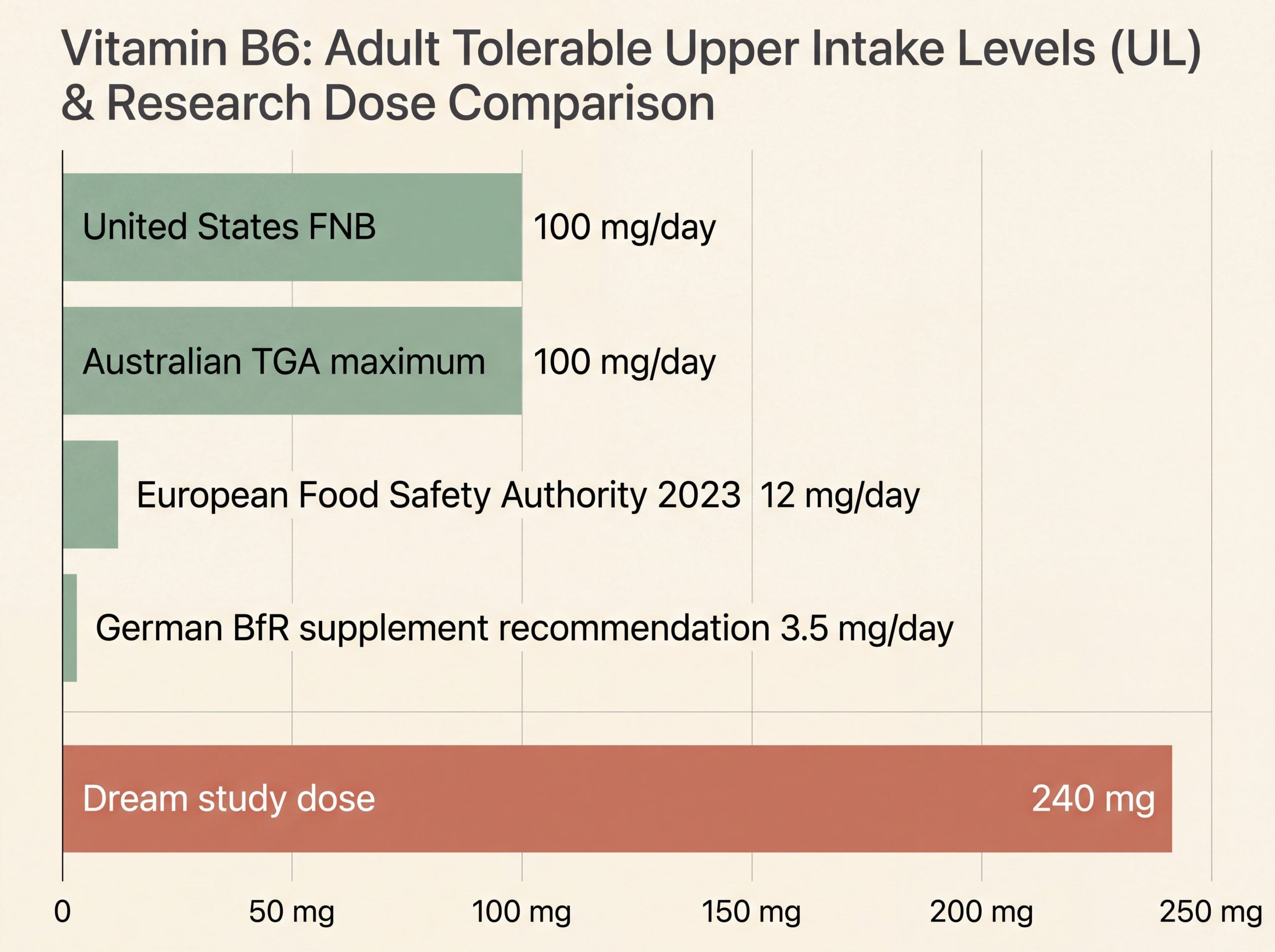
- Study doses far exceed every regulatory ceiling. The US Food and Nutrition Board sets an adult Upper Limit of 100 mg per day, and the European Food Safety Authority revised its limit down to 12 mg per day in 2023.
- Chronic high-dose pyridoxine carries a documented risk of peripheral neuropathy, with cases reported below 50 mg per day during long-term use.
Many people find their dreams fascinating, fleeting glimpses into the sleeping mind. For some, the desire to remember dreams more clearly, or to reach lucidity, the awareness of dreaming while it happens, is strong. Vitamin B6, also known as pyridoxine, keeps surfacing in that conversation as a possible aid.
This article examines what the research actually establishes about pyridoxine’s role in dream recall, dream vividness, and lucid dreaming. Our editorial team reviewed both controlled trials in the literature directly through PubMed rather than relying on the 2018 news cycle that carried them, and we cross-checked every dosage figure against the current Upper Intake Levels published by four separate regulatory agencies. Those figures have changed since most articles on this topic were written.
What follows covers the proposed mechanisms, the two trials that exist, the safety picture, and where pyridoxine honestly sits among the practices that actually produce lucid dreams.

Does Vitamin B6 Help With Lucid Dreaming?
Vitamin B6 does not directly cause lucid dreams. What one randomized controlled trial does show is that 240 mg of pyridoxine hydrochloride taken before bed for five nights significantly increased the amount of dream content participants recalled on waking (Adventure-Heart et al., 2018, Perceptual and Motor Skills, PMID: 29665762). Recall is a prerequisite for lucidity, so the link is real but indirect.
That distinction matters more than it sounds. A supplement that helps you remember dreams gives you more raw material to work with when practicing lucidity techniques. It does not install awareness inside the dream. The techniques still do that work, and the research on pharmacological induction of lucidity points at acetylcholine-active compounds like galantamine rather than at B vitamins.
Understanding Pyridoxine: More Than Just a Vitamin
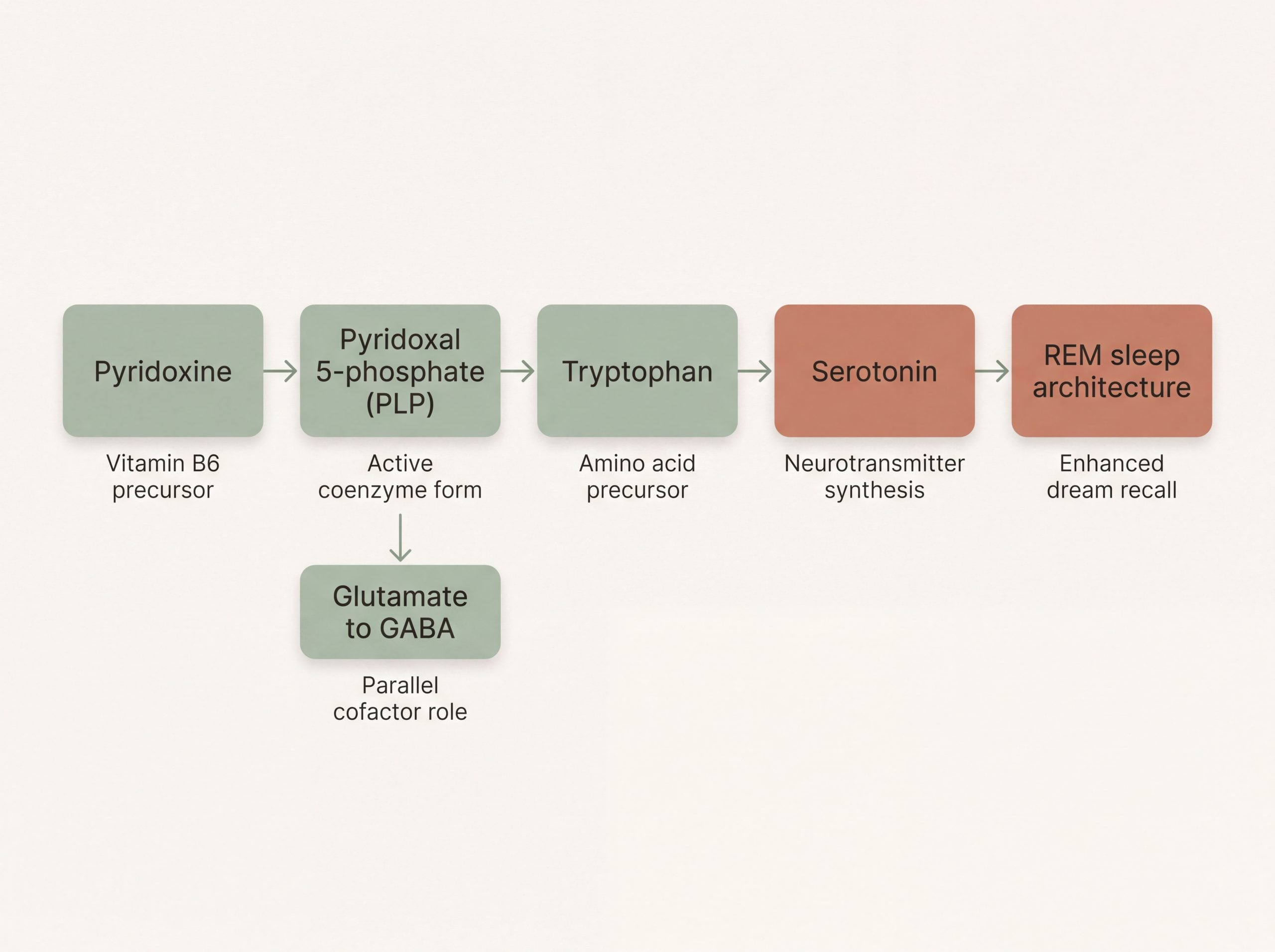
Pyridoxine is a water-soluble vitamin essential for numerous bodily processes. It is not one compound but a group including pyridoxine, pyridoxal, and pyridoxamine, which the body converts into the active coenzyme form, pyridoxal 5′-phosphate (PLP). PLP acts as a helper molecule for over 100 enzymes involved in metabolism, immune function, and brain function.
Role in Brain Chemistry
Pyridoxine, particularly as PLP, plays a significant part in brain health. It is indispensable for the synthesis of several key neurotransmitters, the chemical messengers that transmit signals between nerve cells. These include:
- Serotonin: Associated with mood regulation, sleep, and well-being. PLP is a necessary cofactor for converting the amino acid tryptophan into serotonin.
- GABA (gamma-aminobutyric acid): The primary inhibitory neurotransmitter, helping to calm nerve activity. PLP is the cofactor for glutamate decarboxylase, the enzyme that converts glutamate into GABA.
- Dopamine: Involved in reward, motivation, and movement.
- Norepinephrine and epinephrine: Involved in the fight-or-flight response and alertness.
By influencing these neurotransmitters, pyridoxine indirectly affects sleep cycles, mood, and cognitive processes, all of which are intertwined with dreaming.
Does P5P Work Better Than Pyridoxine for Dreams?
There is no trial evidence that pyridoxal 5′-phosphate (P5P) outperforms pyridoxine hydrochloride for dream recall, because no dream study has ever tested it. Both published trials used pyridoxine hydrochloride, the cheaper and more common form.
This gap is worth stating plainly, because the supplement market often presents P5P as the superior form on the general argument that it skips a conversion step in the liver. That argument has merit in other contexts. It has no supporting dream data at all. Anyone reporting that P5P produced stronger dream effects is reporting an experience, not a replicated finding, and the same caution about cumulative intake applies to both forms.
What Foods Are High in Vitamin B6?
Dietary vitamin B6 carries no neuropathy risk, and the adult Recommended Dietary Allowance is small: 1.3 mg per day for adults aged 19 to 50, rising to 1.7 mg for men and 1.5 mg for women over 50, per the NIH Office of Dietary Supplements. Most people eating a varied diet meet that requirement without thinking about it.
Reliable food sources, with approximate pyridoxine content per standard serving:
- Chickpeas, 1 cup canned: roughly 1.1 mg, close to a full day’s requirement in one serving.
- Beef liver, 3 ounces cooked: roughly 0.9 mg.
- Yellowfin tuna, 3 ounces cooked: roughly 0.9 mg.
- Sockeye salmon, 3 ounces cooked: roughly 0.6 mg.
- Chicken breast, 3 ounces roasted: roughly 0.5 mg.
- Potatoes, 1 cup boiled: roughly 0.4 mg.
- Banana, 1 medium: roughly 0.4 mg.
Deficiency is relatively rare in developed countries, though certain conditions and medications raise the risk. The contrast worth holding onto: the entire daily requirement sits near 1.3 mg, while the doses used in dream research sit at 240 mg. Those are not the same intervention wearing different clothes.

The Nature of Dreams: Recall, Vividness, and Lucidity
Before examining pyridoxine’s effects, the three aspects of dreaming under discussion need separating, because the research treats them very differently.
What Influences Remembering Dreams?
Dream recall refers to the ability to remember dream content after waking. We dream multiple times each night, primarily during REM (rapid eye movement) sleep, but often forget these experiences within minutes. Factors influencing recall include:
- Timing of awakening. Waking during or soon after REM sleep helps considerably.
- Personal interest in dreams.
- Practices such as keeping a dream journal.
- Neurochemical factors, which is where pyridoxine enters the picture.
Defining Dream Vividness
Dream vividness relates to the perceived quality of the dream experience. It encompasses clarity and detail of imagery, intensity of sensations across sight, sound, and touch, richness of color, emotional intensity, and the overall sense of realism or bizarreness.
The State of Lucid Dreaming
Lucid dreaming is a distinct state in which you become aware that you are dreaming while the dream is still in progress. This awareness ranges from fleeting recognition to full clarity, sometimes allowing intentional control over the dream narrative or environment. Reaching lucidity reliably requires practice with specific mental techniques.
What Vitamin Deficiency Causes Vivid Dreams?
No vitamin deficiency has been established as a cause of vivid dreams in controlled research. The question conflates two different phenomena that deserve separating.
The first is deficiency-driven sleep disturbance. Inadequate B6 status can affect serotonin and GABA synthesis, and disrupted sleep architecture produces more awakenings, which mechanically increases the odds of waking directly out of REM sleep and catching a dream in progress. That is fragmented sleep producing recall, not a vitamin producing vividness.
The second is the supplemental high-dose effect measured in the trials below, which occurs in people whose B6 status is already adequate. These are separate situations with separate explanations, and the popular framing of the question tends to fuse them.
Pyridoxine’s Potential Influence on Dream Recall and Vividness
The two controlled trials on this question reached different conclusions about vividness and the same conclusion about recall. The larger and more recent trial found that pyridoxine increased recalled dream content without significantly changing vividness, bizarreness, or color (PMID: 29665762). The earlier and much smaller pilot found increased scores on a composite dream-salience measure that bundled vividness with emotionality and color (Ebben, Lequerica, and Spielman, 2002, Perceptual and Motor Skills, PMID: 11883552). Sample size and design explain most of the gap.
How Might Pyridoxine Affect Dreams? Proposed Ideas
Several hypotheses attempt to explain how supplemental pyridoxine could influence dream experiences:
- Serotonin conversion. The most cited hypothesis involves pyridoxine’s role as a cofactor in converting tryptophan to serotonin. Some researchers theorize that increased serotonin production earlier in the night might suppress REM sleep initially, producing a REM rebound later in the sleep cycle. That rebound could feature longer, more intense REM periods, making dreams more memorable on waking.
- Cortical arousal during REM. Ebben and colleagues proposed that B6 may act by increasing cortical arousal during REM periods, which would make short-term dream impressions more likely to consolidate into retrievable memory before they fade.
- Other neurotransmitter effects. Pyridoxine’s influence on GABA, dopamine, and norepinephrine could play a role, though the specific mechanisms related to dreaming remain unclear.
- Increased wakefulness. An older theory suggested high doses might cause minor sleep disturbances or brief awakenings, providing more opportunities to encode dream memories. The 2018 trial contradicts this, finding no significant effect on sleep-related variables in the B6-only group.
Examining the Research on Dream Recall
Two controlled studies have investigated the link between pyridoxine supplementation and dream recall.
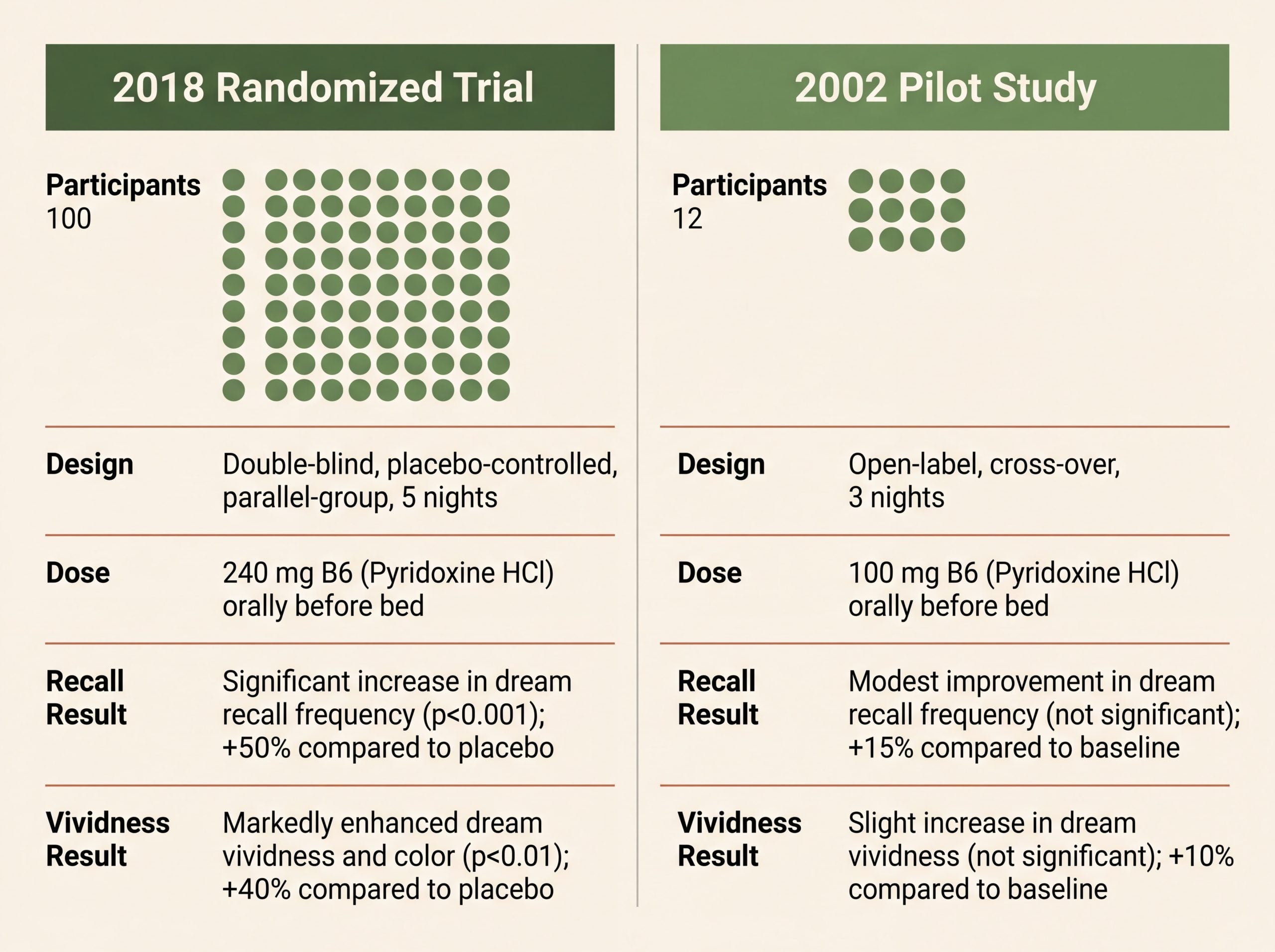
The larger is Adventure-Heart, Madden, and Delfabbro (2018), Perceptual and Motor Skills, PMID: 29665762, DOI: 10.1177/0031512518770326. It was a randomized, double-blind, placebo-controlled investigation of 100 participants from across Australia, who took 240 mg of vitamin B6 as pyridoxine hydrochloride before bed for five consecutive days. The trial also included an exploratory condition using a B complex preparation. Participants taking pyridoxine alone recalled significantly more dream content than the placebo group. Note that the lead author published this work under the name Denholm J. Adventure-Heart, and the same researcher is widely cited as Dr. Denholm Aspy in press coverage. Both names refer to the same University of Adelaide study, which is worth knowing when tracing citations back to the source.
The earlier work is Ebben, Lequerica, and Spielman (2002), Perceptual and Motor Skills, PMID: 11883552, DOI: 10.2466/pms.2002.94.1.135. Twelve college students participated in all three conditions of a counterbalanced crossover design, ingesting 100 mg B6, 250 mg B6, or placebo before bedtime for five consecutive days, with a two-day washout between blocks. Morning self-reports showed a significant difference in dream-salience scores between the 250 mg condition and placebo across the first three days of each treatment block. The 100 mg condition did not reach significance, a detail that most secondary coverage of this study drops.
Read together, these findings support the conclusion that high-dose vitamin B6 helps some people remember more of their dreams. The 2018 trial specifically established an increase in the amount of recalled content.
Research Findings on Dream Vividness
The evidence on vividness is less consistent. The 2018 trial found that pyridoxine did not significantly affect dream vividness, bizarreness, or color. Participants recalled more, but the reported quality of what they recalled did not differ meaningfully from placebo.
The 2002 pilot reported the opposite, with pyridoxine increasing scores on a composite measure that included vividness, emotionality, and bizarreness. Given the conflict between the larger recent trial and the smaller pilot, the effect of pyridoxine on vividness remains unresolved. The recall effect is the better-supported finding.
Aspy 2018 vs Ebben 2002: Reconciling Two Trials
Most coverage of this topic cites one trial or the other and leaves the contradiction unaddressed. Placing them side by side resolves most of it: the studies measured different outcomes with very different statistical power, and the composite measure used in 2002 bundled vividness together with three other variables, which makes a positive composite result compatible with a null result on vividness alone.
| Factor | Adventure-Heart et al., 2018 | Ebben et al., 2002 |
|---|---|---|
| Participants | 100 adults across Australia | 12 college students |
| Design | Randomized, double-blind, placebo-controlled | Counterbalanced crossover, double-blind, placebo-controlled |
| Dose tested | 240 mg pyridoxine hydrochloride | 100 mg and 250 mg, tested separately |
| Duration | 5 consecutive nights | 5 consecutive nights per block, 2-day washout |
| Recall finding | Significant increase in dream content recalled | Improvement reported within composite score |
| Vividness finding | No significant effect on vividness, bizarreness, or color | Composite dream-salience score rose at 250 mg only |
| Effect on sleep quality | No significant effect from B6 alone | Not a primary measure |
| PMID | 29665762 | 11883552 |
| Source: Perceptual and Motor Skills, via PubMed. Both trials indexed at pubmed.ncbi.nlm.nih.gov. | ||
Two trials, twenty years apart, totaling 112 participants. That is the entire controlled evidence base. Our editorial team notes this because the volume of consumer content on this topic vastly exceeds the volume of research underneath it.
How Long Does It Take for Vitamin B6 to Affect Dream Recall?
Both controlled trials dosed participants for five consecutive nights, and neither measured a single-night effect. In the 2018 study, participants described their dreams becoming clearer and easier to hold onto as the five-day period progressed, which suggests the effect accumulated rather than switching on immediately (PMID: 29665762).
The 2002 pilot found its significant dream-salience difference across the first three days of each five-day block, which is the closest thing the literature offers to an onset window. Anyone expecting a result on night one is working from anecdote, not from the trial protocols. It is also worth noting that neither study followed participants beyond five days, so there is no evidence at all about what happens with continued use, and the safety picture below is the reason nobody has run that study.
When Should You Take Vitamin B6 for Dreams, Morning or Night?
Both trials administered pyridoxine immediately before bed, and no study has tested morning dosing against evening dosing for dream outcomes. Every dream-related finding in the literature comes from a bedtime protocol.
The proposed mechanism explains the timing. If the effect works through serotonin synthesis influencing REM architecture or through cortical arousal during REM periods, the compound needs to be present during the night’s REM-heavy later cycles. Vitamin B6 is water-soluble and cleared relatively quickly, so a morning dose has largely moved through the system by the time REM sleep concentrates in the second half of the night.
The practical counterpoint deserves equal weight. People who take B6 in a general-purpose multivitamin taken with breakfast are not doing anything wrong, and there is no reason to shift a routine multivitamin to bedtime chasing a dream effect that its B6 content is far too low to produce anyway.
Is There a Link Between Pyridoxine Supplementation and Lucid Dreaming?
The potential connection between pyridoxine and lucid dreaming is the reason most people arrive at this topic, and the honest answer requires separating two claims that often travel together.
The Indirect Pathway: Enhanced Recall as a Gateway?
The most plausible link is indirect, and the 2018 researchers said as much in their own discussion, noting the potential for using vitamin B6 in lucid dreaming research specifically because of the recall effect. The reasoning runs like this. Regular dream recall is a fundamental prerequisite for lucid dreaming. If you rarely remember your dreams, you have fewer opportunities to recognize the inconsistencies and oddities inside the dream state that trigger lucidity. If pyridoxine improves recall for a given person, that could increase their chances of experiencing a lucid dream by giving them more material to work with.
The popular interest in vitamin B6 for lucid dreaming almost certainly stems from this indirect relationship, compressed in retelling into something more direct than the evidence supports.
Direct Effects on Lucidity: What Science Says
There is little to no direct scientific evidence that pyridoxine causes lucid dreaming through a biochemical mechanism independent of its effect on recall. While some B vitamins and their derivatives are studied as nootropics with possible effects on cognition, direct links to lucidity induction via pyridoxine have not been established in controlled studies. Research into pharmacological induction of lucidity focuses on substances affecting acetylcholine levels, such as galantamine, rather than on pyridoxine.
Anecdotal Reports vs. Evidence
Many individuals in online forums and lucid dreaming communities report more frequent or intense lucid dreams while taking pyridoxine. These personal accounts are interesting, and they are not scientific proof. The placebo effect, confirmation bias in the form of expecting an effect and therefore noticing it more, and the indirect route through enhanced recall could each explain these experiences. Distinguishing personal anecdote from controlled findings is essential on a topic where the anecdote vastly outnumbers the data.
Vitamin B6 vs. B12 vs. B-Complex for Sleep and Dreams
Vitamin B6 taken alone outperformed a B complex preparation for dream purposes in the only trial that tested both. Participants in the B complex group showed significantly lower self-rated sleep quality and significantly higher tiredness on waking, while the B6-only group showed neither of those effects (PMID: 29665762). This is one of the more useful findings in the study and one of the least reported.
Vitamin B12 has no controlled dream-recall trial behind it at all. B12 participates in melatonin regulation and circadian rhythm through separate pathways, and B12 deficiency is associated with sleep disturbance, but no randomized trial has tested B12 supplementation against placebo for dream recall or dream vividness. Comparisons that rank B6 against B12 for dreams are comparing one modest evidence base against an empty one.
| Outcome measured | Vitamin B6 alone (240 mg) | B complex preparation | Placebo |
|---|---|---|---|
| Dream content recalled | Significantly increased | No significant increase | Baseline |
| Dream vividness, bizarreness, color | No significant change | No significant change | Baseline |
| Self-rated sleep quality | No significant change | Significantly lower | Baseline |
| Tiredness on waking | No significant change | Significantly higher | Baseline |
| Source: Adventure-Heart, Madden, and Delfabbro (2018), Perceptual and Motor Skills, PMID: 29665762. | |||
The practical reading: if the goal is dream recall specifically, a B complex is the worse choice of the two tested, and the trial suggests it may cost you sleep quality in exchange for nothing. A general-purpose daily multivitamin serves an entirely different purpose and should be evaluated on nutritional adequacy grounds rather than on dream outcomes.
Important Considerations for Pyridoxine Supplementation
Yes, high-dose vitamin B6 can cause nerve damage. Chronic intake of large amounts of pyridoxine is associated with peripheral neuropathy, a sensory nerve condition affecting the hands and feet. The US Food and Nutrition Board sets the adult Tolerable Upper Intake Level at 100 mg per day, and the European Food Safety Authority revised its own limit down to 12 mg per day in 2023 after reviewing newer evidence. The 240 mg dose used in dream research exceeds both figures substantially and was administered for five nights only under study conditions (PMID: 29665762).
That paragraph is the single most important one on this page, and the sections below unpack it.
Dosages Used in Dream Studies
The trials investigating pyridoxine and dreams used relatively high doses taken shortly before bedtime:
- Adventure-Heart et al. (2018): 240 mg of pyridoxine hydrochloride, five consecutive nights.
- Ebben et al. (2002): 100 mg and 250 mg, tested separately, five consecutive nights per block.
These are short-term study dosages administered under research supervision. They are not recommended daily amounts for general health, and no study has evaluated their safety over longer periods.
Safety Profile and Potential Risks of High Doses
Taking excessively high doses of pyridoxine supplements over extended periods can lead to serious health problems, most notably peripheral neuropathy.
Peripheral neuropathy involves nerve damage typically affecting the hands and feet. Symptoms can include tingling, numbness, burning pain, and loss of sensation or position sense, potentially leading to difficulty walking. While often reversible on stopping supplementation, recovery can be slow, and some effects might persist. There have been reports of neuropathy occurring even at doses below 50 mg per day, especially with long-term use or when multiple supplements containing pyridoxine are taken together. Some individuals appear more sensitive to pyridoxine toxicity due to differences in metabolism.
That last point deserves emphasis, because stacked intake is easy to miss. A B complex, a multivitamin, an energy drink, and a dedicated B6 tablet can each look modest on their own labels and add up to something that is not.
Understanding the Tolerable Upper Intake Level (UL)
Regulatory bodies establish Tolerable Upper Intake Levels for vitamins, the maximum daily intake unlikely to cause adverse health effects in most individuals. The figures for vitamin B6 diverge sharply between agencies, and several have moved downward in recent years.
| Agency / Region | Adult UL for Vitamin B6 | Notes |
|---|---|---|
| US Food and Nutrition Board (FNB) | 100 mg/day | Based on older data, halving doses used in long-term studies (200 mg/day) that showed no neuropathy. |
| European Food Safety Authority (EFSA), 2023 | 12 mg/day | Based on recent systematic reviews linking B6 and neuropathy. |
| German BfR (supplement recommendation) | 3.5 mg/day | Proposed maximum level for addition to supplements per daily dose. |
| Australian TGA (label warning threshold) | Above 10 mg/day | Requires a warning label on products exceeding this daily dose. |
| Australian TGA (maximum permitted daily dose) | 100 mg/day | Reduced from 200 mg/day previously. |
| Sources: NIH Office of Dietary Supplements Vitamin B6 Health Professional Fact Sheet, EFSA 2023 scientific opinion on the tolerable upper intake level for vitamin B6, German Federal Institute for Risk Assessment, Australian Therapeutic Goods Administration. | ||
The variation between agencies is substantial, and the direction of travel is consistent. The EFSA reduction to 12 mg per day reflects growing caution based on neuropathy reports at chronic doses far below what was previously considered safe. The 240 mg used in the 2018 dream study exceeds even the most permissive of these limits by more than twofold, and it was never intended for ongoing use.
Individual Responses Can Vary
Individual responses to pyridoxine differ. Some people might notice effects on dreams at lower supplemental doses, while others notice nothing at higher amounts. Sensitivity to potential side effects varies in the same way, which is part of why case reports of neuropathy appear at doses that most people tolerate without incident.
Who Should Not Take High-Dose Vitamin B6?
Several groups have specific reasons to avoid high-dose pyridoxine or to involve a clinician before considering it. This is general information rather than medical guidance, and it does not replace an individual conversation with a healthcare provider.
- Anyone with existing peripheral neuropathy. Adding a compound with a documented dose-related neuropathy risk to a nerve condition that already exists is a decision for a physician, not for a supplement label.
- People with diabetes or other conditions carrying neuropathy risk. The same reasoning applies where baseline nerve vulnerability is already higher.
- Anyone who is pregnant or breastfeeding. Pyridoxine is used clinically in pregnancy at specific low doses under supervision, which is a different situation entirely from self-administered high-dose use for dream purposes. Defer to your obstetric provider.
- People taking levodopa without a decarboxylase inhibitor. Pyridoxine can affect levodopa metabolism, a well-documented interaction.
- People taking phenytoin or certain other anticonvulsants. B6 can influence serum levels of some of these medications.
- Anyone already taking multiple B6-containing products. Total daily intake across a multivitamin, a B complex, fortified drinks, and a standalone tablet is the number that matters, and it is the number people most often fail to add up.
Anyone taking prescription medication should review a proposed supplement with a pharmacist or physician. Pharmacists are frequently the most accessible professional for exactly this question and tend to be very good at it.
Can You Combine Vitamin B6 With Other Dream Supplements?
No controlled trial has tested vitamin B6 in combination with any other compound for dream outcomes, so every stacking claim rests on individual reports rather than on data. That absence is the honest starting point for this question.
Magnesium is the pairing reported most often in dreaming communities, usually as magnesium glycinate taken in the evening. Magnesium participates in GABAergic signaling and is commonly associated with sleep quality, and pairing it with B6 has appeared in European formulations for decades for reasons unrelated to dreaming. Melatonin runs in the opposite direction for this purpose, since it primarily affects sleep onset and circadian timing rather than dream retention, and shifting sleep architecture can work against the recall you are trying to encourage. Galantamine, an acetylcholinesterase inhibitor, is the compound with the most direct research attention for lucidity induction, and it carries its own interaction and safety profile that places it well outside casual experimentation.
On the botanical side, traditional practice offers a separate category of plants used for dream work rather than for sleep onset. Silene undulata, the Xhosa dream root of southern Africa, is the best known of these and is traditionally prepared as a foam rather than as a tea. Calea zacatechichi holds a comparable role in Chontal Maya practice in Oaxaca. These plants come from a completely different tradition than a synthesized vitamin, and our editorial team treats them as a separate subject rather than as ingredients to combine with a high-dose B6 protocol. Readers interested in that tradition will find fuller treatment in our article on Silene capensis benefits and on our African dream root powder page.
Anyone combining any of these should raise it with a healthcare provider first, particularly where prescription medication is involved.
Perspective: Pyridoxine in the Context of Dream Exploration
Placing the potential effects of pyridoxine in a broader context matters, because the gap between what the research shows and what the internet claims is wide.
Not a Guaranteed Solution
Pyridoxine is not a magic pill for dream recall or lucidity. Research suggests it may help improve dream recall for some people, but the effect is not universal, and its impact on vividness or direct induction of lucidity is weakly supported or contradicted by current evidence.
Foundational Practices for Dream Work
For anyone serious about improving their dream life, and especially about reaching lucidity, established non-pharmacological techniques do the actual work. Each of the following has more direct support behind it than any supplement discussed on this page.
- Dream journaling. Writing down dreams immediately on waking, before moving or checking a phone, is the single most reliable way to improve recall. The practice trains attention toward dream content and captures material before the rapid post-waking decay that makes dreams feel unrecoverable. Keep the journal within arm’s reach of the bed, because getting up to find it is usually enough to lose the dream.
- Reality checks. Regularly questioning whether you are awake or dreaming during ordinary daytime activity builds a habit that can carry into the dream state and trigger recognition. Common checks include looking at your hands, reading text twice to see whether it stays stable, or attempting to push a finger through a solid palm. The point is the habit of genuinely questioning, not the specific test.
- Mnemonic Induction of Lucid Dreams (MILD). MILD involves setting a clear intention before sleep to recognize that you are dreaming, usually by rehearsing a recent dream and imagining yourself noticing its impossibilities. It is a prospective memory technique, meaning you are training yourself to remember to do something in the future, inside the dream.
- Wake Back to Bed (WBTB). WBTB means waking after roughly five to six hours of sleep, staying awake briefly, then returning to bed. It works by returning you to sleep during the portion of the night when REM periods are longest, with waking-level awareness still partially present. WBTB combines particularly well with MILD.
- Sleep hygiene. Adequate, consistent sleep supports the healthy REM cycles that dreaming depends on. Short or fragmented sleep truncates the late-night REM periods where most vivid dreaming occurs, and no supplement compensates for chronically insufficient sleep.
Used cautiously and temporarily, pyridoxine might function as a minor adjunct to these practices, primarily through its potential to improve recall. The practices remain the substance of the work.

Frequently Asked Questions About Vitamin B6 and Dreams
Can vitamin B6 help with lucid dreaming?
Only indirectly. One randomized controlled trial found that 240 mg of pyridoxine before bed increased the amount of dream content recalled, and recall is a prerequisite for lucidity (PMID: 29665762). No study has shown that B6 directly induces the lucid state. Techniques such as MILD, WBTB, and reality checks have more direct support.
What dose of vitamin B6 was used in the dream recall study?
The 2018 University of Adelaide trial used 240 mg of pyridoxine hydrochloride taken immediately before bed for five consecutive nights, in 100 participants. The earlier 2002 pilot tested 100 mg and 250 mg separately in 12 participants, and only the 250 mg condition reached statistical significance on its dream-salience measure.
Is 100 mg of vitamin B6 safe for short-term use?
100 mg per day sits exactly at the US Food and Nutrition Board’s adult Tolerable Upper Intake Level, and well above the 2023 EFSA limit of 12 mg per day and the German BfR supplement recommendation of 3.5 mg per day. Neuropathy has been reported at doses below 50 mg per day with long-term use. Anyone considering doses at this level should discuss it with a healthcare provider first.
Is B6 or B12 better for sleep and dreams?
For dream recall specifically, B6 has the only controlled evidence behind it, and B12 has none. In the 2018 trial, B6 taken alone increased recalled dream content while a B complex preparation did not, and the B complex group reported significantly lower sleep quality and more tiredness on waking.
Does P5P work better than pyridoxine for dreams?
There is no evidence either way, because no dream study has tested pyridoxal 5′-phosphate. Both published trials used pyridoxine hydrochloride. Claims that P5P produces stronger dream effects come from individual reports rather than from comparative research.
What side effects can high-dose vitamin B6 cause?
The primary documented risk is peripheral neuropathy, involving tingling, numbness, burning pain, and loss of sensation or position sense in the hands and feet. It is often reversible on discontinuation, though recovery can be slow and some effects may persist. Risk rises with dose and duration, and stacked intake across multiple supplements is a common and easily overlooked contributor.
Final Thoughts on Pyridoxine and Dreams
The relationship between vitamin B6 and dreams sits at the meeting point of neurochemistry and subjective experience, which is exactly the kind of territory where claims outrun evidence. Research, particularly the 2018 randomized trial, provides reasonable evidence that short-term high-dose pyridoxine supplementation improves dream recall in some individuals. Claims about increased vividness or a direct route to lucid dreaming are not strongly supported by current controlled studies. The connection to lucidity is most likely indirect, running through enhanced recall and the additional opportunities for awareness that recall provides.
Important Safety Note
The doses used in these studies are very high compared with daily requirements and exceed even the most permissive Tolerable Upper Intake Levels. Chronic intake of high-dose pyridoxine carries a significant risk of peripheral neuropathy. Given the recent tightening of UL guidance by bodies including EFSA to as low as 12 mg per day over neuropathy concerns, extreme caution is warranted. Anyone considering vitamin B6 supplements, especially at doses above standard multivitamin levels, should consult a healthcare professional to discuss potential risks and benefits based on their individual health status. Relying on established behavioral techniques for improving dream recall and pursuing lucidity remains the safest and often the most effective approach.
Related Reading
Continue with our related articles on Silene capensis benefits, natural sleep remedies, valerian root for sleep, and how to boost brain power.
Disclaimer
These statements have not been evaluated by the Food and Drug Administration. This product is not intended to diagnose, treat, cure, or prevent any disease. Consult your healthcare provider before use, particularly if you are pregnant, breastfeeding, taking prescription medication, or managing a diagnosed health condition. The dosages described in this article reflect research protocols conducted under study conditions and are not recommendations for personal use.