Key Takeaways
- Fenugreek (Trigonella foenum-graecum) is an annual legume in the Fabaceae family whose seeds and leaves are used as separate ingredients with different flavors and different uses.
- The seeds carry the compounds most studied in research, including galactomannan fiber, 4-hydroxyisoleucine, trigonelline, and diosgenin. The leaves are eaten as a leaf vegetable.
- A meta-analysis of 10 clinical trials found fenugreek intake changed fasting blood glucose by -0.96 mmol/L and HbA1c by -0.85 percent compared with control groups.
- Evidence for fenugreek as a galactagogue is mixed. A 2020 Cochrane review of 41 randomized trials rated the certainty of galactagogue evidence as low to very low.
- The distinctive maple-syrup odor in sweat and urine comes from sotolone and is considered harmless, though it surprises most first-time users.
- Fenugreek should be avoided in medicinal amounts during pregnancy and used with caution alongside blood-sugar and anticoagulant medications.
Fenugreek is one of the few plants that shows up in a spice drawer, a nursing mother’s tea, and a diabetes research database. Its seeds smell like maple syrup and taste bitter until heat changes them. Its leaves behave like a leafy green. Our editorial team has reviewed the clinical literature on this plant alongside the traditional records, and the two do not always agree. This guide covers what fenugreek is, how the seeds and leaves differ, what the research supports, how it is used in cooking, and where the real safety limits sit.
What is fenugreek?
Fenugreek is an annual legume, Trigonella foenum-graecum, in the Fabaceae family, grown for its aromatic seeds and edible leaves. It is used three ways: as a culinary spice, as a leaf vegetable, and as an herbal supplement studied mainly for blood-sugar support and lactation support. The seeds contain a large fraction of soluble galactomannan fiber, which is the basis of most proposed mechanisms.
- Culinary spice, particularly in Indian, Middle Eastern, North African, and Ethiopian cooking.
- Leaf vegetable, eaten fresh or dried.
- Traditional digestive support across several herbal systems.
- Traditional lactation support, the use with the longest continuous record.
- Modern research interest in glucose and lipid markers.
The National Center for Complementary and Integrative Health describes fenugreek as a clover-like herb native to the Mediterranean region, southern Europe, and western Asia, with seeds that smell and taste like maple syrup. Memorial Sloan Kettering Cancer Center maintains a separate botanical monograph on the plant in its About Herbs database.
What does the fenugreek plant look like and where does it grow?
The plant reaches roughly two feet, with three-part clover-like leaflets and small pale yellow-white flowers that give way to slender curved pods. Each pod holds ten to twenty hard, angular, yellowish-brown seeds. India produces the majority of the world’s commercial supply, with Rajasthan and Madhya Pradesh as the dominant growing states. It also grows across Egypt, Ethiopia, Morocco, and Turkey. In our sourcing experience, growing region shows up most clearly in aroma intensity rather than appearance, and seeds from drier terroir tend to carry a sharper maple note.
What is the nutritional profile of fenugreek seeds?
Fenugreek seeds are nutritionally dense for a spice, which matters because typical culinary amounts are small enough that the nutrition contribution is modest in practice. Per 100 grams of whole seed, fenugreek supplies roughly 23 grams of protein, 25 grams of dietary fiber, 33 milligrams of iron, and 191 milligrams of magnesium, according to USDA food composition data. A single tablespoon weighs about 11 grams, so a cooking-sized portion delivers around 2.5 grams of protein and 2.7 grams of fiber.
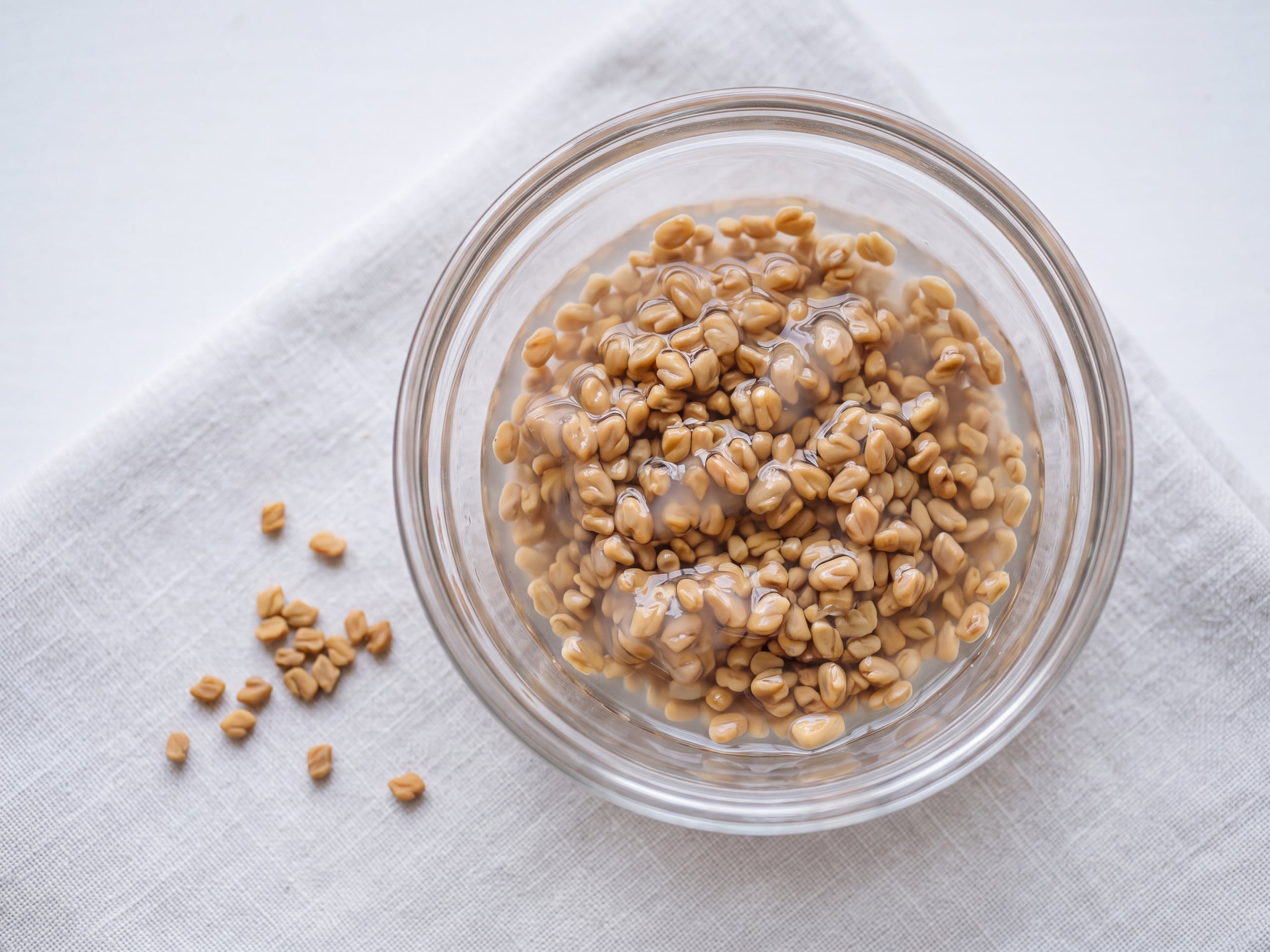
The fiber fraction is the part worth understanding. Roughly half of the seed’s carbohydrate content is galactomannan, a soluble mucilaginous fiber that forms a gel in water. That gel is what slows gastric emptying and carbohydrate absorption, and it is the reason soaked fenugreek seeds turn slippery.
Fenugreek leaves vs fenugreek seeds: what is the difference?
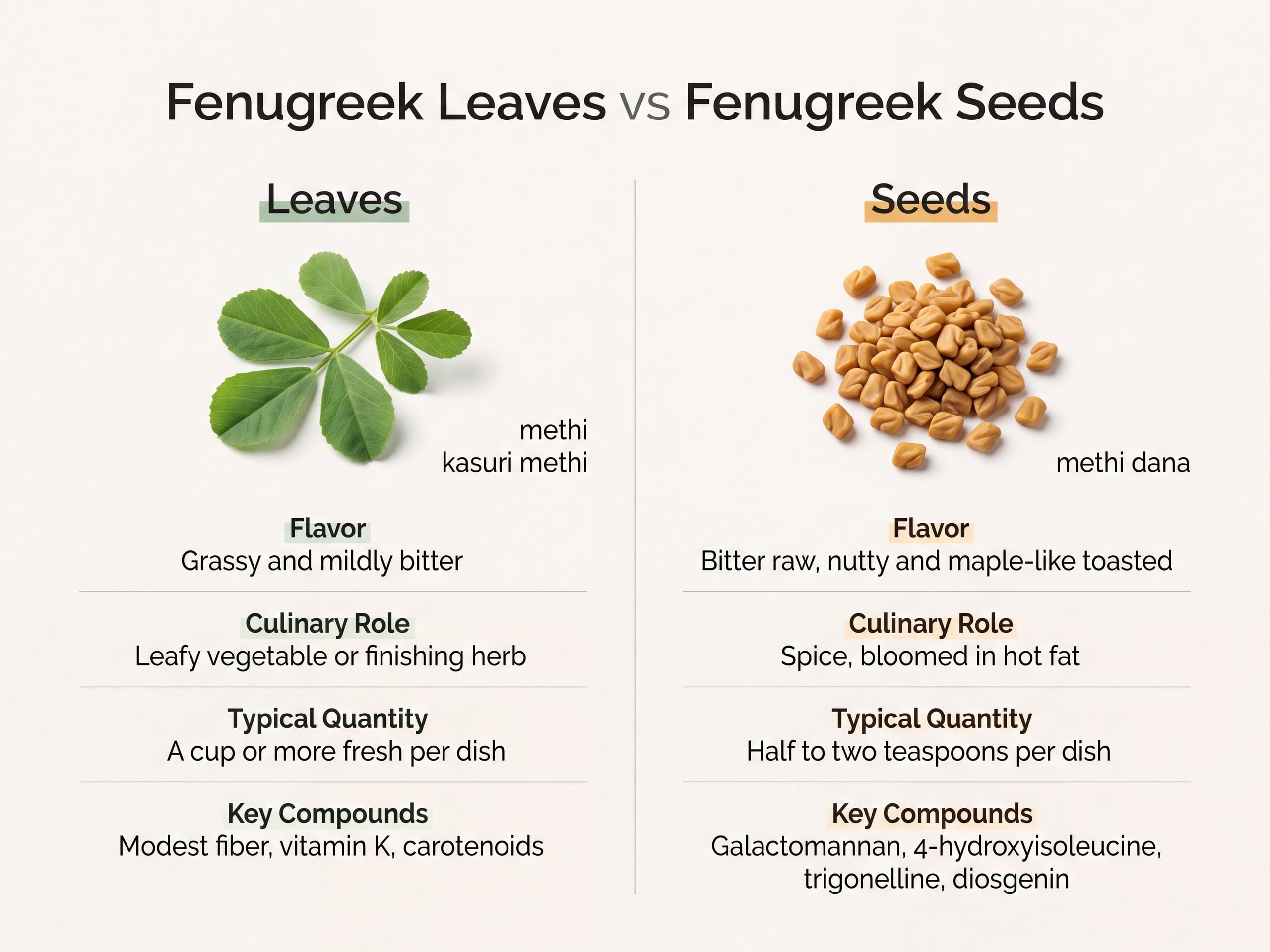
Fenugreek leaves and fenugreek seeds come from the same plant, Trigonella foenum-graecum, but function as two different ingredients and cannot be substituted for each other. The leaves are a mild leafy green used in quantity, similar to spinach. The seeds are a hard, bitter spice used in small amounts, and they carry the galactomannan fiber, 4-hydroxyisoleucine, and diosgenin that nearly all fenugreek research is actually about.
| Attribute | Leaves | Seeds |
|---|---|---|
| Common names | Methi (fresh), kasuri methi (dried) | Methi dana, fenugreek seed |
| Appearance | Small green clover-like leaflets | Hard angular yellowish-brown seeds, 3 to 5 mm |
| Flavor | Grassy and mildly bitter, closer to a herb | Sharply bitter raw, nutty and maple-like once toasted |
| Culinary role | Vegetable or finishing herb, added by the handful | Spice, added by the teaspoon and usually bloomed in fat |
| Typical quantity | A cup or more of fresh leaves per dish | Half a teaspoon to two teaspoons per dish |
| Key compounds present | Modest fiber, vitamin K, carotenoids | Galactomannan, 4-hydroxyisoleucine, trigonelline, diosgenin, steroidal saponins |
| Form used in clinical trials | Rarely studied | Nearly all published trials use seed powder or seed extract |
The practical consequences are worth stating plainly.
- Recipes calling for methi leaves cannot use seeds. The bitterness scales badly, and the dish will be inedible.
- Recipes calling for seeds cannot use leaves. The maple aroma that defines the spice is absent.
- Research findings about fenugreek almost always describe seed preparations, not leaves.
- Dried kasuri methi is crushed between the palms and added at the end of cooking, since its aroma is volatile.
How do you use fenugreek in cooking?
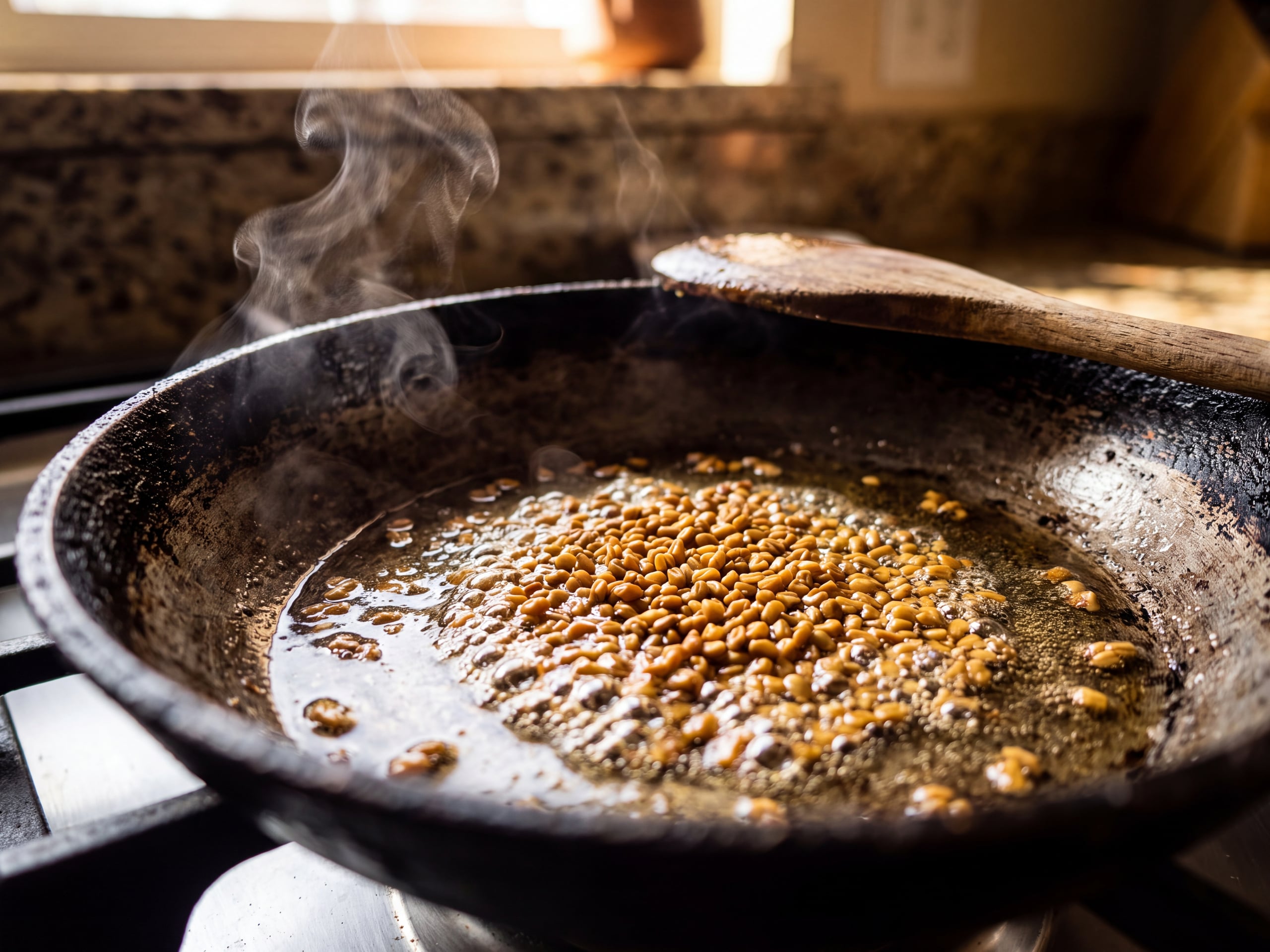
Fenugreek seeds are almost always heated before use, because raw seeds are aggressively bitter and heat converts that bitterness into a nutty maple character. The most common method is blooming, where whole seeds are dropped into hot oil or ghee for a few seconds at the very start of cooking. Timing is unforgiving. Seeds that darken past golden brown turn acrid and the whole pan carries that flavor.
- Blooming or tempering. Whole seeds in hot fat for five to ten seconds, then the remaining ingredients. Standard opening step for dals, pickles, and South Indian preparations.
- Toasting and grinding. Dry-toast in a pan until fragrant, cool, then grind. Used in spice blends including panch phoron, berbere, and many curry powders.
- Soaking. Cover seeds in water overnight. They soften, swell, and develop a slippery coating from the galactomannan. The soaking water is sometimes consumed on its own.
- Fresh leaves. Cooked like spinach in dishes such as methi paratha, aloo methi, and methi dal.
- Dried leaves. Crumbled over a finished dish, most familiarly in butter chicken and other North Indian gravies.
- Tea. Seeds steeped in hot water, the preparation used in several lactation studies.
From our hands-on assessment, the single most common mistake is treating fenugreek like cumin and adding a tablespoon where a half teaspoon belongs. Fenugreek carries further than its size suggests.
Traditional use of fenugreek across herbal systems
Fenugreek has one of the longer documented histories of any culinary herb. Seeds have been recovered from archaeological sites in the Near East dating to roughly 4000 BCE, and the plant appears in the Ebers Papyrus, an Egyptian medical text from around 1500 BCE. The species name foenum-graecum translates as Greek hay, a reference to its use as fodder.
In Ayurveda, the seed is known as methika and is classified as warming and digestive, used for agni or digestive fire and for postpartum recovery. Unani medicine uses it under the name hulba, chiefly for respiratory and digestive complaints. Traditional Chinese Medicine knows the seed as hu lu ba, applied within a warming framework for the kidney system. Western herbalism adopted it comparatively late, primarily as a digestive bitter and a poultice herb. Across all four systems, the lactation application recurs independently, which is part of why that use attracted formal research attention first.
What are the health benefits of fenugreek?
Research on fenugreek is uneven. Blood-sugar markers have the strongest and most replicated evidence base. Lactation, despite being the most famous traditional use, has weaker evidence than most people assume. What follows separates those honestly.
Blood sugar regulation
This is where fenugreek’s research base is strongest. A meta-analysis of 10 clinical trials found that fenugreek intake changed fasting blood glucose by -0.96 mmol/L, two-hour postload glucose by -2.19 mmol/L, and HbA1c by -0.85 percent compared with control interventions, with effects concentrated in trials using medium or high doses in people with diabetes (Neelakantan et al. 2014, Nutrition Journal, PMID: 24438170). A later systematic review of 10 randomized controlled trials covering 706 participants reported reductions in fasting blood glucose, two-hour plasma glucose, and HbA1c, though it found no significant change in insulin resistance as measured by HOMA-IR (Kim et al. 2023, International Journal of Molecular Sciences, PMID: 37762302). A third meta-analysis of 14 trials and 894 participants found an HbA1c reduction of -0.88 with wide confidence intervals on the glucose measures (Shabil et al. 2023, Medicina, PMID: 36837450).
All three reviews flag the same limitation. The underlying trials are mostly small and methodologically weak, and the authors of the 2014 meta-analysis stated directly that higher-quality trials using a well-characterized preparation are still needed. The direction of effect is consistent. The precision is not.
Support for lactation
Fenugreek is the best-known herbal galactagogue in the Western world, and the evidence is considerably softer than its reputation. A 2020 Cochrane review examined 41 randomized trials involving 3,005 mothers and rated the overall certainty of galactagogue evidence as low to very low, citing risk of bias, substantial heterogeneity, and imprecise measurement. Its subgroup analysis specifically noted uncertainty about whether fenugreek improves infant weight (Foong et al. 2020, Cochrane Database of Systematic Reviews, PMID: 32421208).
Individual trials do report positive findings. A randomized study of 66 mother-infant pairs found that mothers drinking a fenugreek-containing herbal tea had significantly higher measured breast milk volume, less maximum weight loss in their infants, and earlier return to birth weight than placebo and control groups (Turkyilmaz et al. 2011, Journal of Alternative and Complementary Medicine, PMID: 21261516). Pulling the other direction, a 2023 randomized controlled trial of 176 exclusively breastfeeding parents in the United States tested commercial lactation cookies containing fenugreek against matched cookies without galactagogues and found no difference in measured human milk production rate, perceived milk supply, or breastfeeding self-efficacy (Palacios et al. 2023, American Journal of Clinical Nutrition, PMID: 36921902). That trial’s authors noted that recommending such products may deliver false hope and unnecessary cost at a vulnerable time.
We include the negative trial deliberately. A reader deciding whether to spend money on a galactagogue deserves the trial that failed as much as the trial that worked.
Heart health and cholesterol
The 2023 systematic review of 706 participants found that fenugreek significantly improved total cholesterol, triglycerides, and HDL cholesterol, while LDL cholesterol and body mass index showed no significant difference (Kim et al. 2023, International Journal of Molecular Sciences, PMID: 37762302). The proposed mechanism is that the same galactomannan fiber acts on glucose. Soluble fiber binds bile acids in the gut, and the liver draws on circulating cholesterol to replace them. This is a well-established fiber mechanism rather than anything unique to fenugreek.
Digestive well-being
The mucilaginous fiber that makes soaked fenugreek slippery also coats and soothes the gastrointestinal lining, which is the basis of the plant’s traditional use for indigestion and irritation. The same fiber adds bulk and draws water into the stool, accounting for the traditional use as a mild laxative. The European Medicines Agency maintains a herbal monograph for fenugreek seed that recognizes traditional use for temporary loss of appetite. Notably, the fiber that produces digestive benefit at moderate intake is also what produces bloating and loose stools when intake climbs too quickly.
Anti-inflammatory activity
Fenugreek seeds contain flavonoids, polyphenols, and steroidal saponins that show anti-inflammatory and antioxidant activity in laboratory and animal models. Human data in this area is thin, and we treat it as mechanistically plausible rather than clinically demonstrated. Readers should weigh this section accordingly.
Hormonal balance and libido
Fenugreek seed has been studied for its effects on testosterone and libido, and it contains steroidal saponins including protodioscin that are frequently cited in that context. This is a large enough research question that we treat it separately rather than compressing it here. Our dedicated article on fenugreek and testosterone covers the trial evidence, dosing, and limitations in full.
What does fenugreek do for a woman?
Most searches phrased this way are asking about one of three things: milk supply, menstrual discomfort, or hormonal support more broadly. The lactation evidence is covered above and is best described as traditionally well-established but clinically uncertain. For menstrual discomfort, several small trials have examined fenugreek seed powder for dysmenorrhea with reported reductions in pain scores, though sample sizes are small and the studies are largely single-site. For blood sugar and lipid markers, the evidence applies equally regardless of sex.
The most important point for women is a caution rather than a benefit. Fenugreek in amounts greater than those found in food should not be used during pregnancy, because of uterine stimulant activity and reported associations with birth defects in animal work. Culinary quantities in cooking are a separate matter and are not the subject of that warning.
Can fenugreek help with weight loss or belly fat?
The honest answer is that fenugreek appears to modestly reduce fat intake in some people without producing measurable weight loss, and there is no evidence it targets abdominal fat specifically. No food or herb reduces fat in one region of the body.
Two randomized controlled trials from the same French research group tested this directly. In a crossover trial of 12 healthy volunteers, the higher dose of a fenugreek seed extract at 1,176 mg reduced daily fat consumption by 17.3 percent compared with placebo, with total energy intake trending down but not reaching significance (Chevassus et al. 2009, European Journal of Clinical Pharmacology, PMID: 19809809). A follow-up six-week trial in 39 overweight men found the same selective reduction in dietary fat consumption and a decrease in the insulin to glucose ratio, but reported no significant effect on weight, appetite scores, or satiety scores (Chevassus et al. 2010, European Journal of Clinical Pharmacology, PMID: 20020282).
That pattern is worth sitting with. Participants ate less fat and did not lose weight. Anyone selling fenugreek as a fat burner is working well ahead of the data.
Is fenugreek used for hair and skin?
Traditional use for hair and skin is genuinely long-standing, particularly across South Asian and North African practice, and it is almost entirely traditional rather than clinical. The classic preparation is a paste of soaked, ground seeds applied to the scalp and rinsed out, used traditionally for scalp conditions and hair texture. Fenugreek’s mucilage gives the paste its slip, which is the practical reason it is applied this way.
Published human trials on fenugreek for hair growth are few and small, and we do not consider the evidence sufficient to make claims. The mucilage and saponin content give a reasonable basis for the traditional cosmetic use. That is as far as the record currently supports.
Understanding fenugreek’s actions: key compounds
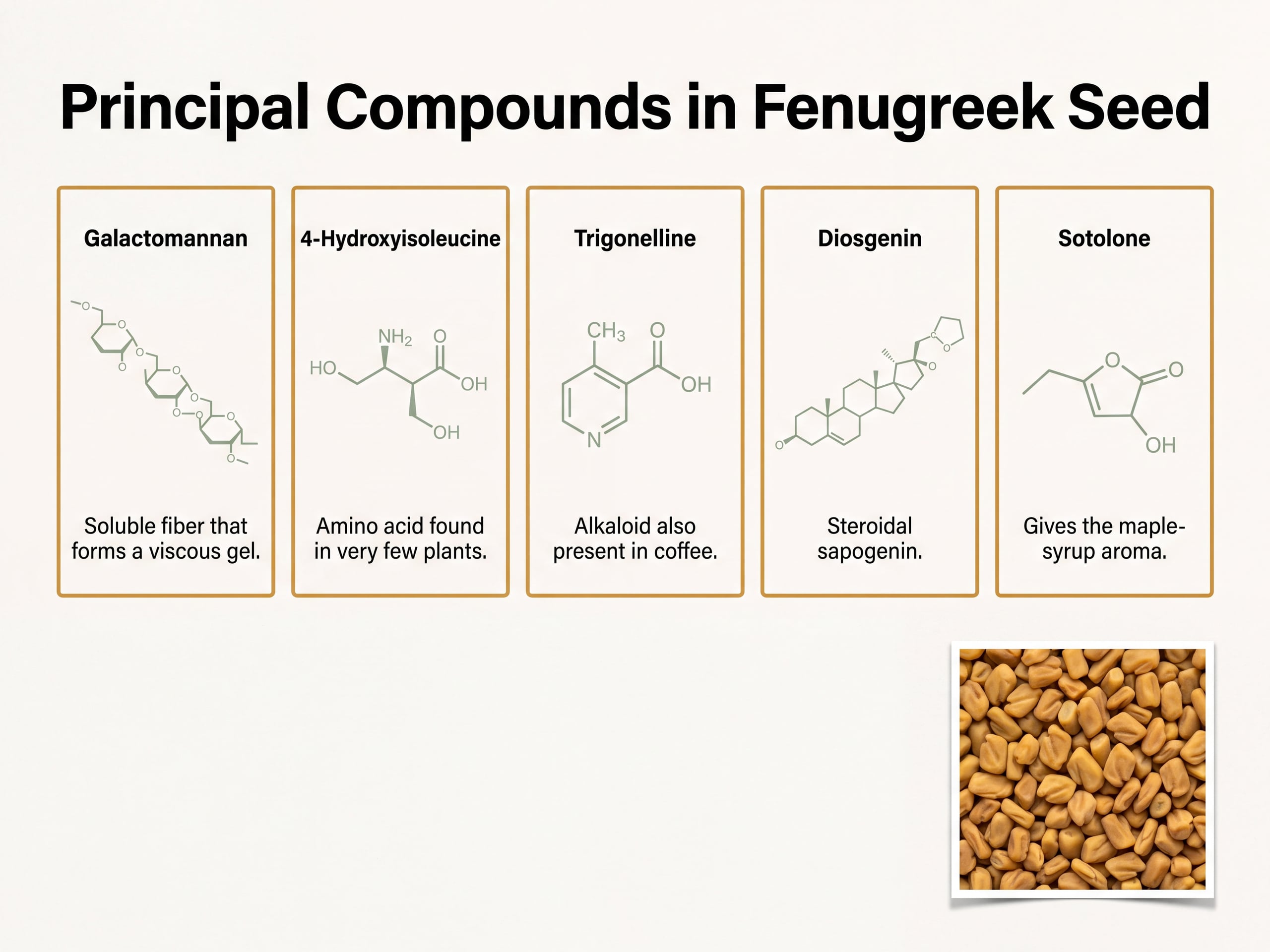
Four compound groups carry most of the plant’s studied activity, and each maps to a specific effect.
| Compound | Class | Proposed action |
|---|---|---|
| Galactomannan | Soluble polysaccharide fiber | Forms a viscous gel, slows gastric emptying and carbohydrate absorption, binds bile acids |
| 4-hydroxyisoleucine | Non-protein amino acid | Studied for glucose-dependent stimulation of insulin secretion, largely unique to this plant |
| Trigonelline | Pyridine alkaloid | Investigated in glucose and lipid metabolism, also present in coffee |
| Diosgenin and steroidal saponins | Steroidal sapogenins | Precursor chemistry used industrially in steroid synthesis, studied for lipid and hormonal effects |
| Sotolone | Volatile lactone | Responsible for the maple-syrup aroma and the odor in sweat and urine |
| Mechanisms are proposed from published pharmacological research and are not claims of clinical effect. | ||
Of these, 4-hydroxyisoleucine is the most distinctive. It occurs in very few plants, and its glucose-dependent action, meaning it appears to prompt insulin release only when glucose is already high, is the mechanistic reason fenugreek attracted diabetes research rather than remaining a kitchen spice. Sotolone deserves mention because it explains the single most surprising thing users report. It is the same compound that gives fenugreek-fed dairy cattle a maple aroma in their milk.
Is fenugreek safe? Side effects and precautions
Fenugreek in food amounts is generally well tolerated. Supplement-level doses more often produce digestive complaints, and the most common effects are mild. The most reliable caution is pregnancy, where medicinal amounts should be avoided. People taking blood-sugar-lowering or anticoagulant medications should speak with their healthcare provider before use.
What are the common side effects of fenugreek?
- Bloating, gas, and loose stools, most likely when intake increases quickly.
- Nausea and general digestive discomfort at higher supplement doses.
- A maple-syrup odor in sweat and urine, caused by sotolone. Harmless but persistent.
- Reduction in blood sugar that may be excessive in people already taking glucose-lowering medication.
The maple odor is worth flagging in advance. In our experience, it is the single most common reason people stop taking fenugreek, not because it causes harm but because nobody warned them it would happen.
Does fenugreek affect the liver?
This question comes up frequently and deserves a direct answer. The 2023 systematic review of 10 randomized controlled trials covering 706 participants specifically reported that hepatic and renal toxicity were not observed, and that no severe adverse events were associated with fenugreek despite mild gastrointestinal side effects in some studies (Kim et al. 2023, International Journal of Molecular Sciences, PMID: 37762302). The National Institutes of Health LiverTox database maintains a record for fenugreek, which is standard for widely used botanicals and reflects monitoring rather than an established pattern of injury.
The practical position is that fenugreek at studied doses has not shown liver toxicity in controlled trials. That is not the same as saying no case reports exist for any botanical, and anyone with existing liver disease should involve their healthcare provider in the decision, as they should with any supplement.
Allergic reactions
Fenugreek is a legume, in the same family as peanuts, chickpeas, and soybeans. Cross-reactivity with peanut and chickpea allergy has been documented, and reactions have ranged from mild to severe. Anyone with a known legume allergy should treat fenugreek as a potential trigger and discuss it with an allergist before use.
Who should not take fenugreek?
- Pregnant women. Amounts greater than those found in food should be avoided, due to uterine stimulant activity and reported birth-defect associations.
- People with legume allergies. Particularly peanut and chickpea, given documented cross-reactivity.
- People scheduled for surgery. Discontinue at least two weeks prior, because of effects on blood sugar and clotting.
- Children. Medicinal amounts are not established as appropriate for pediatric use.
- People with hormone-sensitive conditions. The steroidal saponin content warrants a conversation with a provider first.
Does fenugreek interact with medications?
Yes, in three main classes.
- Blood-sugar-lowering medications including metformin, insulin, and sulfonylureas. Additive glucose lowering may push blood sugar below target. Monitoring should be discussed in advance.
- Anticoagulants and antiplatelet drugs including warfarin, clopidogrel, and aspirin. Fenugreek contains coumarin-like constituents that may add to bleeding risk.
- Oral medications generally. The high soluble fiber content can slow or reduce absorption of drugs taken at the same time. Separating fenugreek from medication by two hours is the standard practical approach.
What happens if you take fenugreek every day?
Most published trials ran between four and twelve weeks, and the majority reported no serious adverse events over those periods. Long-term daily use beyond a few months has not been well characterized in controlled research, which means the honest answer is that safety over years is not established rather than that it is known to be unsafe. Daily culinary use, at the scale of a spice, has a food history spanning thousands of years and sits in a different category from daily supplement dosing. For supplement-level intake, we would encourage periodic reassessment with a healthcare provider rather than indefinite continuation by default.
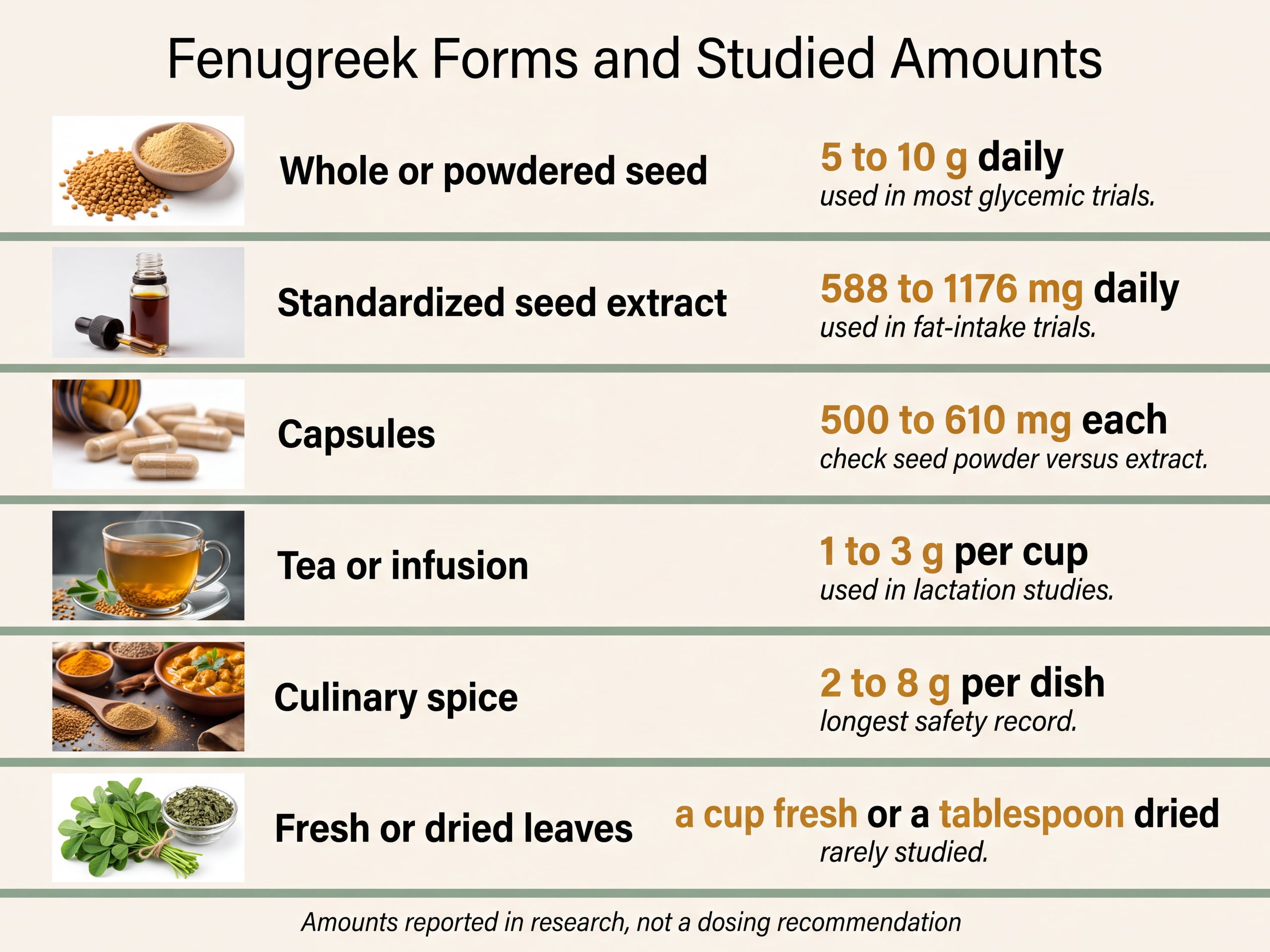
Forms and dosage: how much fenugreek is used in research?
The amounts below are the ranges reported in published trials and traditional monographs. They are not a dosing recommendation, and appropriate intake depends on the individual, the preparation, and any medications involved.
| Form | Amounts reported in studies or monographs | Context |
|---|---|---|
| Whole or powdered seed | 5 to 10 g daily in most glycemic trials, with some using considerably more | The form used in the majority of blood-sugar research |
| Standardized seed extract | 588 to 1,176 mg daily | Doses used in the Chevassus fat-intake trials |
| Capsules | Varies widely by product, commonly 500 to 610 mg per capsule | Check the label for whether it is seed powder or concentrated extract |
| Tea or infusion | Roughly 1 to 3 g of seed per cup | The preparation used in several lactation studies |
| Culinary spice | 0.5 to 2 teaspoons per dish, roughly 2 to 8 g | Food-level intake, the amount with the longest safety record |
| Fresh or dried leaves | A cup or more fresh, a tablespoon dried | Culinary use, rarely studied |
| Ranges compiled from published clinical trials and the European Medicines Agency herbal monograph on fenugreek seed. Not a dosing recommendation. | ||
How long does fenugreek take to work?
It depends entirely on the outcome. Glycemic trials generally ran eight to twelve weeks before measuring HbA1c, because that marker reflects roughly three months of average blood glucose and cannot move faster than its own biology. Digestive effects, including both the intended and the unintended ones, typically appear within days. The maple odor often appears within 24 to 48 hours. Lactation studies have measured outcomes across periods as short as a few days.
Can fenugreek be combined with other supplements?
Fenugreek is commonly combined with other herbs, and the main consideration is additive rather than antagonistic. Stacking it with other blood-sugar-lowering botanicals such as berberine, cinnamon, or gymnema increases the combined glucose-lowering effect, which matters most for anyone already on glucose-lowering medication. Combining it with other high-fiber supplements can compound digestive complaints. Because the soluble fiber can slow absorption of other compounds taken at the same time, spacing fenugreek apart from other supplements by an hour or two is a reasonable default. Anyone combining several botanicals should review the full list with a pharmacist or provider.
Quality and sourcing considerations
Fenugreek is an inexpensive commodity crop, which creates a specific quality problem: there is little economic pressure to do it well. In our sourcing experience, the differences that matter most are harvest freshness, storage conditions, and whether the seed has been sitting whole or was ground long before sale. Ground fenugreek loses its aromatic sotolone fraction quickly, which is why pre-ground powder frequently smells like nothing in particular while whole seed from the same lot smells strongly of maple.
Points worth checking on any fenugreek product:
- Whether the label specifies seed, leaf, or extract, and at what concentration.
- Whether the product is manufactured in a facility operating under cGMP standards.
- Whether third-party testing covers heavy metals and microbial contamination, which matters for any imported ground botanical.
- Country of origin, since aroma intensity varies meaningfully by growing region.
- Aroma on opening. Genuine fenugreek announces itself. Faint powder is old powder.
Frequently asked questions about fenugreek
What is fenugreek used for?
Fenugreek is used as a culinary spice, as a leaf vegetable, and as an herbal supplement studied mainly for blood-sugar support, lipid markers, and lactation support. Its seeds appear in curry blends, pickles, and spice mixtures across Indian, Middle Eastern, and North African cooking, while the leaves are cooked as a green.
What is the difference between fenugreek leaves and seeds?
They come from the same plant but function as different ingredients. Leaves are a mild leafy green used by the handful, known fresh as methi and dried as kasuri methi. Seeds are a hard, bitter spice used by the teaspoon, known as methi dana, and they contain the galactomannan fiber and 4-hydroxyisoleucine that nearly all fenugreek research studies. They cannot be substituted for each other.
Who should not take fenugreek?
Pregnant women should avoid amounts greater than those found in food. People with peanut or chickpea allergies should be cautious because of documented legume cross-reactivity. Anyone taking blood-sugar-lowering or anticoagulant medication, anyone scheduled for surgery within two weeks, and anyone with a hormone-sensitive condition should consult their healthcare provider first.
Why does fenugreek make you smell like maple syrup?
The compound responsible is sotolone, a volatile lactone that is detectable at extremely low concentrations. It passes into sweat and urine and produces a distinct maple-syrup odor, usually within a day or two of starting. It is considered harmless. It is also the same compound that gives fenugreek-fed dairy cattle a maple aroma in their milk.
Does fenugreek actually increase breast milk supply?
The traditional record is strong, and the clinical record is mixed. A 2020 Cochrane review of 41 randomized trials rated galactagogue evidence as low to very low certainty. Some individual trials report increased milk volume, while a 2023 randomized trial of fenugreek-containing lactation cookies found no measurable effect on milk production rate. Anyone with milk supply concerns should work with a lactation consultant, since positioning, latch, and feeding frequency have larger and better-established effects.
Can fenugreek help with weight loss?
Two randomized trials found that fenugreek seed extract selectively reduced dietary fat consumption by 17.3 percent at the higher dose in one crossover study, but neither trial found significant weight loss. There is no evidence that fenugreek reduces abdominal fat specifically, and no food or herb targets fat in a single region of the body.
How much fenugreek should you take per day?
Published glycemic trials most often used 5 to 10 grams of seed powder daily, extract trials used 588 to 1,176 milligrams, and lactation tea studies used roughly 1 to 3 grams of seed per cup. These are the amounts studied, not a recommendation. Appropriate intake depends on the preparation, the individual, and any medications involved, which is a conversation for a healthcare provider.
Is it safe to take fenugreek every day?
Most trials ran four to twelve weeks and reported no serious adverse events during those periods. Safety over multiple years has not been well characterized in controlled research. Culinary amounts have a food-use history spanning millennia and sit in a different category from daily supplement dosing.
Related reading
Continue with our related articles on fenugreek and testosterone, the best herbs for digestive health, and our guide to testosterone herbal supplements.
Disclaimer
These statements have not been evaluated by the Food and Drug Administration. This product is not intended to diagnose, treat, cure, or prevent any disease. Consult your healthcare provider before use, particularly if you are pregnant, breastfeeding, taking prescription medication, or managing a diagnosed health condition. The information in this article is educational and is not a substitute for individualized medical advice.