Key Takeaways
- Cat’s claw is Uncaria tomentosa, a woody Rubiaceae vine of the Peruvian Amazon whose inner bark and root are the parts used.
- Two alkaloid groups drive its activity, and they work against each other. Pentacyclic oxindole alkaloids act on cellular immune signaling, while tetracyclic oxindole alkaloids act on the central nervous system and antagonize them.
- Wild Uncaria tomentosa occurs as two distinct chemotypes, which is why serious extracts state a POA percentage rather than a generic bark weight.
- Its sister species Uncaria guianensis carries roughly 35 times fewer oxindole alkaloids yet tested as the stronger antioxidant, so alkaloid percentage alone is a poor quality proxy.
- Controlled human data run weeks rather than years, and the herb carries real interaction and contraindication limits that deserve a conversation with your provider.
Ask five supplement labels what cat’s claw is, and you will get five different answers. One says Uncaria tomentosa. One says Uncaria guianensis. One says nothing but “cat’s claw bark” and leaves you guessing. In our sourcing experience, that ambiguity is the single most common problem buyers run into with this plant, and it is not cosmetic. The two Amazonian species differ in alkaloid content by a factor of roughly 35, and a third plant sold under a similar name comes from an entirely different continent.
This guide sorts the botany, the chemistry, the research record, and the safety limits into one place. Our editorial team has reviewed the primary literature on both species, and where the evidence is thin we say so rather than filling the gap with enthusiasm. What follows covers what the plant is, how its two alkaloid families pull in opposite directions, how to read a label that actually means something, and where the honest limits of the human data sit.
What Is Cat’s Claw (Uncaria tomentosa)?
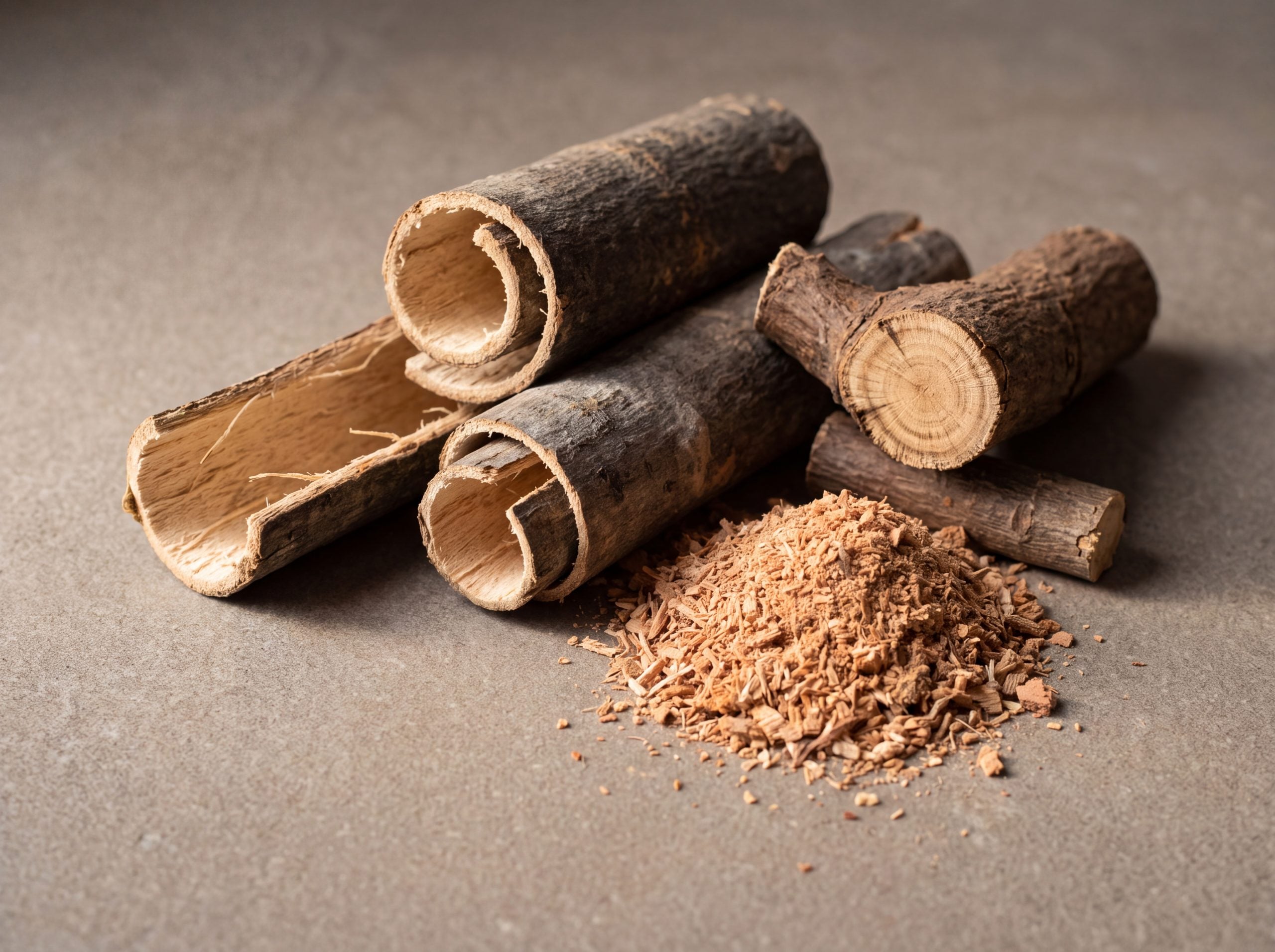
Cat’s claw is Uncaria tomentosa, a woody climbing vine in the Rubiaceae family, the same botanical family as coffee and gardenia. It grows in the Peruvian Amazon and neighboring tropical forests, climbing more than 30 meters into the canopy on curved thorns that resemble a cat’s claws. The inner bark and root are the parts used, and they carry the alkaloid chemistry the plant is known for.
Two other plants share the common name and cause most of the confusion. Uncaria guianensis is a genuine Amazonian relative covered in detail in the next section. Uncaria rhynchophylla, known as gou teng, belongs to Traditional Chinese Medicine and is a separate plant with a separate use history. A fourth, unrelated point of confusion is devil’s claw, Harpagophytum procumbens, which is a Kalahari desert root and shares nothing with cat’s claw beyond a word in its common name.
Key Active Compounds in Cat’s Claw Bark
The chemistry falls into four groups.
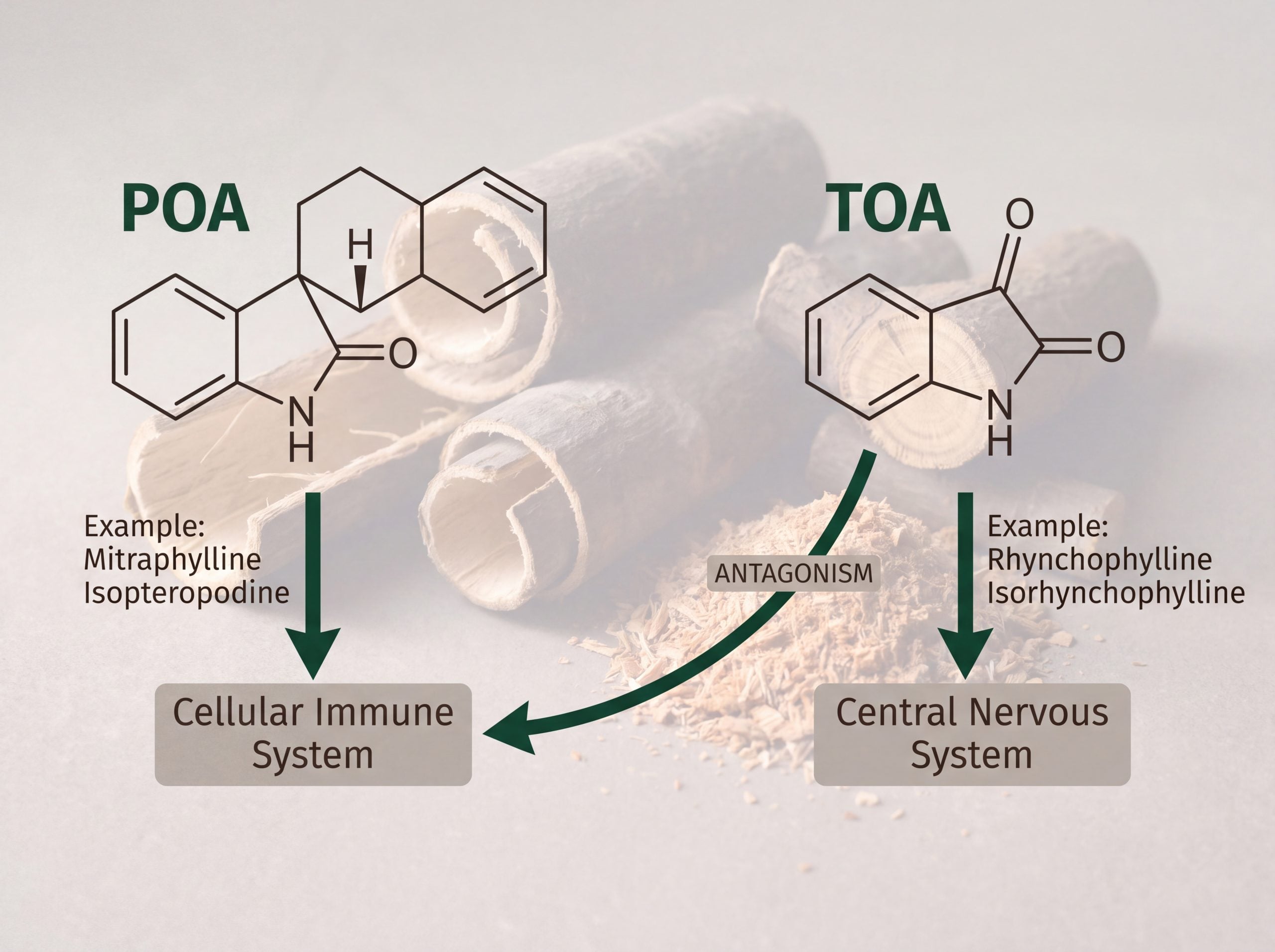
- Oxindole alkaloids. The most studied fraction, split into two structurally distinct subclasses. Pentacyclic oxindole alkaloids, or POAs, carry a five-ring skeleton and include mitraphylline, isomitraphylline, pteropodine, isopteropodine, speciophylline, and uncarine F. Tetracyclic oxindole alkaloids, or TOAs, carry a four-ring skeleton and include rhynchophylline, isorhynchophylline, corynoxeine, and isocorynoxeine.
- Quinovic acid glycosides. Studied in laboratory settings for effects on inflammatory signaling.
- Polyphenols and flavonoids. Including proanthocyanidins and tannins. These contribute antioxidant activity and, as the species comparison below shows, they matter more than the marketing on most labels suggests.
- Triterpenes and sterols. Beta-sitosterol, stigmasterol, and campesterol.
Quinic acid esters deserve their own mention. Sheng et al. (2004), Journal of Ethnopharmacology, DOI: 10.1016/j.jep.2004.10.002, PMID: 15619581, characterized a water-soluble cat’s claw preparation containing under 0.05 percent alkaloids that still showed measurable bioactivity, and identified quinic acid esters as the responsible constituents. That finding matters commercially. It means a low alkaloid number on a water-extract label is not automatically a red flag, because the extraction solvent determines which compounds survive into the finished material.
What Chemotypes Exist in Wild Uncaria tomentosa?
Wild populations are not chemically uniform. Reinhard (1999), Journal of Alternative and Complementary Medicine, DOI: 10.1089/acm.1999.5.143, PMID: 10328636, documented two naturally occurring chemotypes of Uncaria tomentosa. The roots of one type express pentacyclic oxindoles. The roots of the other express tetracyclic oxindoles. Two plants of the same species, from the same forest, can carry opposite alkaloid profiles.
This is the reason a bark weight on a label tells you very little on its own. Without a stated alkaloid profile, a 500 mg capsule could contain either chemotype, and as the mechanism section explains, those two chemotypes do not do the same thing in the body.
Uncaria tomentosa vs Uncaria guianensis: How the Two Cat’s Claw Species Differ
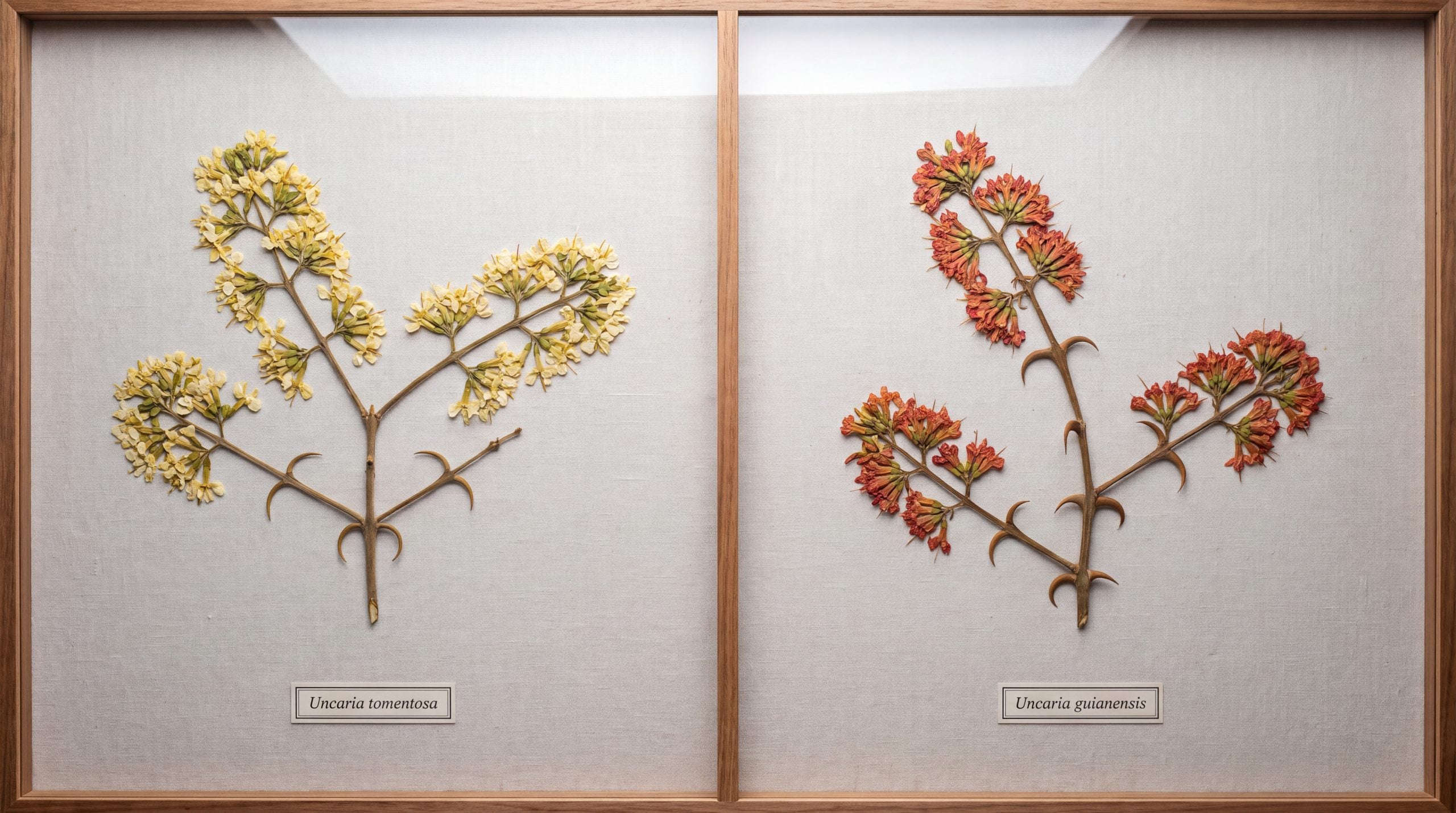
Both species are sold as cat’s claw, and both are genuinely Amazonian, but they are not interchangeable. The differences run through appearance, range, chemistry, and market availability.
| Feature | Uncaria tomentosa | Uncaria guianensis |
|---|---|---|
| Flower color | Yellowish-white | Reddish-orange |
| Thorn form | Paired, less strongly curved | Sharper, more strongly hooked |
| Native range | Peruvian Amazon, higher-altitude tropical forest | Broader distribution across Central and South America |
| Total oxindole alkaloid content | Roughly 35 times higher | Baseline, substantially lower |
| Antioxidant potency (DPPH and related assays) | Lower of the two | Stronger in every assay tested |
| TNF-alpha inhibition IC50 | 14.1 ng/mL | 9.5 ng/mL |
| Supplement market presence | Dominant species in North American products and research | More common in South American harvest and some European joint formulas |
| Chemistry and assay values from Sandoval et al. (2002), Phytomedicine, DOI: 10.1078/0944-7113-00117, PMID: 12120814. | ||
How to Tell the Two Species Apart
On the living plant, flower color is the fastest visual check. Uncaria tomentosa produces yellowish-white flowers and paired thorns with a gentler curve. Uncaria guianensis produces reddish-orange flowers and noticeably sharper, more strongly hooked thorns, and it ranges more widely through Central America and the lowland tropics.
On a finished product, you cannot tell them apart by looking. Milled bark powder from the two species is visually similar. The only reliable identification at the consumer end is the Latin binomial printed on the label, which is precisely why a label that says only “cat’s claw bark” is telling you nothing you can act on.
Which Species Contains More Pentacyclic Alkaloids?
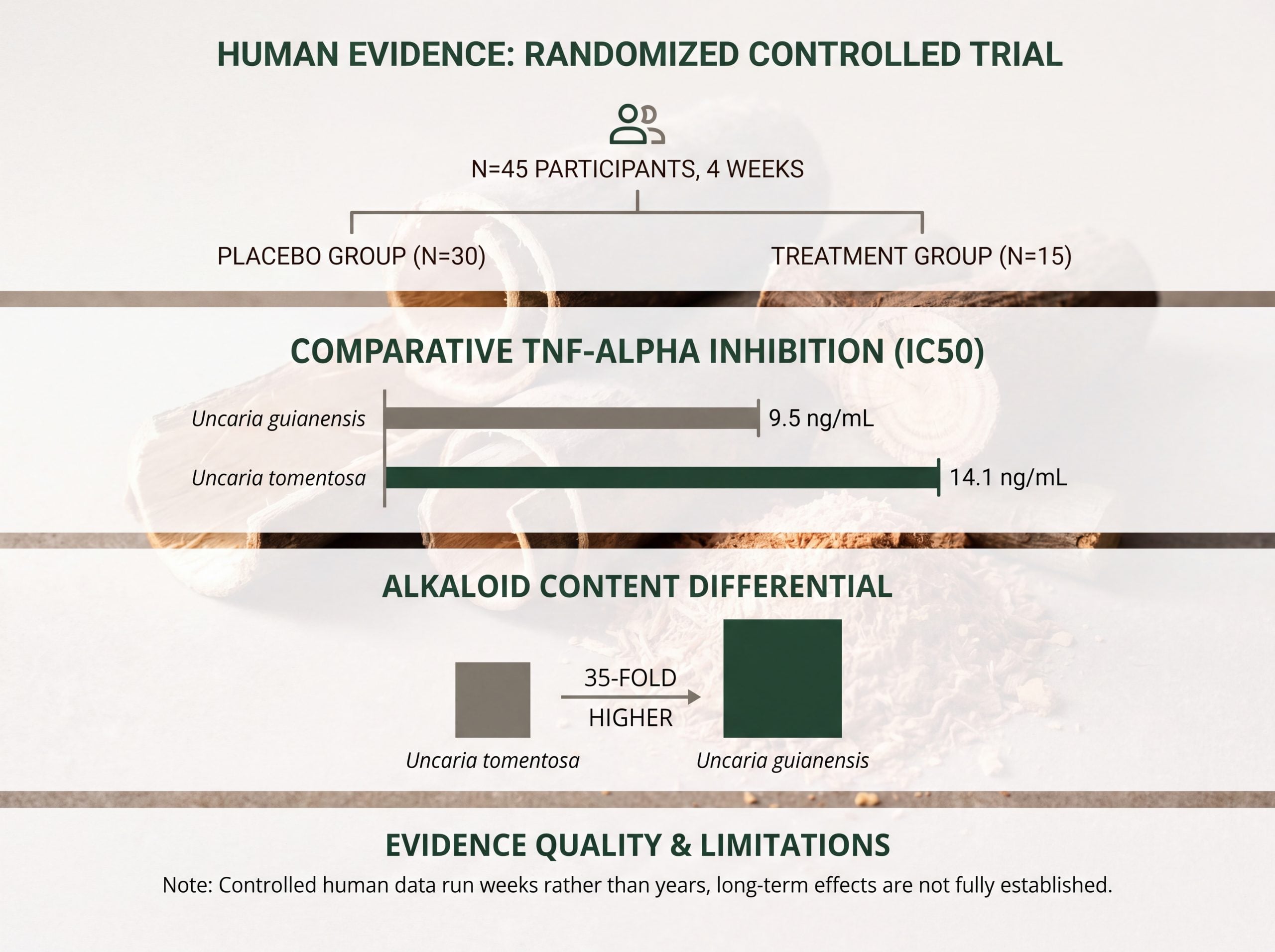
Uncaria tomentosa, by a wide margin. Sandoval et al. (2002), Phytomedicine, DOI: 10.1078/0944-7113-00117, PMID: 12120814, measured total oxindole and pentacyclic alkaloid content in U. tomentosa at roughly 35-fold that of U. guianensis. If alkaloid content is what you are after, the species named on the label is the variable that decides it, not the milligram count.
Why Lower Alkaloid Content Does Not Mean Lower Activity
Here the market’s assumption breaks down. In the same 2002 work, the species carrying 35 times fewer alkaloids was the more potent antioxidant in every assay the researchers ran, including DPPH radical scavenging, hydroxyl radical scavenging, and lipid peroxidation, at statistical significance below P 0.01. On inhibition of TNF-alpha production, U. guianensis registered an IC50 of 9.5 ng/mL against 14.1 ng/mL for U. tomentosa, again favoring the lower-alkaloid species.
The authors concluded that the antioxidant and anti-inflammatory activity of cat’s claw is independent of its alkaloid content, and traced the activity to non-alkaloid HPLC fractions, meaning the polyphenols and flavonoids. Piscoya et al. (2001), Inflammation Research, DOI: 10.1007/PL00000268, PMID: 11603848, reached a compatible conclusion, reporting the two species as equally active at quenching DPPH radicals with EC50 values between 13.6 and 21.7 micrograms per milliliter.
The practical reading is that “higher POA percentage” and “better product” are two different statements. Which one you want depends on which activity you are after, and no label we have reviewed makes that distinction for the buyer.
Which Species Is Actually in Your Supplement?
In North America, almost certainly Uncaria tomentosa. It dominates the supplement supply chain here, and it is the species behind most of the commercial research. Uncaria guianensis is harvested in larger volume in South America and turns up more often in European joint formulations. We have observed in our own label reviews that products failing to name a species almost always turn out to be sourcing U. tomentosa, but “almost always” is not a sourcing standard, and a supplier who will not name the binomial usually cannot.
How Does Cat’s Claw Work? Mechanisms of Action
Cat’s claw acts through two alkaloid families that target different systems and work against each other. Pentacyclic oxindole alkaloids act on the cellular immune system, stimulating endothelial cells to release a factor that regulates lymphocyte proliferation. Tetracyclic oxindole alkaloids act primarily on the central nervous system and antagonize that pentacyclic activity. This split, documented by Keplinger et al. (1999), Journal of Ethnopharmacology, DOI: 10.1016/s0378-8741(98)00096-8, PMID: 10075119, is the mechanism most consumer sources omit.
Why Do TOAs Antagonize POAs?
The antagonism is dose-dependent and has been observed directly. In endothelial cell work, TOAs reduced the lymphocyte-stimulating factor induced by POAs in proportion to their concentration. Reinhard (1999), DOI: 10.1089/acm.1999.5.143, PMID: 10328636, drew the conclusion plainly, stating that mixtures of the two alkaloid types are unsuitable for medicinal application.
That single sentence explains a great deal of what you see on serious extract labels. When a manufacturer states a POA percentage, or advertises a TOA-free material, they are responding to this pharmacology rather than to marketing fashion. A whole-bark powder from an unspecified chemotype makes no such claim because it cannot.
Beyond the alkaloid story, several other pathways have been examined in laboratory and animal models. These include modulation of nuclear factor-kappa B and tumor necrosis factor-alpha signaling, direct free radical scavenging, calcium channel activity attributed to the TOA fraction, and effects on DNA repair observed in vitro. Winkler et al. (2004), Planta Medica, DOI: 10.1055/s-2004-815536, PMID: 15114496, working with human peripheral blood mononuclear cells, found that both whole extracts and isolated alkaloid mixtures modulated interferon-gamma-induced biochemical pathways in a dose-dependent manner, with complete suppression at the highest concentrations tested.
Traditional Use of Cat’s Claw in the Amazon
The ethnobotanical record here is unusually well documented for an Amazonian plant. Keplinger et al. (1999), DOI: 10.1016/s0378-8741(98)00096-8, PMID: 10075119, described the medical system of the Asháninka people of Peru in the peer-reviewed literature, including the position Uncaria tomentosa holds within it. In that system, a person is understood as a physical and a spiritual being connected by a regulating element, and the vine was reserved for practitioners working on that regulation rather than distributed as a general remedy.
Traditional practitioners applied the inner bark and root in the context of joint discomfort, digestive complaints, wound care, and general vitality. The plant acquired the name “life-giving vine of Peru” in regional usage. We treat that history as cultural and historical context rather than as evidence of effect, which is the same standard the primary literature applies.
What Does the Research Say About Cat’s Claw?
Preliminary is the accurate word for most of this evidence base. Laboratory and animal work is plentiful. Controlled human trials are few, small, and short. The National Center for Complementary and Integrative Health states in its own material that high-quality human clinical data on this plant remain limited, and we agree with that read.
Joint Comfort and Inflammatory Response
The joint literature is the strongest thread. Piscoya et al. (2001), DOI: 10.1007/PL00000268, PMID: 11603848, ran a randomized, double-blind, placebo-controlled trial in 45 participants with knee osteoarthritis, giving freeze-dried Uncaria guianensis to 30 participants and placebo to 15 across four weeks. Participants receiving the botanical reported significantly reduced pain associated with activity, with changes appearing within the first week. Knee pain at rest and at night, and knee circumference, were not significantly changed over that short window. The investigators attributed the observed anti-inflammatory activity mainly to inhibition of TNF-alpha and to a lesser degree prostaglandin E2.
A separate small trial referenced in the clinical literature added a standardized U. tomentosa extract at 60 mg daily to existing rheumatoid arthritis medication across 24 weeks and reported a reduction in the number of painful joints against placebo. That study does not indicate the botanical slows joint damage or substitutes for conventional care, and the authors did not claim it did.
Immune Modulation
The immune signal is best described as modulating rather than stimulating. Domingues et al. (2011), Phytotherapy Research, DOI: 10.1002/ptr.3549, PMID: 21656603, dosed mice with a pentacyclic-alkaloid U. tomentosa bark extract at 125, 500, and 1250 mg per kilogram for 28 days. The extract increased splenic white pulp cellularity and thymic medulla cellularity, raised T helper and B lymphocyte counts, and shifted cytokine output toward a Th2 profile. Notably, mitogen-induced T lymphocyte proliferation was significantly inhibited at the higher concentrations, which is the signature of a dose-dependent modulator rather than a one-directional stimulant.
Antioxidant Activity
Both species scavenge free radicals effectively in vitro, and as the species comparison above establishes, U. guianensis does so more strongly despite carrying far fewer alkaloids. The polyphenol and proanthocyanidin fraction carries most of this activity.
Digestive Comfort
Animal work supports the traditional digestive use in a limited way. In the Sandoval 2002 model, three days of oral pretreatment with U. tomentosa was associated with gastroprotective activity against indomethacin-induced gastric injury, alongside reduced TNF-alpha messenger RNA expression and reduced apoptosis in gastric tissue. Animal model findings do not establish a human effect, and no controlled human trial has tested this application.
How Do You Use Cat’s Claw Bark?
Cat’s claw reaches the market as whole or cut inner bark, milled powder, capsules, tablets, liquid extracts, and tinctures. The preparation matters more than most buyers realize, and the forms are not equivalent.
- Bark decoction. Cat’s claw bark is woody, not leafy. Traditional preparation simmers the bark in water for an extended period rather than steeping it briefly the way you would a leaf tea. A short steep pulls very little out of dense bark material. From our hands-on assessment of bark material, the difference between a five-minute steep and a proper simmer is visible in the color of the liquid alone.
- Powder. Whole milled bark. Full-spectrum, carries whatever chemotype the source material happened to be, and states no alkaloid ratio.
- Capsules and tablets. Convenient and dose-consistent by weight, though weight consistency is not potency consistency unless the material is standardized.
- Liquid extracts and tinctures. Solvent choice determines the constituent profile. As the Sheng 2004 work showed, a water extract can carry almost no alkaloids and still be bioactive through a different compound class entirely.
On amounts, the honest answer is that no universally established standard dose exists. Published research has used figures as far apart as 60 mg of a standardized extract daily in the rheumatoid arthritis work and 700 mg daily in immune studies, while typical commercial guidance for dried bark powder falls somewhere between 250 and 1000 mg per day, sometimes divided. Those numbers are not interchangeable across forms, because 60 mg of a concentrated standardized extract and 60 mg of whole bark powder are chemically different materials. Follow the label on the specific product you hold and talk to a qualified provider about what suits your circumstances.
If you are drawn to cat’s claw for joint comfort specifically, our Chuchuhuasi Powder covers adjacent ground from the same forest. It is wild-harvested Peruvian Amazon bark, Maytenus laevis, carrying mayteine and triterpenes rather than oxindole alkaloids, and we sell it as whole bark powder rather than an extract.
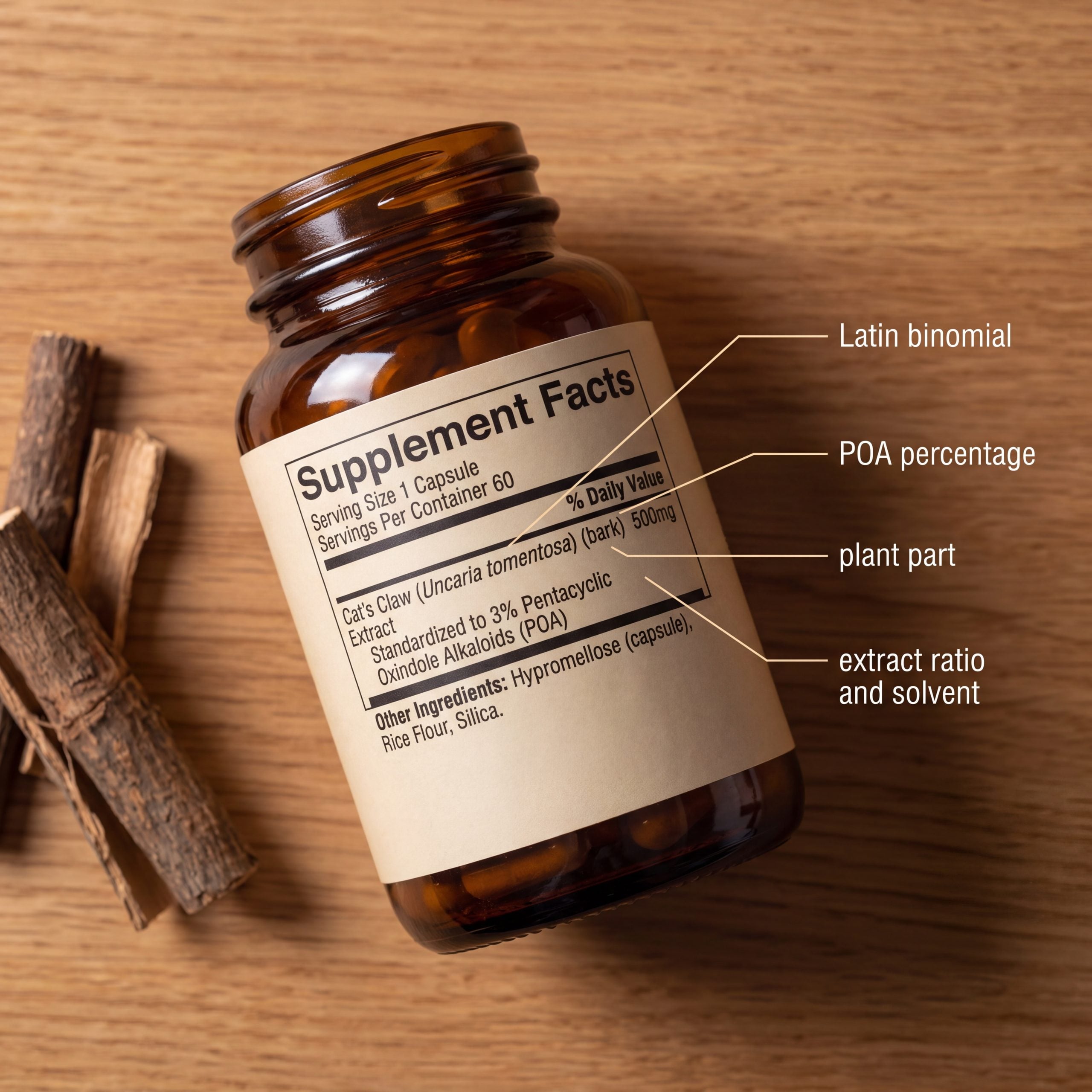
How Can You Tell If a Cat’s Claw Supplement Is Standardized?
A standardized product tells you what is in it. Most cat’s claw on the shelf does not. Run a label through these checks.
- Is the Latin binomial printed? Uncaria tomentosa or Uncaria guianensis, stated outright. A label reading only “cat’s claw” has skipped the single most consequential piece of information about the product.
- Is a POA percentage stated? A pentacyclic oxindole alkaloid percentage means the manufacturer measured it. No percentage means no measurement.
- Does it address TOA content? Given the documented antagonism, a material that declares itself TOA-free or states a POA-to-TOA ratio is making a chemically meaningful claim.
- Is a Certificate of Analysis available with HPLC alkaloid quantification? Reversed-phase HPLC is the standard method for separating and quantifying these alkaloid fractions. Ask for the COA. A supplier who has one will send it.
- Which plant part? Inner bark, root, or unspecified whole vine. These are not the same material.
- What extract ratio and solvent? Water, ethanol, and hydroalcoholic extractions pull different compounds. A water-soluble extract with a low alkaloid figure may still be a serious product, per the quinic acid ester finding, but you can only assess that if the solvent is disclosed.
- Testing and facility standards. Third-party identity testing and cGMP-compliant manufacturing address contamination and adulteration, which are ordinary risks in wild-harvested Amazonian bark.
Safety, Side Effects, and Contraindications
Cat’s claw is generally well tolerated by healthy adults over short periods, and it still carries a real list of limits. This section is the part of the plant’s profile we consider least negotiable.
Common Side Effects
The most frequently reported effects are gastrointestinal, and they are associated with the bark’s high tannin content at larger amounts rather than with the alkaloid fraction.
- Diarrhea
- Nausea
- Stomach pain or indigestion
- Vomiting
- Dizziness
- Headache
Can Cat’s Claw Cause Severe Allergic Reactions?
Yes, in hypersensitive individuals, and this belongs on every label that does not currently carry it. Reported reactions include rash, itching, swelling of the face or tongue, and difficulty breathing. Swelling of the face or tongue and any breathing difficulty are medical emergencies. Stop use and seek immediate medical attention rather than waiting to see whether the reaction settles.
Is Cat’s Claw Safe for Long-Term Use?
Nobody knows, and the honest version of that answer is more useful than a confident one. The longest controlled human data available ran in weeks. The Piscoya trial ran four weeks in 45 participants and reported no deleterious effects on blood parameters or liver function against placebo, and no significant adverse effects beyond placebo. The rheumatoid arthritis work extended to 24 weeks. Beyond roughly six months, controlled safety data on continuous use do not exist. Anyone taking cat’s claw on an ongoing basis is operating outside the evidence base and should be doing so with provider oversight.
Who Should Avoid Cat’s Claw?
| Situation | Reason for caution | Recommendation |
|---|---|---|
| Pregnancy | Traditional use includes application as a contraceptive, with potential uterine activity and no safety data | Avoid |
| Breastfeeding | Insufficient safety data | Avoid |
| Autoimmune conditions | Immune-modulating activity could theoretically affect symptom patterns | Consult your provider first |
| Bleeding disorders | Possible mild effects on clotting | Avoid |
| Upcoming surgery | Potential effects on bleeding and circulation | Stop at least 2 weeks prior |
| Low blood pressure | TOA fraction has been studied for vasodilatory activity | Consult your provider first |
| Organ transplant | May interfere with immunosuppressant medication | Avoid |
| Kidney or liver conditions | Isolated case reports involving renal function exist | Consult your provider first |
Potential Drug Interactions
Memorial Sloan Kettering Cancer Center maintains a herb-drug interaction entry for this plant, and it is the reference we point people toward. The interaction categories to raise with a pharmacist are these.
- Immunosuppressants. Cyclosporine, corticosteroids, and transplant medication. Immune-modulating activity may work against the intended drug effect.
- Anticoagulants and antiplatelets. Warfarin, clopidogrel, aspirin, and NSAIDs. Possible additive bleeding risk.
- Antihypertensives. Blood pressure medication. Possible additive effect leading to hypotension.
- Blood sugar medication. Raised in consumer questions frequently enough to warrant asking about, though the human data here are thin.
- CYP3A4 substrates. Laboratory work suggests possible inhibition of the cytochrome P450 3A4 enzyme system, which could theoretically raise levels of drugs cleared through that pathway, including some statins, calcium channel blockers, and antiretrovirals. Human significance is unresolved. Caution is reasonable.
What About Kidney and Liver Reports?
Isolated case reports involving renal function have appeared in the literature, and they are rare rather than routine. Against that, the four-week Piscoya trial specifically monitored hematological parameters and liver function and found no deleterious effects compared with placebo. The reasonable position sits between the two. Short-term use in healthy adults has not produced a signal in controlled settings, individual case reports exist, and anyone with an existing kidney or liver condition should treat this as a conversation with their provider rather than a self-directed decision.
Frequently Asked Questions
What are the most proven benefits of cat’s claw?
Joint comfort has the strongest human evidence, resting on a randomized four-week trial in 45 participants with knee osteoarthritis that reported reduced activity-associated pain. Antioxidant and immune-modulating activity are well characterized in laboratory and animal models. Most other proposed applications remain preliminary, and the National Center for Complementary and Integrative Health describes the human clinical base as limited.
What side effects does Uncaria tomentosa cause?
Most reported effects are mild and gastrointestinal, including diarrhea, nausea, stomach pain, and vomiting, and they track with the bark’s tannin content at larger amounts. Dizziness and headache are also reported. Allergic reactions are uncommon but can be serious, and facial or tongue swelling or breathing difficulty requires immediate medical attention.
Can cat’s claw interact with medications?
Yes. The categories that matter are immunosuppressants, anticoagulants and antiplatelets, blood pressure medication, and drugs metabolized through the CYP3A4 enzyme pathway. Laboratory work suggests CYP3A4 inhibition, though human significance is not established. Tell your pharmacist and prescriber that you are taking it before starting anything new.
Is cat’s claw safe for long-term use?
Controlled data do not extend that far. The longest available human trials run four weeks and 24 weeks respectively, with the four-week trial reporting no adverse effects on blood or liver parameters versus placebo. Beyond about six months, no controlled safety data exist. Ongoing use should involve provider oversight.
How can I tell if a cat’s claw supplement is standardized?
Look for the Latin binomial, a stated pentacyclic oxindole alkaloid percentage, a declared position on tetracyclic alkaloid content, and a Certificate of Analysis with HPLC quantification. Also check the plant part and the extraction solvent. A label that names no species and states no alkaloid figure is not a standardized product regardless of what the front panel says.
Which cat’s claw species is better for inflammation?
The comparative laboratory data favor Uncaria guianensis, which registered a TNF-alpha inhibition IC50 of 9.5 ng/mL against 14.1 ng/mL for Uncaria tomentosa and outperformed it in antioxidant assays despite carrying roughly 35 times fewer alkaloids. The only randomized human osteoarthritis trial also used U. guianensis. U. tomentosa nonetheless dominates the North American market.
How can I tell Uncaria guianensis from Uncaria tomentosa?
On the living plant, U. tomentosa shows yellowish-white flowers and paired, less strongly curved thorns, while U. guianensis shows reddish-orange flowers and sharper, more strongly hooked thorns. On a finished powder or capsule, the two are visually indistinguishable, so the Latin binomial on the label is your only reliable identification.
Is cat’s claw the same as devil’s claw?
No, and the two are frequently confused because both names contain “claw” and both are associated with joint comfort. Cat’s claw is Uncaria tomentosa, an Amazonian vine whose bark carries oxindole alkaloids. Devil’s claw is Harpagophytum procumbens, a southern African desert plant whose root carries harpagoside. Different continents, different plant parts, different chemistry.
Related Reading
Continue with our guides on herbs for pain, the best herbs for the immune system, and our sourcing notes on Chuchuhuasi Powder from the Peruvian Amazon.
Important: This article is for educational and informational purposes. The statements have not been evaluated by the Food and Drug Administration. The herbs and herbal products discussed are not intended to diagnose, treat, cure, or prevent any disease. Information presented here is not a substitute for professional medical advice, diagnosis, or treatment. Always consult a qualified healthcare provider for medical guidance specific to your circumstances, especially if you are pregnant, nursing, taking medication, or managing a health condition. Do not delay seeking medical care because of information you have read on this site.