Gouro root (Turraea heterophylla) is a West African shrub in the Meliaceae family, traditionally known in Côte d’Ivoire as cure-dent gouro, the “Gouro toothpick,” and chewed by men of the Gouro people to support circulation and vitality. It grows across the tropical forest belt from Sierra Leone to Angola, and its root, the part used medicinally, is either cut into a traditional chewing stick or extracted into a modern hydro-ethanolic tincture. Laboratory testing on an Ivorian root extract found it relaxed isolated vascular tissue, a vasorelaxant action researchers linked to the plant’s terpene and alkaloid content and one that lines up with its long traditional use as a men’s circulation root (Boua et al., 2013, Journal of Applied Biosciences).
Key Takeaways
- Gouro root, also called cure-dent gouro, is the traditional West African name for Turraea heterophylla, a shrub in the Meliaceae family native to the forest belt from Sierra Leone to Angola.
- The root is traditionally chewed as a stick by the Gouro (Guro) people of central Côte d’Ivoire, near Bouaflé, and is now also available as a hydro-ethanolic tincture.
- A 2013 laboratory study found that an Ivorian Turraea heterophylla root extract relaxed isolated guinea pig aorta tissue, a vasorelaxant action tied to the plant’s terpene and alkaloid content.
- Phytochemical screening has identified limonoids, steroids, polyphenols, flavonoids, alkaloids, terpenes, saponins, and coumarins in the plant, giving its traditional reputation a documented chemical basis.
- Responsible use means starting with a single measured dose, respecting its blood-pressure-lowering effect, and talking to a healthcare provider first if you have a heart condition or take related medication.
What Is Gouro Root? An Introduction to Turraea Heterophylla
Gouro root comes from Turraea heterophylla, a climbing shrub or small tree in the Meliaceae family that grows across West Tropical Africa, from Sierra Leone and Liberia through Côte d’Ivoire, Ghana, Togo, and Nigeria, down to Cameroon and Angola. The species carries several common names depending on region, including African honeysuckle and variable-leaved Turraea, but in Côte d’Ivoire it is known as cure-dent gouro, a name that describes exactly how it is traditionally used.
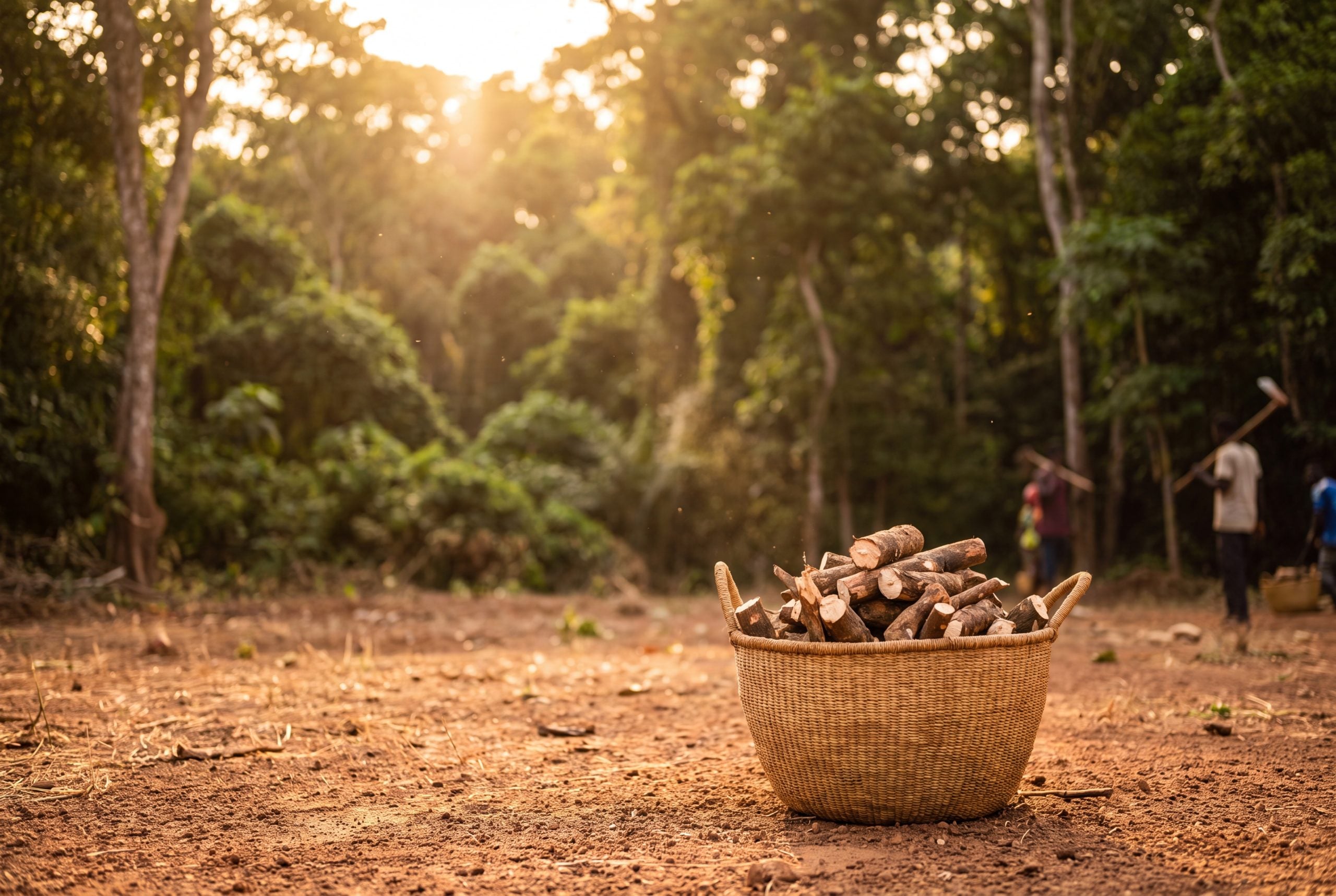
In our research, the clearest way to understand this plant is through the people who named it. The Gouro (Guro) people of central Côte d’Ivoire, settled around Bouaflé, Zuénoula, and Sinfra along the Bandama River, are the same community recognized by UNESCO for the Zaouli mask dance. Among the Gouro and neighboring communities, cutting the root into a short stick and chewing it slowly is a men’s tradition carried down as folk knowledge, which is why the plant still travels under the “Gouro” name in West African markets today, whether sold as a raw root, a chewing stick, or a modern tincture.
Taxonomy, Botanical Description, and Distribution
Taxonomy and Nomenclature
Turraea heterophylla Sm. was first published in A. Rees, Cyclopaedia, volume 36, in 1817. It is important to distinguish Turraea heterophylla Sm. from Turraea heterophylla Sond., a separate name now considered a synonym of Turraea floribunda. The genus Turraea includes many species across Africa and Asia, and getting the taxonomy right matters for anyone sourcing true Gouro root rather than a related but different plant. Kew’s Plants of the World Online lists Turraea heterophylla Sm. as the accepted name this article follows.
Botanical Description
Morphologically, T. heterophylla is a climbing shrub or small tree that typically reaches up to 10 meters, though in closed-forest environments it can stay as short as 1 to 2 meters. Its leaves are alternate and vary considerably in shape, from elliptical to lanceolate to ovate, which is the origin of the species name heterophylla, meaning “different leaves.” The flowers are white to yellowish-white with five petals and a sweet scent, and the fruit is a small round capsule that turns yellow when ripe.
Distribution and Habitat
The species is native to West Tropical Africa and extends to Angola, with a documented range across Sierra Leone, Liberia, Côte d’Ivoire, Ghana, Togo, Nigeria, Cameroon, and Angola. It grows in tropical moist lowland forests, secondary forests, thickets, and savannas, reflecting its adaptability across different climate zones within its tropical range.
Traditional Uses of Gouro Root Across West Africa
Turraea heterophylla has a long history in traditional West African medicine, and its specific use shifts by region and community.
Regional Traditional Uses
In Côte d’Ivoire, where it is called cure-dent gouro, the root is traditionally chewed to support men’s circulation and vitality, and the same communities have historically used the plant for its antimalarial properties. In Togo, T. heterophylla appears in ethnomedicine for common infections, often prepared alongside Terminalia glaucescens. In Ghana, traditional use centers on lumbago, or lower back pain, and the plant holds a recognized place in the country’s ethnomedical plant record.
General Traditional Uses and Preparation
Across its range, T. heterophylla has also been used more broadly for digestive complaints, topical skin care, headaches and muscle aches, inflammation associated with conditions like arthritis, wound care, and oral hygiene, where chewing the root stick doubles as a traditional method for cleaning teeth and strengthening gums. Traditional preparation varies by intended use. The root is most common, either chewed directly, macerated in liquid with or without alcohol, or simmered into a decoction or infusion, while the leaves appear in some regional preparations as well.
Phytochemical Composition of Turraea Heterophylla
Gouro root’s traditional reputation has a documented chemical basis. Research has identified a wide range of compounds in T. heterophylla:
- Limonoids: including 28-nor-4α-carbomethoxy-11β-acetoxy-12α-(2-methylbutanoyloxy) 14,15-deoxyhavanensin-1,7-diacetate, mzikonol, and 1,2-dihydro-azadirone, several reported for the first time in this species using HPLC-ESI-QTOF-MS/MS analysis.
- Steroids: 3β-acetoxy-5-pregn-7,20-dien-6-one, 3β-hydroxy-5α-pregn-6-one, and villosterol.
- Polyphenols and flavonoids: present at significant levels, including both glycosylated flavonoid glycosides and their non-glycosylated aglycone forms.
- Alkaloids, terpenes, and polyterpenes: consistently detected across phytochemical screenings.
- Saponins and coumarins: steroid saponins and coumarins have both been identified.
- Other constituents: reducing sugars, proteins and glycoproteins, and cardiac glycosides.
In our review of this research, the wider genus Turraea is well documented as a source of bioactive limonoids and triterpenoids. A 2015 phytochemical study of the related species Turraea robusta and Turraea nilotica isolated twelve limonoid, protolimonoid, and phytosterol glucoside compounds and found several with measurable antiparasitic and cytotoxic activity (Irungu et al., 2015, Journal of Ethnopharmacology, PMID 26320684), which places T. heterophylla’s own limonoid content in a genus-wide pattern of pharmacological interest rather than an isolated finding.
How Gouro Root May Support Circulation: Mechanism and Scientific Evidence
Quick answer: The clearest evidence behind Gouro root’s traditional reputation comes from a 2013 Ivorian laboratory study, which found that a Turraea heterophylla root extract relaxed isolated guinea pig aorta tissue, an effect the researchers described as favorable to improved blood circulation and consistent with the plant’s traditional use to support male vitality.
Boua and colleagues screened a Turraea heterophylla extract from Côte d’Ivoire and confirmed the presence of sterols, terpenes, alkaloids, coumarins, reducing sugars, polyphenols, steroidal saponins, and proteins. When they tested the extract on isolated guinea pig aorta, a standard laboratory model for vascular tone, it produced measurable vasorelaxation, and the researchers attributed this activity primarily to the extract’s terpene and alkaloid content (Boua et al., 2013, Journal of Applied Biosciences, 68:5394-5403). At higher concentrations, the same extract produced dose-dependent hypotension and a moderate slowing of cardiac activity, effects the study authors treated as a manageable safety profile rather than a barrier to traditional use, and exactly why Gouro root deserves the same respect any vasoactive botanical does.
In our sourcing experience, this is the single most important study behind Gouro root’s reputation, and we think it is worth being direct about what it does and does not show. It is laboratory evidence of a vasorelaxant mechanism in isolated tissue, not a human clinical trial, so we present it as a rational basis for traditional use rather than a proven outcome for any individual. Later phytochemical work has continued to map the compounds behind this activity. A 2021 analysis of T. heterophylla leaf extracts confirmed high total polyphenol and flavonoid content across multiple extraction fractions and demonstrated bacteriostatic activity against Staphylococcus aureus, Escherichia coli, and Pseudomonas aeruginosa (Kouadio Kouassi Blaise et al., 2021, Journal of Pharmacognosy and Phytochemistry, 10(5):16-21), reinforcing that this plant is chemically active across several traditional use cases rather than just one.
How to Use Gouro Root: Traditional Chew vs. Modern Tincture
Quick answer:
- Traditional form: cut a piece of the dried root into a short stick and chew it slowly over time, the original cure-dent gouro method.
- Modern tincture: measure one full dropper, about 30 drops, and add it to a small amount of water or juice.
- Take up to twice daily for steady use, or two droppers about 45 minutes before activity for acute use.
- Start with a single dose and note how your body responds before increasing frequency.
- If you take blood pressure medication or manage a heart condition, talk with a healthcare provider before your first use.
Correct preparation depends on which form you are using, and both methods trace back to the same root.
The Traditional Chewing Stick
In Côte d’Ivoire, the classic preparation is the cure-dent gouro itself, a short stick cut from the root and chewed for its slow release of compounds over hours. This is the oldest and simplest way to use Gouro root, and it remains common in the Gouro homeland around Bouaflé, Zuénoula, and Sinfra today.
The Modern Tincture
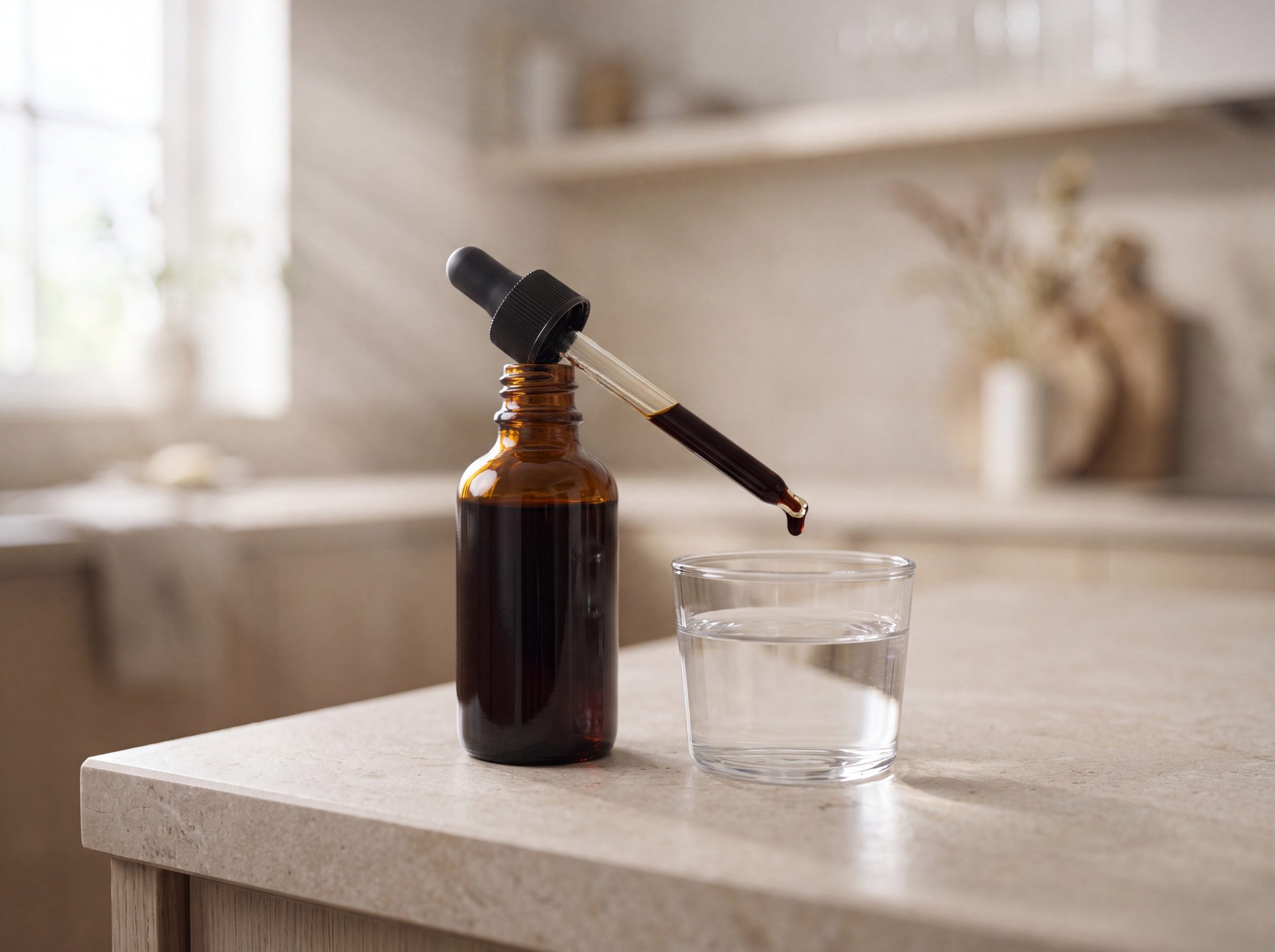
A hydro-ethanolic extraction pulls the same terpenes, sterols, and alkaloids out of the root and into a measurable liquid. In our testing, this gives users the character of the traditional chew in about 30 seconds rather than hours of gnawing on a stick. Our own tincture is wild-harvested in the Gouro homeland of central Côte d’Ivoire near Bouaflé, extracted at a 1:3 dry-root ratio in organic cane alcohol and spring water, and finished in Virginia Beach, Virginia.
Gouro Root Alone or in the Mulondo and Gouro Blend
Men who want a single-root approach typically reach for our Gouro Root Tincture on its own. Others pair its circulation-focused action with Mondia whitei, an East African root traditionally used for libido and mental drive, in our Mulondo and Gouro Root Tincture, built around pairing a desire-focused root with a circulation-focused one.
| Form | What it contains | Best for |
|---|---|---|
| Gouro Root Tincture | Wild-harvested Turraea heterophylla root only, hydro-ethanolic extraction. Available as our Gouro Root Tincture in a 1 fl oz bottle. | Users who want the single-root circulation profile on its own. |
| Mulondo and Gouro Blend | Turraea heterophylla paired with Mondia whitei (Mulondo) root. Offered as our Mulondo and Gouro Root Tincture. | Users who want a broader traditional formula covering both desire and circulation. |
| Both are dosed by the dropper. Start with the single tincture if this is your first time trying Gouro root. | ||
In our sourcing experience, first-time Gouro users tend to start with the single tincture to learn how their body responds to its circulation-focused action, then consider the Mulondo and Gouro blend once they know how it fits their routine. You can compare both on our Gouro Root Tincture and Mulondo and Gouro Root Tincture pages.
Safety and Responsible Use: What You Must Know
Used responsibly, Gouro root is taken in a single measured dose, whether as a chewed stick or a dropper of tincture, and the essentials are simple: start low, respect its blood-pressure-lowering effect, and stop if anything feels off. Laboratory research found that Turraea heterophylla extract produces dose-dependent hypotension and a moderate slowing of cardiac activity at higher concentrations (Boua et al., 2013, Journal of Applied Biosciences), consistent with the product-level caution that Gouro may influence cardiac rhythm and blood pressure. Because of this, anyone with a heart condition, low blood pressure, or a prescription for blood pressure or blood-thinning medication should speak with a healthcare provider before use.
What Toxicity Research Shows
Separately, acute toxicity testing on T. heterophylla leaf extracts found a low-toxicity profile, with an LD50 above 5000 mg/kg body weight in oral studies. We flag one distinction other sources tend to skip: that toxicity figure comes from leaf extract research, not the root extract used in a traditional chew or in our tincture, so we treat it as reassuring context rather than a direct safety rating for the root product itself.
Interactions and Who Should Avoid It
Because Gouro root’s primary documented mechanism is vasorelaxation, it may add to the effect of blood pressure medication, nitrates, or other heart medication, and it may also interact with blood thinners or diabetes medication. Talk with a healthcare provider before combining it with any of these. Due to insufficient safety data, Gouro root is not recommended during pregnancy or breastfeeding, and it should be kept out of reach of children.
Cultivation and Propagation
Turraea heterophylla can be propagated from seed or from cuttings. Seeds should be sown in well-drained soil and kept warm and humid until they germinate. Cuttings taken from mature plants root readily in a moist potting mix. The plant prefers full sun and well-drained soil, consistent with its native range across secondary forests, thickets, and savanna edges in West Africa.
Frequently Asked Questions About Gouro Root
What is Gouro root?
Gouro root is the West African common name for Turraea heterophylla, a shrub in the Meliaceae family traditionally chewed as a root stick, known as cure-dent gouro, by the Gouro people of central Côte d’Ivoire. It is traditionally used to support circulation and male vitality and is now also available as a hydro-ethanolic tincture.
What is Gouro root used for?
Traditionally, Gouro root is chewed or taken as a tincture to support circulation, physical stamina, and male vitality. Regionally, it has also been used for malaria, infections, lower back pain, digestive complaints, skin conditions, pain, inflammation, wound care, and oral hygiene.
Is Gouro root the same as Turraea heterophylla?
Yes. Gouro root, cure-dent gouro, and African honeysuckle are all common names for Turraea heterophylla Sm., a species distinct from the similarly named Turraea heterophylla Sond., which is now classified as Turraea floribunda.
Is Gouro root safe to use?
Leaf extract studies show a low acute toxicity profile, but the root extract used in traditional preparations and in tinctures can lower blood pressure and moderately affect cardiac activity at higher doses. Anyone with a heart condition, low blood pressure, or related medication should consult a healthcare provider before use.
What does the research say about Gouro root and circulation?
A 2013 Ivorian study found that a Turraea heterophylla root extract relaxed isolated guinea pig aorta tissue, a vasorelaxant effect the researchers linked to the plant’s terpene and alkaloid content and described as favorable to improved blood circulation. This is laboratory evidence, not a human clinical trial, so we present it as a rational basis for traditional use rather than a guaranteed outcome.
What is the difference between the traditional chewing stick and the tincture?
The chewing stick is a cut piece of dried root chewed slowly over hours, the original cure-dent gouro method. The tincture uses a hydro-ethanolic extraction to pull the same terpenes, sterols, and alkaloids into a liquid you can dose by the dropper in about 30 seconds.
Can Gouro root be combined with other traditional roots?
Yes. We offer it paired with Mondia whitei (Mulondo), an East African root traditionally used for libido and mental drive, in our Mulondo and Gouro Root Tincture, built around pairing a desire-focused root with a circulation-focused one.
Related Traditional Remedies
Men exploring traditional African circulation and vitality roots often compare Gouro root with these related options from our collection:
- Mpesu, a traditional Southern African root for stamina and vitality
- Bangalala benefits, another traditional stamina root from Southern Africa
- What Congo Dust is and how men use it for control and stamina
- Enkleia cream, a traditional Thai remedy for circulation and vitality
Important: This article is for educational and informational purposes. These statements have not been evaluated by the Food and Drug Administration. This product is not intended to diagnose, treat, cure, or prevent any disease. Speak with a qualified healthcare provider before starting any new herbal supplement, especially if you have a heart condition, low blood pressure, take related medication, or are pregnant or nursing.