Key Takeaways
- Soursop leaves come from Annona muricata, a tropical tree in the Annonaceae family, and are traditionally prepared as a simmered tea in the Caribbean, West Africa, and Southeast Asia.
- The leaves contain acetogenins, including annonacin, a compound that inhibits mitochondrial complex I and has been linked to atypical parkinsonism in Guadeloupe (Caparros-Lefebvre et al. 1999, Lancet, PMID: 10440304).
- No completed human clinical trial shows that soursop leaves treat, cure, or prevent cancer or any other disease. The published research is cell-culture and animal work.
- Because annonacin exposure is cumulative, herbalists do not recommend open-ended daily use. Short courses with breaks and a conversation with your healthcare provider first are the conventional approach.
- People who are pregnant, have a movement disorder, take blood pressure or blood sugar medication, or have kidney or liver concerns should avoid soursop leaves entirely.
What are soursop leaves?
Soursop leaves are the dried or fresh leaves of Annona muricata, a small evergreen tree in the Annonaceae family that grows across the Caribbean, Central and South America, West Africa, and Southeast Asia. The leaves are the plant part most often used in traditional herbal practice, usually simmered into a tea, and their defining chemistry is a class of compounds called Annonaceous acetogenins, of which annonacin is the most studied (Moghadamtousi et al. 2015, International Journal of Molecular Sciences, PMID: 26184167).
The fruit is the part most people recognize. It is sold as soursop, graviola, or guanabana depending on the region. The leaves are different in both use and risk profile, and this guide is about the leaves specifically. In our sourcing work, we handle Annona muricata leaf from Caribbean and West African growers, and the first thing we tell every customer who asks about it is that the safety literature on this plant is more developed than the benefit literature. That order of priority shapes everything below.
The leaves also carry flavonoids, alkaloids such as reticuline and coreximine, and phenolic compounds that behave as antioxidants in laboratory assays. Those constituents are real, but they are not what makes soursop leaves distinctive. Many leaves are rich in polyphenols. Very few contain lipophilic complex I inhibitors, and that is the fact that should anchor any honest discussion of this herb.
What does the research actually show about soursop leaves?
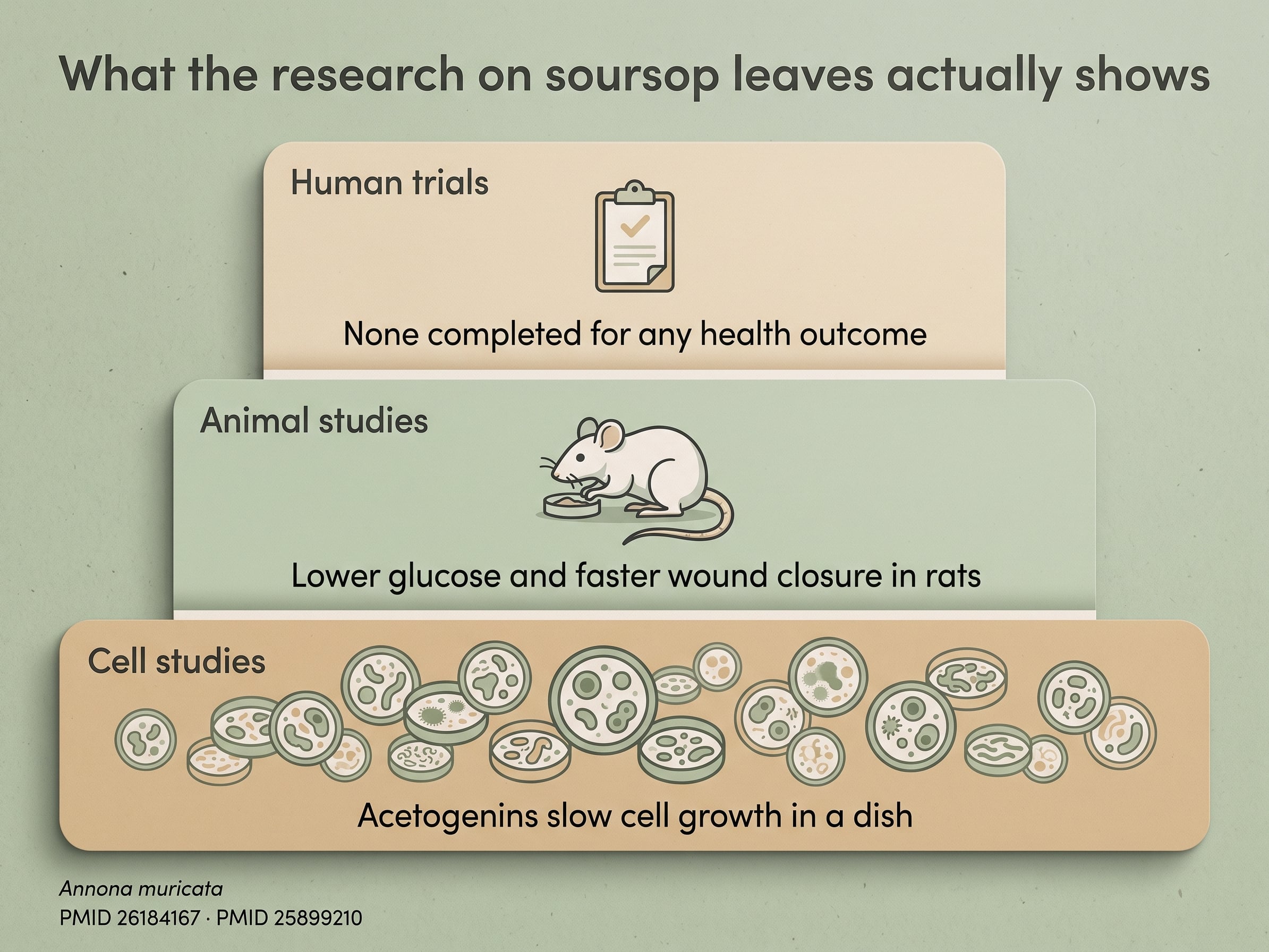
The research on Annona muricata leaf falls into three tiers, and the tiers should never be blended. Cell-culture studies are the most numerous. Animal studies are fewer. Controlled human trials on the leaves for any health outcome are, as of our September 2026 literature review, effectively absent.
Cell-culture findings
Most published work on soursop leaf extracts is in vitro. Acetogenins block mitochondrial complex I, which starves cells of ATP. In a petri dish, that mechanism slows the growth of many cell lines, including cancer cell lines. The 2015 review by Moghadamtousi and colleagues catalogues dozens of these experiments (PMID: 26184167). What that mechanism does not tell you is whether the same effect occurs in a person drinking tea, at what concentration, or at what cost to healthy neurons, which run on the same mitochondrial machinery.
Animal findings
Rodent studies have reported lower blood glucose in chemically induced diabetic rats given leaf extract, and a 2015 study found that a topical leaf extract accelerated wound closure in rats through heat shock protein 70 and antioxidant pathways (Moghadamtousi et al. 2015, International Journal of Surgery, PMID: 25899210). These are pharmacology signals, not health claims. Doses in these studies are typically far higher per kilogram than anything a cup of tea delivers, and rats are not people.
The cancer question, answered plainly
There are no completed human clinical trials showing that soursop leaves treat, cure, or prevent cancer. Memorial Sloan Kettering Cancer Center’s About Herbs database states the same position and adds a specific warning about neurotoxicity. Anyone who tells you otherwise is extrapolating from cell studies, and the compound doing the work in those cell studies is the same compound implicated in nerve damage in humans. We sell this herb, and we still say this on every page where it appears, because the alternative is dishonest.
What is annonacin and why does it matter?
Annonacin is a lipophilic acetogenin found in the leaves, fruit, and seeds of Annona muricata. It inhibits complex I of the mitochondrial electron transport chain; it crosses the blood-brain barrier in animal models, and it accumulates with repeated exposure. Those three properties together are why this compound has its own body of neurology literature.
The story starts in Guadeloupe. In 1999, Caparros-Lefebvre and colleagues published a case-control study in The Lancet showing that patients with an atypical, treatment-resistant form of parkinsonism on the island were far more likely to have regularly consumed Annonaceae fruit and herbal teas than matched controls (PMID: 10440304). In 2005, Champy and colleagues quantified the acetogenins in Annona muricata and estimated that a person eating one fruit or drinking one cup of leaf infusion daily for a year would ingest an amount of annonacin comparable to the dose that produced brain lesions in rats (Champy et al. 2005, Movement Disorders, PMID: 16078200).
The mechanism was then worked out in the laboratory. Annonacin causes tau protein to redistribute and accumulate in cultured neurons, a hallmark shared with several neurodegenerative conditions (Escobar-Khondiker et al. 2007, Journal of Neuroscience, PMID: 17634376). Lannuzel and colleagues consolidated the epidemiological and mechanistic evidence in a 2008 Movement Disorders paper (PMID: 18816693), and a 2016 study showed that chronic Annona muricata juice consumption aggravated tau phosphorylation in the brains of mice (Rottscholl et al. 2016, Journal of Neurochemistry, PMID: 27569447).
The honest reading of this literature is not that one cup of soursop leaf tea will harm you. It is that the risk is dose-dependent and cumulative, that the compound responsible is present in every preparation of the plant, and that no one has established a safe long-term intake. That uncertainty is the reason for every usage caution in the rest of this article.
What are the side effects of soursop leaves?
Reported and mechanistically plausible side effects of soursop leaves fall into six groups. Our editorial team has reviewed the case literature and the pharmacology, and this is the list we give customers before purchase.
- Neurological. Cumulative annonacin exposure is associated with atypical parkinsonism in populations with lifelong high intake. Movement symptoms, tremor, or unexplained stiffness are reasons to stop immediately and see a physician.
- Low blood pressure. Leaf preparations have hypotensive activity in animal models. Combined with antihypertensive medication, this can produce dizziness or fainting.
- Low blood sugar. Additive effects with insulin or oral antidiabetic drugs are plausible based on rodent data.
- Digestive upset. Nausea and loose stools are the most common short-term complaints in traditional-use accounts.
- Pregnancy and breastfeeding. Traditional sources describe uterine-stimulant activity. There is no safety data. Avoid entirely.
- Kidney and liver load. High-dose animal studies show organ stress. Anyone with existing kidney or liver conditions should not use this herb.
Drug interactions to raise with your pharmacist include antihypertensives, antidiabetics, sedatives, and any medication with a narrow therapeutic window. People with Parkinson’s disease or any movement disorder, and people with a family history of atypical parkinsonism, should treat soursop leaves as contraindicated.
Are soursop leaves safe to drink every day?
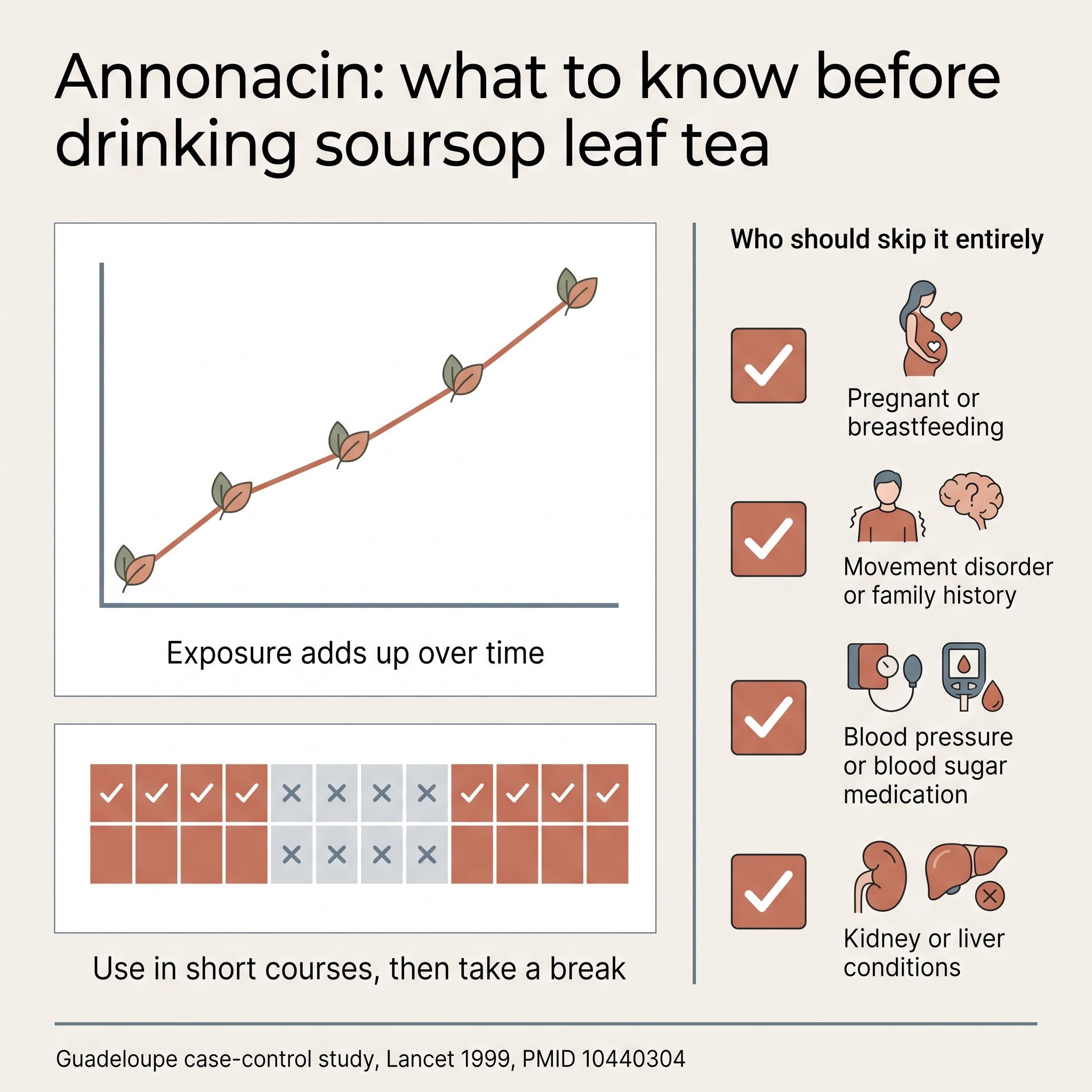
Herbalists generally do not recommend drinking soursop leaf tea every day on an open-ended basis. The reason is annonacin: its effects are cumulative, and the Guadeloupe research linked years of regular Annonaceae consumption, not occasional use, to neurological harm (Champy et al. 2005, PMID: 16078200). Talk to your healthcare provider before starting, and treat the herb as a short course rather than a daily habit.
- The traditional-use convention we see most often is two to four weeks of use followed by an equal or longer break.
- One cup per day during a course is the upper end of what most practitioners describe. More is not better with this plant.
- Stop at once if you notice tremor, stiffness, dizziness, or unusual fatigue, and tell your physician what you were taking.
- Skip it entirely if you are pregnant, breastfeeding, have a movement disorder, or take blood pressure or blood sugar medication.
Regular consumption differs from daily consumption only in degree. The acute effects, mainly digestive, show up quickly and resolve when you stop. The cumulative neurological concern builds silently over months and years, which is exactly why cycling matters.
How long does it take to notice anything from soursop leaf tea?
There is no human clinical timeline for soursop leaf tea, because there are no human trials measuring a benefit over time. Anyone quoting a number of days or weeks to results is guessing. What we can say from traditional practice is that the tea is used in short courses, and that the relevant timeline is the safety ceiling, not a benefit window. If you have used it for a month and feel no different, the sensible response is to stop, not to extend.
How do you make soursop leaf tea?
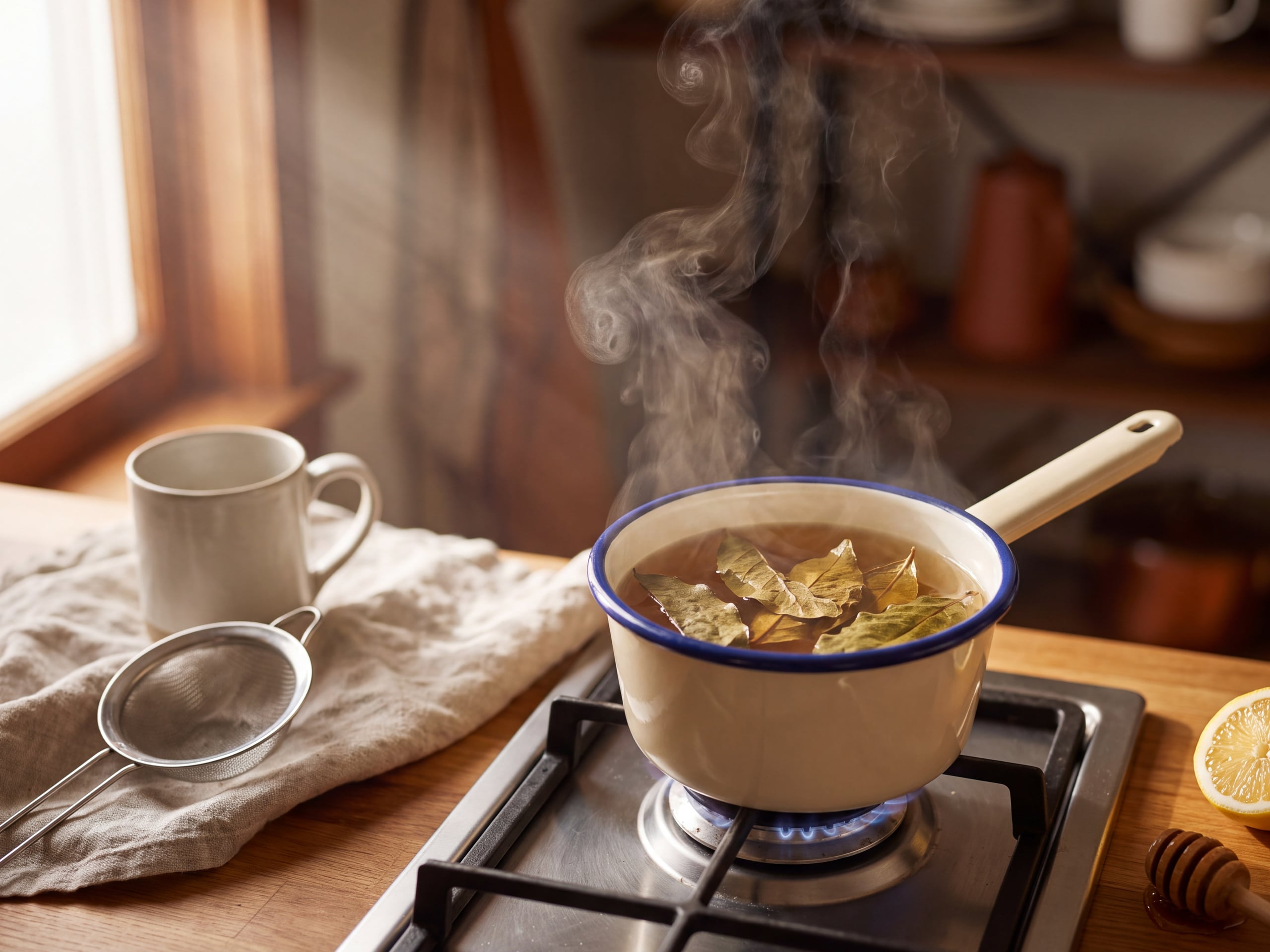
Soursop leaf tea is a decoction, not a steep. The leaves are tough, and their constituents extract slowly, so the traditional method simmers them.
- Rinse 3 to 5 dried Annona muricata leaves under cool water.
- Add the leaves to 2 cups (about 500 ml) of water in a small pot.
- Bring to a boil, then reduce to a gentle simmer for 10 to 15 minutes, until the water turns golden brown.
- Remove from heat and let it stand, covered, for 5 minutes.
- Strain into a cup. Add lemon or a little honey if you prefer.
- Drink one cup. Discard any leftover decoction rather than storing it.
From our hands-on preparation notes, the tea tastes earthy and slightly bitter with a faintly sweet finish. If it tastes sharply acrid or the leaves smell musty before brewing, the batch was poorly dried or stored and should not be used.
Soursop leaves vs soursop bitters: what is the difference?
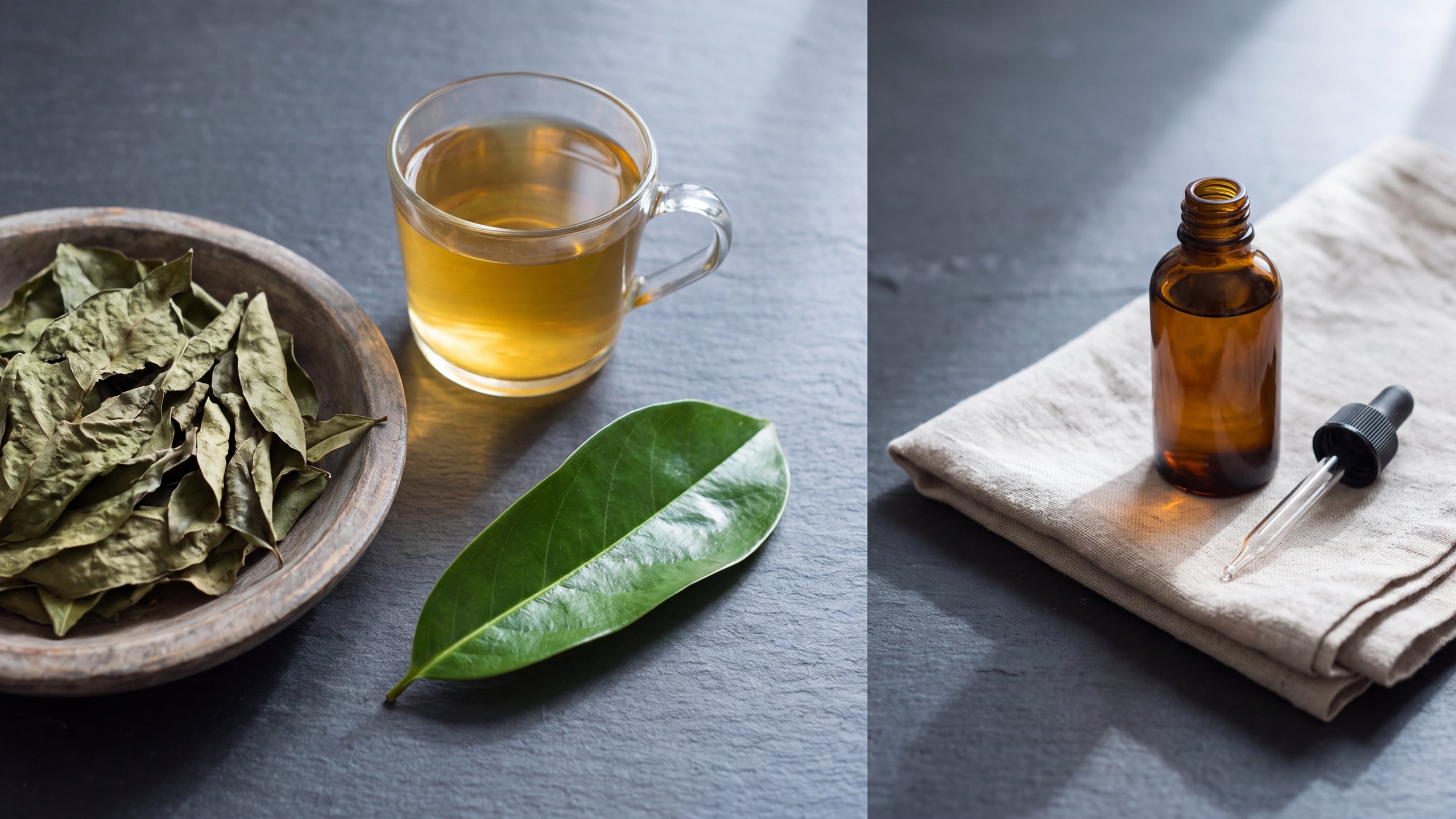
Soursop leaves are a single dried plant part prepared as a water decoction. Soursop bitters are an alcohol-based tincture, usually a blend of soursop with other bittering herbs, taken with a dropper. They share the same annonacin caution and differ in almost everything else.
| Feature | Soursop leaves | Soursop bitters |
|---|---|---|
| Form | Whole dried leaf | Liquid tincture in a dropper bottle |
| Plant material | Annona muricata leaf only | Soursop leaf or fruit plus other bitter herbs, varies by maker |
| Preparation | Simmered in water for 10 to 15 minutes | Pre-extracted in alcohol or glycerin, taken as drops |
| Alcohol content | None | Typically 20 to 40 percent unless glycerin-based |
| Concentration control | You control leaf count and simmer time | Set by the manufacturer, often undisclosed |
| Annonacin caution applies | Yes | Yes, and alcohol extraction may concentrate lipophilic acetogenins |
| Source: Back To Your Roots Herbs editorial review of product labels and Moghadamtousi et al. 2015 (PMID: 26184167). | ||
If you want to know exactly what you are taking and how much, whole leaves give you that control. Bitters trade transparency for convenience.
Can soursop leaves be used on the skin?
Yes, topical use is traditional. Caribbean and West African practice includes crushed fresh leaf poultices and cooled leaf decoctions applied to the skin. The rat wound-healing study cited above is the only controlled data point (PMID: 25899210), and there are no dermatological trials in humans. If you try a leaf-tea face rinse or a poultice, patch-test on the inner forearm for 24 hours first, and do not apply to broken skin. Topical use does not eliminate systemic exposure to acetogenins, so the same cycling logic applies.
How should you store dried soursop leaves?
Store dried Annona muricata leaves in an airtight glass jar away from light, heat, and moisture. Properly dried leaves keep their color and mild aroma for about a year. Discard leaves that smell musty, show white or grey spots, or crumble to powder, since those are signs of moisture damage or age. Never store brewed tea for more than a day.
How have soursop leaves been used traditionally?
Across the Caribbean, soursop leaf tea has been a household remedy for restlessness and sleep, and in Jamaica the leaves are sometimes placed in pillowcases for the same purpose. In West African practice, particularly in Nigeria and Ghana, the leaves have been used for fever, blood sugar concerns, and skin complaints. In the Philippines and Indonesia, decoctions have been used for digestive discomfort and as a general tonic. In Amazonian traditions, the leaves appear alongside the bark and roots in broader herbal formulas.
These are traditional uses, passed down through generations. They are not equivalent to clinically proven effects, and none of them has been confirmed in a controlled human trial. We record them because they are part of the plant’s history, not because they are evidence.
Quality and sourcing considerations
In our sourcing experience, the two things that most affect soursop leaf quality are drying and origin. Leaves dried slowly in shade retain a green to olive color and a soft, slightly sweet smell. Leaves that were sun-scorched or stored damp turn brown and lose aroma. We inspect every lot for color, aroma, and absence of mold before it is packaged in our Virginia Beach facility, and we reject lots that fail any of the three.
Origin matters because annonacin content varies by growing conditions and harvest timing, and no consumer can measure it at home. Buy from a supplier who names the country of origin and can answer questions about drying method. For customers who prefer a standardized encapsulated form of the same plant, our Graviola Capsules are made from Annona muricata leaf and carry the same usage cautions described here.
Frequently asked questions about soursop leaves
Are soursop leaves the same as graviola leaves?
Yes. Soursop, graviola, and guanabana are regional names for the same species, Annona muricata. Products labeled with any of these names contain the same plant and the same acetogenins.
Can soursop leaves help with cancer?
No completed human clinical trial shows that soursop leaves treat, cure, or prevent cancer. The cell-culture studies that circulate online use isolated acetogenins on cell lines, and the same compounds are linked to neurotoxicity in humans. Memorial Sloan Kettering Cancer Center advises against relying on this plant for cancer.
Are soursop leaves safe to drink daily?
Open-ended daily use is not recommended because annonacin exposure is cumulative. Herbalists describe short courses of two to four weeks with breaks, at no more than one cup per day, after checking with a healthcare provider.
What are the side effects of soursop leaf tea?
Short-term effects include nausea and loose stools. Longer-term concerns are neurological, tied to annonacin, along with low blood pressure and low blood sugar in people on related medications. Pregnant and breastfeeding women and anyone with a movement disorder should avoid it.
How many soursop leaves do you boil for tea?
Three to five dried leaves in about two cups of water, simmered for 10 to 15 minutes, is the traditional preparation. That makes one serving.
What is annonacin?
Annonacin is an acetogenin in Annona muricata that inhibits mitochondrial complex I. Epidemiological research in Guadeloupe linked chronic Annonaceae consumption to atypical parkinsonism, and laboratory studies show annonacin causes tau pathology in neurons.
Is soursop leaf tea safe during pregnancy?
No. Traditional sources describe uterine-stimulant activity; there is no safety data, and the neurotoxicity concern applies to a developing nervous system as well. Avoid it during pregnancy and breastfeeding.
Related Reading
Continue with our articles on the best herbs for the immune system, herbal teas for liver health, and moringa and diabetes.
Disclaimer: These statements have not been evaluated by the Food and Drug Administration. This product is not intended to diagnose, treat, cure, or prevent any disease. Consult your healthcare provider before use, especially if you are pregnant, nursing, taking medication, or have a medical condition.