Key Takeaways
- Curcumin, the principal curcuminoid in Curcuma longa, has been studied as an add-on to standard ulcerative colitis therapy, never as a replacement for it.
- Clinical trials in mild-to-moderate ulcerative colitis have used roughly 1.5 to 3 grams of curcumin daily for remission induction and about 2 grams daily for maintenance.
- Culinary turmeric rhizome powder carries only about 2 to 8 percent curcuminoids, so one teaspoon supplies roughly 200 milligrams of curcumin.
- Curcumin absorbs poorly on its own, which is why trial formulations pair it with piperine or use phytosome and enteric-coated delivery.
- Curcumin has mild blood-thinning activity, which matters if a flare already involves bleeding. Speak with your gastroenterologist before adding it.
Anyone managing ulcerative colitis eventually runs into turmeric. It comes up in patient forums, in gastroenterology waiting rooms, and in the supplement aisle, usually attached to a claim that sounds either too good or too vague to act on. The research picture is more specific than that, and also more limited than most articles admit.
This article covers what curcumin does inside the colon, what doses the randomized trials actually used, how much curcumin is in the turmeric powder already in your kitchen, where the evidence is weaker than the headlines suggest, and what to check on a supplement label before buying. Our editorial team sources Curcuma longa rhizome directly and reviews the primary literature on it, so this piece leans on both the published trials and what we see on the sourcing side.
What does turmeric actually do in ulcerative colitis?
Turmeric (Curcuma longa) is a rhizome in the ginger family whose principal active compound, curcumin, has been studied as an adjunctive therapy alongside standard ulcerative colitis medication. In randomized placebo-controlled trials, curcumin added to mesalamine or sulfasalazine was associated with higher rates of clinical remission than the standard medication alone (Chandan et al. 2019, Annals of Gastroenterology, PMID: 31892798). It is not a replacement for prescribed therapy, and no trial has tested it as one.
That is the honest one-paragraph answer. Everything below adds precision to it.
Ulcerative colitis is a long-term inflammatory condition of the colon and rectum, marked by inflammation and small ulcers in the mucosal lining. Unlike Crohn’s disease, it does not typically affect the full thickness of the intestinal wall or extend into the small intestine. The course of the condition alternates between periods of active symptoms, called flares, and periods of remission. Standard management uses aminosalicylates such as mesalamine, corticosteroids, immunosuppressants, and biologic agents. Interest in curcumin as an addition rather than a substitute comes from the fact that a meaningful share of patients do not reach or hold remission on standard therapy alone.
How much curcumin is in turmeric powder, and why does it matter?
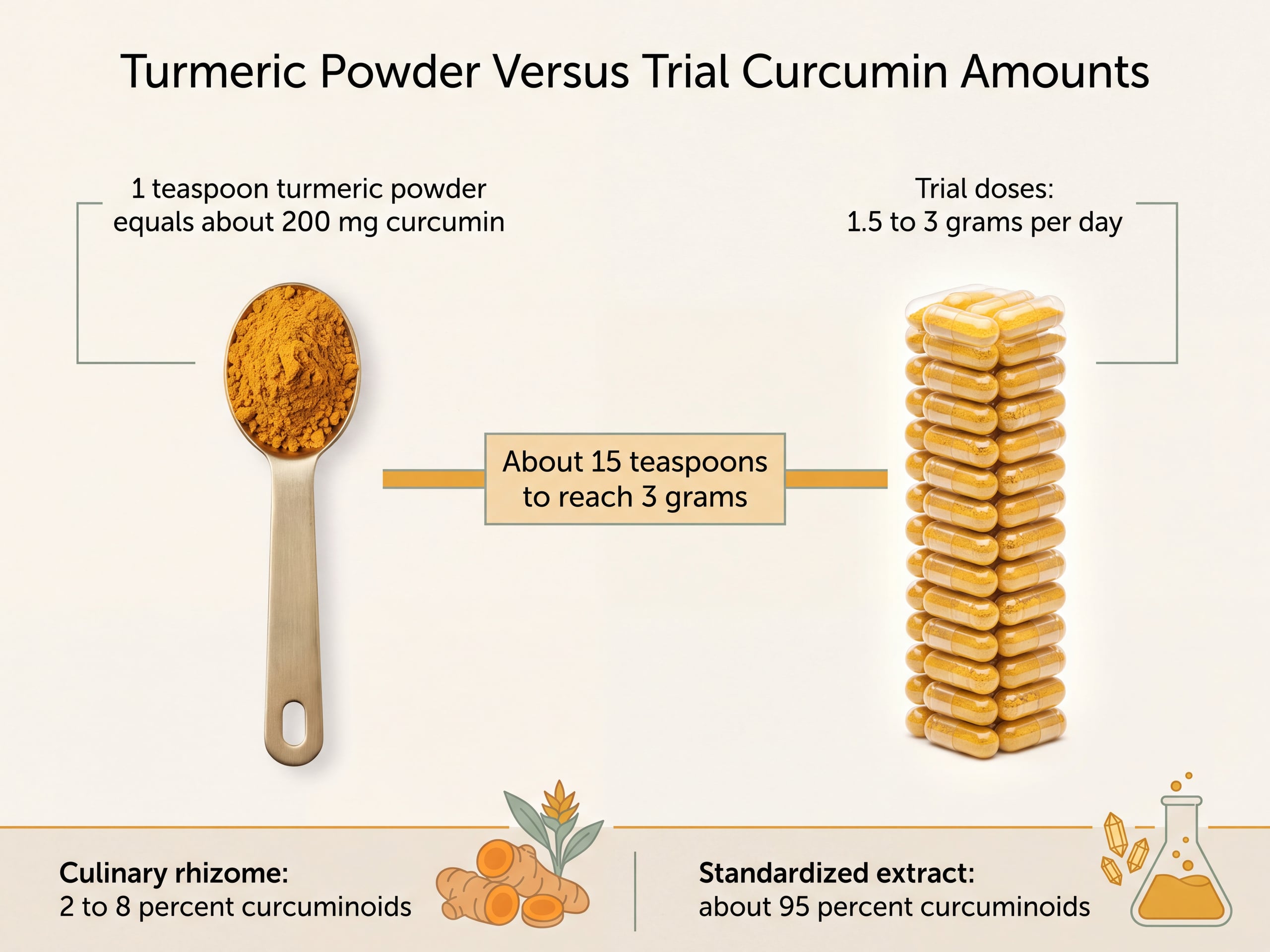
One level teaspoon of turmeric rhizome powder supplies roughly 200 milligrams of curcumin. Culinary turmeric contains only about 2 to 8 percent curcuminoids by weight, while standardized extracts used in clinical trials are concentrated to around 95 percent curcuminoids. That difference is the single most practical fact in this entire topic, and it is the one most often skipped.
The teaspoon arithmetic
Work the numbers. Trials of active ulcerative colitis have used 1.5 to 3 grams of curcumin per day. At roughly 200 milligrams of curcumin per teaspoon of rhizome powder, reaching 3 grams would take somewhere near fifteen teaspoons of turmeric daily. Nobody cooks that way, and nobody should try to.
This is not an argument against cooking with turmeric. Culinary use contributes polyphenols to the diet and has a long record of traditional use in Ayurveda and Traditional Chinese Medicine. It is an argument against expecting a curry to do what a 3-gram standardized dose did in a trial. Those are two different interventions that happen to share a plant.
Spice versus standardized extract
| Form | Typical curcuminoid content | Daily amount reported in UC trials | Absorption note |
|---|---|---|---|
| Culinary turmeric rhizome powder | About 2 to 8 percent curcuminoids | Not established in UC trials | Low. Curcumin is poorly water soluble and rapidly metabolized |
| Standardized 95 percent curcuminoid extract | About 95 percent curcuminoids | 1.5 g/day for 8 weeks (PMID: 31802559) up to 3 g/day for 4 weeks (PMID: 25724700) | Still limited without an absorption strategy |
| Curcumin paired with piperine | Varies by product | Not separately established in UC trials | Piperine from black pepper slows curcumin’s metabolic clearance |
| Enteric-coated curcumin with QingDai | Combination botanical preparation | 3 g/day for 8 weeks (PMID: 37302449) | Enteric coating delays release until the lower digestive tract |
| Curcumin enema (NCB-02) | Localized preparation | Studied for distal and left-sided disease | Bypasses systemic absorption entirely by acting locally |
| Curcumin for maintenance of remission | About 95 percent curcuminoids | 2 g/day for 6 months (PMID: 17101300) | Split as 1 g after breakfast and 1 g after the evening meal |
| Source: doses as reported in the cited randomized controlled trials. Curcuminoid content ranges reflect published analyses of rhizome material and commercial standardized extracts. Amounts listed are what researchers administered under supervision, not recommendations. | |||
How does curcumin work in the colon?
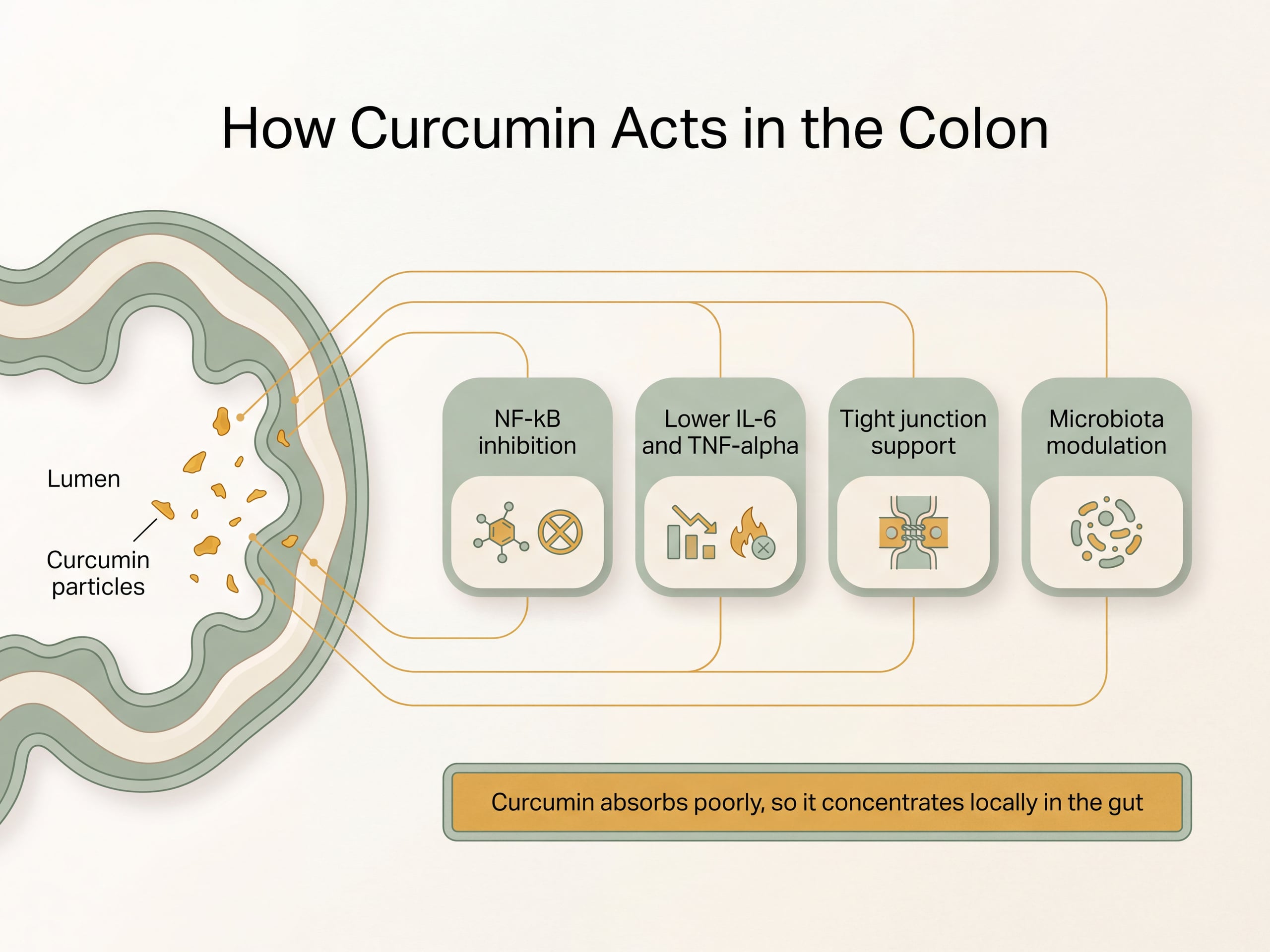
Curcumin acts on several inflammatory pathways at once rather than on a single target, and a good deal of its activity in ulcerative colitis appears to be local to the gut rather than systemic. Because so little curcumin reaches the bloodstream intact, the concentration it achieves inside the gastrointestinal tract is disproportionately high relative to its plasma levels. For a condition confined to the colon and rectum, that quirk of poor bioavailability works in its favor.
Inflammatory signaling
Curcumin inhibits Nuclear Factor-kappa B (NF-kB), a transcription factor complex that governs the expression of many pro-inflammatory genes. Downstream of that inhibition, curcumin reduces the expression of cytokines that run high in active ulcerative colitis, including Interleukin-1 beta (IL-1B), Interleukin-6 (IL-6), Interleukin-8 (IL-8), and Tumor Necrosis Factor-alpha (TNF-a). It also inhibits cyclooxygenase-2 (COX-2) and lipoxygenase (LOX), two enzymes involved in producing inflammatory mediators.
These are not theoretical. In a randomized double-blind trial of 70 patients with mild-to-moderate ulcerative colitis, 1,500 milligrams of curcumin daily for 8 weeks was associated with reductions in high-sensitivity C-reactive protein and erythrocyte sedimentation rate compared with placebo, alongside improvement in the Simple Clinical Colitis Activity Index (Sadeghi et al. 2019, Phytotherapy Research, PMID: 31802559). Serum TNF-alpha, notably, did not change significantly in that trial. Mechanism and measured outcome do not always line up neatly, and it is worth saying so.
Antioxidant and immune-regulating actions
Oxidative stress contributes to mucosal tissue damage in ulcerative colitis. Curcumin scavenges free radicals directly and increases the activity of the body’s endogenous antioxidant enzymes. It also modulates immune cell behavior, influencing T helper cell differentiation and macrophage polarization, both of which shape the inflammatory response inside the colon.
One newer mechanistic finding is worth flagging because almost nothing written for a general audience mentions it. In a placebo-controlled trial of an enteric-coated curcumin and QingDai combination, the treatment upregulated mucosal cytochrome P450 1A1 (CYP1A1) expression, pointing toward activation of the aryl hydrocarbon receptor pathway. That upregulation was not seen in patients on placebo, mesalamine, or biologics (Ben-Horin et al. 2023, Clinical Gastroenterology and Hepatology, PMID: 37302449). It suggests curcumin combinations may act through a route that standard therapy does not touch.
Gut microbiota and the intestinal barrier
Curcumin shifts the composition of the gut microbiota, and the research literature associates that shift with increases in short-chain fatty acid-producing bacteria. Separately, curcumin appears to support the integrity of the intestinal barrier by normalizing the expression of tight junction proteins. A well-sealed barrier limits the passage of bacterial products from the gut lumen into the tissue beneath, which is one of the drivers that keeps inflammation self-sustaining in ulcerative colitis.
What does the clinical research actually show?
Several randomized controlled trials and at least five systematic reviews have examined curcumin as an add-on in ulcerative colitis. The direction of the evidence is consistent. The strength of it is more mixed than most summaries allow.
Inducing remission in active disease
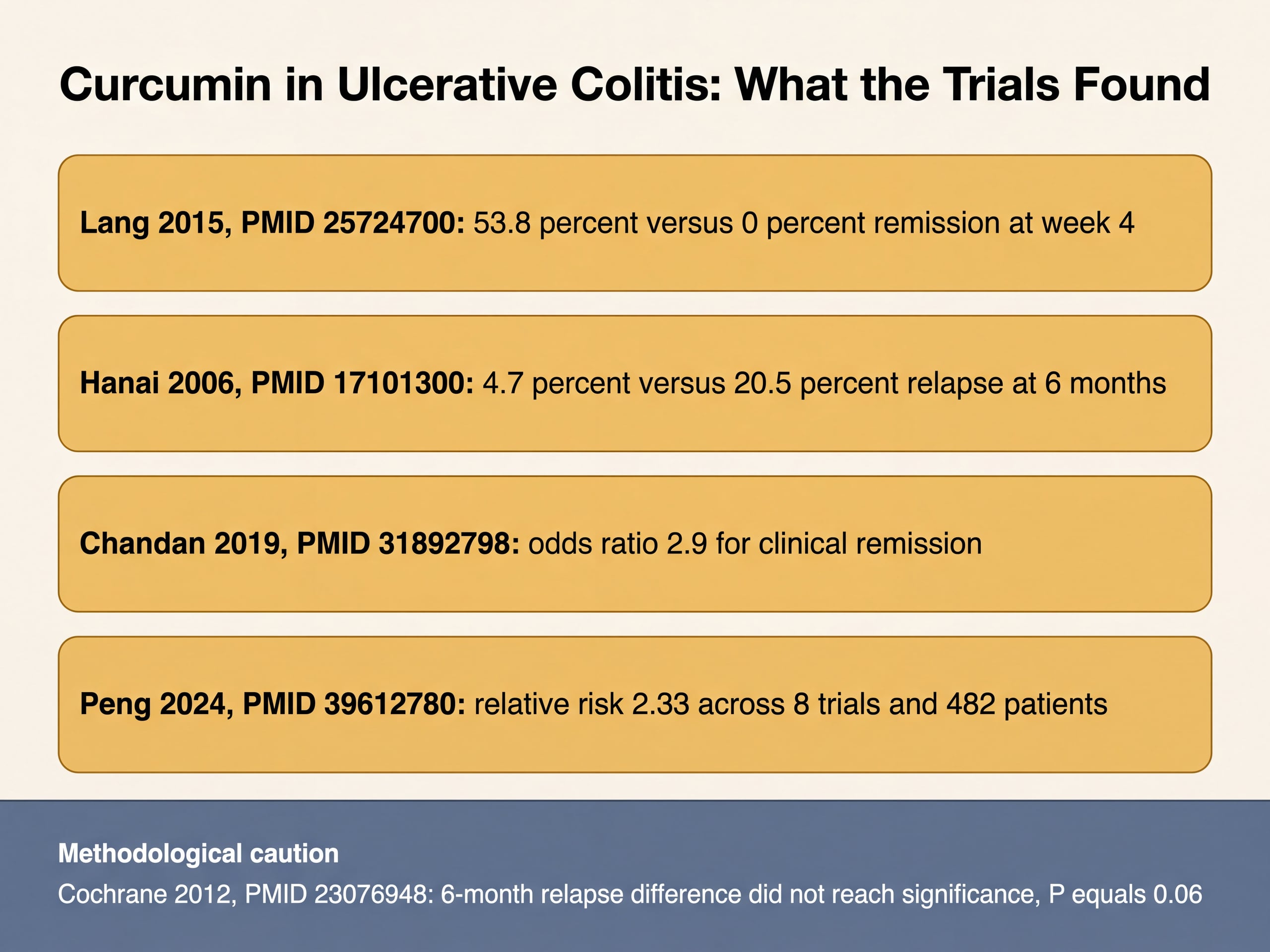
The most cited induction trial randomized 50 patients with active mild-to-moderate ulcerative colitis who had not responded to two additional weeks of maximum-dose mesalamine. Patients received either 3 grams of curcumin daily or placebo for one month, with mesalamine continued in both arms. At week 4, 53.8 percent of the curcumin group reached clinical remission compared with none of the placebo group. Endoscopic remission was observed in 38 percent of evaluated curcumin patients and none of the placebo patients (Lang et al. 2015, Clinical Gastroenterology and Hepatology, PMID: 25724700).
Pooled analyses point the same way. A meta-analysis of seven studies covering 380 patients reported roughly threefold better odds of clinical remission with adjunctive curcumin (odds ratio 2.9, 95 percent confidence interval 1.5 to 5.5) and comparable odds for clinical response (Chandan et al. 2019, Annals of Gastroenterology, PMID: 31892798). An updated meta-analysis of eight trials covering 482 patients found a relative risk of 2.33 for clinical remission, with no serious adverse events reported (Peng et al. 2024, Explore: The Journal of Science and Healing, PMID: 39612780).
That last paper contains a detail worth pulling out. Its subgroup analysis found a positive correlation between dose and efficacy, and found that administration method and follow-up duration did not significantly change the pooled result. Several consumer health articles state that dose does not appear to matter much for turmeric. On this specific question, in this specific condition, the pooled data suggests otherwise.
Maintaining remission
The maintenance evidence traces back largely to one trial. Eighty-nine patients with quiescent ulcerative colitis received either 2 grams of curcumin daily, split as 1 gram after breakfast and 1 gram after the evening meal, or placebo, both on top of sulfasalazine or mesalamine, for 6 months. Relapse occurred in 2 of 43 curcumin patients (4.65 percent) versus 8 of 39 placebo patients (20.51 percent), and both the clinical activity index and the endoscopic index improved (Hanai et al. 2006, Clinical Gastroenterology and Hepatology, PMID: 17101300).
Where the evidence is weaker than it looks
Here is the part that most articles on this topic leave out, and it is the part a person weighing a decision most needs.
When the Cochrane group reviewed curcumin for maintenance of remission in ulcerative colitis, only that single trial met the inclusion criteria. Under Cochrane’s own analysis, the 6-month relapse difference came out at a relative risk of 0.24 with a 95 percent confidence interval of 0.05 to 1.09 and a P value of 0.06, which does not reach statistical significance. At 12 months there was no significant difference either, with 22 percent of curcumin patients relapsing versus 32 percent on placebo (Kumar et al. 2012, Cochrane Database of Systematic Reviews, PMID: 23076948). The clinical and endoscopic index improvements did reach significance. The headline relapse figure, on its own, did not.
A second methodological caution comes from a meta-analysis that ran the same induction data two ways. Using a Mantel-Haenszel random effects model, curcumin was significantly superior to placebo in the per-protocol analysis. Using a beta-binomial random effects model, which handles zero-event cells more accurately, neither the per-protocol nor the intention-to-treat analysis remained significant (Grammatikopoulou et al. 2018, Nutrients, PMID: 30424514). The authors’ conclusion was blunt: on the evidence available at that time, oral curcumin did not appear superior to placebo for attaining remission.
More recent and larger pooled analyses have landed on the positive side, including a 2025 review of 13 placebo-controlled trials that found significant efficacy for clinical remission and response in ulcerative colitis while reporting inconclusive results for Crohn’s disease (Mohseni et al. 2025, Frontiers in Nutrition, PMID: 40196017). A 2020 systematic review of six trials likewise reported curcumin was well tolerated with no serious side effects across the included studies (Coelho et al. 2020, Nutrients, PMID: 32751776).
Read across all of it, the fair summary is this. The signal is real, and it repeats. The trials are small, the heterogeneity between them is high, and the strength of the effect depends on which statistical method you apply. That is a reasonable basis for a conversation with a gastroenterologist. It is not a basis for changing anything on your own.
What curcumin dose has been used in ulcerative colitis studies?
Across the published trials, oral curcumin doses for active mild-to-moderate ulcerative colitis have ranged from 1.5 to 3 grams per day, and maintenance dosing has centered on 2 grams per day. There is no established standard dose, because trials have varied in formulation, duration, and patient population.
Doses were typically divided across the day and taken with meals. In the Hanai maintenance trial, the 2-gram daily total was split into two 1-gram doses. In the Lang induction trial, the 3-gram daily total was given alongside continued mesalamine. Some research has examined doses up to 10 grams daily with limited adverse effects, though nothing about that is a recommendation for unsupervised use.
How long before the studies assessed a response
Trial durations cluster between 4 weeks and 8 weeks for induction and run to 6 months for maintenance. The induction trial that produced the most striking remission figures assessed its primary outcome at week 4. Others ran 8 weeks. Nothing in this literature supports evaluating results after a few days. If a healthcare provider agrees curcumin is reasonable in a given case, the published timeframes suggest giving it at least a month or two before drawing conclusions.
What are the bio-enhanced curcumin formulations?
Curcumin’s poor absorption has driven a whole category of reformulation, and the labels can be hard to decode. Here is what the main terms mean.
- Piperine-paired curcumin. Piperine, the pungent alkaloid in black pepper (Piper nigrum), slows the metabolic clearance of curcumin and raises how much stays in circulation. This is the oldest and most common approach.
- Phytosome curcumin. Curcumin bound to a phospholipid carrier, often sold under trade names. The phospholipid complex improves passage across the intestinal wall, so these products use lower stated milligram amounts than unformulated extracts.
- Nanomicellar and nanoparticle curcumin. Curcumin dispersed into micelles or particles small enough to remain suspended in water, which addresses its poor water solubility directly.
- Enteric-coated curcumin. A coating that resists stomach acid so the capsule releases its contents further along the digestive tract. The curcumin and QingDai trial used an enteric-coated preparation, which matters for a condition centered in the colon.
- Localized preparations. Curcumin enemas, including the NCB-02 preparation, have been studied for distal and left-sided disease. These deliver curcumin to the inflamed tissue directly rather than relying on absorption and redistribution.
A practical caution on the bio-enhanced products. Because they change how much curcumin reaches circulation, a 100 milligram bio-enhanced dose is not directly comparable to a 100 milligram dose of plain extract. Comparing products by milligram alone will mislead you. So will assuming a higher-absorption product is automatically preferable in a condition where local gut concentration is part of the point.
How do you know a curcumin supplement is good quality?
A trustworthy curcumin or turmeric product states its curcuminoid percentage on the label, carries third-party testing for identity and heavy metals, and names the origin of the raw material. Turmeric rhizome is a root crop, which means it takes up whatever is in the soil it grew in, and it has a documented history of adulteration with synthetic colorants. Those two facts are why testing matters more here than it does for many botanicals.
What third-party testing actually covers
The phrase gets used loosely, so it helps to know what a real testing program checks:
- Identity. Confirms the material is Curcuma longa and not a related species or a substituted root. Botanical identity testing is the foundation everything else sits on.
- Heavy metals. Lead, arsenic, cadmium, and mercury. Lead is the specific concern with turmeric because lead chromate has historically been used as an adulterant to brighten color in some supply chains.
- Microbial limits. Total plate count, yeast and mold, and specific pathogens.
- Pesticide residue. Relevant for conventionally grown material and worth confirming even on organic-certified lots.
- Curcuminoid assay. The actual measured curcuminoid percentage, rather than a number carried over from a spec sheet.
Reading a curcumin label
Four things are worth checking before anything else. First, whether the product states a curcuminoid percentage at all. A label that says only “turmeric 500 mg” tells you nothing about curcumin content. Second, whether the milligram figure refers to the whole rhizome powder or to a standardized extract, because those differ by more than an order of magnitude. Third, whether an absorption enhancer is present and named. Fourth, whether the manufacturer will provide a certificate of analysis for the specific lot you are buying.
In our own sourcing work, we have found that origin is the variable most people never ask about and most worth asking about. Rhizome from different growing regions differs measurably in curcuminoid content, and the gap between a low lot and a high lot is wide enough to change what a given teaspoon actually delivers.
Is turmeric safe to take during an ulcerative colitis flare?
Turmeric is generally well tolerated, but an active flare is the specific circumstance where added caution is warranted, and the reason is bleeding risk rather than the herb itself. Here is what to weigh, and all of it belongs in a conversation with the physician managing your care:
- Bleeding. Curcumin has mild anticoagulant activity. An active ulcerative colitis flare frequently involves bloody stools already, so adding a compound with blood-thinning properties during a flare is a decision for your gastroenterologist and not one to make independently.
- Symptom overlap. The most common side effects of higher-dose curcumin are stomach pain, nausea, bloating, and diarrhea. Those are the same symptoms a flare produces, which makes it genuinely difficult to tell whether a supplement is helping, doing nothing, or contributing.
- Adjunct only. Every trial discussed in this article gave curcumin on top of continued standard medication. None tested it as a substitute, and none supports reducing prescribed therapy.
- Medication review first. The classes that matter most are aminosalicylates such as mesalamine, biologics including adalimumab and infliximab, immunosuppressants including tacrolimus and azathioprine, and anticoagulants such as warfarin.
- Timing around procedures. If a colonoscopy, biopsy, or surgery is scheduled, tell the team you are taking curcumin. Anticoagulant activity is relevant to procedural planning.
What are the side effects, interactions, and precautions?
Across the systematic reviews, curcumin has been reported as well tolerated with no serious adverse events at the doses studied. That is a meaningful safety record. It is not the same as no risk, and the interaction list is longer than most people expect.
Common side effects
Mild gastrointestinal effects are the most frequently reported, particularly at higher doses. These include stomach pain, nausea, diarrhea, constipation, and a sensation of abdominal bulging. Allergic reactions are uncommon. Isolated case reports have described abnormal heart rhythm and liver injury, though other research points toward protective effects on the liver, and newer work on highly absorbable formulations suggests serious liver injury is rare after weeks to months of use. Periodic liver function monitoring is a reasonable request for anyone on long-term high-dose curcumin, particularly alongside other medications.
Medication interactions
- Anticoagulants and antiplatelet drugs. Warfarin, clopidogrel, and aspirin. Combined use may increase bleeding risk.
- Biologics and immunosuppressants. High curcumin intake may amplify the effects of immunosuppressive agents such as tacrolimus. Anyone on adalimumab, infliximab, or a similar biologic should raise curcumin specifically with their prescriber rather than assuming a botanical is neutral.
- Diabetes medications. Curcumin may lower blood glucose, which raises the possibility of hypoglycemia in combination with glucose-lowering drugs.
- Drugs metabolized by the liver. Curcumin affects cytochrome P450 enzyme subtypes involved in drug metabolism, which can alter how other medications behave. Piperine-containing formulations compound this, because piperine also affects drug metabolism.
- Iron. Some research indicates curcumin may interfere with iron absorption, which is relevant given how common iron deficiency is in ulcerative colitis.
Who should exercise particular caution?
Individuals with gallstones or bile duct obstruction should be careful, since curcumin stimulates bile production and could aggravate symptoms. Turmeric contains oxalates, which can contribute to kidney stone formation in susceptible people. Anyone with pre-existing liver conditions warrants closer monitoring. Because research on medicinal doses during pregnancy and lactation is insufficient, supplemental doses are generally avoided in those circumstances, though culinary use is a separate matter.
What about turmeric tea and golden milk?
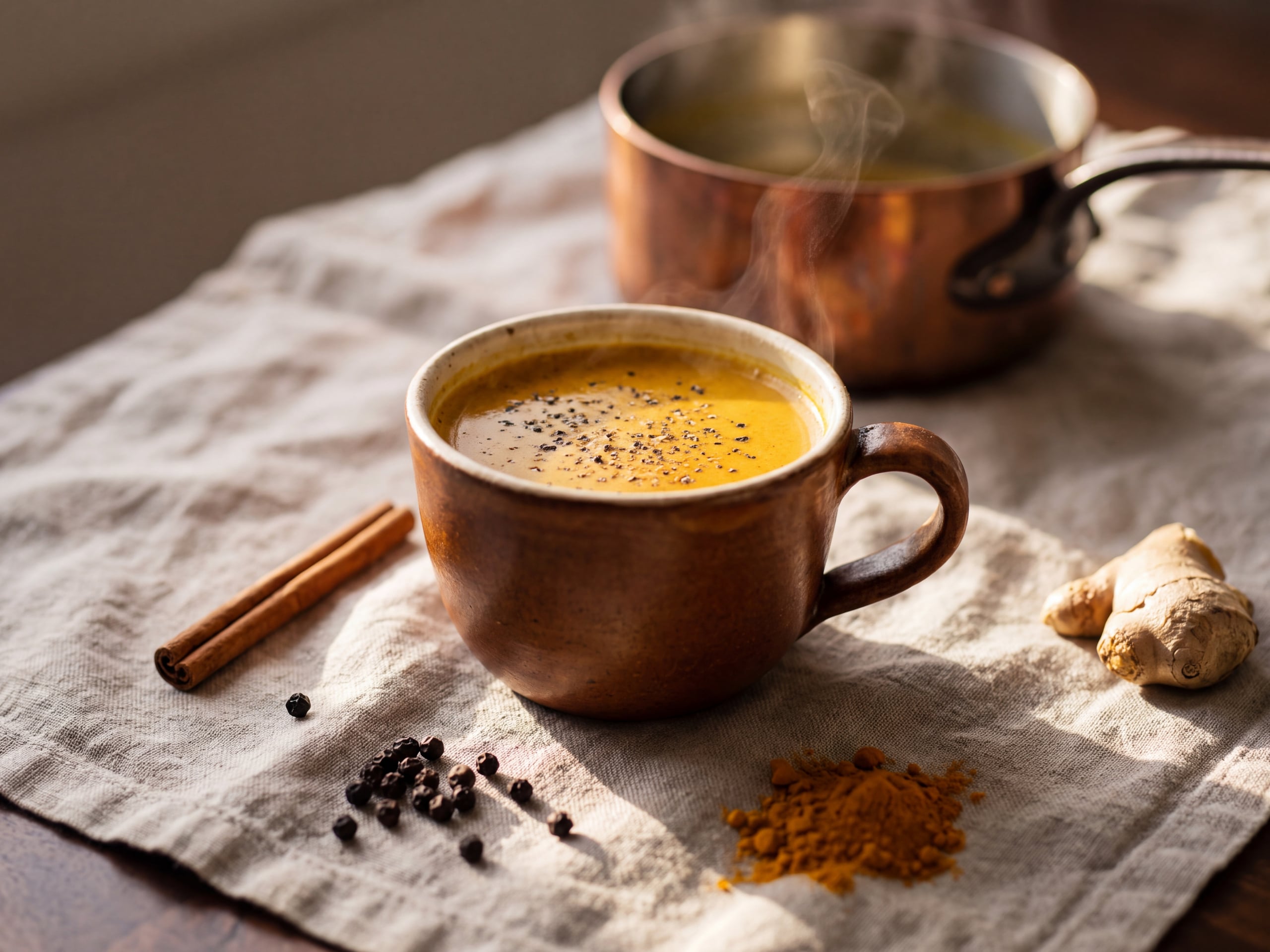
Turmeric tea and golden milk are pleasant, traditional, and useful for general dietary polyphenol intake, but they do not approach the curcumin amounts used in ulcerative colitis trials. This is worth stating plainly because a great deal of writing on this topic blurs the line.
Golden milk, sometimes called a golden latte, is turmeric warmed into milk, often with black pepper, ginger, and cinnamon. Adding black pepper is not decorative. The piperine in it is the same absorption enhancer used in supplement formulations, and the traditional pairing predates the pharmacokinetic explanation for it by centuries. Warm liquid and a fat source also help, since curcumin is fat soluble.
None of that closes the arithmetic gap. A cup made with a teaspoon of turmeric supplies roughly 200 milligrams of curcumin against trial doses of 1,500 to 3,000 milligrams. Enjoy the tea for what it is. Our editorial team’s position is that framing a beverage as a substitute for a studied dose does readers a disservice, whatever it does for engagement.
One practical caution during an active flare: dairy, high-fiber additions, and very hot beverages are poorly tolerated by some people with ulcerative colitis, independent of the turmeric.
What other spices and supplements do people with ulcerative colitis ask about?
Two questions come up constantly alongside turmeric, and both deserve a direct answer rather than a deflection.
Which spices give people trouble? There is no universal list, and the evidence for spice-specific harm in ulcerative colitis is thin. What clinicians tend to report is that capsaicin-containing spices such as chili and cayenne are more often flagged by patients during active flares, while aromatic culinary spices including turmeric, ginger, cumin, coriander, and fennel are usually tolerated. Individual tolerance varies enough that a food and symptom diary is more useful than any published list.
Which supplements warrant extra care? The categories that most often prompt caution in ulcerative colitis are high-dose fiber supplements during an active flare, supplements with anticoagulant activity when bleeding is present, and any product with an incomplete or unverifiable ingredient list. Iron supplementation is common in ulcerative colitis because of blood loss, but oral iron is itself a frequent source of gastrointestinal complaints, which is a conversation for a prescriber rather than a shelf label. The general principle holds across all of them: with a diagnosed inflammatory bowel condition, supplements belong in the same conversation as prescriptions.
How does turmeric compare with other botanicals studied for gut inflammation?
Curcumin has the largest randomized trial base of any botanical studied in ulcerative colitis, which is why it dominates this conversation. Several others have been examined in the broader herbal medicine literature for active ulcerative colitis, including preparations built around Boswellia serrata, Andrographis paniculata, wheatgrass juice, and the traditional Chinese preparation QingDai, also known as indigo naturalis. A systematic review of herbal medicines for active ulcerative colitis assessed this group collectively (PMID: 38612967).
Boswellia is the one most often raised alongside turmeric, because its boswellic acids act on the 5-lipoxygenase pathway rather than primarily on NF-kB, which is a different mechanistic route into the same inflammatory process. The trial base for boswellia in ulcerative colitis specifically is considerably smaller than curcumin’s, and it should not be presented as an equivalent body of evidence.
The comparison that matters is not really turmeric against another herb. It is any of these against the standard of care, and on that comparison the entire botanical literature positions itself as adjunctive.

Sourcing and quality considerations
Our organic turmeric root powder comes from Erode in Tamil Nadu, India, a district with geographical indication recognition for turmeric and coordinates near 11.34 degrees north, 77.72 degrees east. That specificity is not decoration. Curcuminoid content in Curcuma longa varies with cultivar, soil, and post-harvest handling, and premium South Indian rhizome typically assays in the 4 to 7 percent curcuminoid range, toward the upper end of what culinary-grade material delivers.
From our hands-on assessment, three things separate good rhizome powder from ordinary rhizome powder. Color depth that comes from curcuminoid content rather than added colorant. Aroma that still carries the resinous, slightly bitter top note of fresh rhizome instead of smelling flat. And a particle grind consistent enough that it disperses rather than clumping. None of those replace a laboratory assay, but they are what we check before an assay is ever ordered.
Anyone using turmeric powder as a culinary ingredient should understand what it is and is not. It is a whole-rhizome food with a documented traditional record in Ayurveda and Traditional Chinese Medicine and a curcuminoid content in the single-digit percentages. It is not a standardized clinical extract, and we will not describe it as one.
Frequently asked questions
Can turmeric reduce inflammation in ulcerative colitis?
Research indicates curcumin acts on inflammatory signaling pathways relevant to ulcerative colitis, including NF-kB inhibition and reduction of pro-inflammatory cytokines. In a randomized trial, 1,500 milligrams daily for 8 weeks was associated with reductions in high-sensitivity C-reactive protein and erythrocyte sedimentation rate compared with placebo (PMID: 31802559). These findings come from adjunctive use alongside standard medication.
What dose of curcumin was used in ulcerative colitis studies?
Trials in active mild-to-moderate disease used 1.5 to 3 grams of curcumin daily, typically divided and taken with meals over 4 to 8 weeks. The main maintenance trial used 2 grams daily for 6 months, split into two 1-gram doses. There is no established standard dose, and these figures describe what researchers administered under supervision.
Does curcumin interact with mesalamine or other ulcerative colitis medications?
Curcumin was given alongside mesalamine or sulfasalazine in the trials without serious adverse events reported. That said, curcumin affects cytochrome P450 drug-metabolizing enzymes, has mild anticoagulant activity, and may amplify the effects of immunosuppressants such as tacrolimus. Anyone on aminosalicylates, biologics, immunosuppressants, or anticoagulants should review curcumin with their prescriber.
Is curcumin better than turmeric for ulcerative colitis?
They are not interchangeable. Turmeric rhizome powder contains roughly 2 to 8 percent curcuminoids, so a teaspoon supplies about 200 milligrams of curcumin. Standardized extracts used in trials are concentrated near 95 percent curcuminoids and were dosed at 1,500 to 3,000 milligrams daily. Reaching a trial-level dose through culinary turmeric alone is not realistic.
Can turmeric worsen diarrhea or stomach pain?
Higher doses of curcumin can cause stomach pain, nausea, diarrhea, and bloating in some people. Because those overlap with ulcerative colitis symptoms, distinguishing a supplement effect from disease activity is difficult, which is one reason starting anything new during an active flare warrants medical supervision.
Should curcumin be taken with black pepper?
Piperine from black pepper (Piper nigrum) slows curcumin’s metabolic clearance and is used in many formulations for that reason. Piperine also affects the metabolism of other drugs, so anyone taking prescription medication should raise piperine-containing products with a pharmacist or physician rather than assuming the pairing is inert.
Can curcumin replace standard ulcerative colitis treatment?
No. Every trial referenced here administered curcumin in addition to continued standard therapy, and none evaluated it as a replacement. Reducing or stopping prescribed medication on the basis of supplement research is not supported by this literature.
How long does it take to see results in the studies?
Induction trials assessed primary outcomes at 4 to 8 weeks. The maintenance trial ran 6 months. No published work in ulcerative colitis supports evaluating curcumin over a few days.
Related Reading
Continue with our related articles on turmeric for GERD, gut health and immunity, the best herbs for digestive health, and herbs for liver support.
Important: This article is for educational and informational purposes. The statements have not been evaluated by the Food and Drug Administration. The herbs and herbal products discussed are not intended to diagnose, treat, cure, or prevent any disease, including ulcerative colitis. Information presented here is not a substitute for professional medical advice, diagnosis, or treatment. Always consult a qualified healthcare provider for medical guidance specific to your circumstances. Do not delay seeking medical care because of information you have read on this site.