Key Takeaways
- Mulondo and Mpesu are not the same herb. They come from two completely different plant species in two different botanical families.
- Mulondo is Mondia whitei, a climbing vine in the Apocynaceae family, often called African Ginger or White’s Ginger for its sweet vanilla-like root.
- Mpesu is Securidaca longepedunculata, the root of the Violet Tree, a small deciduous tree in the Polygalaceae family with a sharp, acrid root bark.
- The two roots carry different compound classes. Mondia whitei is defined by aromatic benzaldehyde derivatives, while Securidaca longepedunculata is defined by xanthones and saponins.
- They occupy different traditional categories. Mondia whitei is used as a food flavouring across East Africa, while Securidaca longepedunculata has never been a food plant and is handled by experienced practitioners.
- Root powders are among the most substituted herbal products in African markets, so the Latin binomial on the label is the only reliable way to confirm which root you have.
Are Mulondo and Mpesu the Same Herb?
No. Mulondo is Mondia whitei, a climbing vine in the Apocynaceae family, and Mpesu is Securidaca longepedunculata, a small tree in the Polygalaceae family. They are separate species from separate plant families, grown in different regions, with different root chemistry and different traditional roles. The names are not interchangeable, and treating them as synonyms is the most common error in this corner of African herbalism.
The confusion is understandable. Both roots have long histories in African traditional practice, both are associated with male vitality, and online sellers routinely bundle them into the same listing. But botanically they are no closer to one another than a grapevine is to an oak. Our editorial team reviewed the published literature on both species and found no taxonomic overlap whatsoever, which is why we wrote this comparison in the first place.
Meet Mulondo (Mondia whitei)
The Botanical Profile of “African Ginger”
Here is the short version for anyone who needs the facts quickly:
- Scientific name: Mondia whitei, family Apocynaceae, the dogbane family.
- Other names: Mulondo and omulondo in Uganda, mukombero in western Kenya, Yaw Dudu in Ghana, plus Gondolosi, White’s Ginger, and African Ginger in wider trade.
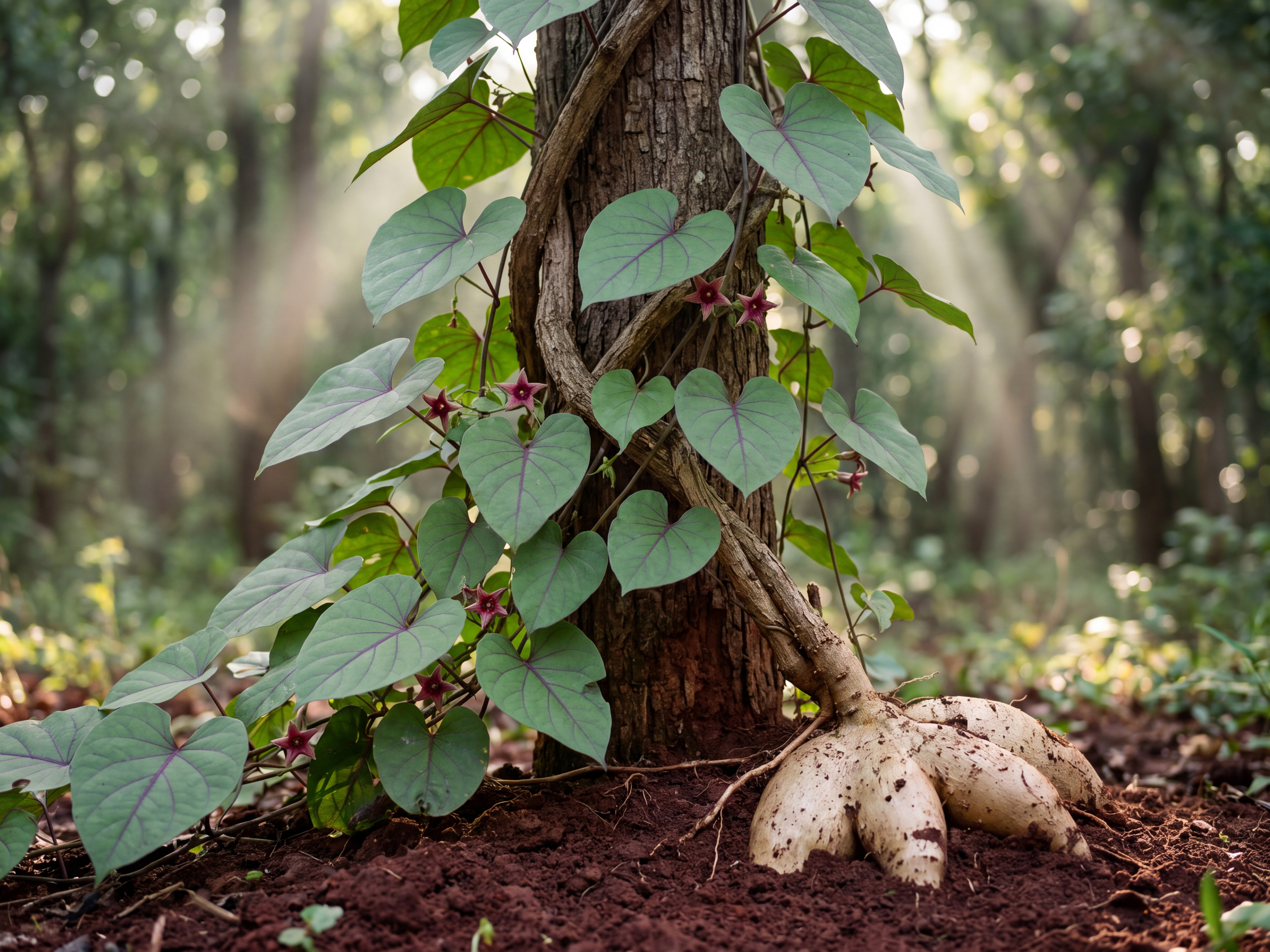
- Growth habit: a vigorous perennial climbing vine, or liana, growing from a large tuberous rootstock.
- Plant part used: the root, occasionally the root bark.
- Field markers: broad heart-shaped leaves with distinct purple veining, and small reddish-purple flowers.
- Aroma: sweet and warm, with vanilla, ginger, and licorice notes carried by 2-hydroxy-4-methoxybenzaldehyde, the compound responsible for the plant’s common name.
That aroma is the reason the root became a kitchen ingredient as well as a traditional remedy. It is palatable enough to chew raw, which is unusual among medicinal roots and which explains why it turns up in teas, juices and flavoured beverages across East Africa rather than only in a herbalist’s preparation.
Where Mulondo Grows and What It Is Called
The species is native across sub-Saharan Africa, with the densest traditional use concentrated in East and Central Africa. Uganda is the best-known hub, and the Ugandan name mulondo is the one that has travelled furthest into international trade. Move west into Kenya and the same root is mukombero. Move further west into Ghana, and it becomes Yaw Dudu. Populations also occur in West and Southern Africa.
This matters more than it first appears. A single plant carrying five or six regional names is a plant whose supply chain is easy to muddle, and much of the online confusion between Mulondo and Mpesu starts with vernacular names being treated as botanical ones.
Traditional Applications in Wellness and Vitality
Historically, the uses of Mulondo are broad. It is well known in traditions relating to libido and vitality, and it is equally used as a general wellness tonic, an appetite stimulant, and a support for digestive comfort. Its role in the ethnobotanical record is that of a foundational, restorative herb that supports the body’s overall function rather than targeting a single outcome.
A 2023 systematic review of medicinal plants used across the East African Community catalogued 171 species used in traditional practice for vitality and reproductive wellness, and named Mondia whitei among the most frequently used of them (Kyarimpa et al., 2023, Evidence-Based Complementary and Alternative Medicine, PMID: 37600549). That review also found that roots account for roughly 45 percent of all plant parts used in this category, and that decoctions account for about 69 percent of preparations, which places Mulondo squarely in the mainstream of regional practice rather than at its margins.
Meet Mpesu (Securidaca longepedunculata)
The Botanical Profile of the “Violet Tree Root”
The quick facts for the second root:
- Scientific name: Securidaca longepedunculata, family Polygalaceae, the milkwort family. The spelling is worth noting, because the literature splits between longepedunculata and longipedunculata, and marketplace listings frequently mangle both. Kew’s Plants of the World Online treats Securidaca longepedunculata Fresen. as the accepted name.
- Other names: Mpesu, Violet Tree, and Muvanya or related forms in Venda practice.
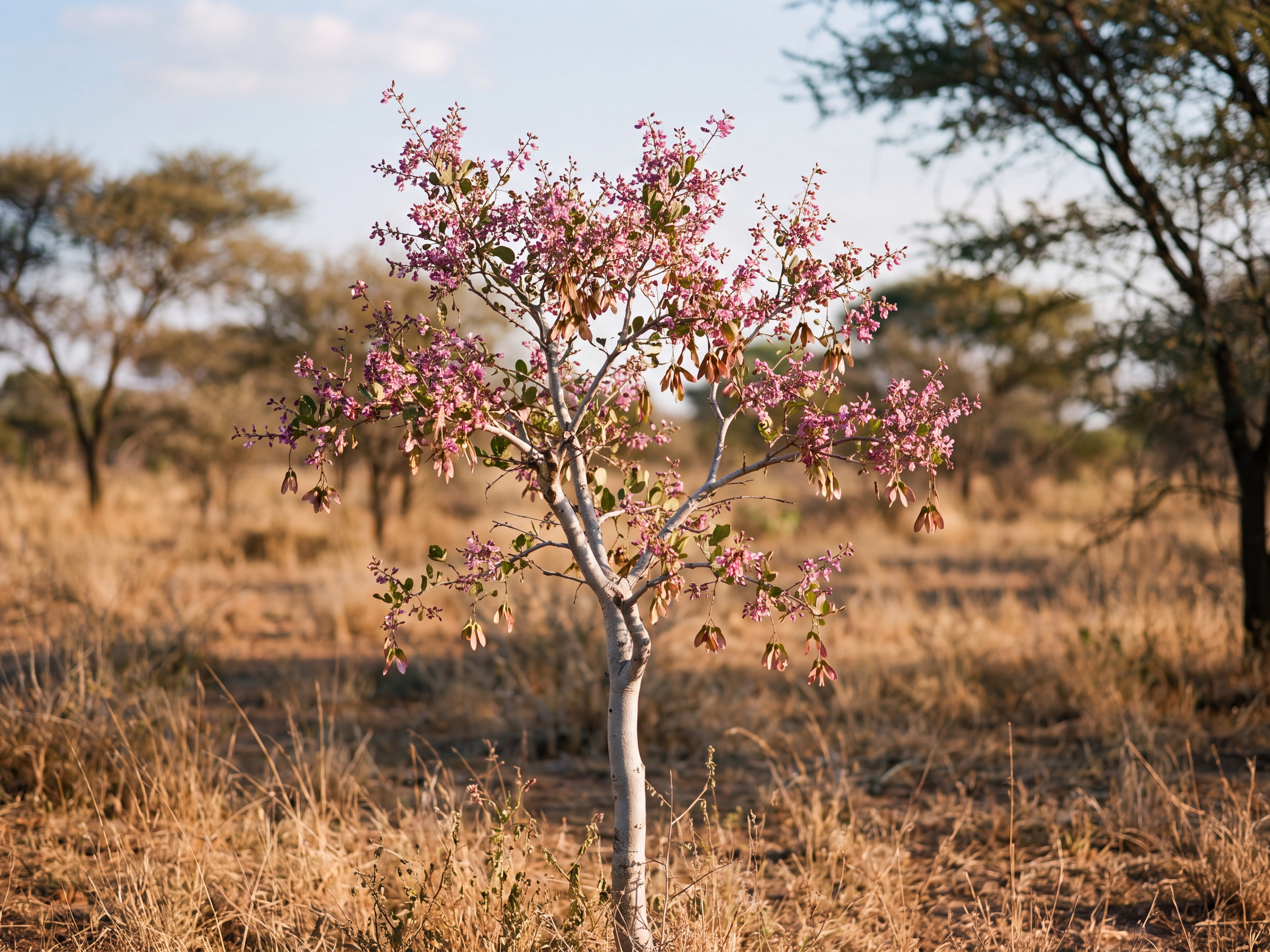
- Growth habit: a small deciduous shrub or tree, not a vine.
- Plant part used: the root and root bark.
- Field markers: pale grey bark, sweetly scented pinkish-purple flowers, and distinctive winged fruits.
- Aroma: sharp, pungent and wintergreen-like, with an acrid and bitter taste. Nothing about it is culinary.
Where Mpesu Grows and What It Is Called
Where Mulondo’s centre of gravity is East Africa, Mpesu’s is Southern Africa. The root is most closely associated with Venda tradition in the Limpopo province of South Africa, where it holds a specific and long-standing place in local practice. The species range extends much wider across tropical and southern Africa, and it is heavily traded in Central Africa as well, but the Venda association is the one that shaped the name Mpesu as it is used commercially today.
Traditional Applications and Cultural Significance
The traditional uses of the Violet Tree root are narrower and more specific than those of Mulondo. It is connected to male stamina and physical performance in Venda practice, and it also appears in the wider ethnobotanical record for pain, inflammatory complaints, and infection. Its cultural role is significant, and the consistent thread running through the ethnographic literature is that this is a substance requiring knowledgeable handling rather than casual daily use.
That distinction is not a marketing position. It reflects how the plant is actually treated in the communities that use it.
Head-to-Head Comparison: A Clear Breakdown
The single biggest difference is category: Mulondo is a food-grade aromatic root that doubles as a traditional tonic, while Mpesu is a specialist preparation root that has never been a food plant. Everything else follows from that.
| Attribute | Mulondo | Mpesu |
|---|---|---|
| Scientific name | Mondia whitei | Securidaca longepedunculata |
| Botanical family | Apocynaceae (dogbane family) | Polygalaceae (milkwort family) |
| Common names | African Ginger, White’s Ginger, Gondolosi, mukombero, Yaw Dudu | Violet Tree Root, Muvanya |
| Growth habit | Climbing perennial vine with a tuberous rootstock | Deciduous shrub or small tree |
| Plant part used | Root | Root and root bark |
| Primary region | East, Central and West Africa, especially Uganda | Southern Africa, especially Venda and Limpopo |
| Aroma and flavour | Sweet, vanilla and ginger notes, palatable | Sharp, acrid, distinctly medicinal |
| Marker compound class | Aromatic benzaldehyde derivatives, notably 2-hydroxy-4-methoxybenzaldehyde | Xanthones, bisdesmosidic saponins, benzoate esters |
| Traditional role | Broad wellness and vitality tonic, plus culinary flavouring | Focused traditional preparations, never a food plant |
| Traditional handling | Widely used as a beverage additive and everyday tonic | Prepared by experienced practitioners in small measures |
| Compiled from published ethnobotanical and phytochemical reviews cited throughout this article. | ||
How Can You Tell the Two Roots Apart?
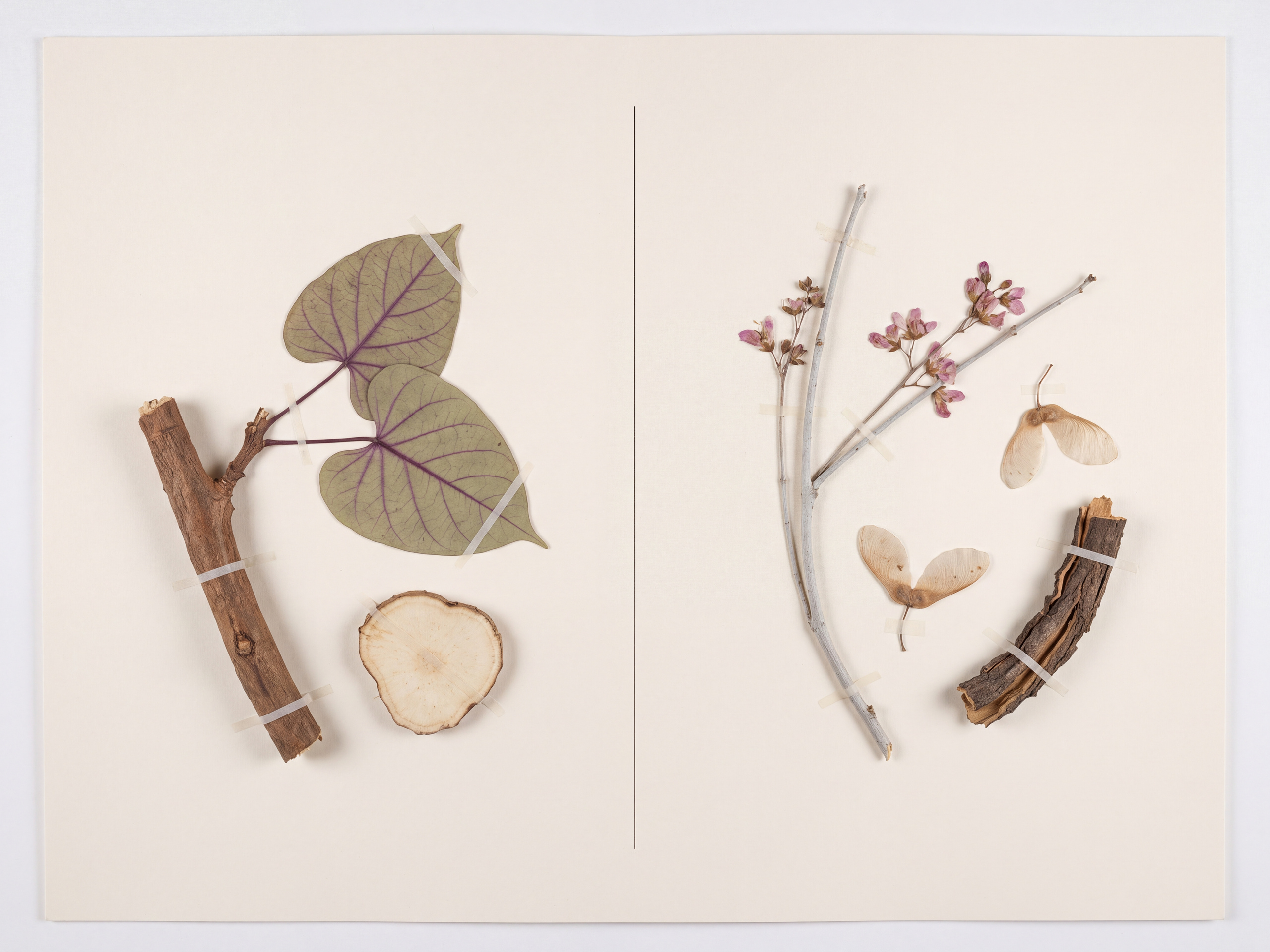
If you have the living plant in front of you, the two are not remotely alike. Mondia whitei climbs. It sends out a woody vine with broad heart-shaped leaves marked by purple veins, and it grows from a swollen tuberous rootstock that is dug rather than cut. Securidaca longepedunculata stands on its own as a shrub or small tree with pale grey bark, produces sweetly scented pinkish-purple flowers, and sets winged fruits that spin as they fall.
Dried and powdered, the visual distinction collapses. This is where the real risk sits, and it is measurable. A 2024 market survey across Lubumbashi in the Democratic Republic of Congo purchased 514 samples from 108 herb sellers and laboratory-tested 92 of them from the three most-traded species. Securidaca longepedunculata was the second most traded of the three, at roughly six tons sold annually in that one city. Of the samples analysed, 18.5 percent raised problems, and the majority of those were outright species substitution rather than simple contamination. The researchers noted that sellers themselves reported difficulty identifying and preserving S. longepedunculata (Mutombo et al., 2024, Journal of Ethnopharmacology, PMID: 39489362).
That figure is the most useful number in this entire article. Nearly one in five samples of the most popular traded roots was not reliably what it claimed to be, in a study that used microscopy and chromatographic fingerprinting rather than guesswork.
In our sourcing experience, the practical defence is simple, and it has nothing to do with trusting a product photograph:
- Look for the Latin binomial on the label, not just the trade name. A listing that says only “Mpesu Root” has told you nothing verifiable.
- Check the spelling of that binomial. We have observed in our own supplier vetting that sellers who cannot spell Securidaca longepedunculata correctly rarely have documentation behind it.
- Use aroma as a first-pass check. Mulondo should smell sweet and vanilla-like. If a powder sold as Mulondo smells sharp and medicinal, something is wrong.
- Ask which plant part was used. Mulondo is root. Mpesu is root and root bark. A supplier who cannot answer that has not seen their own supply chain.
How Do Their Active Compounds Differ?
The chemistry is where the two species separate most cleanly, and it explains the sensory difference anyone can notice by smell.
A 2024 review of the ethnomedicinal, phytochemical, pharmacological and toxicological profile of Mondia whitei catalogued the compounds isolated from the root, including 2-hydroxy-4-methoxybenzaldehyde, isovanillin, propacin, 5-chloropropacin, loliolide and para-pentylphenyl-benzoate, alongside broader classes such as saponins, tannins, phenolics, alkaloids and triterpenes (Deeh et al., 2024, Fitoterapia, PMID: 39002656). The aromatic benzaldehyde fraction is what gives the root its vanilla character, and it is the reason the plant reads as a spice as much as a medicine.
Securidaca longepedunculata runs on an entirely different chemical register. Its roots are a documented source of xanthones, a class of oxygenated heterocyclic compounds. A 2025 study isolated a previously unpublished xanthone named securidacaxanthone D from the roots, alongside five known analogues including 1,7-dihydroxyxanthone and 1,7-dihydroxy-3-methoxyxanthone (Hinmara Tina et al., 2025, Natural Product Research, PMID: 40127435). Separately, two bisdesmosidic saponins built on a medicagenic acid backbone, named securidacaside A and securidacaside B, were isolated and characterised from the root bark (Stevenson et al., 2009, Journal of Agricultural and Food Chemistry, PMID: 19769365). Benzoate esters, including benzyl benzoate, have also been isolated from the root (Moussavi et al., 2024, ACS Chemical Neuroscience, PMID: 38270158).
Aromatic benzaldehydes on one side, xanthones and saponins on the other. Two roots, two chemistries, one persistent naming confusion.
Are Either of Them Toxic or Unsafe to Use?
The two species sit in different traditional safety categories, and the published record reflects that plainly.
For Mondia whitei, the 2024 Fitoterapia review reported toxicological studies showing an oral LD50 above 5,000 mg per kilogram in animal models, with no signs of toxicity observed after a week of oral treatment (Deeh et al., 2024, PMID: 39002656). That is consistent with a plant that has been eaten as a flavouring and drunk in beverages across a wide region for a very long time.
For Securidaca longepedunculata, the picture is different in kind rather than merely in degree. The 2024 zebrafish study of the plant’s extracts and isolated constituents opened by stating that limited knowledge is available on its toxicity, and went on to establish maximum tolerated concentrations for several isolated xanthones and benzoates, with three compounds identified as the most toxic in that assay (Moussavi et al., 2024, PMID: 38270158). Separately, powdered root bark of the species has been documented as an effective grain protectant in African agriculture, reducing emergence of the maize weevil Sitophilus zeamais and the cowpea beetle Callosobruchus maculatus from treated stores for more than nine months after application (Stevenson et al., 2009, PMID: 19769365).
We include that agricultural finding deliberately, because it makes an abstract point concrete. A root used to protect stored grain from insects is not in the same category as a root used to flavour a drink, and the traditional convention of treating Securidaca longepedunculata as a specialist preparation reflects long practical experience rather than superstition.
None of this is a safety verdict on either plant. It is a summary of what has been published, and the honest position is that the toxicological literature on S. longepedunculata remains thin. Speak with a qualified healthcare provider before using either root.
Interactions to Discuss With Your Healthcare Provider
Both of these roots have traditional associations with circulation and physical performance. Any botanical in that category deserves a conversation with a provider if you take prescription medication, and particularly if you take blood pressure medicines, nitrates, blood thinners, or medication for sexual health. Combining circulation-active substances without oversight is not something we recommend to anyone.
The same applies if you are pregnant, nursing, managing a chronic condition, or scheduled for surgery. The published human data on both species is limited enough that a provider conversation is the correct default rather than an abundance of caution.
How Are These Roots Traditionally Prepared?
This section describes documented traditional practice. It is not a usage protocol, and it contains no amounts, because responsible guidance on quantity belongs with a qualified practitioner rather than an article.
Mulondo appears in the ethnobotanical record in the widest range of forms of the two. The root is chewed fresh, dried and ground to powder, brewed as a tea, steeped into juices and local beverages, and infused into alcohol as a traditional tonic. In East Africa it also functions straightforwardly as a flavouring agent, which is a use no bitter root ever earns. Decoction is the dominant preparation method for roots in this category across the region, accounting for roughly 69 percent of preparations in the 2023 East African review (PMID: 37600549).
Mpesu is narrower. The root and root bark are typically dried and powdered, then steeped or soaked, and traditionally taken in small measured preparations rather than as a daily beverage. Its bitterness makes casual consumption unlikely in any case. The Lubumbashi market study found that roots are overwhelmingly traded in powder form, at 78.7 percent of sampled material, which is precisely why visual authentication fails and binomial labelling matters (PMID: 39489362).
From our hands-on assessment of incoming root lots, the preparation question and the identity question are the same question. You cannot prepare a root correctly if you are not certain which root it is.
What Does the Research Say?
Both species are better documented than most people assume, though the evidence base is weighted heavily toward ethnobotanical survey and preclinical work rather than human clinical trials.
For Mondia whitei, the 2024 Fitoterapia review is the most complete single source available, covering botany, phytochemistry, pharmacology and toxicology in one place (PMID: 39002656). The 2023 East African systematic review provides the regional ethnobotanical context and the frequency-of-use data (PMID: 37600549).
For Securidaca longepedunculata, the phytochemistry is well characterised through the xanthone and saponin literature (PMID: 40127435 and PMID: 19769365), while the pharmacological and toxicological picture is still developing (PMID: 38270158). The 2024 Journal of Ethnopharmacology market study is the essential reference on trade, adulteration, and quality control (PMID: 39489362).
Readers who want primary sources can find all six of these on PubMed. The National Center for Complementary and Integrative Health also maintains general guidance on evaluating herbal products, and Kew’s Plants of the World Online is the reference we use for confirming accepted botanical names.
What the literature does not contain is a head-to-head human comparison of the two species. Anyone claiming one root is definitively stronger than the other is stating a preference, not a finding.
Summary: Choosing the Right Herb for Your Purpose
The two are not interchangeable, and the choice between them is about purpose rather than potency ranking.
Someone interested in a broad, traditional, pleasant-tasting wellness and vitality root with a long culinary history and a favourable published safety profile is describing Mondia whitei. Someone researching the narrower Southern African ethnobotanical tradition around a specialist root with a distinctive xanthone chemistry and a practice of careful handling is describing Securidaca longepedunculata.
They are not competitors. They are two different plants that a naming accident placed on the same shelf. Our own single-herb Mulondo powder and our Mpesu and Mondia whitei root products are listed separately for exactly that reason, and each carries the binomial on the label.
In our experience fielding customer questions, the people who get the best result from either root are the ones who worked out which plant they actually wanted before they bought anything.
Frequently Asked Questions
Is mulondo the same as mpesu?
No. Mulondo is Mondia whitei, a climbing vine in the Apocynaceae family. Mpesu is Securidaca longepedunculata, a small tree in the Polygalaceae family. They are different species from different families with different root chemistry, and the names are not synonyms.
What is Mulondo called in English?
Mulondo is most often called African Ginger or White’s Ginger in English, after the sweet ginger and vanilla character of its root. It is also traded as Gondolosi. Its botanical name is Mondia whitei. The Ugandan form of the name is sometimes written omulondo.
What is mpesu made of?
Mpesu is the root and root bark of Securidaca longepedunculata, the Violet Tree. Its characteristic constituents include xanthones such as securidacaxanthone D, bisdesmosidic saponins built on a medicagenic acid backbone, and benzoate esters. It is not a blend or a compound product in its traditional form.
How do you drink mpesu powder?
In traditional Southern African practice, the dried root or root bark is powdered and then steeped or soaked before use, taken in small measured preparations rather than as a daily beverage. Its taste is sharply bitter. We do not publish quantities, and anyone considering it should speak with a qualified practitioner or healthcare provider first.
How long does Mulondo take to work?
There is no established timeframe in the published literature, because the human clinical research needed to answer that question has not been done. The ethnobotanical record describes Mondia whitei as a tonic used over a continuous period rather than a single-dose preparation, which is a different pattern of use than a fast-acting remedy.
Can Mulondo and Mpesu be taken together?
Traditional practice and commercial blends do sometimes combine them, but we are not aware of published safety data on the combination specifically. Because both are traditionally associated with circulation, combining them is a decision to make with a healthcare provider rather than on your own, especially alongside any prescription medication.
Which is stronger, mulondo or mpesu?
No published head-to-head human study compares the two, so any claim that one is definitively stronger is opinion rather than evidence. They differ in kind rather than in strength. Mondia whitei is the broad traditional tonic with a food history, while Securidaca longepedunculata is the narrower specialist root with a tradition of careful handling.
How can I tell Mondia whitei from Securidaca longepedunculata?
As whole plants, they are easy to separate. Mondia whitei is a climbing vine with heart-shaped purple-veined leaves and a tuberous root. Securidaca longepedunculata is a small tree with pale grey bark, pinkish-purple flowers and winged fruits. As powders, aroma is the fastest check, with Mulondo sweet and Mpesu sharp. The reliable method is buying from a supplier who prints the correct Latin binomial on the label.
Related Reading
Continue with our guides to traditional African aphrodisiac herbs, our profile of Bangalala and its role in regional blends, and our comparison of Cistanche and Tongkat Ali for readers looking at vitality botanicals from other traditions.
Important: This article is for educational and informational purposes. The statements have not been evaluated by the Food and Drug Administration. The herbs and herbal products discussed are not intended to diagnose, treat, cure, or prevent any disease. Speak with a qualified healthcare provider before starting any new herbal regimen, especially if you are pregnant, nursing, taking medication, or managing a health condition.