Bangalala (Eriosema kraussianum) is a traditional South African root, called uBangalala in Zulu, that men have used for generations to support vitality, stamina, and healthy circulation. It is a legume from the grasslands of KwaZulu-Natal, not a ginger and not related to galangal despite the similar-sounding name, and the woody rootstock is simmered into a traditional milk decoction rather than steeped as a tea. The compounds behind its reputation, kraussianone-1 and kraussianone-2, have shown vasorelaxant activity in laboratory and animal studies, but no published human clinical trial exists on Eriosema kraussianum, a gap most sellers leave out.
Key Takeaways
- Bangalala, or Eriosema kraussianum, is a traditional South African herb primarily known for its historical use in supporting male vitality and stamina.
- Bangalala is not galangal, and it is not bala, banaba, or bangle. It is a legume from Southern Africa, not a ginger from Asia.
- Its traditional reputation may be linked to modern scientific observations of its effects on cardiovascular health, specifically its ability to help relax blood vessels and improve circulation.
- The published research is pre-clinical only. There are no human clinical trials on Eriosema kraussianum.
- A 2006 study found the plant’s active compounds also lowered blood sugar in rats, which matters if you take blood-sugar medication.
- A responsible approach is paramount. Understanding dosage, safety precautions, and when to consult a healthcare professional is essential before incorporating this or any potent herb into your routine.
Bangalala is a name that resonates deeply within the history of South African traditional medicine. For generations, this herb has been regarded for its specific effects on male health and vitality. While its reputation is well-known, a clear understanding of its traditional uses, the science that may explain them, and how to approach it responsibly is necessary for anyone interested in a holistic approach to vitality. This guide provides a comprehensive look at the subject.
What is Bangalala (Eriosema kraussianum)?
Eriosema kraussianum, the plant commonly known as Bangalala, is a small, perennial herb from the legume family, native to the grasslands of South Africa. It is visually distinct, with silvery, silky hairs covering its stems. While the entire plant has a place in traditional medicine, it is the root that is most sought after for its concentrated compounds.
Precision matters here, because the name is where most of the confusion starts. Eriosema kraussianum N.E.Br. sits in the Fabaceae family, the same botanical family as beans and peas, in the subfamily Papilionaceae. It grows in the grasslands of KwaZulu-Natal and the surrounding provinces, and the part traditional practitioners use is the woody rootstock rather than the leaf or flower. In our sourcing work, we have found that the rootstock is also the part most often substituted or adulterated in the open market, which is exactly why the botanical name is worth knowing before you buy anything.
The genus itself is large. A 2021 review in Frontiers in Pharmacology counted roughly 150 Eriosema species across Africa, Asia, Australia and the Neotropics, and catalogued 107 distinct compounds isolated from just eight of them, with flavonoids accounting for close to 70 percent of the total (Ateba et al., 2021, Frontiers in Pharmacology, PMID: 34025412). Bangalala is one branch of a much larger and largely unstudied genus.
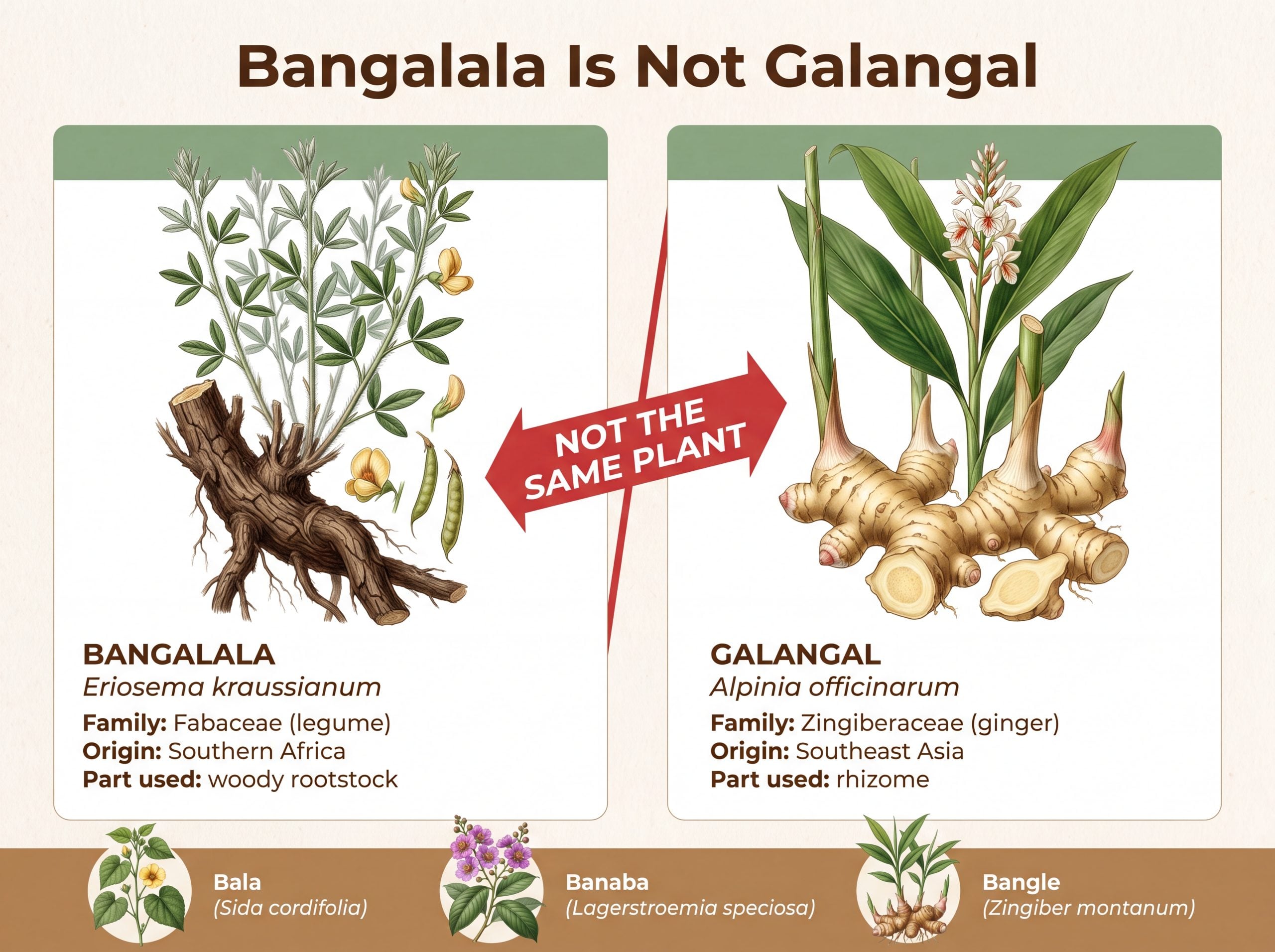
Is Bangalala the Same as Galangal? Clearing Up the Name Confusion
No. They are not the same plant, not the same family, and not the same continent of origin. This question comes up constantly, and it is worth answering plainly.
“Bangalala” is a transliteration of a Zulu term, and the peer-reviewed literature is explicit about what it covers. Ojewole, Drewes and Khan, writing in Phytochemistry in 2006, describe “uBangalala” as the Zulu indigenous umbrella name applied to Eriosema kraussianum and several related Eriosema species (PMID: 16434072). It is a category name in a living traditional system, not a single-species label, which is part of why it travels badly into English. You will also see the plant called Mvusa Nkunzi and Vukuhlale in regional use, and the Xhosa tradition carries its own parallel legacy with the root.
Here is what Bangalala is not.
| Common name | Botanical name | Family | Origin | Part used |
|---|---|---|---|---|
| Bangalala | Eriosema kraussianum | Fabaceae (legume) | Southern Africa | Rootstock |
| Galangal | Alpinia officinarum | Zingiberaceae (ginger) | Southeast Asia and China | Rhizome |
| Bala | Sida cordifolia | Malvaceae (mallow) | India | Root and aerial parts |
| Banaba | Lagerstroemia speciosa | Lythraceae | Philippines and Southeast Asia | Leaf |
| Bangle | Zingiber montanum | Zingiberaceae (ginger) | Indonesia and Thailand | Rhizome |
| Botanical names verified against Kew Plants of the World Online. Zulu vernacular per PMID 16434072. | ||||
Galangal is a ginger. Bangalala is a legume. The two share four opening letters in English and nothing else. If a listing sells you “bangalala” and the photograph shows a knobbly, pale, ginger-like rhizome, you are looking at galangal or bangle, not Eriosema kraussianum. Authentic Bangalala is a dark, fibrous, woody root. We have seen this substitution often enough in our sourcing that we treat the Latin binomial on the label as the minimum standard, and you should too. If a supplier cannot name the species, they cannot vouch for what is in the bag.
Anyone verifying a botanical name independently can cross-check it against Kew’s Plants of the World Online, which is the reference database our team uses for taxonomy.
The Core Traditional Benefit: Supporting Male Vitality and Stamina
The primary historical application of Bangalala in Zulu culture and broader South African traditional medicine is for the support of male vitality. It is traditionally regarded for its ability to enhance libido and sustain stamina. This reputation is so strong that it is sometimes colloquially referenced as a natural aphrodisiac. However, its role in a holistic framework is more nuanced, seen as a way to maintain a man’s overall vigor and energy, which are foundational to a healthy and active life.
Beyond Vitality: Supporting Cardiovascular and Endothelial Health
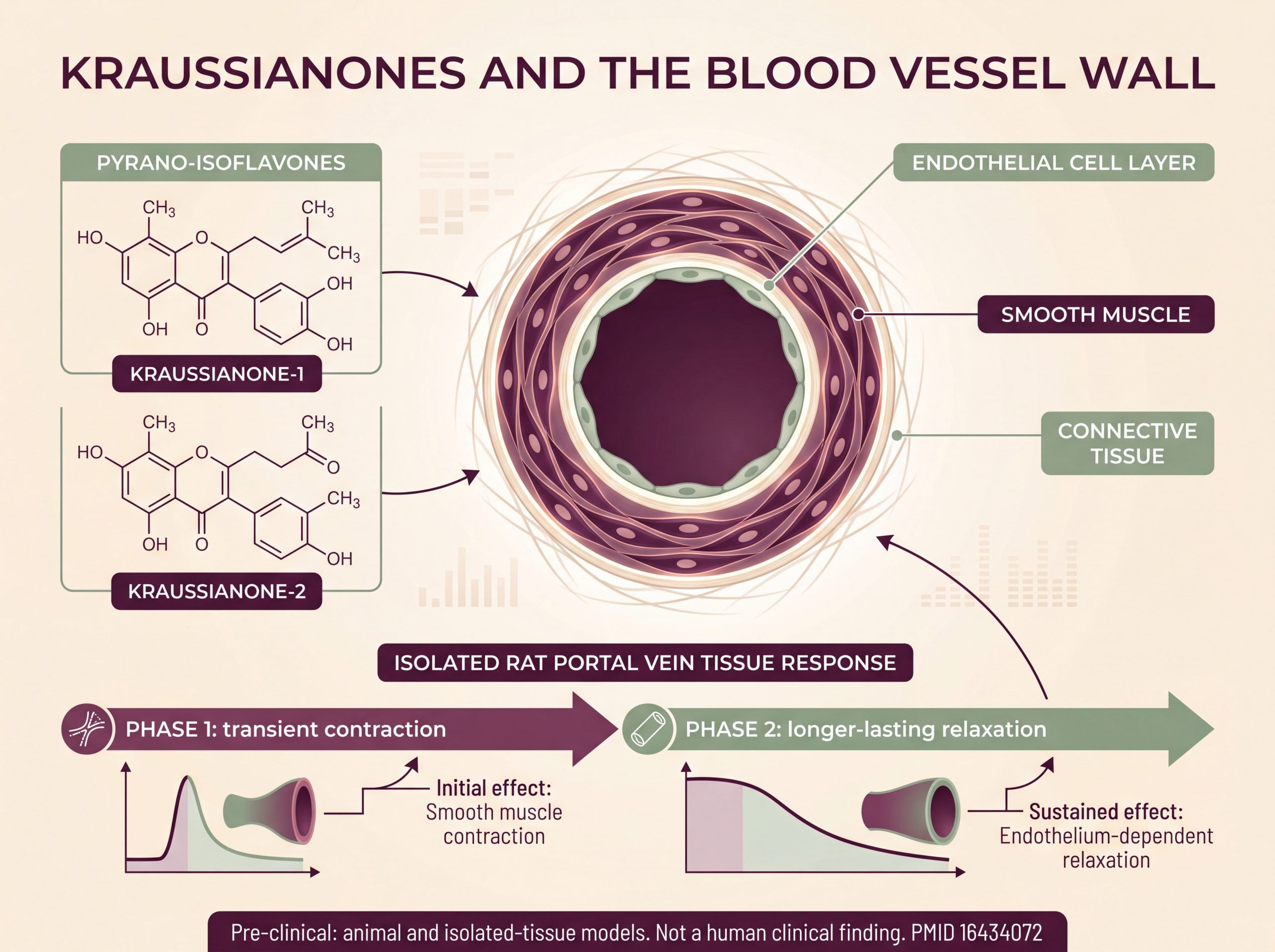
Quick answer: Laboratory research on two compounds from Bangalala’s rootstock, kraussianone-1 and kraussianone-2, found they relax vascular smooth muscle tissue in a two-stage pattern: a brief contraction followed by longer-lasting relaxation, an effect researchers linked to the plant’s traditional reputation for supporting circulation and male vitality. This is animal and isolated-tissue evidence, not a human clinical outcome.
While tradition provides the history, modern science offers potential mechanisms to explain these effects. A key area of interest is the impact of Eriosema kraussianum on the cardiovascular system.
Healthy circulation underpins physical performance, and circulation depends on the endothelium, the thin cell layer lining the interior of blood vessels. This is where the published work on Bangalala actually sits, and it is worth being precise about what that work does and does not show.
Two pyrano-isoflavones isolated from the rootstock, designated kraussianone-1 and kraussianone-2, are the compounds that draw research attention. In a 2006 study at the University of KwaZulu-Natal, both were administered to laboratory rats and tested on isolated portal vein tissue. The response was biphasic. The vessel tissue first showed a brief, transient contraction, and this was followed by a longer-lasting, statistically significant relaxation (Ojewole et al., 2006, Phytochemistry, PMID: 16434072).
That two-stage pattern is more interesting than the flat “it relaxes blood vessels” summary you will find on most pages covering this herb, and it is the version the data supports. It is also worth stating clearly what tier of evidence this is. These were animal and isolated-tissue experiments, which is pre-clinical work. It establishes a plausible mechanism. It does not establish a clinical outcome in humans, and we will not pretend otherwise.
What the Research Actually Says: A Look at the Published Studies
Most articles about Bangalala gesture vaguely at “studies” without naming one. The literature is small but real, and it is almost entirely the work of one research group in South Africa. Here is what has actually been published.
The compounds were isolated in 2002
Drewes and colleagues at the University of Natal isolated five pyrano-isoflavones from the Eriosema kraussianum rootstock and confirmed their structures using single-crystal X-ray analysis. The compounds were tested on isolated rabbit corpus cavernosum tissue, the smooth muscle responsible for penile blood flow, in a laboratory bioassay benchmarked against sildenafil, and the most active compound reached roughly 75 percent of sildenafil’s effect in that isolated-tissue model (Drewes et al., 2002, Phytochemistry, PMID: 11909631). This is an in-vitro study on isolated tissue in a dish, benchmarked against a pharmaceutical in a laboratory assay, not a human trial of Bangalala or any finished product. It is the origin of the herb’s modern research reputation, and it is a long way from a human trial.
Not every compound in the plant does the same thing
This is the finding that almost nobody reports, and it is the one we find most useful. A 2004 follow-up isolated two additional minor pyrano-isoflavones and re-tested the series. Kraussianones 3 and 5 caused contraction of corpus cavernosum tissue rather than the relaxation the researchers anticipated (Drewes et al., 2004, Phytochemistry, PMID: 15280002).
Read that again, because it matters practically. The plant contains compounds that act in opposing directions. Which ones end up in a finished product depends on the specific plant material, the part used, and the extraction method. That is a strong argument for knowing your supplier and a strong argument against assuming that any powder labelled “bangalala” behaves like any other.
The chemistry has been independently confirmed
Kraussianone-1 was successfully produced by total synthesis in 2010, which independently confirmed the structure originally proposed from the plant material and produced the related isoflavones eriosemaone D and genistein along the way (Selepe et al., 2010, Journal of Natural Products, PMID: 20718472). Broader reviews of the genus have catalogued 52 distinct flavonoids across just five studied Eriosema species (Awouafack et al., 2015, Natural Product Communications, PMID: 26411043).
The honest summary
There are no published human clinical trials on Eriosema kraussianum. Everything above is laboratory and animal work. That is not a reason to dismiss the herb, which has centuries of documented traditional use behind it, but it is a reason to be skeptical of anyone selling you certainty. Our editorial team reads the primary literature directly rather than repeating supplier marketing copy, and this is where the primary literature currently stands. For general guidance on evaluating herbal supplement evidence, the National Center for Complementary and Integrative Health maintains a useful consumer resource.
An Adaptogenic Ally for Stress Resilience
Another important aspect of Bangalala is its potential role as an adaptogen. An adaptogen is a natural substance considered to help the body adapt to stress and exert a normalizing effect upon bodily processes.
Stress, both physical and psychological, leads to the release of cortisol. As discussed in a holistic approach to vitality, chronically high cortisol can negatively impact energy levels, mood, and libido. By helping the body better manage its stress response, adaptogenic herbs can play a supportive role in maintaining balance. The traditional use of Eriosema kraussianum to promote overall vitality suggests it may help build resilience against the depleting effects of daily stressors.
How Bangalala Is Traditionally Prepared and Taken
Quick answer, by form:
- Powder: 1 level teaspoon (about 5 g) simmered into warm milk for 5 minutes, or stirred into hot milk. Traditionally taken about an hour before the effect is wanted, with an onset of roughly 45 to 60 minutes.
- Capsules: 2 to 4 capsules (about 1 to 2 g), taken with milk or a light meal, roughly 60 to 90 minutes before the effect is wanted.
- Tincture: 1 to 2 full droppers (30 to 60 drops), held under the tongue for about 60 seconds, then swallowed, roughly 20 to 30 minutes before the effect is wanted. This is the fastest of the three forms.
- These are the serving sizes printed on our own product labels, not a clinically established dose. No human dosing trial has been run on Eriosema kraussianum.
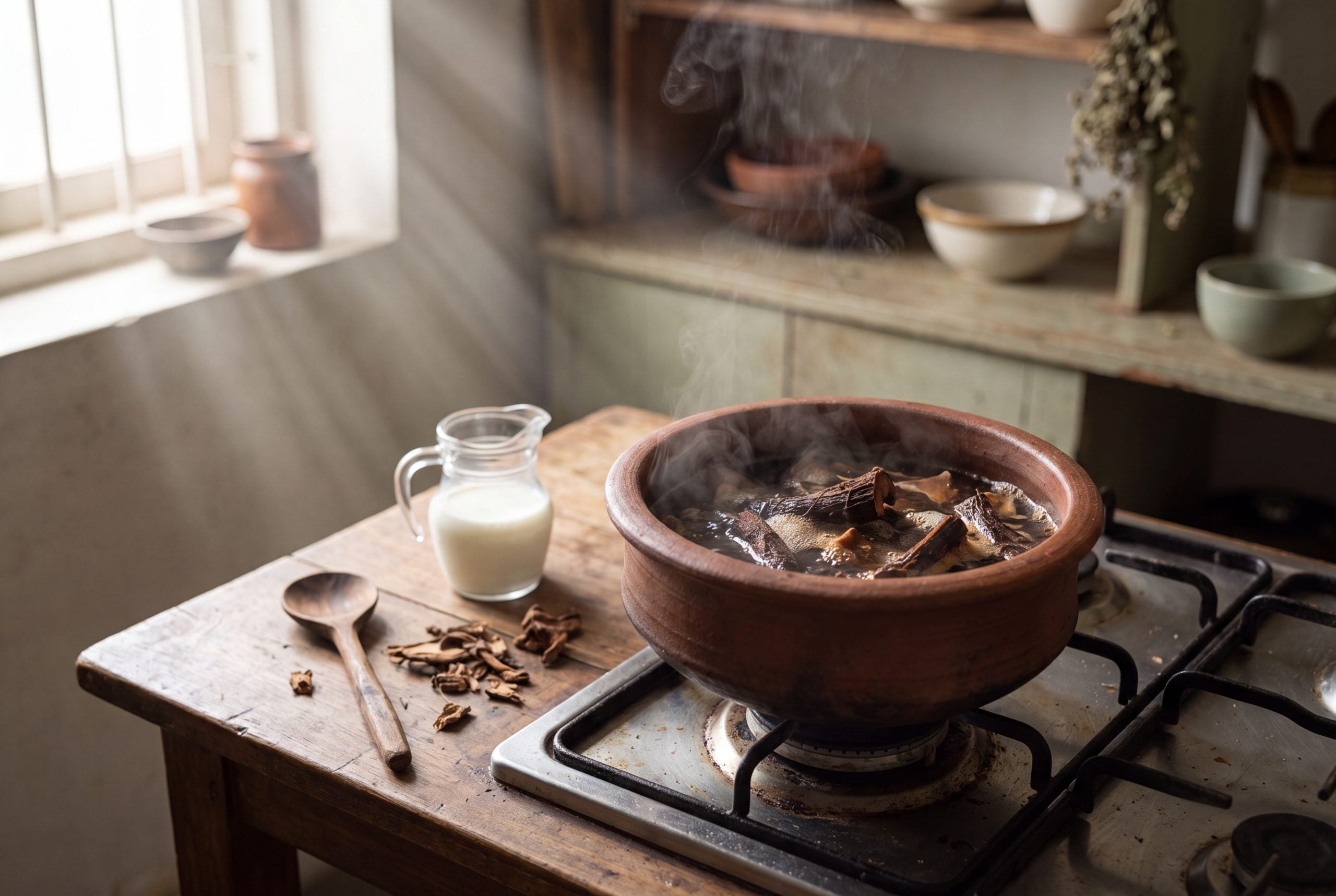
The traditional preparation is a root decoction. The woody rootstock is simmered rather than steeped, because the fibrous material does not surrender its constituents to a short infusion the way a leaf or flower does. In our own kitchen testing, a gentle simmer of 15 to 20 minutes produces a noticeably darker and more bitter liquid than a five-minute steep, which tracks with how the traditional method is described.
The most distinctive detail in the traditional record is the milk preparation. Across Zulu practice, the root is frequently taken with milk rather than water. The commonly given reason is that milk extends the duration of the effect. We would note that this is an ethnobotanical observation rather than a tested pharmacokinetic claim, though it is at least chemically plausible, since the pyrano-isoflavones are poorly water-soluble and fats can improve the absorption of compounds in that class. Traditional practice also places the preparation a few hours ahead of when the effect is wanted rather than immediately before.
Practical serving guidance
There is no clinically established dose for Eriosema kraussianum, because no human dosing trial has been run. Anyone quoting you a precise therapeutic milligram figure is extrapolating beyond the evidence. What we can offer is the practical guidance we give our own customers.
- Start low. Begin at the low end of the serving range on the product label and hold there for several days before adjusting.
- Take it with food. Traditional use places it after a meal, and the blood-sugar consideration discussed further down reinforces that.
- Do not stack it blindly. Combining Bangalala with other circulatory or vasoactive herbs compounds an effect that has never been formally studied in humans.
- Give it time. The acute traditional use and the longer-term tonic use are two different patterns, and they are not interchangeable.
For a closer look at how different extraction methods change what ends up in the finished preparation, our team has written a separate guide to Bangalala plant extracts and how they are made.
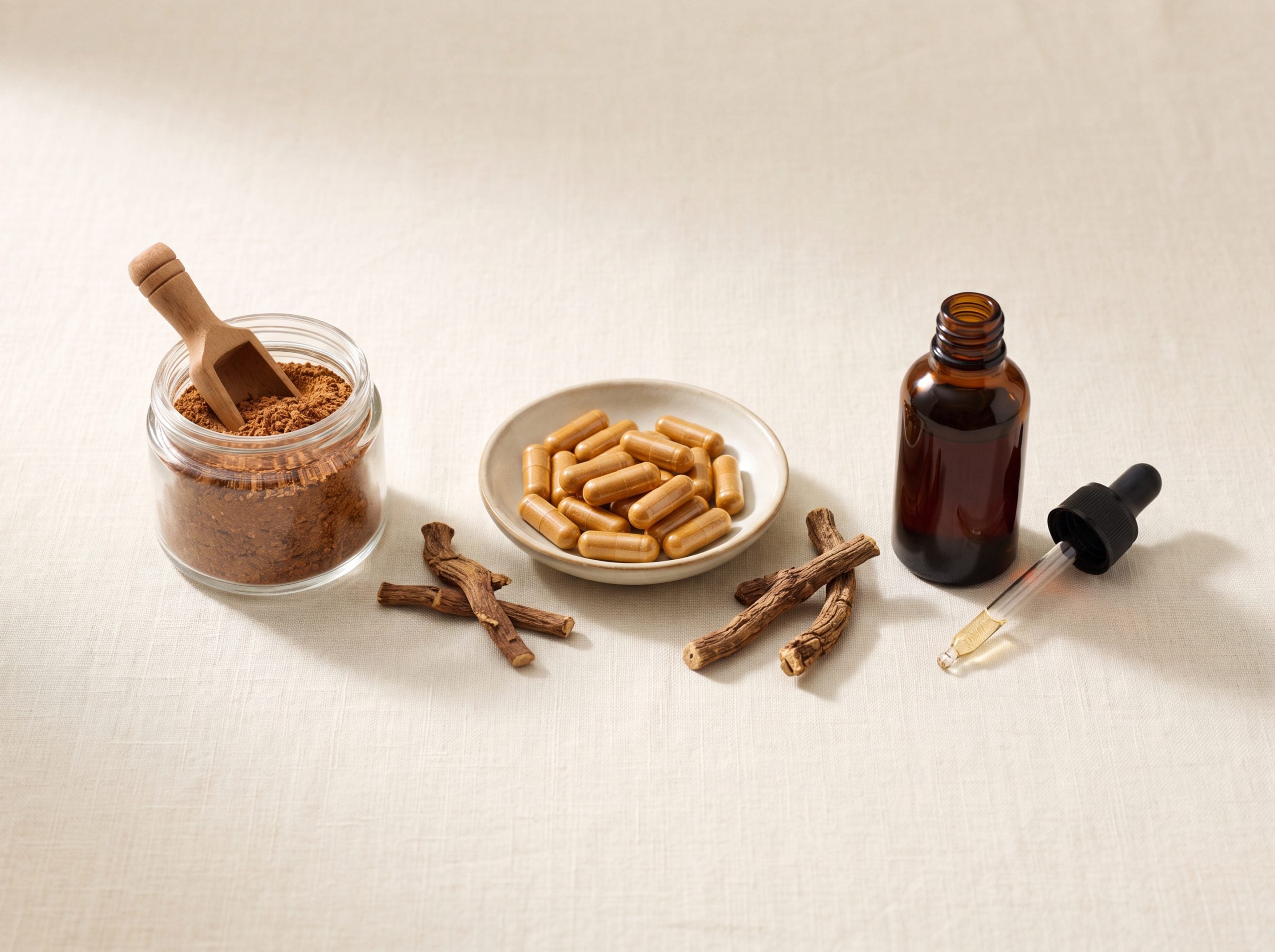
Forms of Bangalala: Powder, Capsules, and Tincture
Bangalala reaches the market in three practical forms, and the choice between them is mostly a trade-off between traditional fidelity and convenience.
| Form | Best for | Trade-off |
|---|---|---|
| Root powder | Traditional decoction and the milk preparation. Closest to how the root is actually used in Southern Africa. | Bitter. Requires preparation time. Serving size is less precise. |
| Capsules | Consistent serving size and no taste. The most practical daily option. | Bypasses the traditional milk-decoction method entirely. |
| Tincture | Alcohol extraction suits poorly water-soluble constituents. Fast to dose, long shelf life. | Not suitable for anyone avoiding alcohol. |
What to look for when you buy
The quality markers we hold our own material to, and the ones we would tell anyone to demand of any supplier.
- The Latin binomial on the label. Eriosema kraussianum. If it is not printed, the supplier is not committing to what is in the bag. Given how frequently galangal and bangle are sold under this name, this is not a small point.
- The plant part named. It should say rootstock or root. The research is on the root.
- Country of origin. Southern Africa. Material of unstated origin is material of unstated identity.
- Third-party testing. Root powders carry a genuine adulteration and heavy-metal risk, and testing is the only thing standing between you and that risk.
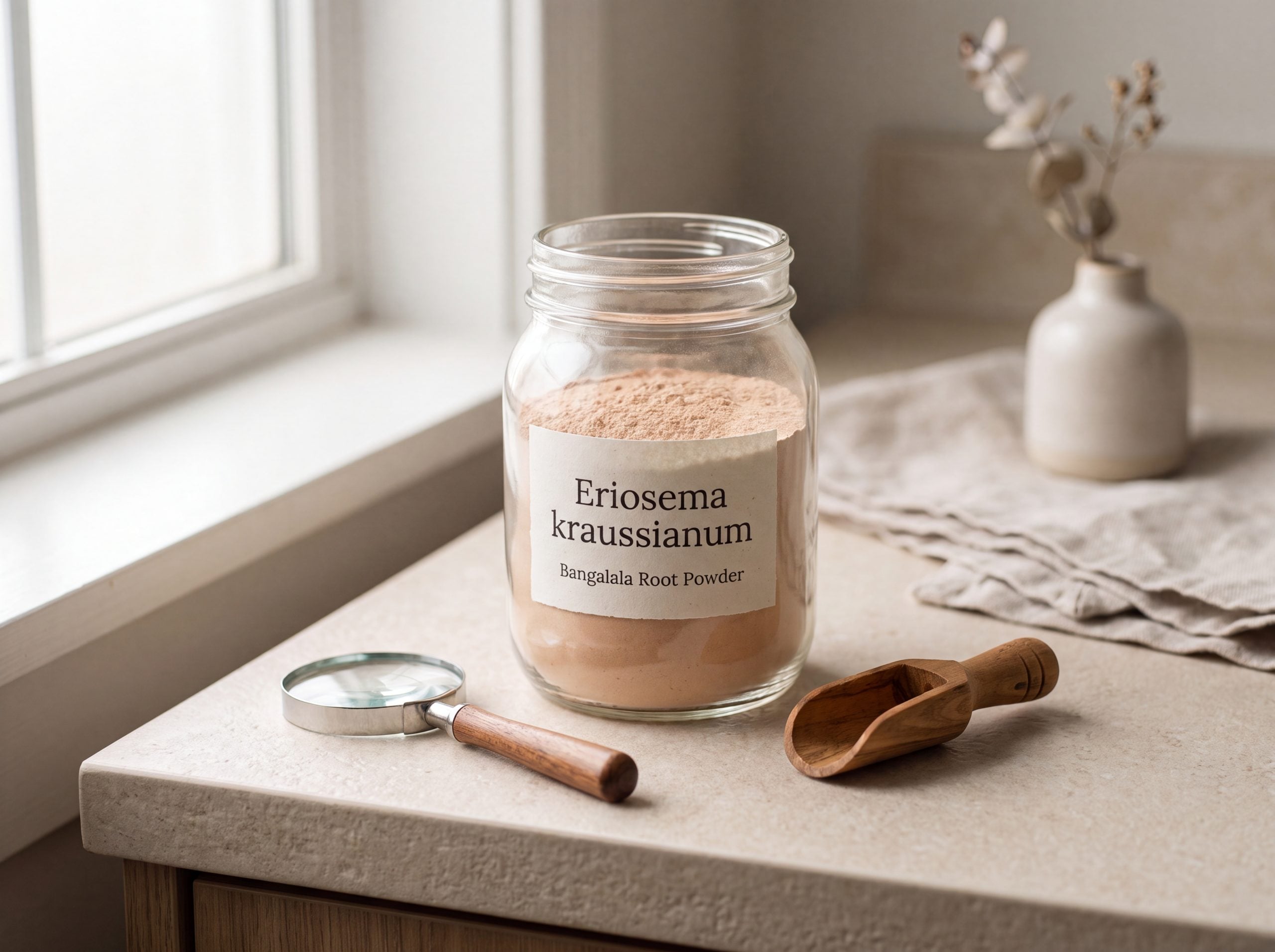
Our own material is sourced against these standards and reviewed in our Virginia Beach facility. You can see how we present it on our Bangalala root powder page, and the same root is available as Bangalala capsules and as a Bangalala tincture.
Men who want a broader traditional formula sometimes pair Bangalala with Mulondo (Mondia whitei), an East African root traditionally used for daily energy and libido, rather than taking Bangalala on its own. We offer this as our Mulondo and Bangalala powder, a 50/50 whole-root blend wild-harvested in KwaZulu-Natal and traditionally prepared as a spiced milk decoction, 1 teaspoon once daily and cycled 5 days on and 2 days off. It is a different traditional profile from Bangalala alone. Mulondo’s traditional role is the stimulating layer and Bangalala’s is the circulation layer, so the blend suits men who want both rather than a single-root approach.
A Responsible Approach: Dosage and Safety Considerations
The potency of Eriosema kraussianum demands a responsible and informed approach. Its power as a traditional remedy is respected, and that respect should extend to its use in a modern context.
Bangalala is most commonly available as a powder or in capsules. For those new to the herb, it is always wise to begin with a low dose to assess individual tolerance. For more detailed information on how these forms are created and their specific precautions, you can read our guide on Bangalala plant extracts.
Most critically, it is essential to consult with a healthcare professional before adding Bangalala to your regimen, especially if you have pre-existing health conditions (particularly related to the heart or blood pressure) or are taking any medication. This ensures your wellness journey is both effective and safe.
Who should not take Bangalala?
Some of these are firm, and we would rather be direct than diplomatic about them.
- Anyone pregnant or breastfeeding. This is not a cautious hedge. It is a firm no.
- Anyone taking medication for blood pressure or circulation. The pre-clinical vasoactive findings and a vasoactive prescription drug are an unstudied combination, and unstudied is not the same as safe.
- Anyone managing diabetes or taking blood-sugar medication. See the section immediately below. This one is specific, and it is frequently missed.
- Anyone with a known heart condition. Speak with your cardiologist first, not afterward.
Reported effects in traditional and consumer use are generally mild and digestive in nature. The candid position is that no formal human safety or toxicology study has been published on Eriosema kraussianum, so the absence of documented severe adverse effects reflects the absence of formal study as much as anything else. Treat that as a reason for care rather than as reassurance. The NIH Office of Dietary Supplements publishes general guidance on evaluating supplement safety that is worth reading before starting anything new.
Bangalala and Blood Sugar: A Safety Consideration Most Guides Miss
This is the part of the Bangalala research that gets almost no coverage anywhere, and it is arguably the most practically important thing in the literature.
The same 2006 University of KwaZulu-Natal study that examined the vascular effects also measured blood glucose. Kraussianone-1 and kraussianone-2, given orally to rats across a 20 to 80 mg/kg range, produced dose-dependent and statistically significant hypoglycaemia, meaning a measurable drop in blood sugar (Ojewole et al., 2006, Phytochemistry, PMID: 16434072). The effect was pronounced enough that the researchers benchmarked it against glibenclamide, a conventional blood-sugar medication.
Sit with what that means in practice. If you take medication for blood sugar, adding an herb with an independent blood-sugar-lowering signal is a combination that has never been studied in humans, and the direction of the interaction is additive rather than opposing. That is a conversation to have with your doctor before you start, not after you notice something.
Two honest qualifications. This was a rat study, not a human one, and rodent glucose response does not transfer cleanly to people. And a hypoglycaemic signal in a laboratory model is not the same thing as a blood-sugar benefit, which we are explicitly not claiming. What it is, unambiguously, is a flag worth raising. We raise it because the published data raises it, and because a guide that omits it is not doing its job.
Can Women Take Bangalala?
The short answer is that Bangalala is not a herb we recommend for women, and the traditional record does not support it as one.
The Zulu and Xhosa use of uBangalala is overwhelmingly male-directed. This is not an accident of how the tradition was recorded. It is what the tradition says. Unlike herbs such as Mondia whitei, which have documented traditional use across both men and women, Bangalala arrives with a narrow and specific traditional application, and that is where our recommendation sits.
There is one piece of research that surfaces in searches on this question, and it is worth addressing directly so that nobody misreads it. A 2012 study administered kraussianone-2 to pregnant rats in an induced pre-eclampsia model and observed improved uterine artery blood flow along with reduced concentrations of two antiangiogenic markers (Ramesar et al., 2012, Phytotherapy Research, PMID: 22308016).
That study is sometimes cited as evidence that Bangalala is useful in pregnancy. It is not, and it should never be read that way. This was an isolated compound administered under controlled laboratory conditions in an animal disease model. It was not whole-root Bangalala, it was not a human being, and it was not a safety study. Pregnancy remains a firm contraindication for this herb. Nothing in that paper changes that, and we would rather state it flatly than leave room for the wrong inference.
Women looking at traditional herbs for vitality and hormonal support have better-documented options, and our team has covered several of them in our guide to traditional aphrodisiac herbs for women.
How Bangalala Compares to Other Traditional Men’s Tonic Roots
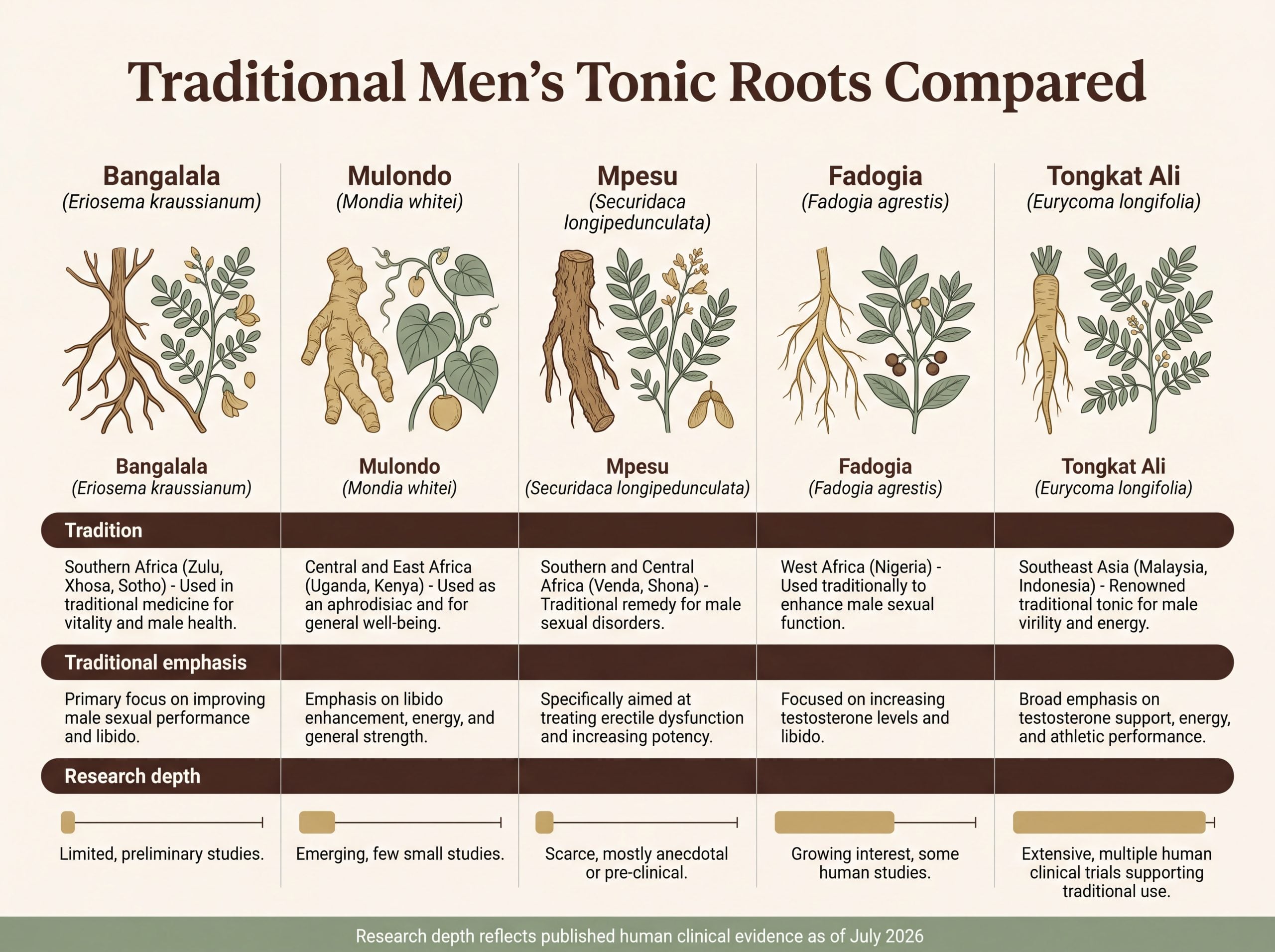
Bangalala rarely travels alone. In Southern African practice, it sits alongside several other roots, and buyers routinely want to know how they differ. Here is how our team reads the comparison.
| Herb | Botanical name | Tradition | Traditional emphasis | Research depth |
|---|---|---|---|---|
| Bangalala | Eriosema kraussianum | Zulu, Xhosa | Acute vitality. Circulation. | Thin. Pre-clinical only. |
| Mulondo | Mondia whitei | Ugandan, East African | Tonic. Broader use, including by women. | Moderate. |
| Mpesu | Securidaca longipedunculata | Venda, Southern African | Stamina. Endurance. | Thin. |
| Fadogia | Fadogia agrestis | West African, Nigerian | Hormonal support. | Animal studies. Safety questions. |
| Tongkat Ali | Eurycoma longifolia | Malaysian, Indonesian | Hormonal support. Stress. | Strongest of this group. Human trials exist. |
| Research depth reflects published human clinical evidence available as of July 2026. | ||||
A point worth being blunt about. If human clinical evidence is your primary criterion, Bangalala is not the strongest choice in this group, and Tongkat Ali is. Bangalala’s case rests on a long and specific traditional record plus an interesting but narrow pre-clinical literature. That is a legitimate basis for interest and a poor basis for certainty, and we would rather tell you that than sell past it.
The comparison most people actually want is Mulondo against Mpesu, and our team has written that one up separately in Mulondo vs Mpesu: how the two roots differ. Readers weighing the wider category may also want our overview of the traditional herbs used to support male stamina.
Frequently Asked Questions about Bangalala
What is Bangalala primarily used for?
Bangalala is used in Zulu and Xhosa traditional medicine as a male tonic root, valued for supporting vitality, stamina, and circulation. Modern laboratory work has focused on two compounds from the rootstock, kraussianone-1 and kraussianone-2, which showed vasorelaxant activity in pre-clinical animal and isolated-tissue models. No human clinical trials have been published on the herb.
Is Bangalala the same as galangal?
No. Bangalala is Eriosema kraussianum, a legume in the Fabaceae family native to Southern Africa, and the part used is the woody rootstock. Galangal is Alpinia officinarum, a member of the ginger family from Southeast Asia. They are unrelated plants that share only a superficial similarity in their English spelling. Bangalala is also distinct from bala (Sida cordifolia), banaba (Lagerstroemia speciosa), and bangle (Zingiber montanum), all of which are commonly confused with it.
How long does it take for Bangalala to work?
Traditional Zulu practice places the root decoction a few hours ahead of when the effect is wanted, which points to an acute rather than cumulative pattern of use. Tonic and adaptogenic use follows a different pattern and is generally described as building gradually with consistent use. Because no human dosing study exists, any specific timeline should be treated as traditional guidance rather than an established finding.
Is Bangalala safe?
Bangalala is generally well-tolerated in traditional use, though no formal human safety or toxicology study has been published, so its long-term safety profile is not established. Consult your healthcare provider before use. It is not recommended during pregnancy or breastfeeding, and particular caution is warranted for anyone taking blood-pressure, circulatory, or blood-sugar medication.
Can Bangalala affect blood sugar?
Possibly, and this deserves attention. A 2006 rat study found that kraussianone-1 and kraussianone-2 produced dose-dependent, statistically significant reductions in blood glucose (PMID: 16434072). This is pre-clinical animal data rather than a human finding, but it is a genuine interaction signal. Anyone taking medication for blood sugar should speak with their doctor before using Bangalala.
Can women take Bangalala?
We do not recommend it. The traditional use of uBangalala across Zulu and Xhosa practice is specifically male-directed, and pregnancy and breastfeeding are firm contraindications. A 2012 animal study on the isolated compound kraussianone-2 in a pre-eclampsia model is sometimes misread as supporting use in pregnancy. It does not, and it should not be interpreted that way.
What are the active compounds in Bangalala?
The compounds of interest are pyrano-isoflavones, principally kraussianone-1 and kraussianone-2, alongside other flavonoids, alkaloids, and saponins. Notably, not all of them act in the same direction. Kraussianones 3 and 5 were found to cause contraction of smooth muscle tissue rather than relaxation (PMID: 15280002), which is why extraction method and material quality genuinely matter with this root.
What forms does Bangalala come in?
Root powder, capsules, and tincture. Powder is closest to the traditional decoction and to the Zulu practice of preparing the root with milk. Capsules offer a consistent serving size without the bitterness. Tinctures use alcohol extraction, which suits the poorly water-soluble pyrano-isoflavones. Whichever form you choose, confirm that the label names Eriosema kraussianum and specifies the root as the plant part.
Related Reading
Continue with these related guides from our editorial team:
- Bangalala plant extracts and how they are prepared
- Mulondo vs Mpesu: how the two roots differ
- Traditional herbs used to support male stamina
- A guide to traditional aphrodisiac herbs
- Mpesu benefits, another traditional Southern African stamina root
- What Congo Dust is and how men use it for control and stamina
- Gouro root (Turraea heterophylla), a West African circulation root
- Mulondo and Bangalala powder, our traditional two-root blend
Important: This article is for educational and informational purposes. The statements have not been evaluated by the Food and Drug Administration. The herbs and herbal products discussed are not intended to diagnose, treat, cure, or prevent any disease. Speak with a qualified healthcare provider before starting any new herbal regimen, especially if you are pregnant, nursing, taking medication, or managing a health condition.