Key Takeaways
- Tongkat ali (Eurycoma longifolia) is studied in training contexts for supporting a healthy cortisol response and testosterone balance, not as a direct performance enhancer.
- The strongest single data point: 4 weeks of standardized root extract lowered salivary cortisol by 16% and raised testosterone by 37% in moderately stressed adults (Talbott et al. 2013, PMID: 23705671).
- Strength trials are mixed. Added to resistance training, tongkat ali produced small extra gains in two studies and none in a third. Taken without training, it did not change strength in any trial.
- Trials used 200 to 400 mg per day of standardized water extract, dosed once daily and continuously for 2 weeks to 6 months. Cycling protocols have never been tested.
- NIH LiverTox added a tongkat ali chapter in 2024 after liver-injury reports in bodybuilders. Rare, but real. Anyone with liver disease, heavy alcohol use, or a hepatotoxic prescription should not take it.
Tongkat ali for fitness and performance is one of the most searched supplement questions in the training space, and one of the most oversold. The root of Eurycoma longifolia, a slow-growing Southeast Asian shrub, has a real research record: a stress-hormone trial with hard numbers, a 2022 meta-analysis on testosterone, four strength studies with mixed results, and a 2024 liver-safety chapter from the National Institutes of Health. This guide works through that record in the order athletes actually ask about it. Does it build muscle? What dose the trials used. What it does to cortisol and testosterone, and how fast. How it compares with shilajit, fadogia agrestis, and ashwagandha. What the side effects are, including the liver signal most supplement pages leave out.
Our editorial team has reviewed every study cited below against PubMed and rebuilt this article around the questions the research can actually answer. Back To Your Roots Herbs sells tongkat ali. That is exactly why the evidence comes first, and the shelf comes last.
What is tongkat ali (Eurycoma longifolia), and what does it do for fitness?
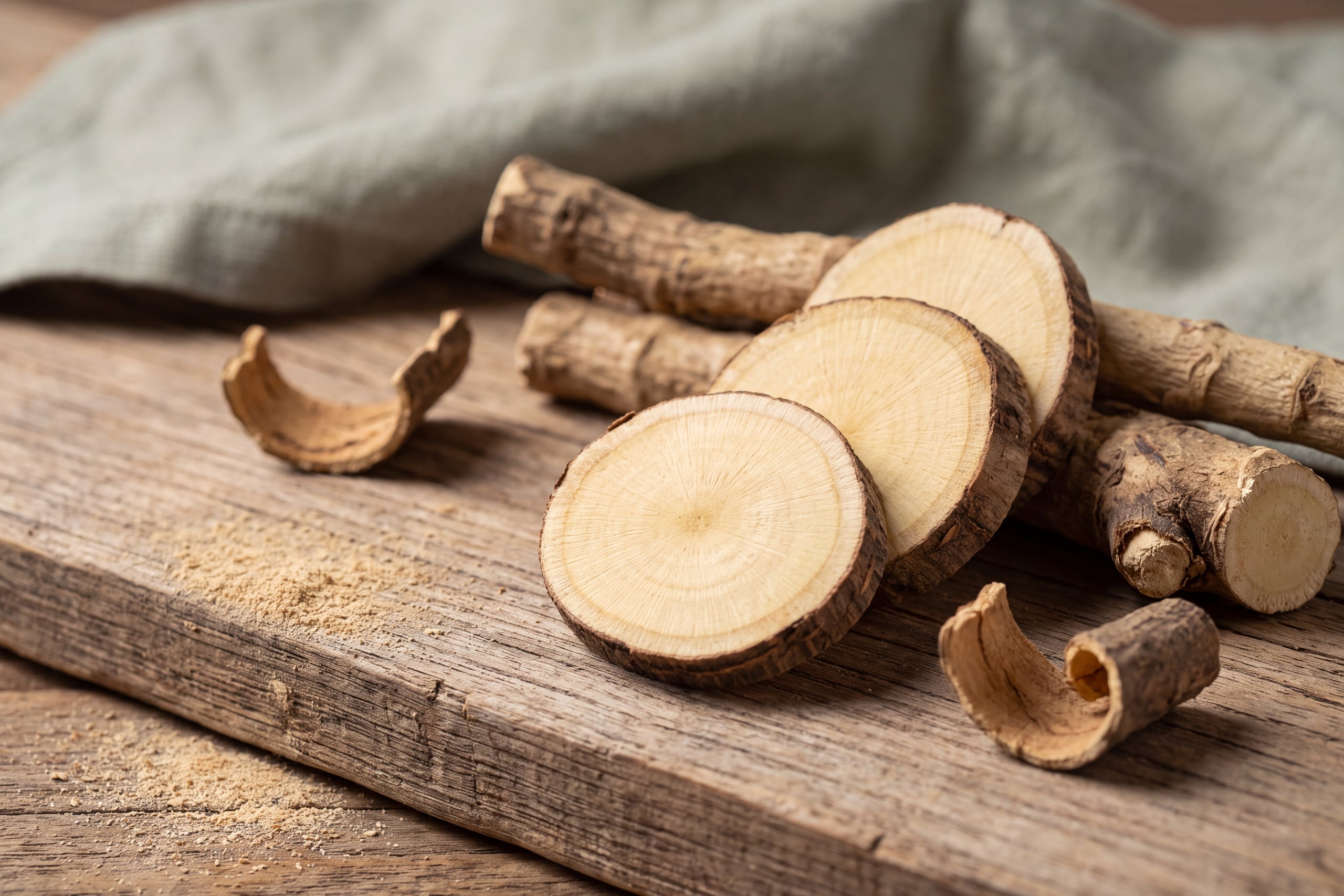
Tongkat ali is the root of Eurycoma longifolia, a Simaroubaceae shrub native to Malaysia and Indonesia, used for generations as a vitality tonic and nicknamed Malaysian ginseng. Its major quassinoid is eurycomanone, and in training contexts, the root is studied for supporting a healthy cortisol response and testosterone balance, not for direct performance gains. Four weeks of standardized root extract lowered salivary cortisol by 16% and raised testosterone by 37% in moderately stressed adults (Talbott et al. 2013, Journal of the International Society of Sports Nutrition, PMID: 23705671).
The plant grows slowly in the lowland and hill forests of the Malay Peninsula, Sumatra, and Borneo, and the root takes years to reach harvest size. Malay and Indonesian traditional medicine used it as a general tonic for fatigue, which is the traditional-use claim the modern research most clearly supports. In our sourcing experience, the roots with the deepest bitterness come from the Karo Highlands of North Sumatra, Indonesia (about 3.1° N, 98.5° E), on the volcanic plateau around Mount Sinabung, where slow growth concentrates the bitter quassinoids the herb is known for.
What is eurycomanone, and why does standardization matter?
Eurycomanone is the most abundant quassinoid in tongkat ali root, and the marker compound most extracts are standardized against. In isolated rat Leydig cells, it raised testosterone production in a dose-dependent way by inhibiting aromatase, the enzyme that converts testosterone to estrogen (Low et al. 2013, Journal of Ethnopharmacology, PMID: 23810842). That is a laboratory finding in animal cells, not a human one, and we state it as such. The root also carries eurycomanol, eurycomalactone, a family of small proteins called eurypeptides, and glycosaponins, which is why whole-root preparations and standardized water extracts do not behave identically.
Two standardized water extracts account for most of the clinical record: Physta, specified by eurycomanone, protein, and glycosaponin content, and LJ100. When a label says standardized, ask which marker and at what percentage. From our hands-on assessment, the most reliable field test is taste. A genuine Eurycoma longifolia root is aggressively bitter with a long astringent finish. A product that is not bitter is either not the root or is too dilute to matter, a point the sports-nutrition literature makes explicitly (Talbott, Nutrition and Enhanced Sports Performance, 2nd edition, Elsevier). Whole root powder and standardized extract are different tools. Milled whole root delivers the full quassinoid profile at a gram-level dose. A 100:1 or 200:1 water extract delivers concentrated eurycomanone at the 200 to 400 mg doses the trials used. Unless stated otherwise, the research below refers to standardized extracts.
How does tongkat ali affect cortisol and testosterone during training?
Hard training raises cortisol. Cortisol is useful in the short term and catabolic when it stays high, which is why athletes watch the cortisol-to-testosterone ratio through heavy blocks. Tongkat ali behaves as an adaptogen in this system. In the 4-week placebo-controlled trial above, 63 moderately stressed adults, 32 men and 31 women, took a standardized hot-water root extract and showed a 16% reduction in salivary cortisol and a 37% increase in salivary testosterone, alongside lower scores for tension, anger, and confusion (Talbott et al. 2013, PMID: 23705671). A 2014 review in Andrologia describes the herb acting across the hypothalamic-pituitary-adrenal (HPA) and hypothalamic-pituitary-gonadal (HPG) axes rather than at a single receptor (George and Henkel 2014, PMID: 24386995).
On testosterone specifically, the pooled evidence is positive and population-dependent. A 2022 systematic review and meta-analysis of five randomized trials found a significant increase in total testosterone with Eurycoma longifolia supplementation, with the clearest effect in men whose baseline testosterone was low (Leisegang et al. 2022, Medicina, PMID: 36013514). In healthy young men, 600 mg per day for 2 weeks raised total and free testosterone while sex hormone-binding globulin (SHBG), luteinizing hormone, and follicle-stimulating hormone did not change (Chan et al. 2021, Andrologia, PMID: 33559971). That last detail matters. The popular claim that tongkat ali frees bound testosterone by lowering SHBG is a proposed mechanism, not an established one, and the one trial that measured SHBG in young men saw no movement.
How quickly does tongkat ali increase testosterone? Hormonal changes appeared within 2 to 4 weeks in the trials above. Strength or body-composition changes, where they appeared at all, took 5 weeks to 6 months and only alongside training.
Does tongkat ali give you energy?
Yes, in the sense that the trials measured, which is perceived fatigue and mood rather than endurance output. The 4-week stress trial recorded improvements in tension (down 11%), anger (down 12%), and confusion (down 15%) on a validated mood scale (PMID: 23705671). A 12-week trial of 300 mg Physta in 109 men reported a significant gain in the Physical Functioning domain of the SF-36 quality-of-life questionnaire versus placebo (Ismail et al. 2012, Evidence-Based Complementary and Alternative Medicine, PMID: 23243445). Endurance is a different story. A 7-day trial of 150 mg in recreational runners found no change in running economy, time-trial performance, or heart rate in the heat (Muhamad et al. 2010, International Journal of Applied Sports Sciences). If you feel more energetic on tongkat ali, the likeliest explanation is a better stress-hormone profile, not a larger engine.
Does tongkat ali actually improve strength and muscle gains?
The honest answer is mixed, and the pattern across four human studies is consistent enough to be useful.
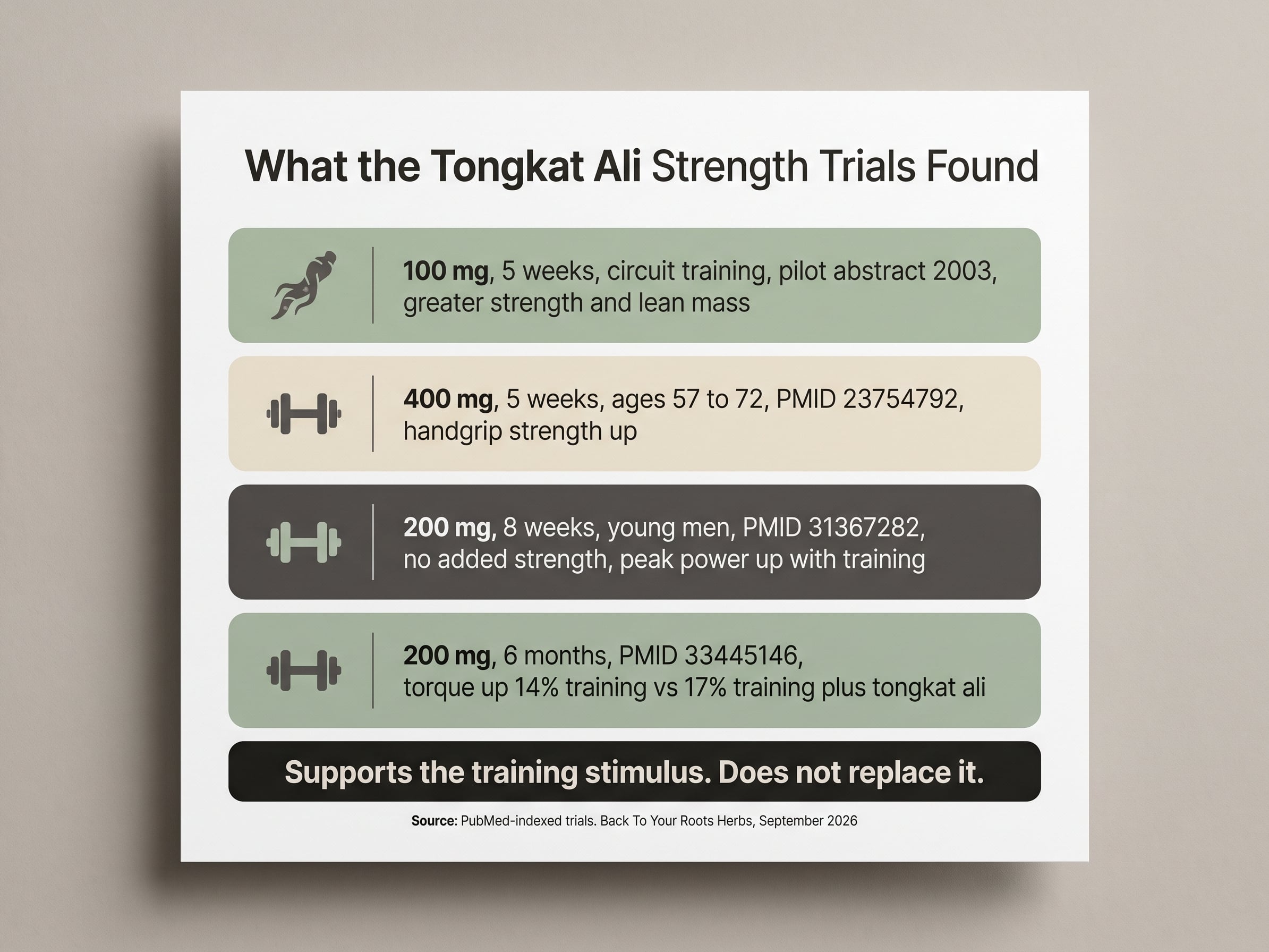
- A 5-week pilot in men doing circuit training with 100 mg per day reported greater strength and lean-mass gains than training alone. It was published as a conference abstract (Hamzah and Yusof 2003, British Journal of Sports Medicine), not as a full peer-reviewed trial.
- Five weeks of 400 mg per day improved handgrip strength and raised total and free testosterone in physically active men and women aged 57 to 72 (Henkel et al. 2014, Phytotherapy Research, PMID: 23754792).
- Eight weeks of 200 mg per day in 40 young men: resistance training improved lower-limb isokinetic power with or without tongkat ali; cycling peak power rose only in the combined group, and tongkat ali alone changed nothing (Chen et al. 2019, International Journal of Preventive Medicine, PMID: 31367282).
- Six months of 200 mg per day in 45 men with androgen deficiency of aging: knee-extensor peak torque rose 14% with concurrent training alone and 17% with training plus tongkat ali, while the herb by itself did not increase strength (Leitão et al. 2021, Complementary Therapies in Clinical Practice, PMID: 33445146).
- Verdict: tongkat ali may support the training stimulus. It does not replace it, and it has never produced muscle in a study where nobody trained.
Can tongkat ali help build muscle? Only in the way a better hormonal environment can. The 6-month trial found that testosterone levels correlated with knee-extension torque across all participants (r = 0.52), which is the route by which a modest hormonal shift could translate into slightly better adaptation over months (PMID: 33445146). Nobody should expect the 37% salivary testosterone change from the stress trial to show up as 37% more on the bar. It does not, and the strength trials say so. Tongkat ali is not a synthetic anabolic substance or a steroid, and the results it is associated with are a response to a training and nutrition program that was already working.
Can tongkat ali help with muscle recovery after intense workouts?
The recovery case rests on cortisol and immune function rather than on soreness studies, which do not yet exist for this herb. Keeping cortisol from staying high after heavy sessions may support recovery from heavy training loads, and the 16% salivary cortisol reduction is the relevant data point (PMID: 23705671). Separately, 200 mg per day of Physta for 4 weeks raised total, naive, and CD4+ T-cell counts and an immunological vigor score in 83 middle-aged men and women (George et al. 2016, Phytotherapy Research, PMID: 26816234). Heavy training blocks are known to depress immune markers, so that is a reasonable place for an adaptogen to earn its keep. We have observed in our own testing that the effect people describe is a steadier mood through a hard week, not faster muscle repair.
How does tongkat ali compare to shilajit, fadogia agrestis, and ashwagandha for performance?
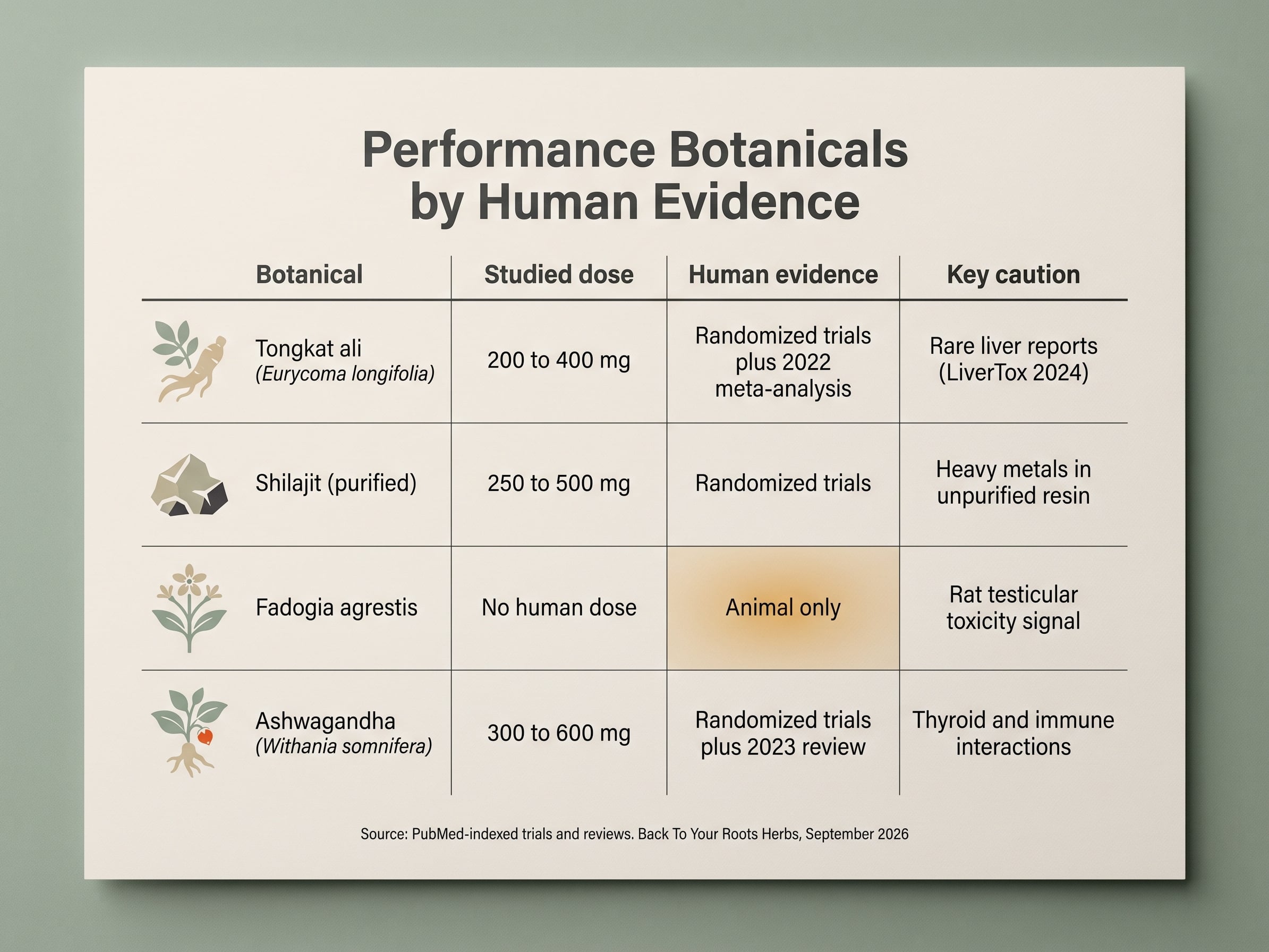
Four botanicals dominate the natural performance conversation. Two have human strength trials, one has a testosterone review behind it, and one has no human data at all.
| Botanical | Active compounds | Studied dose | Human evidence tier | Strongest performance-relevant finding | Key caution | Source PMID |
|---|---|---|---|---|---|---|
| Tongkat ali (Eurycoma longifolia root) | Eurycomanone and related quassinoids, eurypeptides, glycosaponins | 200 to 400 mg per day standardized water extract | Randomized trials plus a 2022 meta-analysis | Cortisol down 16%, testosterone up 37% over 4 weeks. Strength gains only when combined with training | Rare liver-injury reports (NIH LiverTox 2024). Restlessness, trouble sleeping | 23705671, 36013514, 33445146 |
| Shilajit (purified resin, PrimaVie) | Fulvic acid, dibenzo-alpha-pyrones | 250 to 500 mg per day | Randomized trials | 500 mg for 8 weeks preserved maximal strength after a fatiguing protocol in the stronger half of 63 men. 250 mg twice daily for 90 days raised total and free testosterone in men aged 45 to 55 | Heavy-metal contamination in unpurified resin | 30728074, 26395129 |
| Fadogia agrestis (stem) | Alkaloids, saponins | No human dose established | Animal only. No human trial | Raised serum testosterone in male rats over 5 days | Adverse testicular function changes in rats at every dose over 28 days. No human safety data | 16281088, 18023305 |
| Ashwagandha (Withania somnifera root) | Withanolides | 300 to 600 mg per day standardized extract | Randomized trials plus a 2023 systematic review | Graded as possibly effective for testosterone in healthy men across a 52-study review | Thyroid and immune-medication interactions. Rare liver reports | 37697053 |
| Source: PubMed-indexed trials and reviews cited by PMID. Compiled by the Back To Your Roots Herbs Editorial Team, September 2026. | ||||||
Should you stack tongkat ali with fadogia or avoid it? Avoid it, in our reading. Fadogia agrestis has never been tested in a human trial, and the same laboratory that showed it raised testosterone in rats later found adverse changes in testicular-function markers at every dose over 28 days (Yakubu et al. 2007, Journal of Ethnopharmacology, PMID: 18023305). Adding an untested botanical to one that carries a liver signal compounds two unknowns. Our separate guide to fadogia agrestis and tongkat ali benefits covers the rat data in full.
Is ashwagandha better than tongkat ali for testosterone? A 2023 systematic review of 52 studies graded both Eurycoma longifolia and Withania somnifera as possibly effective for healthy men, graded Eurycoma longifolia and purified shilajit as possibly effective for men with late-onset hypogonadism, and found that Tribulus terrestris and most marketed testosterone products did not raise total testosterone at all (Morgado et al. 2023, International Journal of Impotence Research, PMID: 37697053). The only ingredients that the review graded as effective for male athletes were beta-hydroxy beta-methylbutyrate and betaine, neither of which is a herb. An August 2026 critical review in Pharmacological Research landed in the same place: standardized tongkat ali, ashwagandha, and fenugreek show limited-to-moderate evidence for modest testosterone increases in selected male populations, and the authors call for active hepatotoxicity surveillance (Sharma et al. 2026, PMID: 42575271). For the resin, our guide to shilajit for bodybuilding walks through the strength-retention trial in detail.
Are there side effects or safety concerns with tongkat ali?
The most commonly reported effects are restlessness or trouble sleeping, irritability, and mild stomach upset, according to the Natural Standard evidence-based systematic review (Ulbricht et al. 2013, Journal of Dietary Supplements, PMID: 23419023). Rare but documented liver injury is the concern that matters most: the National Institutes of Health added a Tongkat Ali chapter to its LiverTox database in 2024, citing reports of clinically apparent liver injury in bodybuilders, and a 2024 case report describes a 47-year-old man who developed jaundice and raised liver enzymes after starting the herb and recovered when he stopped (Kaliounji et al. 2024, Cureus, PMID: 38646387). For balance, controlled trials at 400 mg per day for 6 weeks in recreational athletes and at 300 mg per day for 12 weeks in 109 men found no change in liver or kidney markers (Chen et al. 2014, PMID: 25013692, and Ismail et al. 2012, PMID: 23243445). People with liver disease, heavy alcohol use, a hepatotoxic prescription, or a multi-ingredient anabolic stack already in the cabinet should not take tongkat ali. Anyone who notices dark urine, yellowing eyes, or pain under the right ribs should stop and seek care.
Liver injury reports: what LiverTox actually says
LiverTox is the National Institutes of Health and National Library of Medicine reference on drug- and supplement-induced liver injury, and its tongkat ali chapter was last updated in October 2024. Its position is measured. The herb has a long traditional record; earlier controlled trials showed no toxicity, and the recent case reports in bodybuilders are the reason it now has a chapter at all. Two features of those reports stand out to our editorial team. The users were often taking several products at once, and the injury resolved on discontinuation. That argues for single-ingredient products with a third-party certificate of analysis, and for a liver panel every few months in anyone using tongkat ali continuously.
Drug interactions
A 200 mg water extract reduced the bioavailability of the beta-blocker propranolol by 29% and its peak concentration by 42% in a crossover trial in healthy men, an interaction at the level of absorption rather than metabolism (Salman et al. 2010, Journal of Clinical Pharmacy and Therapeutics, PMID: 21054461). Anyone taking a blood-pressure medication, a blood-sugar medication, or an immunosuppressant should treat tongkat ali as a conversation with their prescriber first (PMID: 23419023). Pregnancy and nursing are contraindications by default.
Is tongkat ali safe for drug-tested athletes?
Eurycoma longifolia does not appear on the World Anti-Doping Agency Prohibited List, and two trials measured the urinary testosterone-to-epitestosterone ratio that doping controls rely on. Neither 400 mg per day for 6 weeks (PMID: 25013692) nor 200 mg per day for 8 weeks (PMID: 31367282) changed the ratio. The real risk for a tested athlete is adulteration. Products labeled tongkat ali have been found to contain none of the root and instead contain prescription erectile dysfunction drugs, a pattern documented in the sports-nutrition literature. A third-party test is the athlete’s protection. The herb’s reputation is not.
What is the best tongkat ali dosage for fitness, and when should you take it?
The trial-supported range is 200 to 400 mg per day of a standardized water extract, taken once daily. The ladder runs: 200 mg per day in the 8-week resistance-training study and the 6-month concurrent-training trial (PMIDs: 31367282, 33445146), 300 mg per day in the 12-week quality-of-life trial (PMID: 23243445), 400 mg per day in the 6-week athlete safety study and the 5-week seniors trial (PMIDs: 25013692, 23754792), and 600 mg per day for only 2 weeks in the young-male hormone study (PMID: 33559971). Start at the bottom of the range for a week to check tolerance, then hold one dose long enough for the trial timelines to apply. Whole-root powder is a different measure. A gram of milled root delivers far less eurycomanone than 200 mg of a 100:1 or 200:1 extract, so do not convert between them by weight.
What happens if you take tongkat ali every day?
Every trial cited here dosed once daily and continuously, for 2 weeks to 6 months, and none reported liver or kidney marker changes over those periods. The cycling protocols popular online, five days on and two off or eight weeks on and two off, have never been tested in a trial. Cycling is a user practice, not a clinical finding. Our own products carry an eight-weeks-on, two-weeks-off guideline as a conservative default, and we say plainly that it is a convention. For long-term daily users, the case-report literature argues for a liver panel every few months, a small price for a herb that touches hormone signaling.
Should you take tongkat ali before bed or in the morning?
No trial has compared dosing times. Because restlessness and trouble sleeping are among the most commonly reported effects, morning or pre-training dosing is the convention, and it is the one we follow. Taking tongkat ali before bed has no supporting study and runs against the side-effect profile. Take it with food if it bothers your stomach.
Is tongkat ali effective for women?
Women have been in the trials from the start, though rarely as the focus. The 4-week stress-hormone trial enrolled 31 women alongside 32 men, and the cortisol and mood improvements were reported for the group as a whole (PMID: 23705671). The 5-week seniors trial that improved handgrip strength included women aged 57 to 72 (PMID: 23754792), and the immune study enrolled middle-aged men and women at 200 mg per day (PMID: 26816234). A 150-woman randomized trial of 50 mg and 100 mg Physta in perimenopausal and postmenopausal women, measuring mood, fatigue, sleep quality, and sexual function, is registered, and its results are pending (Muniandy et al. 2023, BMJ Open protocol, PMID: 37914304). Until it reports, the honest position is that tongkat ali supports the same stress-hormone system in women, that the trials used lower doses for them, and that pregnancy and nursing remain contraindications.
How we source and test our tongkat ali
In our sourcing experience, the character of Eurycoma longifolia root is set by terroir and age. Our Tongkat Ali Powder is wild-harvested whole root from the Karo Highlands of North Sumatra, milled without extraction so the full quassinoid profile stays intact, and it is the most bitter root we have ever cupped. Our Tongkat Ali Capsules carry a 200:1 standardized extract from primary rainforest terroir in Riau, Sumatra, at the milligram doses the trials used, and they support testosterone already within the normal range rather than promising anything beyond it. Every batch of both is third-party tested for lead, arsenic, cadmium, mercury, and microbial load, which is the certificate a drug-tested athlete should ask any supplier for before anything else. The wider Athletic Performance collection groups the rest of our training botanicals.
Frequently asked questions about tongkat ali for fitness and performance
What is the best dosage of tongkat ali for athletes?
200 to 400 mg per day of a standardized water extract, taken once daily, is the range every strength and safety trial used. Start at 200 mg for the first week. Whole-root powder is dosed in grams and is not interchangeable with extract by weight.
Can tongkat ali help build muscle?
Only alongside training, and modestly. Two trials found small additional strength gains when tongkat ali was added to a training program, one found none, and no trial has found muscle or strength gains from the herb without training (PMIDs: 33445146, 31367282, 23754792).
How quickly does tongkat ali increase testosterone?
Hormonal changes appeared within 2 weeks at 600 mg per day in healthy young men (PMID: 33559971) and within 4 weeks at a standard dose in moderately stressed adults (PMID: 23705671). Strength and body-composition changes took 5 weeks to 6 months and required training.
What happens if I take tongkat ali every day?
Trials dosed once daily for up to 6 months without liver or kidney marker changes (PMIDs: 25013692, 23243445, 33541567). Daily use is how the research was done. Cycling has not been studied. Long-term users should consider a periodic liver panel given the 2024 case reports.
Can you take tongkat ali with cistanche?
Yes, the two are commonly paired in modern herbalism, with tongkat ali studied for cortisol and testosterone balance, and Cistanche used traditionally for energy and vitality support. Our guide to combining cistanche and tongkat ali covers doses and timing for the pair.
Should I stack tongkat ali with fadogia agrestis or avoid it?
Avoid it. Fadogia agrestis has no human trials, and rat studies found adverse testicular-function changes at every dose over 28 days (PMID: 18023305). Adding an untested botanical to one with a documented liver signal is two unknowns, not one stack.
Is tongkat ali safe for the liver?
For most healthy adults at 200 to 400 mg per day, trials found no liver marker changes over 6 to 12 weeks (PMIDs: 25013692, 23243445). NIH LiverTox added a chapter in 2024 because of rare but real liver-injury reports in bodybuilders (PMID: 38646387). Do not use it with liver disease, heavy alcohol use, or hepatotoxic medication.
Is tongkat ali effective for both men and women?
The cortisol and mood benefits were reported in mixed groups of men and women (PMID: 23705671), and the seniors strength trial included women (PMID: 23754792). A dedicated trial in perimenopausal women is underway (PMID: 37914304). It is not for use in pregnancy or nursing.
Related reading
Continue with our guides to natural athletic performance enhancers, the best herbs for muscle growth, the testosterone herbal supplements the evidence actually supports, and ashwagandha for testosterone.
Important: This article is for educational and informational purposes. The statements have not been evaluated by the Food and Drug Administration. The herbs and herbal products discussed are not intended to diagnose, treat, cure, or prevent any disease. Speak with a qualified healthcare provider before starting any new herbal regimen, especially if you are pregnant, nursing, taking medication, or managing a health condition.