Key Takeaways
- Natural athletic performance enhancers are legal, food- or plant-derived substances, such as caffeine, dietary nitrate from beetroot, creatine, and adaptogenic herbs, used to support energy output, endurance, and recovery around training.
- The International Olympic Committee consensus names only caffeine, creatine, nitrate, and buffering agents such as beta-alanine and sodium bicarbonate as having good evidence of benefit (Maughan et al. 2018, British Journal of Sports Medicine, PMID: 29540367).
- Among herbs, rhodiola (Rhodiola rosea) has the strongest data: a 2025 meta-analysis of 26 randomized trials reported gains in VO2max and time to exhaustion. Ashwagandha, cordyceps, and Panax ginseng sit at moderate or preliminary tiers.
- Turmeric and ginger have controlled-trial data for muscle soreness after exercise, though the curcumin evidence is mixed and depends on the formulation used.
- The main risks are contaminated products that contain prohibited substances, dose-related side effects, and herb-drug interactions. Third-party tested products and a conversation with your healthcare provider address all three.
Natural athletic performance enhancers get more marketing than measurement. Every training plateau produces a new list of powders and roots, and most of those lists never say which ingredients have controlled trials behind them, at what dose, and for which kind of effort. This guide does. We organized it around the questions athletes actually ask, sorted every ingredient by the strength of its evidence, and listed the doses used in the cited studies rather than the doses printed on labels.
Our editorial team reviewed the primary literature for each ingredient below and checked every study identifier against PubMed before it went into this article. Back To Your Roots Herbs sells several of the botanicals discussed here. We do not sell creatine, beta-alanine, or sodium bicarbonate, and we still lead with them, because that is where the evidence is strongest. An honest map is more useful to a training athlete than a flattering one.
Which natural performance enhancers have the strongest evidence?
Natural athletic performance enhancers are legal, food- or plant-derived substances, such as caffeine, dietary nitrate from beetroot (Beta vulgaris), creatine, and adaptogenic herbs like rhodiola (Rhodiola rosea), used to support energy output, endurance, and recovery. The International Olympic Committee names only caffeine, creatine, nitrate, and buffering agents as having good evidence of benefit, with herbs at moderate or preliminary tiers (Maughan et al. 2018, British Journal of Sports Medicine, PMID: 29540367). Caffeine at 3 to 6 mg per kilogram of body mass is the single best-documented dose in the field (Guest et al. 2021, Journal of the International Society of Sports Nutrition, PMID: 33388079).
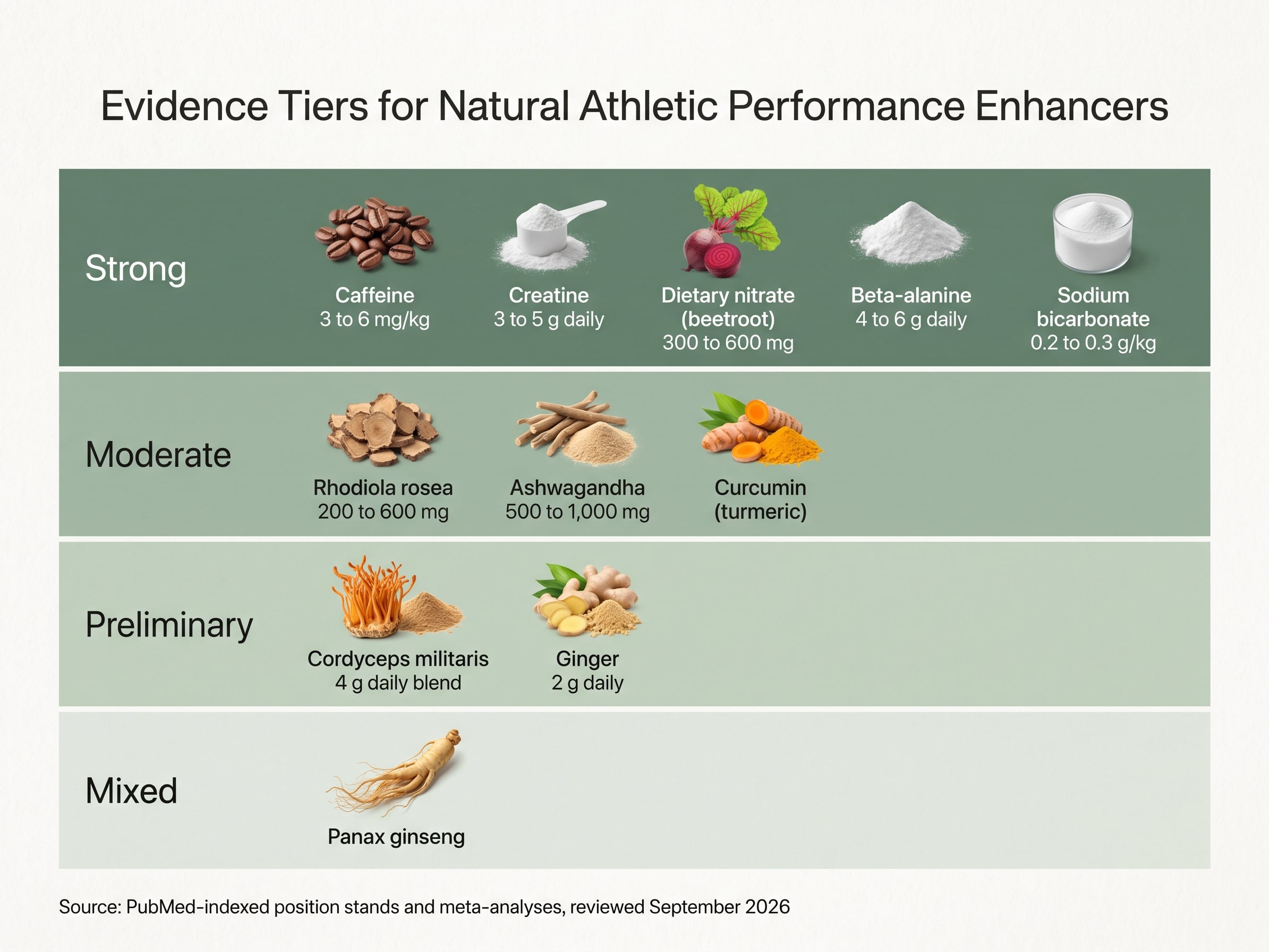
The table below is the short version of everything that follows. Doses are the amounts used in the cited trials, not recommendations, and every row assumes you have already talked with a healthcare provider if you take medication, compete in a tested sport, or have a diagnosed condition. Rows are grouped by the training goal each ingredient has the best data for: endurance, strength and power, or recovery.
| Enhancer | Best-evidenced use | Evidence tier | Dose used in trials | Main caution | Source |
|---|---|---|---|---|---|
| Caffeine (coffee, tea, guarana seed) | Endurance, power, strength | Strong (ISSN position stand, IOC consensus) | 3 to 6 mg per kg body mass, about 60 minutes before exercise | Sleep loss and anxiety in sensitive people. Side effects climb near 9 mg per kg. | Guest 2021, PMID 33388079. Yu and Ding 2025, PMID 41058995 |
| Creatine monohydrate | Strength, power, repeated high-intensity efforts | Strong (ISSN position stand) | 3 to 5 g daily | Early water-weight gain. Kidney disease caution. | Kreider 2017, PMID 28615996 |
| Dietary nitrate (beetroot, Beta vulgaris) | Endurance, exercise economy | Strong in recreational athletes, limited in elite athletes | About 300 to 600 mg nitrate (70 to 140 mL concentrated juice), 2 to 3 hours before | Blunted by antibacterial mouthwash. Harmless pink urine. | Dominguez 2017, PMID 28067808. Yu and Ding 2025, PMID 41058995 |
| Beta-alanine | High-intensity efforts of 1 to 4 minutes | Strong (ISSN position stand) | 4 to 6 g daily for at least 2 to 4 weeks | Tingling (paraesthesia), reduced by divided doses. | Trexler 2015, PMID 26175657 |
| Sodium bicarbonate | High-intensity efforts of 30 seconds to 12 minutes, combat sports | Strong (ISSN position stand) | 0.2 to 0.3 g per kg, 60 to 180 minutes before | Bloating, nausea, and stomach upset. | Grgic 2021, PMID 34503527 |
| Rhodiola (Rhodiola rosea) | Endurance, perceived exertion, recovery markers | Moderate and growing (26-trial meta-analysis) | Roughly 200 to 600 mg extract daily, with larger VO2max gains above 600 mg | Stimulating for some. Caution with thyroid or antidepressant medication. | Wang 2025, PMID 41080184. Sanz-Barrio 2023, PMID 37495266 |
| Ashwagandha (Withania somnifera) | VO2max, strength in resistance-trained adults | Moderate (4-trial meta-analysis, high heterogeneity) | 500 to 1,000 mg root extract daily, 8 to 12 weeks | Not with thyroid medication or immunosuppressants without provider input. Avoid in pregnancy. | Perez-Gomez 2020, PMID 32316411 |
| Cordyceps (Cordyceps militaris) | Time to exhaustion, ventilatory threshold | Preliminary (one randomized trial of a mushroom blend) | 4 g daily of a Cordyceps militaris blend, 1 to 3 weeks | Small trial. Blend, not a single-species product. | Hirsch 2016, PMID 27408987 |
| Panax ginseng | Muscle soreness, perceived fatigue | Mixed (umbrella review: soreness reduction, moderate certainty) | Doses vary widely across trials | Caution with anticoagulants and diabetes medication. | Talebi 2024, PMID 37460208 |
| Turmeric (Curcuma longa, curcumin) | Muscle soreness and creatine kinase after exercise | Moderate but mixed (two meta-analyses disagree) | Bioavailable curcumin forms, wide dose range across trials | Anticoagulant interaction. Gallbladder disease caution. | Beba 2022, PMID 35574627. Oxley 2023, PMID 37408367 |
| Ginger (Zingiber officinale) | Muscle pain after eccentric exercise | Limited (one randomized trial in two parts) | 2 g raw or heated ginger daily, 11 days | Mild stomach upset. Anticoagulant caution. | Black 2010, PMID 20418184 |
| Source: PubMed-indexed position stands, consensus statements, meta-analyses, and trials cited by PMID in each row. Doses are those used in the cited research, not recommendations. Evidence tiers reflect the number and quality of randomized trials, not the size of the effect. | |||||
How do caffeine, creatine, beta-alanine, and bicarbonate compare with herbal enhancers?
Caffeine improves endurance, muscular strength, sprint, and jump performance at 3 to 6 mg per kilogram of body mass taken about 60 minutes before exercise, and aerobic endurance shows the most consistent benefit (Guest et al. 2021, PMID: 33388079). A 2025 systematic review of 46 trials in elite athletes found caffeine to be the single most consistent performance enhancer studied (Yu and Ding 2025, Frontiers in Nutrition, PMID: 41058995). Coffee and tea are the usual sources. Guarana seed (Paullinia cupana) and kola nut (Cola acuminata) are the traditional botanical sources from the Amazon basin and West Africa, and our guarana seed capsules supply caffeine in whole-seed form with its naturally occurring catechins and tannins. Doses near 9 mg per kilogram add side effects without adding performance.
Creatine monohydrate raises the creatine stored inside muscle, which supports repeated high-intensity efforts and greater adaptation to training over time. The International Society of Sports Nutrition position stand reports that 3 g daily maintains those stores and that supplementation up to 30 g daily for five years was well tolerated in healthy people (Kreider et al. 2017, PMID: 28615996). It is not a herb, and we do not sell it. It belongs in this article because no botanical product matches its strength and power data.
Beta-alanine at 4 to 6 g daily for at least two to four weeks raises muscle carnosine, a buffer that slows the acid build-up inside working muscle, and improves performance most in open-ended efforts lasting one to four minutes. The only reported side effect is a harmless tingling that divided doses reduce (Trexler et al. 2015, PMID: 26175657).
Sodium bicarbonate at 0.2 to 0.3 g per kilogram, taken 60 to 180 minutes before high-intensity work lasting 30 seconds to 12 minutes, improves muscular endurance and performance in combat sports, cycling, rowing, running, and swimming. Bloating and nausea are common enough that athletes test it in training first, and the ISSN notes that part of its effect may be placebo-driven (Grgic et al. 2021, PMID: 34503527).
Where do herbs fit? Below these four in evidence, above most of what is sold as a natural pre-workout, and with a different job. The best-studied botanicals act on perceived exertion, oxygen use, and recovery markers over weeks of use rather than on a single session’s output.
Do adaptogens like rhodiola improve endurance and recovery?
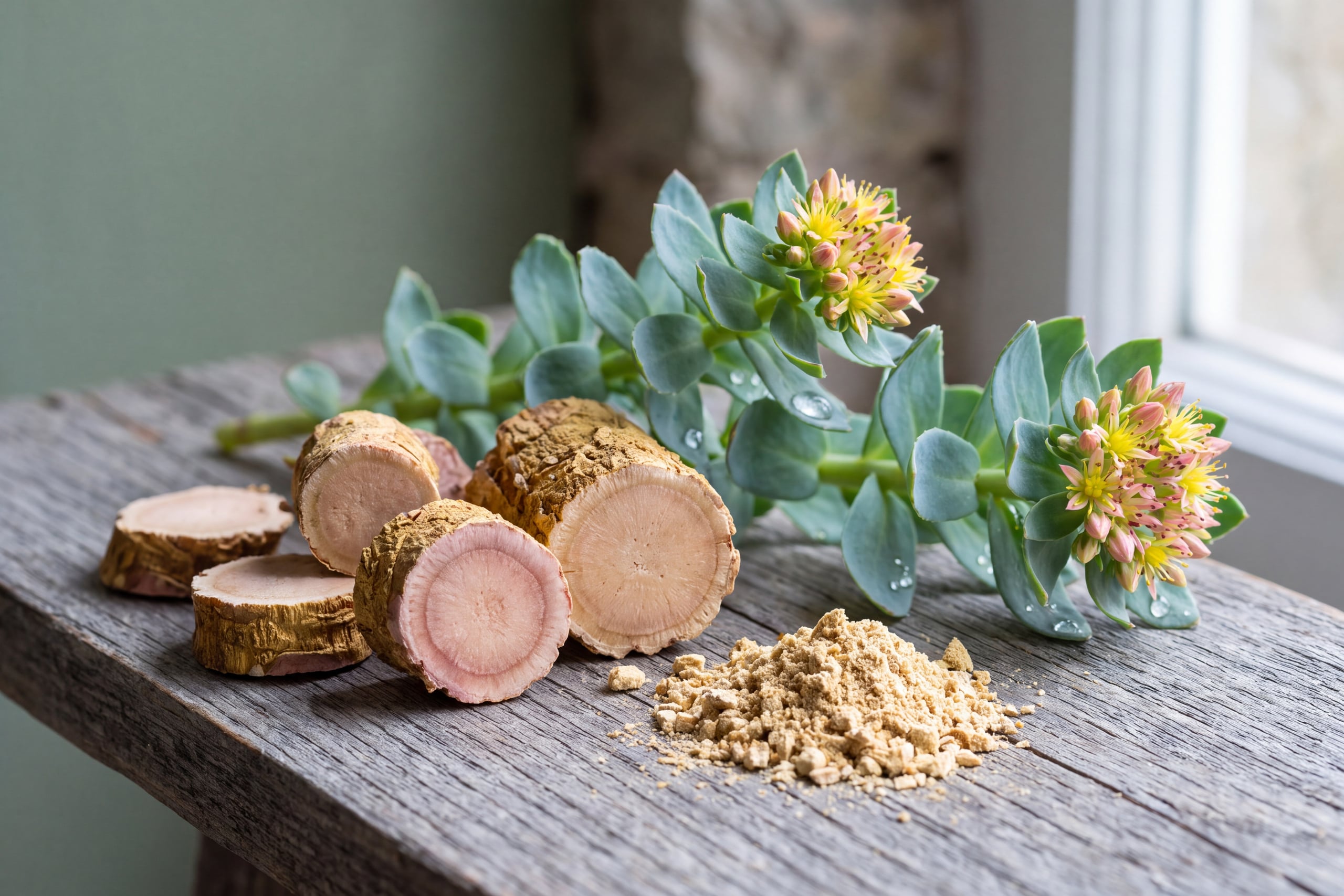
Rhodiola (Rhodiola rosea) is the adaptogen with the strongest athletic evidence. A 2025 meta-analysis of 26 randomized controlled trials in 668 healthy participants reported improvements in VO2max, time to exhaustion, and time-trial performance, along with lower creatine kinase and lactate after exercise, with larger VO2max gains at doses above 600 mg per day (Wang et al. 2025, Frontiers in Nutrition, PMID: 41080184). A 2023 systematic review of 13 trials drew a useful line: a single dose taken before a session improved endurance and rating of perceived exertion, while daily use over weeks improved anaerobic performance and may lower markers of muscle damage but did not improve endurance (Sanz-Barrio et al. 2023, Phytotherapy Research, PMID: 37495266).
The marker compounds are rosavins and salidroside, phenylpropanoid and phenylethanoid molecules concentrated in the root. The standardized extracts used in most trials carried 3 percent rosavins and 1 percent salidroside, which is the same standard we require for our rhodiola rosea capsules, made from Altai Siberian root. In our sourcing experience, root from high-altitude Altai and Siberian stands tends to test higher for rosavins on its certificate of analysis than lowland cultivated material, which is why the extract standard matters more than the word rhodiola on a label.
Panax ginseng has a longer tradition and a shorter evidence trail for performance. A 2024 umbrella review of 53 meta-analyses on nutrition for exercise-induced muscle damage found that ginseng reduced muscle soreness with moderate-certainty evidence, alongside curcumin and polyphenols (Talebi et al. 2024, Nutrition Reviews, PMID: 37460208). Its effects on endurance measures are inconsistent across trials, so we place it in the recovery column rather than the endurance column. Our red ginseng capsules use six-year Geumsan root, the traditional harvest age in Korean practice.
Do cordyceps and ashwagandha benefit athletes the way rhodiola does?
Not yet at the same evidence level, though both have controlled data. Cordyceps militaris, taken as 4 grams daily of a mushroom blend, improved time to exhaustion by 28 seconds after one week and by 70 seconds after three weeks in a randomized placebo-controlled trial, with VO2max rising 4.8 mL per kg per minute and ventilatory threshold improving only after three weeks of use (Hirsch et al. 2016, Journal of Dietary Supplements, PMID: 27408987). That is one trial of 28 people using a blend, which places cordyceps at a preliminary tier. The signal sits in tolerance of hard efforts and ventilatory threshold rather than raw VO2max, and it appears with consistent daily use. Our cordyceps capsules contain 100 percent Cordyceps militaris fruiting body, the species used in that trial, and our guide to cordyceps for working out covers dosing and timing in detail.
Ashwagandha (Withania somnifera) has a meta-analysis behind it. Four randomized trials in 142 participants found a mean VO2max increase of 3.00 mL per kg per minute with root extract, though heterogeneity was high and the authors called for larger studies (Perez-Gomez et al. 2020, Nutrients, PMID: 32316411). The pooled trials used 500 to 1,000 mg of root extract daily for 8 to 12 weeks. Withanolides, the steroidal lactones in the root, are the compounds those extracts are standardized to. For strength outcomes specifically, our article on ashwagandha and bodybuilding walks through the five trials one by one.
How do beetroot and citrulline raise nitric oxide?
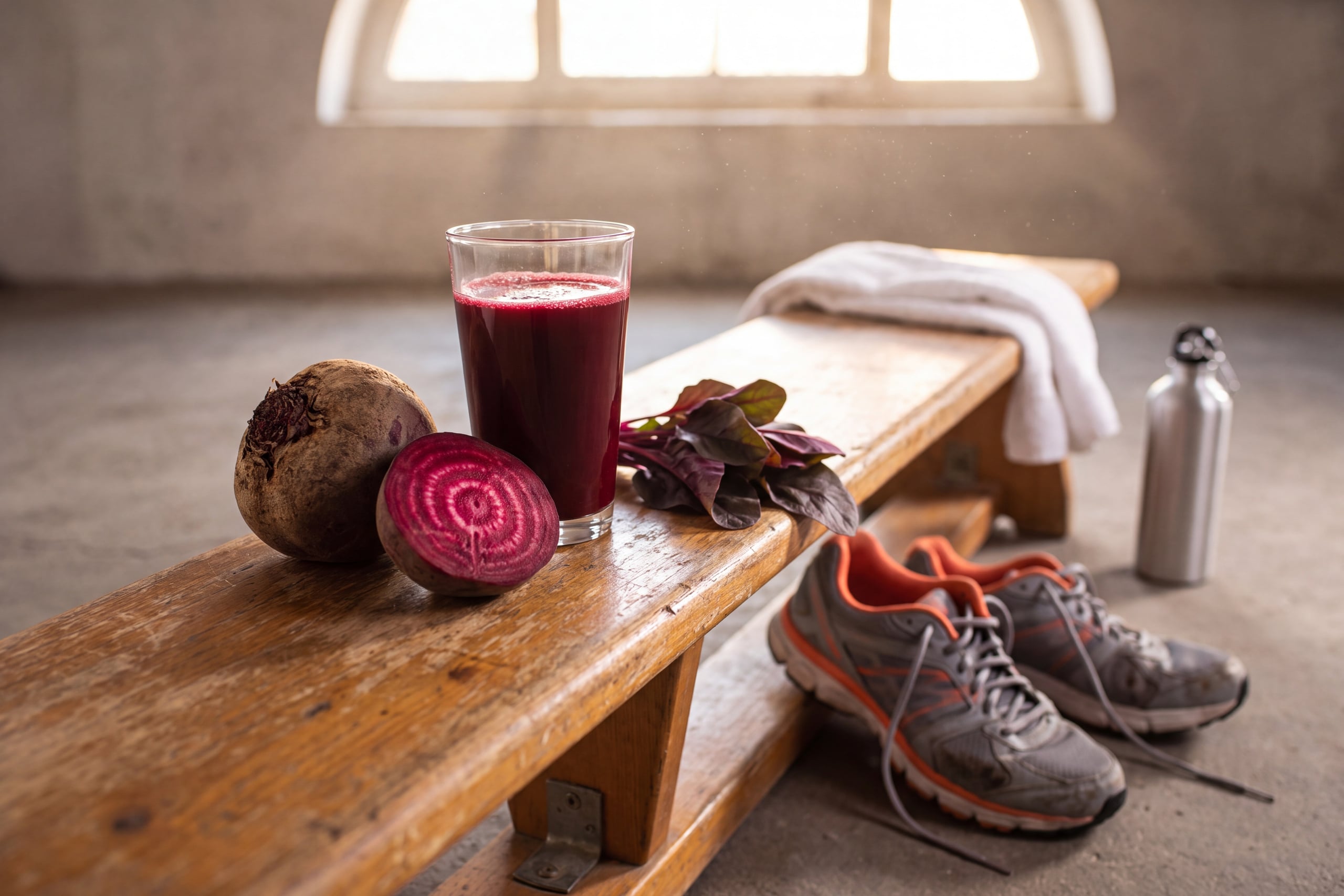
Beetroot (Beta vulgaris) raises nitric oxide through inorganic nitrate. Bacteria on the tongue reduce dietary nitrate to nitrite; the body converts nitrite to nitric oxide, and nitric oxide widens blood vessels and lowers the oxygen cost of submaximal exercise. A systematic review of 23 studies found that beetroot juice improved cardiorespiratory endurance, increased time to exhaustion at submaximal intensities, and may improve performance at the anaerobic threshold (Dominguez et al. 2017, Nutrients, PMID: 28067808). In elite athletes, the picture is weaker. The 2025 review of 46 elite-athlete trials reported limited effects of nitrate in that population (Yu and Ding 2025, PMID: 41058995), which fits a pattern in which highly trained athletes already run close to their nitric oxide ceiling.
Trial protocols commonly used 70 to 140 mL of concentrated beetroot juice, roughly 300 to 600 mg of nitrate, two to three hours before exercise. Two practical notes come from that literature. Antibacterial mouthwash blunts the effect by removing the oral bacteria that perform the first conversion, and red spinach (Amaranthus dubius), arugula, and other leafy greens supply nitrate through the same pathway.
L-citrulline works through the other nitric oxide route. The kidneys convert it to L-arginine, the direct substrate of nitric oxide synthase, and it raises blood arginine more reliably than arginine itself because it bypasses first-pass metabolism in the gut and liver. The performance data for citrulline malate in trained adults are smaller and less consistent than the nitrate data, so we list it as a mechanism worth knowing rather than a first-line choice.
What natural foods support athletic performance?
- Beetroot (Beta vulgaris): dietary nitrate converted to nitric oxide, with 23 studies supporting better endurance and time to exhaustion when taken two to three hours before exercise (Dominguez et al. 2017, PMID: 28067808).
- Coffee and tea: caffeine at 3 to 6 mg per kilogram about 60 minutes before training. A 70 kg athlete lands in range with roughly 200 to 400 mg (Guest et al. 2021, PMID: 33388079).
- Guarana seed and kola nut: the whole-seed botanical caffeine sources traditionally used in the Amazon basin (Paullinia cupana) and West Africa (Cola acuminata), for athletes who prefer caffeine from a plant they can name.
- Tart cherry (Prunus cerasus): anthocyanins studied for muscle soreness and sleep after hard training, usually as 30 mL of concentrate twice daily in trials.
- Turmeric root (Curcuma longa) and ginger (Zingiber officinale): curcumin and gingerols, the two kitchen botanicals with controlled-trial data for post-exercise muscle soreness (Beba et al. 2022, PMID: 35574627; Black et al. 2010, PMID: 20418184).
- Red spinach (Amaranthus dubius) and leafy greens: dietary nitrate through the same pathway as beetroot, with no juice required.
- Alfalfa leaf (Medicago sativa): a nutrient-dense green with a full amino acid profile and vitamin K, useful as an addition to a training diet, not as a protein source.
Which herbs support strength and muscle growth?
Muscle grows when protein synthesis outpaces protein breakdown across weeks of resistance training, and no herb changes that arithmetic. What some botanicals may do is support the hormonal environment and the recovery that training depends on. Tongkat ali (Eurycoma longifolia) is the most studied of these. Its quassinoids, led by eurycomanone, are the compounds of interest, and the human trials to date are small, short, and mixed, so we treat it as an active area of research rather than a settled result. Our guide to tongkat ali for fitness and performance covers the cortisol and hormone data, and our guide Is Turkesterone a Steroid explains why the ecdysteroids in Ajuga turkestanica are not androgens.
Our Athletic Muscle Growth Powder combines Ajuga turkestanica with black maca (Lepidium meyenii) and a standardized green tea extract for athletes who want a plant-based stack to mix into a post-training shake. It supports a training program. It does not replace one.
Alfalfa (Medicago sativa) appeared in the earlier version of this guide as a recovery herb because its leaf carries all nine essential amino acids, including the branched-chain amino acids leucine, isoleucine, and valine. That is accurate, and it is also true that the total protein in a serving of leaf powder is small. Treat our alfalfa powder as a nutrient-dense green, not as a protein source. Whey, eggs, legumes, and meat do that job.
Which herbs support recovery after training?
Turmeric (Curcuma longa, active compound curcumin) and ginger (Zingiber officinale, active compounds gingerols and shogaols) are the recovery botanicals with controlled-trial data. A dose-response meta-analysis of ten randomized trials found that curcumin supplementation lowered serum creatine kinase by about 66 IU per liter, reduced muscle soreness scores by 0.56 points on a visual analogue scale, and improved maximal voluntary contraction and range of motion after damaging exercise (Beba et al. 2022, Phytotherapy Research, PMID: 35574627). Ginger at 2 grams daily for 11 days reduced muscle pain 24 hours after eccentric exercise by roughly 25 percent compared with placebo, whether the ginger was raw or heat-treated (Black et al. 2010, Journal of Pain, PMID: 20418184).
The honest caveat: a 2023 meta-analysis of the curcumin trials found no statistically significant effect on muscle damage markers, soreness, or inflammation at any time point and called for better-designed studies (Oxley and Peart 2023, Nutrition and Health, PMID: 37408367). The two reviews disagree partly because the trials used different curcumin formulations. Plain curcumin is poorly absorbed, and the positive trials mostly used lipid-based or piperine-enhanced forms. Our organic turmeric powder is whole rhizome from Erode in Tamil Nadu, India’s geographically recognized turmeric region, and from our hands-on use, we pair it with black pepper and a fat source for exactly that reason. The right framing for both herbs is support for a healthy inflammatory response after exercise, not a substitute for sleep, protein, and rest days.
What are the safety risks of performance supplements?
The main risks of performance supplements are inadvertent ingestion of substances prohibited under anti-doping codes through contaminated or mislabeled products, dose-related side effects, and herb-drug interactions. The IOC consensus statement describes inadvertent ingestion of prohibited substances as a known risk of some supplements and recommends expert assessment before an athlete starts any of them (Maughan et al. 2018, PMID: 29540367). The World Anti-Doping Agency Prohibited List is updated every January, and tested athletes should read it directly rather than trusting a label.
- Contamination: drug-tested athletes should choose products carrying a third-party certification for sport, such as NSF Certified for Sport or Informed Sport. Single-herb products from suppliers who publish batch testing lower the risk. Proprietary blends with undisclosed amounts raise it.
- Caffeine: sleep loss, anxiety, and a racing heart rise sharply near 9 mg per kilogram. Genetic differences in caffeine metabolism explain much of the variation between people (Guest et al. 2021, PMID: 33388079). Caffeine is on the WADA monitoring program but is not prohibited.
- Beta-alanine: tingling of the skin, which is harmless and fades with divided doses (Trexler et al. 2015, PMID: 26175657).
- Sodium bicarbonate: bloating, nausea, and vomiting. Test it in training, never for the first time in competition (Grgic et al. 2021, PMID: 34503527).
- Creatine: a kilogram or two of water weight in the first weeks. People with kidney disease should ask a physician first.
- Adaptogens: rhodiola and ashwagandha can interact with thyroid medication, sedatives, immunosuppressants, and some antidepressants. Ashwagandha is not recommended during pregnancy.
- Turmeric, ginger, and Panax ginseng: caution with anticoagulant and antiplatelet drugs. Panax ginseng may affect blood glucose in people taking diabetes medication.
- Pregnancy, nursing, and athletes under 18: none of the ingredients in this article have adequate safety data in these groups. Talk with a healthcare provider.
Supplements support a program. They do not replace one. In our editorial team’s experience reviewing ingredient labels, the products that cause trouble are rarely the single herbs. They are the blends that will not tell you what is inside.
Frequently asked questions about natural performance enhancers
What is a natural performance enhancer?
A natural performance enhancer is a legal, food- or plant-derived substance used to support energy output, endurance, strength, or recovery around training, as opposed to a pharmaceutical or a prohibited doping agent. The best-evidenced examples are caffeine, creatine, dietary nitrate from beetroot, beta-alanine, and sodium bicarbonate, followed by adaptogenic herbs such as rhodiola (Rhodiola rosea) and ashwagandha (Withania somnifera). None of them replaces training, sleep, and adequate protein.
Which natural supplements have the strongest evidence for performance?
Caffeine, creatine monohydrate, dietary nitrate, beta-alanine, and sodium bicarbonate are the five the International Olympic Committee consensus identifies as having good evidence of benefit (Maughan et al. 2018, PMID: 29540367). Among herbs, rhodiola has the most randomized-trial support, with a 2025 meta-analysis of 26 trials reporting gains in VO2max and time to exhaustion (Wang et al. 2025, PMID: 41080184). Ashwagandha sits one tier below with a four-trial meta-analysis, and cordyceps and Panax ginseng are preliminary or mixed.
What is the 4-2-1 rule for athletes?
The 4-2-1 rule is a pre-exercise eating timetable: a full meal about four hours before training or competition, a light carbohydrate-based snack about two hours before, and quick-digesting carbohydrate or fluids about one hour before. Its purpose is to arrive fueled without food still sitting in the stomach. The same numbers are sometimes used to describe a workout structure of four sets of a heavy compound lift, two sets of an accessory movement, and one conditioning finisher, so check which version a coach means.
What is the best natural alternative to pre-workout?
A cup or two of coffee, or a whole-seed source like guarana, taken about 60 minutes before a session gives the same caffeine dose most pre-workout powders rely on, at 3 to 6 mg per kilogram (Guest et al. 2021, PMID: 33388079). Concentrated beetroot juice two to three hours before exercise adds the nitrate pathway. For herbs, the 2023 review of rhodiola trials found a single dose taken before exercise improved endurance and perceived exertion (Sanz-Barrio et al. 2023, PMID: 37495266). Pair any of these with 30 to 60 g of carbohydrate in the hour before hard work.
Do adaptogens like rhodiola actually improve athletic recovery?
The 2025 meta-analysis found that rhodiola lowered creatine kinase, a marker of muscle damage, and post-exercise lactate, and raised antioxidant capacity, with the creatine kinase effect strongest in trained people measured soon after exercise (Wang et al. 2025, PMID: 41080184). Inflammatory markers such as interleukin-6 and C-reactive protein did not change. The recovery effect is real in the pooled data and modest in size, so it belongs alongside sleep and protein rather than in place of them.
How effective is beetroot nitrate for endurance athletes?
For recreational and sub-elite endurance athletes, beetroot juice improves exercise economy and time to exhaustion at submaximal intensities across a 23-study review (Dominguez et al. 2017, PMID: 28067808). For elite athletes, the 2025 review of 46 trials found limited effects (Yu and Ding 2025, PMID: 41058995). The practical dose in trials was 70 to 140 mL of concentrated juice two to three hours before exercise, and antibacterial mouthwash cancels much of the benefit.
Are herbal performance enhancers safe for drug-tested athletes?
Rhodiola, ashwagandha, cordyceps, Panax ginseng, turmeric, and ginger are not on the WADA Prohibited List, and caffeine is monitored but not prohibited. The risk for tested athletes is contamination or undeclared ingredients in the finished product, which the IOC consensus calls a known risk of some supplements (Maughan et al. 2018, PMID: 29540367). Choose single-herb products with published batch testing or a sport certification, keep the receipts and lot numbers, and check the current Prohibited List before each season.
What did ancient athletes use to enhance performance?
Ancient Greek athletes trained on diets built around figs, cheese, grains, and meat, and ancient writers describe herbal wines and plant preparations used before competition. Bone chemistry from a gladiator cemetery in Ephesus shows those Roman fighters ate a largely plant-based diet of wheat, barley, and legumes, and may have drunk a plant-ash beverage for its calcium (Losch et al. 2014, PLoS One, PMID: 25333366). The foods and botanicals in this article belong to that tradition. Modern doping agents do not.
Related Reading
Continue with our guides to cordyceps for working out, ashwagandha and bodybuilding, tongkat ali for fitness and performance, and shilajit for bodybuilding, or browse the full athletic performance collection.
Important: This article is for educational and informational purposes. The statements have not been evaluated by the Food and Drug Administration. The herbs and herbal products discussed are not intended to diagnose, treat, cure, or prevent any disease. Speak with a qualified healthcare provider before starting any new herbal regimen, especially if you are pregnant, nursing, taking medication, or managing a health condition.