Key Takeaways
- Female hormonal balance describes six interacting messengers, not two: estrogen, progesterone, testosterone, cortisol, insulin, and thyroid hormone.
- Chasteberry (Vitex agnus-castus) has the strongest premenstrual evidence of any herb here, at 2.57 times the placebo remission rate across three double-blind trials.
- Black cohosh (Cimicifuga racemosa) is the honest disappointment: six double-blind trials in 1,112 women did not consistently show an effect.
- Hormone-active herbs interact with hormonal contraceptives, hormone therapy, anticoagulants, and thyroid medication, and several are unsuitable in pregnancy.
- Roughly 7 to 9 hours of sleep, protein at each meal, and adequate fiber influence hormone production and clearance more reliably than any single botanical.
Search for natural hormone support, and you will find the same five herbs repeated on every page, usually with no dose, no botanical name, and no study behind them. Our editorial team pulled the primary literature on each one, and the results do not line up neatly with the marketing. One herb performs better than expected. One performs worse. This guide gives the evidence as it actually reads, alongside the lifestyle factors that influence female hormonal balance more consistently than any capsule does.
What Is Female Hormonal Balance?
Female hormonal balance describes a working equilibrium among the chemical messengers that regulate the menstrual cycle, energy, mood, sleep, body composition, and reproductive function. Most articles reduce this to estrogen and progesterone. That is incomplete. Six messengers do the meaningful work.
- Estradiol, the dominant estrogen in reproductive years, governs cycle regulation, bone density maintenance, and cognitive and mood signaling.
- Progesterone, produced after ovulation by the corpus luteum, prepares the endometrium and exerts calming effects through neurosteroid metabolites.
- Testosterone, present in women at roughly a tenth of male concentrations, contributes to libido, muscle maintenance, and drive.
- Cortisol, the primary output of the hypothalamic-pituitary-adrenal axis, competes for the same regulatory bandwidth as reproductive hormones under sustained stress.
- Insulin, which at chronically elevated levels reduces sex hormone-binding globulin and raises free androgen concentrations.
- Thyroid hormones, thyroxine and triiodothyronine, under the direction of thyroid-stimulating hormone, which sets the metabolic rate every other hormone operates against.
The two pituitary signals that coordinate the cycle, follicle-stimulating hormone and luteinizing hormone, complete the picture. Together these form the hypothalamic-pituitary-ovarian axis, and a disturbance at any point in it produces effects felt everywhere else.
What Causes Hormonal Imbalance in Women?
Causes divide cleanly into two groups, and the distinction matters because one group calls for patience and the other calls for a clinician.
Physiological causes, which are expected
- The normal monthly rise and fall of estradiol and progesterone across the follicular and luteal phases.
- Puberty, pregnancy, the postpartum period, and lactation.
- Perimenopause, the transition of variable length that precedes the final menstrual period.
Clinical causes, which need investigation
- Polycystic ovary syndrome, the most common endocrine disorder of reproductive-age women, characterized by irregular ovulation, elevated androgens, and frequently insulin resistance.
- Thyroid dysfunction, in either direction, which disrupts cycle regularity, energy, and body weight.
- Insulin resistance, which alters androgen availability through reduced sex hormone-binding globulin.
- Sustained activation of the stress axis, which can suppress the reproductive axis outright.
- Elevated prolactin, which suppresses ovulation and is a recognized cause of absent periods.
Is it PCOS or a general hormone imbalance?
This is not a distinction that can be settled from symptoms alone, and any source telling you otherwise is overreaching. Polycystic ovary syndrome is diagnosed against defined criteria that combine irregular or absent ovulation, clinical or biochemical signs of elevated androgens, and ovarian appearance on ultrasound, after other causes have been excluded. Two of the three are generally required. The practical answer is that persistent cycle irregularity plus signs of androgen excess, such as new coarse facial hair or stubborn cystic acne along the jawline, is the pattern that warrants a formal assessment rather than a supplement.
What Are the Signs of Hormonal Imbalance in Women?
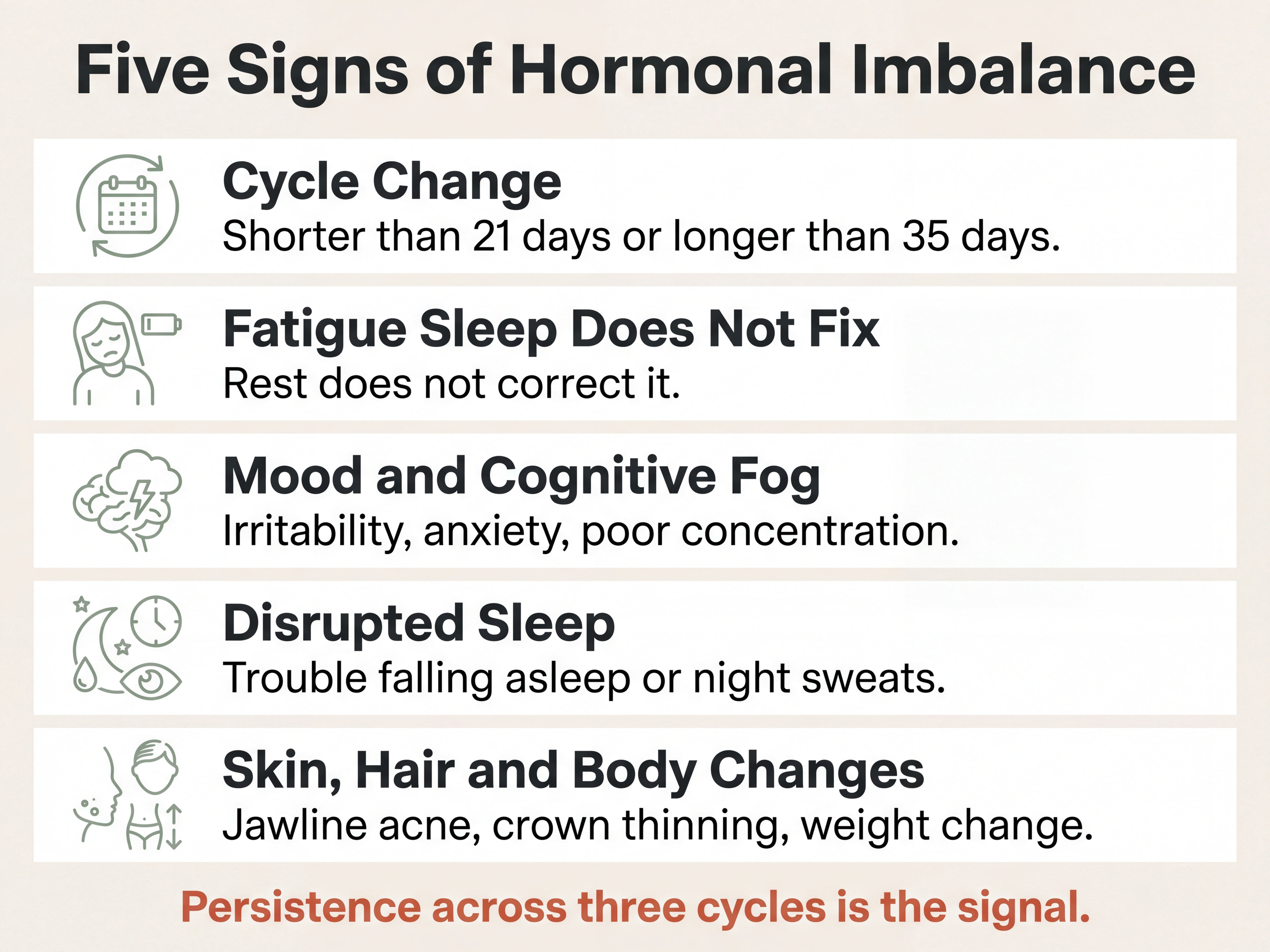
Five patterns account for most presentations, and what makes them meaningful is persistence rather than intensity. A single difficult cycle is ordinary. Three consecutive months of the same disruption is a signal.
- Cycle change. Cycles consistently shorter than 21 days or longer than 35 days, sudden heavy bleeding, or skipped months.
- Fatigue that sleep does not resolve. Distinct from ordinary tiredness because rest does not correct it.
- Mood instability and cognitive fog. New irritability, anxiety, or difficulty holding concentration, often clustered in the luteal phase.
- Sleep disruption. Difficulty falling asleep, waking at consistent hours, or night sweats.
- Change in skin, hair, or body composition. Cystic acne along the jaw, hair thinning at the crown, or weight change without a change in habits.
Reduced libido, breast tenderness, and hot flashes complete the common picture. None of these is diagnostic on its own, which is precisely why testing exists.
How Do Hormones Change Across a Woman’s Life?
A woman’s hormonal profile is not fixed. It shifts predictably, and knowing which stage you are in determines which support makes sense.
The menstrual cycle
Estradiol climbs through the follicular phase and peaks before ovulation. Progesterone then rises through the luteal phase and falls sharply if implantation does not occur, which triggers menstruation. Premenstrual symptoms cluster in the second half of that sequence, which is why herbs studied for premenstrual complaints are typically taken continuously rather than only when symptoms appear.
Perimenopause and menopause
Perimenopause is marked by erratic rather than simply declining estradiol, which is why the experience is often more turbulent than post-menopause itself. Follicle-stimulating hormone rises as ovarian response falls. Hot flashes, night sweats, sleep fragmentation, mood change, and vaginal dryness are the recognized features. Menopause is confirmed retrospectively, after twelve consecutive months without a period.
Post-menopause and the years after 40
With estradiol settled at a lower level, the priorities change. Bone mineral density and cardiovascular health become the practical focus, which shifts attention toward resistance training, adequate protein, vitamin D and calcium status, and cardiovascular risk monitoring. In our editorial team’s review of the literature for this article, this is the life stage where lifestyle evidence is strongest and botanical evidence is thinnest.
Which Herbs Are Used for Female Hormone Balance, and What Does the Evidence Show?
The five herbs named most often are chasteberry (Vitex agnus-castus), ashwagandha (Withania somnifera), maca (Lepidium peruvianum), red clover (Trifolium pratense), and black cohosh (Cimicifuga racemosa). The single strongest finding among them belongs to chasteberry, where a meta-analysis restricted to three properly reported double-blind trials in 520 women found participants 2.57 times more likely to experience remission of premenstrual symptoms than those on placebo, with a 95 percent confidence interval of 1.52 to 4.35 (Csupor et al. 2019, Complementary Therapies in Medicine, PMID: 31780016). The weakest belongs to black cohosh, and we say so below.
| Herb | Botanical name | Traditional use | Best human evidence | Evidence strength | Key caution |
|---|---|---|---|---|---|
| Chasteberry | Vitex agnus-castus | European herbalism, premenstrual complaints | 2.57x placebo remission rate, 3 trials, 520 women (PMID: 31780016) | Moderate, the best of this group | Acts on dopaminergic signaling and prolactin. Avoid alongside dopamine-active medication |
| Ashwagandha | Withania somnifera | Ayurveda, rasayana tonic | Serum cortisol reduced versus placebo, 60 days, n=64 (PMID: 23439798) | Moderate for stress markers, indirect for sex hormones | Thyroid-active. Rare liver injury reports. Not for use in pregnancy |
| Maca | Lepidium peruvianum | Andean traditional food and tonic | Kupperman’s Index fell from 22 to 10 on 2 g daily (PMID: 23675005) | Weak, promising but poorly replicated | Small trials from a single research group. Independent replication is thin |
| Black cohosh | Cimicifuga racemosa | Native American and European herbalism, menopause | 6 double-blind trials, 1,112 women, effect not consistently demonstrated (PMID: 18585461) | Weak, the most-studied and least-convincing here | Rare liver injury reports. Generally limited to short-term use |
| Dong quai | Angelica sinensis | Traditional Chinese Medicine, blood tonic | Studied chiefly within multi-herb formulas rather than alone | Weak as a single herb | Contains coumarins. Meaningful concern alongside anticoagulants |
| Cistanche | Cistanche deserticola, C. tubulosa | Traditional Chinese Medicine, kidney yang tonic | Human data in women is limited. Echinacoside and acteoside characterized chiefly in preclinical work | Thin in women specifically | Most available research is in men. Do not assume transferability |
| Sources: PubMed records as cited. Evidence strength reflects trial quality and replication, not popularity. | |||||
Chasteberry, and the caveat that comes with it
The 2.57 figure above is the number worth quoting because it comes from trials that reported their preparations properly. A larger meta-analysis of 14 trials found a bigger pooled effect, but its authors were direct about the problem: high risk of bias, statistical heterogeneity of 91 percent, and funnel plot evidence of publication bias, leading them to describe the pooled effect as at best an overestimate of the real one (Verkaik et al. 2017, American Journal of Obstetrics and Gynecology, PMID: 28237870). Both numbers are real. The smaller one is the trustworthy one. Our detailed treatment of chasteberry in the menopause transition covers dosing and the standardized extracts used in those trials.
Ashwagandha and the stress axis
Ashwagandha’s evidence is about cortisol rather than about estrogen. In a 60-day double-blind trial of 64 adults with chronic stress, 300 mg of full-spectrum root extract twice daily was associated with substantially reduced serum cortisol compared with placebo (Chandrasekhar et al. 2012, Indian Journal of Psychological Medicine, PMID: 23439798). Because sustained cortisol elevation is one of the recognized disruptors of the reproductive axis, that is a relevant mechanism. It is not the same as direct evidence for sex hormone modulation, and it should not be presented as though it were. Our separate coverage of ashwagandha for perimenopause examines what the perimenopause-specific trials measured.
Black cohosh, stated plainly
Black cohosh is the herb most often recommended for hot flashes, and it has the least convincing record in this group. A systematic review of six double-blind randomised trials covering 1,112 peri- and post-menopausal women concluded that the evidence does not consistently demonstrate an effect on menopausal symptoms, while allowing that a benefit in peri-menopausal women cannot be excluded (Borrelli and Ernst 2008, Pharmacological Research, PMID: 18585461). We sell black cohosh in combination. We are still going to tell you the trials are not persuasive, because a source that only reports the flattering findings is not a source worth citing.
Maca, and why the numbers deserve caution
Trials of pre-gelatinized maca at 2 g daily in early-postmenopausal women reported increased estradiol, suppressed follicle-stimulating hormone, and a fall in the Kupperman’s Index from 22 to 10 (Meissner et al. 2006, International Journal of Biomedical Science, PMID: 23675005 and PMID: 23675006). Those are meaningful figures. They also come from one research group, in small samples, published in a low-visibility journal, and they have not been well replicated. We include maca because the signal is interesting. We flag it because a single group’s findings are not the same as an established result.
Which Hormone Herbs Interact With Medications, and Who Should Avoid Them?
This is the part most articles omit, and it is the part that matters most. Herbs that influence hormonal signaling are pharmacologically active, which means they can alter how prescribed medication behaves.
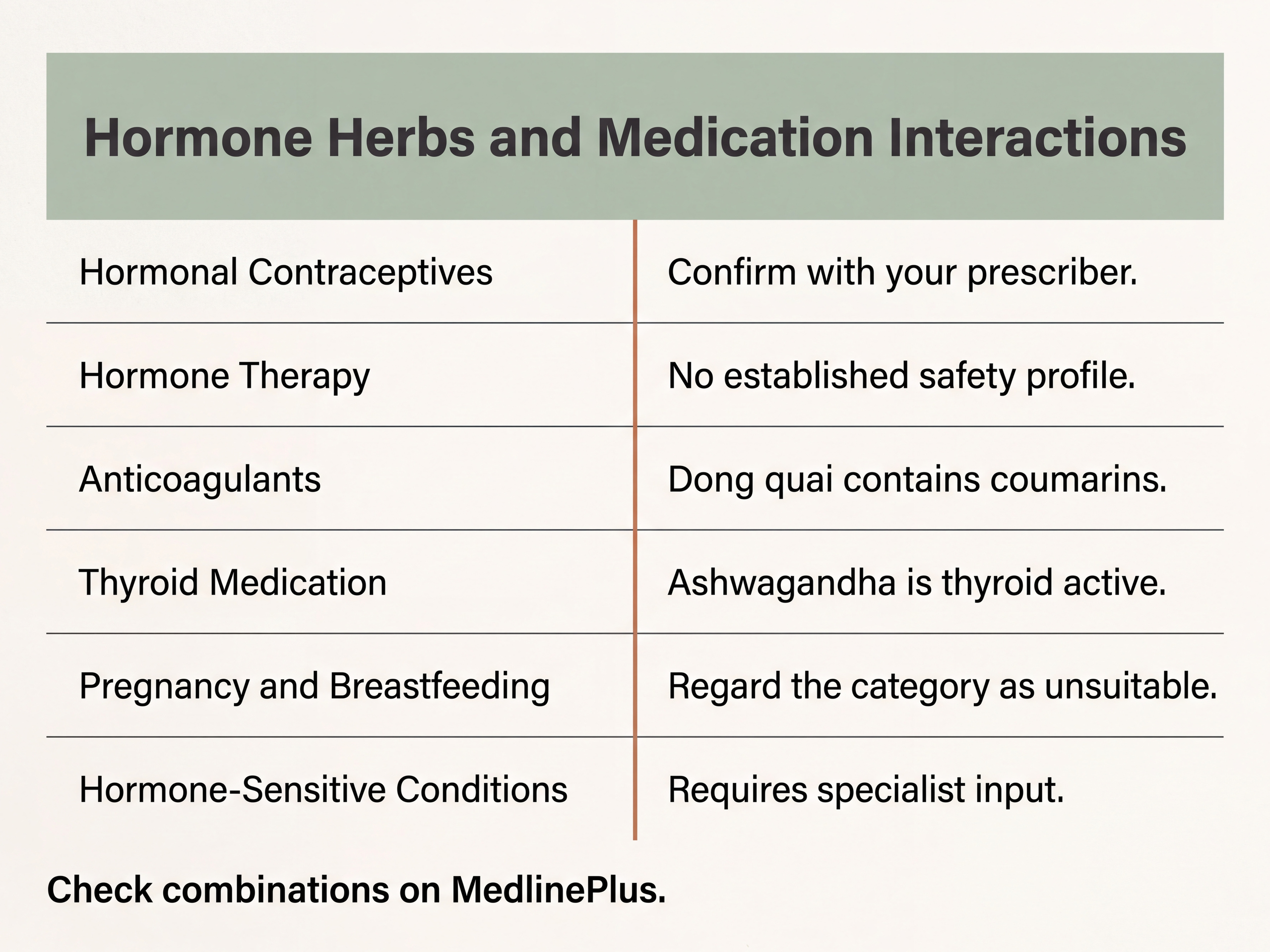
- Hormonal contraceptives. Chasteberry acts on dopaminergic pathways and prolactin regulation, and combining hormone-active botanicals with hormonal contraception is not a well-characterized situation. Confirm with your prescriber rather than assuming compatibility.
- Menopausal hormone therapy. Layering phytoestrogen-containing herbs such as red clover on top of prescribed hormone therapy has no established safety profile. Standard guidance is not to combine them without medical supervision.
- Anticoagulants and antiplatelet medication. Dong quai contains coumarin compounds. This is the clearest interaction concern in the group and warrants a direct conversation with your prescriber.
- Thyroid medication. Ashwagandha influences thyroid hormone concentrations. Anyone on levothyroxine or managing a thyroid condition should regard it as an active variable, not a neutral one.
- Pregnancy and breastfeeding. A number of hormone-active herbs, including chasteberry, black cohosh, dong quai, and ashwagandha, are not considered suitable during pregnancy. Regard the whole category as off-limits unless a qualified provider has advised otherwise.
- Hormone-sensitive conditions. Anyone with a history of hormone-receptor-positive breast cancer, endometrial hyperplasia, endometriosis, uterine fibroids, or polycystic ovary syndrome should not begin phytoestrogenic or hormone-modulating herbs without oncology or gynecology input. This caution is not theoretical. In a randomised trial of diindolylmethane in women taking tamoxifen, the supplement measurably reduced circulating tamoxifen metabolites including endoxifen (Thomson et al. 2017, Breast Cancer Research and Treatment, PMID: 28560655). A compound widely marketed as gentle hormone support altered the pharmacology of a prescribed medication.
- Liver considerations. Both black cohosh and ashwagandha carry rare reports of liver injury. Discontinue and seek advice if jaundice, dark urine, or unexplained upper abdominal discomfort develops.
The MedlinePlus drug and herb interaction resource maintained by the National Library of Medicine is the reference we point people to for checking specific combinations, and a pharmacist can cross-check your full medication list in a few minutes.
How Do Fiber and Cruciferous Vegetables Affect Estrogen Levels?
Nearly every article on this topic says fiber helps clear excess estrogen and cruciferous vegetables support the liver. Almost none explains the pathway, so here it is.
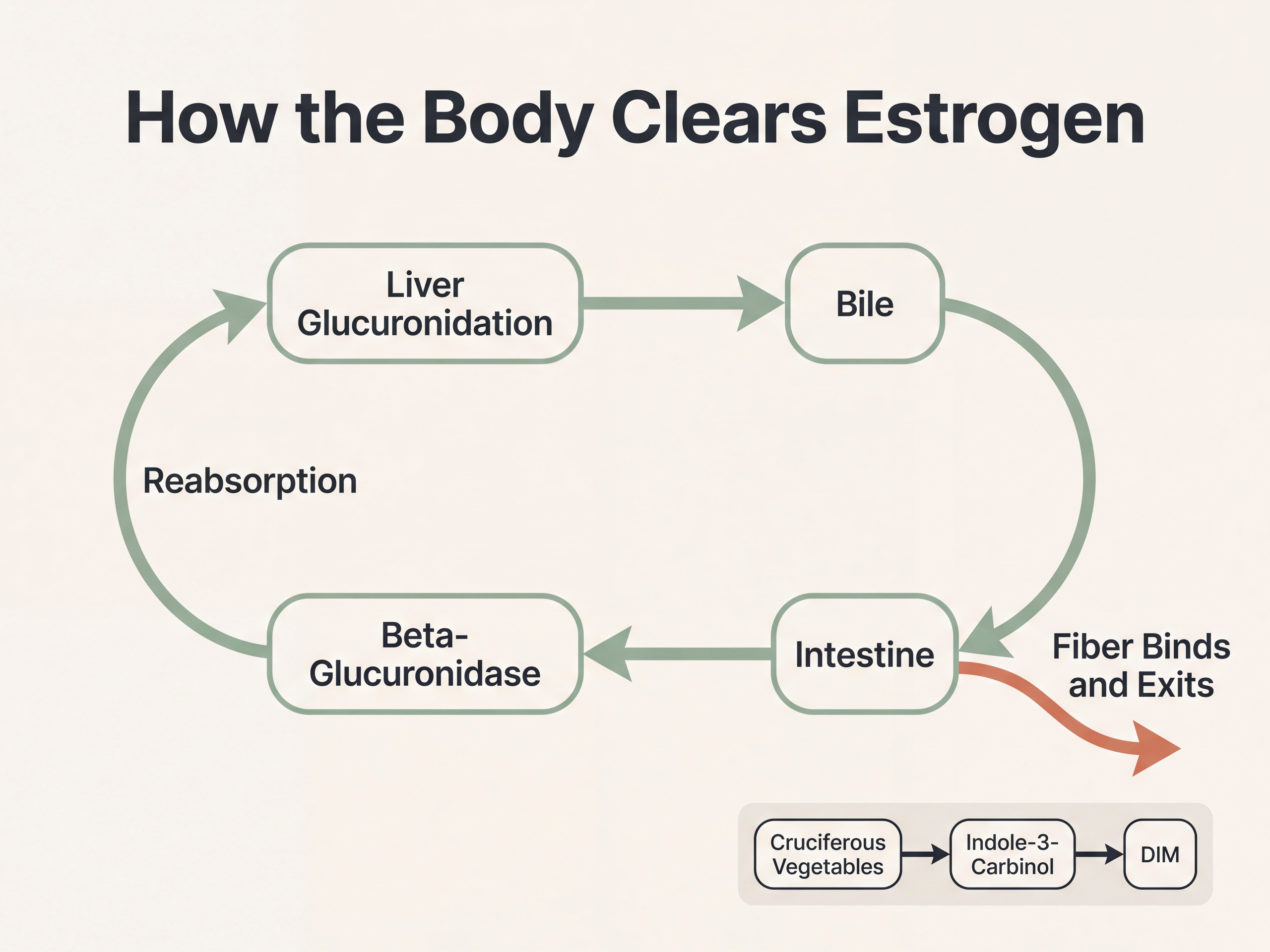
Estrogens are inactivated in the liver by conjugation, mainly glucuronidation, which attaches a water-soluble group and marks the hormone for excretion in bile. Once that conjugated estrogen reaches the intestine, it can be reversed. Gut bacteria producing the enzyme beta-glucuronidase strip the conjugate off, returning the estrogen to its active form so it is reabsorbed into circulation rather than eliminated. This loop is enterohepatic recirculation, and the collection of gut microbial genes governing it is termed the estrobolome. When microbial diversity falls, the amount of estrogen returned to circulation changes, with consequences described across metabolic, reproductive, and cognitive outcomes (Baker et al. 2017, Maturitas, PMID: 28778332).
Dietary fiber matters here mechanically. It binds conjugated estrogens in the gut and speeds transit, reducing the window in which deconjugation and reabsorption can occur. Cruciferous vegetables, members of Brassica oleracea and related species, contribute differently. They supply glucosinolates that convert to indole-3-carbinol and then to diindolylmethane, compounds that shift estrogen metabolism toward the 2-hydroxy pathway. In a randomised placebo-controlled trial, diindolylmethane raised the urinary 2 to 16-alpha-hydroxyestrone ratio and increased sex hormone-binding globulin compared with placebo (PMID: 28560655). That is a real, measured effect on estrogen handling, and it is the same trial that showed the tamoxifen interaction noted above. Both facts belong to the same study, which is exactly why the mechanism and the caution have to be read together.
What Foods, Habits, and Nutrients Support Hormonal Balance?
The unglamorous answer is that these factors move the needle more reliably than any botanical in the table above, and they do it without an interaction profile.
Protein, fat, and fiber are the raw material
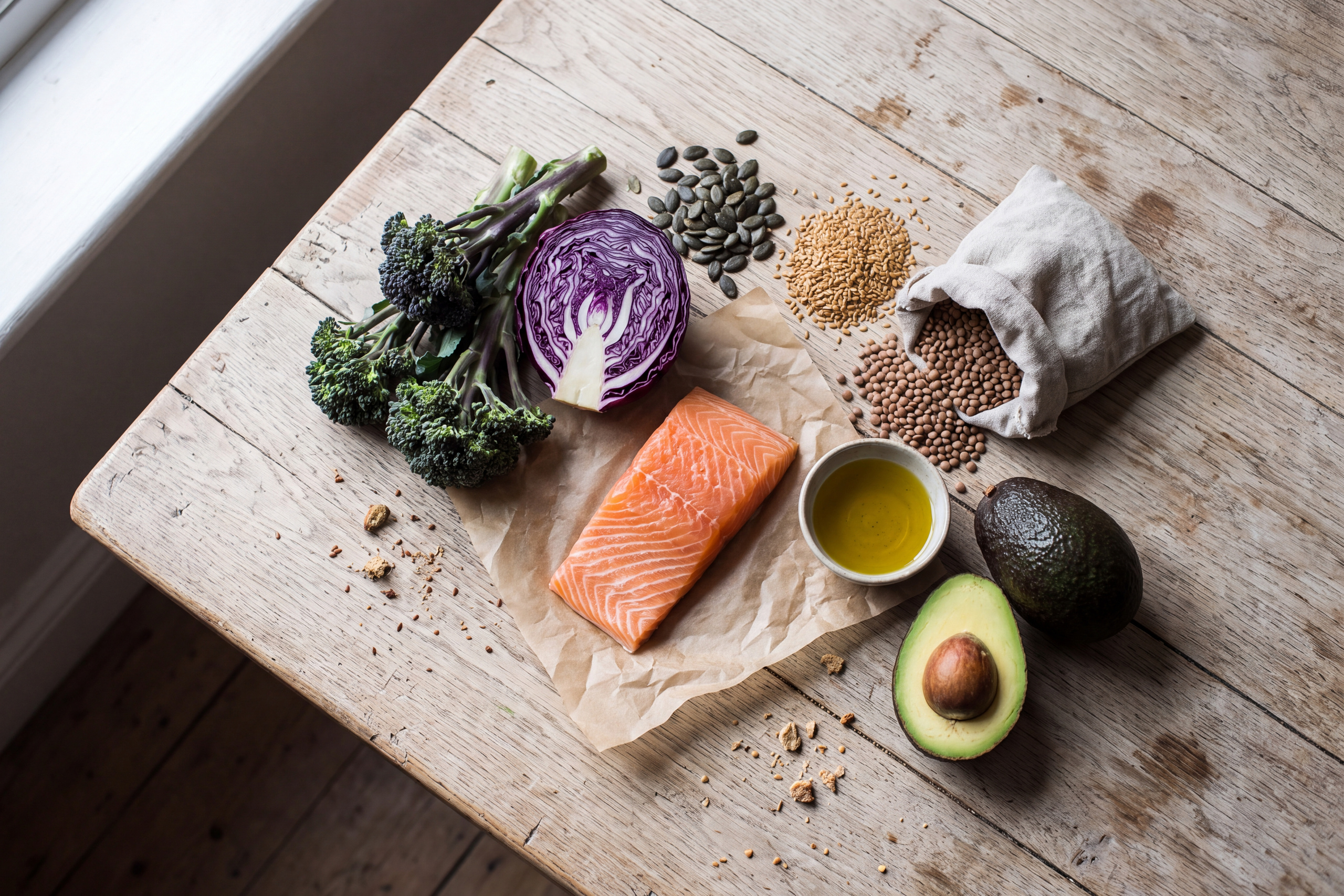
Steroid hormones, estradiol and progesterone among them, are built from a cholesterol backbone, which means chronically inadequate dietary fat constrains the supply chain. Peptide hormones including insulin and luteinizing hormone are assembled from amino acids, so protein at each meal supplies the substrate. Fiber, as described above, governs clearance rather than production. Practically: protein at every meal, whole-food fats such as olive oil, nuts, seeds, and oily fish, and fiber from vegetables, legumes, and whole grains with cruciferous vegetables included several times weekly.
Sleep is the highest-yield single change
Roughly 7 to 9 hours supports the normal diurnal cortisol rhythm and the leptin and ghrelin signaling that regulates appetite. Consistency of timing matters as much as duration. Curtailed or fragmented sleep raises evening cortisol, and elevated cortisol is one of the recognized suppressors of reproductive-axis signaling.
Exercise has a dose, and more is not better
Resistance training and moderate cardiovascular work support insulin sensitivity, bone density, and mood. The failure mode runs the other direction. Sustained high training volume combined with insufficient energy intake produces low energy availability, which can suppress the hypothalamic-pituitary-ovarian axis and stop ovulation entirely, a recognized cause of absent periods in active women. If cycles became irregular after a training block, the training load and the food intake are the first two variables to examine.
Endocrine-disrupting chemicals
Bisphenol A and phthalates, found in some plastics, food packaging, and personal care products, can bind hormone receptors and interfere with normal signaling. Reasonable and low-effort reductions: avoid heating food in plastic, use glass or stainless steel for hot liquids, and check ingredient lists on cosmetics and fragrance. This is a sensible reduction of exposure, not a cause for alarm.
Nutrient status worth confirming
Magnesium is commonly used in the context of premenstrual discomfort and sleep quality. B vitamins participate in hormone metabolism, including the methylation steps involved in estrogen processing. Vitamin D status is relevant to bone health and is frequently insufficient at higher latitudes. Iron deserves particular attention in women with heavy menstrual bleeding, where depletion is common and easily missed. The NIH Office of Dietary Supplements fact sheets are the reference we use for intake ranges.
How Is Hormonal Imbalance Actually Tested?
No single test evaluates hormonal balance, which is why the phrase resists a simple answer. A clinician selects tests based on your symptoms and your cycle timing, and timing is the part most direct-to-consumer panels get wrong. Commonly ordered assessments include:
- Estradiol and follicle-stimulating hormone, usually on day 3 of the cycle for reproductive-age women.
- Progesterone, drawn about 7 days after presumed ovulation to establish whether ovulation occurred.
- Thyroid-stimulating hormone with free thyroxine.
- Prolactin, particularly with absent periods or unexplained nipple discharge.
- Total and free testosterone with sex hormone-binding globulin, plus DHEA-sulfate where androgen excess is suspected.
- Fasting glucose, fasting insulin, or HbA1c where insulin resistance is a consideration.
- Ferritin and a full blood count where bleeding is heavy.
Interpretation depends on cycle day, life stage, and medication, which is why a results printout without clinical context tends to produce more anxiety than clarity.
When Should You See a Clinician Rather Than Self-Managing?
Self-directed lifestyle change is reasonable. There is a point past which it is not the right tool, and these are the markers of that point.
- Absent periods for three consecutive months outside pregnancy, breastfeeding, or established menopause.
- Bleeding heavy enough to soak through protection hourly, or bleeding lasting beyond seven days.
- Any bleeding after menopause has been established. This always warrants prompt assessment.
- Difficulty conceiving after 12 months of trying, or after 6 months if you are over 35.
- New coarse facial hair, scalp hair loss, or a deepening voice.
- Severe premenstrual mood symptoms that disrupt work or relationships.
- Unexplained weight change, persistent palpitations, or heat or cold intolerance, which point toward thyroid assessment.
Herbal support is best regarded as something layered onto a picture you already understand, not as a substitute for finding out what is happening.
Choosing and Using Herbal Support Well
If you and your provider decide a botanical is appropriate, a few practices separate a fair trial from a wasted one. Introduce one herb at a time, because starting three simultaneously makes it impossible to attribute any change. Allow a realistic window: the premenstrual trials of chasteberry ran a minimum of two menstrual cycles, and shorter self-experiments do not tell you much. Track something specific such as cycle length, bleeding days, or sleep quality, rather than relying on general impression. Look for a defined botanical name and plant part on the label, since Vitex agnus-castus fruit and Withania somnifera root are not interchangeable with unspecified blends.
In our sourcing work, the difference between a batch of dong quai root that has been properly dried and one that has not is apparent before any analysis, in aroma and in the cross-section of the cut root. That variability is why we test rather than assume, and it is also why comparing trial results to an unstandardized product is an imperfect exercise. For women whose primary concern is cycle comfort, our menstrual support capsules are formulated around that specific window rather than as a general hormone product.
Frequently Asked Questions About Female Hormonal Balance
What are the 5 signs of hormonal imbalance?
Persistent cycle change, fatigue unrelieved by sleep, mood instability or cognitive fog, disrupted sleep, and changes to skin, hair, or body composition. Persistence over roughly three cycles is what distinguishes a signal from normal variation.
What causes hormonal imbalance in females?
Expected physiological transitions account for most of it: the menstrual cycle, pregnancy, the postpartum period, and perimenopause. Clinical causes include polycystic ovary syndrome, thyroid dysfunction, insulin resistance, elevated prolactin, and sustained stress-axis activation.
What is the best herb for hormonal imbalance?
By evidence quality rather than popularity, chasteberry (Vitex agnus-castus) is for premenstrual symptoms, at 2.57 times the placebo remission rate across three properly reported double-blind trials (PMID: 31780016). No herb has good evidence across all hormonal complaints, and any source naming one probably has not read the trials.
Does black cohosh work for hot flashes?
The evidence is not persuasive. A systematic review of six double-blind trials in 1,112 women found no consistent effect on menopausal symptoms, while allowing that benefit in peri-menopausal women cannot be excluded (PMID: 18585461). It remains widely recommended, which reflects tradition rather than trial data.
Can herbs interfere with birth control or hormone therapy?
Yes, and this combination is not well characterized. Chasteberry acts on prolactin and dopaminergic signaling, dong quai contains coumarins relevant to anticoagulation, and ashwagandha influences thyroid hormone. Check any combination with a prescriber or pharmacist before starting.
Which herbs should be avoided with hormone issues?
Phytoestrogenic and hormone-modulating herbs should be avoided without specialist input by anyone with hormone-receptor-positive breast cancer, endometrial hyperplasia, endometriosis, or fibroids. In pregnancy, regard the entire category as unsuitable unless a provider advises otherwise.
What foods help balance female hormones naturally?
Protein at each meal supplies amino acids for peptide hormones. Whole-food fats supply the cholesterol backbone for steroid hormones. Fiber and cruciferous vegetables influence estrogen clearance through gut transit and the indole-3-carbinol pathway. Limiting ultra-processed food supports steadier insulin signaling.
What tests check for hormonal imbalance in women?
There is no single test. Clinicians commonly order day-3 estradiol and follicle-stimulating hormone, mid-luteal progesterone, thyroid-stimulating hormone with free thyroxine, prolactin, testosterone with sex hormone-binding globulin, and glucose or insulin markers. Cycle timing determines whether results are interpretable.
How can I tell whether it is PCOS or a general hormone imbalance?
Not from symptoms alone. Polycystic ovary syndrome is identified against defined criteria combining irregular ovulation, androgen excess, and ovarian ultrasound appearance, after excluding other causes. Persistent cycle irregularity with signs of androgen excess is the pattern that warrants formal assessment.
Are essential oils effective for balancing female hormones?
Controlled human evidence for essential oils influencing hormone concentrations is very limited. Aromatherapy has some support for relaxation and perceived stress, which is a different claim. Essential oils should not be taken internally without qualified guidance.
How long do herbs take to work for hormone balance?
The chasteberry trials required a minimum of two menstrual cycles, and most measured over three. Assessing any hormone-related botanical over less than eight to twelve weeks does not allow enough cycles to distinguish effect from normal variation.
Can lifestyle changes alone improve hormonal balance?
For many women with symptoms driven by sleep debt, chronic stress, low energy availability, or unstable blood sugar, yes, and the evidence for these factors is stronger than for any single herb. Where an underlying condition such as thyroid dysfunction or PCOS is present, lifestyle change supports treatment rather than replacing it.
Related Reading
Continue with our detailed guides on chasteberry for perimenopause, ashwagandha for perimenopause, dong quai compared with black cohosh, and cistanche for women.
Important: This article is for educational and informational purposes. The statements have not been evaluated by the Food and Drug Administration. The herbs and herbal products discussed are not intended to diagnose, treat, cure, or prevent any disease. Information presented here is not a substitute for professional medical advice, diagnosis, or treatment. Always consult a qualified healthcare provider for guidance specific to your circumstances, particularly if you are pregnant, nursing, taking medication, or managing a health condition.