Key Takeaways
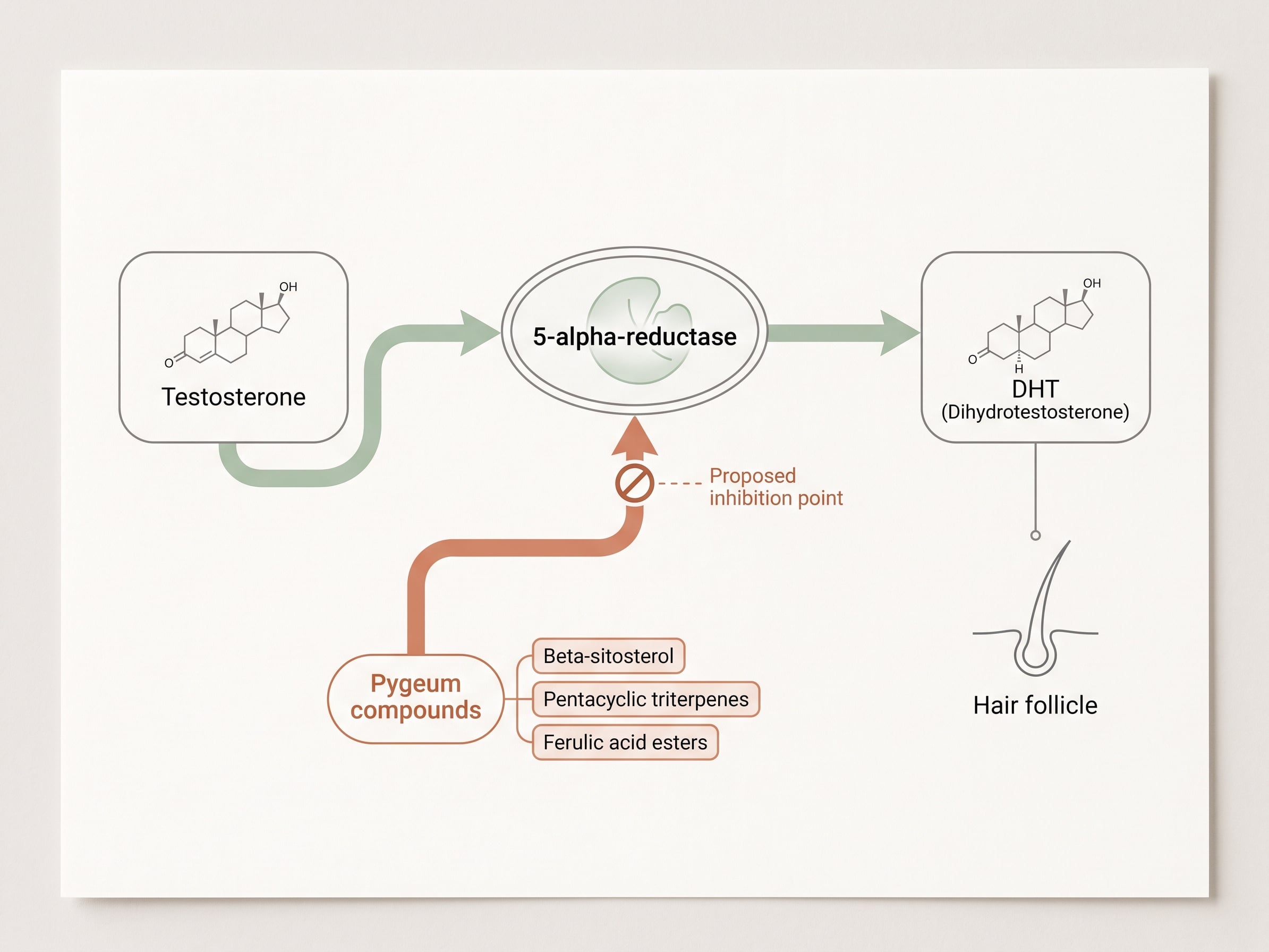
- Pygeum is bark from Prunus africana, the African cherry tree, and its phytosterols are studied as inhibitors of 5-alpha-reductase, the enzyme that converts testosterone into DHT.
- Direct human evidence now exists. A 2025 double-blind, placebo-controlled trial of a pygeum-containing formula reported measurably higher hair density at three and six months (PMID: 39911983).
- That trial tested a combination formula, so pygeum’s individual contribution cannot be separated from L-Cystine, Serenoa repens, and Cucurbita pepo.
- No published trial has tested pygeum bark on its own for pattern hair loss, and none has measured DHT concentrations at the scalp.
- Pygeum is almost always formulated with other botanicals rather than taken alone, most often saw palmetto, pumpkin seed oil, and nettle root.
Anyone researching pygeum and hair loss runs into the same two answers, and they contradict each other. One says pygeum is a proven natural DHT blocker. The other says there is no evidence at all. Our editorial team went back to the primary literature to settle it, and the honest answer sits between the two, closer to the middle than either camp admits. This is a review of what Prunus africana bark is, how its compounds are proposed to act on the hormone pathway behind pattern hair loss, and precisely what the clinical record does and does not show as of September 2026.
What is pygeum, and is it really a DHT blocker?
Pygeum is the bark of Prunus africana, an evergreen African cherry tree, sold in supplements under the older botanical synonym Pygeum africanum. Its bark contains phytosterols including beta-sitosterol, pentacyclic triterpenes, and ferulic acid esters such as docosanol and tetracosanol. Laboratory work indicates these compounds inhibit 5-alpha-reductase, the enzyme converting testosterone into dihydrotestosterone, which is the basis for its common description as a natural DHT blocker.
That last sentence is doing careful work. Inhibiting an enzyme in a laboratory assay and lowering the hormone at a hair follicle in a living person are separated by several steps that have not all been demonstrated. We return to that gap below.
Where Prunus africana grows, and why sourcing matters
The tree grows in montane forests across central and southern Africa, with commercially harvested stands concentrated on Mount Cameroon, in Madagascar, and through the Kenyan and Ugandan highlands. Because the medicinal part is the bark rather than a fruit or leaf, harvesting can kill the tree when it is done poorly. Prunus africana is listed on CITES Appendix II, meaning international trade is regulated to prevent overharvesting. In our sourcing work, we treat that listing as a practical filter rather than a footnote. It is the single fastest way to separate suppliers who track their harvest from suppliers who do not.
Why is a prostate herb being discussed for hair at all?
The connection is not a marketing invention. It rests on a shared hormone. To follow the reasoning, it helps to understand what actually drives pattern hair loss.
Understanding androgenetic alopecia
Androgenetic alopecia is the clinical name for pattern hair loss in both men and women, and it is driven by genetics and androgens together. Dihydrotestosterone binds to receptors in scalp follicles of genetically susceptible people. That binding progressively shrinks the follicle, shortens the growth phase of the hair cycle, and produces finer, shorter hairs until the follicle stops producing visible hair. Benign prostatic hyperplasia involves the same androgen acting on different tissue. Because DHT sits upstream of both conditions, a botanical studied for one has been carried over to the other by inference.
Key Takeaways: Pygeum and Hair Hormones
| Concept | Description | Relevance to hair |
|---|---|---|
| Prunus africana | African cherry tree bark containing beta-sitosterol, pentacyclic triterpenes, and ferulic acid esters. | Researched for prostate function, which shares the DHT pathway with pattern hair loss. |
| Androgenetic alopecia | The clinical term for genetic, androgen-driven pattern hair loss in men and women. | The most common reason people look for a hair thinning solution. |
| Dihydrotestosterone (DHT) | A potent androgen produced from testosterone by 5-alpha-reductase. | The hormone associated with follicle miniaturization in pattern baldness. |
| 5-alpha-reductase | The enzyme catalyzing the testosterone-to-DHT conversion, with type I and type II forms. | The specific target that botanical DHT blockers are proposed to act on. |
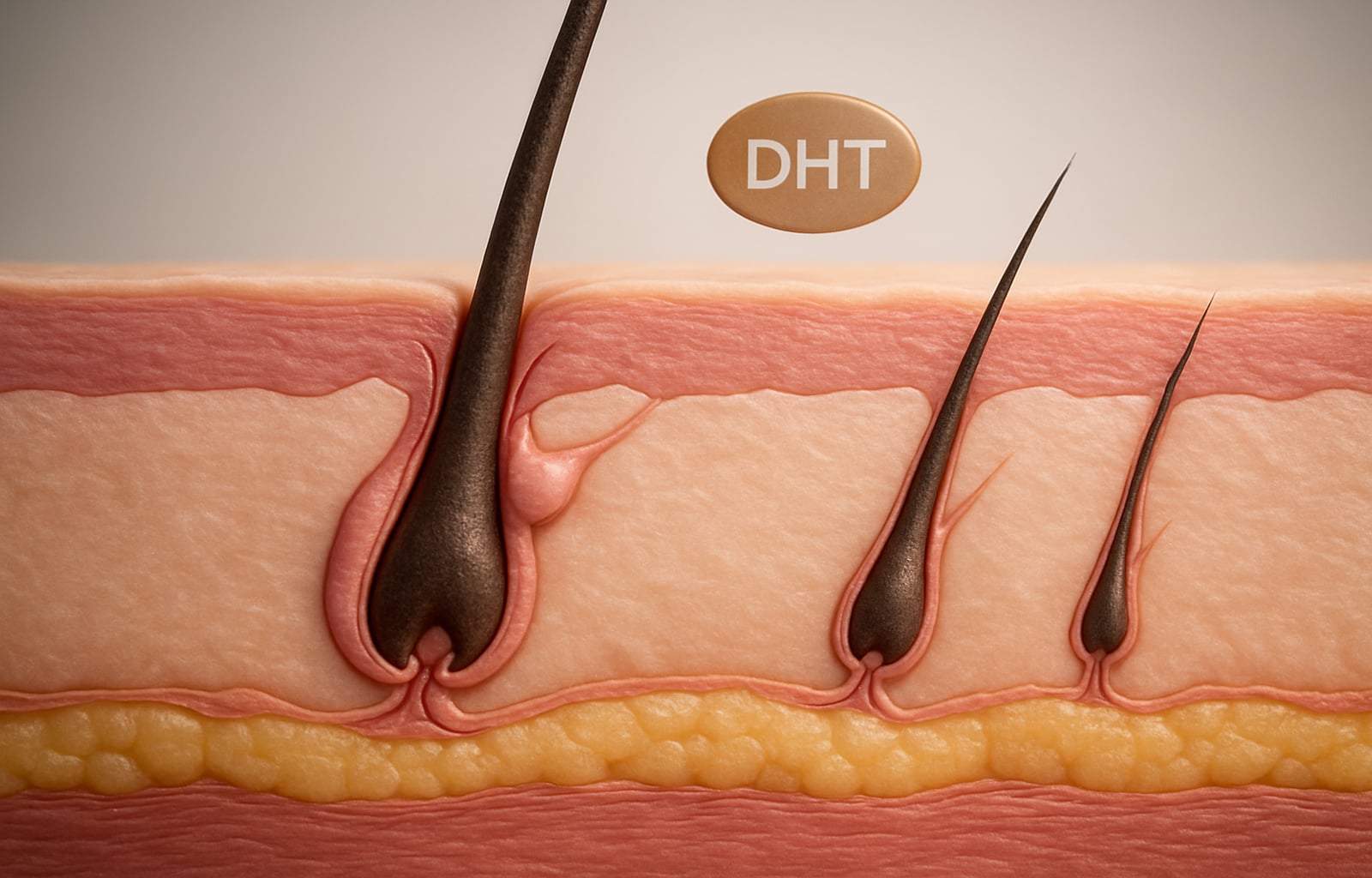
How does pygeum act on 5-alpha-reductase?
Most articles stop at “pygeum inhibits 5-alpha-reductase” without naming what does the inhibiting. The proposed activity is distributed across several compound classes rather than concentrated in one marker molecule, which is one reason standardization across products is inconsistent.
Which compounds are proposed to do the work
- Beta-sitosterol and related phytosterols. The most studied fraction, and the compound class shared with saw palmetto and pumpkin seed oil.
- Pentacyclic triterpenes. Associated in preclinical work with reduced inflammatory signaling in glandular tissue.
- Ferulic acid esters, including docosanol and tetracosanol. Associated with suppression of androgen-stimulated fibroblast growth factors, the signaling implicated in the fibrous stiffening of tissue around a miniaturizing follicle.
A 2021 review of botanicals used in benign prostatic hyperplasia places Pygeum africanum bark in the same mechanistic group as pumpkin seed, saw palmetto fruit, and nettle root, all described as acting on the 5-alpha-reductase pathway (Csikós et al., 2021, Molecules, PMID: 34885733).
Systemic DHT versus scalp DHT: the distinction that gets skipped
Here is a step almost every article omits. There are three separate claims stacked inside “pygeum blocks DHT,” and they carry different levels of support. First, that pygeum compounds inhibit the enzyme in laboratory conditions, which has preclinical support. Second, that taking pygeum orally lowers DHT measurably throughout the body, where human data are sparse. Third, that any such change reaches the follicles on the scalp in a quantity that alters the hair cycle, for which no published measurement exists. In our reading of the literature, the third step has never been tested directly in humans. Treating the first claim as though it establishes the third is the most common error in consumer coverage of this herb.
What does the research actually say about pygeum and hair loss?
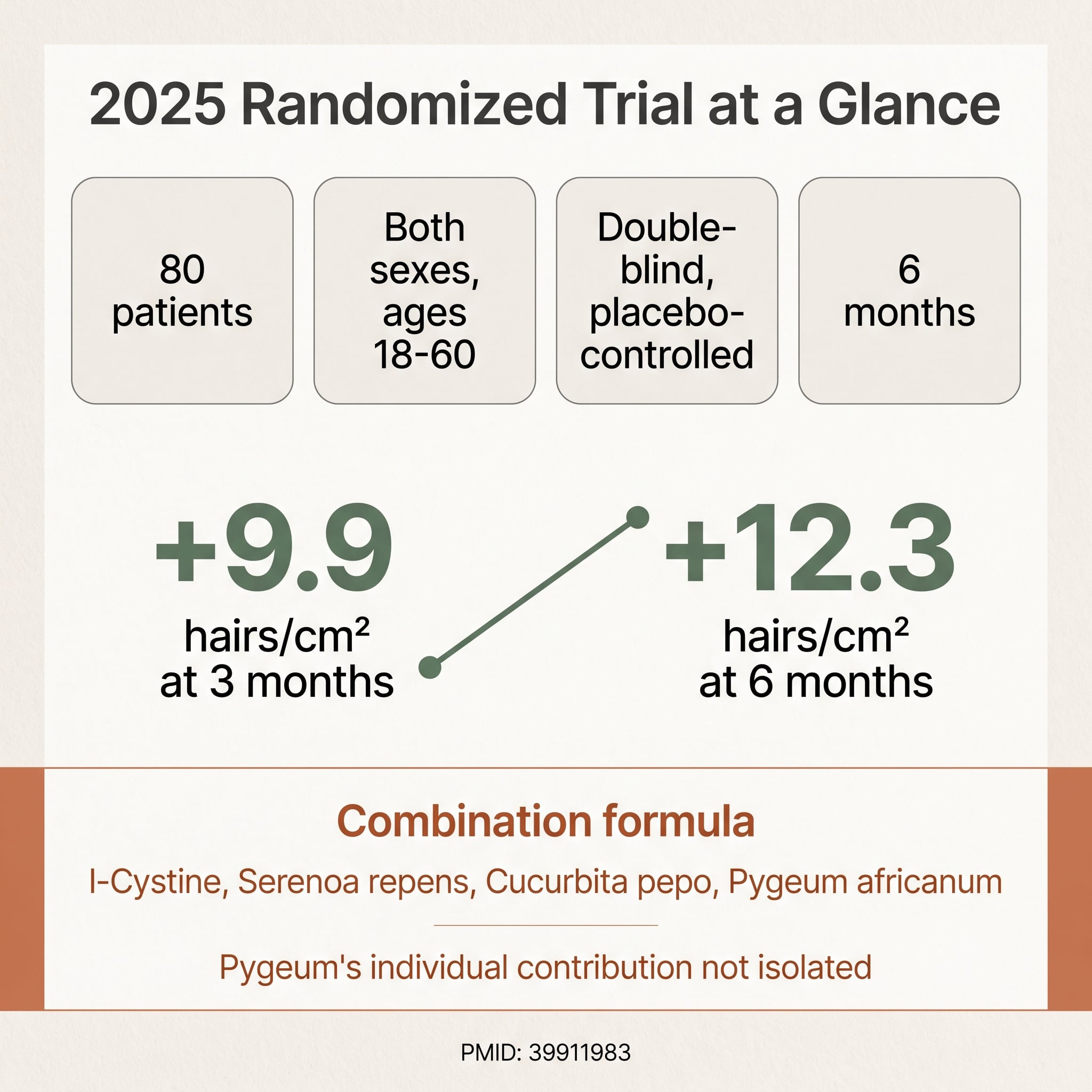
Direct human evidence now exists, and it is recent. A 2025 double-blind, placebo-controlled randomized trial enrolled 80 patients of both sexes, aged 18 to 60, with chronic telogen effluvium or androgenetic alopecia, assigning one capsule daily or placebo for six months with phototrichograms at baseline, three months, and six months. Hair density rose by 9.9 hairs per square centimeter at three months and 12.3 hairs per square centimeter at six months, statistically significant against placebo, and the supplement was well tolerated with no moderate or severe adverse events reported (Piquero-Casals et al., 2025, Skin Appendage Disorders, PMID: 39911983). The formula also contained L-Cystine, Serenoa repens, and Cucurbita pepo alongside vitamins and micronutrients, so the trial cannot tell us how much of that result belongs to pygeum.
That single paragraph replaces what this article previously said, which was that no direct trials had been published. That was accurate when first written and is no longer accurate now. We would rather correct the record plainly than leave it standing.
What the prostate research contributes, and what it does not
The larger body of pygeum research concerns urinary function. A Cochrane systematic review pooled 18 randomized controlled trials covering 1,562 men, reporting that men taking Pygeum africanum were roughly twice as likely to report overall symptom improvement, with nocturia reduced by 19 percent, residual urine volume by 24 percent, and peak urine flow increased by 23 percent, with adverse effects comparable to placebo (Wilt et al., 2002, Cochrane Database of Systematic Reviews, PMID: 11869585). The same research group published the parallel meta-analysis in the American Journal of Medicine (Ishani et al., 2000, PMID: 11099686).
Two caveats from that review matter more for hair than the headline numbers do. The mean study duration was 64 days, which is short relative to a hair growth cycle measured in months. And the reviewers noted that no included study compared pygeum against a pharmaceutical 5-alpha-reductase inhibitor, so its relative potency against that drug class has never been established in a head-to-head trial. Both facts constrain how far prostate findings can be carried toward the scalp.
Key Takeaways: Evidence and Efficacy
| Area of research | Findings | Implication for hair |
|---|---|---|
| Prostate health (BPH) | Cochrane review of 18 trials in 1,562 men found improved urinary symptoms and flow measures versus placebo. | Establishes activity on an androgen-linked pathway in prostate tissue rather than scalp tissue. |
| Hair loss, combination formula | 2025 double-blind placebo-controlled trial, 80 patients, six months, hair density up 9.9 then 12.3 hairs per square centimeter. | Direct human evidence in androgenetic alopecia and telogen effluvium for a formula containing pygeum. |
| Hair loss, pygeum alone | No published randomized trial of isolated pygeum bark extract for pattern hair loss. | Pygeum’s individual contribution to the 2025 result remains unquantified. |
| Scalp DHT measurement | No published human data measuring follicular DHT after pygeum supplementation. | The proposed mechanism at the follicle stays inferred rather than demonstrated. |
| Sources: PMID 39911983, PMID 11869585, PMID 11099686. Reviewed September 2026. | ||
Which ingredients is pygeum formulated with, and why?
Pygeum is rarely sold as a standalone hair product. It appears as one component of multi-botanical formulas, and understanding the stack explains both why the 2025 trial was designed the way it was and why isolating pygeum’s effect is difficult. The ingredients below are the ones that appeared in that trial’s formula or that recur most often in commercial hair formulas.
- L-Cystine is a sulfur-containing amino acid and a structural building block of keratin, included to supply substrate for the hair shaft rather than to act on hormones.
- Serenoa repens (saw palmetto) is the most researched botanical 5-alpha-reductase inhibitor for hair, and the one with its own direct alopecia trials.
- Cucurbita pepo (pumpkin seed oil) supplies phytosterols overlapping with pygeum’s, and carries its own randomized hair trial discussed below.
- Biotin and micronutrients address deficiency-driven shedding, which is a different mechanism from androgen-driven miniaturization and is frequently confused with it.
- Urtica dioica (nettle root) is included for its proposed activity on sex hormone-binding globulin and on inflammatory signaling around the follicle.
- Green tea EGCG (Camellia sinensis) is added as a polyphenol antioxidant with proposed local effects at the follicle.
Reading that list back, the pattern is clear. These formulas combine structural substrate, several overlapping phytosterol sources, and anti-inflammatory compounds. The design makes commercial sense and makes clean attribution nearly impossible.
How do the natural DHT blockers compare?
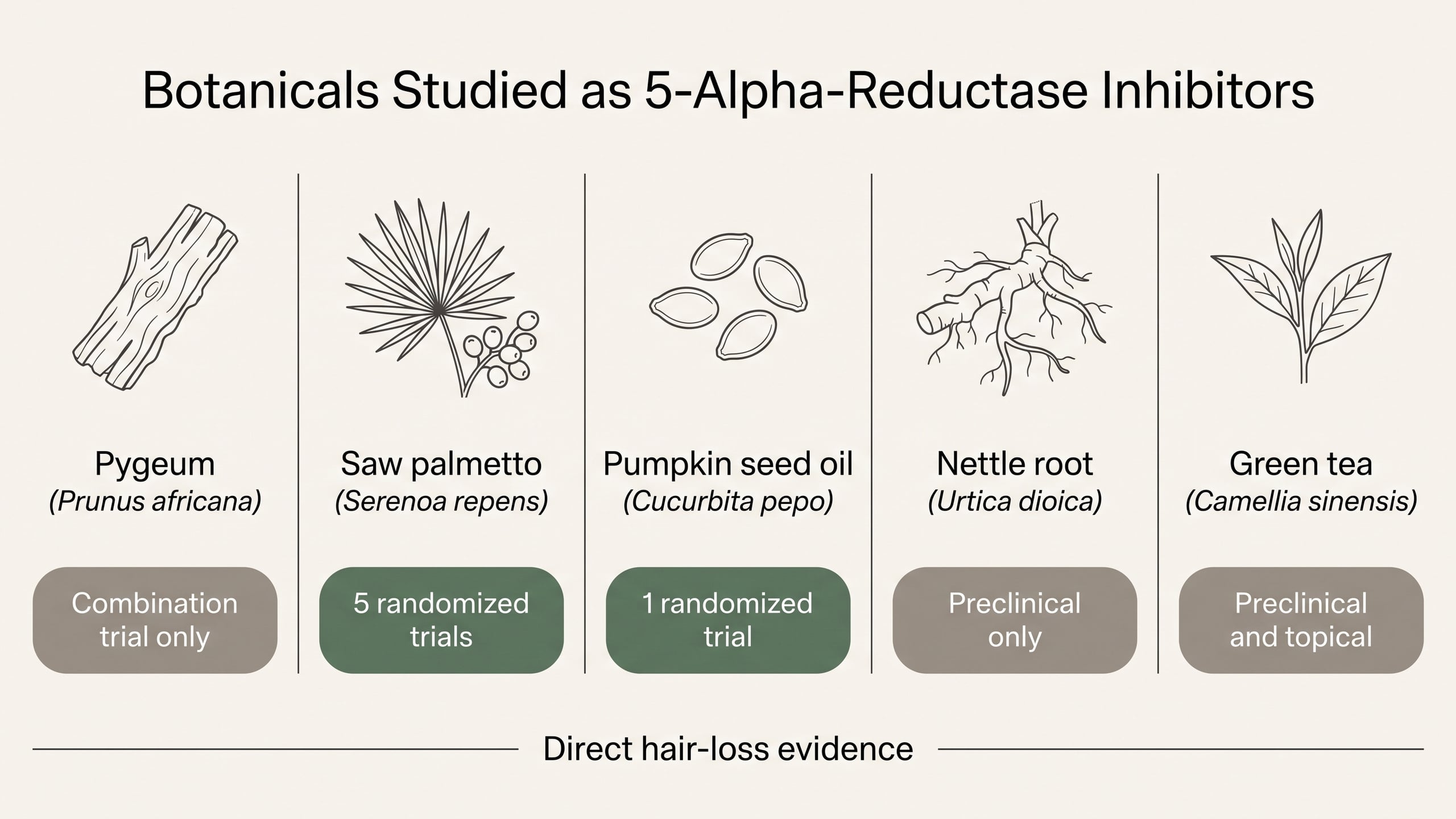
Among the botanicals grouped as natural DHT blockers, the evidence is uneven, and pygeum sits toward the thinner end for hair specifically. Two of its formula partners have direct randomized hair trials that pygeum lacks on its own.
| Botanical | Named active compounds | Direct hair-loss evidence | Typical role in formulas |
|---|---|---|---|
| Pygeum (Prunus africana) | Beta-sitosterol, pentacyclic triterpenes, ferulic acid esters | One 2025 combination-formula trial. None on pygeum alone. | Secondary phytosterol source |
| Saw palmetto (Serenoa repens) | Fatty acids, beta-sitosterol | Systematic review of 5 randomized trials and 2 cohorts, 100 to 320 mg, reporting 27 percent improvement in total hair count. | Primary botanical active |
| Pumpkin seed oil (Cucurbita pepo) | Phytosterols, fatty acids | Randomized placebo-controlled trial, 76 men, 400 mg daily for 24 weeks, mean hair count up 40 percent versus 10 percent on placebo. | Primary botanical active |
| Nettle root (Urtica dioica) | Lignans, sterols | Preclinical and prostate research. No dedicated randomized hair trial. | Supporting botanical |
| Green tea (Camellia sinensis) | EGCG and related catechins | Preclinical and topical research. Limited oral hair data. | Antioxidant support |
| Sources: PMID 39911983, PMID 33313047 (saw palmetto systematic review), PMID 24864154 (pumpkin seed oil trial), PMID 34885733 (botanical 5-alpha-reductase review). | |||
Read across that table, and a reasonable conclusion appears. Saw palmetto has the strongest direct hair evidence of the group (Evron et al., 2020, Skin Appendage Disorders, PMID: 33313047), pumpkin seed oil has the single most striking randomized result (Cho et al., 2014, Evidence-Based Complementary and Alternative Medicine, PMID: 24864154), and pygeum’s support for hair comes almost entirely through the company it keeps.
Where do natural blockers sit next to minoxidil and finasteride?
This comparison deserves a plain answer. Published research on prescription 5-alpha-reductase inhibitors such as finasteride and dutasteride reports substantially larger effects on androgen levels than research on any botanical in the table above, and minoxidil remains the most studied topical option for pattern hair loss. Botanical phytosterols are studied as milder agents acting on the same enzyme family. Nobody in the literature positions them as equivalent.
Our editorial team has covered the finasteride and saw palmetto comparison in depth separately, including how the two are sometimes used together and what the reported side effect profiles look like, so this article keeps that comparison short deliberately rather than repeating it. Any decision involving a prescription medication belongs with a healthcare provider who knows your history.
Before you blame DHT, is it pattern hair loss or telogen effluvium?
This step gets skipped constantly, and skipping it is why some people take a DHT-focused supplement for a shedding pattern that has nothing to do with androgens. The three most common presentations look different from each other.
- Androgenetic alopecia presents as gradual thinning at the temples and crown in men, or a widening part with preserved hairline in women. It progresses slowly over years.
- Telogen effluvium presents as sudden diffuse shedding across the whole scalp, typically two to three months after a trigger such as illness, surgery, rapid weight loss, childbirth, or a medication change. It is usually self-limiting.
- Nutrient- or thyroid-related shedding presents diffusely as well and is identified through laboratory testing rather than pattern recognition. Thyroid function, ferritin, and complete blood count are the standard starting panel.
These descriptions are informational and are not a diagnosis. A clinician can distinguish them in a single visit, and that visit determines whether a DHT-focused approach is even relevant to what is happening.
What are the dosage, timeline, and safety considerations?
What dosages appear in the research
Pygeum is sold as capsules, as whole bark powder, and as a standardized extract. Because it is not an approved medical treatment for hair loss, no official dosage exists for that purpose. Trials on urinary symptoms have generally used 50 to 200 milligrams of extract daily. The 2025 hair trial used a single daily combination capsule rather than an isolated pygeum dose, which means no research-anchored pygeum dose for hair can be quoted honestly. Anyone reporting one is extrapolating.
How long before anything would be visible
The hair cycle sets the floor here. In the 2025 trial, phototrichogram measurements were taken at three and six months, and the six-month figure was larger than the three-month figure. Any realistic assessment period runs on that scale. Products or claims promising visible change in a few weeks are working against the biology of the follicle rather than with it.
Side effects, interactions, and who should be cautious
Reported side effects are generally mild and gastrointestinal, including stomach upset, nausea, diarrhea, and abdominal discomfort. Across the pooled prostate trials, adverse effects were comparable to placebo, and the dropout rate was similar between groups. Caution is warranted for several groups. Anyone taking hormone-modulating medication, a prescription 5-alpha-reductase inhibitor, or a prostate medication should speak with a clinician first, since the proposed mechanisms overlap. The same applies to anyone pregnant or breastfeeding, anyone with a known hormone-sensitive condition, and anyone taking prescription medication of any kind.
Is pygeum suitable for women with hair thinning?
The 2025 trial is worth noting here because it enrolled patients of both sexes aged 18 to 60, which is less common than it should be in hair research. Female pattern hair loss involves the same androgen pathway expressed differently, typically as diffuse thinning through the crown with the frontal hairline preserved. Women are also more likely to present with telogen effluvium or with iron and thyroid-related shedding, which is why the triage step above matters more, not less. Women who are pregnant, breastfeeding, or trying to conceive should not use hormone-modulating botanicals without medical guidance.
Final considerations for hair wellness
Pygeum occupies an unusual position. It is neither the proven natural answer that supplement marketing describes nor the useless ingredient that skeptical coverage describes. Its bark contains compounds with a plausible and partially demonstrated relationship to the enzyme behind pattern hair loss. It now appears in a formula with genuine randomized human evidence in androgenetic alopecia. And it has never been tested alone for hair, so what portion of that evidence belongs to it remains unknown.
From our hands-on assessment of this category, the useful question is not whether pygeum works. It is whether an androgen-focused approach fits the type of hair loss you actually have, and whether the specific formula in front of you contains the ingredients that carry their own direct evidence. Those two questions are answerable. Speak with a healthcare provider about which pattern you are dealing with before selecting anything.
Frequently Asked Questions
Does pygeum actually block DHT?
Laboratory and preclinical research indicates that phytosterols in pygeum bark inhibit the 5-alpha-reductase enzyme, which is the basis for its common description as a natural DHT blocker. Human data confirming that oral pygeum meaningfully lowers systemic DHT are sparse, and no published study has measured DHT at the scalp follicle after supplementation.
Is there any clinical trial on pygeum for hair loss?
Yes, as of 2025. A double-blind, placebo-controlled randomized trial of 80 patients with androgenetic alopecia or chronic telogen effluvium reported significantly increased hair density over six months using a formula containing Pygeum africanum, Serenoa repens, Cucurbita pepo, and L-cysteine (PMID: 39911983). Because it was a combination product, the trial cannot show how much of the effect came from pygeum specifically.
How long does it take for pygeum to work for hair?
The 2025 trial measured hair density at three and six months, with the larger improvement at six months. Since the hair growth cycle operates over months rather than weeks, any honest assessment period is at least three to six months of consistent use.
What are the main side effects of taking pygeum?
The most commonly reported effects are digestive, including stomach upset, nausea, diarrhea, and abdominal discomfort. In pooled prostate research, adverse effects were mild and comparable to placebo. Stop use and consult a clinician if adverse effects occur.
Is pygeum better than saw palmetto for hair loss?
Based on published evidence, saw palmetto has the stronger record for hair. A systematic review covering five randomized trials and two cohort studies reported improvements in hair count and density with saw palmetto supplements (PMID: 33313047), whereas pygeum has no equivalent standalone trial. Neither is a proven medical treatment for hair loss.
What ingredients is pygeum usually combined with for hair?
Most commonly, L-cysteine, Serenoa repens, Cucurbita pepo, biotin, Urtica dioica, and green tea catechins. The combination supplies keratin substrate, several overlapping phytosterol sources, and antioxidant support, which is the formula design used in the 2025 randomized trial.
How do natural DHT blockers compare to minoxidil or finasteride?
Published research reports substantially larger effects for prescription options than for any botanical studied in this category, and botanical phytosterols are described in the literature as milder agents acting on the same enzyme family. No study has compared pygeum head-to-head against a pharmaceutical 5-alpha-reductase inhibitor. Prescription decisions belong with a healthcare provider.
Can women take pygeum for hair thinning?
The 2025 trial enrolled both men and women aged 18 to 60. Female pattern hair loss involves the same androgen pathway, though women more frequently present with telogen effluvium or nutrient-related shedding, which respond to different approaches. Women who are pregnant, breastfeeding, or trying to conceive should not use hormone-modulating botanicals without medical guidance.
Related Reading
Continue with our detailed comparison of finasteride and saw palmetto for hair loss, our review of boswellia for hair loss, and our guide to eclipta alba for hair.
These statements have not been evaluated by the Food and Drug Administration. This product is not intended to diagnose, treat, cure, or prevent any disease. Consult your healthcare provider before use.