Key Takeaways
- Holistic health treats the whole person rather than isolated symptoms, addressing physical, mental, emotional, social, and spiritual factors together.
- The World Health Organization defined health this way in 1946, and the NIH now calls the same idea whole-person health.
- Frameworks count 5, 7, or 8 dimensions because they descend from different source models, not because any one is wrong.
- Evidence quality varies sharply by practice. Acupuncture and mindfulness have large trial datasets. Several popular therapies do not.
- Herbalism sits inside the biologically based category, where traditional preparations meet modern quality testing.
Most wellness content answers the question “what is holistic health” with a definition and stops there. Our editorial team reviewed the primary literature behind each major practice category and found something more useful: the evidence base is uneven in ways that most guides quietly skip over. Some practices carry thousands of patients’ worth of randomized trial data. Others carry almost none. Knowing which is which is the difference between an informed choice and a guess.
This guide covers the definition, the competing dimension frameworks, what the research supports, where herbalism fits, and how to begin. We have kept the honest parts in.
What Is Holistic Health and Healing?
Holistic health and healing is an approach to wellness that treats the complete person rather than isolated symptoms, addressing physical, mental, emotional, social, and spiritual factors as one interconnected system. The World Health Organization anchored this idea in its 1946 constitution, defining health as “a state of complete physical, mental and social well-being and not merely the absence of disease or infirmity.” The National Center for Complementary and Integrative Health calls the same concept whole person health.
That 1946 definition matters more than its age suggests. It was the first time a major international body stated that health is a positive condition rather than the absence of illness. Every modern holistic framework traces back to it.
The practical shift is one of attention. Rather than viewing the body as separate parts where symptoms get managed in isolation, a holistic view looks for the pattern connecting them. Poor sleep, low energy, and digestive complaints are treated as one question rather than three. The NCCIH describes this as looking at the whole person instead of separate organs or body systems, and considering the biological, behavioral, social, and environmental factors that shape health over time.
What Does a Holistic View Actually Change?
Three things change in practice. First, the timeframe lengthens. Holistic care asks what has been building over years rather than what started last week. Second, the inputs widen to include sleep, relationships, work conditions, and environment alongside clinical measures. Third, the person takes an active role. The emphasis falls on daily choices that support the body’s own regulatory systems rather than on reacting after symptoms appear.
In our editorial work reviewing herbal traditions across Ayurveda, Traditional Chinese Medicine, and Western herbalism, this pattern repeats. Each system organizes its remedies around restoring balance in a person rather than targeting a named condition.
5, 7, or 8 Dimensions? Reconciling the Frameworks
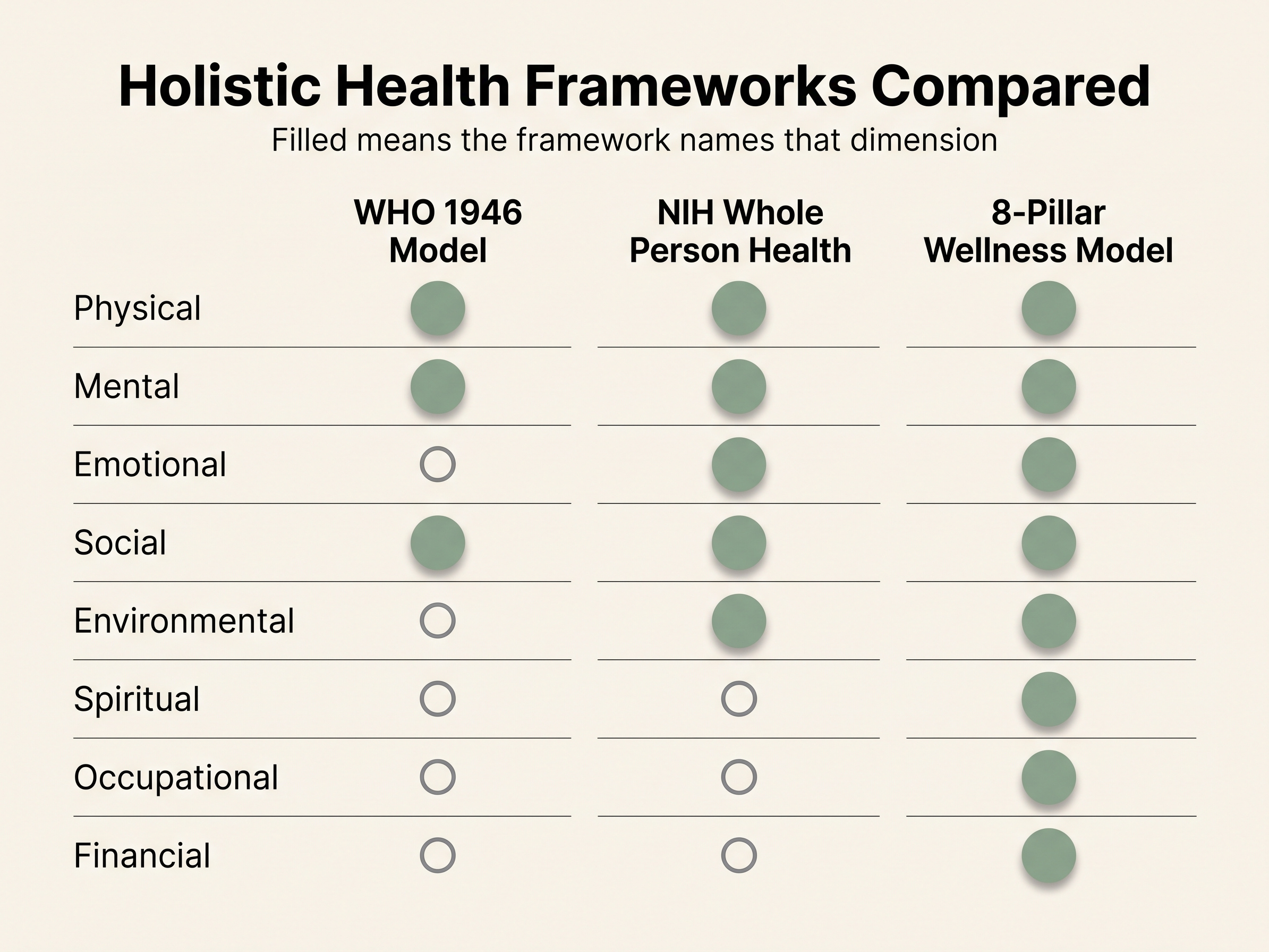
Different sources count 5, 7, or 8 dimensions of holistic health because they descend from different source models, not because any of them is wrong. The WHO constitution names three domains. The NIH whole person health model names four factor categories. The popular wellness framework circulating in consumer health content names eight. Each was built for a different purpose.
This is the question we saw asked most often and answered least often. Here is the reconciliation.
| Dimension | WHO 1946 model | NIH whole person health | Popular 8-pillar model |
|---|---|---|---|
| Physical | Yes | Biological | Physical |
| Mental | Yes | Behavioral | Intellectual |
| Emotional | Folded into mental | Behavioral | Emotional |
| Social | Yes | Social | Social |
| Environmental | Not named | Environmental | Environmental |
| Spiritual | Not named | Not named | Spiritual |
| Occupational | Not named | Within social | Occupational |
| Financial | Not named | Within social | Financial |
| Sources: World Health Organization constitution (1946) and the NIH National Center for Complementary and Integrative Health whole person health framework. | |||
The counts differ because of scope. The WHO was writing a treaty definition and stayed broad. The NIH model was built to guide research funding, so it groups factors by what researchers can measure. The 8-pillar model came out of campus and workplace wellness programming, which is why it separates occupational and financial health into their own categories. None of the three contradicts the others. They slice the same territory at different resolutions.
If you want a single working answer: five dimensions cover the ground most people mean. Physical, mental, emotional, social, and spiritual. Add environmental if your living or working conditions are a live factor.
What Is the Difference Between Holistic and Integrative Medicine?
Holistic describes a philosophy of care. Integrative medicine describes a specific clinical model that combines conventional medical treatment with complementary therapies that have reasonable evidence behind them. All integrative medicine is holistic in outlook. Not all holistic practice is integrative, because integrative care requires a licensed conventional provider coordinating the plan.
The NCCIH draws a further line worth knowing. Complementary means used alongside conventional care. Alternative means used instead of it. The center notes that true alternative use, replacing effective medical treatment, is uncommon and carries real risk. Integrative and complementary approaches are the mainstream of what people actually do.
The WHO takes a similar position in its traditional, complementary and integrative medicine program, describing integrative medicine as an evidence-based approach combining biomedical knowledge with traditional and complementary practices. The operative word in both definitions is combining.
What Therapies Are Included in Holistic Wellness Care?
Holistic wellness care groups into five recognized categories. The NCCIH uses a similar taxonomy for research classification.
- Mind-body therapies – meditation, yoga, tai chi, breathwork, guided imagery – traditionally used to support stress response and emotional regulation.
- Alternative medical systems – Ayurveda, Traditional Chinese Medicine, naturopathy, homeopathy – complete traditions with their own diagnostic frameworks.
- Manipulative and body-based methods – massage therapy, chiropractic, reflexology, osteopathic manipulation – traditionally used to support musculoskeletal comfort and circulation.
- Energy therapies – Reiki, therapeutic touch, sound therapy – practices based on proposed energy fields, with the thinnest research base of the five.
- Biologically based practices – herbal preparations, dietary approaches, vitamins and minerals – where botanical medicine and nutrition sit.
Mind-Body Therapies
These practices work through the connection between mental state and physical function. Meditation and mindfulness training, yoga, tai chi, qigong, and breathwork all belong here. They are the most studied category in holistic care, largely because they are straightforward to test in a randomized design.
Alternative Medical Systems
Ayurveda, developed in the Indian subcontinent, organizes care around three functional principles called doshas and includes a daily-routine practice known as dinacharya. It classifies certain herbs as rasayana, meaning preparations traditionally used to support vitality over long periods. Ashwagandha, Withania somnifera, is the best-known rasayana herb. Traditional Chinese Medicine works from a different model built on organ networks and pattern diagnosis, and includes acupuncture, herbal formulas, and movement practice. Western herbalism draws on European and North American plant traditions.
A practical Ayurvedic starting point is dinacharya itself. Waking at a consistent hour, eating the largest meal at midday when digestive capacity is considered highest, and winding down after sunset. These are behavioral rather than pharmacological, which is why they carry no meaningful risk.
Manipulative and Body-Based Methods
Massage therapy applies pressure to muscle and soft tissue. A licensed chiropractor assesses and manages neuromusculoskeletal complaints through manual adjustment. Reflexology applies pressure to specific points on the feet and hands. These practices are hands-on and generally well tolerated when performed by credentialed practitioners.
Energy Therapies
Reiki, therapeutic touch, and sound therapy propose that practitioners influence energy fields around or within the body. We include this category because it is genuinely part of holistic practice and people ask about it. The research base here is the weakest of the five categories, and we say so plainly below.
Biologically Based Practices
This category covers herbal preparations, whole-food dietary approaches, and nutritional supplementation. Practitioners in this area use whole foods, personalized dietary patterns, and botanical preparations traditionally used to support specific body systems.
Is Holistic Health Backed by Scientific Evidence?
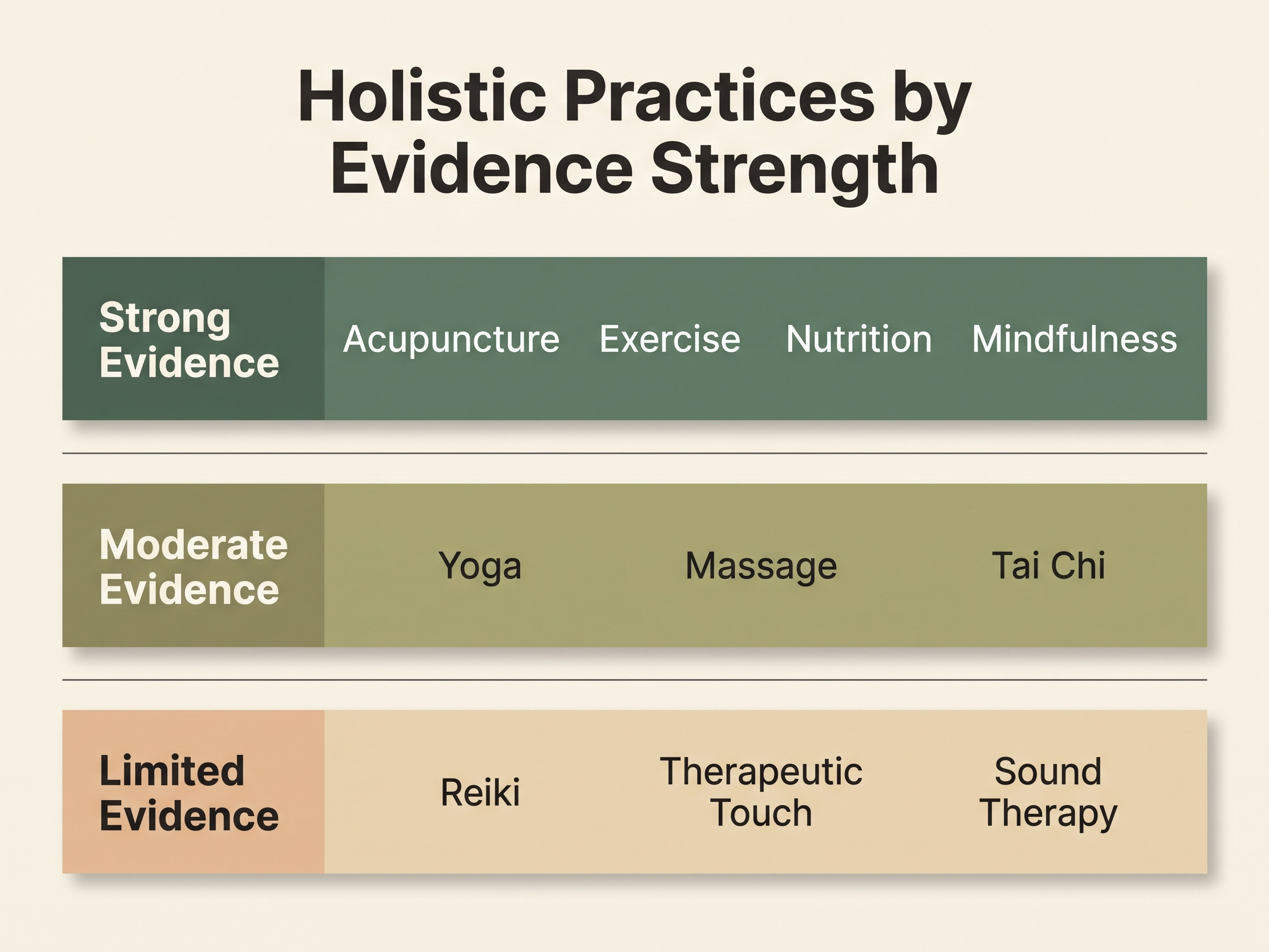
Partly, and the variation is wide. Acupuncture, yoga, and mindfulness training carry substantial randomized controlled trial data. Nutrition and exercise are well established. Energy therapies such as Reiki have little rigorous supporting evidence. Treating “holistic health” as one thing with one evidence rating is the most common error in this space.
Here is what the strongest datasets actually show.
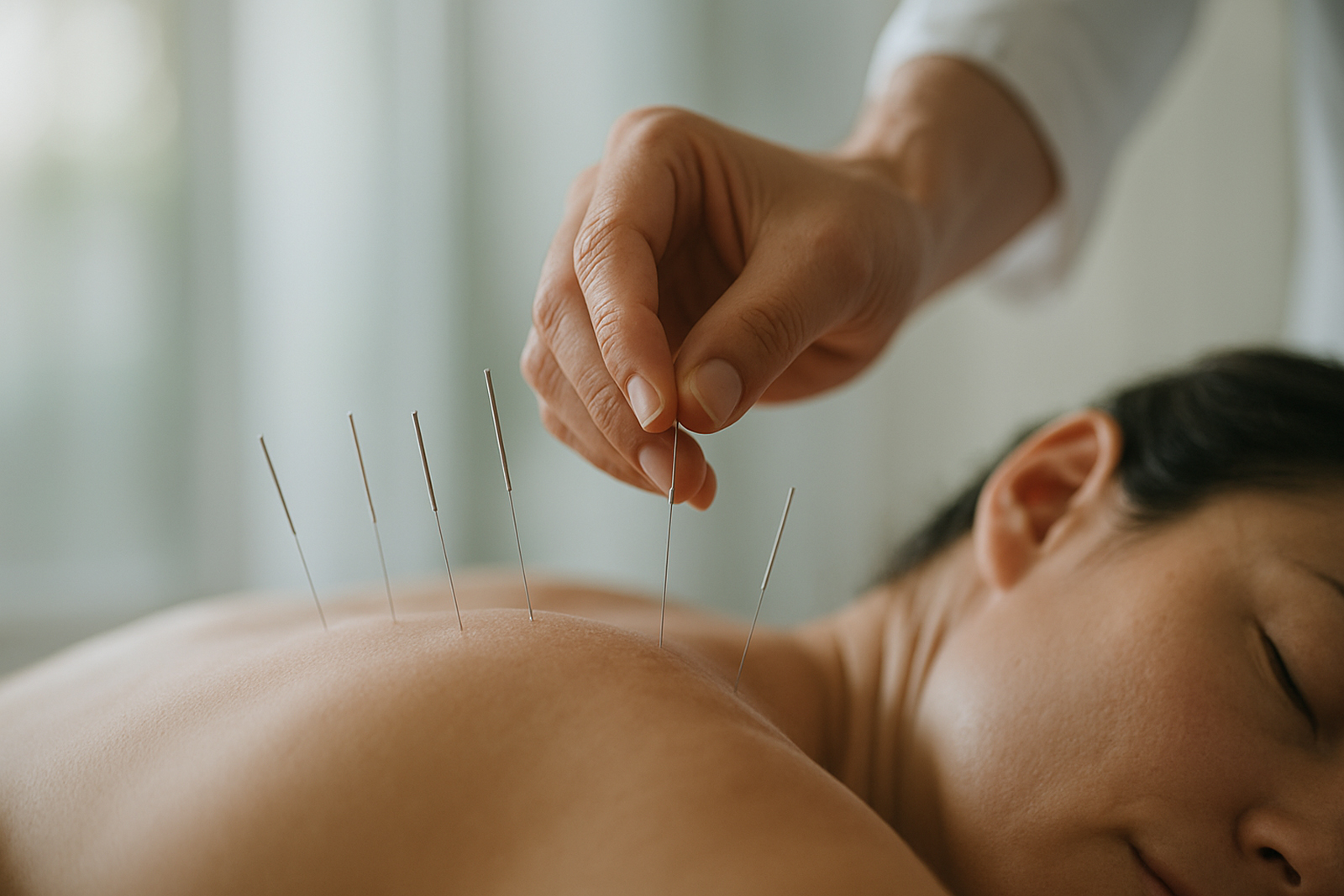
Acupuncture has the largest evidence base of any single practice in this field. An individual patient data meta-analysis pooled 39 trials covering 20,827 patients with chronic musculoskeletal pain, osteoarthritis, chronic headache, and shoulder pain. Acupuncture outperformed both sham and no-acupuncture controls for every condition tested. Effects persisted at one year with only about a 15 percent decrease. Vickers et al. (2018), The Journal of Pain, PMID: 29198932. The earlier analysis in this line covered 29 trials and 17,922 patients. Vickers et al. (2012), Archives of Internal Medicine, PMID: 22965186.
Yoga shows real benefits and real limits. A Cochrane review of 12 trials with 1,080 participants found moderate-certainty evidence that yoga produced small to moderate improvements in back-related function at six months compared with non-exercise controls. The honest caveat matters: the pain improvement did not reach the review’s own pre-defined threshold for clinical significance, and yoga carried a higher rate of adverse events than non-exercise controls, primarily increased back pain. Wieland et al. (2017), Cochrane Database of Systematic Reviews, PMID: 28076926. An earlier meta-analysis of 8 trials with 743 patients found medium to large effects on functional disability. Holtzman and Beggs (2013), Pain Research and Management, PMID: 23894731.
Mindfulness training shows measurable biological effects. A randomized controlled trial of mindfulness-based stress reduction found reduced cortisol area under the curve in response to a standardized laboratory stressor. Andersen et al. (2021), Psychosomatic Medicine, PMID: 33259351.
Adaptogenic herbs have a smaller but growing dataset. A 60-day randomized, double-blind, placebo-controlled study of 60 stressed adults taking a standardized Withania somnifera extract found a statistically significant reduction on the Hamilton Anxiety Rating Scale and a reduction in morning cortisol compared with placebo. No adverse events were reported. Lopresti et al. (2019), Medicine (Baltimore), PMID: 31517876.
The pattern worth carrying away: the practices with the most evidence are the least exotic. Movement, breathing, sleep, food, and a small number of well-studied botanical preparations.
Where Does Herbalism Fit in Holistic Practice?
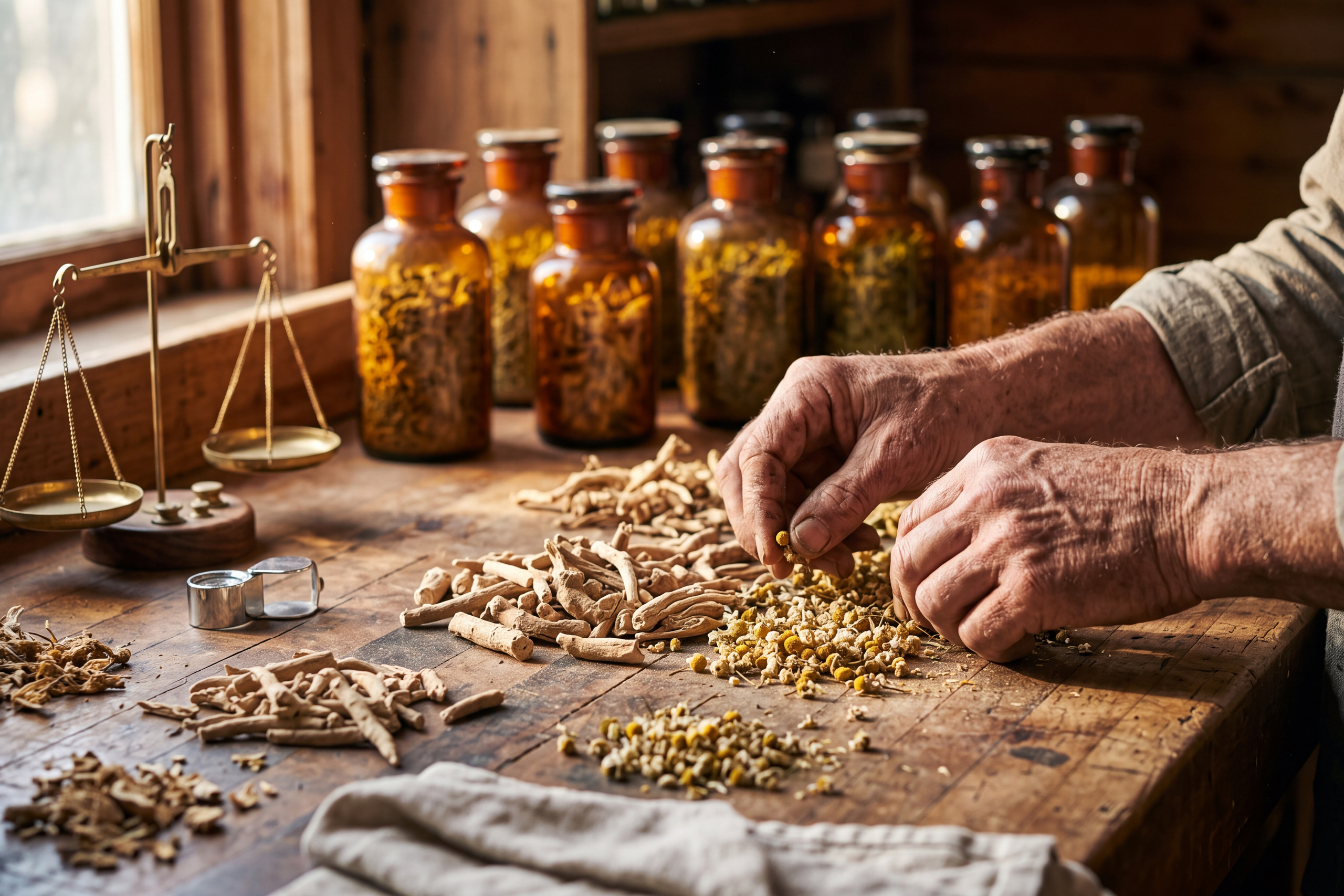
Herbalism sits within the biologically based category, and it is the oldest continuously practiced element of holistic care. Every major traditional system built its materia medica from plants before it developed anything else. What separates a serious modern herbal practice from a casual one is sourcing discipline and quality verification.
In our sourcing experience, the same botanical species can vary enormously in constituent profile depending on growing region, harvest timing, and post-harvest handling. Withania somnifera root grown in different soil conditions carries different withanolide concentrations. Curcuma longa rhizome varies in curcuminoid content. This is why terroir language, borrowed from wine, has become standard among herbalists who care about consistency.
The plants most often encountered in holistic practice cluster by traditional use. Withania somnifera and Rhodiola rosea are classified as adaptogens, traditionally used to support the body’s stress response. Matricaria chamomilla, German chamomile, has been used traditionally to support evening calm. Zingiber officinale, ginger, is traditionally used to support digestive comfort. Camellia sinensis, the tea plant, supplies both caffeine and L-theanine. Panax ginseng holds a central place in Traditional Chinese Medicine formulations.
Quality verification is where our editorial team spends most of its assessment effort. The markers worth checking are third-party identity testing confirming the species is what the label says, heavy metals and microbial screening, manufacture in a cGMP-compliant facility, and a specified plant part. Root, leaf, and aerial parts of the same species are not interchangeable. Memorial Sloan Kettering Cancer Center maintains a herb reference database that is a useful cross-check on interactions, particularly for anyone taking prescription medication.
For readers building a first herbal routine around stress support, our Ashwagandha Root Capsules use root material only, the plant part used in the clinical literature cited above.
These preparations are traditionally used to support normal body function. They are not substitutes for medical care, and anyone taking prescription medication should review potential interactions with a pharmacist or physician before starting.
How Do I Start Healing Myself Holistically?
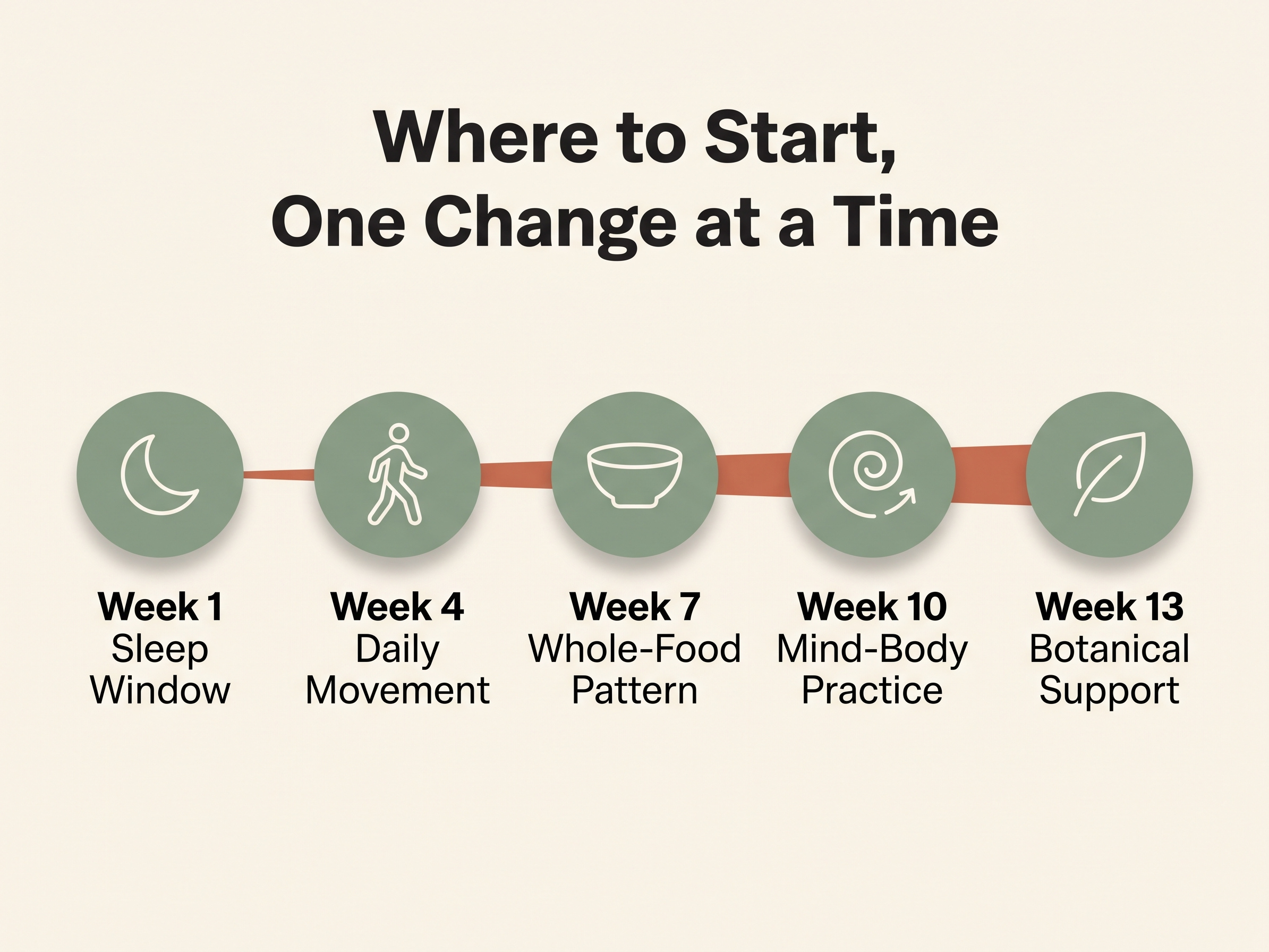
Start with one measurable input, hold it for three weeks, then add the next. The three inputs with the strongest evidence and the lowest risk are sleep regularity, daily movement, and a whole-food dietary pattern. Layering everything at once makes it impossible to tell what is working.
Begin With a Written Self-Assessment
Spend a week recording sleep hours, energy at three fixed points in the day, digestive comfort, mood, and stress level. Written records surface patterns that memory smooths over. Most people discover that one input, usually sleep or a specific meal timing, drives several of the others.
Add Practices in Sequence
Week one, fix the sleep window. Same bedtime and wake time within a thirty-minute range. Week four, add daily movement you will actually repeat. Week seven, adjust the dietary pattern toward whole foods. Week ten, add a mind-body practice such as ten minutes of breathwork or meditation. Week thirteen, consider whether a botanical preparation fits a specific remaining gap.
Find a Qualified Practitioner
Credentials to look for depend on what you need. An integrative physician holds a conventional medical degree plus complementary training. A naturopathic doctor holds an ND from an accredited four-year program, and licensing varies by state. A licensed acupuncturist holds an L.Ac. credential and state licensure. A clinical herbalist may hold registered herbalist status through a professional body. A functional medicine practitioner may come from several clinical backgrounds, so ask directly about the underlying license.
Ask three questions at a first appointment. What is your license and who issues it? How do you decide when to refer to conventional care? Will you coordinate with my physician? A practitioner who answers all three without hesitation is a reasonable bet.
How Do Holistic Practitioners Approach Long-Term Health?
Holistic practitioners generally work on a longer arc than episodic care, focusing on the daily inputs that shape health over months and years rather than on isolated appointments. The working assumption is that persistent patterns come from persistent conditions, so the plan targets sleep, nutrition, movement, stress load, and environment together rather than sequentially.
In practice, this means longer initial consultations, frequent short reviews, and adjustment based on what the person reports rather than a fixed protocol. It also means coordination. A practitioner working outside conventional medicine who does not ask what medications you take or who your physician is has skipped the most important part of the job.
What Are the Limitations and Criticisms?
The criticisms are legitimate and worth stating clearly. Anyone selling holistic wellness who will not name the limitations is not worth listening to.
Evidence quality is inconsistent. As shown above, the gap between acupuncture’s 20,000-patient dataset and the evidence behind energy therapies is enormous. Marketing language tends to flatten that difference.
Delaying necessary medical care is the real danger. Complementary use alongside conventional treatment is a reasonable choice. Substituting for effective treatment of a serious condition is not. The NCCIH is explicit on this point.
Practitioner regulation varies widely. Some holistic disciplines have state licensure and accredited training. Others have neither. The title alone tells you little.
“Natural” does not mean risk-free. Botanical preparations contain active compounds that can interact with prescription medication. The Cochrane yoga review found a measurably higher adverse event rate than non-exercise controls, which is a reminder that even gentle practices carry some risk.
Cost and coverage. Most holistic services are not covered by insurance, which puts them out of reach for many people and creates a market where cost is not disciplined by any third-party payer.
Frequently Asked Questions
What are the 7 types of holistic needs?
The seven-dimension model typically lists physical, emotional, intellectual, social, spiritual, environmental, and occupational needs. It sits between the WHO’s three-domain definition and the eight-pillar wellness model, which adds financial health as a separate category. All three describe the same territory at different levels of detail.
What are the 8 pillars of holistic health and wellness?
The eight pillars are physical, emotional, intellectual, social, spiritual, environmental, occupational, and financial. This model originated in campus and workplace wellness programming, which explains why occupational and financial health appear as standalone pillars rather than being folded into social health as they are in the NIH framework.
How do I heal myself holistically?
Begin with a one-week written self-assessment covering sleep, energy, digestion, mood, and stress. Then change one input at a time, holding each for about three weeks before adding the next. Sleep regularity, daily movement, and a whole-food dietary pattern carry the strongest evidence and lowest risk, so start there.
What are examples of holistic health?
Common examples include meditation and mindfulness practice, yoga and tai chi, acupuncture, massage therapy, Ayurvedic dinacharya routines, whole-food nutrition plans, herbal preparations, and sleep hygiene protocols. Most people combine two or three rather than adopting a full traditional system.
What is the difference between holistic and integrative medicine?
Holistic is a philosophy of treating the whole person. Integrative medicine is a clinical model that combines conventional treatment with evidence-supported complementary therapies under a licensed provider’s coordination. Integrative care is always holistic in outlook, but holistic practice is only integrative when a conventional provider is coordinating the plan.
How does the WHO define holistic health?
The World Health Organization does not use the term holistic in its constitution. It defines health as “a state of complete physical, mental and social well-being and not merely the absence of disease or infirmity,” adopted in 1946. That definition is the origin point for modern holistic frameworks, which added spiritual and environmental dimensions later.
Is holistic health backed by scientific evidence?
Some practices are strongly supported, and others are not. Acupuncture, yoga, mindfulness training, nutrition, and exercise carry substantial randomized trial evidence. Energy therapies such as Reiki carry very little. Evaluating each practice on its own evidence rather than accepting or rejecting holistic health as a whole is the accurate approach.
What therapies are included in holistic wellness care?
Holistic wellness care includes five categories: mind-body therapies such as meditation and yoga, alternative medical systems such as Ayurveda and Traditional Chinese Medicine, manipulative methods such as massage and chiropractic, energy therapies such as Reiki, and biologically based practices including herbal preparations and nutrition.
Related Reading
Continue with our guides on herbal adaptogens for stress, what the evidence supports about detoxifying herbs, natural sleep remedies, and how to evaluate herbal supplements before buying.
Disclaimer
These statements have not been evaluated by the Food and Drug Administration. This product is not intended to diagnose, treat, cure, or prevent any disease. Consult your healthcare provider before use, particularly if you are pregnant, nursing, taking prescription medication, or managing a diagnosed condition. This article is educational and is not a substitute for individualized medical advice.
References
- Vickers AJ, Vertosick EA, Lewith G, et al. Acupuncture for Chronic Pain: Update of an Individual Patient Data Meta-Analysis. The Journal of Pain. 2018. PMID: 29198932
- Vickers AJ, Cronin AM, Maschino AC, et al. Acupuncture for chronic pain: individual patient data meta-analysis. Archives of Internal Medicine. 2012. PMID: 22965186
- Wieland LS, Skoetz N, Pilkington K, et al. Yoga treatment for chronic non-specific low back pain. Cochrane Database of Systematic Reviews. 2017. PMID: 28076926
- Holtzman S, Beggs RT. Yoga for chronic low back pain: a meta-analysis of randomized controlled trials. Pain Research and Management. 2013. PMID: 23894731
- Andersen E, Geiger P, Schiller C, et al. Effects of Mindfulness-Based Stress Reduction on Experimental Pain Sensitivity and Cortisol Responses. Psychosomatic Medicine. 2021. PMID: 33259351
- Lopresti AL, Smith SJ, Malvi H, Kodgule R. An investigation into the stress-relieving and pharmacological actions of an ashwagandha (Withania somnifera) extract. Medicine (Baltimore). 2019. PMID: 31517876
- National Center for Complementary and Integrative Health. Whole Person Health: What It Is and Why It’s Important.
- National Center for Complementary and Integrative Health. Complementary, Alternative, or Integrative Health: What’s In a Name?
- World Health Organization. Constitution of the World Health Organization, 1946.
- World Health Organization. Traditional, Complementary and Integrative Medicine.
- Memorial Sloan Kettering Cancer Center. About Herbs, Botanicals and Other Products.
- Ayurveda: An ancient Indian system of medicine that uses diet, herbal treatments, and yogic breathing to restore balance between the mind, body, and spirit.
- Naturopathy: A system that focuses on natural remedies and the body’s ability to heal itself, incorporating therapies like nutrition, herbal medicine, and homeopathy.
Manipulative and Body-Based Methods
These methods are based on the manipulation or movement of one or more parts of the body.
- Massage Therapy: The practice of rubbing and kneading the body’s muscles and soft tissues to relieve pain and tension.
- Chiropractic Care: Focuses on the diagnosis and treatment of neuromuscular disorders, with an emphasis on treatment through manual adjustment of the spine.
Energy Therapies
These therapies involve the belief that a universal life force or subtle energy exists in and around the body.
- Reiki: A Japanese technique for stress reduction and relaxation that also promotes healing, often administered by “laying on hands.”
- Qigong: A practice from Traditional Chinese Medicine that combines slow movements, breathing exercises, and meditation to cultivate and balance life energy, or “qi.”
Biologically Based Treatments
These methods use substances found in nature, such as herbs, foods, and vitamins.
- Herbal Medicine: The use of plants and plant extracts for therapeutic purposes. Back To Your Roots Herbs provides resources for understanding different botanical traditions.
- Nutrition: Focuses on the impact of food on health, often using specialized diets and supplements to treat and prevent illness.
The Potential Benefits of a Holistic Approach
Adopting holistic principles can have a positive impact on many areas of life. People who incorporate these practices often report a variety of improvements in their overall wellness.
- Enhanced Physical Well-being: By focusing on prevention, nutrition, and movement, individuals may notice improved energy levels, better sleep, and fewer physical complaints.
- Improved Emotional and Mental Resilience: Mind-body practices like meditation and yoga are well-documented to reduce stress, improve mood, and increase one’s ability to cope with life’s challenges.
- A Greater Sense of Personal Control: A key aspect of the holistic health and healing journey is education. Understanding the connection between lifestyle choices and health outcomes gives individuals a more active role in their own well-being.
Important Considerations and Criticisms
While many find value in holistic health, it is important to approach it with a balanced perspective. Acknowledging the limitations and criticisms is a sign of a well-informed approach.
The primary consideration is the importance of evidence-based practices. While many holistic therapies like yoga and nutrition are supported by extensive scientific research, others have less empirical evidence to support their effectiveness. It is also vital to recognize the risk of forgoing or delaying conventional medical treatment for serious or life-threatening conditions. Holistic therapies should be used to complement, not replace, necessary medical care. Finally, the regulation of some holistic practitioners can vary, so it is important to seek out qualified and credentialed professionals.
How to Start Integrating Holistic Principles
Incorporating a holistic view into your life does not require a dramatic overhaul. It can begin with small, intentional changes that accumulate over time.
Start with Mindful Self-Assessment
Take a moment to check in with yourself across the five aspects of health. Where do you feel strong? Which areas might need more attention? This simple act of awareness is the first step.
Finding a Qualified Holistic Practitioner
If you are interested in a specific therapy like acupuncture or naturopathy, research practitioners in your area. Look for proper licensing, certifications, and positive reviews. Discuss your health goals with them and ask about their approach to see if it aligns with your needs.
Small, Sustainable Lifestyle Changes
You can begin integrating these ideas on your own through simple actions.
- Add more whole foods to your diet.
- Dedicate five minutes each day to quiet breathing or meditation.
- Take a short walk in nature.
- Schedule quality time with loved ones.