The Verdict: Synaptolepis Kirkii Internal Quality Score
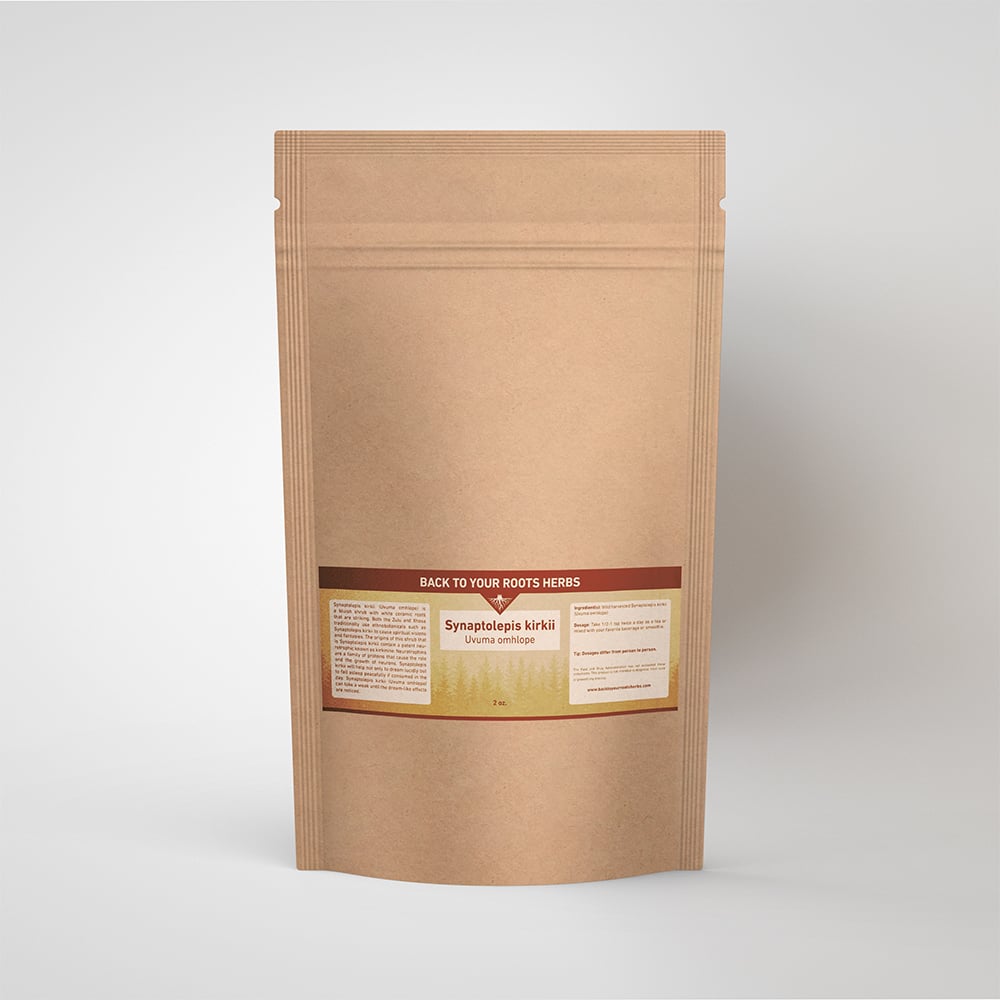
Grade A Wild-Harvested. Whole-root powder of Synaptolepis kirkii (Uvuma Omhlope), porcelain-white root sourced from the East African coastal forest mosaic of Tanga, Tanzania (5.07° S, 39.10° E). Heavy metal panel tested. No extract, no fillers, no carriers.
– Back To Your Roots Herbs Research Group
Sensory Analysis of the Kirkii Root Powder
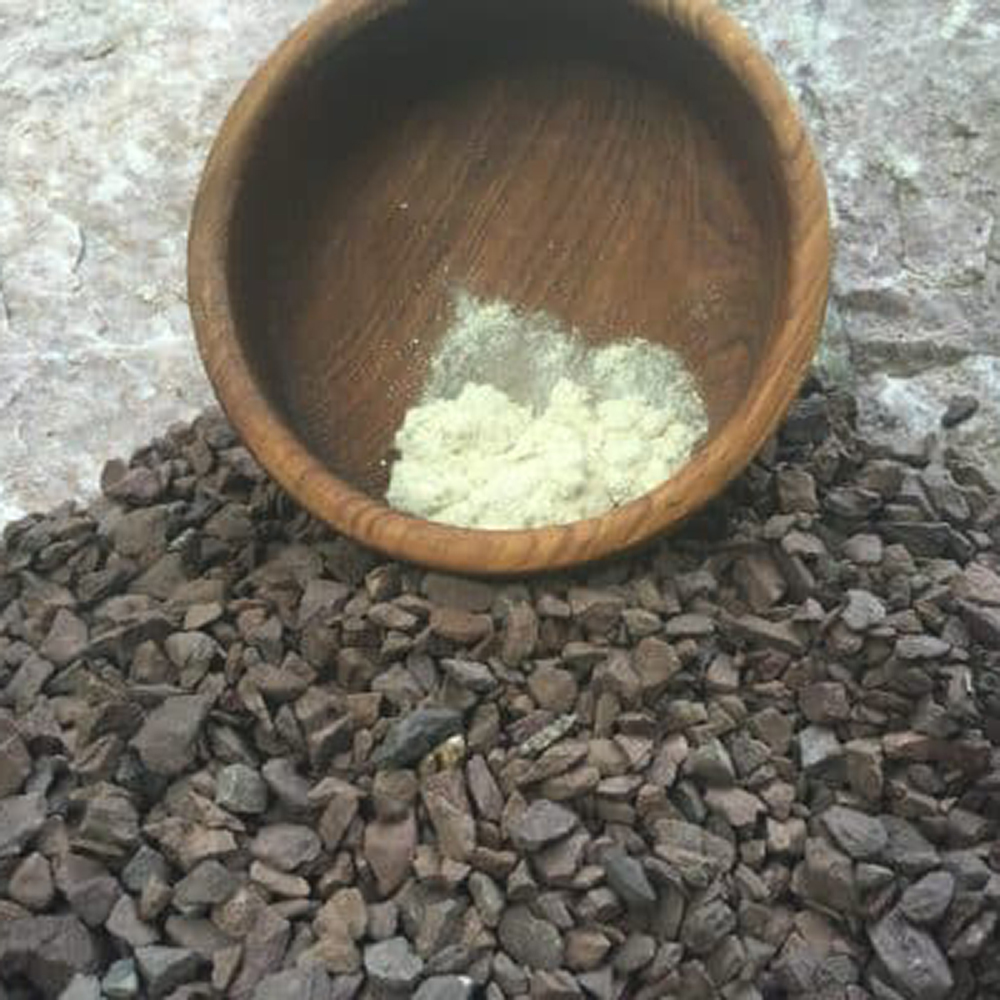
- Look: Fine, ivory-to-chalk-white powder with occasional pale beige fibers from the cortex. Loosely packed. Lifts easily under a spoon.
- Smell: Faintly woody. A subdued resinous undertone. Back-note of dry hay. Not perfumed.
- Taste: Earthy. Distinctly bitter on the front of the tongue. Clean, slightly astringent finish. Not chemical, not sweet.
How Does Synaptolepis Kirkii Work?
The dream herb, traditionally called Uvuma Omhlope by the Zulu and Xhosa, is botanically identified as Synaptolepis kirkii. The plant is a small shrub in the family Thymelaeaceae with porcelain-white tuberous roots, blue-green leaves, and tubular cream flowers that develop into orange berry-like fruits.
Synaptolepis Kirkii Botanical Identity
Synaptolepis kirkii was named by botanist Daniel Oliver in 1894 from collections in Mozambique. The species is recognized in the International Plant Names Index and is documented by the Royal Botanic Gardens, Kew (POWO) in their Flora of Tropical East Africa records. A 2006 taxonomic revision (de Vos et al.) clarified that southern African specimens long traded as Synaptolepis kirkii are morphologically Synaptolepis oliveriana. Both species share identical traditional usage and an overlapping daphnane diterpenoid profile, and the trade name Synaptolepis kirkii is used commercially across both. Our supply line tracks the East African coastal-forest population where voucher confirmation is available.
The Active Compound: Kirkinine
He, Cik, Van Puyvelde, Appendino, and colleagues (Bioorganic & Medicinal Chemistry, 2002, PMID 12150870) reported the bioassay-guided isolation of kirkinine, a daphnane diterpene orthoester, from a dichloromethane extract of the kirkii root. The paper described nine related daphnane diterpenoids and noted neurotrophic and antileukemic activity in cellular assays. Kirkinine and its sister daphnane orthoesters are the principal chemical markers used to authenticate the species.
Origin and Terroir of the Synaptolepis Kirkii Plant
Synaptolepis kirkii is endemic to the coastal forest mosaic of East Africa: the Tanga and Pwani regions of Tanzania, the Kilifi and Kwale coastal forests of Kenya, and the southern lowland forest of Somalia. The plant grows as an understory shrub on sandy, well-drained soils within seasonal rainfall belts. The white root system is the part of the kirkii plant that is harvested. Surface roots are scraped with a blade parallel to the rhizome, sun-dried, then milled to powder.
Sustainability of Kirkii Plant Harvesting
Synaptolepis kirkii is not currently listed as threatened on the IUCN Red List, but the closely related Synaptolepis oliveriana is monitored by SANBI (the South African National Biodiversity Institute) due to muthi-market pressure. Our wild-harvest is staggered across rotational sites and limited to mature shrubs.
Critical Usage of the Synaptolepis Kirkii Root Powder
The traditional preparation of Uvuma Omhlope calls for 300 to 500 milligrams of the dried root powder, frothed in cool water and consumed on an empty stomach shortly before bed. Avoid use during pregnancy or breastfeeding. Not for children or adolescents. Daphnane orthoesters in the family Thymelaeaceae can be irritating to skin and mucous membranes, so handle the dry powder with care, do not exceed the traditional dosage, and do not use this product on broken skin. Speak with a qualified healthcare provider before use if you are taking medication or managing any health condition.
Preparation as a Frothed Tea (Traditional Method)
Stir 300 to 500 mg of the kirkii root powder into 50 ml of cool water inside a sealable jar. Shake the jar vigorously for 30 to 60 seconds until a thick foam rises to the surface. Spoon the foam into the mouth and chase with the remaining liquid. Use the kirkii dream root tea before bed.
Storage
Keep the powder dry, sealed, and away from direct light. The Synaptolepis kirkii root powder remains stable for 24 months at standard room temperature.
Daphnane Diterpenoids: Marker Profile Note
The kirkinine class of daphnane diterpene orthoesters is the chemotaxonomic signature for authentic Synaptolepis kirkii. Adulterant species rarely express this marker.
Clinical Specs
| Spec | Detail |
|---|---|
| Serving Size | 300 to 500 mg of root powder |
| Frequency | Once nightly, before bed, on an empty stomach |
| Active Marker | Kirkinine and related daphnane diterpene orthoesters |
| Processing | Wild-harvested white root, sun-dried, finely milled. No extract, no carrier oil, no excipients. |
| Safety | Heavy Metal Tested (Pass). Family Thymelaeaceae cautions disclosed above. |
| Ingredients | 100% Synaptolepis kirkii root powder (Uvuma Omhlope) |
| Other Ingredients | None. No fillers, no flow agents, no capsule shell. |
| Purity | Wild-Harvested, Non-GMO, Vegan |
| Free From | Wheat, Gluten, Soy, Dairy, Binders, Fillers, Carriers |
| Origin | Tanga and Pwani regions, Tanzania, East Africa (5.07° S, 39.10° E) |
| Manufactured | Virginia Beach, VA, USA |
| Net Weight | 2 oz (approx. 56 g) |
Comparison Table: BTYRH vs. Generic Synaptolepis Kirkii
| Feature | BTYRH Synaptolepis Kirkii Powder | Generic Etsy Kirkii Listing |
|---|---|---|
| Origin | East African coastal forest, Tanga, Tanzania (5.07° S, 39.10° E) | Unspecified “African” sourcing |
| Preparation | Whole white root, sun-dried, finely milled. No extract, no carrier. | Often pre-ground from mixed cuts and chips |
| Taste | Earthy, distinctly bitter, clean astringent finish | Variable, sometimes flat or stale |
| Authentication | Tracked to S. kirkii sensu stricto, where voucher-confirmed; daphnane diterpenoid marker profile | “Synaptolepis kirkii” trade name with no taxonomic verification |
| Safety | Heavy metal panel tested. Thymelaeaceae cautions disclosed. | Unspecified testing |
| Dosage Guidance | 300 to 500 mg before bed, the traditional Xhosa froth method described | Often missing or vague |
Authentication Note
This product is offered as the dried, ground, white root of Synaptolepis kirkii. Per the 2006 taxonomic revision, the trade name covers both S. kirkii sensu stricto and the morphologically near-identical S. oliveriana. Both share the kirkinine daphnane diterpenoid marker profile and are used identically in tradition.
DISCLAIMER: These statements have not been evaluated by the Food and Drug Administration. This product is not intended to diagnose, treat, cure, or prevent any disease. Consult your healthcare provider prior to use if you are pregnant, nursing, or taking any medication.


Shane (verified owner) –
Excellent packaging, fast delivery, and product quality.