Shilajit, a revered substance in traditional medicine, is increasingly recognized for its diverse health benefits, particularly for women. This unique resin, formed over centuries from decomposed plant material in the Himalayan mountains, is rich in essential minerals and nutrients.
What Exactly is Shilajit?
Shilajit is a sticky, tar-like substance that seeps from rocks in high-altitude regions. Its rich composition includes fulvic acid, humic acid, and a variety of trace minerals, making it a powerful supplement for health and wellness. Asphaltum punjabianum has unique properties, which have made it a staple in Ayurvedic medicine, where it is used to promote longevity and vitality.
One honest caveat up front. Much of the strongest human research on shilajit has been conducted in men, or in mixed groups, so where the evidence comes specifically from women we say so, and where it does not we flag the gap rather than paper over it. For the skin-specific details, our team covers that topic in depth in our guide to shilajit’s benefits for skin.
Historical and Cultural Significance of Shilajit
Shilajit has been a cornerstone of traditional medicine systems, most notably in Ayurveda, for centuries. Known in Sanskrit as “the destroyer of weakness,” it has long been valued for its rejuvenating properties. In traditional practices, Shilajit was frequently recommended for women to support reproductive health, enhance energy, and maintain overall wellness during various life stages.
Ancient texts describe Asphaltum punjabianum as a powerful adaptogen, assisting the body in resisting physical, chemical, and biological stressors. Its application in women’s health is deeply rooted in ancient times, when it was prescribed for a range of female-specific conditions, including menstrual irregularities and fertility issues.
Understanding the Composition of Shilajit
The efficacy of Shilajit stems from its complex composition, a result of the decomposition of plant matter over centuries. This process, occurring in the high-altitude regions of the Himalayas, enriches Shilajit with a unique blend of organic compounds and minerals.
Key Components:
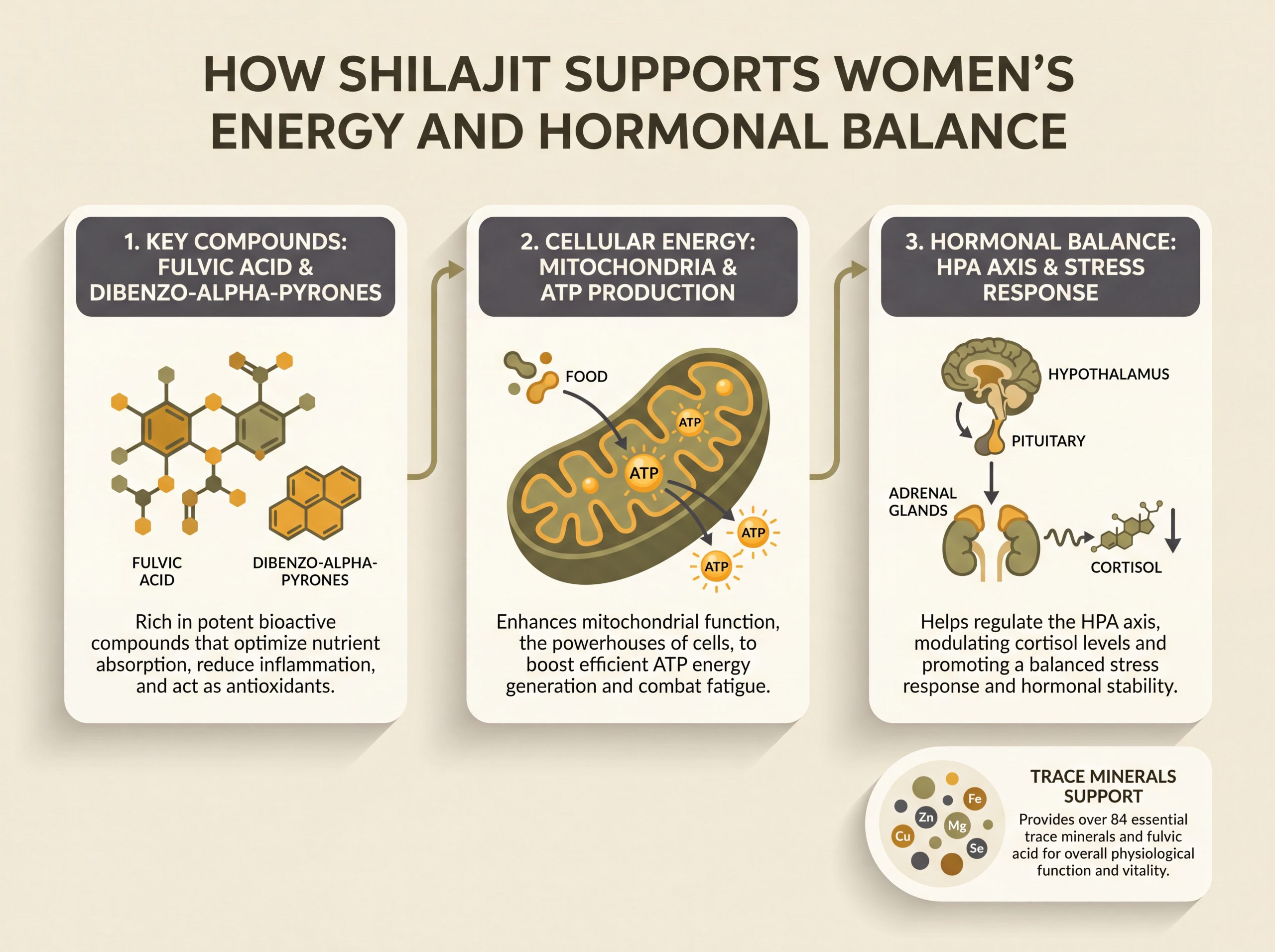
- Fulvic Acid: A primary active component, fulvic acid, is known for its potent antioxidant properties and its ability to enhance nutrient absorption. It plays a significant role in improving cellular energy production and reducing oxidative stress.
- Humic Acid: Complementing fulvic acid, humic acid contributes to the overall therapeutic effects of Shilajit. It supports the body’s detoxification processes and helps in the efficient removal of waste products.
- Trace Minerals: Shilajit contains a plethora of trace minerals, including iron, zinc, magnesium, potassium, and calcium. These minerals are essential for various bodily functions, from supporting bone health to ensuring proper enzyme activity.
- Dibenzopyrones: Shilajit contains dibenzo-α-pyrones and related metabolites, which, in combination with fulvic acid, have been shown to have potential benefits for supporting mitochondrial function.
- Other Organic Compounds: In addition to these primary components, Shilajit contains other organic compounds like amino acids and plant sterols, contributing to its overall health-promoting profile.
The combination of these elements makes Shilajit a multifaceted substance, capable of influencing various aspects of health, particularly in women.
What gives shilajit its activity is its chemistry rather than any single “active ingredient.” A peer-reviewed safety and efficacy review identifies dibenzo-alpha-pyrones (DBPs) and fulvic acid, along with their derivatives, as the constituents most responsible for shilajit’s antioxidant, anti-inflammatory, and adaptogenic behavior, and notes that its safety is well documented in both animal and human studies (Stohs, 2014, Phytotherapy Research, PMID: 23733436, PubMed record). In our own sourcing work we treat a verified fulvic acid percentage and third-party heavy-metal testing as the two numbers that separate a quality resin from a poor one. The same review is candid that well-controlled human trials remain limited, so much of what follows reflects a mix of human data, animal research, and centuries of traditional use rather than settled clinical fact.
Shilajit and Hormonal Health in Women
One of the most significant benefits of Shilajit for women lies in its potential to support hormonal balance. Hormonal health is a complex and dynamic aspect of overall well-being, influencing everything from menstrual cycles to mood and energy levels.
Impact on Key Hormones
Shilajit contains various bioactive compounds that interact with the endocrine system. It’s suggested that Asphaltum punjabianum can influence key hormones such as:
- Estrogen: While not a phytoestrogen (a plant-derived compound that mimics estrogen), Shilajit may support the body’s natural estrogen production and balance. This is particularly relevant for women experiencing fluctuating estrogen levels, such as during perimenopause or menopause.
- Progesterone: Shilajit may also play a role in balancing progesterone levels, a hormone essential for regulating the menstrual cycle and supporting pregnancy.
- Follicle-stimulating hormone (FSH) and Luteinizing Hormone (LH): These hormones, crucial for ovulation and overall reproductive health, may also be positively influenced by Shilajit’s adaptogenic properties.
Addressing Specific Conditions
Shilajit’s hormone-balancing effects may be beneficial for various conditions:
- Menstrual Irregularities: By supporting the body’s natural hormonal rhythms, Shilajit may help regulate menstrual cycles, reducing instances of irregular periods.
- Terminalia chebula: The fruit of Terminalia chebula is another component sometimes associated with traditional Ayurvedic formulations, although it’s distinct from Shilajit. Terminalia chebula is renowned for its digestive and detoxifying properties.
- Polycystic Ovary Syndrome (PCOS): Women with PCOS often struggle with insulin resistance, weight management, and skin issues. While more research is needed, some studies suggest Shilajit’s potential to improve insulin sensitivity and support weight management, which could indirectly benefit women with PCOS. Its antioxidant properties might also help with skin health.
- Endometriosis: Endometriosis is characterized by inflammation and pain. Shilajit’s potential anti-inflammatory properties may help alleviate some of the discomfort associated with this condition, although clinical studies are still needed to confirm this effect.
- Thyroid Function: The thyroid gland plays a vital role in regulating metabolism and energy levels. Some sources suggest Shilajit can support healthy thyroid function. However, women with pre-existing thyroid disorders (hypothyroidism or hyperthyroidism) should exercise caution and consult their healthcare provider before using Shilajit, as it could potentially influence thyroid hormone levels.
What about testosterone and higher-androgen conditions? This is worth understanding before you start. A randomized, double-blind, placebo-controlled trial in men aged 45 to 55 found that purified shilajit at 250 mg twice daily for 90 days raised total testosterone, free testosterone, and DHEAS compared with placebo (Pandit et al., 2016, Andrologia, PMID: 26395129, PubMed record). No published trial has measured the same endpoints in women, so shilajit’s effect on female androgens is not established. Because of that androgen-related signal, women whose conditions involve elevated androgens, including many cases of PCOS, and women with hormone-sensitive concerns should review shilajit with their healthcare provider first rather than assuming it is neutral for their hormones. From our editorial team’s reading of the literature, the honest position is caution and personalization here, not a blanket yes or no.
Enhancing Energy and Vitality with Shilajit
Fatigue is a common concern for women, often stemming from hormonal fluctuations, demanding lifestyles, or nutritional deficiencies. Shilajit offers a natural approach to boosting energy and combating fatigue.
The Science Behind Energy Enhancement
Shilajit’s ability to enhance energy is closely linked to its impact on cellular function, particularly the mitochondria. Mitochondria are the “powerhouses” of cells, responsible for producing adenosine triphosphate (ATP), the primary energy currency of the body.
- Fulvic Acid’s Role: The fulvic acid in Shilajit is key to improving mitochondrial function. It enhances the efficiency of the electron transport chain, a crucial process in ATP production.
- Combating Fatigue: By boosting mitochondrial function, Shilajit helps the body produce energy more effectively, leading to reduced feelings of fatigue and increased stamina. This is particularly beneficial for women who experience fatigue due to hormonal changes, busy schedules, or iron deficiency.
- Adaptogenic Properties: As an adaptogen, Shilajit also helps the body adapt to stress, which can be a significant contributor to fatigue. By reducing the body’s stress response, Shilajit indirectly supports sustained energy levels.
Practical Benefits for Women
Many women report feeling more vibrant and less fatigued when incorporating Shilajit into their daily routines. This increased energy can translate to improved productivity, enhanced physical performance, and a greater sense of overall well-being.
The most cited mechanism for shilajit and energy is cellular rather than stimulant. In a controlled animal model of stress-induced fatigue, processed shilajit standardized to roughly 57 percent fulvic acids helped preserve mitochondrial function and moderated activity of the hypothalamic-pituitary-adrenal (HPA) axis, the same axis that governs cortisol, the body’s primary stress hormone (Surapaneni et al., 2012, Journal of Ethnopharmacology, PMID: 22771318, PubMed record). Because mitochondria are where cells make usable energy, supporting their function is a plausible reason women describe steadier energy rather than a jittery lift. This is animal evidence, so we read it as a mechanism worth knowing, not proof of a result in women.
Shilajit’s Role in Supporting Reproductive Health
Beyond hormonal balance, Shilajit is also gaining recognition for its potential benefits in supporting reproductive health in women.
Fertility Enhancement
- Ovarian Function: Some studies suggest that Shilajit may support healthy ovarian function, potentially improving egg quality and supporting regular ovulation. This is crucial for women trying to conceive.
- Uterine Health: Shilajit may also contribute to a healthy uterine lining. A well-nourished uterine lining is essential for the successful implantation of a fertilized egg.
- Hormonal Balance (Revisited): By promoting overall hormonal balance, Shilajit creates a more favorable environment for conception. Balanced hormones are essential for regular ovulation and a healthy menstrual cycle.
Nutritional Support for Reproductive Health
The rich mineral content of Shilajit provides essential nutrients that support reproductive health. Minerals like iron, zinc, and selenium play important roles in various reproductive processes.
Cognitive Benefits of Shilajit for Women
As women age, maintaining cognitive function becomes increasingly important. Shilajit shows promise in supporting brain health and cognitive performance.
Neuroprotective Properties
Shilajit possesses potential neuroprotective properties, meaning it may help protect brain cells from damage. This is particularly relevant for women as they age, as the risk of cognitive decline increases.
- Antioxidant Activity: The antioxidants in Shilajit combat oxidative stress, a major contributor to age-related cognitive decline.
- Fulvic Acid’s Role (Again): Fulvic acid may also play a role in protecting brain cells and supporting cognitive function.
Memory and Focus
Shilajit may improve memory and focus. By supporting overall brain health and potentially enhancing neurotransmitter function, Shilajit can contribute to sharper cognitive performance.
Relevance for Women
These cognitive benefits are particularly important for women, who may experience cognitive changes during different life stages, such as during pregnancy (“pregnancy brain”) or menopause.
Shilajit and Bone Health in Women
Maintaining strong and healthy bones is a critical aspect of women’s health, especially as they age. Women are at a higher risk of developing osteoporosis, a condition characterized by weakened bones and increased fracture risk, particularly after menopause.
Post-Menopausal Osteoporosis
After menopause, estrogen levels decline significantly. Estrogen plays a protective role in bone health, so this decline can lead to accelerated bone loss. Shilajit’s potential to support bone health is multifaceted:
- Mineral Content: Shilajit is a rich source of minerals essential for bone health, including calcium, magnesium, and potassium. These minerals are the building blocks of bone tissue.
- Potential Estrogen Support: While not a direct replacement for estrogen, Shilajit may support the body’s natural estrogen production, indirectly contributing to bone protection.
- Improved Bone Density: Some studies suggest that Shilajit may contribute to maintaining or even improving bone density. This is crucial for reducing the risk of fractures.
Beyond Menopause
Even before menopause, adequate mineral intake is essential for building and maintaining strong bones. Shilajit can be a valuable supplement for women of all ages to support bone health.
Immune System Support with Shilajit
A robust immune system is essential for overall health and well-being. Shilajit offers potential benefits for strengthening the body’s natural defenses.
Antioxidant and Anti-inflammatory Effects
Shilajit’s potent antioxidant and anti-inflammatory properties play a key role in supporting immune health.
- Combating Oxidative Stress: Antioxidants neutralize harmful free radicals, protecting immune cells from damage.
- Reducing Inflammation: Chronic inflammation can weaken the immune system. Shilajit’s anti-inflammatory effects can help maintain a healthy immune response.
Specific Benefits for Women
A strong immune system is particularly helpful for women with conditions like PCOS or endometriosis, where inflammation plays a significant role. A well-functioning immune system also helps protect against common illnesses and infections.
Skin and Hair Health
Shilajit’s benefits extend beyond internal health, offering potential advantages for skin and hair health.
Antioxidant Protection for Skin
The high fulvic acid content in Shilajit provides potent antioxidant protection for the skin. This can help reduce the signs of aging, such as wrinkles and fine lines, by combating free radical damage.
Collagen Support
Some research suggests that Shilajit may support collagen production. Collagen is a vital protein that provides structure and elasticity to the skin. Maintaining healthy collagen levels is crucial for youthful-looking skin.
There is human data behind the collagen connection. In a clinical study, eight weeks of oral purified shilajit at 250 mg twice daily upregulated a cluster of extracellular matrix genes in skeletal muscle, including collagen, elastin, fibrillin, decorin, and fibronectin, the structural proteins that also give skin its firmness and elasticity (Das et al., 2016, Journal of Medicinal Food, PMID: 27414521, PubMed record). A separate randomized trial linked shilajit supplementation to lower serum hydroxyproline, a marker of collagen turnover, alongside better retention of muscular strength (Keller et al., 2019, Journal of the International Society of Sports Nutrition, PMID: 30728074, PubMed record). We flag that the strength study enrolled men, while the extracellular-matrix study included women, so the connective-tissue signal is promising and still building.
Skin Regeneration
The trace minerals in Shilajit may aid in skin cell regeneration, promoting a healthier complexion and potentially helping with wound healing.
Hair Health
While more research is needed, some traditional uses of Shilajit include promoting hair growth and improving hair quality. The minerals and nutrients in Shilajit may support scalp health and nourish hair follicles.
How to Use Shilajit: Dosage and Administration
Incorporating Shilajit into your daily routine requires careful consideration of dosage, form, and timing.
Forms of Shilajit
Shilajit is available in several forms:
- Resin: This is the most traditional and often considered the most potent form. It’s a sticky, tar-like substance.
- Powder: Shilajit powder is made by drying and grinding the resin. It’s convenient for mixing into drinks or smoothies.
- Capsules: Capsules offer a pre-measured dose and are easy to take.
Dosage Guidelines
Dosage recommendations can vary depending on the form of Shilajit and individual needs. It’s always best to start with a low dose and gradually increase it as needed.
- Resin: A pea-sized amount (approximately 300-500 mg) once or twice daily is a common starting point.
- Powder: 300-500 mg per day is a typical recommendation.
- Capsules: Follow the manufacturer’s instructions, usually 1-2 capsules daily.
Timing and Administration
- Timing: Many people prefer to take Shilajit in the morning on an empty stomach for optimal absorption. However, it can be taken at other times of the day as well.
- Administration:
- Resin: Dissolve the resin in warm (not boiling) water, milk, or herbal tea.
- Powder: Mix the powder into warm water, milk, smoothies, or other beverages.
- Capsules: Swallow the capsules with water.
Cycling Shilajit
Some practitioners recommend “cycling” Shilajit, meaning taking it for a period (e.g., 4-6 weeks), then taking a break (e.g., 1-2 weeks). This may help prevent the body from becoming desensitized to its effects and potentially maximize benefits.
Potential Side Effects and Precautions
While Shilajit is generally considered safe for most people, it’s essential to be aware of potential side effects and precautions.
Common Side Effects
- Digestive Issues: Some individuals may experience mild stomach upset, diarrhea, or nausea, especially when starting Shilajit. Starting with a low dose and taking it with food can help minimize these effects.
- Allergic Reactions: Although rare, allergic reactions are possible. Symptoms may include rash, itching, hives, or difficulty breathing. Discontinue use and seek medical attention if you experience any signs of an allergic reaction.
Important Precautions
- Heavy Metal Contamination: This is a significant concern. Shilajit sourced from unregulated areas may contain high levels of heavy metals (lead, mercury, arsenic). Always choose a reputable supplier that provides third-party lab testing results to confirm purity and the absence of heavy metals.
- Iron Overload: Shilajit can increase iron levels. Individuals with hemochromatosis (a condition characterized by excessive iron absorption) should avoid Shilajit.
- Low Blood Pressure: Shilajit may lower blood pressure. If you have low blood pressure or are taking medication for high blood pressure, monitor your blood pressure closely and consult your healthcare provider.
- Low Blood Sugar: Shilajit may lower blood sugar levels. If you have diabetes or are taking medication to lower blood sugar, monitor your blood sugar levels carefully and consult your healthcare provider.
- Pregnancy and Breastfeeding: Due to a lack of definitive research on its safety during pregnancy and breastfeeding, it’s generally recommended to avoid Shilajit during these periods unless specifically advised by your healthcare provider.
- Medication Interactions: Shilajit may interact with certain medications, including:
- Blood thinners (anticoagulants/antiplatelets): Shilajit may have mild blood-thinning effects, so caution is needed.
- Diabetes medications: Shilajit may enhance the effects of these medications, potentially leading to hypoglycemia (low blood sugar).
- Immunosuppressants: Shilajit may have immune-modulating effects, so it could potentially interfere with immunosuppressant medications.
- Medications for an overactive thyroid: Since it may have an effect on the thyroid, you should not take it with other medications for an overactive thyroid.
- Surgery: It might lower blood sugar and interfere with blood sugar control during and after surgery. Stop use at least 2 weeks before surgery.
- Hormonal Imbalances: While Shilajit is generally beneficial for balancing hormones, in some women, it could potentially exacerbate existing imbalances. If you have a known hormonal imbalance, consult your healthcare provider before using Shilajit.
- Autoimmune Diseases: Those with autoimmune diseases should consult with a doctor before using.
Choosing High-Quality Shilajit
The quality and purity of Shilajit are paramount for safety and efficacy.
- Source: Look for Shilajit sourced from reputable regions, such as the high-altitude areas of the Himalayas or the Altai Mountains.
- Processing: Choose a Shilajit that has been properly processed and purified to remove impurities and contaminants.
- Third-Party Testing: This is essential. Select a product that has undergone independent third-party lab testing to verify its purity, potency, and the absence of heavy metals.
- Form: While resin is often considered the most potent form, purified powder and capsules can also be effective if sourced from a reputable supplier.
Comparing Shilajit to Other Supplements
While many supplements offer benefits for women’s health, Shilajit stands out due to its unique composition and multifaceted effects.
| Supplement | Primary Benefits | Unique Aspects of Shilajit |
|---|---|---|
| Shilajit | Hormonal balance, energy, fertility support, cognitive function, bone health | Rich mineral content, adaptogenic properties, fulvic acid for enhanced nutrient absorption and mitochondrial function |
| Maca Root | Hormonal balance, libido enhancement | Shilajit offers a broader range of minerals and a more comprehensive approach to women’s health beyond just libido |
| Evening Primrose Oil | Hormonal balance, skin health | Shilajit provides additional energy-boosting benefits and supports cognitive function, bone health, and immune function |
| Iron Supplements | Anemia prevention, energy | Shilajit contains natural iron along with other minerals, potentially offering better bioavailability and a wider range of benefits |
| Calcium Supplements | Bone health | Shilajit offers calcium along with other bone-supporting minerals (magnesium, potassium) and may have additional benefits for bone density |
Addressing Common Questions about Shilajit (FAQ)
Q: Can Shilajit help with menstrual cramps?
A: While research is limited, some women report reduced menstrual discomfort when using Shilajit, possibly due to its anti-inflammatory properties. However, more studies are needed to confirm this.
Q: Is Shilajit safe for long-term use?
A: Traditionally, Shilajit has been used for extended periods. However, more long-term research is needed to definitively assess its safety for prolonged use. It’s generally advisable to consult with a healthcare provider for personalized advice, especially if you have any underlying health conditions.
Q: Can Shilajit interfere with contraceptives?
A: There’s no direct evidence that Shilajit interferes with hormonal contraceptives. However, because of its potential hormone-modulating effects, it’s wise to consult your healthcare provider if you’re using hormonal birth control.
Q: How long does it take to see benefits from Shilajit?
A: The timeframe for experiencing benefits can vary. Some women report noticing changes in energy levels within a few weeks. However, hormonal benefits and other effects may take longer to manifest, often several weeks or even months of consistent use.
Q: Can Shilajit help with weight management?
A: Shilajit is not primarily a weight loss supplement. However, its potential to boost metabolism and energy levels might indirectly support weight management efforts when combined with a healthy diet and exercise.
Q: Can ladies with PCOS use Shilajit?
A: Some preliminary research suggests potential benefits for women with PCOS, particularly regarding insulin sensitivity and hormonal balance. However, more research is needed, and women with PCOS should consult their healthcare provider before using Shilajit.
Q: Does shilajit raise testosterone in women, and is it safe if I have high androgens or PCOS?
A: The clearest human evidence comes from a placebo-controlled trial in middle-aged men, where purified shilajit raised testosterone and DHEAS over 90 days (Pandit et al., 2016, Andrologia, PMID: 26395129, PubMed record). There is no equivalent trial in women, so shilajit’s effect on female testosterone is not established. If you have PCOS or another condition linked to higher androgens, treat that uncertainty as a reason to check with your healthcare provider before starting, and to choose a purified, third-party-tested resin if you proceed.
Q: Can Shilajit help with endometriosis?
A: Shilajit’s potential anti-inflammatory properties may offer some relief from endometriosis-related pain and discomfort. However, clinical studies are needed to confirm this. Consult your healthcare provider.
Q: Is Shilajit useful for women with thyroid issues?
A: The relationship between Shilajit and thyroid function is complex. Some sources suggest it can support healthy thyroid function, while others advise caution for those with pre-existing thyroid disorders. Consult your healthcare provider, especially if you have hypothyroidism or hyperthyroidism.
Q: Can I take Shilajit with other supplements?
A: Generally, Shilajit can be taken with other supplements. However, it’s always best to consult with a healthcare provider to avoid potential interactions, especially if you’re taking medications or have underlying health conditions.
A note on safe use. The information in this guide is educational and reflects traditional use and current published research on shilajit. It is not medical advice. Shilajit is a dietary supplement, and individual responses vary. If you are pregnant, breastfeeding, managing a hormone-sensitive condition, taking prescription medication, or living with a chronic health condition, speak with your healthcare provider before adding shilajit to your routine.
These statements have not been evaluated by the Food and Drug Administration. This product is not intended to diagnose, treat, cure, or prevent any disease. Consult your healthcare provider before use.
Conclusion
Shilajit offers a wide array of potential benefits for women’s health, ranging from hormonal balance and increased energy to improved reproductive health, cognitive function, and bone strength. However, it is not a magic bullet. It is one component of a holistic approach to well-being. Its effectiveness is likely enhanced when combined with a healthy lifestyle, including a balanced diet, regular exercise, stress management techniques, and adequate sleep.
The key to using Shilajit safely and effectively is to choose a high-quality, purified product from a reputable source, start with a low dose, and monitor your body’s response. Always consult with a healthcare professional before starting any new supplement, especially if you have underlying health conditions, are taking medications, or are pregnant or breastfeeding. As research on Shilajit continues, our understanding of its full potential in supporting women’s health will undoubtedly continue to grow.