Many people seeking natural ways to support their weight management goals have encountered Rhodiola rosea, an adaptogenic herb with a long history of use in traditional medicine. While often noted for its energy-supporting and stress-reducing properties, the question remains: can Rhodiola rosea actually help you lose weight? This article examines the scientific evidence, explores the potential mechanisms, and provides practical guidance for those considering Rhodiola rosea as part of a healthy lifestyle.
Does Rhodiola Rosea Directly Cause Weight Loss?
The short answer is that there is no definitive scientific proof that Rhodiola rosea directly causes weight loss in humans. While some animal studies show promising results, large-scale, well-designed human clinical trials are lacking. It is worth approaching claims about Rhodiola rosea and weight loss with realistic expectations. However, this does not mean the herb is useless for those seeking to manage their weight. Several indirect mechanisms suggest it can be a valuable supportive tool.
How Rhodiola Rosea Can Indirectly Support Weight Management
While Rhodiola rosea may not be a magic bullet for shedding pounds, its adaptogenic properties can address underlying factors that often contribute to weight gain or hinder weight loss efforts. As the National Center for Complementary and Integrative Health notes, Rhodiola is traditionally used to support the body during periods of stress and fatigue.
Stress Reduction and Cortisol Regulation
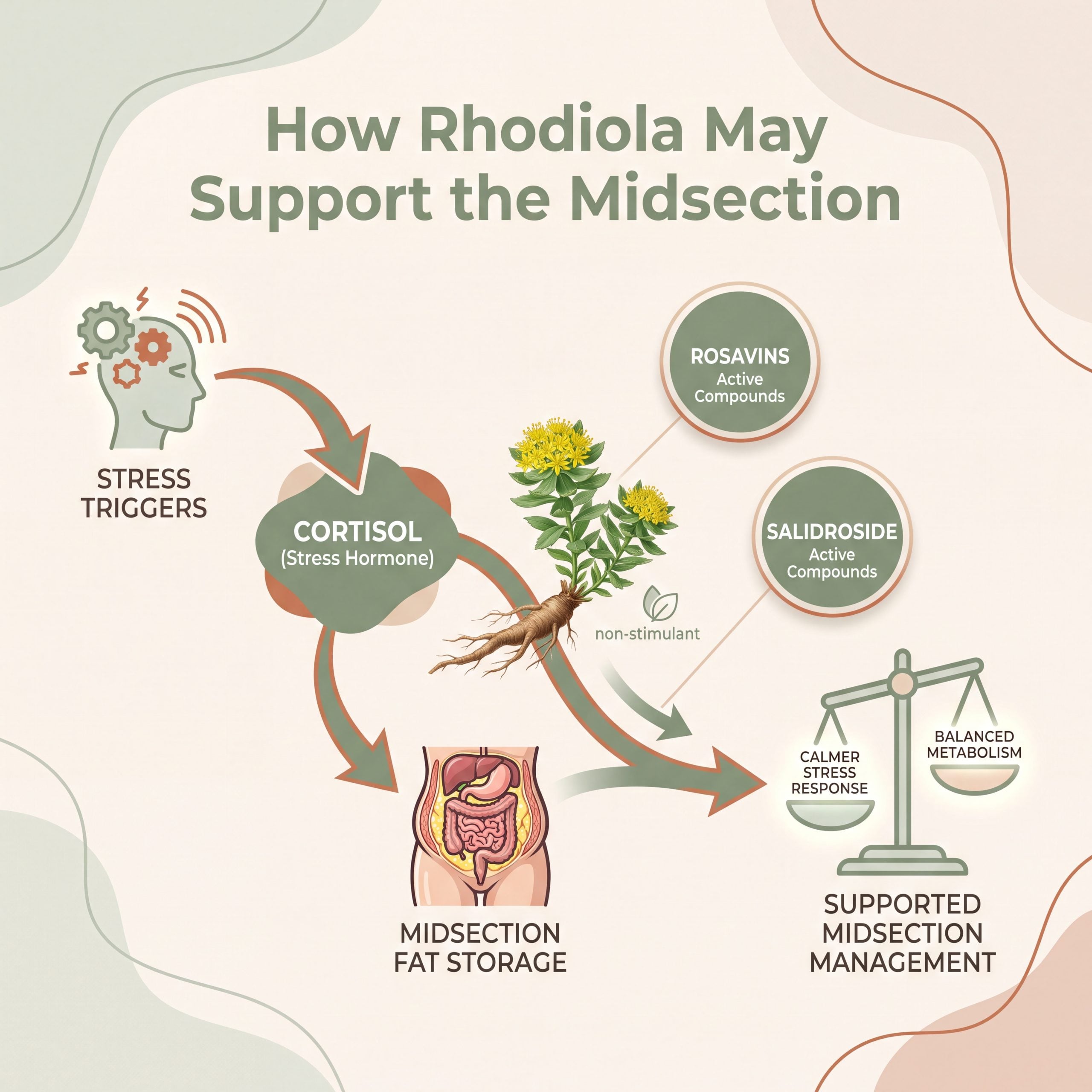
Chronic stress is a significant contributor to weight gain, particularly around the abdomen. When stressed, the body releases cortisol, a hormone that, while essential for survival, can disrupt metabolism when chronically elevated. High cortisol levels can increase appetite, promote cravings for unhealthy foods (especially sugary and fatty ones), and encourage the storage of fat, particularly visceral fat (the type that surrounds internal organs).
Rhodiola rosea, as an adaptogen, helps regulate the hypothalamic-pituitary-adrenal (HPA) axis, the body’s central stress response system. By modulating cortisol levels, Rhodiola rosea may help reduce the negative metabolic effects of stress. In a randomized, double-blind, placebo-controlled trial, standardized Rhodiola extract reduced the cortisol response to awakening stress and eased burnout-related fatigue (Olsson et al., 2008, Planta Medica, PMID: 19016404). A calmer cortisol response can, in turn, support healthier eating habits and reduce the likelihood of stress-related weight gain. For the calming counterpart to Rhodiola, see our guide to ashwagandha for cortisol and weight management.
Increased Energy and Reduced Fatigue
One of the biggest challenges in weight management is maintaining the energy levels needed for regular physical activity. Fatigue, whether physical or mental, can derail even the best-laid plans. Rhodiola rosea has a long-standing reputation for combating fatigue and supporting energy. It is believed to work by supporting cellular energy production, specifically by influencing ATP (adenosine triphosphate) levels, the primary energy currency of cells.
By supporting energy and reducing feelings of tiredness, Rhodiola rosea can make it easier to engage in regular exercise, a key part of any successful weight management program. In a double-blind crossover trial, repeated low-dose Rhodiola reduced stress-related fatigue and improved mental performance in healthy adults working demanding night shifts (Darbinyan et al., 2000, Phytomedicine, PMID: 11081987).
Improved Exercise Performance
Beyond simply providing energy, Rhodiola rosea may directly enhance exercise performance. Research suggests it can offer several benefits for those engaged in physical activity:
- Reduced Muscle Pain and Damage: Rhodiola rosea may help reduce exercise-induced muscle pain and damage, supporting faster recovery and allowing for more frequent workouts.
- Improved Skeletal Muscle Recovery: Studies indicate that Rhodiola rosea can support skeletal muscle recovery after strenuous exercise, potentially by reducing oxidative stress.
- Enhanced Explosive Power: Some research suggests Rhodiola rosea may improve explosive athletic power, which can be helpful for various types of training.
- Increased Endurance: In a placebo-controlled trial, a single dose of Rhodiola improved endurance capacity and peak oxygen uptake in healthy volunteers (De Bock et al., 2004, International Journal of Sport Nutrition and Exercise Metabolism, PMID: 15256690).
These combined effects can lead to more effective workouts and, as a result, contribute to better weight management outcomes.
Potential Metabolic Effects
Emerging research suggests that Rhodiola rosea may have positive effects on metabolism, although more human studies are needed to confirm these findings. Some potential mechanisms include:
- Activation of Hormone-Sensitive Lipase: Rhodiola rosea may activate hormone-sensitive lipase, an enzyme that plays a key role in breaking down stored fat.
- Reduced Fat Accumulation: Some animal studies suggest that Rhodiola rosea may help limit the accumulation of fat, particularly visceral fat.
- Support for Liver Fat Metabolism: Preliminary animal research indicates that Rhodiola rosea may support healthy fat metabolism in the liver, though further investigation in humans is needed.
The two compound families most associated with Rhodiola rosea are the rosavins and salidroside. In preclinical research, salidroside has been the more studied of the two for metabolism. In a controlled study in obese mice, salidroside reduced fat-cell formation in white adipose tissue, lowered markers of adipose inflammation, and improved insulin and leptin sensitivity, the hormone signal that helps regulate appetite (Wang et al., 2016, Scientific Reports, PMID: 27145908). These are animal findings, not proof of weight loss in people, but they help explain the biological plausibility behind Rhodiola’s traditional association with metabolic support.
The visceral-fat angle is where the stress connection becomes concrete. In a diet-induced obesity model, a combination of Rhodiola rosea (standardized to rosavins and salidroside) with bitter orange reduced visceral white adipose tissue by about 30 percent compared with controls, even when overall body weight did not change (Verpeut et al., 2013, Nutrition Research, PMID: 23746567). Because Rhodiola is traditionally used to moderate the cortisol response, and elevated cortisol is linked to abdominal fat storage, this may be one pathway by which it supports a healthier fat-distribution pattern rather than driving raw weight loss. Our editorial team reads the current evidence as promising for stress-linked, midsection-focused support, while stopping well short of any claim that Rhodiola burns fat on its own.
Blood Sugar and Appetite Support
Balanced blood sugar levels are important for maintaining consistent energy and preventing cravings. Rhodiola rosea may aid in regulating energy metabolism, potentially contributing to more stable blood sugar levels. Additionally, by influencing neurotransmitters like dopamine and serotonin, which are involved in mood and appetite regulation, Rhodiola rosea might help reduce cravings and support a healthier relationship with food.
Often referred to as golden root, Rhodiola rosea has a rich history of use in traditional medicine, particularly in regions characterized by harsh climates. It is valued for its ability to support the body’s resilience to stress and fatigue, and its potential role in supporting healthy body composition and endurance is an active area of interest for our editorial team.
Does Rhodiola Work for Both Men and Women?
One of the most common questions our editorial team receives is whether Rhodiola rosea supports men and women differently when the goal is weight management. Based on the human research to date, the primary mechanism applies to both. Rhodiola is an adaptogen that works on the stress-response system rather than on any sex-specific pathway, so the cortisol-moderating and anti-fatigue effects observed in trials were seen across mixed male and female groups.
The most-cited human trial on Rhodiola and stress-related fatigue enrolled both men and women aged 20 to 55 and reported a reduced cortisol response to waking stress alongside less fatigue in the treatment group (Olsson et al., 2008, Planta Medica, PMID: 19016404). Because chronically elevated cortisol is associated with appetite changes and the storage of visceral fat around the midsection, a calmer stress response is a plausible, sex-neutral way that Rhodiola may support weight management for both men and women.
In our sourcing experience, the practical difference is rarely about biological sex and more about individual stress load, sleep quality, and activity level. There is no robust evidence for sex-specific Rhodiola dosing for weight management. Both men and women in the clinical literature used the same standardized root extracts. If your weight patterns are closely tied to stress eating or fatigue, the adaptogenic angle is likely to be relevant regardless of sex. For a broader look at how stress hormones and body composition interact, see our guide to the best adaptogens for weight management.
Stimulant-Free Support: Energy Without the Jitters
Many thermogenic weight-loss products lean on stimulants like caffeine or synephrine from bitter orange (Citrus aurantium) to raise energy and suppress appetite. Those compounds can also bring jitters, a racing heartbeat, and an afternoon crash. Rhodiola rosea works differently. It is not a stimulant. Instead of forcing the nervous system into overdrive, it is traditionally used to support the body’s own stress response and to reduce perceived fatigue.
This distinction matters for anyone who wants steadier energy to stay active without the wired feeling. In a double-blind crossover trial, a single acute dose of standardized Rhodiola extract (containing roughly 3 percent rosavins and 1 percent salidroside) modestly improved endurance capacity and peak oxygen uptake in healthy volunteers, with no stimulant-type side effects reported (De Bock et al., 2004, International Journal of Sport Nutrition and Exercise Metabolism, PMID: 15256690).
From our hands-on assessment, this is why Rhodiola appeals to people who react poorly to high-caffeine fat burners. It offers a gentler route to the energy and activity tolerance that make a calorie-aware routine sustainable. It is generally well-tolerated by healthy adults, though it can feel mildly activating if taken late in the day, so morning use is a sensible default. Consult your healthcare provider before combining it with stimulant supplements.
Dosage and Usage Guidelines for Weight Management Support
If you are considering using Rhodiola rosea to support your weight management efforts, it is worth using it safely and effectively. Here are some general guidelines:
- Dosage: A typical dosage range is 200 to 600 mg per day of a standardized extract (containing at least 3% rosavins and 1% salidroside). Some studies have used higher doses, up to 1500 mg, but a generally accepted safe maximum is 600 mg daily. It is always best to start with a lower dose and gradually increase it as needed, paying attention to your body’s response.
- Timing: The best time to take Rhodiola rosea is in the morning or early afternoon. Due to its energizing effects, taking it later in the day may interfere with sleep.
- Administration: Rhodiola rosea is often taken on an empty stomach for better absorption, but it should not be taken immediately before bedtime.
- Cycling: Some experts recommend cycling Rhodiola rosea, which means taking breaks from supplementation to prevent tolerance. A common approach is to take it for several weeks, followed by a week or two off, then resuming.
In our sourcing experience, a standardized extract makes consistent dosing far easier. You can find our third-party tested Rhodiola rosea capsules and Rhodiola rosea root powder in our shop, both standardized for rosavins and salidroside.
Potential Side Effects and Safety Considerations
Rhodiola rosea is generally considered safe for most people when used appropriately. However, like any supplement, it can cause side effects in some individuals. The NIH Office of Dietary Supplements offers general guidance on using dietary supplements safely.
- Common Side Effects: These are usually mild and may include dizziness, dry mouth, excessive saliva production, headache, digestive upset, feeling jittery or overstimulated, and nervousness.
- Less Common Side Effects: These may include agitation, anxiety, and irritability.
- Serious Side Effects: These are rare but can occur.
Contraindications:
- Pregnancy and Breastfeeding: Rhodiola rosea is not recommended for pregnant or breastfeeding women due to a lack of safety data.
- Autoimmune Conditions: Because Rhodiola rosea can stimulate the immune system, individuals with autoimmune conditions (such as rheumatoid arthritis, multiple sclerosis, or lupus) should avoid it or use it only under the strict supervision of a healthcare provider.
- Medication Interactions: Rhodiola rosea can interact with certain medications, including:
- Antidepressants (may increase the risk of side effects).
- Diabetes medications (may affect blood sugar levels).
- Blood pressure medications (may affect blood pressure).
- Immunosuppressants (may counteract their effects).
- Bipolar Disorder: There have been isolated reports of Rhodiola rosea triggering manic episodes in individuals with bipolar disorder.
It is worth consulting with a healthcare provider before using Rhodiola rosea, especially if you have any pre-existing health conditions or are taking any medications.
Rhodiola Rosea vs. Other Adaptogens for Weight Management
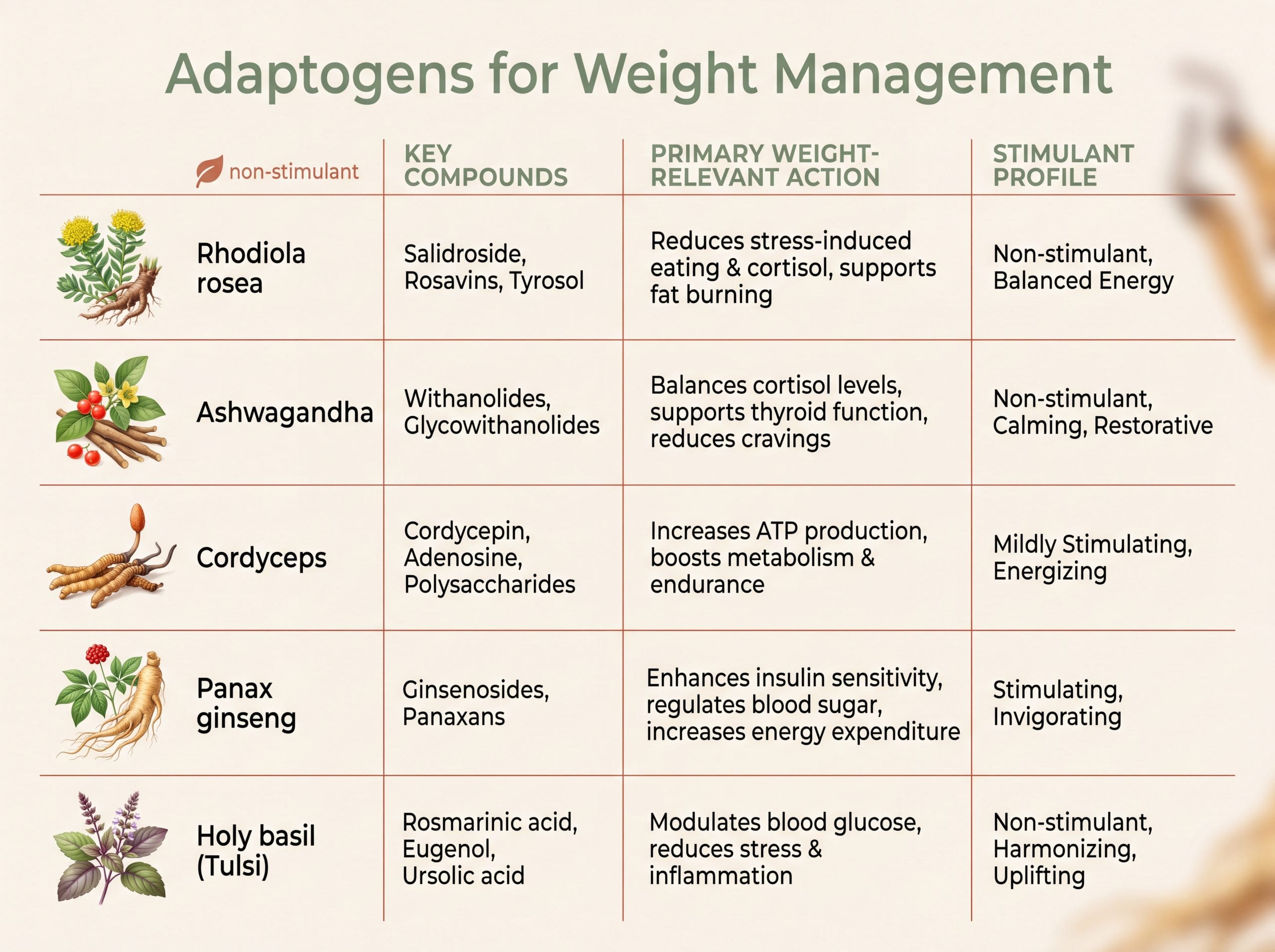
Rhodiola rosea is just one of several adaptogenic herbs that may offer benefits for weight management. To see where it fits among the adaptogens most often discussed for this goal, our editorial team compiled the comparison below. Each herb acts on a different part of the stress, energy, and metabolic picture, which is why they are sometimes chosen for different goals rather than ranked as simply best. General background on adaptogens is available from Cleveland Clinic.
| Adaptogen (Latin binomial) | Key compounds | Primary weight-relevant action | Stimulant profile |
|---|---|---|---|
| Rhodiola (Rhodiola rosea) | Rosavins, salidroside | May support a calmer cortisol response and reduce fatigue, helping sustain activity | Non-stimulant, may feel mildly activating |
| Ashwagandha (Withania somnifera) | Withanolides | Traditionally used to support a calm stress response and sleep, which are tied to appetite regulation | Non-stimulant, calming |
| Cordyceps (Cordyceps sinensis) | Cordycepin, polysaccharides | Studied for aerobic performance and exercise tolerance | Non-stimulant, energizing |
| Panax ginseng (Panax ginseng) | Ginsenosides | Traditionally used to support energy and metabolic health | Mildly stimulating for some |
| Holy basil/tulsi (Ocimum tenuiflorum) | Eugenol, ursolic acid | Traditionally used to support stress resilience and healthy blood sugar | Non-stimulant, calming |
| For educational comparison only. Structure and function support varies by individual. Cordyceps aerobic-performance evidence: Chen et al., 2014, High Altitude Medicine and Biology, PMID: 25251930. | |||
Rhodiola rosea is generally considered more energizing, making it a good choice for daytime use and supporting physical activity. Ashwagandha, on the other hand, is often used for its calming and sleep-supporting effects. The best adaptogen for you will depend on your individual needs and goals. Citrus aurantium (bitter orange) is another herb sometimes combined with Rhodiola rosea in weight-loss supplements, but it carries its own set of risks and should be used with caution. For a side-by-side look, see our roundup of the best adaptogens for weight management, and for the workout angle, cordyceps for workout performance.

Frequently Asked Questions about Rhodiola and Weight Loss
Can Rhodiola help me lose belly fat?
Rhodiola can indirectly support the reduction of belly fat by helping manage stress and cortisol levels. Chronic stress is linked to increased abdominal fat storage, so a calmer stress response may help with the midsection over time.
How long does it take to see results from Rhodiola for weight loss?
Direct weight loss effects are not guaranteed. Any indirect benefits related to energy, exercise, or stress management may become noticeable within a few weeks, but individual results vary greatly.
Is Rhodiola a good pre-workout supplement?
Rhodiola can be a helpful pre-workout supplement due to its potential to support energy, reduce fatigue, and improve exercise performance, without the jitters associated with high-caffeine pre-workouts.
Does Rhodiola cause jitters like caffeine-based fat burners?
No. Rhodiola rosea is not a stimulant. Rather than spiking the nervous system the way caffeine or synephrine can, it is traditionally used to support the body’s stress response and reduce perceived fatigue. Most healthy adults tolerate it well, though some find it mildly activating, so morning use is the usual recommendation.
Does Rhodiola work differently for men and women?
The human research to date does not show a meaningful difference by sex for weight management support. Rhodiola acts on the stress-response system rather than a sex-specific pathway, and the key clinical trials enrolled both men and women using the same standardized doses. Individual factors like stress load, sleep, and activity level tend to matter more than biological sex.
Can I take Rhodiola with other weight loss supplements?
In many cases, yes, but the details matter. Rhodiola rosea is non-stimulant, so it is often paired with calming adaptogens like ashwagandha for a broader cortisol-support approach. The bigger caution is combining it with stimulant fat burners that contain caffeine or synephrine, because layering activating ingredients can increase the risk of jitteriness or elevated heart rate. Rhodiola may also interact with antidepressants, blood pressure drugs, and diabetes medications. Talk to your healthcare provider before stacking supplements, especially if you take any prescription medication.
What is healthy weight management?
Maintaining a healthy weight involves a combination of regular physical activity, a balanced diet, stress management, and adequate sleep. Rhodiola is best viewed as a supporting tool within that routine rather than a replacement for it.
A Holistic Approach for Weight Management
While Rhodiola rosea can be a valuable tool for supporting weight management, it is worth remembering that it is not a standalone solution. A holistic approach that incorporates a healthy diet, regular exercise, stress management techniques, and sufficient sleep is important for achieving and maintaining a healthy weight. Rhodiola rosea can be a helpful addition to this approach, but it should not be viewed as a quick fix or a replacement for healthy lifestyle habits.
No adaptogen replaces the fundamentals. Sustained weight management still rests on a modest, consistent calorie deficit, regular movement, adequate protein, and quality sleep. Where Rhodiola rosea may help is around the edges of that equation. By supporting a calmer stress response and steadier energy, it can make a calorie-aware routine easier to stick with, particularly for people whose eating patterns spike under stress or fatigue. Our editorial team views Rhodiola as a supporting actor to diet, activity, and sleep rather than a substitute for them. Because poor sleep alone raises appetite-driving hormones, pairing Rhodiola’s stress support with a consistent sleep schedule is a sensible, evidence-aligned combination.
Related Reading
Continue exploring this topic with these guides from our team:
- Our complete guide to Rhodiola rosea
- Best adaptogens for weight management
- Ashwagandha for cortisol and weight management
These statements have not been evaluated by the Food and Drug Administration. Rhodiola rosea is a dietary supplement and is not intended to diagnose, treat, cure, or prevent any disease, including obesity. Consult your healthcare provider before use, especially if you are pregnant, nursing, taking medication, or have a medical condition.