For centuries, the aromatic infusion derived from Smilax plant roots, commonly known as sarsaparilla tea, has captivated herbalists and health enthusiasts. This unique beverage offers a range of potential wellness-enhancing properties. Let’s examine the fascinating world of this herbal drink and uncover how it might contribute to your overall well-being.
What is Sarsaparilla?
Sarsaparilla refers to several species within the Smilax genus, a group of woody vines native to tropical and subtropical regions. These plants are characterized by their robust, tuberous roots, which have long been prized in traditional medicines for their therapeutic potential. The Smilax plants Smilax ornata, Smilax regelii, and Smilax glabra are among the most commonly used species in herbal preparations.
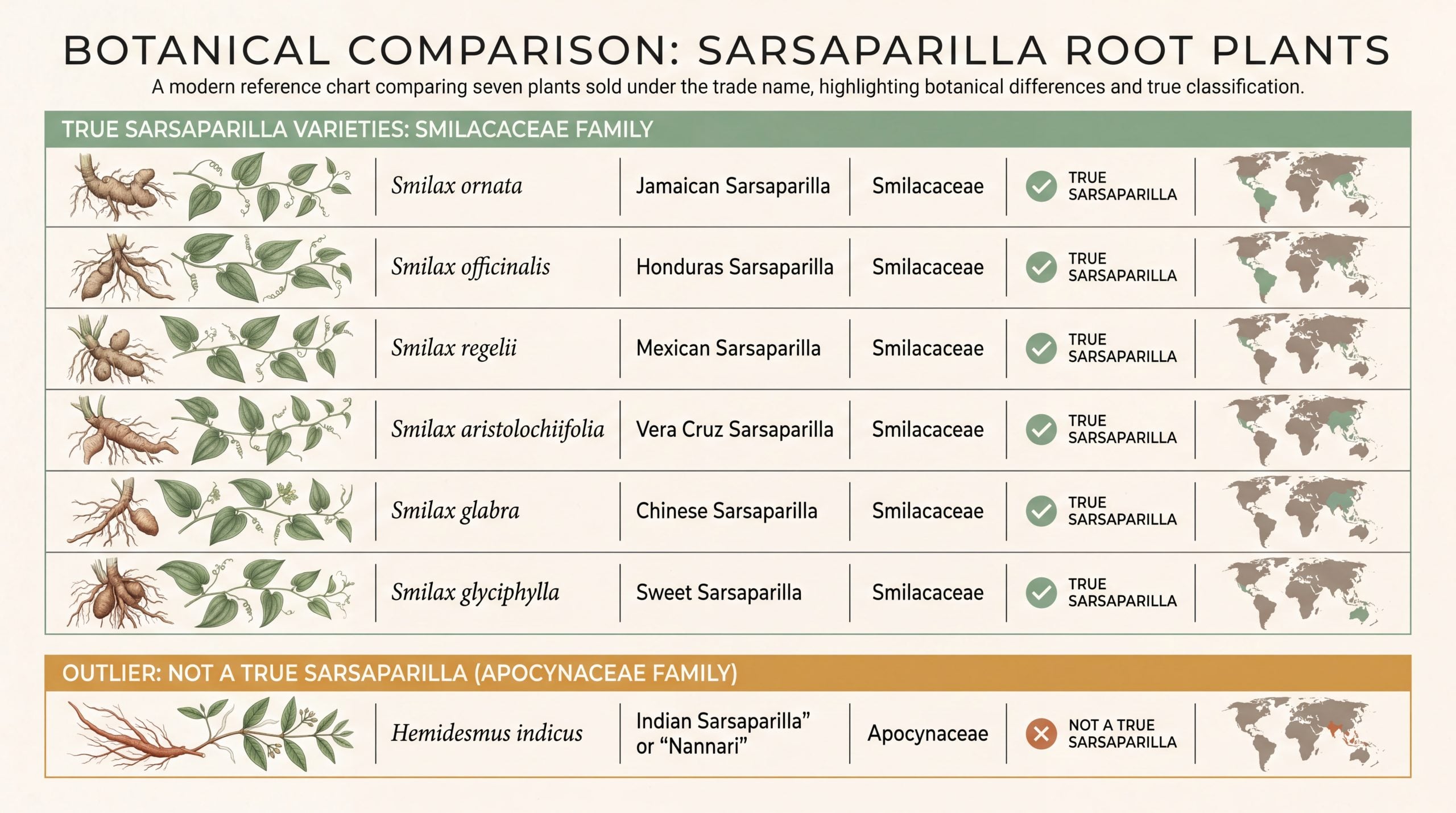
Which Plant Is Actually “Sarsaparilla”? A Species Guide
Here is the problem almost nobody addresses. “Sarsaparilla” is not one plant. It is a trade name applied to at least seven botanically distinct roots, and one of them is not even in the same family. In our sourcing work this is the single most common point of confusion we encounter, and it has real consequences: a study conducted on one species does not automatically transfer to another.
Most published research sold to the public as “sarsaparilla research” was in fact performed on Smilax glabra (a Chinese medicinal root) or on Hemidesmus indicus (an Ayurvedic root that is not a Smilax at all). Neither is the Jamaican sarsaparilla, Smilax ornata, that most Western tea drinkers are actually buying.
| Botanical name | Common trade name | Family | A true sarsaparilla? |
|---|---|---|---|
| Smilax ornata | Jamaican sarsaparilla | Smilacaceae | Yes. This is the classic tea root. |
| Smilax officinalis | Honduran sarsaparilla | Smilacaceae | Yes. |
| Smilax regelii | Honduran / Jamaican sarsaparilla | Smilacaceae | Yes. Frequently synonymised with S. ornata. |
| Smilax aristolochiifolia | Mexican sarsaparilla | Smilacaceae | Yes. |
| Smilax glabra | Tu fu ling (Chinese smilax) | Smilacaceae | A true Smilax, but a different species with its own chemistry. Most modern lab research is done on this one. |
| Smilax glyciphylla | Australian sarsaparilla | Smilacaceae | A true Smilax. Contains glycyphyllin, which the others do not. |
| Hemidesmus indicus | Indian sarsaparilla, anantamul | Apocynaceae | No. Not a Smilax. Not a sarsaparilla. A different plant in a different family entirely. |
| Sources: Hua et al. (2018), American Journal of Chinese Medicine, PMID: 29433390. Das and Bisht (2012), Phytotherapy Research, PMID: 22887725. Cox et al. (2005), Journal of Ethnopharmacology, PMID: 15885944. | |||
Why this matters in practice. When a source tells you “studies show sarsaparilla reduces inflammation,” the honest follow-up question is which sarsaparilla. A great deal of the anti-inflammatory literature is Smilax glabra work, and the antioxidant data most often quoted comes from Smilax glyciphylla, an Australian species containing a compound the Jamaican root does not have.
None of this makes the research worthless. It makes it specific. Our editorial team reads every citation back to its species before we repeat a claim, and we think you should expect that of any source. When you buy sarsaparilla, ask for the Latin binomial. A seller who cannot tell you which Smilax they are selling does not know what is in the bag.
A Journey Through History: The Heritage of Sarsaparilla
The story of sarsaparilla begins in the rainforests of Central and South America. Indigenous populations used its root for a range of traditional purposes long before it reached Europe. European explorers encountered the plant in the 16th century and quickly recognised its trade value. Sarsaparilla soon crossed the Atlantic, where it was traditionally used for a variety of complaints and became a fixture of the herbal trade. Its influence spread globally, eventually becoming a staple in traditional healing practices. It was even a key ingredient in the original formulation of root beer, contributing to its distinctive flavour.
Traditional Uses Around the Globe
Sarsaparilla has played a significant role in various traditional medicine systems worldwide:
- Native American Healing: Employed for addressing skin conditions and rheumatic complaints.
- Traditional Chinese Medicine: Known as “Tu Fu Ling,” it is utilized for dermatological issues and reducing inflammation.
- Indian Medicines: Valued for its purifying properties and support of joint health within Ayurvedic practices.
- Caribbean Folk Medicine: Traditionally used to support skin health and valued as a “blood purifier” in the folk-medicine sense of that term.
- South American Herbal Traditions: Sometimes applied to address reproductive health concerns. Historically, it has been used as a treatment for syphilis in some cultures.
Decoding the Nutritional Composition of Sarsaparilla Root
Sarsaparilla root boasts an impressive array of beneficial components:
- Saponins: These compounds are renowned for their anti-inflammatory and immune-enhancing capabilities. Steroidal saponins, in particular, have been studied for their potential to mimic certain human hormones, although more research is needed in this area.
- Flavonoids: These potent antioxidants shield cells from oxidative damage caused by free radicals. Specific flavonoids found in sarsaparilla include quercetin and kaempferol.
- Essential Minerals: Sarsaparilla root contains various minerals, including iron, manganese, zinc, copper, and selenium.
- Vital Vitamins: It provides vitamins such as A, C, and D.
- Phytosterols: Plant sterols have been shown to exhibit some anti-inflammatory properties.
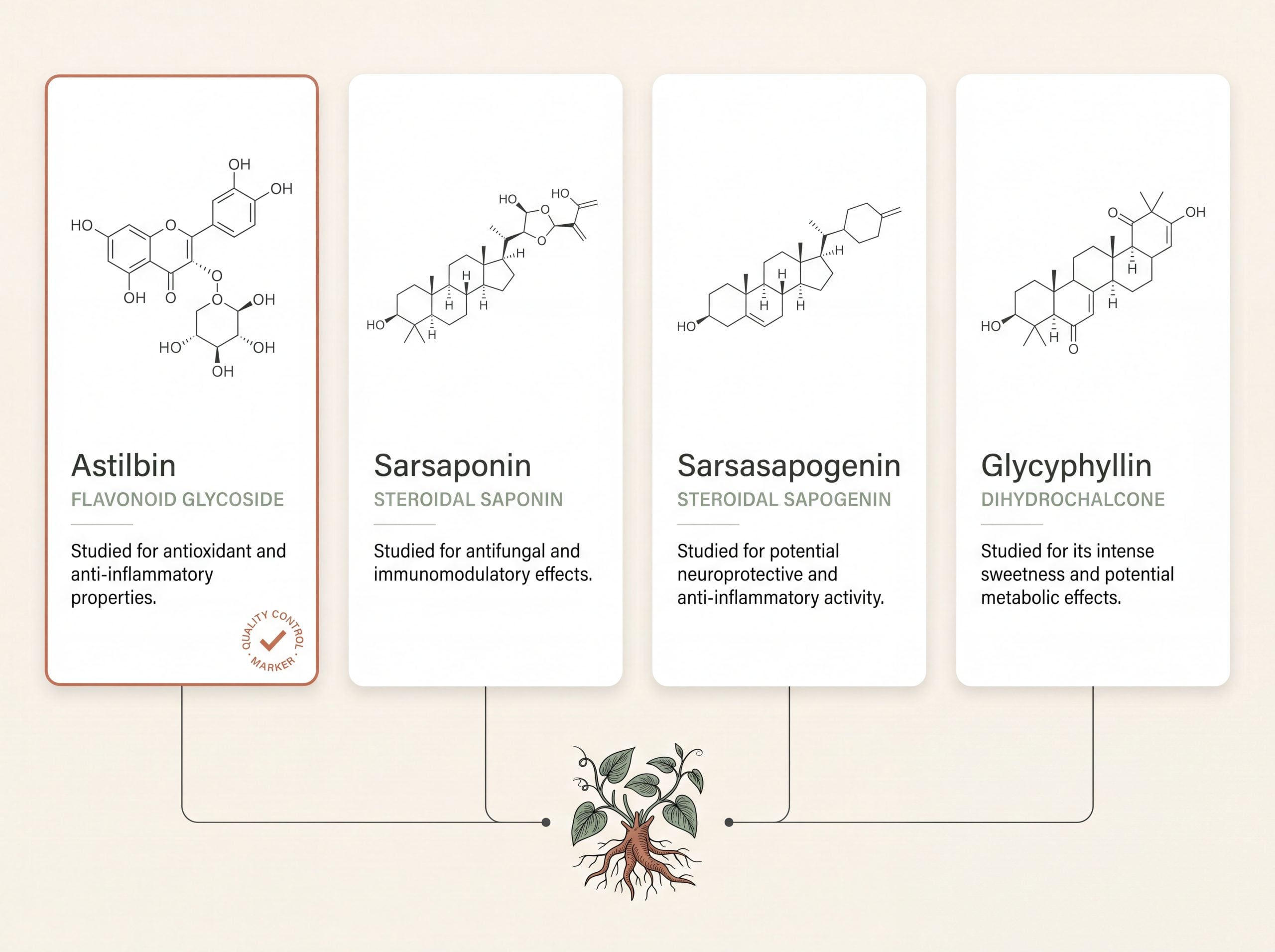
Sarsaponin, Astilbin, and Sarsasapogenin: the Named Compounds
Roughly 200 individual compounds have been isolated from Smilax glabra alone, and these are the ones worth knowing by name.
- Astilbin, a flavonoid glycoside, is the official quality-control marker used to authenticate Smilax glabra. When a lab verifies that a root is what the label says, astilbin is what they measure (Hua et al., 2018, American Journal of Chinese Medicine, PMID: 29433390).
- Sarsaponin, a steroidal saponin, sits at the centre of the endotoxin-binding hypothesis for skin covered further down.
- Sarsasapogenin is the steroidal sapogenin left behind when a saponin’s sugar groups are cleaved off. It is a plant steroid skeleton, and that distinction matters enormously for one of the most persistent myths about this root (Mustafa et al., 2022, Molecules, PMID: 35335393).
- Smiglasides A through E are phenylpropanoid glycosides characterised in Smilax glabra rhizomes (Chen et al., 2000, Phytochemistry, PMID: 10820830).
- Glycyphyllin, a dihydrochalcone, appears in Smilax glyciphylla and not in the Jamaican root.
Flavonoids, phenolic acids, and phytosterols sit alongside these.
Potential Health Benefits of Sarsaparilla Tea
While many are drawn to Smilax infusion for its taste, its possible health advantages are equally interesting. Here are some noteworthy potential benefits associated with consuming this herbal drink:
Reducing Inflammation
The compounds present in sarsaparilla may help mitigate inflammation, potentially offering relief for conditions like arthritis. Scientific investigations suggest that extracts from this herb can inhibit inflammatory markers within the body, such as tumor necrosis factor-alpha (TNF-α) and interleukin-6 (IL-6). Some in vitro studies have also shown that certain saponins in sarsaparilla may inhibit the activity of COX-2, an enzyme involved in the inflammatory process. The inflammation is reduced due to these properties.
Enhancing Skin Vitality
Rich in antioxidants, this infusion may promote skin health by combating oxidative stress and supporting the skin’s natural repair processes. Research indicates that sarsaparilla could improve certain dermatological conditions, including psoriasis and eczema. The specific flavonoids and saponins present may contribute to these effects by reducing inflammation and promoting skin cell regeneration. Some studies suggest that sarsaparilla may also help with wound healing.
How the Skin Mechanism Is Thought to Work
The hypothesis holds that sarsaponin binds bacterial endotoxins circulating in the bloodstream, reducing the inflammatory load that shows up in skin lesions. It is a binding hypothesis, not a demonstrated cure, and human clinical evidence remains limited.
A 2022 network-pharmacology and RNA-sequencing study found that a Smilax glabra herb pair reduced inflammatory cytokine expression through the MAPK signalling pathway in an animal model of psoriasis-like skin inflammation (Hu et al., 2022, Phytomedicine, PMID: 35963195). These are animal and cell-culture findings, not a treatment.
For the full picture, including what the evidence does and does not support, read our detailed piece on sarsaparilla and psoriasis.
Supporting Detoxification
Herbalists have traditionally used sarsaparilla in formulas intended to support liver function and the body’s own clearance processes. In traditional practice, it was classed as a depurative, an old herbal category for plants believed to support the body’s natural filtering organs. Preliminary laboratory work has examined whether Smilax constituents influence bile production and the activity of clearance enzymes such as glutathione S-transferase, though this research is early and largely confined to animal models. The root also appears to have a mild diuretic effect. We use sarsaparilla in our own lymphatic cleanse powder for exactly this traditional role. The phrase “blood purifier” is a folk-medicine term of art, not a physiological description.
Promoting Digestive Comfort
Sarsaparilla may foster a healthy gut environment and alleviate digestive discomfort. Some studies suggest this herbal remedy could be beneficial for various gastrointestinal issues, such as bloating and gas. While the exact mechanisms are still under investigation, it’s believed that sarsaparilla’s anti-inflammatory properties may contribute to its digestive benefits. There’s also some preliminary evidence suggesting it may have a prebiotic effect, supporting the growth of beneficial gut bacteria.
Hormonal Equilibrium and Sarsaparilla
Let us deal with the myth first, because it is everywhere. Sarsaparilla does not contain testosterone. It does not contain any human hormone, and it is not an anabolic steroid. The claim traces back to a decades-old marketing distortion built on a real chemical fact that was then badly misused.
The real fact is this. Sarsaparilla contains steroidal saponins, and when you strip the sugar groups from a saponin, you get a sapogenin such as sarsasapogenin. A sapogenin is a plant steroid skeleton. Chemists can use such skeletons as starting material in a laboratory to synthesise steroid hormones. That laboratory conversion is a multi-step industrial process. It does not happen in your digestive tract, and it does not happen in a teapot (Mustafa et al., 2022, Molecules, PMID: 35335393).
What remains after the myth is cleared away is more modest and more honest. Preliminary in-vitro and animal work suggests sarsaparilla’s saponins may have some influence on hormone-related pathways, but human research is lacking and no firm conclusion is available. Sarsaparilla may also have mild estrogen-like activity, so anyone with a hormone-sensitive condition should speak to a healthcare provider before use.
Antimicrobial Properties
Laboratory studies have demonstrated that sarsaparilla extracts possess antimicrobial properties, potentially aiding in the fight against certain bacteria and fungi. In vitro research has shown that sarsaparilla may be effective against some strains of bacteria, including Staphylococcus aureus and Escherichia coli, as well as certain fungi. However, it is crucial to understand that this does not mean sarsaparilla is a substitute for prescribed antibiotics or antifungals.
Potential Kidney Support
Some traditional uses and preliminary research suggest that sarsaparilla may offer support for kidney health, primarily due to its diuretic properties. By increasing urine production, it may help the kidneys flush out waste products more efficiently. However, individuals with pre-existing kidney conditions should exercise caution and consult a healthcare professional before using sarsaparilla, as excessive diuresis could potentially strain the kidneys.
Investigating Respiratory Health Connections
While less commonly cited, some traditional medicine systems have used sarsaparilla for respiratory ailments, such as coughs and colds. There’s limited scientific evidence to support these uses, but the anti-inflammatory and potential antimicrobial properties of sarsaparilla might offer some theoretical benefits. Further research is necessary to explore this area.
Antioxidant Power
Sarsaparilla contains flavonoids and phenolic compounds with measurable antioxidant activity, and unlike most sources, we can give you the actual figures. Working with the Australian species Smilax glyciphylla, researchers found that a hot water extract inhibited lipid peroxidation with a half-maximal inhibitory concentration of 10 micrograms per millilitre under iron/ascorbate-initiated conditions and 33 micrograms per millilitre under AAPH-initiated conditions. It quenched superoxide anion at 50 micrograms per millilitre, and its reactivity in the ABTS radical assay was equivalent to 48.4 millimolar Trolox, the water-soluble vitamin E analogue used as the reference standard (Cox et al., 2005, Journal of Ethnopharmacology, PMID: 15885944).
Two honest caveats belong with those numbers. First, that work was done on Smilax glyciphylla, which contains the dihydrochalcone glycyphyllin, a compound the Jamaican root does not have. Second, the authors themselves concluded that the extract is unlikely to deliver direct antioxidant protection to tissues deep in the body. What they did suggest is notable for anyone reading a tea article: consuming the plant as a tea may be sufficient to reduce oxidative damage in the gastrointestinal tract, where the extract makes direct contact. That is a narrower claim than “antioxidant superfood,” and it is the one the evidence supports.
Crafting Your Own Sarsaparilla Infusion
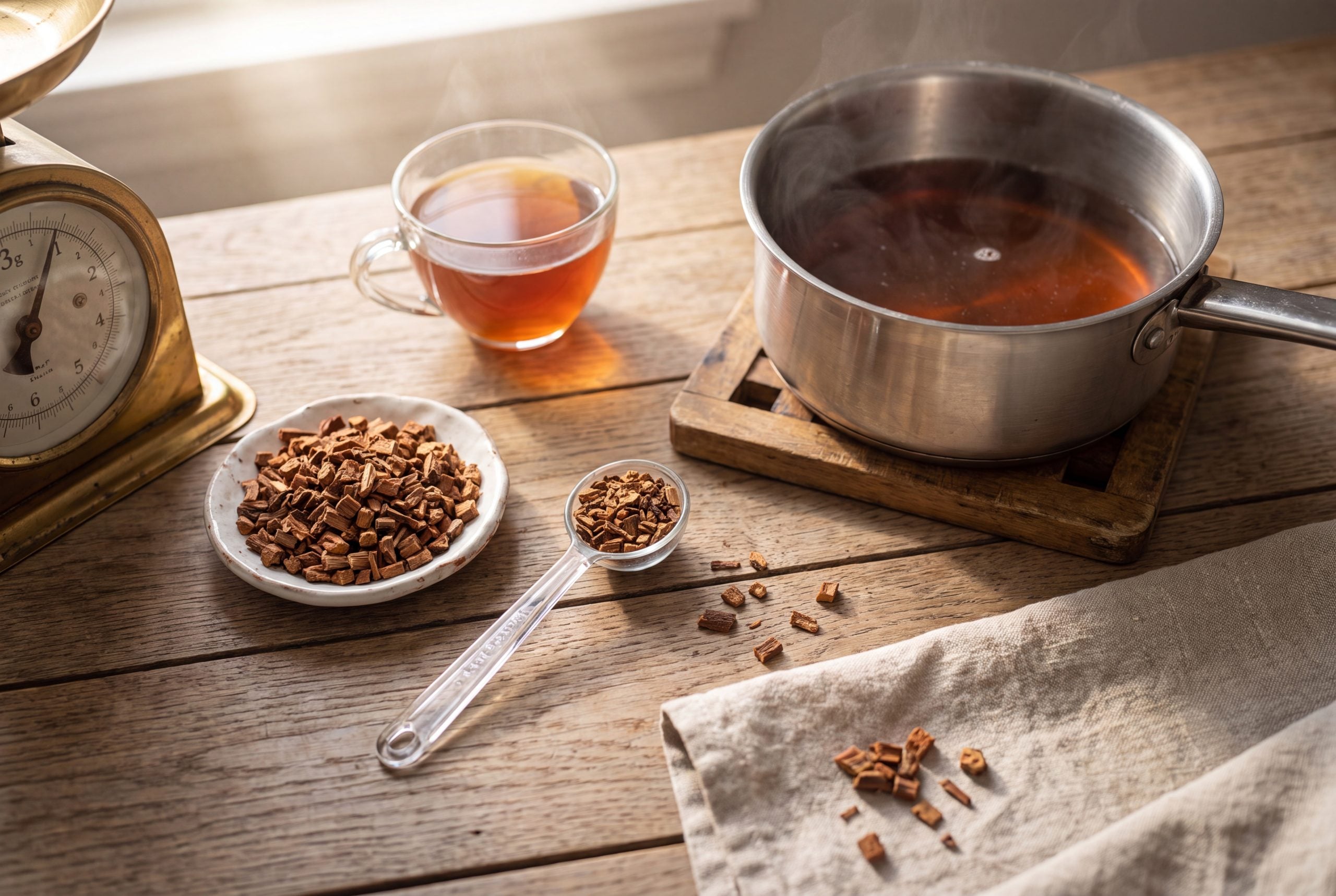
Creating this herbal drink at home is a straightforward process. Follow this simple recipe:
Ingredients:
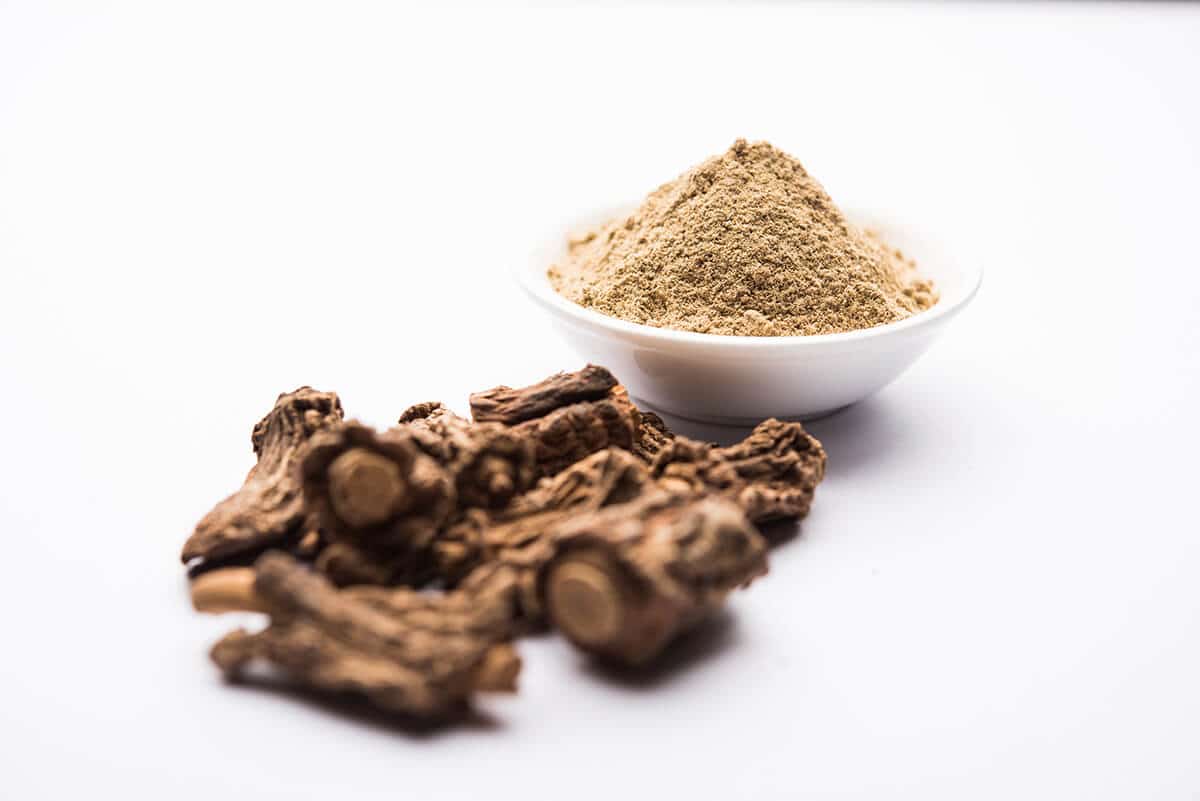
- 1-2 teaspoons of dried sarsaparilla root
- 2 cups of water
- Optional: Honey or lemon for added flavor
Instructions:
- Bring 2 cups of water to a vigorous boil in a pot.
- Add the dried sarsaparilla root to the boiling water.
- Reduce heat and allow to simmer for 10-15 minutes, extracting the beneficial compounds.
- Strain the liquid into a cup, removing the root pieces.
- If desired, stir in honey or lemon to enhance the taste.
- Sip slowly and savor the aromatic flavors.
Brewing Tips:
- Adjust the amount of root used to achieve your preferred strength.
- Experiment by combining sarsaparilla with complementary herbs like ginger or licorice for additional health benefits.
Alternative Preparation: Cold Brew Method
For a smoother, less bitter flavor profile, try this cold brew technique:
- Place 1-2 teaspoons of dried sarsaparilla root in a glass jar.
- Fill the jar with cold water and seal tightly.
- Refrigerate for 8-12 hours or overnight.
- Strain and enjoy over ice for a refreshing twist.
How Much Sarsaparilla Tea Per Day? Traditional Preparation Amounts
There is no established therapeutic dose for sarsaparilla tea. No clinical dosing standard exists because the human trials that would establish one have not been done. What follows describes how the root has traditionally been prepared. It is not a recommendation of how much you should take.
| Variable | Traditional practice |
|---|---|
| Dried root per cup | Roughly 1 to 2 teaspoons, approximately 2 to 4 grams of cut and sifted root per 8-ounce cup. |
| Water temperature | Just off the boil, around 100 degrees Celsius or 212 degrees Fahrenheit. |
| Steep or simmer time | Roots are dense. A 10 to 15 minute simmer (a decoction) pulls more from the root than a short steep. |
| Cups per day, traditionally | Traditional use generally falls in the range of 1 to 3 cups daily. |
| Caffeine | None. Sarsaparilla root is naturally caffeine-free. |
A practical note from our own preparation work. Sarsaparilla is a root, not a leaf, and people routinely under-extract it by treating it like green tea. Simmering the root gently is what produces the deep, sweet, root-beer-like character the plant is known for.
Because saponins can irritate the digestive tract in quantity, more is not better here. And because sarsaparilla’s saponins may increase the absorption of other compounds, including medications, anyone taking prescription medication should consult their healthcare provider before drinking it regularly. Our sarsaparilla root powder is the same botanical in a form that is easier to portion consistently.
Understanding Potential Side Effects and Precautions
While generally considered safe for most individuals, it’s important to be aware of possible side effects and interactions when consuming sarsaparilla infusion:
Allergic Reactions
Some people may experience allergic reactions, including skin rashes or itching. Discontinue use if you notice any allergic symptoms.
Digestive Upset
In rare cases, sarsaparilla may cause mild digestive discomfort, such as nausea or diarrhea. Begin with small amounts to gauge your tolerance.
Hormonal Considerations
Sarsaparilla may exhibit estrogen-like effects, which could be a concern for individuals with hormone-sensitive conditions (e.g., breast cancer, uterine fibroids). Consult a healthcare provider if you have such conditions.
Medication Interactions
This herb may interact with certain medications. It’s particularly important to be aware of the following:
- Diuretics: Sarsaparilla may have diuretic effects, potentially increasing the risk of dehydration when combined with diuretic medications.
- Digoxin (Lanoxin): Sarsaparilla may increase the absorption of digoxin, a heart medication, leading to potentially toxic levels.
- Lithium: Sarsaparilla may decrease the body’s ability to eliminate lithium, increasing the risk of side effects.
- Other Medications: It is always best to consult with a healthcare professional before combining sarsaparilla with any medications, especially those affecting hormone levels or liver function.
Kidney Disease Caution
Individuals with pre-existing kidney disease should consult their healthcare provider before using sarsaparilla, as its diuretic effects could potentially place additional strain on the kidneys.
Autoimmune Disease Considerations
Because Smilax may stimulate the immune system, there is a theoretical concern that it could worsen autoimmune conditions. Consult with your doctor.
Sourcing and Sustainability
As the popularity of sarsaparilla grows, so do concerns about its sustainable harvesting:
- Wild Harvesting Issues: Increasing demand has raised concerns about overharvesting in some regions.
- Sustainable Cultivation: Efforts are underway to cultivate sarsaparilla sustainably, meeting demand while preserving wild populations.
Ethical Sourcing: What to Look For
When purchasing sarsaparilla products, look for certifications or labels that ensure ethical sourcing practices. This supports sustainable harvesting and cultivation efforts.
Where to Find High-Quality Sarsaparilla
- Health Food Stores: Local shops specializing in organic or natural products often carry sarsaparilla.
- Reputable Online Retailers: Purchase from trusted websites that provide detailed product information and sourcing details.
- Specialty Herbal Shops: These stores typically offer a variety of herbal teas and roots, including sarsaparilla.
Quality Indicators
- Organic Certification: Ensures the product is free from harmful pesticides and herbicides.
- Freshness: Opt for recently harvested roots for maximum potency.
- Customer Feedback: Read results and reviews to gauge product quality and effectiveness.
Sarsaparilla from Back To Your Roots Herbs
We source sarsaparilla root with the species named, the origin documented, and third-party testing on file. It comes in two forms: sarsaparilla root powder for brewing, and sarsaparilla capsules if you would rather not brew. It also appears in our blood purification capsules, reflecting its traditional depurative role.
Sarsaparilla in Context: Comparing Herbal Infusions
Understanding how sarsaparilla compares to other popular herbal teas can help you make informed choices:
| Feature | Sarsaparilla Infusion | Licorice Root Tea | Ginseng Tea |
|---|---|---|---|
| Antioxidant Properties | Yes | Yes | Yes |
| Anti-inflammatory Potential | Yes | Yes | Yes |
| Hormonal Effects | Mild (potential testosterone/estrogen influence) | May affect blood pressure, potential cortisol effects | May have mild effects on blood sugar |
| Caffeine Content | None | None | Varies (some ginseng varieties contain caffeine) |
| Smilax glabra | Yes | No | No |
| Powerful herb | Yes | Yes | Yes |
| Pharmaceutical applications | Research Ongoing | Some traditional uses | Some traditional uses |
Recent Research Developments
Note again that nearly all of this work uses Smilax glabra or Smilax china rather than the Jamaican root, so read it as species-specific.
- Astilbin and inflammatory pathways (2024). Astilbin suppressed neutrophil extracellular trap formation by downregulating the purinergic P2Y6 receptor and the downstream IL-8/CXCR2 pathway in cell and mouse models of gouty arthritis (Li et al., 2024, Phytomedicine, PMID: 38820662).
- Skin inflammation pathways (2022). A network-pharmacology, RNA-sequencing, and metabolomics study of a Smilax glabra herb pair found reduced inflammatory cytokine expression through the MAPK pathway in an animal model of psoriasis-like dermatitis (Hu et al., 2022, Phytomedicine, PMID: 35963195).
- Sarsasapogenin pharmacology (2022). A review of the chemistry, biosynthesis, and pharmacology of sarsasapogenin, the steroidal sapogenin at the centre of the testosterone myth (Mustafa et al., 2022, Molecules, PMID: 35335393).
- Lipid metabolism (2019). A Smilax china ethanol extract reduced lipid accumulation through AMP-activated protein kinase (AMPK) pathway activation in high-fat-diet-fed mice (Yang et al., 2019, Nutrition and Metabolism, PMID: 30679938).
The honest summary. This work is real, and it is almost entirely preclinical. Cell cultures and mice are not people. It establishes that sarsaparilla’s compounds are biologically active and worth studying properly, not that drinking the tea produces these effects in humans.
Frequently Asked Questions (FAQs)
Is Sarsaparilla Infusion Safe During Pregnancy? Due to its potential hormonal effects, pregnant or breastfeeding women should avoid sarsaparilla tea.
Can Children Consume Sarsaparilla Infusion? Consult a pediatrician before giving sarsaparilla tea to children, as its effects on young individuals are not well-studied.
How Often Can I Drink Sarsaparilla Tea? Moderation is key. Start with one cup per day and monitor your body’s response.
Does Sarsaparilla Infusion Support Weight Management? There is no human evidence that sarsaparilla tea causes weight loss, and we would be sceptical of anyone who tells you otherwise. Laboratory work in mice has found that a Smilax china extract influenced lipid metabolism through the AMPK pathway (Yang et al., 2019, PMID: 30679938), but that is an animal study on a different species, and it does not translate to a weight-loss claim for a cup of tea. As an unsweetened, caffeine-free beverage, it can reasonably take the place of higher-calorie drinks, which is a real but modest thing.
Can I Combine Sarsaparilla with Other Herbs? Yes, blending sarsaparilla with complementary herbs like ginger or turmeric may enhance its potential health benefits.
Does Sarsaparilla have a diuretic effect? Yes, studies show that Sarsaparilla can have a mild diuretic effect.
Is Indian sarsaparilla the same as true sarsaparilla? No. Indian sarsaparilla is Hemidesmus indicus, a plant in the Apocynaceae family. True sarsaparilla is a Smilax species in the Smilacaceae family. They are not botanically related; their chemistry differs, and research on one does not transfer to the other. A great deal of published “sarsaparilla” research is in fact Hemidesmus research.
Does sarsaparilla contain testosterone? No. Sarsaparilla contains no human hormones of any kind and is not an anabolic steroid. It contains steroidal saponins whose sapogenin skeletons can be used by chemists as laboratory starting material for synthesising steroids, an industrial multi-step process that does not occur in the human body or in a teapot. The testosterone claim is a marketing distortion of a real chemical fact.
How much sarsaparilla tea should I drink per day? No therapeutic dose has been established, because the human trials required to set one have not been performed. Traditional preparation uses roughly 1 to 2 teaspoons of dried root (about 2 to 4 grams) per 8-ounce cup, simmered 10 to 15 minutes, with traditional use generally falling between 1 and 3 cups daily. Consult your healthcare provider before regular use, particularly if you take prescription medication.
Does sarsaparilla tea have caffeine? No. Sarsaparilla root is naturally caffeine-free, which is one reason it was historically consumed in the evening and used as a base for caffeine-free sodas.
Conclusion
Incorporating Smilax root infusion into your wellness routine may offer a range of potential health benefits, from supporting the body’s natural anti-inflammatory processes to promoting digestive health. By understanding its potential advantages and possible drawbacks, you can make an informed decision about whether this unique herbal infusion aligns with your health goals. Always consult with a healthcare professional before adding new supplements or herbal remedies to your regimen.
Disclaimer
These statements have not been evaluated by the Food and Drug Administration. This product is not intended to diagnose, treat, cure, or prevent any disease. Consult your healthcare provider before use.