Understanding Psoriasis: An Inflammatory Skin Condition
Before looking at sarsaparilla, it’s helpful to understand the condition it’s being considered for. Psoriasis is more than just a skin issue; it’s a chronic systemic inflammatory disease.
What Causes Psoriasis?
The precise cause involves a combination of genetic predisposition and environmental triggers. The immune system mistakenly attacks healthy skin cells, triggering inflammation and causing skin cells to reproduce much faster than normal. This leads to the characteristic symptoms of the condition. Factors like stress, infections, certain medications, and skin injury can trigger flare-ups in susceptible individuals.
Common Symptoms and Impact
Psoriasis typically manifests as well-defined, red patches of skin covered with silvery scales (plaques). These often appear on elbows, knees, scalp, and lower back, but can affect any part of the body. Other forms of psoriasis exist, affecting nails (psoriatic arthritis with acupuncture is sometimes explored for joint pain, which can co-occur) or presenting as smaller spots or widespread redness. The condition can cause significant itching, discomfort, and affect emotional well-being.
Introducing Sarsaparilla: A Root with Historical Skin Applications
Sarsaparilla is a plant whose roots have been part of traditional medicine systems for centuries, particularly in relation to skin ailments and inflammatory conditions.
What is Sarsaparilla? (Smilax species)
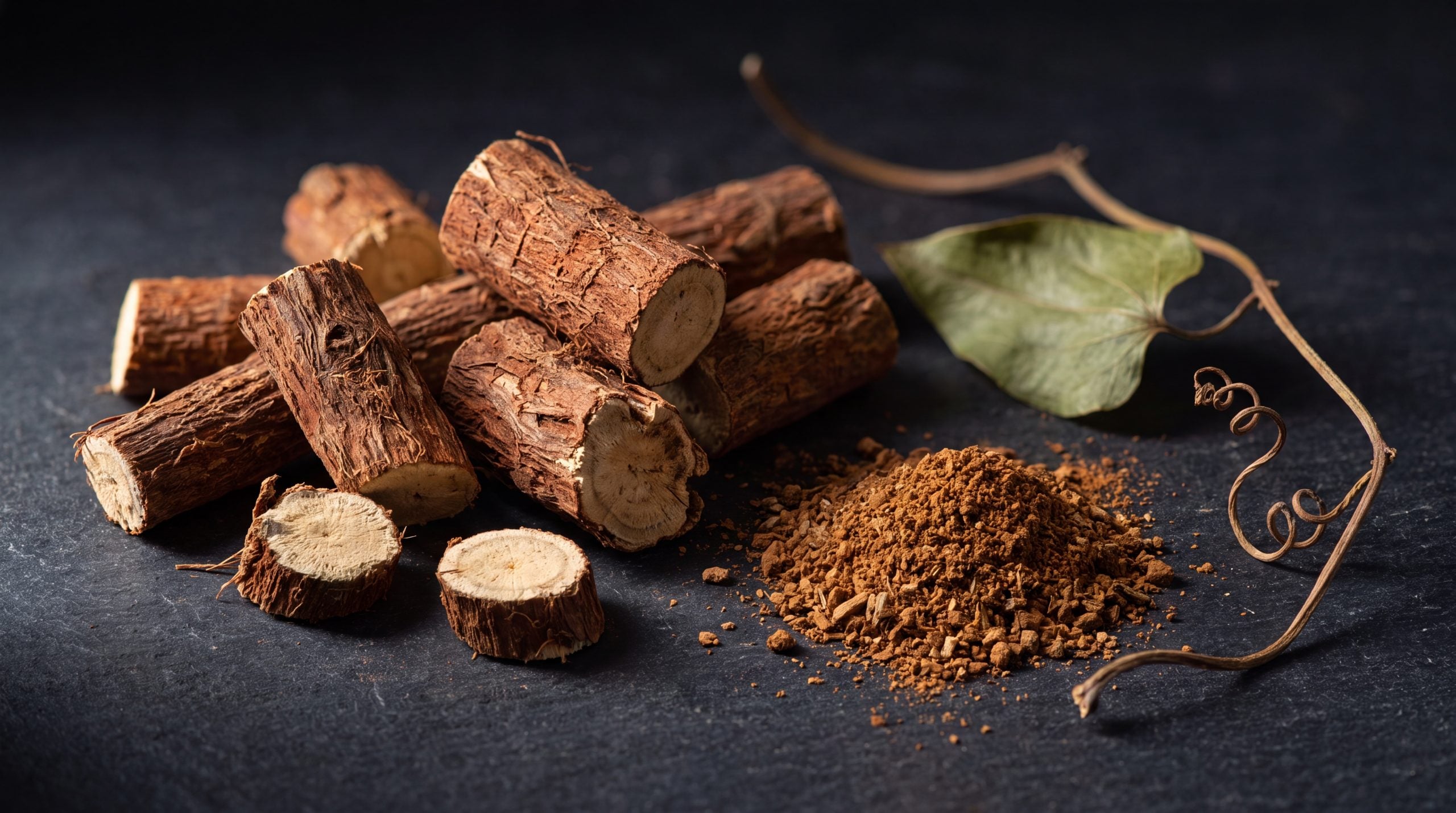
Sarsaparilla refers to the roots of various tropical vines belonging to the Smilax genus (e.g., Smilax ornata, Smilax regelii, Smilax glabra). Native to Central and South America, the Caribbean, and parts of Asia, these plants produce thick, tuberous roots. These roots contain a complex array of phytochemicals believed to contribute to their reputed health benefits. The root is typically prepared as tinctures, teas (decoctions), powders, or extracts.
One distinction runs underneath everything else on this page, and almost nobody writing about sarsaparilla makes it. Smilax is a large genus, and the species listed above are not interchangeable. The root sold as sarsaparilla in the United States is generally Smilax ornata, the Jamaican species, or its close relatives Smilax regelii and Smilax aristolochiifolia from Honduras and Mexico. These are tropical American plants. Smilax glabra Roxb., known in Chinese medicine as Tu Fu Ling, is an East Asian species and a different plant.
That distinction matters because the psoriasis research is not about the American ones. In our review of the published literature, every study connecting Smilax to psoriasis used an East Asian species, overwhelmingly Smilax glabra and occasionally Smilax china L. (Wang et al., 2023, Journal of Ethnopharmacology, PMID: 37541403). The 2025 mouse work is Smilax glabra (Wu et al., International Immunopharmacology, PMID: 40876428). The keratinocyte work is astilbin from Smilax glabra (Zhang et al., 2017, Biomedicine and Pharmacotherapy, PMID: 28700975). The T cell work is Smilax glabra (Guo et al., 2024, Journal of Ethnopharmacology, PMID: 38301985). Not one published psoriasis study has tested Jamaican sarsaparilla.
Same genus is not the same plant. Congeneric species can differ substantially in which compounds they carry and in what concentration. We are stating this plainly because we sell Smilax ornata, and it would be straightforward to let research on its Asian cousin quietly do the work of implying something about our product. It should not, and we will not let it. Anyone citing psoriasis research to sell you Jamaican sarsaparilla is citing research conducted on a plant they are not selling.
Traditional Context for Skin Health
Historically, various cultures used sarsaparilla preparations for treating psoriasis and other skin diseases, rheumatoid arthritis, and conditions thought to benefit from “blood purification.” Indigenous peoples in the Americas used it for skin sores and joint pain. In Traditional Chinese Medicine (“Tu Fu Ling”), it’s applied for dermatitis and damp-heat conditions. Ayurvedic medicine (raw dried indian ayurvedic traditions) also values related plants for purification and joint health. This historical use provides the foundation for investigating its potential benefits for modern conditions like psoriasis and eczema.
Beyond Psoriasis: Eczema, Acne, and Other Skin Concerns
Traditional herbalism applied sarsaparilla broadly across skin complaints, not narrowly to psoriasis. Eczema and other inflammatory dermatoses appear in the older herbals under the same alterative reasoning. The modern evidence is thinner here than it is for psoriasis, which is already thin, and no controlled human trial supports sarsaparilla for any specific skin condition.
Acne appears in traditional records as well, usually framed through the same blood-cleansing idea rather than through anything resembling a mechanism. We would not present it as a supported use.
Readers following a specific skin question are better served by the dedicated articles. Our guide to kalawalla root and the evidence for Polypodium leucotomos in skin health covers the botanical with the strongest research base in this space, which is a more useful place to start than sarsaparilla. For the broader traditional uses of the root itself, see our guide to sarsaparilla tea and its traditional health properties. Readers focused on antioxidant approaches to skin may also want our article on astaxanthin for skin health.
How Might Sarsaparilla Affect Psoriasis? Potential Mechanisms
While traditional use is intriguing, understanding how sarsaparilla might influence psoriasis requires looking at its known components and biological activities. The benefits of sarsaparilla root are linked to its chemical constituents.
Targeting Inflammation: The Core of Psoriasis
Inflammation is central to the development and persistence of psoriasis plaques.
Role of Saponins and Flavonoids
Smilax roots are rich in steroidal saponins (like sarsasapogenin, smilagenin) and flavonoids (like astilbin, quercetin, kaempferol). These compounds have demonstrated anti-inflammatory properties in laboratory settings. Saponins, in particular, are thought to be key active ingredients.
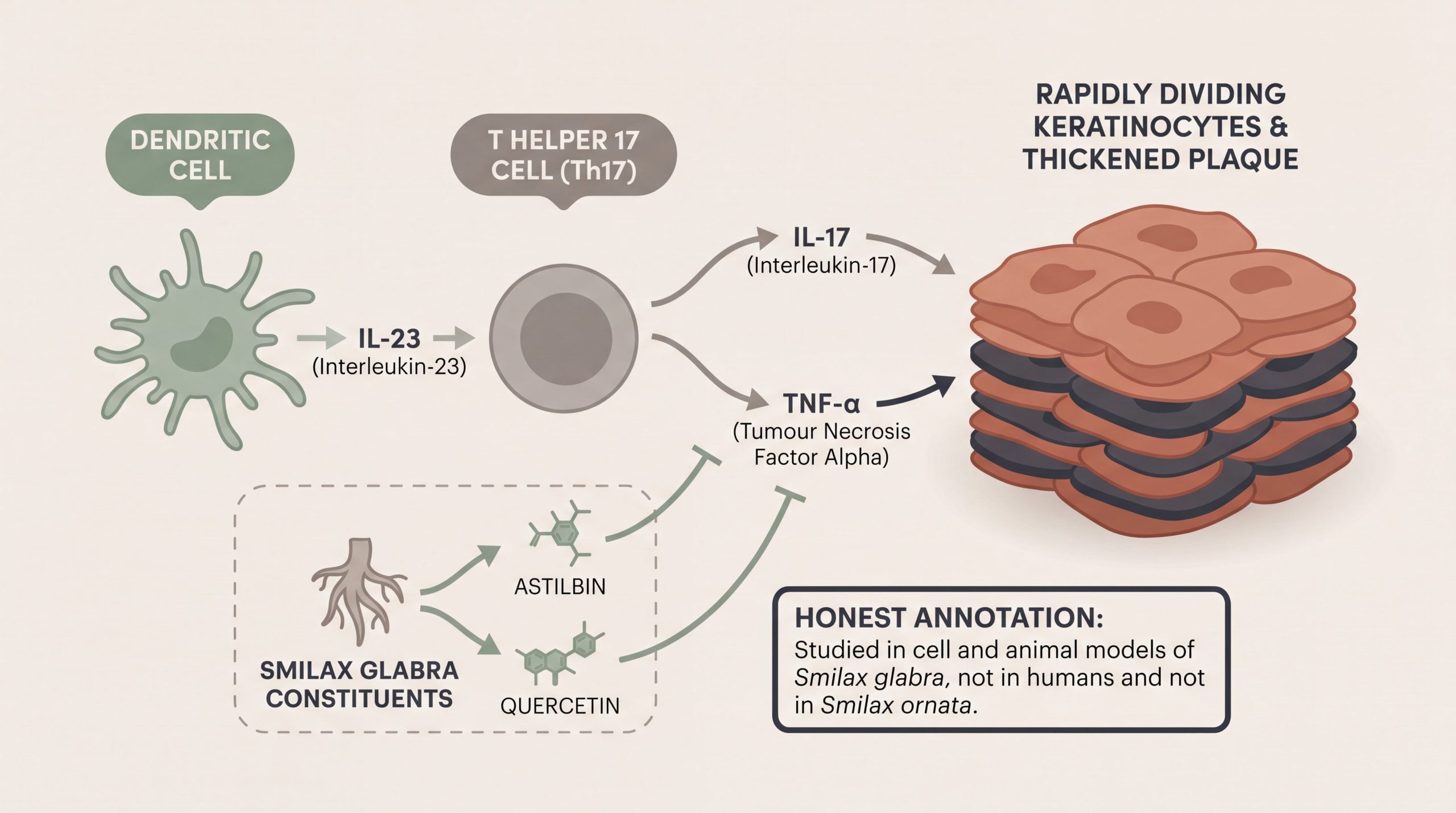
The specific chemistry is worth pressing on, because the order in which those compounds are usually listed is misleading. Sarsaparilla is marketed on its steroidal sapogenins, sarsasapogenin and smilagenin. Searching the published literature for a link between sarsasapogenin and psoriasis returns nothing at all. The compound that actually carries the skin research is not a sapogenin. It is astilbin, a flavonoid, and it has been characterised primarily in Smilax glabra rather than in the Jamaican root (Zhang et al., 2017, Biomedicine and Pharmacotherapy, PMID: 28700975). A 2025 mouse study identified astilbin, quercetin, and resveratrol as the compounds driving the anti-psoriatic effect of a Smilax glabra extract, working through TOP2A inhibition and AhR activation (Wu et al., International Immunopharmacology, PMID: 40876428).
The saponins are real, and they are well characterised. Steroidal saponins isolated from Smilax china did inhibit COX-2 activity and TNF-alpha production in cell culture (Shao et al., 2006, Phytochemistry, PMID: 17166529). But the compound with the specific keratinocyte data is a flavonoid, from a different species, and we think that is worth stating rather than blurring. Anyone telling you that sarsasapogenin is why sarsaparilla works for psoriasis is telling you something the literature does not support.
Impact on Inflammatory Pathways
Research suggests these compounds may interfere with specific inflammatory pathways relevant to psoriasis. For instance, some studies indicate they might inhibit the production or activity of pro-inflammatory cytokines such as Tumor Necrosis Factor-alpha (TNF-α) and certain interleukins (ILs), which are known drivers of psoriatic inflammation. There is also preliminary evidence suggesting potential inhibition of pathways like NF-κB, a critical regulator of the inflammatory response. Reducing inflammation is a primary goal in psoriasis management.
Naming the pathway precisely matters here, because psoriasis has a specific one and “certain interleukins” undersells it. Current immunology places the interleukin-23 and interleukin-17 signalling axis at the center of the disease, working alongside TNF-alpha. Interleukin-23 sustains the T helper 17 cell population; those cells release interleukin-17, and interleukin-17 drives the keratinocyte hyperproliferation that produces a visible plaque. The loop then feeds itself (Menter et al., 2021, Dermatology and Therapy, PMID: 33512665). Every modern biologic drug for moderate to severe psoriasis works by blocking one node on that axis (Ten Bergen et al., 2020, Scandinavian Journal of Immunology, PMID: 32697374).
So the honest question is not whether sarsaparilla is anti-inflammatory in some general sense. It is whether anything in the root touches that axis. In our editorial review of the literature, the answer is a narrow and heavily qualified maybe, and only for species other than the one sold as sarsaparilla. A 2022 study of a two-herb Chinese formula containing Smilax glabra reported reduced expression of interleukin-17, interleukin-23, interleukin-1 beta, and TNF-alpha in a mouse model of psoriasis-like skin inflammation, with the effect attributed to suppression of MAPK signalling (Hu et al., Phytomedicine, PMID: 35963195). That is a mouse. It is a formula, not a single herb. And Smilax glabra is not Smilax ornata. Three separate gaps sit between that result and a person with psoriasis.
Interaction with the Immune System
Psoriasis is an immune-mediated disease.
Autoimmunity in Psoriasis
The condition arises from an overactive immune response targeting the skin. Therefore, any substance considered for psoriasis needs evaluation for its immune effects.
Potential Modulatory Effects and Cautions
Some research suggests saponins from Smilax species might have immunomodulatory effects, potentially helping to rebalance immune responses. However, this area requires careful consideration. Because sarsaparilla is used for psoriasis and other skin issues partly based on immune interaction, there’s a theoretical concern: if the herb acts as a general immune stimulant, it could potentially worsen autoimmune conditions like psoriasis. This highlights the need for caution and professional guidance.
Antioxidant Properties and Oxidative Stress
Oxidative stress (an imbalance between free radicals and antioxidants) is implicated in the pathology of psoriasis. Smilax roots contain flavonoids and other phenolic compounds that possess antioxidant activity, helping neutralize harmful free radicals. This could potentially mitigate some cellular damage contributing to psoriatic inflammation.
Influence on Skin Cell Growth (Keratinocytes)
A hallmark of psoriasis is hyperproliferation – excessively rapid growth and turnover of keratinocytes (the main type of skin cell). While direct evidence is limited, some traditional uses hint at regulating skin processes. Research investigating whether Smilax extracts or their components can specifically slow down keratinocyte proliferation in a psoriasis context would be valuable, but is currently scarce.
Sarsaparilla, the Liver, and What “Blood Purifier” Was Trying to Describe
The alterative language is easy to dismiss as pre-scientific, and mostly it is. But it was pointing at something, and the something has a modern name. The proposal that survived is the endotoxin hypothesis: that sarsaparilla’s saponins bind bacterial endotoxin circulating in the bloodstream, reducing the inflammatory load that reaches the skin. Endotoxin binding is a real mechanism in principle, and it is the reason this herb attached itself to psoriasis in the first place rather than to some other complaint.
Where the liver enters is that endotoxin clearance is substantially a hepatic job. A herb described for centuries as cleaning the blood, acting through a mechanism that reduces circulating endotoxin, handled by the organ that clears endotoxin, is a coherent story. We want to be precise about its status. It is a coherent story, not a demonstrated one. No study has measured circulating endotoxin in people with psoriasis before and after taking sarsaparilla. The hypothesis has been repeated for decades without being tested.
Sarsaparilla is not established as a liver-supporting herb in any clinical sense, and we would not describe it as one. Readers looking specifically at liver questions should treat that as an open area rather than a settled use, and should note the kidney considerations in the safety section below, which are relevant to anyone taking the root regularly.
Evaluating the Evidence: Sarsaparilla for Psoriasis Treatment
What are the health benefits specifically proven for psoriasis? Despite traditional use and plausible mechanisms, rigorous scientific evidence specifically for the treatment of psoriasis using sarsaparilla remains limited.
Scientific Studies: What Research Shows
Psoriasis-Specific Investigations
Direct clinical trials evaluating sarsaparilla preparations exclusively for psoriasis in humans are scarce or of low quality. Some older reports or case studies exist, but large-scale, well-controlled trials are lacking. Much of the supportive data comes from in vitro (test tube) or in vivo (animal) studies looking at inflammation markers or general skin inflammation models, not necessarily psoriasis itself.
Research on Key Compounds (Smilax Isolates)
Research has often focused on isolated compounds, like specific saponins found in Smilax species. Studies on these isolates have shown anti-inflammatory effects in various lab models, some relevant to inflammatory pathways in psoriasis. For example, astilbin, a flavonoid found in some Smilax species, has been studied for its immunomodulatory effects. However, results from isolated compounds don’t always translate directly to using the whole plant extract in humans with a complex disease like psoriasis.
Assessing the Strength and Limitations of Current Evidence
The current scientific backing for using sarsaparilla for psoriasis is primarily based on traditional use, preclinical studies (lab and animal), and research on its anti-inflammatory components. There is insufficient high-quality human clinical trial data to confirm its effectiveness or establish appropriate dosing for psoriasis treatment.
Distinguishing Anecdotal Use from Clinical Proof
Many anecdotal reports claim benefits, but these are not a substitute for scientific evidence. Individual responses can vary greatly, and the placebo effect can play a role. Relying solely on anecdotal reports for treating a chronic condition like psoriasis is not advisable.
Here is what the record actually contains, stated plainly. There is no randomised controlled trial of sarsaparilla for psoriasis. There is no modern human trial of any kind. What exists is a small set of laboratory and animal studies, almost all of them on East Asian Smilax species rather than the Jamaican root, and a much older clinical literature that would not meet current standards.
The modern work is more rigorous but further from the product. Astilbin from Smilax glabra slowed the growth of cultured human keratinocytes and shifted their differentiation markers, moving them out of the basal-layer pattern seen in psoriatic skin (Zhang et al., 2017, Biomedicine and Pharmacotherapy, PMID: 28700975). Quercetin from Smilax china produced measurable orthokeratosis in a mouse tail assay (Vijayalakshmi et al., 2012, Asian Pacific Journal of Tropical Biomedicine, PMID: 23569912). A topical Chinese formula containing Smilax glabra reduced epidermal hyperplasia in mice in NIH-funded work (Man et al., 2008, Experimental Dermatology, PMID: 18341576). Each is a real result. None of them is a person, and none of them is Smilax ornata.
In our editorial assessment, the correct summary is this. The mechanistic rationale is not absurd, and the traditional use is genuinely old and genuinely widespread. But the evidence chain from a petri dish of Smilax glabra to a human plaque treated with Jamaican sarsaparilla has at least three unproven links in it, and nobody has closed any of them. Anyone who tells you otherwise is selling something.
How Long Does It Take to See Results?
The honest answer is that nobody knows, and any specific timeline you encounter was invented rather than measured. No controlled trial has tracked an outcome in people taking sarsaparilla for psoriasis, which means there is no week four, no week eight, and no window in which anything is supposed to happen.
Traditional herbalism does offer a frame, and it is worth reporting as tradition. Alteratives were understood as slow herbs, taken across weeks rather than days, on the theory that they worked by gradually shifting an underlying process rather than by suppressing a symptom. Practitioners generally worked in six- to twelve-week arcs. That is a description of how the herb was used, not a claim about what it did.
Two things are worth knowing regardless of timeline. Psoriasis remits and flares on its own, which makes any single person’s experience with any intervention extremely difficult to interpret, and is a large part of why uncontrolled reports about this herb have never settled anything. And a new rash, digestive upset, or any unexpected symptom is a reason to stop and speak to a healthcare provider, not a sign that something is working.
Forms of Sarsaparilla (Informational Overview)
Sarsaparilla is available in several forms, reflecting traditional preparation methods:
| Form | Description | Common Preparation/Use |
|---|---|---|
| Dried Root | Whole or cut pieces of the raw dried indian Smilax root. | Used to make decoctions (simmered tea) or tinctures. |
| Powder | Finely ground dried root. | Can be added to smoothies, capsules, or used topically. |
| Liquid Extract | Concentrated liquid form, often alcohol- or glycerin-based (tinctures). | Taken orally in drops, usually diluted in water. |
| Tea Bags | Pre-portioned cut root, sometimes blended with other herbs. | Steeped in hot water (may be less potent than decoction). |
The choice of form often depends on personal preference and intended use, but potency can vary significantly between forms and preparations.
How Sarsaparilla Is Traditionally Prepared and Taken
The traditional preparation is a decoction, which simply means the root is simmered rather than steeped. Sarsaparilla root is woody; its saponins do not release readily into hot water the way a leaf tea does, and the historical practice reflects that: roughly a teaspoon of dried root per cup of water, brought to a simmer and held there for fifteen to twenty minutes, then strained. In our sourcing experience, the resulting liquid is earthy and faintly sweet, closer to a root beer note than most people expect, which is not a coincidence given what sarsaparilla was historically used to flavour.
Traditional intake ranges vary by form. Powdered root has historically been taken in the range of one to four grams daily, capsules are typically standardised to a fixed amount per serving, and tinctures are dosed by the dropperful according to the extraction ratio on the bottle. Traditional practice generally has the root taken with food, largely because saponins can irritate an empty stomach.
We want to be direct about what these numbers are and are not. They describe what herbalists have done. They are not a clinical dose, because no clinical dose exists. No trial has established an amount of sarsaparilla that does anything measurable for psoriasis, which means any number presented to you as a psoriasis dose is an invention. Follow the serving size on whatever product you have, and treat the traditional ranges as context rather than as instruction.
Capsules, Tincture, or Powder: Choosing a Form
No study has compared these forms for any skin outcome, so the honest framing is practical rather than clinical. What differs between them is the extraction medium, the precision of the amount, and how much effort the preparation takes.
| Form | Extraction medium | Dosing precision | Traditional precedent |
|---|---|---|---|
| Powder | Water, when simmered as a decoction. Whole root matrix retained. | Measured by weight or spoon. Least precise. | Strongest. This is the historical preparation. |
| Capsules | None. Ground root taken whole and digested directly. | Fixed amount per capsule. Most precise. | Modern. No traditional equivalent. |
| Tincture | Alcohol, which pulls a different constituent balance than water does. | By dropper, per the stated extraction ratio. | Established in Western herbalism, later than decoction. |
One point that gets lost: alcohol and water do not pull the same things out of a root. A water decoction and an alcohol tincture of the same sarsaparilla are chemically different preparations, and the traditional record is built almost entirely on the water one. That is an argument for the decoction on grounds of tradition, not on grounds of effect.
For readers who want the traditional preparation, our Jamaican sarsaparilla root powder, sourced as Smilax ornata, is the form that supports a simmered decoction. For those who prefer a measured serving without the preparation, we offer sarsaparilla capsules containing 600mg of Smilax ornata root. Neither is offered as anything to do with psoriasis, and the evidence section above explains why we will not make that claim.
Important Safety Considerations, Benefits, Risks, and Side Effects
While often considered relatively safe when used appropriately, sarsaparilla is not without potential risks and interactions, especially for individuals with psoriasis. Understanding the benefits, risks, and side effects is essential.
General Side Effects
When taken in large amounts, sarsaparilla may cause stomach upset or digestive discomfort. Allergic reactions, though uncommon, are possible and could manifest as skin rashes or itching.
Specific Precautions for Individuals with Psoriasis
Autoimmune Considerations
This is a critical point. As psoriasis is an autoimmune disease, and Smilax preparations might influence the immune system, there’s a theoretical risk of exacerbating the condition. Anyone with psoriasis or another autoimmune disorder (like rheumatoid arthritis) should not use sarsaparilla without consulting their healthcare provider.
Kidney Health
Sarsaparilla may have diuretic properties, increasing urine output. While potentially beneficial for some, this could strain the kidneys in individuals with pre-existing kidney disease. Caution and medical advice are necessary.
Hormonal Sensitivity
Some Smilax compounds might possess weak hormone-like activity (estrogenic or other). Individuals with hormone-sensitive conditions (e.g., certain types of breast cancer, uterine fibroids) should exercise caution and consult a doctor.
Potential Drug Interactions to Be Aware Of
Sarsaparilla may interact with certain medications:
- Digoxin: Sarsaparilla might increase the absorption or effect of this heart medication, potentially leading to toxicity.
- Lithium: It may decrease the body’s ability to excrete lithium, increasing the risk of side effects.
- Diuretics: Combining sarsaparilla with diuretic drugs could lead to excessive fluid loss and electrolyte imbalance.
- Immunosuppressants: Potential interactions exist with medications used to treat autoimmune diseases (including some psoriasis treatments) due to sarsaparilla’s possible immune effects.
- Other Medications: Interactions are possible with anticoagulants, diabetes medications, or drugs metabolized by the liver.
Naming those drugs is more useful than gesturing at them. A person with moderate to severe psoriasis is likely to be taking one or more of the following: methotrexate, cyclosporine, acitretin, apremilast, or a biologic targeting TNF-alpha, interleukin-17, or interleukin-23 (Ten Bergen et al., 2020, Scandinavian Journal of Immunology, PMID: 32697374). Many are also managed with phototherapy.
No study has tested sarsaparilla in combination with any of them. That is worth sitting with for a moment, because it is easy to read “no known interactions” as reassurance when what it actually means is that nobody has looked. Whether the absorption effects listed above extend to any psoriasis medication is simply unknown.
Our position on this is not cautious for the sake of appearing cautious. Psoriasis medications are titrated carefully, several of them are immunosuppressive, and the consequences of an unrecognised interaction are not trivial. Anyone taking a prescription psoriasis medication should clear sarsaparilla with the clinician who prescribed it before starting, and should mention it at follow-up visits even if nothing seems to have changed.
Consulting Healthcare Professionals is Essential
Given the complexities of psoriasis, the potential for immune system interaction, and possible drug interactions, you must speak with a dermatologist or primary care physician before considering sarsaparilla as part of your management plan. They can help assess potential risks based on your specific health status and current treatments.
Final Thoughts on Sarsaparilla and Psoriasis Management
Sarsaparilla (Smilax species) is an herbal remedy with a long history of use for skin conditions and inflammation. Its constituent compounds, particularly saponins and flavonoids, exhibit anti-inflammatory and antioxidant properties in laboratory settings that seem relevant to the underlying processes in psoriasis.
However, the leap from traditional use and lab findings to effective clinical application for the treatment of psoriasis requires more robust scientific validation through high-quality human trials. Currently, evidence supporting sarsaparilla is used for psoriasis and other skin conditions effectively is limited and largely preclinical or anecdotal.
Crucially, due to its potential immune-modulating effects and possible interactions, sarsaparilla should not be considered a replacement for prescribed psoriasis therapies. Individuals interested in exploring sarsaparilla should approach it with caution, fully aware of the potential side effects and risks, and always under the guidance of a qualified healthcare professional who understands their overall health picture and psoriasis treatment plan.
Frequently Asked Questions About Sarsaparilla and Psoriasis
How does sarsaparilla help with psoriasis symptoms?
No human clinical trial has established that sarsaparilla changes psoriasis symptoms. Laboratory research on related Smilax species points to two areas of interest. Steroidal saponins from Smilax china inhibited COX-2 activity and TNF-alpha production in cell culture (Shao et al., 2006, Phytochemistry, PMID: 17166529). Astilbin, a flavonoid from Smilax glabra, slowed the growth of human keratinocytes in vitro (Zhang et al., 2017, Biomedicine and Pharmacotherapy, PMID: 28700975). Both findings come from species other than the Jamaican sarsaparilla sold as a supplement, and neither has been reproduced in people.
Are there any side effects of using sarsaparilla for psoriasis?
Sarsaparilla is generally well tolerated in traditional food and beverage amounts. Reported effects at higher intakes include stomach upset and digestive discomfort. The saponin content may irritate the digestive tract in sensitive individuals, and allergic reactions, while uncommon, are possible. Because psoriasis is an autoimmune condition and sarsaparilla may influence immune activity, anyone with psoriasis should speak with their healthcare provider before adding it.
Can sarsaparilla be used alongside other psoriasis treatments?
This question has not been studied. No trial has tested sarsaparilla alongside methotrexate, cyclosporine, phototherapy, or any biologic drug targeting TNF-alpha, interleukin-17, or interleukin-23. Sarsaparilla has separately been reported to affect the absorption or clearance of certain medications, including digoxin and lithium. Absence of study data is not the same as absence of interaction. A prescribing clinician should review any addition to an existing psoriasis regimen.
Is sarsaparilla effective for other skin conditions besides psoriasis?
Traditional herbalism has applied sarsaparilla to a range of skin complaints, including eczema and acne, usually under the older idea of an alterative or blood-cleansing herb. Modern evidence for these uses is limited and does not include controlled human trials for any specific skin condition. Traditional use records what practitioners did. It does not establish clinical effect.
How long does it take to see results from sarsaparilla?
There is no established timeline, because no controlled trial has measured one. Traditional herbalists classified sarsaparilla as a slow-acting alterative, typically taken over a period of weeks rather than days. Any published timeline should be treated as tradition rather than as a clinical finding. Anyone who develops a rash, digestive upset, or any new symptom should stop and consult a healthcare provider.
Sarsaparilla capsules vs. tincture vs. powder: which form?
The choice is mostly practical rather than clinical, because no study has compared forms for any skin outcome. Capsules give a fixed, measurable amount and bypass the taste of the root. Powder suits the traditional decoction, a simmered water preparation that is how sarsaparilla was historically taken. Tinctures use alcohol as the extraction medium, which pulls a different balance of constituents than water does. None of these forms has been shown to change psoriasis.
References
- Wu X, Zhou H, Cheng G, et al. Smilax glabra Roxb. extract alleviates psoriasis-like lesions in mice by the synergistic effects of TOP2A inhibition and AhR activation. International Immunopharmacology. 2025;164:115408. PMID: 40876428
- Zhang C, Xu Q, Tan X, et al. Astilbin decreases proliferation and improves differentiation in HaCaT keratinocytes. Biomedicine and Pharmacotherapy. 2017;93:713-720. PMID: 28700975
- Guo Y, Mao W, Bai N, et al. Integrated network pharmacological analysis revealed that Smilax glabra Roxb. alleviates IMQ-induced psoriatic skin inflammation through regulating T cell immune response. Journal of Ethnopharmacology. 2024;325:117836. PMID: 38301985
- Hu X, Qi C, Feng F, et al. Combining network pharmacology, RNA-seq, and metabolomics strategies to reveal the mechanism of Cimicifugae Rhizoma – Smilax glabra Roxb herb pair for the treatment of psoriasis. Phytomedicine. 2022;105:154384. PMID: 35963195
- Vijayalakshmi A, Ravichandiran V, Malarkodi V, et al. Screening of flavonoid quercetin from the rhizome of Smilax china Linn. for anti-psoriatic activity. Asian Pacific Journal of Tropical Biomedicine. 2012;2(4):269-275. PMID: 23569912
- Man MQ, Shi Y, Man M, et al. Chinese herbal medicine (Tuhuai extract) exhibits topical anti-proliferative and anti-inflammatory activity in murine disease models. Experimental Dermatology. 2008;17(8):681-687. PMID: 18341576
- Shao B, Guo H, Cui Y, et al. Steroidal saponins from Smilax china and their anti-inflammatory activities. Phytochemistry. 2006;68(5):623-630. PMID: 17166529
- Menter A, Krueger GG, Paek SY, et al. Interleukin-17 and interleukin-23: a narrative review of mechanisms of action in psoriasis and associated comorbidities. Dermatology and Therapy. 2021;11(2):385-400. PMID: 33512665
- Ten Bergen LL, Petrovic A, Krogh Aarebrot A, Appel S. The TNF/IL-23/IL-17 axis: head-to-head trials comparing different biologics in psoriasis treatment. Scandinavian Journal of Immunology. 2020;92(4):e12946. PMID: 32697374
- Wang M, Bai QX, Zheng XX, et al. Smilax china L.: a review of its botany, ethnopharmacology, phytochemistry, pharmacological activities, actual and potential applications. Journal of Ethnopharmacology. 2023;318(Pt B):116992. PMID: 37541403
- National Institute of Arthritis and Musculoskeletal and Skin Diseases. Psoriasis: Symptoms, Causes, and Risk Factors. National Institutes of Health.
- Nair PA, Badri T. Psoriasis. StatPearls. NCBI Bookshelf, National Library of Medicine.
Disclaimer
These statements have not been evaluated by the Food and Drug Administration. This product is not intended to diagnose, treat, cure, or prevent any disease. Consult your healthcare provider before use. Psoriasis is a chronic medical condition. Nothing on this page is medical advice, and nothing here should be used to delay or replace care from a qualified clinician.