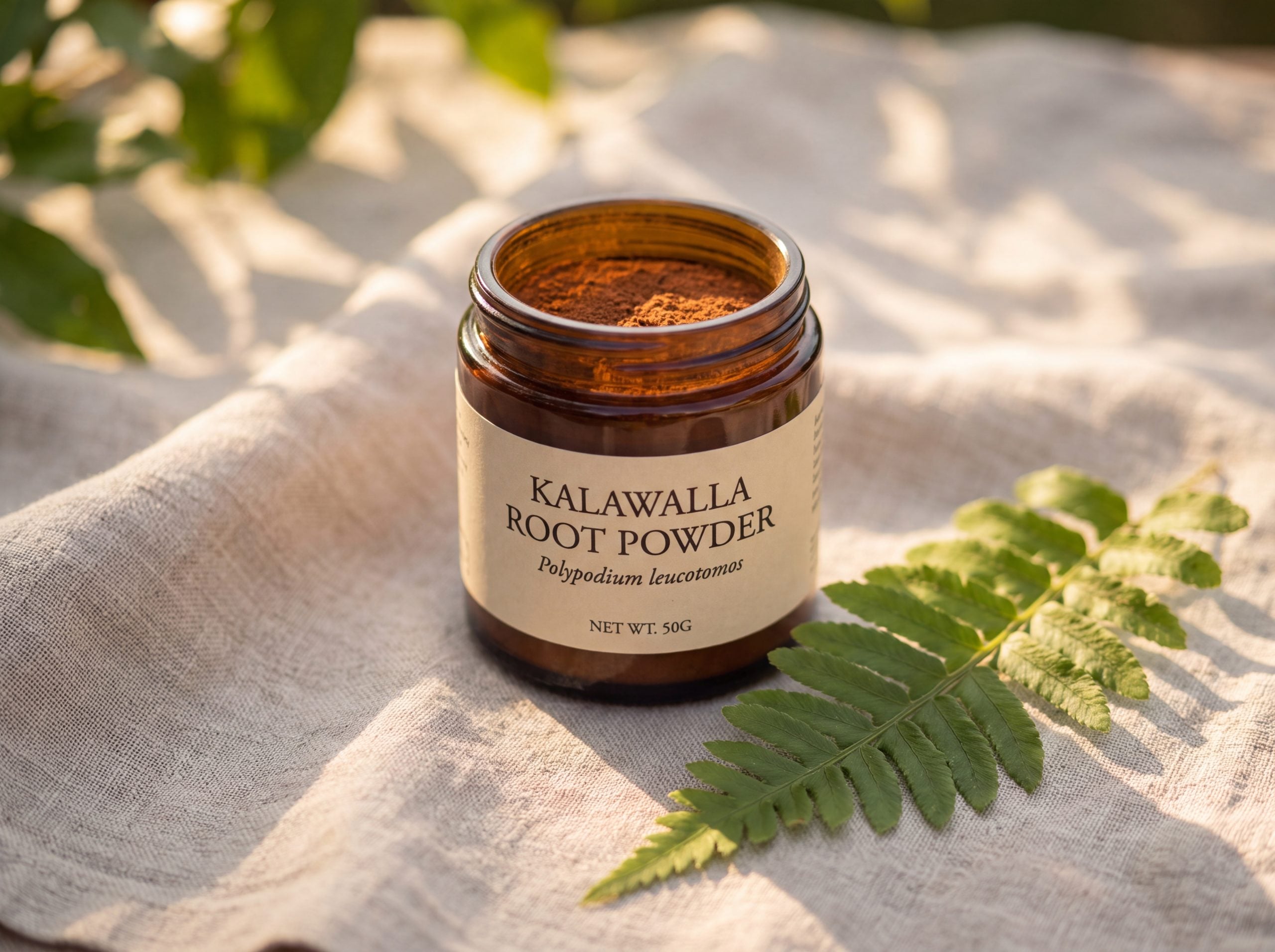
Kalawalla is the common trade name for Polypodium leucotomos, a fern native to Honduran rainforests that coastal Garifuna communities have long prepared as a traditional wellness drink. The part sold commercially as “root” is technically the fern’s rhizome, dried and ground into a fine reddish-brown powder. Modern interest in this plant concentrates on two connected areas: skin resilience against ultraviolet exposure and antioxidant support for a balanced immune response. Most of the clinical research behind this reputation, including studies touching on UV exposure, psoriasis, vitiligo, and atopic dermatitis, used a standardized oral extract, commonly the branded Fernblock formulation, a distinction most sellers leave out (Journal of Drugs in Dermatology, 2016, PMID: 26885792).
Key Takeaways
- Kalawalla, also sold as Calaguala or Kalahuala, is the trade name for Polypodium leucotomos, a Honduran fern traditionally prepared by coastal Garifuna communities as a wellness decoction.
- Most human clinical research used a standardized oral extract called Fernblock, not the raw dried rhizome powder typically sold under the Kalawalla name.
- Published dermatology research has studied oral Polypodium leucotomos extract alongside standard care for psoriasis, vitiligo, atopic dermatitis, and general UV exposure, always as a complement rather than a replacement.
- Its antioxidant reputation centers on phenolic compounds, including caffeic acid and ferulic acid, that help the body manage oxidative stress from sunlight.
- Kalawalla is a traditional wellness herb, not a treatment for any diagnosed skin or immune condition, and it should not replace sunscreen or a healthcare provider’s guidance.
What Is Kalawalla Root? An Introduction to the Polypodium Fern
Kalawalla is a natural supplement derived from the fern Polypodium leucotomos, native to Honduran rainforests and long prepared as a traditional drink by coastal Garifuna communities. In the wider herbal trade, it also goes by the regional names Calaguala and Kalahuala. While often referred to as a “root,” the part actually used is the fern’s rhizome, a horizontal underground stem, along with its fronds, rather than a true root in the botanical sense.
In our sourcing experience, this distinction matters more than most retailers let on. High-quality Kalawalla powder is a dense, reddish-brown dust with an earthy aroma similar to dried soil or bark, and a slightly bitter, astringent taste that signals a strong concentration of polyphenols, including the caffeic acid and ferulic acid credited with the plant’s antioxidant activity (PMID: 25666116). Unlike single-compound immune herbs such as Echinacea, Kalawalla holds a distinct position in Western herbalism as an immune-supporting botanical, a traditional classification we cover in more depth in the next section.
How Does Kalawalla Affect the Immune System?
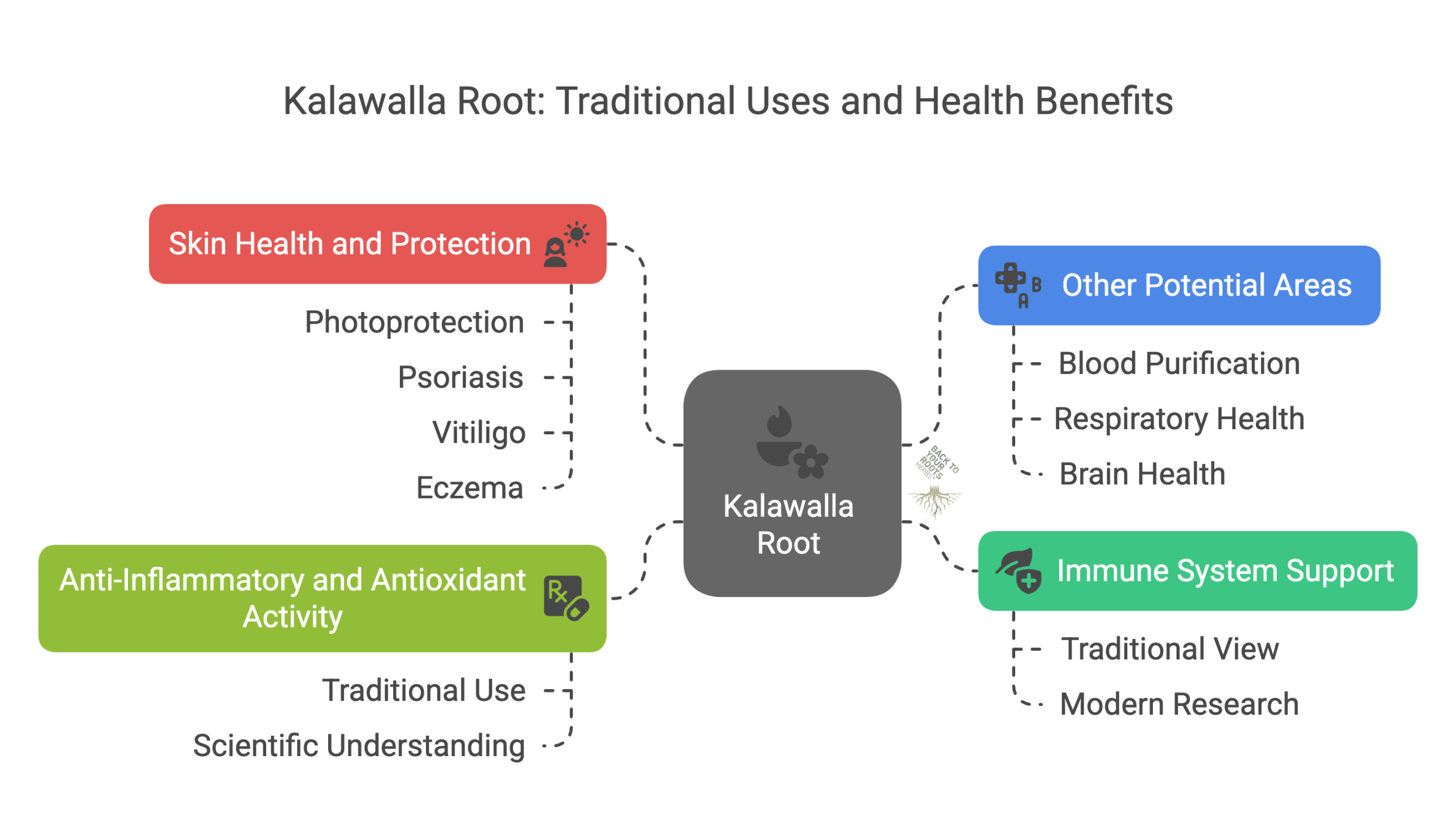
Kalawalla’s immune-support reputation traces back to the same phenolic compounds behind its skin research. Free radicals generated by ultraviolet exposure and everyday oxidative stress can affect immune cell function, and the caffeic acid and ferulic acid concentrated in Polypodium leucotomos help the body manage that oxidative load (PMID: 25666116). A separate analysis of the extract’s antioxidant activity and how the body processes it supports the same conclusion (PMID: 16263237).
A broader literature review of the plant’s dermatologic applications frames this antioxidant and immune-supporting activity as the throughline connecting its skin research to its traditional reputation as a general wellness tonic (PMID: 34221229). We frame Kalawalla accordingly in how we describe our own herbs: a traditional botanical that supports the body’s normal antioxidant defenses, not a treatment for any immune condition. For a beta-glucan-based option that reaches the same antioxidant and immune territory from a different angle, our chaga mushroom powder is worth a look.
UV Protection and Skin Resilience: What the Research Shows
The single most studied effect of this fern is its role in helping skin withstand ultraviolet exposure. Published dermatology research reports that oral Polypodium leucotomos extract inhibits UVB radiation-induced immunosuppression, helping preserve Langerhans cells, the immune cells in skin that ultraviolet exposure typically depletes (PMID: 18477132). An earlier study found the oral extract decreased psoralen-UVA-induced phototoxicity, pigmentation, and measurable skin damage in human subjects (Journal of the American Academy of Dermatology, 2004, PMID: 14699363).
The mechanism traces back to the plant’s phenolic acid content. Caffeic acid and ferulic acid act as antioxidants, helping neutralize the free radicals that ultraviolet light generates in skin cells, which is the basis for describing the extract as a photoprotective agent rather than a sunscreen replacement (PMID: 25666116). From our review of this research, the caveat matters as much as the finding. No published study positions Polypodium leucotomos as a substitute for sunscreen, and one widely cited review is explicit that no controlled human trial has yet demonstrated a role in preventing skin cancer (PMID: 25666116). We treat it as a complementary antioxidant, used alongside standard sun protection rather than instead of it. Some customers pair this kind of support with others in their routine, including our astaxanthin powder, another lipid-soluble antioxidant frequently discussed alongside skin and UV resilience.
Can Kalawalla Help With Skin Conditions Like Psoriasis and Vitiligo?
Beyond general sun exposure, dermatology researchers have studied oral Polypodium leucotomos extract as a complementary addition to standard care for several specific skin conditions. A 2016 review reported that the extract has been studied for its reported benefit in atopic dermatitis, vitiligo, and psoriasis (Journal of Drugs in Dermatology, 2016, PMID: 26885792).
Atopic Dermatitis and Eczema
A randomized, double-blind, placebo-controlled trial in pediatric patients found that oral Polypodium leucotomos extract meaningfully reduced the need for oral antihistamines during a course of standard atopic dermatitis care, though it did not significantly reduce topical corticosteroid use in the same trial (Actas Dermo-Sifiliográficas, 2012, PMID: 22560125). If eczema or psoriasis-prone skin is your primary concern, our Yellow Dock root guide covers a different traditional herb long used for the same skin concerns.
Vitiligo
Separate randomized trials have paired oral Polypodium leucotomos extract with narrow-band UVB phototherapy, a standard vitiligo treatment, to test whether the combination outperforms phototherapy alone (PMID: 17659004). A more recent analysis reviewed its role specifically as an adjunct within an existing vitiligo treatment plan rather than as a standalone therapy (PMID: 34390787).
What This Research Does Not Mean
These are studies of a standardized extract used alongside conventional dermatology treatment for diagnosed conditions, conducted under a physician’s care. Nothing here suggests that Kalawalla, taken on its own, treats, cures, or replaces medical care for psoriasis, vitiligo, atopic dermatitis, or any other diagnosed skin condition. Our editorial team reports this research because it is part of an honest picture of the plant, not because it changes how we frame our own products, which we treat strictly as a traditional wellness herb intended to support the skin’s resilience against everyday environmental stress.
What Is the Recommended Dosage for Kalawalla?
Clinical studies of oral Polypodium leucotomos extract typically dose the standardized Fernblock formulation in a range of roughly 240 mg to 480 mg per day, split into two doses, though exact amounts vary by study and by the specific extract ratio tested (PMID: 26885792). Products sold under the Kalawalla name vary in concentration, commonly around a 50:1 extract ratio, so always follow the specific serving guidance on the label of whatever product you use rather than treating any single figure as universal.
Absorption is worth planning around. Unlike fat-soluble botanicals such as Mpesu, Kalawalla’s water-soluble polyphenols are often best absorbed on an empty stomach with water, roughly 30 minutes before a meal, so digestion does not compete with uptake.
A General Daily Framework
- Morning: Take your serving 30 minutes before breakfast, with water.
- Evening: Take a second serving 30 minutes before dinner, if your product’s label calls for twice-daily use.
- Maintenance: Once desired results are noticed, usually over 3 to 4 months of consistent use, many people move to a lower maintenance serving.
This is general education drawn from the published research, not a recommendation for any particular product. Speak with a healthcare provider before starting a new herbal supplement, especially if you take medication.
Kalawalla vs. Turmeric vs. Seamoss: Which Is Right for You?
Kalawalla is best known for immune and skin-focused antioxidant support, Turmeric focuses on general inflammation, and Seamoss provides mineral nutrition. Use this table to see which botanical lines up with your wellness goals.
| Herb | Botanical Name | Primary Action | Best For |
|---|---|---|---|
| Kalawalla | Polypodium leucotomos | Antioxidant, Immune Support | Skin resilience, UV exposure, immune balance |
| Turmeric | Curcuma longa | Anti-Inflammatory | Joint pain, general swelling, and digestion |
| Seamoss | Chondrus crispus | Nutritional Density | Thyroid support, mineral deficiency, and mucus reduction |
Safety and Responsible Use: What You Must Know
Oral Polypodium leucotomos extract has been generally well tolerated across the clinical trials conducted so far, with mild digestive upset reported occasionally as the most common complaint. Kalawalla is traditionally taken as a wellness herb, not a treatment for any diagnosed skin or immune condition, and it should not replace sunscreen, prescribed dermatology treatment, or any medication a healthcare provider has recommended.
Not a Sunscreen Replacement
However promising the photoprotection research looks, no study has shown that Kalawalla or its standardized extract can replace topical sunscreen, protective clothing, or shade. Continue standard sun protection and treat this herb as a complementary antioxidant at most.
Who Should Check With a Provider First
Anyone who is pregnant or nursing should avoid Kalawalla without medical supervision, since safety data in pregnancy is limited. If you have a diagnosed skin condition such as psoriasis, vitiligo, or atopic dermatitis, or you take prescription medication of any kind, talk with your dermatologist, physician, or pharmacist before adding Kalawalla or any new herbal supplement to your routine, since some of the research on this plant has been conducted alongside prescribed treatment rather than in place of it.
Frequently Asked Questions About Kalawalla
What is Kalawalla used for?
Kalawalla, botanically Polypodium leucotomos, is a traditional Honduran fern used for general wellness, with modern interest concentrated on skin resilience against UV exposure and antioxidant support for the immune system. It is not a treatment for any diagnosed skin or immune condition.
Is Kalawalla the same as Calaguala?
Yes. Calaguala and Kalahuala are regional names for the same fern, Polypodium leucotomos, used across Central America, South America, and the Caribbean. Kalawalla is simply the name most common in the English-language herbal trade.
Does Kalawalla help with psoriasis or vitiligo?
Published research has studied a standardized oral extract of this plant, most often marketed as Fernblock, as a complementary addition to standard dermatology treatment for psoriasis, vitiligo, and atopic dermatitis. That research describes it as an adjunct used alongside conventional care under a physician’s supervision, not a standalone treatment, and it should not be read as a claim that any product treats or cures these conditions.
Can Kalawalla replace sunscreen?
No. The photoprotection research on this plant describes an internal antioxidant effect that complements sun protection. It has not been shown to replace topical sunscreen, and the researchers who study it recommend continuing standard sun protection alongside it.
What is the difference between raw Kalawalla powder and the extract used in studies?
Most human clinical trials used a standardized, concentrated oral extract, commonly the branded Fernblock formulation, rather than raw dried rhizome powder. The traditional powder has a long history of traditional use, but it has not itself been tested in the controlled trials described in this guide.
Is Kalawalla safe to take?
It has been generally well tolerated in clinical research, with occasional mild digestive upset reported. Anyone who is pregnant or nursing, manages a diagnosed health condition, or takes prescription medication should speak with a healthcare provider before use.
Related Reading: Beauty and Immune Support
If Kalawalla’s antioxidant and immune-support angle interests you, these related picks from our collection and our learning library cover similar ground.
- Astaxanthin powder, another lipid-soluble antioxidant we carry that is studied for skin support and UV-related oxidative stress
- Chaga mushroom powder, a beta-D-glucan and melanin source traditionally used for immune and skin support
- Amla capsules, a vitamin C-rich antioxidant traditionally used for skin and collagen support
- Yellow Dock root benefits, including its traditional use for eczema, psoriasis, and other skin irritations
- What Baobab is and its traditional antioxidant and immune-support reputation
Scientific References
- Polypodium Leucotomos, An Overview of Basic Investigative Findings. Journal of Drugs in Dermatology, 2016. PMID: 26885792
- Polypodium leucotomos inhibits ultraviolet B radiation-induced immunosuppression. PMID: 18477132
- Orally administered Polypodium leucotomos extract decreases psoralen-UVA-induced phototoxicity, pigmentation, and damage of human skin. Journal of the American Academy of Dermatology, 2004. PMID: 14699363
- Polypodium leucotomos, a potential new photoprotective agent. PMID: 25666116
- Polypodium leucotomos extract in atopic dermatitis, a randomized, double-blind, placebo-controlled, multicenter trial. Actas Dermo-Sifiliográficas, 2012. PMID: 22560125
- Treatment of vitiligo vulgaris with narrow-band UVB and oral Polypodium leucotomos extract, a randomized double-blind placebo-controlled study. PMID: 17659004
- Polypodium leucotomos as an adjunct to the treatment of vitiligo. PMID: 34390787
- Polypodium leucotomos extract, antioxidant activity and disposition. PMID: 16263237
- Dermatologic Applications of Polypodium leucotomos, A Literature Review, 2021. PMID: 34221229
Important: This article is for educational and informational purposes. These statements have not been evaluated by the Food and Drug Administration. This product is not intended to diagnose, treat, cure, or prevent any disease, including psoriasis, vitiligo, atopic dermatitis, or any autoimmune or immune-related condition, and it is not a substitute for sunscreen or prescribed medical treatment. Speak with a qualified healthcare provider before starting any new herbal supplement, especially if you are pregnant, nursing, manage a diagnosed skin or immune condition, or take medication.