Known by many names like Velvet Leaf, Ice Vine, and Laghu Patha, Cissampelos pareira is a climbing vine with a rich history embedded in traditional medicine systems across the globe. For centuries, communities in South America, Asia, and Africa have relied on this plant for various health purposes. This article provides an informational overview of Cissampelos pareira, covering its identity, traditional applications, known medicinal properties, the state of scientific research, and essential safety considerations.
It is important to clarify that while commonly called “Abuta,” this name can sometimes refer to other related plants, particularly those in the Abuta genus like Abuta grandifolia, which has different uses. This article specifically focuses on the species Cissampelos pareira L. of the Menispermaceae family, the plant most frequently associated with the medicinal uses discussed here.
Identifying Cissampelos pareira
Understanding the plant itself is the first step. Cissampelos pareira is a perennial, slender, climbing shrub found throughout the tropical and subtropical regions of the world.
Botanical Characteristics
- Scientific Name: Cissampelos pareira L.
- Family: Menispermaceae (Moonseed family)
- Common Names: Pareira Brava, Velvet Leaf, Ice Vine, Laghu Patha (Sanskrit), Patha (Hindi), Ambastha, Akanadi, Midwife’s Herb, Bejunco de Cerca (Spanish), Vigne Sauvage (French), Xi Sheng Teng (Chinese), among many others depending on the region.
- Appearance: It’s a twining vine with distinctive features:
- Leaves: Softly hairy (pubescent), giving it the “Velvet Leaf” name. They are typically rounded or kidney-shaped, with the leaf stalk (petiole) attached near the center of the underside rather than at the edge (peltate).
- Stems: Slender, woody near the base, covered in fine hairs.
- Flowers: Small and inconspicuous, yellowish-green. Male and female flowers grow on separate plants (dioecious). Male flowers are in branched clusters (cymes), while female flowers appear in longer, hanging clusters (racemes), often accompanied by leaf-like bracts.
- Fruit: A small, fleshy, hairy, reddish-orange drupe that turns dark purple or black when ripe.
- Seed: Characteristically horseshoe or crescent-shaped.
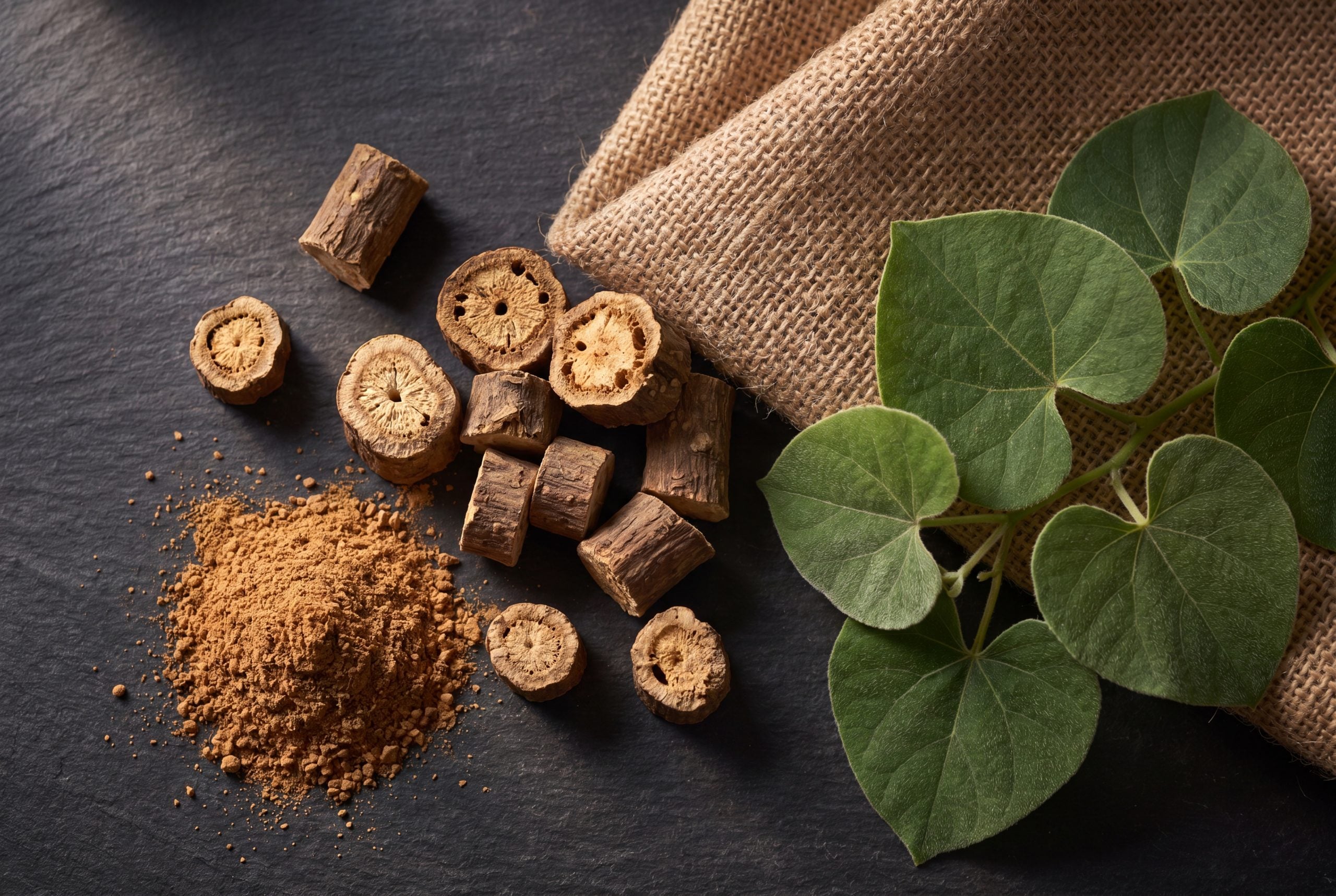
- Roots: Often thick and woody, a primary part used in traditional medicine, along with the leaves and stems.
Distribution and Habitat
This adaptable vine thrives in diverse tropical and subtropical environments. It grows wild in forests, along riverbanks, in thickets, and even in disturbed areas or gardens across South America (especially the Amazon basin, like in Peru), India, Sri Lanka, East Africa, and other regions with warm climates.
Cultivation, Habitat Range, and Common Pests
People often ask whether abuta can be grown at home, and the honest answer is that it is rarely practical outside the tropics. Both Cissampelos pareira and the true Abuta genus vines such as Abuta mycetandra are wild-harvested forest lianas, not ornamental houseplants. They need consistent warmth, high humidity, dappled forest light, and a sturdy host or trellis to climb. In our sourcing experience, material reaches the market through wild collection in the Amazon basin and other tropical regions rather than through cultivated plots.
A second obstacle is the plant’s reproductive biology. Cissampelos pareira is dioecious, meaning male and female flowers grow on separate plants, so fruit and viable seed require both a male and a female vine nearby. Outside USDA zones with a true tropical or subtropical climate, a home grower would need a heated greenhouse to keep the vine alive through winter.
Documented pest and disease pressure on these vines is limited because so little formal horticulture exists for them. In humid tropical cultivation, climbing Menispermaceae vines face the same pressures as other broad-leaved lianas: fungal leaf spot and powdery mildew in stagnant air, root rot in waterlogged soil, and sap-feeding insects such as aphids, mealybugs, and spider mites. Good airflow and well-drained soil prevent most of these problems. Because reliable cultivation data is thin, anyone serious about growing abuta should treat it as an experimental tropical specimen rather than a proven garden plant.
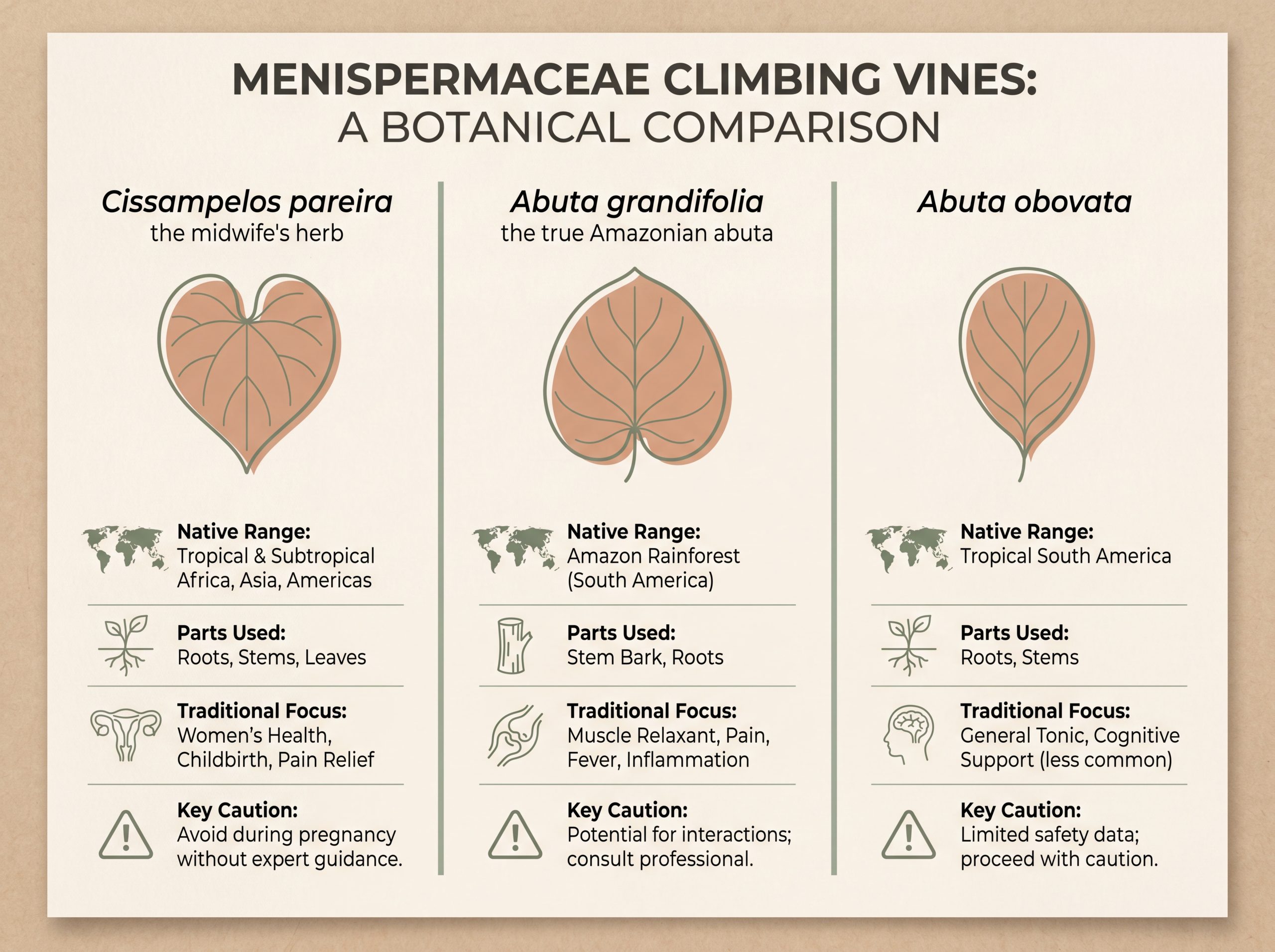
The Abuta Genus vs. Cissampelos pareira: Clearing Up the Confusion
The name “abuta” causes real confusion, and it matters for safety. The plant most herbal references mean by “abuta” is Cissampelos pareira, the midwife’s herb covered throughout this article. But there is also a separate botanical genus literally named Abuta, in the same family (Menispermaceae) but with about 32 distinct species native to tropical Central and South America. The two are not interchangeable. According to Plant of the World Online from Kew Science, the Abuta genus and the Cissampelos genus are taxonomically separate, and the vines carry different compounds and different traditional uses.
The most-used true Abuta species is Abuta grandifolia, an Amazonian liana whose bark and root are traditionally associated with fever, malaria, eye inflammation, and wound care, and which some indigenous groups historically included in arrow-poison preparations. That curare-adjacent history alone marks it as a different plant from Cissampelos pareira. Species such as Abuta obovata, Abuta longa, and Abuta mycetandra are far less studied. For Abuta obovata specifically, the documented record is sparse: Kew lists it as a South American climber of the wet tropical forest with some reported food use, and rigorous medicinal data for it is essentially absent. Most online “medicinal uses of Abuta” content actually describes either Cissampelos pareira or Abuta grandifolia, then attaches the wrong Latin name. The practical takeaway is to verify the binomial on any product before use.
| Feature | Cissampelos pareira | Abuta grandifolia | Abuta obovata |
|---|---|---|---|
| Genus and family | Cissampelos, Menispermaceae | Abuta, Menispermaceae | Abuta, Menispermaceae |
| Common names | Velvet Leaf, Pareira, Laghu Patha, “midwife’s herb.” | True abuta, Amazonian abuta | Abuta (genus only, no settled common name) |
| Native range | Pantropical: South America, India, Sri Lanka, East Africa | Amazon basin (Peru, Brazil, neighboring regions) | South tropical America, wet tropical forest |
| Parts traditionally used | Root and leaf | Bark, root, stem | Limited record; some reported food use |
| Traditional focus | Women’s health, menstrual comfort, urinary support, fever | Fever, malaria, eye inflammation, wounds; historic arrow-poison use | Not well documented |
| Key caution | Avoid in pregnancy; can lower blood pressure | Distinct, more toxic alkaloid profile; not interchangeable | Scant safety data; frequently mislabeled online |
| Sources: Plants of the World Online (Kew Science); Useful Tropical Plants database; Cissampelos pareira review, Journal of Ethnopharmacology (PMID: 33485976). | |||
For taxonomy you can verify independently, see the Kew Plants of the World Online entry for Abuta obovata and the Useful Tropical Plants profile of Abuta grandifolia.
A Legacy of Traditional Use
The historical application of Cissampelos pareira in traditional medicine is extensive, dating back thousands of years, particularly in Ayurvedic practices and among indigenous communities in South America. The parts used vary, including the root, leaves, bark, seeds, and sometimes the entire plant.
Applications in South American Traditions
Often referred to as the “Midwife’s Herb” in the Amazon, its primary uses center around women’s health:
- Managing difficult menstruation, including cramps and excessive bleeding.
- Assisting during childbirth and aiding postpartum recovery, potentially reducing pain and hemorrhage.
- A traditional, though potentially risky, use was noted for preventing threatened miscarriage (modern science advises against this; see Safety section).
- Other uses include treating snakebites (using leaves or seeds), kidney problems, heart irregularities (traditional use in Peru), fever, and as a diuretic and expectorant. Leaves were sometimes made into poultices for pain relief.
Cultural and Ceremonial Significance in the Amazon
Beyond its clinical applications, abuta holds a recognized cultural place in Amazonian life. Its best-known nickname, the “midwife’s herb,” reflects more than a remedy. It marks a body of women’s knowledge passed between generations of traditional birth attendants. In many river and forest communities, midwives historically carried abuta root with them for menstrual discomfort, for pre- and post-natal pain, and for heavy bleeding, and that role gave the plant a social standing tied to women’s health and community care.
The plant also appears in the wider repertoire of Amazonian plant healers, where it is grouped with the bitter, cooling botanicals used to settle the stomach and support recovery after illness. Knowledge of which vine to cut, which part to use, and how to prepare it has traditionally been transmitted orally rather than through written texts, which is part of why the common name “abuta” spread across several different plants. In our editorial review of the ethnobotanical record, this oral transmission is exactly what blurred the line between Cissampelos pareira and the true Abuta genus over time. Respecting that heritage means naming the plant precisely and crediting the communities who carried the knowledge forward.
Role in Ayurvedic Medicine (Patha/Laghu Patha)
In Ayurveda, Cissampelos pareira (Patha or Laghu Patha) is valued for a wide range of conditions:
- Digestive Health: Addressing diarrhea, dysentery, indigestion, abdominal colic, and intestinal parasites.
- Urinary System: Used as a diuretic for painful urination, urinary tract inflammation, and is considered helpful for kidney and bladder stones (‘Pashanabheda’ properties).
- Respiratory Relief: Employed for asthma, coughs, and bronchitis.
- Fever and Infections: Utilized as an antipyretic (fever reducer) and for conditions like malaria.
- Pain and Inflammation: Applied for joint pain, muscle aches, and wound healing.
- Women’s Health: Addressing menstrual issues and leukorrhea.
- Other Uses: Blood purification, skin ailments, and traditionally for heart conditions.
Use in African and Other Traditional Systems
Across Africa and other regions like Mexico, Cissampelos pareira has been traditionally used for:
- Treating coughs, colds, and sore throats.
- Managing diarrhea and stomach aches.
- Application on wounds.
- Addressing fevers, malaria, snakebites, and rheumatism.
- Veterinary uses such as treating intestinal worms in livestock.
Traditional preparations commonly involve making decoctions (boiling the root or leaves), infusions (teas), tinctures (alcohol extracts), or applying fresh leaves or pastes externally as poultices. The specific preparation often depended on the intended use and local customs. The wide geographical range and long history mean the traditional uses for this plant are diverse.
Medicinal Properties and Active Components
The extensive traditional applications of Cissampelos pareira stem from its complex phytochemistry, particularly its high concentration of alkaloids. Scientific investigation has begun to explore the biological activities associated with this plant.
Key Investigated Properties
Research, primarily through laboratory (in vitro) and animal (in vivo) studies, suggests Cissampelos pareira possesses several potentially therapeutic properties:
- Antispasmodic: Relaxes smooth muscles, such as those in the uterus, intestines, and urinary tract. This helps explain its traditional use for menstrual cramps, colic, and urinary difficulties.
- Anti-inflammatory: Extracts have demonstrated the ability to reduce inflammation markers in studies, supporting its use for pain and inflammatory conditions.
- Analgesic: Shows pain-relieving effects in animal models.
- Diuretic: Increases urine production, relevant for urinary complaints and fluid balance.
- Muscle Relaxant: Affects both smooth and skeletal muscle, with some older research noting curare-like (muscle-paralyzing) potential at high doses, mainly linked to specific alkaloids.
- Antioxidant: Contains compounds that can neutralize harmful free radicals.
- Antimicrobial & Antiparasitic: Shows activity against various bacteria, fungi, and, importantly, the Plasmodium parasite responsible for malaria.
- Antipyretic: Demonstrates fever-reducing capabilities in animal studies.
- Hepatoprotective: Some studies suggest it may help protect the liver from certain types of toxin-induced damage.
- Cardiovascular Effects: Can lower blood pressure (hypotensive effect) and potentially affect heart rate. This requires careful consideration regarding safety.
- Antilithic: Traditionally believed to help prevent or dissolve kidney stones; this is an area needing more research, but forms the basis of some homeopathic uses.
- Anticancer Potential: Certain isolated alkaloids have shown activity against specific cancer cell lines in vitro. This research is very preliminary and does not translate to human cancer treatment at this stage.
Active Phytochemicals
The medicinal effects are largely attributed to a rich array of chemical compounds, especially isoquinoline alkaloids of the bisbenzylisoquinoline type. A 2021 review in the Journal of Ethnopharmacology catalogued roughly 54 isolated phytomolecules from Cissampelos pareira, dominated by these alkaloids alongside flavonoids and fatty acids (PMID: 33485976). Pharmacognostic standardization work on the root has further characterized this constituent profile (PMID: 23661865). Notable examples include:
- Alkaloids: This is the most significant group, primarily isoquinoline alkaloids, and particularly bisbenzylisoquinoline types. Notable examples include:
- Hayatin, Hayatinine, Hayatidin
- Cissampeline, Cissamine
- Bebeerine (related to Berberine)
- Cycleanine, Chondrocurine, Isochondrodendrine
- Tetrandrine
- Magnoflorine
- Pareirine. These compounds contribute to the plant’s diverse actions, including muscle relaxation, anti-inflammatory effects, antimicrobial activity, and potential cytotoxicity. The exact alkaloid profile can vary based on geographical location, plant part used, and harvest time.
- Other Compounds: Flavonoids (like quercetin), terpenoids, saponins, tannins, glycosides, and fatty acids are also present and may contribute to the overall effects.
Scientific Research Landscape
Modern research aims to validate the traditional knowledge surrounding Cissampelos pareira. While many traditional uses find plausible support from preclinical studies demonstrating relevant biological activities (like antispasmodic, anti-inflammatory, and antimicrobial effects), there is a significant gap in human clinical trials.
- Support for Traditional Uses: Laboratory and animal studies provide evidence supporting its potential for pain relief, inflammation reduction, fever management, muscle spasm relaxation (relevant for cramps), diarrhea control (due to antimicrobial and antispasmodic actions), malaria treatment (antiplasmodial activity), and liver protection.
The antimalarial signal is the most chemically traced of these activities. Analytical work profiling the constituents behind the antiplasmodial action of Cissampelos pareira attributes the effect largely to its isoquinoline alkaloids (PMID: 32726676). This still reflects laboratory and preclinical evidence rather than confirmation in human clinical trials.
- Areas Needing More Research: Claims related to dissolving kidney stones, anticancer activity, and effects on fertility require much more rigorous investigation, including human studies, before any conclusions can be drawn about efficacy in humans.
- The Evidence Gap: It is essential to understand that positive results from in vitro (test tube) or animal studies do not automatically guarantee the same effects or safety in people. Currently, high-quality clinical trials confirming the effectiveness and establishing safe dosages of Cissampelos pareira for specific health conditions are largely absent. Therefore, it should not be considered a substitute for conventional medicine.
Safety Profile and Important Considerations
Natural does not automatically mean safe. Using Cissampelos pareira requires caution due to its potent biological activity and lack of comprehensive safety data in humans.
Contraindications (When NOT to Use)
- Pregnancy: Strongly contraindicated. Despite some traditional reports of use to prevent miscarriage, the plant has demonstrated uterine stimulant and relaxant effects in studies. Its use during pregnancy poses significant risks and should be avoided entirely.
- Breastfeeding: Due to a lack of safety information, use during lactation is not recommended.
- Low Blood Pressure (Hypotension): Because the plant can lower blood pressure, individuals already having low blood pressure should use it with extreme caution, if at all, under professional guidance.
Potential Side Effects
- The most documented risk is lowering blood pressure (hypotension).
- Potential effects on heart rate (bradycardia – slowing) have been noted with certain constituents.
- Other side effects are not well-documented due to limited human studies.
Potential Drug Interactions
- Antihypertensive Medications: Combining Cissampelos pareira with drugs designed to lower blood pressure could lead to an excessive drop in pressure.
- Diuretics: Concurrent use might increase the risk of electrolyte imbalances.
- Heart Medications: Due to potential effects on heart rate and contractility (linked to alkaloids like tetrandrine), interactions are possible. Consult a physician.
- Muscle Relaxants: Additive effects might occur.
Dosage
- There is no scientifically established safe or effective dose for Cissampelos pareira or its preparations.
- Traditional dosages vary widely and depend on the preparation method, plant part, and specific use. Relying on traditional recipes without expert guidance is risky due to variations in plant potency and potential for misidentification.
Recommendation: Given the potent activity, potential risks, and lack of established dosages, it is essential to consult a qualified healthcare professional (such as a doctor, pharmacist, or experienced clinical herbalist) before using Cissampelos pareira. This is particularly important for individuals with pre-existing health conditions, those taking medications, or anyone considering its use for therapeutic purposes. Self-treating with this potent vine is not advised. Many species of plants require careful handling.
Final Thoughts on Cissampelos pareira
Cissampelos pareira stands out as a plant with deep roots in traditional healing practices across continents, especially in South America and Asia. Its historical applications, particularly for women’s health, urinary ailments, pain, inflammation, and infections like malaria, are extensive. Scientific inquiry has started to validate some of these uses by identifying potent bioactive compounds, mainly alkaloids, and demonstrating relevant pharmacological properties like antispasmodic, anti-inflammatory, and antimicrobial effects in preclinical models.
However, the enthusiasm generated by traditional use and preliminary research must be tempered with caution. The lack of robust human clinical trials means that definitive proof of efficacy and clear safety guidelines are missing. The potential for side effects, particularly lowering blood pressure, and interactions with conventional medications underscores the need for professional guidance. Cissampelos pareira represents a fascinating intersection of ethnobotany and modern science, a potent tropical vine deserving further study but demanding respectful and informed use.
Disclaimer: These statements have not been evaluated by the Food and Drug Administration. This product is not intended to diagnose, treat, cure, or prevent any disease. The information here is educational and is not medical advice. Consult your healthcare provider before using Cissampelos pareira or any botanical, especially during pregnancy or breastfeeding, if you have low blood pressure, or if you take prescription medication.