What is Rhodiola Rosea?
Rhodiola rosea is a hardy perennial plant that thrives in cold, mountainous regions of Europe and Asia. Its vibrant yellow flowers are a common sight in these rugged environments. The term “golden root” refers to the appearance of its rhizome, which is typically brownish on the outside and a lighter color internally. Scientists have identified several bioactive compounds within Rhodiola rosea, including rosavin, salidroside, and tyrosol. These natural substances have been studied for their potential effects on mood, stress regulation, and cognitive function.
Many cultures in northern Europe and parts of Asia have traditionally used Rhodiola for medicinal purposes. Historical records highlight its use to reduce fatigue and support stamina during periods of cold weather or intense physical labor. In modern times, as interest in herbal remedies has grown, Rhodiola products have become widely available. Some individuals use it as a dietary supplement, in capsule form, or as an extract, while others prefer powders or teas made from the dried plant.
Researchers classify this plant within the genus Rhodiola, which includes various species found in challenging environments. Studies often examine its physiological effects, focusing on how the active compounds interact with the body’s cells. Some research focuses on protein expression or stress hormones, while others explore the broader concept of adaptogens and their tangible benefits. While modern scientific understanding is still developing, ongoing research continues to clarify the optimal ways to utilize Rhodiola’s potential.
Traditional and Cultural Uses of Rhodiola Rosea
In northern climates, Rhodiola rosea has often been used as a form of support during cold, dark winters. Written documents dating back centuries reflect an enduring interest in plants that might help with daily hardship. Family traditions in areas like Siberia sometimes passed down recipes for a Rhodiola tonic intended to keep spirits bright and bodies strong.
Different populations have their own names and methods of preparation. Some might use a dried rhizome for making tonics, while others create salves or ointments for external application. Ancient healers categorized Rhodiola among herbs believed to promote balance and stamina.
Understanding the Science Behind Rhodiola Rosea
Mechanism of Action: The HPA Axis and Stress Response
Rhodiola rosea’s adaptogenic properties are largely attributed to its influence on the hypothalamic-pituitary-adrenal (HPA) axis. The HPA axis is a complex neuroendocrine system that regulates the body’s response to stress. When faced with a stressor (physical, emotional, or environmental), the hypothalamus releases corticotropin-releasing hormone (CRH). CRH stimulates the pituitary gland to release adrenocorticotropic hormone (ACTH), which in turn prompts the adrenal glands to produce cortisol, the primary stress hormone.
Cortisol is essential for survival, providing the energy needed to respond to threats. However, chronic stress can lead to persistently elevated cortisol levels, which can have detrimental effects on various bodily systems, including metabolism, immune function, and cognitive performance.
Rhodiola rosea appears to help regulate the HPA axis by modulating the release of stress hormones. Studies suggest that it can reduce excessive cortisol production during prolonged stress, helping to maintain a more balanced hormonal environment. A study by Olsson et al. (2009) in Planta Medica found that Rhodiola rosea extract significantly reduced cortisol levels in individuals experiencing burnout. Other research indicates that Rhodiola may influence neuropeptide Y (NPY), a stress-related peptide, and heat shock proteins (HSPs), which protect cells from stress-induced damage.
Neurotransmitter Modulation
Beyond its effects on the HPA axis, Rhodiola rosea may also influence neurotransmitter activity in the brain. Neurotransmitters are chemical messengers that transmit signals between nerve cells, playing a vital role in mood, cognition, and behavior.
Research suggests that Rhodiola may affect levels of serotonin, dopamine, and norepinephrine. Serotonin is often associated with feelings of well-being and happiness, while dopamine plays a role in motivation, reward, and pleasure. Norepinephrine is involved in alertness and arousal.
A study by Panossian et al. (2008) in the Nordic Journal of Psychiatry found that Rhodiola rosea extract exhibited antidepressant-like effects in individuals with mild to moderate depression, possibly by influencing serotonin and dopamine pathways. Other studies have shown that Rhodiola may enhance the sensitivity of brain receptors to these neurotransmitters, potentially improving their overall function.
Antioxidant Activity
Rhodiola rosea contains various compounds with antioxidant properties, including rosavin, salidroside, and tyrosol, as well as flavonoids and phenolic acids. Antioxidants protect cells from damage caused by free radicals, and unstable molecules that can contribute to oxidative stress. Oxidative stress is implicated in various chronic diseases and the aging process.
Studies have demonstrated that Rhodiola extracts can scavenge free radicals and enhance the activity of antioxidant enzymes in the body. A study by Skarpanska-Stejnborn et al. (2009) in the International Journal of Sport Nutrition and Exercise Metabolism found that Rhodiola supplementation increased antioxidant capacity in athletes, potentially reducing exercise-induced oxidative stress.
Key Health Benefits of Rhodiola Rosea
Stress Relief and HPA Axis Regulation
Many individuals report experiencing a greater sense of calm and improved resilience to stress after incorporating Rhodiola rosea into their routines. This may be attributed to its ability to modulate the HPA axis and promote more balanced cortisol levels. When the body can maintain hormonal equilibrium, it may be better equipped to handle challenging situations.
Some users report a more positive outlook and improved mood, although individual experiences vary. Rhodiola’s potential to contribute to a sense of balance makes it a potential option for those seeking natural stress management strategies. However, it’s important to note that it is not a substitute for professional medical intervention, especially in cases of severe anxiety or other conditions requiring specialized care.
Improved Physical Performance and Endurance
Athletes and individuals engaged in regular physical activity sometimes report that Rhodiola rosea provides sustained energy during workouts and may aid in recovery. It may help reduce the perception of fatigue during prolonged exercise, and some evidence suggests it may support faster recovery times after physical exertion.
Studies have investigated Rhodiola’s potential effects on muscle cells and energy metabolism. Certain proteins linked to endurance may be influenced by Rhodiola’s active compounds, although the precise mechanisms are still under investigation. A study published in the International Journal of Sports Nutrition and Exercise Metabolism showed that Rhodiola supplementation improved exercise performance in trained individuals.
Cognitive Enhancement: Focus and Mental Clarity
Rhodiola rosea may support mental clarity and alertness, which could be beneficial for students, professionals, or anyone with a demanding schedule. Individuals experiencing difficulty concentrating or daily fatigue might find some support from this supplement. Users often report an improved ability to focus on complex or lengthy tasks.
Changes in brain function can result from various factors, including hormone levels, neurotransmitter activity, and overall physiological state. By influencing stress hormones, Rhodiola might indirectly contribute to maintaining mental sharpness. A clinical trial featured in the Journal of Psychopharmacology observed measurable improvements in concentration among participants receiving Rhodiola extracts.
Combating Fatigue: Physical and Mental
Rhodiola rosea has a long-standing reputation for combating fatigue, both physical and mental. This is likely due to its combined effects on the HPA axis, neurotransmitter activity, and cellular energy production.
Anxiety Reduction
Rhodiola rosea has shown promise in reducing symptoms of anxiety. While not a replacement for conventional treatments for anxiety disorders, it may offer a complementary approach for managing general anxiety and stress-related anxiety.
Support for Mood and Depression
Rhodiola rosea has demonstrated potential benefits for individuals experiencing low mood or mild to moderate depression. It’s important to emphasize that it is not a substitute for professional treatment for clinical depression, but it may be considered as a complementary approach for supporting mood.
Potential Benefits for Weight Management
While Rhodiola rosea is not a direct weight loss supplement, it may indirectly support weight management efforts through several mechanisms:
- Stress Reduction and Cortisol Control: As discussed earlier, chronic stress and elevated cortisol levels can contribute to weight gain, particularly abdominal fat. By regulating the HPA axis and reducing cortisol, Rhodiola may help mitigate this effect.
- Increased Energy and Reduced Fatigue: Rhodiola’s ability to combat fatigue can make it easier to engage in regular physical activity, a crucial component of weight management.
- Improved Exercise Performance: By enhancing endurance and reducing muscle damage, Rhodiola can support more effective workouts.
- Potential Metabolic Effects: Emerging research suggests that Rhodiola may have positive effects on metabolism, although more human studies are needed. Some potential mechanisms include:
- Activation of Hormone-Sensitive Lipase: Rhodiola may activate hormone-sensitive lipase, an enzyme that helps break down stored fat.
- Prevention of Fat Accumulation: Some animal studies suggest that Rhodiola may help prevent the accumulation of fat, particularly visceral fat.
- Support for Fatty Liver Health: Preliminary research indicates that Rhodiola may have beneficial effects on metabolism that could potentially help address fat accumulation in the liver.
- Blood Sugar and Appetite Support: Rhodiola may contribute to more stable blood sugar levels and influence neurotransmitters involved in appetite regulation, potentially reducing cravings.
It’s crucial to reiterate that Rhodiola is not a “magic bullet” for weight loss. It should be viewed as a potential supportive tool within a comprehensive weight management plan that includes a healthy diet, regular exercise, and stress management techniques.
Potential Benefits for Diabetes Management
Research indicates that Rhodiola may assist in the management of diabetes.
Anticancer Properties of Rhodiola
Studies show that Rhodiola may have anticancer properties.
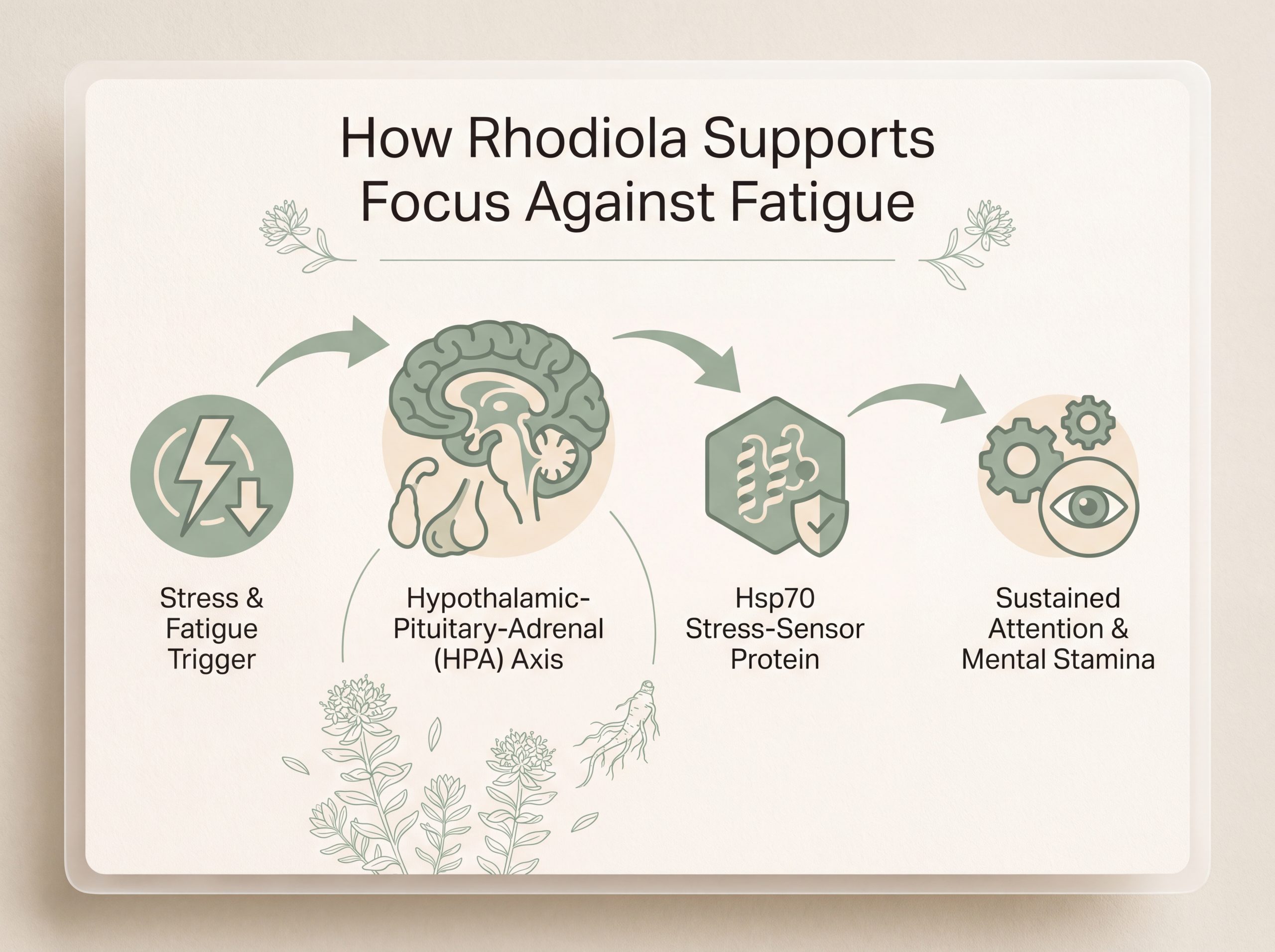
Rhodiola Rosea and Focus: What the Research Suggests About Attention
One of the most common questions our editorial team receives is whether Rhodiola rosea can support focus, including for people exploring options alongside attention challenges. It is worth being precise here. Rhodiola is not a treatment for ADHD, and no herb should replace an evaluation or care plan from a qualified clinician. What the research does describe is a botanical that has been studied for its effect on attention and mental fatigue under demanding conditions.
In a randomized, double-blind, placebo-controlled Phase III trial, the standardized SHR-5 extract of Rhodiola rosea improved several indices of attention on the Conners’ Continuous Performance Test in adults with stress-related fatigue, alongside a reduced cortisol response to awakening (Olsson et al., 2008, Planta Med, PMID 19016404, doi.org/10.1055/s-0028-1088346). A separate single-dose study of a Rhodiola-containing adaptogen combination reported measurable gains in attention, speed, and accuracy on the d2 Test of Attention within two hours in stressed participants (Aslanyan et al., 2010, Phytomedicine, PMID 20374974, doi.org/10.1016/j.phymed.2010.02.005).
How the focus connection is thought to work
The proposed mechanism ties back to the same hypothalamic-pituitary-adrenal (HPA) axis regulation discussed earlier in this guide. By moderating the stress-response cascade and supporting the “stress-sensor” chaperone protein Hsp70, adaptogens like Rhodiola may help sustain mental endurance when fatigue would otherwise degrade concentration (Panossian and Wikman, 2009, Curr Clin Pharmacol, PMID 19500070, doi.org/10.2174/157488409789375311). In plain terms, the effect studied is less “stimulation” and more “protection of focus against fatigue.” For a broader context on botanicals studied for cognition, see the narrative review by Lewis et al. (2021, J Clin Transl Res, PMID 34541370).
If you are considering Rhodiola for focus, particularly if you take prescription stimulants or other medications, review the plan with your healthcare provider first. Individual responses vary, and adaptogens are best understood as one part of a broader routine that includes sleep, nutrition, and clinical guidance where appropriate. For authoritative background, the NIH National Center for Complementary and Integrative Health maintains a Rhodiola overview at nccih.nih.gov.
Rhodiola Rosea vs. Other Adaptogens
| Adaptogen | Potential Emphasis | Common Regions |
|---|---|---|
| Rhodiola Rosea | Stress regulation, physical performance | Cold mountainous areas |
| Ashwagandha | Calmness, restful sleep, general adaptation | South Asian locations |
| Ginseng | Energy support, immune considerations | Parts of East Asia |
| Holy Basil (Tulsi) | Stress relief, anti-inflammatory properties, immune support | Overall well-being, supporting stress response, potentially aiding respiratory health |
Different adaptogens can complement each other. However, caution is advised when mixing various herbal supplements without professional oversight. Some individuals find it helpful to rotate products or use them intermittently to avoid tolerance buildup or conflicting effects. Rhodiola rosea is generally considered more energizing, making it a good choice for daytime use and supporting physical activity. Ashwagandha, on the other hand, is often used for its calming and sleep-promoting effects. The best adaptogen for you will depend on your individual needs and goals. Citrus aurantium (bitter orange) is another herb sometimes combined with Rhodiola rosea in weight-loss supplements, but it carries its own set of risks and should be used with caution.
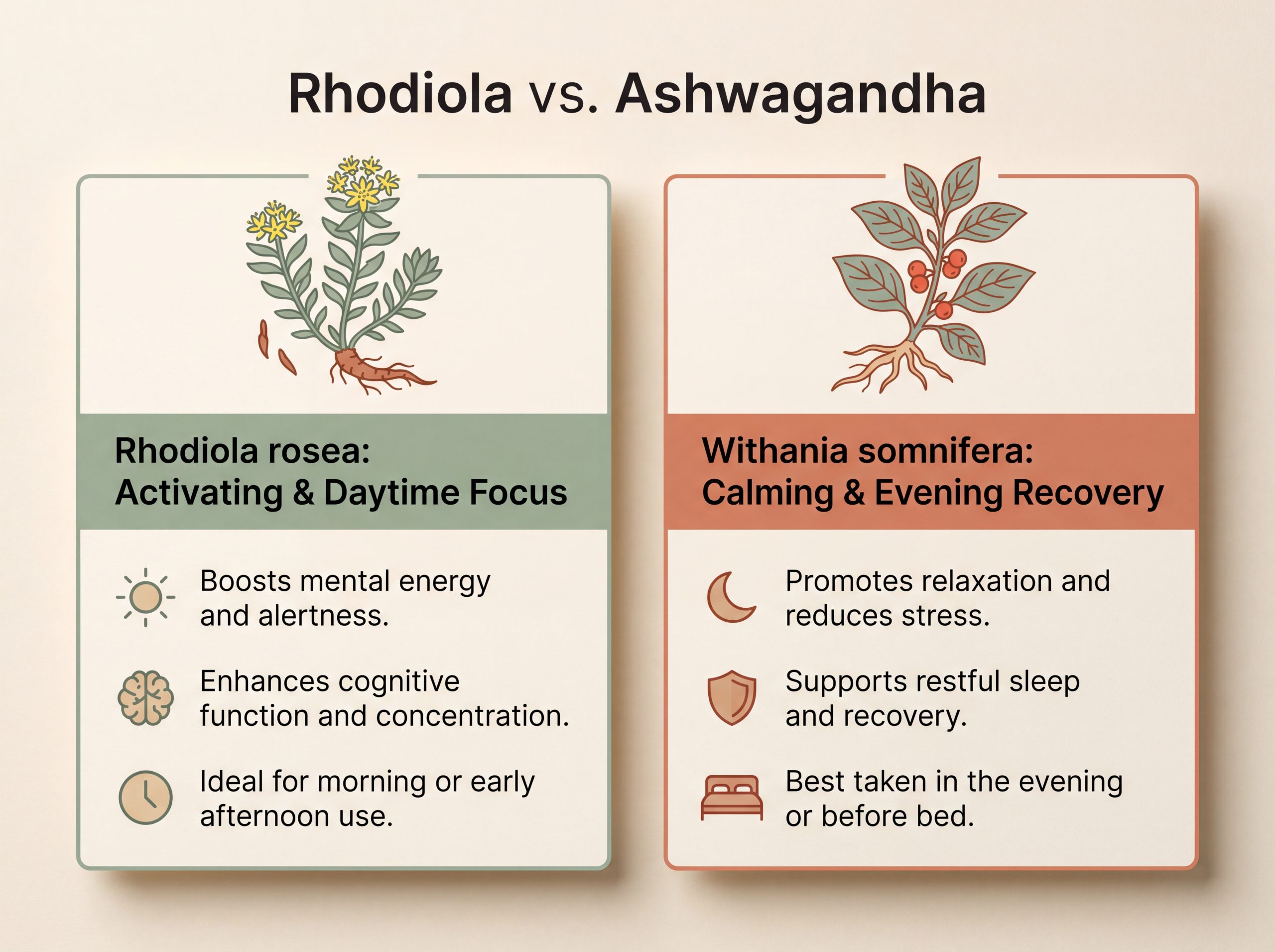
Rhodiola vs. Ashwagandha: A Direct Comparison
Because these two adaptogens are the ones most often weighed against each other, here is a direct read. Rhodiola rosea has the strongest human evidence for stress-related fatigue and mental performance under load, including the SHR-5 fatigue trials in physicians on night duty (Darbinyan et al., 2000, Phytomedicine, PMID 11081987, doi.org/10.1016/S0944-7113(00)80055-0) and in adults with burnout-related fatigue (Olsson et al., 2008, PMID 19016404). Its felt character tends toward alertness and stamina.
Ashwagandha, by contrast, is traditionally used to support a calmer baseline and has been studied more for perceived stress and sleep. A useful rule of thumb from our editorial team: reach for Rhodiola when the goal is daytime energy and focus against fatigue, and consider ashwagandha when the goal is evening calm and recovery. Neither is universally “better.” They answer different questions. For a comparison against stimulating adaptogens generally, ginseng and Eleutherococcus (Siberian ginseng) sit closer to Rhodiola on the activating end, while ginkgo is used more specifically for circulation and memory support.
Incorporating Rhodiola Rosea into Your Daily Routine
Individuals can incorporate Rhodiola into their daily routines in various ways, including capsules, powders, teas, and liquid extracts. The choice of form often depends on personal preferences, such as taste or convenience.
- Capsules: Typically taken once or twice daily, with dosages ranging from 200 to 600 mg of a standardized extract. This method provides a consistent intake.
- Powders: Can be added to smoothies, oatmeal, or other recipes. This allows for flexible adjustment of serving sizes.
- Tea: Dried roots or prepared tea bags can be steeped in hot water for 10-15 minutes. Some individuals add honey or lemon to balance the taste.
- Liquid Extract: A concentrated form that some people prefer for ease of use. Drops can be added to beverages.
Suggested Times and Methods of Use
Morning or midday consumption is typical for those seeking daytime benefits and minimizing potential sleep disturbances. Some athletes may experiment with taking Rhodiola before training sessions to potentially reduce fatigue. Individuals sensitive to stimulatory effects should avoid taking it late in the evening.
Sample Recipes for Rhodiola Powders
Berry Smoothie
- 1 cup of mixed berries
- 1 teaspoon of Rhodiola powder
- 1 tablespoon of nut butter
- 1 cup of a milk alternative (e.g., almond or oat milk)
Blend until smooth and serve chilled.
Oatmeal Infusion
- 1/2 cup of rolled oats
- 1 teaspoon of Rhodiola powder
- 1 cup of water or milk of choice
- A pinch of cinnamon or nutmeg (optional)
Simmer until the oats absorb the liquid. Stir well before serving.
These recipes are examples and can be customized. Some individuals may add a protein source, such as Greek yogurt or a plant-based protein powder.
Stacking Rhodiola with Ashwagandha and Other Adaptogens
A frequent question is whether Rhodiola rosea and ashwagandha (Withania somnifera) belong in the same routine. Many people use them together because their traditional profiles are complementary rather than redundant. Rhodiola is generally experienced as more activating and is often taken earlier in the day, while ashwagandha is traditionally used to support a calmer, more grounded state and is often placed in the evening.
From our hands-on assessment, the common pattern is Rhodiola in the morning to support daytime focus and stamina, with ashwagandha later to support wind-down and sleep quality. This is a matter of personal routine rather than a fixed rule. Start with one adaptogen at a time so you can gauge your own response before combining them, and keep the total intake conservative. If you take medications or are pregnant or nursing, confirm the combination with your healthcare provider before stacking, since adaptogens can interact with how the body handles stress and, in some cases, medications.
Potential Side Effects and Safety Considerations
Although Rhodiola rosea is generally considered safe, it’s important to be aware of potential side effects and interactions.
| Side Effect | Description | Frequency |
|---|---|---|
| Insomnia | Difficulty sleeping may occur if taken late in the day or in high doses. | Occasional |
| Dry Mouth | A feeling of dryness or slight irritation in the mouth. | Rare |
| Headaches | Some individuals experience mild headaches, especially at the start. | Occasional |
| Digestive Issues | Minor gastrointestinal discomfort (bloating, mild cramping) may occur. | Rare |
| Dizziness | Some individuals report feeling dizzy. | Rare |
| Agitation | R. rosea may cause agitation in some individuals. | Rare |
| Anxiety | R. rosea may cause anxiety in some individuals. | Rare |
| Irritability | R. rosea may cause irritability in some individuals. | Rare |
Extended Safety Profile
- Long-Term Use: While many users don’t report serious complications, it’s prudent to monitor any unexpected changes in overall health. Most human studies on Rhodiola have been short-term (6-12 weeks), and more long-term research is needed.
- Pregnancy and Nursing: Rhodiola rosea is not recommended for pregnant or breastfeeding women due to a lack of safety data.
- Specific Health Conditions: Individuals with bipolar disorder, certain autoimmune conditions, or other unique physiological vulnerabilities should consult a healthcare professional before using Rhodiola.
- Bipolar Disorder: There have been isolated reports of Rhodiola triggering manic episodes in individuals with bipolar disorder.
- Autoimmune Diseases: Individuals with autoimmune diseases (e.g., rheumatoid arthritis, multiple sclerosis, lupus) should only use Rhodiola under the strict supervision of a healthcare provider, as it may stimulate the immune system.
- Medication Interactions: It’s crucial to confirm that there are no potential interactions with current prescription medications. A discussion with a pharmacist or healthcare provider can address concerns about dosing and timing. Potential interactions include:
- Antidepressants (SSRIs, SNRIs, MAOIs): Rhodiola may increase the risk of serotonin syndrome or have additive effects.
- Diabetes Medications: Rhodiola may affect blood sugar levels, potentially leading to hypoglycemia.
- Blood Pressure Medications: Rhodiola may affect blood pressure, potentially leading to hypotension.
- Immunosuppressants: Rhodiola may counteract their effects.
- Stimulants: Potential for additive stimulant effects.
- Warfarin and anti-inflammatory medication.
- Medications Metabolized by Liver Enzymes (CYP2C9, CYP3A4, CYP1A2): Rhodiola may affect their metabolism.
Always consult a healthcare professional before using Rhodiola rosea, especially if you have any pre-existing health conditions or are taking medications.
Rhodiola and Thyroid or Autoimmune Considerations
People managing thyroid conditions, including Hashimoto’s thyroiditis, often ask whether Rhodiola rosea is appropriate for them. This is a question to bring directly to your healthcare provider, and here is the honest state of the evidence. There are no large clinical trials establishing Rhodiola as safe or beneficial specifically for autoimmune thyroid conditions. Because Rhodiola interacts with the stress-response system and has been studied for immune-modulating activity, anyone with an autoimmune diagnosis should treat it with extra caution rather than assume it is neutral.
From our editorial review of the literature, the prudent approach is individualized. Adaptogens are traditionally used to support the body’s resilience to stress, and stress management is broadly relevant to thyroid wellbeing, but “relevant to” is not the same as “a therapy for.” If you take levothyroxine or other thyroid medication, spacing considerations and possible interactions should be reviewed with a clinician or pharmacist before adding any new botanical. The NIH Office of Dietary Supplements is a reliable starting point for supplement-safety context at ods.od.nih.gov. Do not start, stop, or change any prescribed thyroid treatment based on herbal information alone.
Interactions and Long-Term Use
Rhodiola rosea is generally well tolerated in the clinical studies conducted to date, with mild and infrequent effects such as light stimulation or, occasionally, sleepiness noted in trials (Aslanyan et al., 2010, PMID 20374974). Still, a few interaction categories deserve caution and a conversation with your pharmacist or healthcare provider before combining. Because Rhodiola can be mildly activating, pairing it with stimulants may amplify jitteriness. Because it has been studied for effects on mood, anyone taking antidepressants, including SSRIs or MAOIs, should seek professional guidance first. People taking blood pressure or diabetes medications should also review Rhodiola with a clinician, since adaptogens can influence how the body handles stress-linked pathways.
On long-term use, most human trials have been short, running from a single dose up to several weeks (Panossian and Wikman, 2009, Curr Clin Pharmacol, PMID 19500070, doi.org/10.2174/157488409789375311). That means the long-horizon safety picture is not fully characterized by controlled data. A common traditional practice is periodic cycling, taking breaks rather than using Rhodiola continuously without pause. For balanced, non-commercial safety background, Memorial Sloan Kettering maintains an About Herbs entry on Rhodiola at mskcc.org.
Dosage and Administration Guidelines
- Standardized Extracts: It’s crucial to use Rhodiola rosea extracts that are standardized to contain specific percentages of active compounds, typically at least 3% rosavins and 1% salidrosides. This ensures consistency and potency.
- Dosage Range: The typical dosage range for standardized Rhodiola extracts is 200-600 mg per day. Some studies have used higher doses, but exceeding 680 mg may not provide additional benefits and could increase the risk of side effects. It’s generally recommended to start with a lower dose (100-200 mg) and gradually increase if needed, under the guidance of a healthcare provider.
- Timing: Due to its energizing effects, it’s best to take Rhodiola rosea in the morning or early afternoon. Avoid taking it close to bedtime.
- Cycling: Some experts recommend “cycling” Rhodiola, meaning taking breaks from supplementation. A common approach is to take it for several weeks, followed by a week or two off, then resuming. This may help prevent tolerance.
- Administration: Rhodiola rosea is often taken on an empty stomach for better absorption, but it should not be taken immediately before bedtime.
How Long Until You Notice Effects?
Rhodiola rosea has an unusual profile because it shows both acute and cumulative effects in the research. Some studies report measurable changes in attention and mental speed within about two hours of a single dose in stressed participants (Aslanyan et al., 2010, Phytomedicine, PMID 20374974, doi.org/10.1016/j.phymed.2010.02.005). For stress-related fatigue, the controlled trials that reported benefit typically ran for one to four weeks of consistent daily use (Olsson et al., 2008, PMID 19016404).
In practical terms, some people notice a same-day lift in alertness, while the fatigue and stress-resilience effects that Rhodiola is traditionally used to support tend to build over two to four weeks of steady use. Consistency matters more than a single large dose. If you have taken Rhodiola daily for several weeks with no perceptible change, that is worth discussing with your healthcare provider rather than simply increasing the amount.
Sourcing and Quality Considerations
The quality and potency of Rhodiola rosea supplements can vary significantly. Here are some key considerations:
- Third-Party Testing: Choose supplements that have been tested by independent laboratories for purity, potency, and the absence of contaminants (heavy metals, pesticides).
- Standardized Extract: Look for products labeled with precise percentages of active compounds (at least 3% rosavins and 1% salidrosides).
- Sustainability: Overharvesting is a concern, as wild Rhodiola grows slowly in high-altitude regions. Opt for companies committed to responsible harvesting practices.
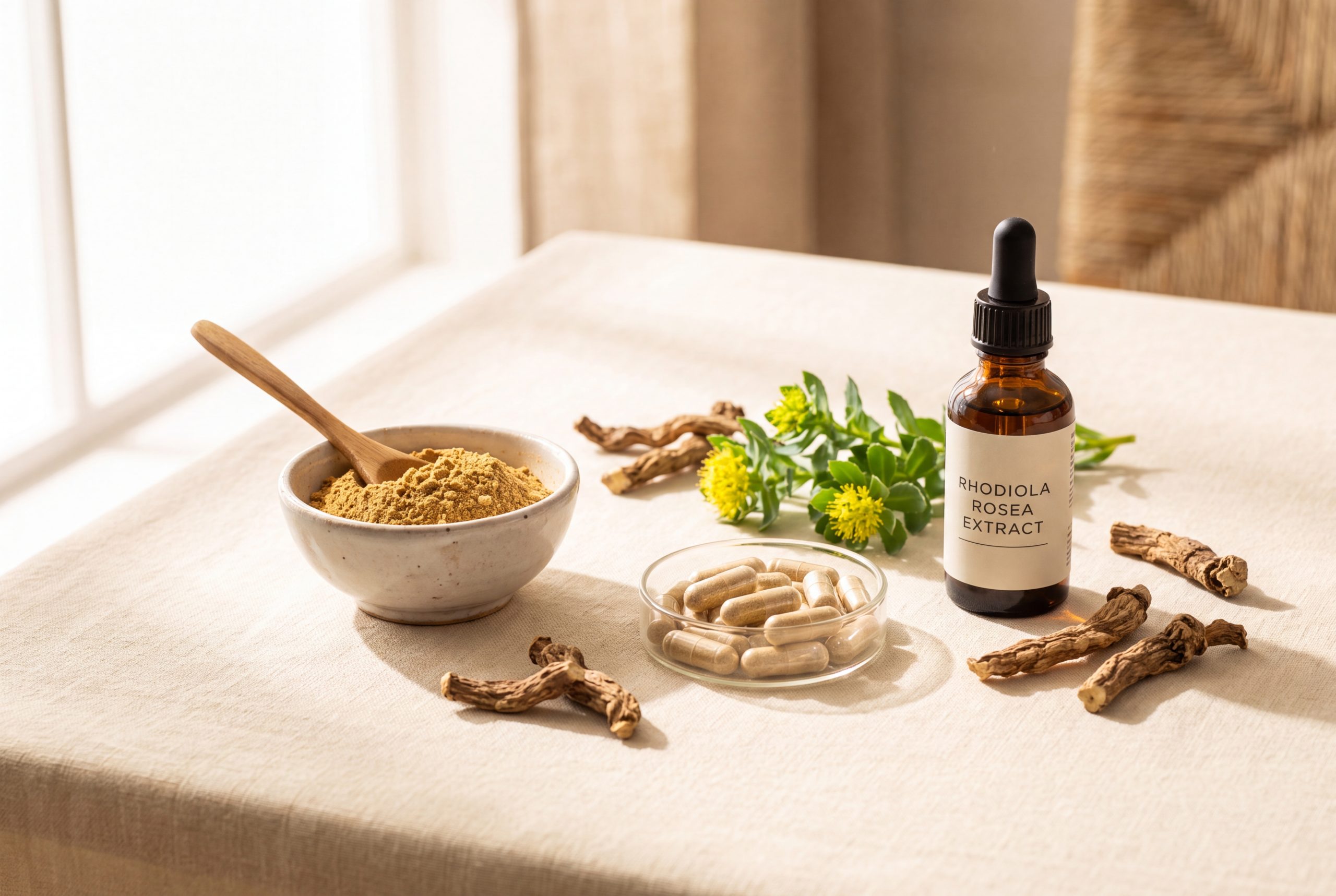
Rhodiola Formats: Powder, Capsules, and Tinctures Compared
Rhodiola rosea reaches your routine in three common forms, and the right one depends on how you prefer to dose and taste it. In our sourcing experience, the deciding factors are standardization, convenience, and how much control you want over the amount.
| Format | Best for | Trade-off |
|---|---|---|
| Powder | Flexible dosing, blending into smoothies or warm drinks | Distinct astringent taste, needs a scale for accuracy |
| Capsules | Convenience and consistent pre-measured amounts | Less flexibility to fine-tune the amount |
| Tincture | Fast, adjustable dosing by the dropperful | Contains alcohol in most preparations, strong taste |
| Whatever the format, look for extracts standardized to rosavins and salidroside and third-party tested in a cGMP-compliant facility. | ||
Whichever format you choose, the marker of quality is the same. Look for a Rhodiola rosea extract standardized to its characteristic rosavins and salidroside content, sourced from genuine high-altitude Rhodiola rosea rather than substitute species. You can explore our approach to sourcing and standardization on our Rhodiola rosea page.
Frequently Asked Questions (FAQs)
- How soon can benefits be noticed? Many individuals notice differences within a couple of weeks, although individual responses vary. Factors such as dosage, lifestyle, and overall health influence the timing of any effects.
- Can Rhodiola be taken indefinitely? Some people use it for extended periods without major issues, but periodic breaks or assessments with a healthcare provider are advisable. Monitoring ongoing health metrics can guide decisions about duration.
- Which form is best: capsule, extract, tea, or powder? The choice depends on convenience and personal preference. Capsules provide a measured dose, while extracts and teas offer alternative methods of consumption. Powders can be incorporated into foods or drinks.
- Is Rhodiola suitable for individuals with chronic illnesses? This depends on the specific illness and any medications involved. Medical consultation is recommended to confirm safety and rule out potential interactions.
- Could Rhodiola replace prescription medications? It is not a direct substitute for prescribed treatments. Individuals with medical conditions should coordinate with healthcare professionals to determine if incorporating Rhodiola is appropriate.
Conclusion
Rhodiola rosea presents a natural option for those seeking support for managing stress, enhancing energy levels, and maintaining mental focus. It has been a part of traditional practices for generations, and modern research continues to build upon that legacy. Whether consumed as a capsule, extract, tea, or powder, Rhodiola has garnered attention across diverse communities.
Individual responses to herbal interventions can differ. Making informed choices is essential, which includes consulting with a healthcare provider, conducting personal research, and adhering to dosage guidelines. Rhodiola rosea can be a valuable component of a comprehensive wellness plan, particularly for individuals interested in herbs that may support bodily systems facing mental and physical challenges.
Medical Disclaimer
These statements have not been evaluated by the Food and Drug Administration. This product is not intended to diagnose, treat, cure, or prevent any disease. Consult your healthcare provider before use, especially if you are pregnant, nursing, taking medication, or managing a health condition.