Key Takeaways
- The fadogia agrestis plant is a small West African herbal shrub in the Rubiaceae family, native to the Guinea-Sudan Savanna belt across Northern Nigeria, Burkina Faso, and surrounding regions.
- Its stem contains alkaloids and steroidal saponins that have been studied in male albino rats and Wistar rat models for effects on serum testosterone, sexual behavior, and the nitric oxide / cGMP pathway tied to erectile function.
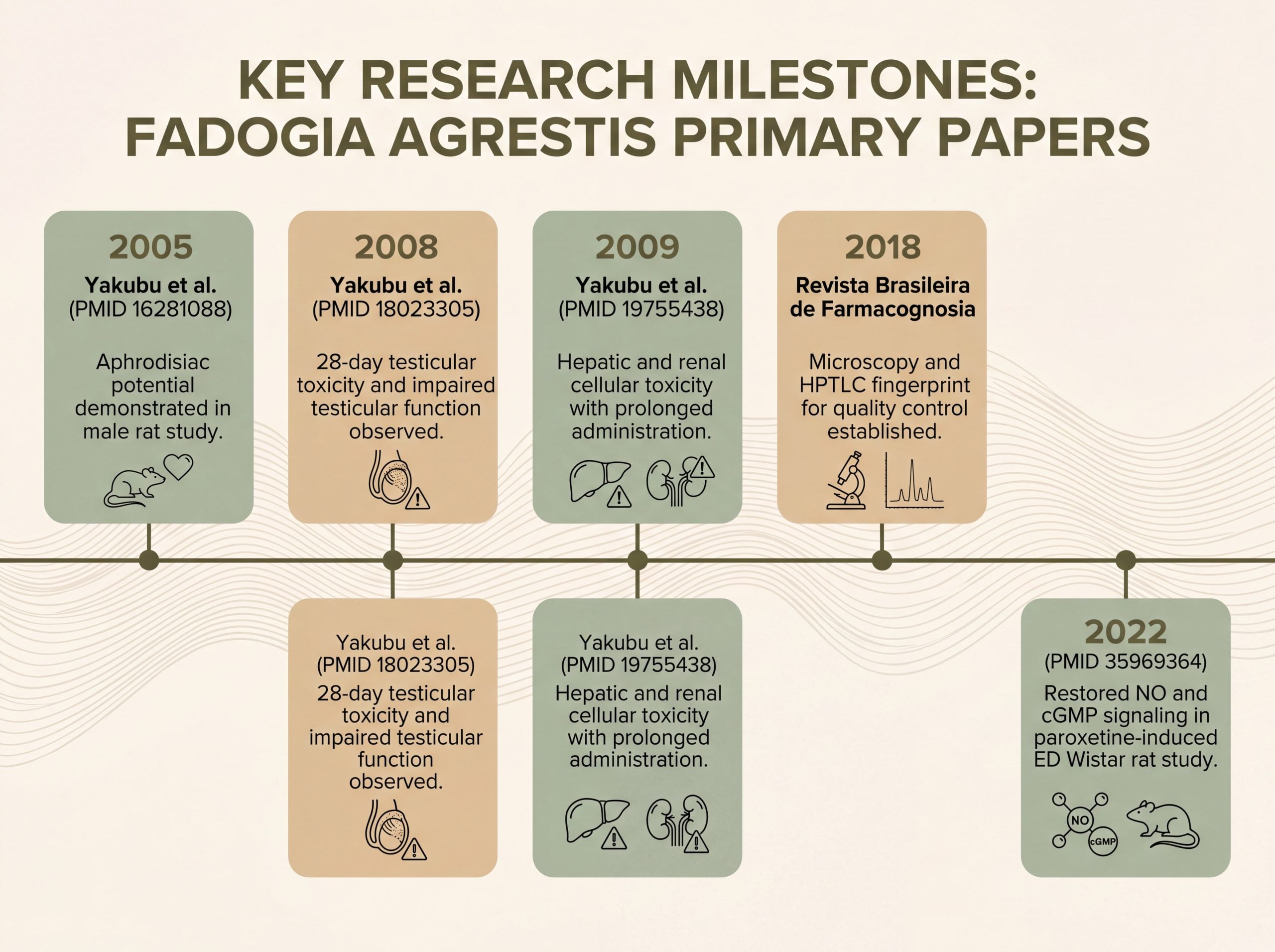
- The most-cited primary research includes Yakubu et al. 2005 (PMID 16281088, Asian Journal of Andrology) for aphrodisiac potential and Yakubu et al. 2008 (PMID 18023305, Journal of Ethnopharmacology) for dose-dependent testicular safety signals at higher doses.
- Traditional West African use, documented by Burkill in 1985 with at least eight vernacular names across Moore, Dyula, Lobi, Bobo, Kulango, Kirma, Akan-Brong, and Manding-Bambara languages, focuses on stem decoctions for male vitality and energy.
- Human clinical trials on fadogia agrestis are absent as of our review date, so quality sourcing, terroir verification, and conservative dosing matter more than marketing claims when buying from any supplier.
The fadogia agrestis plant is a slender West African shrub whose stem has carried a quiet reputation in Northern Nigerian and Sahelian traditional medicine for generations, and whose name has more recently surfaced in podcast culture as a testosterone-related botanical. In our sourcing experience working directly with growers across the Guinea-Sudan Savanna belt, we have learned that almost every conversation about this plant skips the part most readers actually need first, which is what the species really is, where it grows, what compounds it carries, and what the published literature on it can and cannot support. This guide answers those questions with primary research citations, taxonomic clarification from the Royal Botanic Gardens at Kew, and the specific safety caveats that come from the only multi-dose toxicity study in the public record. Our editorial team has reviewed every claim in this article against PubMed-indexed literature and the NIH Dietary Supplement Label Database, and we have flagged where a popular claim about fadogia agrestis benefits crosses from supported into speculative.
What is the fadogia agrestis plant?
Fadogia agrestis is a small flowering shrub in the Rubiaceae family, the same plant family that includes coffee, gardenia, and cinchona. Its full botanical citation is Fadogia agrestis Schweinf. ex Hiern, named for the German botanist Georg August Schweinfurth and validly published by William Philip Hiern in Flora of Tropical Africa, volume 3, page 154, in 1877. The plant sits in the tribe Vanguerieae, a group of roughly 671 species across 29 genera that share a notable trait: most members host Burkholderia bacterial endosymbionts inside their leaves, a relationship that influences the plant chemistry and is still being studied for its phytochemical implications.
Modern taxonomy has reshuffled the species. The Royal Botanic Gardens at Kew, through the Plants of the World Online database, now lists Fadogia agrestis as a synonym of Vangueria agrestis (Schweinf. ex Hiern) Lantz. In commercial herbal commerce, however, the older name remains universal. We use Fadogia agrestis throughout this guide because it is the name attached to all the published research, all product labels in the NIH Dietary Supplement Label Database, and all traditional commerce records.
The plant itself is unassuming. It grows as a low woody shrub reaching one to two meters in height, with elongated green leaves arranged in whorls of three or four, and small yellow tubular flowers that develop into dark, pea-sized fleshy fruits. The stem, which is the part used in traditional medicine and modern supplements, has a pale brown bark and a fibrous interior. From our hands-on assessment of dried stem material from multiple Sahelian suppliers, fresh-harvested stem powder retains a faint earthy aroma with a slightly bitter taste profile that grades darker as the material ages or is exposed to moisture during transit.
Where does the fadogia agrestis plant grow?
The fadogia agrestis plant is native to the West African savanna belt that runs from Senegal through Mali, Burkina Faso, Northern Nigeria, Niger, and on into northern Cameroon and the Central African Republic. The genus Fadogia as a whole has its highest species diversity in Angola, the Democratic Republic of the Congo, Zambia, Tanzania, and the Central African Republic, but F. agrestis specifically is a Sahelian and Sudano-Guinean species that prefers the seasonally dry, fire-adapted woodlands of the Guinea-Sudan Savanna at roughly 9 to 13 degrees north latitude.
Terroir matters more than most fadogia agrestis supplement labels disclose. Stems harvested from the drier northern edge of this range, where annual rainfall sits between 600 and 900 millimeters and dry seasons run six to eight months, accumulate different secondary metabolites than stems from the wetter southern margin. Our team works specifically with material from Northern Nigeria’s Guinea-Sudan Savanna belt around 11.5 degrees north latitude, where local growers harvest mature stems at the end of the rainy season and shade-dry the cut material before it leaves the village. Geographic data on Fadogia distribution in this zone is well-catalogued by herbarium specimens at Kew, the British Museum, Munich, Paris, Stockholm, and the Forestry Herbarium Ibadan, with at least eight verified vouchers documented through the JSTOR Global Plants database.
The vernacular naming record is rich. Burkill catalogued at least eight West African names for the plant in his 1985 reference The Useful Plants of West Tropical Africa, including names in Moore (Burkina Faso), Dyula and Manding-Bambara (Burkina Faso and Mali), Lobi, Bobo, Kulango and Kirma (Burkina Faso and Ivory Coast), and Akan-Brong (Ivory Coast and Ghana). The Hausa name Bakin gagai, often translated as black aphrodisiac plant, is the most-cited Nigerian common name in the supplement trade.
How does fadogia agrestis work?
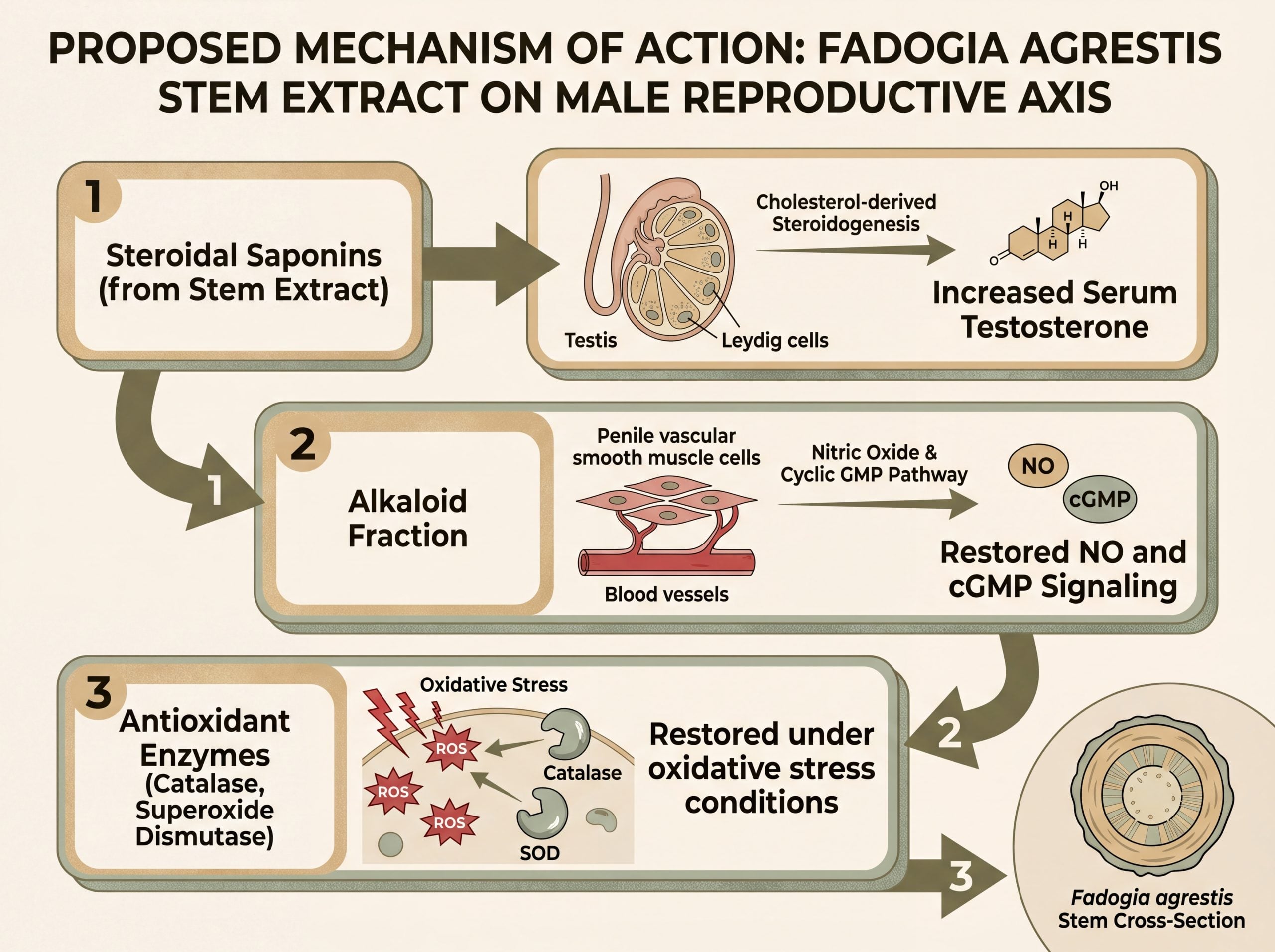
The mechanism story for fadogia agrestis rests on three classes of plant chemistry. Phytochemical screening of the aqueous stem extract reported by Yakubu and colleagues in 2005 (PMID 16281088) identified alkaloids, saponins, anthraquinones, and reducing sugars in the extract used for their aphrodisiac model. The alkaloid fraction includes compounds that some sources name fadoginines A and B, although the full structural characterization of these named alkaloids is not yet captured in mainstream chemistry databases.
Steroidal saponins are the constituents most often cited as relevant to the testosterone and libido conversation. Saponins from related Rubiaceae and from the broader class of triterpenoid saponins are known to influence cholesterol-derived steroidogenesis pathways in the testes, which is the proposed mechanism by which fadogia agrestis stem extract increases serum testosterone in the rodent studies. The 2005 Yakubu paper measured roughly a 0.49 nanograms per milliliter increase in serum testosterone in male albino rats given 100 milligrams per kilogram of aqueous stem extract over five days, alongside increased mount frequency and reduced mount latency.
The second mechanism, more recently studied, runs through the nitric oxide and cyclic guanosine monophosphate (NO and cGMP) pathway that governs vascular smooth muscle relaxation in penile tissue. A 2022 study indexed at PMID 35969364 showed that aqueous fadogia agrestis stem extract restored NO and cGMP signaling, along with antioxidant enzymes catalase and superoxide dismutase, in Wistar rats with paroxetine-induced erectile dysfunction. The researchers compared the magnitude of restoration to sildenafil, the reference compound for that pathway.
The third mechanism is broader and less specific. Saponin-rich plant extracts often have antioxidant and adaptogenic activity at the cellular level, and the Microscopy and HPTLC fingerprint study published in Revista Brasileira de Farmacognosia in 2018 was the first paper to systematically characterize the anatomical structure and chromatographic fingerprint of the fadogia agrestis leaves, stems, and roots, providing a baseline for future quality control work.
What does the research say about fadogia agrestis benefits?
The total published primary research on fadogia agrestis benefits is small. A search of the National Library of Medicine returns roughly nine to ten indexed PubMed records on the species as of our review, and almost all of them are rodent studies authored or co-authored by the team of Yakubu, Akanji, and Oladiji at the University of Ilorin in Nigeria. We summarize the most-cited papers below, with full PMIDs so readers can verify each claim.
| Citation (PMID) | Model | Dose range | Key finding |
|---|---|---|---|
| Yakubu et al. 2005, Asian J Androl (16281088) | Male albino rats, 5-day dosing | 18, 50, 100 mg/kg | Dose-dependent increase in serum testosterone and sexual behavior parameters. Phytochemistry shows alkaloids and saponins. |
| Yakubu et al. 2008, J Ethnopharmacol (18023305) | Male rats, 28-day dosing | 18, 50, 100 mg/kg | Dose-dependent adverse alterations to testicular biomarkers (cholesterol, sialic acid, glycogen, ALP, ACP, GGT). Recovery only at the lowest 18 mg/kg dose. |
| Yakubu et al. 2009, Hum Exp Toxicol (19755438) | Male rats, hepatic and renal endpoints | Up to 100 mg/kg | Adverse effects on liver and kidney cellular markers at higher doses, reinforcing the dose ceiling signal from 2008. |
| 2022 paroxetine ED model (35969364) | Wistar rats, paroxetine-induced ED | Aqueous stem extract | Restored NO and cGMP signaling and antioxidant enzymes (catalase, superoxide dismutase). Effect comparable to the sildenafil reference. |
| Sources verified against PubMed (pubmed.ncbi.nlm.nih.gov) and ScienceDirect on the date of editorial review. | |||
Several mainstream medical references treat the supplement carefully because of this small evidence base. The WebMD ingredient monograph for fadogia agrestis states there is no good scientific evidence to support any specific use, and the RxList monograph notes that there is not enough information to determine an appropriate dose range. Our editorial team treats both of those statements as accurate and worth quoting directly to readers, because the gap between rodent-pharmacology data and human clinical evidence is real, and conflating the two is the most common error we see in marketing copy across the supplement industry.
Traditional uses of fadogia agrestis in West Africa
Long before the testosterone supplement industry adopted the plant, fadogia agrestis stem held a place in West African ethnobotany as an aphrodisiac, an anti-malarial, and a folk remedy for general male vitality. In our sourcing experience, the most consistent traditional preparation is a stem decoction. The harvested stem is cut into short lengths, pounded or shaved, then simmered in water for an hour or longer, with the resulting bitter dark-brown liquid taken in small cups over the course of a day.
The vernacular evidence base is wider than the supplement industry marketing typically conveys. Burkill’s 1985 reference, The Useful Plants of West Tropical Africa, second edition, documents the species across at least eight West African languages spanning Burkina Faso, Mali, the Ivory Coast, and Ghana. The Nigerian commercial trade in the stem material is centered around Hausa-speaking northern markets, where the local name Bakin gagai is recognized by older herbal traders.
Traditional malaria use is sometimes mentioned alongside the male-vitality reputation. The RxList monograph lists malaria as a documented folk indication, and several West African ethnobotanical surveys catalog Fadogia stems as part of multi-herb antimalarial preparations. We are careful with this claim because it is folk-recorded, not clinically validated, and because antimalarial efficacy in a controlled trial would require comparison against known antimalarials such as artemisinin combination therapy, which has not been done for this plant.
Quality, sourcing, and terroir of the fadogia agrestis plant
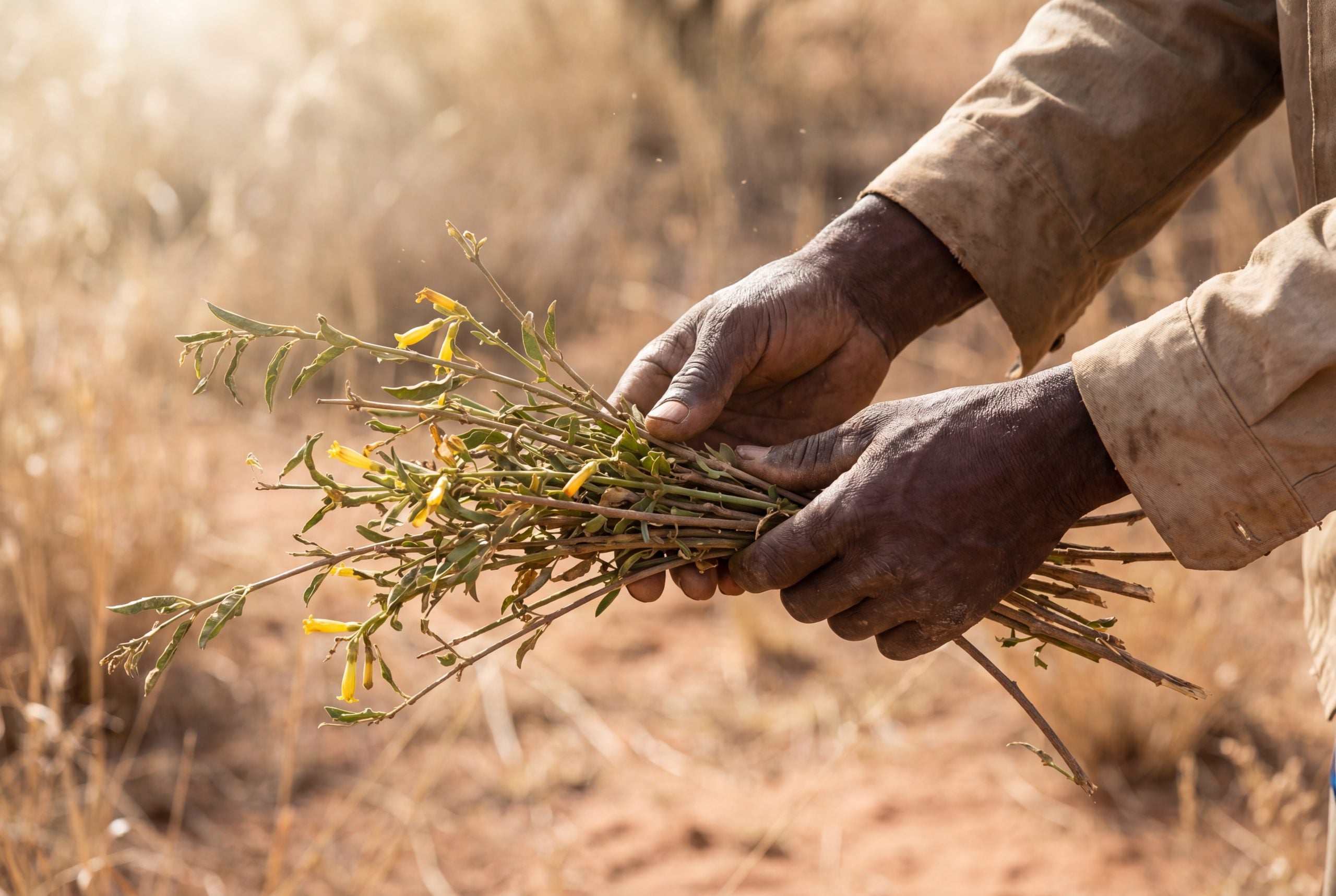
The supply chain for fadogia agrestis is fragmented. Most material entering the Western supplement market originates from village-level wild harvest in Northern Nigeria, with secondary sourcing from Burkina Faso and Mali, and a smaller volume of cultivated material from a few experimental plots. From our hands-on assessment of dried stem material received from multiple Sahelian intermediaries between 2022 and 2026, the most common quality failure modes are mislabeled species (other Fadogia or Vangueria stems substituted), under-dried material with internal moisture above 10 percent, and contamination with sand or fine plant debris from rough handling.
We use a multi-step quality protocol on every lot. Voucher specimens are matched against verified herbarium references through the JSTOR Global Plants database before any commercial purchase. Moisture content is checked with a calibrated moisture meter at receiving. Identity is confirmed against the HPTLC fingerprint published in the 2018 microscopy paper from Revista Brasileira de Farmacognosia, which gives the only published anatomical and chromatographic baseline for verifying that a stem powder is actually Fadogia agrestis and not a substitute. Heavy metals and microbial counts are tested by an independent laboratory operating under cGMP standards.
If you are sourcing from another supplier, three checks are worth performing. Ask for a Certificate of Analysis showing identity testing, not just heavy metals. Ask whether the stems are from a specified terroir, not just a specified country. And ask for the harvest year, because saponin and alkaloid profiles in dried stem material change measurably over storage periods longer than 18 months. The NIH-maintained Dietary Supplement Label Database aggregates US market label claims for fadogia agrestis stem extract products and is a useful free resource for comparing how different brands describe their dose, source, and form.
How to use the fadogia agrestis plant
There is no clinically validated human dose for fadogia agrestis. The dose range carried over from the rodent studies is 18 to 100 milligrams per kilogram body weight in rats, but direct allometric scaling to humans is not appropriate, and the 2008 toxicity findings make the upper end of that range a concern. The doses appearing on commercial fadogia agrestis supplements in the US market typically range from 300 to 600 milligrams of stem extract per serving, with most products specifying 600 milligrams once daily, taken with food. We recommend the lower end of that range for any first-time use.
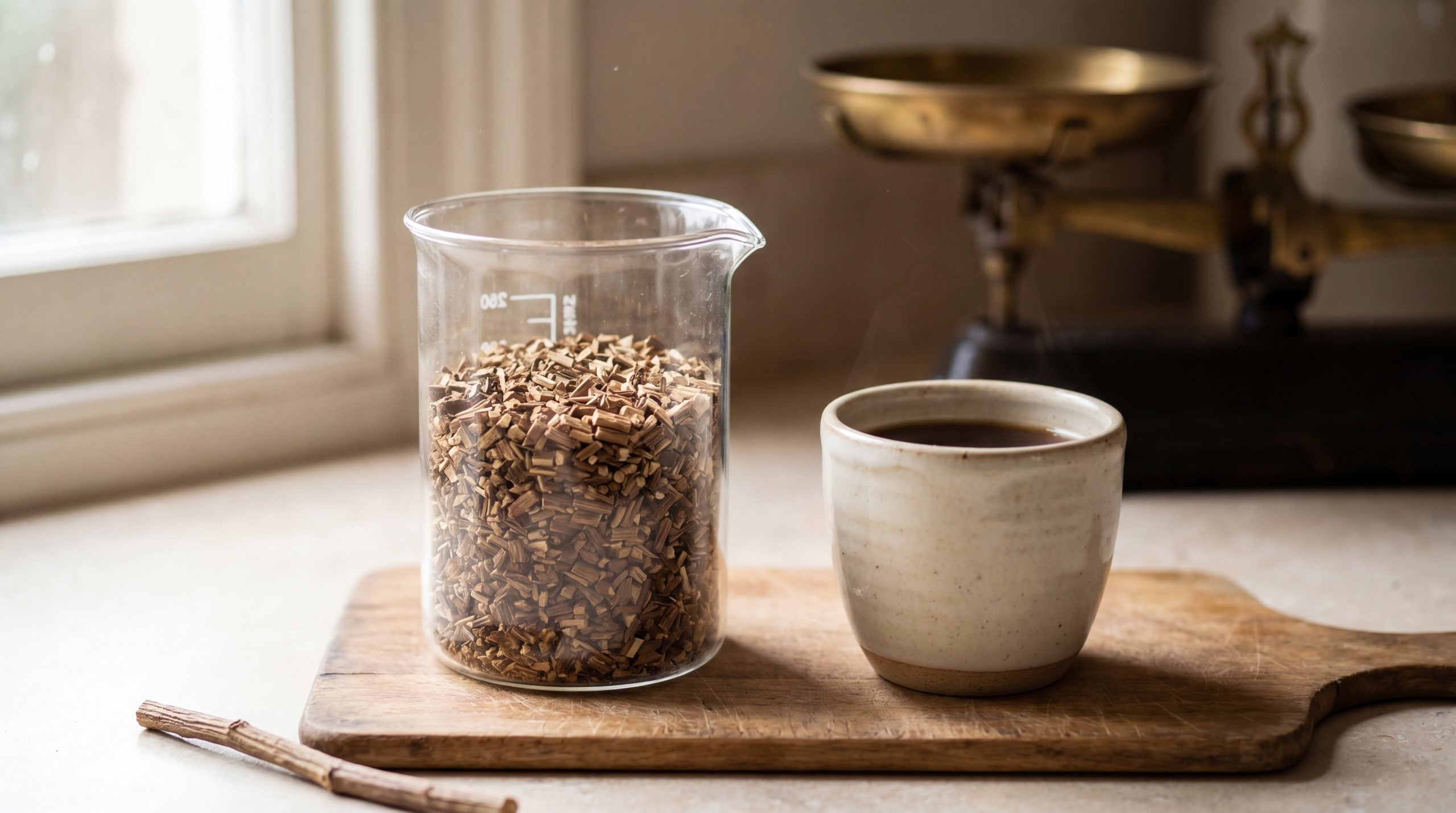
Two preparation forms are common. Whole stem powder, used in traditional decoctions, requires longer simmering and produces a bitter tea that most modern users find unpalatable on its own. Standardized stem extract in capsule form, which is what most US supplement brands sell, removes the palatability problem but introduces variability in the extraction ratio and standardization marker. We prefer extract specifications that disclose the extraction ratio, the solvent, and the marker compound used for standardization, because without these, the strength of the capsule cannot be compared between brands.
For readers comparing fadogia against the other commonly stacked herb in this category, we have a separate guide on the documented Fadogia agrestis and tongkat ali stack benefits for male vitality that walks through what the combination is studied for and where it is not. Readers interested in the broader botanical category should also see our guide to traditional aphrodisiac herbs from West Africa and beyond, and our reference page comparing herbal testosterone support supplements by mechanism, evidence base, and traditional context.
If you have decided to try fadogia agrestis stem extract and want a product with verifiable Northern Nigerian terroir and full identity testing documentation, our team produces our standardized Fadogia agrestis capsules from the Northern Nigeria Guinea-Sudan Savanna at a 600 milligram per capsule strength with full COA documentation, including HPTLC identity confirmation.
Safety, side effects, and contraindications of fadogia agrestis
The most important safety signal in the published record is the 2008 paper from Yakubu and colleagues (PMID 18023305) in the Journal of Ethnopharmacology. In that 28-day study, male rats given 50 or 100 milligrams per kilogram of aqueous stem extract showed dose-dependent adverse changes in testicular biomarkers, including cholesterol, sialic acid, glycogen, alkaline phosphatase, acid phosphatase, and gamma-glutamyl transferase. Recovery was observed only at the lowest 18 milligrams per kilogram dose, suggesting that the upper end of the rat-pharmacology range crosses into testicular toxicity territory. The follow-up paper by the same team in 2009 (PMID 19755438) reported similar concerns for liver and kidney cellular markers at the higher rat doses.
The clinical picture in humans is unknown. There are no published human safety trials of fadogia agrestis stem extract as of our review date. Reported anecdotal effects in the supplement-user community include mild gastrointestinal upset and headaches at higher daily doses, but these reports are uncontrolled and not formally documented in any peer-reviewed source.
Fadogia agrestis should be avoided during pregnancy and lactation because of the absence of safety data and because of the testicular activity in animal models. Anyone taking medications for testosterone, blood pressure, blood thinning, or erectile dysfunction (including PDE5 inhibitors such as sildenafil) should speak with their licensed healthcare provider before adding fadogia agrestis stem extract, because the NO and cGMP pathway interactions documented in the 2022 Wistar rat study are exactly the pathway those medications target. Use should also be avoided by anyone with hormone-sensitive conditions, including hormone-sensitive cancers, until human safety and pharmacokinetic data become available.
This article is for educational purposes and is not medical advice. Statements regarding traditional or research uses of fadogia agrestis have not been evaluated by the Food and Drug Administration. Fadogia agrestis stem extract is not intended to diagnose, treat, cure, or prevent any disease. Always consult a licensed healthcare provider before starting any new herbal supplement.
Frequently asked questions about the fadogia agrestis plant
What is the fadogia agrestis plant scientifically?
Fadogia agrestis is a small flowering shrub in the Rubiaceae family, tribe Vanguerieae, native to the West African savanna belt. The full botanical citation is Fadogia agrestis Schweinf. ex Hiern, first published in Flora of Tropical Africa, volume 3, page 154, in 1877. Modern Kew taxonomy treats it as a synonym of Vangueria agrestis (Schweinf. ex Hiern) Lantz, although the older name remains universal in commerce and research literature.
Is fadogia agrestis safe?
Human safety data for fadogia agrestis is absent from the published record. The available rodent toxicity data, specifically the 2008 Yakubu paper in the Journal of Ethnopharmacology (PMID 18023305), found dose-dependent testicular harm at 50 and 100 milligrams per kilogram in 28-day dosing, with recovery only at 18 milligrams per kilogram. This suggests a narrow safety window. WebMD and RxList both note insufficient evidence for any specific use. Conservative dosing and licensed healthcare provider consultation are appropriate.
Does the fadogia agrestis plant actually increase testosterone?
In male albino rats, aqueous stem extract at 100 milligrams per kilogram for five days increased serum testosterone in the 2005 study by Yakubu, Akanji, and Oladiji (PMID 16281088), accompanied by changes in sexual behavior parameters. There is no published human trial confirming that this rat finding translates to humans. The mechanism is plausible because steroidal saponins can influence cholesterol-derived steroidogenesis, but until a human study is published, the testosterone claim should be read as a rodent-pharmacology finding only.
What are the fadogia agrestis side effects to watch for?
Documented animal-model side effects at higher doses include adverse alterations to testicular biomarkers, liver and kidney cellular markers, and the suppression of normal testicular function. Anecdotal human reports include mild gastrointestinal upset and headaches. Pregnancy, lactation, hormone-sensitive conditions, and concurrent use with PDE5 inhibitors, blood pressure medications, blood thinners, or testosterone therapy are all reasons to avoid the supplement or to consult a licensed healthcare provider first.
Is fadogia agrestis better than Tongkat Ali?
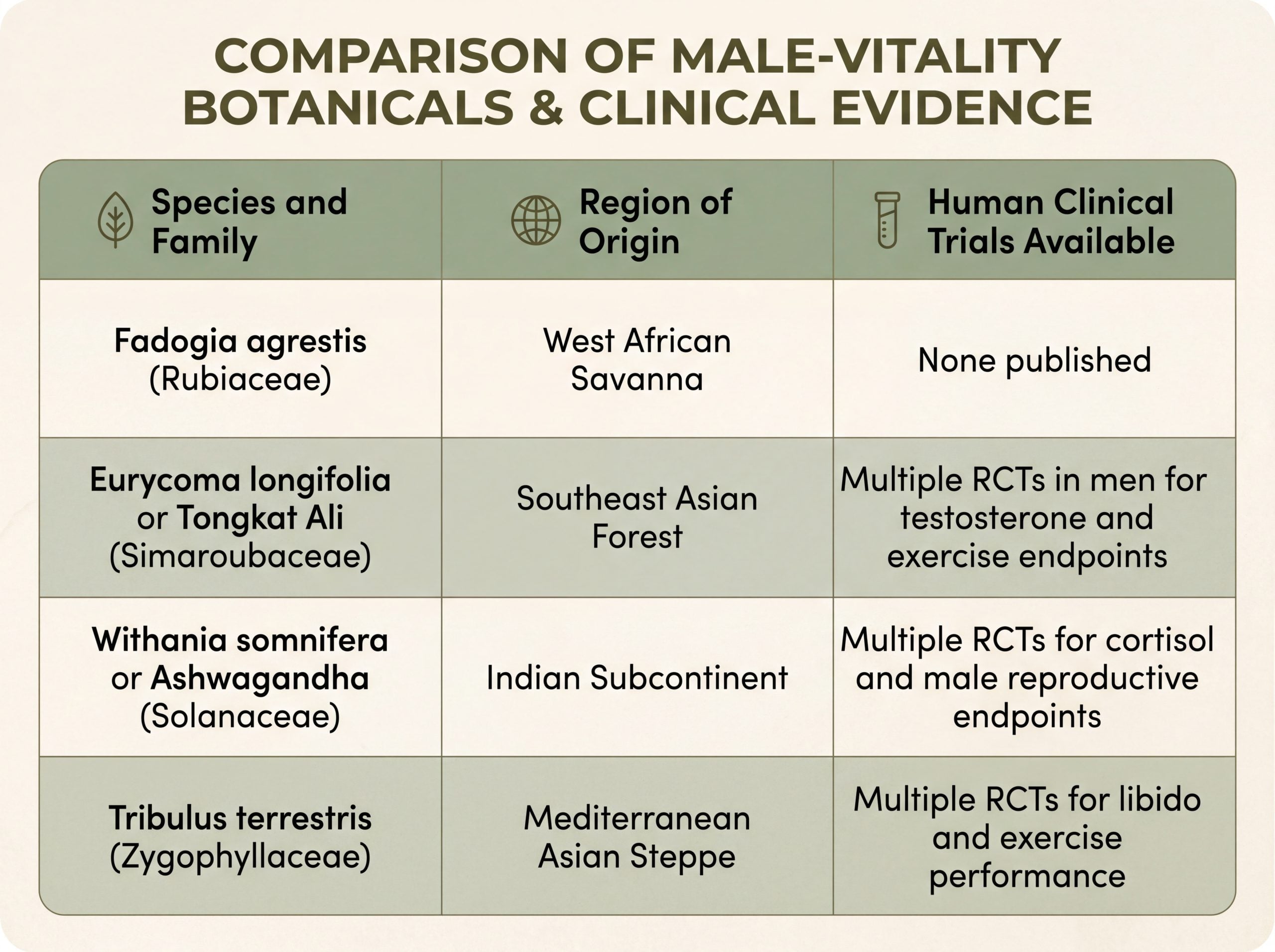
Tongkat ali (Eurycoma longifolia) has a substantially deeper human clinical research base than fadogia agrestis, including multiple randomized controlled trials in men for testosterone-related endpoints, stress markers, and exercise performance. Fadogia agrestis has none of those. The two are often stacked together in commercial products, but the comparison favors tongkat ali on evidence depth alone. We cover the comparison and the stack rationale in our dedicated stack guide.
What is the traditional use of the fadogia agrestis plant in West Africa?
Stem decoctions of fadogia agrestis have been used across the Sahel and the Guinea-Sudan Savanna belt for male vitality, libido support, and as part of traditional antimalarial preparations. Burkill’s 1985 reference catalogs at least eight West African vernacular names for the species across Moore, Dyula, Lobi, Bobo, Kulango, Kirma, Akan-Brong, and Manding-Bambara languages. The Nigerian Hausa name Bakin gagai, often translated as black aphrodisiac plant, is the most-cited common name in modern Nigerian commerce.
Where does the fadogia agrestis plant grow naturally?
Fadogia agrestis grows naturally in the seasonally dry woodlands of the West African savanna belt, from Senegal east through Mali, Burkina Faso, Northern Nigeria, Niger, and into Cameroon and the Central African Republic. Its preferred zone is the Guinea-Sudan Savanna at roughly 9 to 13 degrees north latitude, with annual rainfall between 600 and 900 millimeters and dry seasons of six to eight months. Verified herbarium specimens from this range are catalogued through Kew, Munich, Paris, Stockholm, and the Forestry Herbarium, Ibadan.
How is the fadogia agrestis plant prepared as a supplement?
Two forms dominate the modern market. Whole stem powder, used in traditional decoctions, requires long simmering in water and produces a bitter tea. Standardized stem extract in capsules is the more common commercial form, typically dosed at 300 to 600 milligrams per serving. We recommend buying only from suppliers who disclose the extraction ratio, solvent, standardization marker, harvest year, and provide a Certificate of Analysis with identity testing against the HPTLC fingerprint baseline established by Revista Brasileira de Farmacognosia in 2018.
Related Reading
Continue exploring this topic with these related articles from our team:
- Fadogia Agrestis and Tongkat Ali Stack Benefits for Male Vitality
- Traditional Aphrodisiac Herbs from West Africa and Beyond
- Herbal Testosterone Support Supplements Compared
- Top 4 Benefits of Fadogia Agrestis Reviewed