Hashimoto’s Thyroiditis is an autoimmune disease that affects the thyroid gland. In this condition, the immune system mistakenly attacks the thyroid tissue, leading to inflammation. This chronic inflammation disrupts the thyroid’s ability to produce essential hormones, resulting in an underactive thyroid, also known as hypothyroidism.
Symptoms of Hashimoto’s can vary but often include fatigue, unexplained weight gain, increased sensitivity to cold, dry skin, hair loss, and muscle weakness. If you experience any of these symptoms, it is important to consult a healthcare provider for proper diagnosis and management.
Diagnosing Hashimoto’s involves a combination of blood tests and a physical examination. Blood tests will assess thyroid hormone levels (TSH, T3, T4) and check for the presence of thyroid antibodies, specifically thyroid peroxidase antibodies (TPOAb) and thyroglobulin antibodies (TgAb). A physical examination helps the healthcare provider evaluate the size and texture of the thyroid gland.
Treatment for Hashimoto’s typically involves managing symptoms and restoring hormonal balance. The primary medication is levothyroxine, a synthetic thyroid hormone that replaces the hormones your body is not producing adequately. Regular monitoring of hormone levels through blood tests is vital to ensure the correct dosage of levothyroxine and achieve optimal results. Lifestyle modifications, such as a nutrient-rich diet and stress reduction techniques (yoga, meditation), can also play a supportive role in managing the condition.
The Impact of Stress and Inflammation in Hashimoto’s
Chronic stress and inflammation are significant factors in the development and progression of Hashimoto’s Thyroiditis. The immune system’s attack on the thyroid gland triggers an inflammatory response. This ongoing inflammation damages thyroid tissue, impairing its ability to function correctly.
Stress plays a dual role. First, it can exacerbate the autoimmune response, worsening the attack on the thyroid. Second, chronic stress disrupts the hypothalamic-pituitary-adrenal (HPA) axis, the body’s central stress response system. The HPA axis involves the hypothalamus and pituitary gland in the brain, as well as the adrenal glands located above the kidneys.
When the body experiences stress, the hypothalamus releases corticotropin-releasing hormone (CRH), which stimulates the pituitary gland to release adrenocorticotropic hormone (ACTH). ACTH then prompts the adrenal glands to produce cortisol, the primary stress hormone. In healthy individuals, cortisol levels rise during stress and return to normal afterward. However, in chronic stress, the HPA axis becomes dysregulated, leading to persistently elevated cortisol levels.
High cortisol levels can interfere with thyroid hormone production and conversion. Cortisol can inhibit the conversion of T4 (the inactive form of thyroid hormone) to T3 (the active form), leading to lower levels of active thyroid hormone in the body. This can worsen hypothyroid symptoms, even if someone is taking levothyroxine.

Introduction to Rhodiola
Rhodiola, scientifically known as Rhodiola rosea, is an adaptogenic herb with a history of use in traditional medicine. Also called golden root or Arctic root, it grows in cold, mountainous regions of Europe and Asia. Adaptogens are natural substances that help the body adapt to stress and maintain balance.
The medicinal properties of Rhodiola rosea are attributed to its active compounds, including rosavin, salidroside, and tyrosol. These compounds are believed to support mental clarity, enhance energy, and promote emotional well-being. Rhodiola rosea has been used to combat fatigue and boost energy levels. By stimulating ATP (adenosine triphosphate) production, the cellular energy currency, this herb can enhance physical endurance and mental performance.
Historically, various cultures recognized Rhodiola’s therapeutic properties. Ancient Chinese healers utilized its immune-supporting capabilities, while Scandinavian communities relied on it to combat fatigue caused by harsh climates.
Rhodiola and Hashimoto’s Thyroiditis: Connecting the Mechanisms
Research suggests that Rhodiola’s potential benefits for thyroid health, particularly in the context of Hashimoto’s, stem from its ability to modulate the HPA axis, reduce inflammation, and provide antioxidant support.
- HPA Axis Modulation: As discussed earlier, chronic stress and elevated cortisol levels can negatively impact thyroid function. Rhodiola rosea helps regulate the HPA axis, preventing excessive cortisol production. By reducing cortisol levels, Rhodiola helps maintain a more balanced hormonal environment, supporting optimal thyroid function. A study published in Phytotherapy Research found that Rhodiola extract reduced stress markers in participants.
- Anti-inflammatory Effects: Hashimoto’s is characterized by chronic inflammation of the thyroid gland. Rhodiola rosea possesses anti-inflammatory properties, which may help mitigate this thyroid damage. While direct studies on Rhodiola and Hashimoto’s are limited, research on other inflammatory conditions shows promising results. For example, a study published in the journal Phytomedicine demonstrated the anti-inflammatory effects of Rhodiola in cell cultures.
- Immune System Support: In autoimmune conditions like Hashimoto’s, regulating immune function is important for symptom management. Research indicates that compounds in Rhodiola rosea may have immunomodulatory capabilities, potentially aiding in balancing the immune responses involved in autoimmunity.
- Antioxidant Support: Oxidative stress, an imbalance between free radicals and antioxidants, contributes to thyroid cell damage in Hashimoto’s. Rhodiola rosea contains compounds that act as antioxidants, protecting cells from this damage. A study in the Journal of Agricultural and Food Chemistry highlighted the antioxidant activity of Rhodiola extracts.
- Supporting Thyroid Hormone Levels: Some research suggests Rhodiola may influence thyroid hormone levels. A study published in Phytomedicine (mentioned in your original draft) showed that Rhodiola extract improved symptoms in patients with subclinical hypothyroidism, a condition with slightly elevated TSH but normal T4 levels. While this isn’t Hashimoto’s specifically, it suggests a potential for supporting thyroid hormone balance. More research is needed in this area.
It is worth being clear about what the research does and does not show. Most human studies of rhodiola have looked at stress and fatigue in generally healthy people rather than at Hashimoto’s specifically, and the National Center for Complementary and Integrative Health describes the overall human evidence as low-to-moderate quality. Within that limit, the findings are still relevant to how people with Hashimoto’s actually feel day to day. In a randomized, double-blind, placebo-controlled trial, a standardized rhodiola extract lowered the cortisol response to morning awakening stress in people with stress-related fatigue and improved their ability to concentrate (Olsson et al., 2009, Planta Medica, PMID: 19016404). Because chronic stress and elevated cortisol can worsen how an underactive thyroid feels, that HPA-axis effect is the mechanism most often connected to rhodiola in this context. Separately, laboratory research on salidroside, one of rhodiola’s active compounds, has shown it can dampen pro-inflammatory signaling molecules such as TNF-alpha and interleukin-6 in cell and animal models (Guan et al., 2011, PMID: 22019446). That inflammation work is preclinical and does not prove a benefit in people with Hashimoto’s, but it helps explain why the herb is studied for stress-related conditions at all. For a balanced consumer overview of what is and is not established, the NCCIH summary is a useful starting point (NCCIH: Rhodiola), and the American Thyroid Association explains the autoimmune basis of Hashimoto’s itself (American Thyroid Association: Hashimoto’s Thyroiditis).
Potential Benefits of Rhodiola for Hashimoto’s Symptoms
Beyond its potential effects on the underlying mechanisms of Hashimoto’s, Rhodiola rosea may offer benefits for managing specific symptoms:
- Combating Fatigue: Fatigue is a common and debilitating symptom of Hashimoto’s. Rhodiola rosea’s ability to enhance energy production and reduce fatigue can be particularly helpful. Research in the International Journal of Sports Nutrition and Exercise Metabolism showed that Rhodiola supplementation improved exercise performance in trained individuals.
- Improving Cognitive Function: Many individuals with Hashimoto’s experience “brain fog,” difficulty concentrating, and memory problems. Rhodiola rosea may improve mental clarity and focus. A clinical trial in the Journal of Psychopharmacology observed improvements in concentration among participants receiving Rhodiola extracts.
- Supporting Mood: Hashimoto’s is often associated with mood changes, including anxiety and depression. Rhodiola rosea may have mood-supporting effects. Some evidence suggests it can positively influence mood and emotional well-being, potentially alleviating symptoms of anxiety and depression.
Rhodiola for Brain Fog and Mental Clarity in Hashimoto’s
Brain fog is one of the most frustrating parts of living with an underactive thyroid. The slow recall, the loss of focus partway through a task, the mental tiredness that arrives by mid-afternoon. Rhodiola is one of the better-studied herbs for exactly this kind of mental fatigue. In a double-blind, placebo-controlled crossover study of physicians working demanding night shifts, a standardized rhodiola extract improved measures of associative thinking, short-term memory, concentration, and speed of perception during fatigue (Darbinyan et al., 2000, Phytomedicine, PMID: 11081987). A separate placebo-controlled study of students under exam stress found a similar antifatigue and mental-performance effect on a low repeated dose (Spasov et al., 2000, Phytomedicine, PMID: 10839209), and a dose-comparison trial reported gains in capacity for mental work (Shevtsov et al., 2003, Phytomedicine, PMID: 12725561). None of these trials enrolled people with Hashimoto’s, so we describe them as supportive context rather than proof. Still, the symptom they measured, stress-driven mental fatigue, is the same symptom many of our customers with Hashimoto’s are trying to manage.
Rhodiola vs. Other Adaptogens for Hashimoto’s
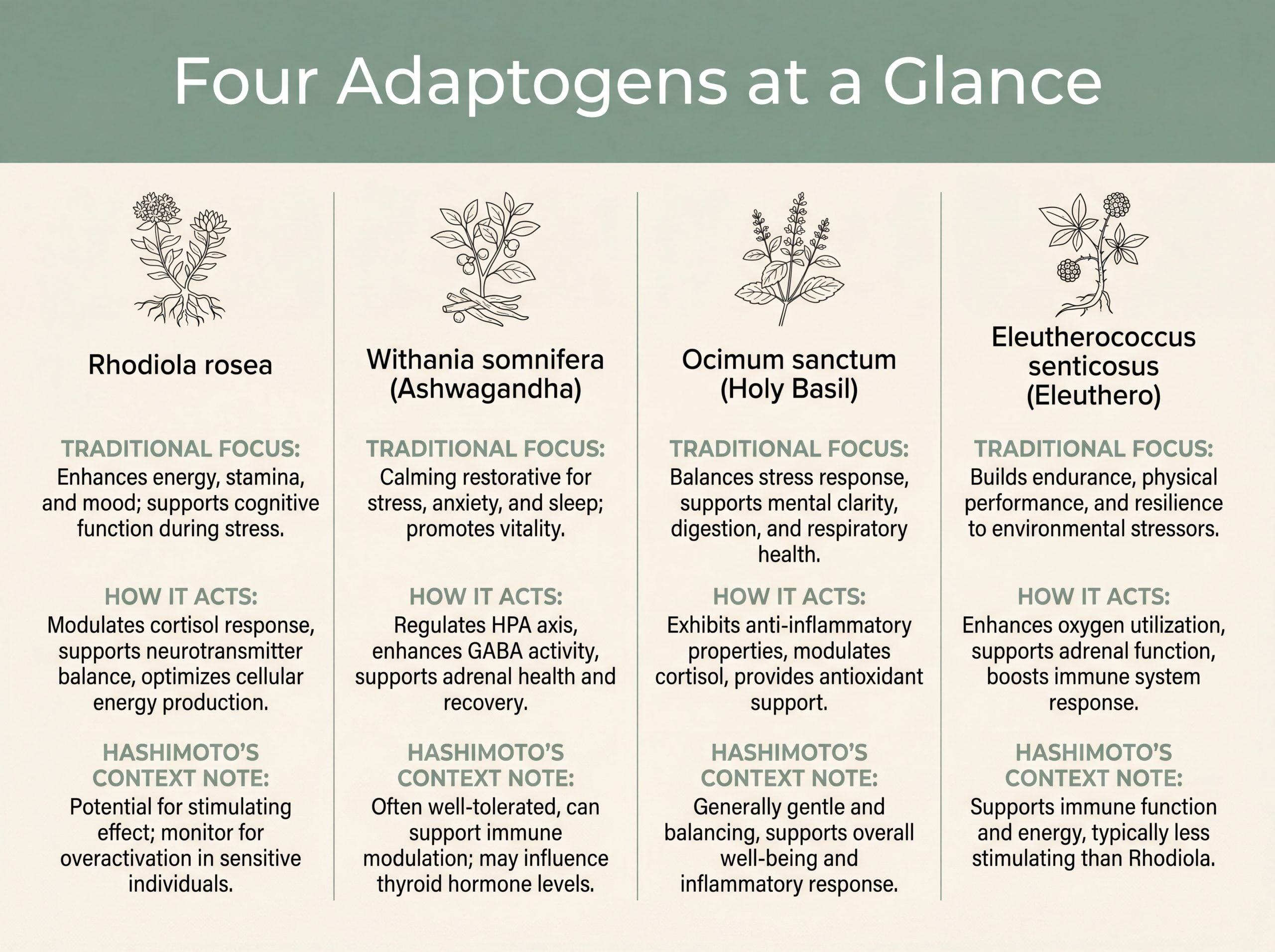
One of the most common questions our editorial team hears is how rhodiola compares to other adaptogens when thyroid health is the concern. The short answer from our reading of the literature is that adaptogens are not interchangeable. They act on different parts of the stress-response system, and that difference matters for people managing Hashimoto’s thyroiditis.
Rhodiola vs. ashwagandha for thyroid support
Rhodiola rosea works mainly on the HPA axis, the hormonal pathway that governs cortisol output, rather than acting directly on thyroid hormone production (Panossian et al., 2010, Phytomedicine, PMID: 20378318). Ashwagandha (Withania somnifera) is sometimes approached with more caution in autoimmune thyroid situations, because it has been observed to influence thyroid hormone levels and immune activity. That does not make ashwagandha unsuitable for everyone, but it is the reason many people with Hashimoto’s ask their healthcare provider which adaptogen fits their individual case before combining either one with thyroid medication. In our sourcing experience, this is the single most useful distinction to understand before choosing.
Where holy basil and eleuthero fit
Holy basil (Ocimum sanctum, also called tulsi) is a warming adaptogen used in Ayurveda and is often chosen for its traditional association with a calm, balanced mood. Eleuthero (Eleutherococcus senticosus), once called Siberian ginseng, is traditionally used to support stamina and resilience during periods of physical demand. Neither is a substitute for rhodiola, and like rhodiola, neither is a treatment for thyroid disease. The table below summarizes how our team thinks about these four adaptogens side by side.
| Adaptogen | Latin binomial | Primary traditional focus | Note for Hashimoto’s context |
|---|---|---|---|
| Rhodiola | Rhodiola rosea | Mental fatigue, stress resilience | Acts on the HPA axis and cortisol signaling, not directly on thyroid hormone |
| Ashwagandha | Withania somnifera | Calm, sleep, stress | May influence thyroid hormone and immune activity, so discuss with your provider first |
| Holy basil (tulsi) | Ocimum sanctum | Balanced mood, daily stress | Traditional Ayurvedic adaptogen with limited thyroid-specific human data |
| Eleuthero | Eleutherococcus senticosus | Stamina, physical resilience | Traditionally used for endurance, not a thyroid treatment |
| Adaptogen classification and stress-protective mechanisms reviewed in Panossian and Wikman (2009), PMID: 19500070. This table is educational and is not medical advice. | |||
How to Use Rhodiola Safely and Effectively
Using Rhodiola rosea as a supportive therapy for Hashimoto’s Thyroiditis requires careful consideration and guidance from a healthcare professional.
- Consult Your Healthcare Provider: Before starting any new supplement, including Rhodiola, consult your healthcare provider, especially if you have Hashimoto’s or any other medical condition. They can assess your individual needs, determine if Rhodiola is appropriate, and monitor for potential interactions with medications.
- Dosage: Typical dosage ranges for Rhodiola rosea extract (standardized to at least 3% rosavins and 1% salidrosides) are 200-600 mg per day. It’s generally recommended to start with a lower dose (100-200 mg) and gradually increase if needed, under the guidance of your healthcare provider.
- Timing: Due to its energizing effects, it’s best to take Rhodiola rosea in the morning or early afternoon. Avoid taking it close to bedtime, as it may interfere with sleep.
- Cycling: Some experts recommend “cycling” Rhodiola, meaning taking breaks from supplementation. A common approach is to take it for several weeks, followed by a week or two off, then resuming. This may help prevent tolerance.
- Monitoring: Pay attention to how your body responds to Rhodiola. Keep track of any changes in your energy levels, mood, stress resilience, and thyroid function markers (through regular check-ups and blood tests with your healthcare provider).
Combining Rhodiola with Thyroid Medication and Other Supplements
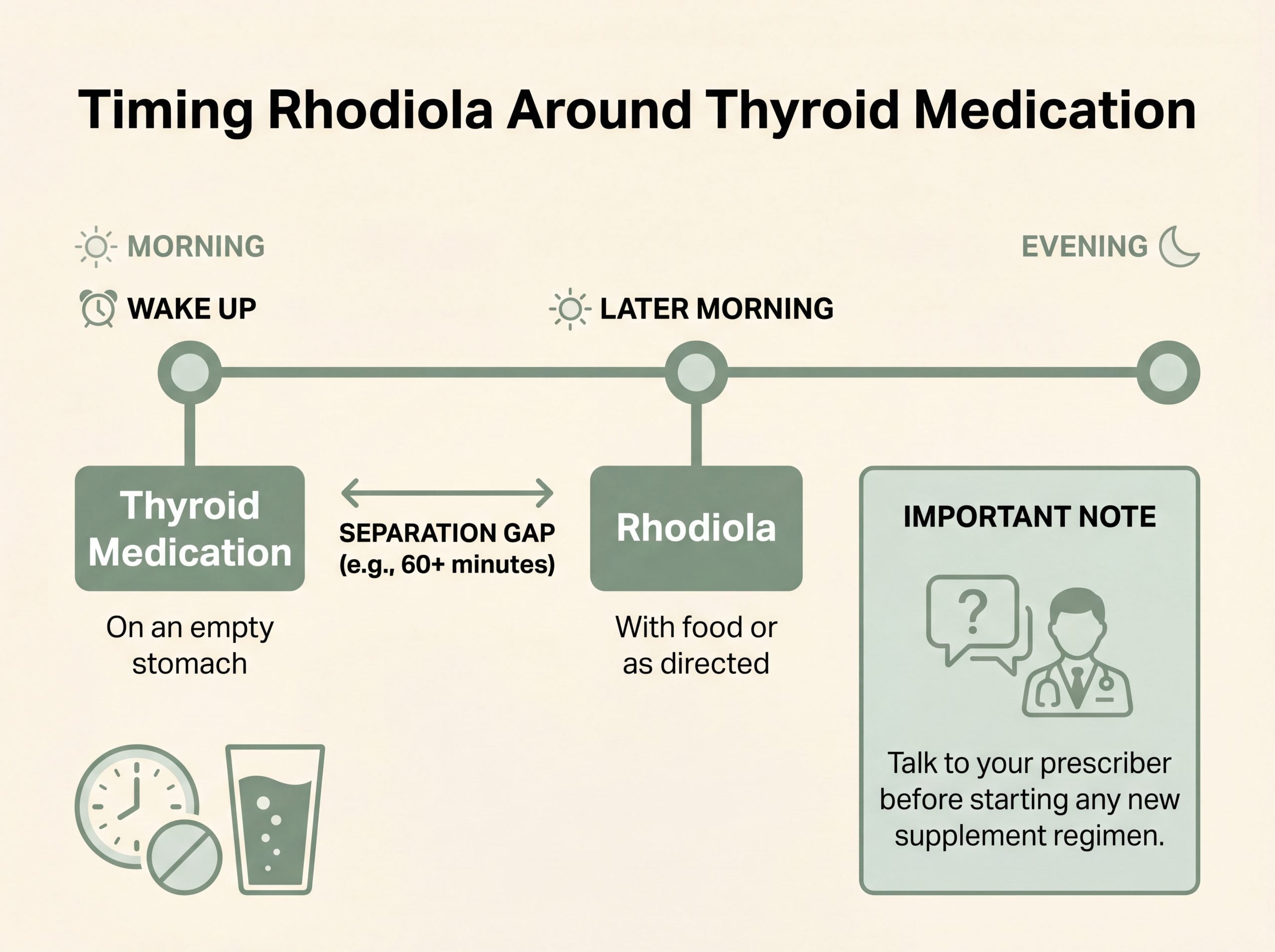
If you take levothyroxine or another thyroid medication, timing is the practical issue to get right. Thyroid medication is typically taken on an empty stomach, and many supplements are best kept separate from that dose so they do not interfere with absorption. A common approach our team has seen people use is taking rhodiola in the morning well apart from the thyroid dose, but the right schedule is a conversation for you and your prescriber, not a fixed rule. The National Center for Complementary and Integrative Health notes that rhodiola has a reported interaction with losartan, a blood-pressure medication, which is one more reason to review your full medication list with a professional before adding it (NCCIH: Rhodiola, Usefulness and Safety).
People focused on thyroid wellness sometimes pair rhodiola with selenium, a mineral the body uses in thyroid hormone metabolism. That can be reasonable, but more is not better, and selenium has a narrow safe range. Before stacking rhodiola with selenium, iodine-containing products, or other adaptogens, confirm the combined plan with your healthcare provider, especially during pregnancy, nursing, or if you take other medication.
Precautions and Contraindications
While Rhodiola rosea is generally considered safe for most people, there are important precautions and contraindications to be aware of:
- Pregnancy and Breastfeeding: Rhodiola rosea is not recommended for pregnant or breastfeeding women due to a lack of safety data.
- Autoimmune Diseases: Because Rhodiola rosea can stimulate the immune system, individuals with autoimmune diseases (such as rheumatoid arthritis, multiple sclerosis, or lupus) should use it only under the strict supervision of a healthcare provider.
- Bipolar Disorder: There have been isolated reports of Rhodiola triggering manic episodes in individuals with bipolar disorder.
- Medication Interactions: Rhodiola rosea can interact with certain medications, including:
- Antidepressants: May increase the risk of side effects.
- Diabetes medications: May affect blood sugar levels.
- Blood pressure medications: May affect blood pressure.
- Immunosuppressants: May counteract their effects.
- Thyroid medications: Rhodiola could potentially affect thyroid hormone levels.
- Side Effects: Although generally well-tolerated, some individuals may experience mild side effects, such as:
- Dizziness
- Dry mouth
- Excessive saliva production
- Headache
- Digestive upset
- Feeling jittery or overstimulated
- Nervousness.
- Agitation
- Anxiety
- Irritability
If you experience any adverse reactions, discontinue use and consult your healthcare provider.
Choosing a Quality Rhodiola Supplement
When considering a Rhodiola rosea supplement, focus on quality and standardization:
- Standardized Extracts: Look for products that are standardized to contain specific percentages of active compounds, typically at least 3% rosavins and 1% salidrosides. This ensures consistency and potency.
- Third-Party Testing: Choose supplements that have been tested by independent laboratories for purity, potency, and the absence of contaminants (heavy metals, pesticides).
- Reputable Brands: Select products from companies with a good reputation for quality and transparency.
- Form: Rhodiola is available in various forms, including capsules, tablets, liquid extracts, and powders. The best form depends on personal preference and how you plan to use it.
Lifestyle Strategies to Support Thyroid Health
While Rhodiola rosea can be a valuable supportive therapy, it’s most effective when combined with a holistic approach to managing Hashimoto’s. This includes:
- Diet: Follow an anti-inflammatory diet rich in whole foods, including fruits, vegetables, lean protein, and healthy fats. Minimize processed foods, sugar, and refined carbohydrates. Consider working with a registered dietitian or nutritionist specializing in thyroid health.
- Stress Management: Practice stress-reducing techniques such as yoga, meditation, deep breathing exercises, or spending time in nature.
- Sleep: Prioritize getting 7-9 hours of quality sleep per night.
- Exercise: Engage in regular physical activity, but avoid overtraining, which can stress the body.
- Regular Medical Care: Continue to work closely with your healthcare provider for ongoing monitoring of thyroid hormone levels and medication adjustments as needed.
Conclusion
Rhodiola rosea offers a potential natural approach for supporting individuals with Hashimoto’s Thyroiditis. Its adaptogenic, anti-inflammatory, and antioxidant properties may help address some of the underlying mechanisms and symptoms of the condition. However, it is not a cure and should not replace conventional medical treatment. Always consult with your healthcare provider before using Rhodiola or any other supplement, especially if you have a pre-existing health condition or are taking medications. A holistic approach, combining Rhodiola with lifestyle modifications and medical care, can provide the best support for managing Hashimoto’s and improving overall well-being.
Disclaimer
These statements have not been evaluated by the Food and Drug Administration. This product is not intended to diagnose, treat, cure, or prevent any disease. Consult your healthcare provider before use, especially if you are pregnant, nursing, taking medication, or have a medical condition.