Welcome to Back To Your Roots Herbs, your ultimate destination for natural remedies and herbal solutions. We will discuss the ability of herbs to enhance male stamina.
Stamina is an essential component of optimal male health, especially when it comes to achieving peak sexual performance and enduring vitality. It encompasses the capacity to sustain physical and mental exertion over extended periods, empowering men to engage in activities with unwavering energy and enthusiasm.
For centuries, herbs have stood as unparalleled in boosting stamina. These remarkable gifts from nature offer an array of benefits that can improve your performance both inside and outside the bedroom.
We will present the herbs – a key to transforming your journey toward unrivaled male stamina.
Understanding Male Stamina: A Key to Male Health and Virility
Male stamina significantly impacts overall health. As experts in herbal remedies and natural solutions, we understand the pivotal role that stamina plays in a life filled with vigor and fulfillment.
Here’s a breakdown of the key factors influencing male stamina, expanded for a more in-depth understanding:
Physical Fitness: The Foundation of Endurance
Regular exercise is not just beneficial; it’s essential for building stamina. Engaging in cardiovascular exercises like running, swimming, or cycling strengthens the heart and improves endurance. Strength training also plays a vital role, in increasing muscle strength and power, which directly contributes to stamina.
Nutrition: Fueling the Body for Optimal Performance
A well-balanced diet is the cornerstone of sustained energy. Consuming whole grains, lean proteins, fruits, vegetables, and healthy fats provides the essential nutrients needed to fuel stamina. Specific nutrients play critical roles:
- Complex Carbohydrates: Provide sustained energy release, unlike simple sugars.
- Lean Proteins: Essential for muscle repair and growth.
- Healthy Fats: Support hormone production and overall cellular function.
- Micronutrients: Vitamins and minerals are vital for various bodily processes, including energy production.
Sleep: The Essential Recovery Period
Quality sleep is non-negotiable for stamina. Aim for 7-9 hours of restful sleep each night. During sleep, the body repairs itself, replenishes energy stores, and regulates hormones. Lack of sleep leads to fatigue, reduced cognitive function, and decreased physical performance.
Stress Management: The Silent Stamina Drainer
Chronic stress significantly impacts both physical and mental performance, including sexual stamina. Stress hormones like cortisol can interfere with testosterone production and blood flow. Relaxation techniques such as meditation, yoga, and deep breathing exercises can help manage stress and preserve stamina.
Hormonal Balance: The Key Regulator of Energy and Drive
Hormones, particularly testosterone, play a crucial role in regulating energy production, libido, and overall male vitality. Hormonal imbalances, such as low testosterone (low T), can significantly undermine stamina. Factors like age, lifestyle, and underlying health conditions can affect hormone levels.
Cardiovascular Health: The Engine of Stamina
A healthy heart and circulatory system are paramount for delivering oxygen and nutrients to muscles and organs, including the penis. Conditions like high blood pressure, high cholesterol, and heart disease can impair blood flow, negatively affecting stamina and erectile function.
Blood Flow and Nitric Oxide: The Mechanics of Erection
Adequate blood flow to the penis is essential for achieving and maintaining an erection. Nitric oxide (NO) is a key molecule that relaxes the smooth muscles in the penis, allowing for increased blood flow. Many herbs that support sexual stamina work, in part, by boosting NO production.
Psychological Factors: The Mind-Body Connection
Mental and emotional well-being are intimately connected to sexual stamina. Stress, anxiety, depression, relationship problems, and performance anxiety can all negatively impact sexual function and endurance. Addressing these psychological factors is often crucial for improving stamina.
The Science Behind Herbs and Male Stamina Enhancement
Scientific evidence supports the use of specific herbs for elevating male stamina. This section examines the scientific basis for how these herbs work and provides research-backed evidence of their benefits.
Mechanisms of Action
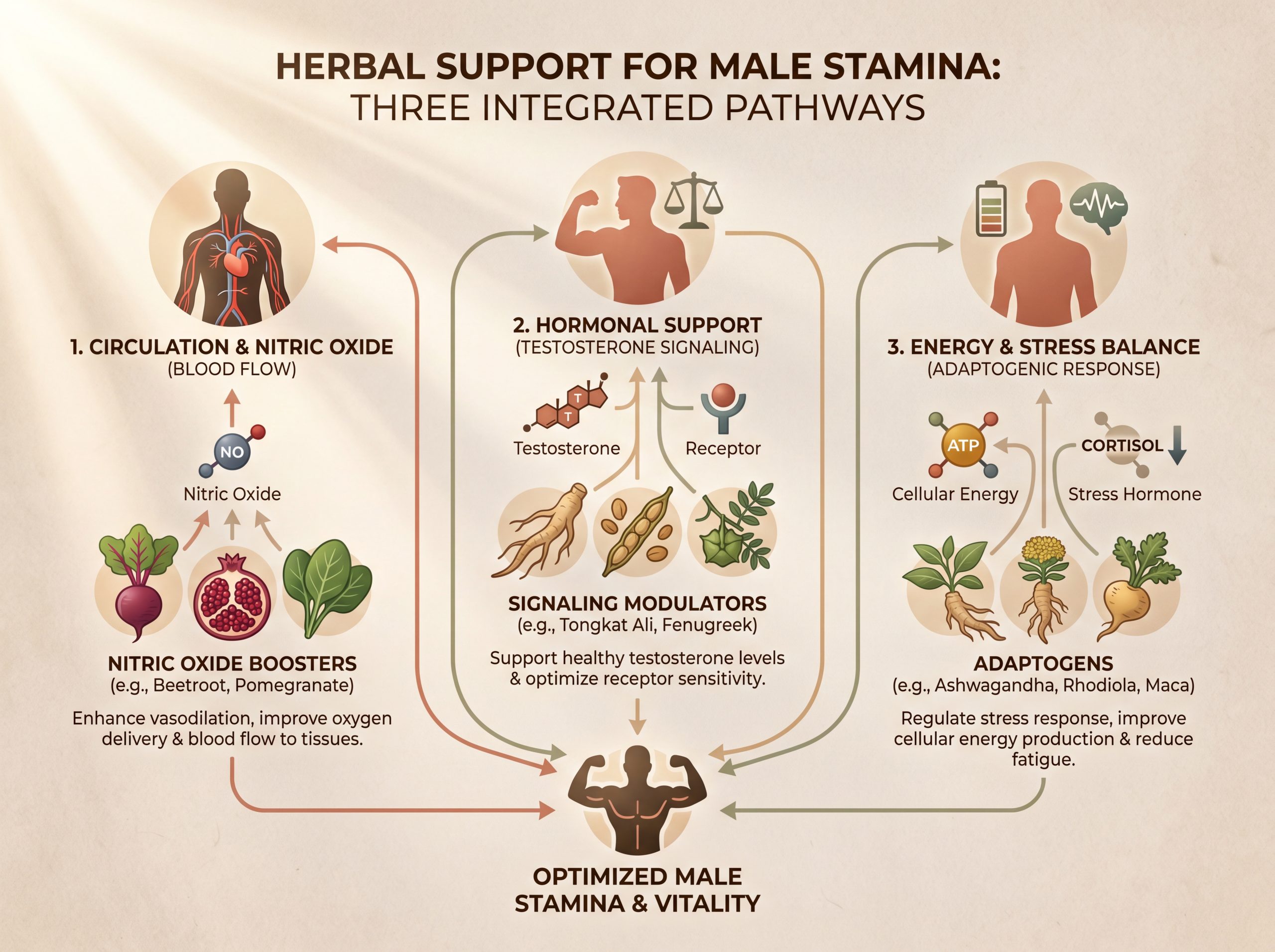
Herbs enhance stamina through various mechanisms:
- Improved Blood Flow (Vasodilation): Many herbs promote vasodilation, the widening of blood vessels. This improved blood flow delivers more oxygen and nutrients to muscles and organs, including the penis, enhancing both physical and sexual performance. This matters for healthy circulation, which supports normal erectile function.
- Hormonal Balance (Testosterone Support): Some herbs support healthy testosterone levels. Testosterone is crucial for libido, energy levels, muscle mass, and overall male vitality.
- Adaptogenic Properties (Combating Fatigue): Adaptogens help the body cope with stress, both physical and mental. They support adrenal function and help regulate stress hormone production, reducing fatigue and improving endurance.
- Enhanced Cellular Energy Production: Certain herbs support mitochondrial function. Mitochondria are the powerhouses of cells, responsible for producing energy.
- Antioxidant Activity (Combating Oxidative Stress): Intense physical activity can lead to oxidative stress, an imbalance between free radicals and antioxidants. Some herbs possess potent antioxidant properties, protecting cells from damage and supporting recovery.
- Arginine Production: L-arginine is found in many foods that help with male stamina. L-arginine is an amino acid that helps make proteins.
Scientific Studies Supporting Herb Use for Stamina
- Ginseng ( Panax ginseng ): A 2008 review in the British Journal of Clinical Pharmacology concluded that Panax ginseng (Korean red ginseng) can improve erectile function. Multiple studies suggest it enhances nitric oxide production, leading to improved blood flow. Ginsenosides, the active compounds in ginseng, are believed to be responsible for its effects.
- Maca ( Lepidium meyenii ): Studies have shown that maca can improve libido and sexual desire. Some research also suggests it may improve sperm quality and motility. A study published in Andrologia (2002) found that maca improved self-reported sexual desire in men.
- Tribulus Terrestris: Research on Tribulus terrestris and its ability to increase testosterone is mixed. Some studies show a positive effect, while others show no significant change. It’s important to present this nuanced view. A study in the Journal of Ethnopharmacology (2012) found that Tribulus terrestris extract improved sexual behavior in rats, but human studies are less conclusive.
- Ashwagandha ( Withania somnifera ): Studies on ashwagandha demonstrate its adaptogenic properties, helping to reduce stress and improve energy levels. Some research also suggests it can support healthy testosterone levels in men. A study in the Journal of the International Society of Sports Nutrition (2015) found that ashwagandha supplementation improved muscle strength and recovery in men.
- Yohimbe ( Pausinystalia yohimbe ): Yohimbine, the active compound in Yohimbe bark, is a vasodilator and has been used to treat ED. However, it’s crucial to emphasize that yohimbe has potentially serious side effects, including increased heart rate, anxiety, and even heart attacks or seizures. The FDA has only approved yohimbine hydrochloride as a prescription drug, not as an over-the-counter supplement.
- Horny Goat Weed ( Epimedium ): Icariin, a compound found in horny goat weed, is a phosphodiesterase type 5 (PDE5) inhibitor, similar to the active ingredient in Viagra. This means it can help increase nitric oxide levels and improve blood flow to the penis. However, more human research is needed.
- Maritime Pine ( Pinus pinaster ): Maritime Pine contains procyanidins, which have antioxidant and anti-inflammatory properties that assist with blood flow.
Individual results may vary, and consulting a healthcare professional before integrating any new herbal remedies into your daily regimen is always recommended.
To ground these mechanisms in published research, several herbs have human or mechanistic evidence worth naming. A 6-month randomized controlled trial found that standardized tongkat ali improved erectile-function scores and total testosterone in aging men (PMID: 33541567). A Cochrane systematic review reported a modest improvement in erectile function with ginseng (PMID: 34169686). A randomized study of maca found improved self-reported sexual desire that was independent of testosterone, pointing to a separate pathway (PMID: 12472620). Reading the literature in our editorial reviews, the honest summary is that quality varies by herb, the strongest signals are for tongkat ali, maca, and ginseng, and several popular herbs still rest mainly on traditional use or animal data.
Top Herbs for Boosting Male Stamina and Sexual Performance
The herbs below are among the most widely used natural aphrodisiacs, meaning plants traditionally used to support libido and sexual function. A few notes on the ones already familiar to many readers. Panax ginseng is studied for erectile function and is also traditionally used to support stamina and to address concerns like premature ejaculation, which we cover in our guide to ginseng for premature ejaculation. Maca is best known for supporting sexual desire, and the black variety is the form most often chosen by men, as we explain in black maca for men. Tribulus terrestris has a long folk reputation for sex drive, though current human reviews rate the evidence as limited rather than strong (PMID: 32736394), which we detail in our article on tribulus for sex drive.- Ashwagandha ( Withania somnifera ): Known for increasing energy levels and reducing stress. As an adaptogen, it helps the body cope with physical and mental strain, reducing fatigue and enhancing overall strength. Typical dosage ranges vary, but studies often use 300- 500 mg of a standardized extract daily. Potential side effects are generally mild but can include digestive upset. It may interact with sedative medications. It is found to be one of the best herbs in Ayurveda.
- Maca ( Lepidium meyenii ): Often referred to as “nature’s Viagra,” maca boosts libido, enhances fertility, and improves erectile function. It also provides a natural energy boost. The dosage ranges from 1.5-3 grams per day of the powdered root. Side effects are rare, but some people may experience mild digestive issues.
- Tribulus Terrestris: Widely recognized for its potential to increase testosterone levels naturally, enhancing athletic performance and sexual drive. It’s believed to stimulate luteinizing hormone (LH) production, which signals the testes to produce more testosterone. Dosage varies, but studies often use 750- 1500 mg per day of an extract standardized to protodioscin content. Potential side effects are usually mild but may include stomach upset.
- Ginseng ( Panax ginseng ): A potent herb for boosting male vitality and stamina. It stimulates nitric oxide production, improving blood flow, which helps combat erectile dysfunction and provides an energy boost. Korean red ginseng (Panax ginseng) is the most studied form for sexual health. Typical dosages range from 200- 1000 mg per day of a standardized extract. Potential side effects can include insomnia, headaches, and digestive upset. It may interact with blood thinners and other medications.
- Saw Palmetto ( Serenoa repens ): Primarily known for supporting prostate health, Saw Palmetto also plays a role in maintaining healthy hormone levels and promoting better endurance. It may inhibit the conversion of testosterone to dihydrotestosterone (DHT). Typical dosage is 160-320 mg per day of a standardized extract. Side effects are generally mild but can include digestive upset.
- Ginkgo Biloba: An ancient herb used to improve cognitive function and enhance blood circulation. Increased blood flow to the brain and other parts of the body boosts stamina and overall performance. Typical dosages range from 120-240 mg per day of a standardized extract. Potential side effects can include headache, dizziness, and digestive upset. It may interact with blood thinners.
- Horny Goat Weed ( Epimedium ): A powerful aphrodisiac. It contains icariin, which increases nitric oxide production and improves blood flow to the penis, enhancing sexual performance and boosting energy levels. Dosage varies, but many supplements contain 500-1000 mg of icariin per day. Potential side effects are generally mild but can include dizziness and dry mouth.
- Yohimbe ( Pausinystalia yohimbe ): Derived from the bark of an African tree, Yohimbe increases blood flow to erectile tissues and blocks alpha-2 adrenergic receptors, which can help improve both physical endurance and sexual performance. Crucially, yohimbe has potentially serious side effects and should only be used under the strict supervision of a healthcare professional. It is not recommended for general over-the-counter use. It is found to help with enhancement.
- Saffron (Crocus sativus): Saffron is a spice with a strong history and has been used as an aphrodisiac.
- Tongkat Ali (Eurycoma longifolia): Tongkat ali, also called longjack, is a Southeast Asian root traditionally used to support male vitality and energy. Its eurycomanone compounds are thought to influence the body’s own testosterone signaling rather than adding hormones from outside. In a 6-month randomized, double-blind, placebo-controlled trial in androgen-deficient aging men, a standardized root extract improved erectile-function scores and raised total testosterone (Leitao et al., 2021, Maturitas, PMID: 33541567). A later systematic review and meta-analysis found a consistent increase in total testosterone across clinical trials. In our sourcing experience, a water-standardized extract delivers the most reproducible results. A commonly used range is 200 to 400 mg of standardized extract per day. Our team profiles this root in more depth in our guide to tongkat ali for fitness and performance.
- Fadogia Agrestis: Fadogia agrestis is a West African shrub that has drawn attention as a traditional aphrodisiac. The evidence base is important to understand honestly. The most cited study dosed male rats with the aqueous stem extract and reported increased serum testosterone and mounting behavior (Yakubu et al., 2005, Asian Journal of Andrology, PMID: 16281088). We want to be clear about a real limitation. There are no published large, randomized, placebo-controlled human trials confirming that fadogia safely raises testosterone in men, and the same line of animal research flagged signs of liver and kidney stress at higher doses. For that reason, our editorial team recommends treating fadogia as an experimental botanical, using conservative amounts, cycling rather than taking it continuously, and consulting a healthcare provider first, especially if liver markers are a concern. We cover the research nuance in our article on fadogia agrestis and testosterone.
- Cistanche (Cistanche deserticola / Cistanche tubulosa): Cistanche, sometimes called desert ginseng, is a parasitic desert plant used for centuries in traditional Chinese herbalism to support kidney yang, stamina, and healthy aging. Its phenylethanoid glycosides, such as echinacoside and acteoside, are the constituents of interest. Preclinical work suggests these compounds may support the body’s own testosterone synthesis through the CYP450 and 3-beta-HSD pathway in testicular cells (Jiang et al., 2020, Journal of Ethnopharmacology, PMID: 31881320). Cistanche is frequently paired with tongkat ali because the two are thought to work along complementary pathways, one supporting hormone production and the other supporting hormone signaling. A common educational range is 300 to 1,000 mg of extract per day. We compare the pairing in detail in our piece on cistanche and tongkat ali.
Other Traditional Botanicals for Male Stamina
Several additional herbs round out a traditional stamina toolkit. Shilajit, a mineral-rich resin from the Himalayas, was studied in a randomized, placebo-controlled trial where a purified form at 250 mg twice daily was associated with higher total and free testosterone in healthy men aged 45 to 55 over 90 days (Pandit et al., 2016, Andrologia, PMID: 26395129). We profile it in our guide to shilajit for libido. Muira puama (Ptychopetalum olacoides), the Amazonian “potency wood,” is traditionally used to support libido and nerve function. Cordyceps (Cordyceps militaris), a fungus traditionally used to support endurance and oxygen efficiency, may support healthy blood flow relevant to stamina, as we discuss in our article on cordyceps and erectile function. Damiana (Turnera diffusa), a Central American shrub, has a long folk history as a mood-supporting aphrodisiac. As with any botanical, our team recommends starting with one herb at a time so you can observe how your body responds.Dosage, Timing, and How Long Results Take
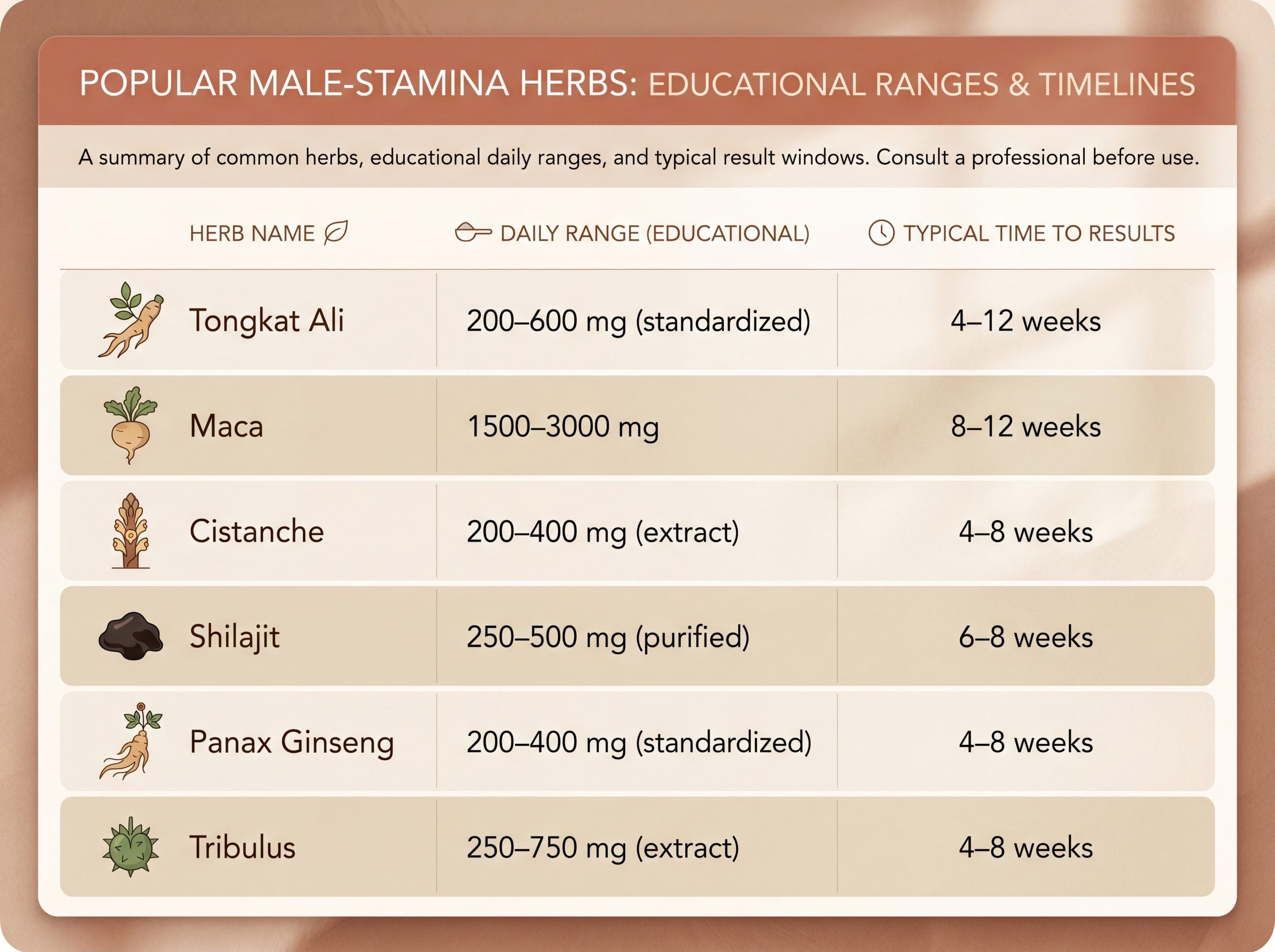
A question we hear constantly is how much to take and how long before anything changes. Herbs are not pharmaceuticals, so they tend to work gradually as they support the body’s own systems. In our experience most people notice changes over a span of weeks, not days. The ranges below are general educational starting points drawn from traditional use and the clinical literature. They are not medical advice, and the right amount for you depends on your health, your goals, and your provider’s guidance.| Herb | Common educational range | Typical time to noticeable change |
|---|---|---|
| Tongkat ali (standardized extract) | 200 to 400 mg per day | 2 to 8 weeks |
| Maca (gelatinized) | 1,500 to 3,000 mg per day | 6 to 12 weeks |
| Cistanche (extract) | 300 to 1,000 mg per day | 4 to 8 weeks |
| Shilajit (purified) | 250 to 500 mg per day | 8 to 12 weeks |
| Panax ginseng | 1,000 to 3,000 mg per day | 4 to 8 weeks |
| Tribulus terrestris | 250 to 750 mg per day | 4 to 12 weeks |
| Fadogia agrestis | No established human dose. Use conservatively and cycle. See safety note above. | Not established in humans |
| Educational ranges only, compiled by the Back To Your Roots Herbs Editorial Team. Consult your healthcare provider before starting any herb. | ||
How to Incorporate Herbs into Your Diet for Improved Stamina
Incorporating these herbs into your daily diet is a simple way to experience their benefits. Here are some practical tips:- Fresh Herbs: Use fresh herbs in your cooking. Add chopped basil, cilantro, or parsley to salads, soups, stews, or stir-fries.
- Herbal Teas: Brew herbal teas. Steep a teaspoon of dried herb (such as ginseng or ashwagandha) in hot water for about 10 minutes.
- Smoothies and Juices: Add powdered forms of herbs (like maca root powder) to smoothies or juices.
- Infused Oils: Combine olive oil with crushed garlic cloves and rosemary leaves. Use this oil as a dressing for salads or drizzle it over roasted vegetables.
- Herbal Supplements: If incorporating herbs directly into your diet is challenging, consider taking high-quality herbal supplements. Choose reputable brands and follow recommended dosages. This is often the easiest way to get a consistent, standardized dose of an herb. Always choose supplements that have undergone third-party testing for quality and purity.
Lifestyle Factors for Enhancing Male Stamina and Sexual Health
While herbs can provide significant benefits, they work best when combined with a healthy lifestyle. Here are key lifestyle factors that contribute to male stamina and sexual health:Exercise: The Cornerstone of Stamina
- Cardiovascular Exercise: Regular cardio (running, swimming, cycling) improves heart health, blood flow, and endurance. Aim for at least 150 minutes of moderate-intensity or 75 minutes of vigorous-intensity cardio per week.
- Strength Training: Builds muscle mass, increases testosterone, and improves overall strength and stamina. Aim for at least two strength-training sessions per week.
- Pelvic Floor Exercises (Kegels): Strengthen the pelvic floor muscles, which can improve erectile function and control.
Diet: Fueling Performance
- Balanced Diet: Focus on whole grains, lean proteins, fruits, vegetables, and healthy fats.
- Specific Foods:
- Foods Rich in L-Arginine: (e.g., nuts, seeds, poultry) L-arginine is a precursor to nitric oxide.
- Nitrate-Rich Vegetables: (e.g., beets, spinach) Nitrates can also boost nitric oxide levels.
- Antioxidant-Rich Foods: (e.g., berries, dark chocolate) Protect against oxidative stress.
- Fruits and Vegetables: Fruits can lower your risk of high blood pressure.
- Omega-3 Fatty Acids: Increase blood flow.
- Vitamin D: Enhances blood flow, reduces oxidative stress, and lowers cholesterol.
Smoking and Alcohol: The Stamina Saboteurs
- Smoking: Damages blood vessels and significantly impairs blood flow, leading to erectile dysfunction and reduced stamina. Quitting smoking is one of the best things you can do for your overall and sexual health.
- Excessive Alcohol: Can interfere with hormone production, impair nerve function, and reduce sexual performance. Limit alcohol consumption.
Stress Management: The Key to Unlocking Potential
- Meditation: Practice mindfulness meditation to reduce stress and improve focus.
- Yoga: Combines physical postures, breathing techniques, and meditation to reduce stress and improve flexibility and strength.
- Deep Breathing Exercises: Simple and effective for calming the nervous system.
- Time in Nature: Spending time outdoors can reduce stress and improve mood.
Sleep: The Foundation of Recovery
- Quality Sleep: Aim for 7-9 hours of quality sleep per night.
- Sleep Hygiene: Establish a regular sleep schedule, create a relaxing bedtime routine, and optimize your sleep environment.
Conventional Treatments and When to See a Doctor
While herbs and lifestyle changes can be very effective, it’s important to know when to seek professional medical help.Conventional Treatments for Erectile Dysfunction (ED)
- PDE5 Inhibitors: Medications like sildenafil (Viagra), tadalafil (Cialis), and vardenafil (Levitra) work by increasing blood flow to the penis. These are prescription medications and should only be used under the guidance of a doctor.
- Other Medications: Other treatments may include injections, vacuum erection devices, and penile implants.
When to See a Doctor
- Persistent Problems: If you experience persistent problems with stamina or erectile function, see a doctor.
- Underlying Health Conditions: If you have underlying health conditions like diabetes, heart disease, or high blood pressure, it’s crucial to manage these conditions, as they can contribute to sexual dysfunction.
- Sudden Changes: If you experience a sudden change in your sexual function, see a doctor immediately.
- Medication Side Effects: If you suspect that a medication you’re taking is affecting your sexual function, talk to your doctor.
- Mental Health: If you have mental issues with sex or problems with your sperm, seek a doctor.
Precautions and Considerations When Using Herbs
It’s crucial to use herbs responsibly and be aware of potential risks.- Consult a Healthcare Professional: Before starting any herbal regimen, consult a healthcare professional, especially if you have underlying health conditions or are taking medications.
- Allergies and Sensitivities: Be aware of any known allergies before introducing new herbs.
- Dosage Guidelines: Follow reputable sources’ suggested dosages or consult your healthcare provider.
- Potential Drug Interactions: Some herbs may interact with medications, such as blood thinners or antidepressants. Discuss potential interactions with your doctor or pharmacist.
- Quality Control: Choose herbal supplements from reputable sources that prioritize quality control measures. The FDA does not regulate herbal supplements like prescription drugs. Look for products that have been third-party tested for purity and potency.
- Hidden Ingredients: Be extremely cautious about supplements marketed for sexual enhancement. Many have been found to contain hidden, undeclared ingredients, including prescription drugs like sildenafil (Viagra), which can be very dangerous.
- Adverse Reactions: If you notice any unusual symptoms after consuming an herb, discontinue use and seek medical attention if necessary.
- Pregnancy and Breastfeeding: Pregnant and breastfeeding women should exercise caution and consult their healthcare providers before using herbs.
- Individual Variability: What works for one person may not work for another.
Combining and Cycling Herbs Safely
Stacking herbs is common, and a few principles keep it sensible. Start with one herb at a time for one to two weeks so you can tell what is doing what. When combining, pair botanicals that work along different pathways rather than several that do the same thing, for example, a hormone-support herb such as cistanche alongside a signaling-support herb such as tongkat ali. Watch for overlap with medications. Herbs that affect blood pressure, blood sugar, or blood thinning can add to the effect of prescriptions, so anyone taking nitrates, blood-pressure medicine, or blood thinners should talk with a provider first. Cycling, meaning planned breaks, helps the body stay responsive and reduces the chance of side effects from continuous use. If you notice digestive upset, sleep changes, or anything unusual, stop and reassess. When in doubt, fewer herbs at higher quality beats many herbs at once. By following these guidelines, you can safely incorporate herbs for improving male stamina into your routine. Prioritize your well-being and seek professional guidance when needed.Frequently Asked Questions
What is the best herb for male stamina?
There is no single best herb, because stamina depends on circulation, hormones, energy, and stress. Tongkat ali has the strongest human evidence for supporting testosterone and erectile-function scores, maca is well studied for sexual desire, and ginseng is studied for erectile function. Many people combine one hormone-support herb with one circulation-support herb.How long do these herbs take to work?
Most herbs work gradually. In studies and in our customers’ experience, noticeable change usually appears over 4 to 12 weeks of consistent daily use rather than within days. Maca and shilajit tend to sit at the longer end, while tongkat ali and ginseng can act sooner.Are these herbs safe, and do they have side effects?
Most of the herbs covered here are generally well tolerated when used at traditional amounts. Yohimbe and fadogia agrestis are the two that call for extra caution: yohimbe for its effects on heart rate and blood pressure, and fadogia because its safety in humans is not established and animal data raised liver and kidney concerns. Always consult your healthcare provider before use.How does Tongkat Ali compare with Fadogia Agrestis?
Tongkat ali has multiple randomized human trials supporting its effect on testosterone and erectile function, including a 6-month placebo-controlled study (PMID: 33541567). Fadogia agrestis has only animal data and no large human trials, plus unresolved safety questions. For most people seeking an evidence-backed option, tongkat ali is the more established choice.Can I take Cistanche and Tongkat Ali together?
Many people do, because the two are thought to support different parts of the same system: cistanche on hormone production and tongkat ali on hormone signaling. Start each one separately first, use conservative amounts, and check with your provider if you take any medication.What is the recommended dosage?
Common educational ranges are 200 to 400 mg per day of standardized tongkat ali, 1,500 to 3,000 mg of maca, 300 to 1,000 mg of cistanche, and 250 to 500 mg of purified shilajit. These are general starting points, not prescriptions, and your provider can help you personalize them.Do herbs work as well as conventional treatments?
Conventional options such as PDE5 inhibitors are prescribed by physicians and tend to act quickly for erectile concerns. Herbs work differently, supporting the underlying systems gradually, and the evidence varies by herb. They are best viewed as part of a broader stamina and lifestyle approach rather than a direct replacement for medical care.Related Reading
Continue exploring this topic with these guides from our team:
- A closer look at aphrodisiac herbs
- Natural ways to support male libido
- Ashwagandha for libido and stress
- Does cistanche increase testosterone?