Hot flashes, also known as hot flushes, are a frequent and often bothersome symptom experienced by many women during perimenopause and menopause. Characterized by a sudden sensation of intense heat spreading through the upper body and face, often accompanied by sweating and sometimes chills afterward, they can significantly impact daily life and sleep quality. While hormonal changes are the primary driver, many women seek ways to manage these symptoms without hormone medication.
This article provides information on various natural strategies, lifestyle adjustments, and herbal remedies that may help reduce the frequency or intensity of hot flashes.
Our editorial team reviews this literature the way we would want it reviewed for ourselves, which means reporting the trials that came back negative alongside the ones that came back positive. Everything here is educational and is not medical advice. Hot flashes have several treatable causes beyond menopause, and effective prescription options exist for women whose symptoms are severe. Please talk with a qualified healthcare provider before starting any herb or supplement, particularly if you take prescription medication, have a history of hormone-sensitive cancer, or are managing liver conditions.
Understanding Why Hot Flashes Happen
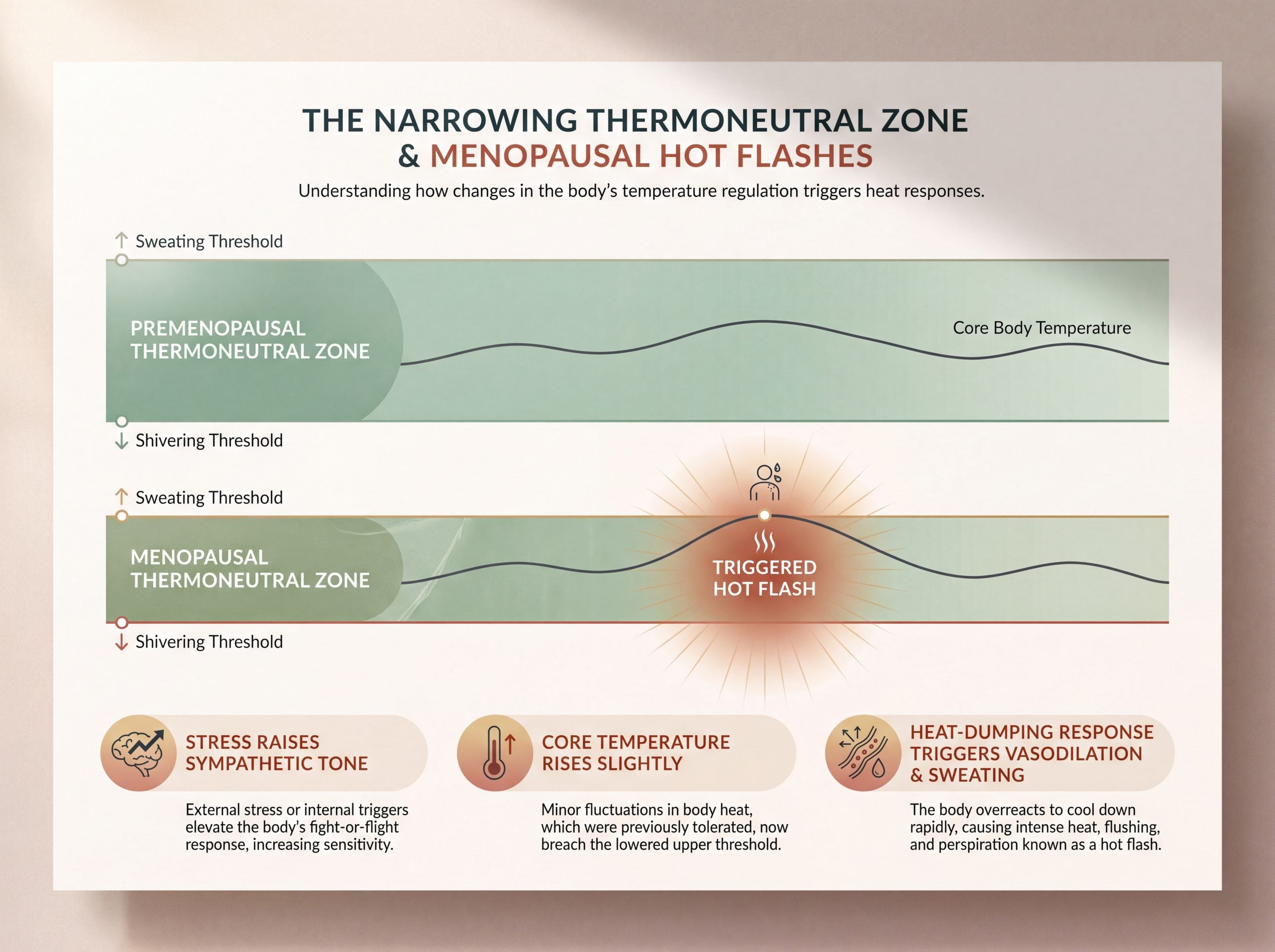
The exact mechanism of hot flashes isn’t fully understood, but they are strongly linked to the fluctuations and eventual decline in estrogen levels that occur during the menopausal transition. These hormonal shifts appear to affect the hypothalamus, the brain region responsible for regulating body temperature. It’s thought that a narrowing of the body’s thermoneutral zone occurs, meaning smaller changes in core body temperature can trigger the body’s cooling responses – sweating and peripheral vasodilation (widening of blood vessels near the skin) – resulting in a hot flash.
Common Hot Flash Triggers
Identifying personal triggers is a key step in managing hot flashes. Keeping a simple log of when flashes occur, what you were doing, eating, or feeling can be insightful. Common triggers include:
- Stress and anxiety
- Consumption of caffeine or alcohol
- Eating spicy foods
- Hot environments (weather, hot showers, saunas)
- Tight or non-breathable clothing
- Smoking or exposure to smoke
- Intense exercise (for some individuals)
- Feeling hungry or having low blood sugar
Lifestyle Approaches to Manage Hot Flashes
Making adjustments to daily habits and diet forms the foundation for managing menopausal symptoms naturally. These strategies often improve overall health and well-being during this transition.
Dietary Adjustments for Symptom Relief
What you eat can influence hot flash frequency and severity. Consider these dietary strategies:
- Phytoestrogens: These compounds found in plants have a structure similar to human estrogen and can bind weakly to estrogen receptors. Including foods rich in phytoestrogens may help mitigate the effects of declining estrogen levels. Key sources include:
- Soy: Whole soy foods like tofu, tempeh, edamame, and unsweetened soy milk contain isoflavones. Some studies suggest a link between higher soy intake and fewer hot flashes, although results vary. Focus on whole or minimally processed soy foods.
- Flaxseeds: Rich in lignans, another type of phytoestrogen, and omega-3 fatty acids. Ground flaxseed is better absorbed than whole seeds. Add 1-2 tablespoons daily to smoothies, yogurt, or oatmeal.
- Other Sources: Chickpeas, lentils, beans, whole grains, and some fruits and vegetables also contain phytoestrogens.
- Mediterranean-Style Eating: Emphasizing fruits, vegetables, whole grains, legumes, nuts, seeds, fish, and olive oil may be beneficial. Research suggests women following this pattern may experience fewer menopausal symptoms, including hot flashes.
- Limit Trigger Foods: Reduce intake of known triggers like spicy foods, caffeine, and alcohol to see if it impacts your symptoms.
- Stay Hydrated: Drink plenty of water throughout the day. Sipping cool water at the onset of a flash may offer some relief.
- Fiber Intake: Adequate fiber supports digestive health and can aid in weight management. Aim for recommended daily amounts through whole grains, fruits, vegetables, and legumes.
- Calcium and Vitamin D: Essential for bone health, which becomes particularly important after menopause due to decreased estrogen. Ensure adequate intake through diet or supplements if needed.
The Role of Exercise
Regular physical activity offers broad benefits during menopause, including improvements in mood, sleep, weight management, and cardiovascular health. The research on exercise specifically for hot flashes is genuinely mixed, and we think you deserve the honest version rather than the tidy one.
Two randomized trials point one way. A six-month aerobic training program (50 minutes, four times weekly) in 176 symptomatic menopausal women improved sleep quality and significantly reduced the hot flushes that were disturbing sleep (Mansikkamäki et al., 2012, Maturitas, PMID: 22673453). A separate trial of resistance training three times weekly for 15 weeks reported improvement in the vasomotor-symptom domain of the Women’s Health Questionnaire (Berin et al., 2021, Climacteric, PMID: 34240669).
The larger NIH-funded MsFLASH trial network points the other way. Across its randomized trials, MsFLASH found no benefit on vasomotor symptoms from yoga or exercise compared with usual activity (Reed et al., 2020, Menopause, PMID: 31977667).
How to read that split. The smaller trials measured sleep-disturbing flashes and symptom-domain scores. MsFLASH measured hot flash frequency directly. It is plausible that exercise does less to stop a flash from happening than it does to reduce how much the flash costs you in sleep and daily function. In our editorial review of this literature, that distinction matters more to most women than the frequency count does. Exercise remains worth doing on cardiovascular, bone, and sleep grounds regardless of what it does to your flash count.
Practical framing: aerobic work most weekdays, resistance training two to three times weekly, and note that some women find intense exertion is itself a personal trigger. Track your own response rather than assuming the group average applies to you.
Stress Management Techniques
Stress is a well-known trigger for hot flashes. Incorporating stress-reduction practices into your routine can be very helpful:
- Mindful Breathing: Simple deep breathing exercises can help calm the nervous system during stressful moments or even at the start of a hot flash.
- Mindfulness and Meditation: Regular practice can lower overall stress levels and improve emotional regulation. Studies on mindfulness-based stress reduction (MBSR) show promise for menopausal symptoms.
- Yoga and Tai Chi: These practices combine movement, breathing, and meditation, offering benefits for both physical and mental well-being.
The mechanism, in plain terms. A hot flash begins when a small rise in core body temperature crosses a threshold and the brain triggers heat-dumping, which is skin vasodilation and sweating. During the menopausal transition, the temperature window the body tolerates before triggering that response, sometimes called the thermoneutral zone, appears to narrow. Sympathetic arousal from acute stress nudges core temperature and heart rate upward, which can push you across a threshold that is now much closer than it used to be. This is why stress feels like it triggers flashes. Mechanistically, it plausibly does.
Paced respiration is the technique with the clearest rationale here. Slow, deep, diaphragmatic breathing at roughly six to eight breaths per minute engages the parasympathetic branch and elicits what researchers call the relaxation response, lowering sympathetic tone. Practiced for 15 minutes twice daily, and again at the first sensation of a flash beginning, it costs nothing and carries no interaction risk.
Mindfulness-based stress reduction has been studied for menopausal symptoms with modest results. Our honest read: stress techniques appear to reduce how much a hot flash bothers you and how well you cope with it, more reliably than they reduce how often flashes occur. That is still a meaningful result. Bother and interference are what actually degrade quality of life.
Maintaining a Healthy Weight
Research indicates a correlation between higher body mass index (BMI) and increased frequency and severity of hot flashes. Excess body fat can act as insulation and may also influence hormone metabolism. Achieving and maintaining a healthy weight through diet and exercise may help manage symptoms.
Optimizing Sleep Habits
Hot flashes often disrupt sleep (termed night sweats when occurring at night). Improve sleep hygiene by:
- Keeping the bedroom cool and well-ventilated.
- Using fans or air conditioning.
- Wearing lightweight, breathable sleepwear (cotton or moisture-wicking fabrics).
- Using layered bedding that can be easily removed.
- Considering cooling pillows or mattress pads.
- Avoid heavy meals or excessive fluids close to bedtime.
Smoking Cessation
Smoking is linked to an earlier onset of menopause and potentially more severe menopausal symptoms, including hot flashes. Quitting smoking offers broad health benefits and may help reduce symptom severity.
Environmental and Behavioral Tips
Simple adjustments can make a difference:
- Dress in layers that can be removed easily.
- Choose natural, breathable fabrics like cotton or linen.
- Carry a portable fan.
- Sip cool water throughout the day and at the onset of a flash.
- Take lukewarm showers instead of hot ones.
Natural Remedies and Supplements for Hot Flashes
Beyond lifestyle changes, some women explore specific natural remedies, often herbal, to address hot flashes. It is vital to approach these with caution and awareness of the evidence and safety profile. Many women look for ways to relieve hot flashes naturally.

Herbal Remedies Explored
Herbal treatments have a long history of use for women’s health, but rigorous scientific evidence for many is still evolving.
- Black Cohosh (Cimicifuga racemosa or Actaea racemosa): This is one of the most studied herbs for menopausal symptoms. Some clinical trials and reviews suggest certain standardized extracts may reduce hot flash frequency and severity compared to placebo, potentially by affecting neurotransmitter pathways rather than acting strongly like estrogen. However, overall evidence is mixed, with other studies showing no significant benefit over placebo. It’s generally considered safe for short-term use (up to 6-12 months). Potential side effects are usually mild (e.g., stomach upset). Rare cases of liver issues have been reported, so individuals with liver disease should avoid it, and users should be aware of symptoms like jaundice or unusual fatigue. Consultation is advised, especially for those with a history of hormone-sensitive conditions like breast cancer.
- Red Clover (Trifolium pratense): It contains isoflavones, a type of phytoestrogen. Studies on its effectiveness for hot flashes have yielded inconsistent results. Some meta-analyses suggest a possible reduction in hot flash frequency, but more high-quality research is needed. It may have mild estrogenic effects and potential blood-thinning properties, warranting caution for those on anticoagulants or with hormone-sensitive conditions.
- Flaxseed (Linum usitatissimum): As mentioned under diet, flaxseed contains lignans and omega-3 fatty acids. Some research suggests that a daily intake of ground flaxseed (e.g., 40 grams or about 4 tablespoons) may decrease hot flash scores, but more robust trials are required to confirm these findings. Potential side effects include bloating or digestive changes.
- Evening Primrose Oil (Oenothera biennis): Rich in gamma-linolenic acid (GLA), an omega-6 fatty acid. Despite its popularity, scientific evidence supporting evening primrose oil specifically for reducing hot flashes is limited and inconsistent. Some studies found no benefit over placebo for flash frequency or severity, though one suggested a possible reduction in the intensity of night sweats.
- Other Herbal Considerations: Many other herbs are traditionally used or researched with varying levels of evidence, including Dong Quai (Angelica sinensis – limited evidence for hot flashes, potential interactions), Sage (Salvia officinalis – traditional use for sweating, some small studies), Hops (Humulus lupulus – contains a potent phytoestrogen, caution advised), Ginseng (Panax ginseng – mixed results), Maca (Lepidium meyenii – preliminary research), and Valerian (Valeriana officinalis – primarily for sleep, some studies on menopause symptoms). Evidence for many others, like Wild Yam or Chaste Tree, is generally weaker for hot flashes.
The compound chemistry behind these herbs. Black cohosh (Actaea racemosa) contains triterpene glycosides, notably actein and 27-deoxyactein, along with cinnamic acid esters. Notably, it does not appear to act as a classical phytoestrogen despite decades of assumption that it did. Red clover (Trifolium pratense) supplies four isoflavones, with biochanin A and formononetin as the two that distinguish it from soy. Sage (Salvia officinalis) carries rosmarinic acid and thujone-containing volatile oils. Soy (Glycine max) supplies genistein and daidzein. Flaxseed (Linum usitatissimum) supplies the lignan secoisolariciresinol diglycoside.
The chemistry matters because the dose and the specific compound, not the herb name, appear to determine whether anything happens. That is the single most useful thing in this literature, and almost nobody says it plainly.
For a deeper treatment of two of these botanicals in traditional women’s herbalism, see our article on dong quai and black cohosh in women’s herbal traditions. Women navigating the earlier transition may also want our coverage of chasteberry during perimenopause, and those weighing adaptogens can read our review of ashwagandha for menopausal symptoms.
Phytoestrogen Supplements
Concentrated isoflavone supplements, primarily from soy or red clover, are available. Research on their effectiveness mirrors the mixed results seen with dietary sources and whole herbs. While some analyses suggest a benefit in reducing hot flash frequency, the effects can be modest and variable. Discussing use with a healthcare provider is important, particularly regarding dosage and potential risks for individuals with hormone-sensitive conditions.
What the Clinical Evidence Actually Shows
Most articles on this topic give you a list of herbs and a soft “may help.” We would rather show you the actual trial results, including the ones that came back negative. In our editorial review of this literature, the honest picture is more useful than the flattering one, and it is the only way to make a decision you can trust.
| Intervention | Latin binomial / type | Active compound | What the research found |
|---|---|---|---|
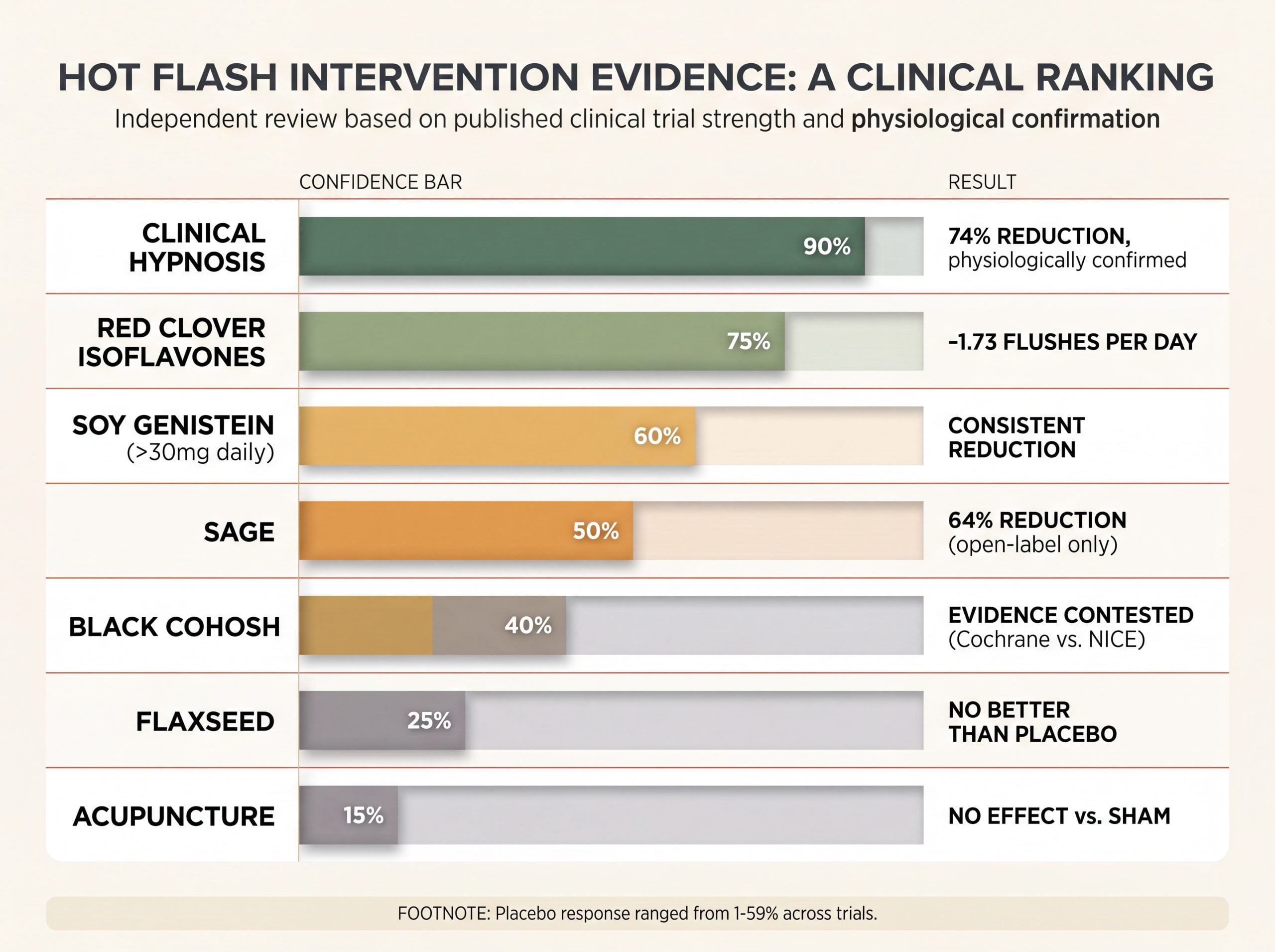
| Clinical hypnosis | Mind-body | Not applicable | Strongest evidence on this page. Randomized trial of 187 postmenopausal women reported a 74.16% reduction in self-reported hot flash frequency versus 17.13% in controls, and a 56.86% reduction in physiologically monitored flashes versus 9.94% (p<0.001). Elkins et al., 2013, Menopause, PMID: 23435026 |
| Red clover | Trifolium pratense | Isoflavones (biochanin A, formononetin) | Meta-analysis of eight trials found a reduction of 1.73 hot flushes per day versus placebo (95% CI −3.28 to −0.18, p=0.0292). Effect concentrated in studies using 80 mg/day or more of isoflavones for 12 weeks or longer, with a higher biochanin A fraction. Kanadys et al., 2021, Nutrients, PMID: 33920485 |
| Soy isoflavones | Glycine max | Genistein, daidzein | A Cochrane review of 43 trials found no conclusive overall effect for phytoestrogen supplements, but noted that extracts delivering more than 30 mg/day of genistein consistently reduced hot flash frequency. Dose appears decisive. Lethaby et al., 2013, PMID: 24323914 |
| Sage | Salvia officinalis | Rosmarinic acid, volatile oils | An eight-week multicenter trial reported a 64% reduction in intensity-rated hot flushes (p<0.0001). Important caveat: this trial was open-label with no placebo group and was conducted by a manufacturer. Promising, but not yet confirmed by independent placebo-controlled work. Bommer et al., 2011, Adv Ther, PMID: 21630133 |
| Black cohosh | Actaea racemosa | Triterpene glycosides (actein, 27-deoxyactein) | The evidence is genuinely split. A Cochrane review of 16 trials in 2,027 women found no significant difference from placebo in hot flush frequency (P=0.79). Leach & Moore, 2012, PMID: 22972105. However, the UK NICE guideline network meta-analysis of 47 trials in 8,326 women found black cohosh and isoflavones more effective than placebo. Sarri et al., 2017, BJOG, PMID: 28276200. The two reviews used different trial pools and different statistical methods. Reasonable experts currently disagree. |
| Flaxseed | Linum usitatissimum | Lignans (secoisolariciresinol diglycoside) | A placebo-controlled trial delivering 46 mg lignans daily for 12 weeks found flaxseed no more effective than placebo for hot flashes. Both groups improved similarly. Simbalista et al., 2010, J Nutr, PMID: 20007337 |
| Acupuncture | Mind-body | Not applicable | Does not outperform sham. A systematic review of sham-controlled randomized trials concluded that acupuncture shows no specific effect on menopausal hot flush frequency or severity. Lee, Shin & Ernst, 2009, Climacteric, PMID: 19116803. Later reviews agree. Chien et al., 2020, PMID: 31612733 |
| Sources: PubMed. Further reading: NIH Office of Dietary Supplements, Black Cohosh · NCCIH, Menopausal Symptoms · Memorial Sloan Kettering, About Herbs | |||
Three things this table is telling you. First, the best-supported option on this entire page is not an herb at all. It is clinical hypnosis, and the trial that showed it used skin-conductance monitoring rather than relying on what women reported. Second, where herbs do show an effect, the dose and the specific compound carry the result, not the plant name on the label. Red clover at 80 mg of isoflavones is a different proposition from red clover at 40 mg. Third, a strong placebo response runs through this entire literature, ranging from 1% to 59% across trials. Any product promising you a dramatic result is competing against a placebo that is already quite good at producing one.
Note also that a strong placebo effect is not the same as nothing happening. If your flashes decrease, they have decreased. It simply means we cannot credit the herb for it with any confidence.
Mind-Body Practices as Treatments
These are ordered by the strength of the published evidence, which is not the order most articles use.
- Clinical Hypnotherapy (strongest evidence). A randomized controlled trial of 187 postmenopausal women reported a 74.16% reduction in hot flash frequency after five weekly sessions, compared with 17.13% in the structured-attention control group. Critically, the effect held up under objective measurement. Physiologically monitored hot flashes fell 56.86% versus 9.94% in controls (p<0.001). Sleep quality and hot-flash interference also improved (Elkins et al., 2013, Menopause, PMID: 23435026). Very few interventions in this field, herbal or otherwise, have produced a result this large under objective monitoring. It remains underused, and we think that is a mistake.
- Cognitive Behavioral Therapy (good evidence for bother and interference). CBT adapted for menopause targets the thoughts and behaviors surrounding a flash rather than the flash itself. It reliably reduces how much hot flashes interfere with daily life and sleep, even when the raw frequency count moves less. The NIH MsFLASH network found CBT for insomnia improved sleep quality in symptomatic menopausal women (Reed et al., 2020, Menopause, PMID: 31977667).
- Acupuncture (evidence does not support a specific effect). We are including this because it is widely recommended and you deserve the actual finding. A systematic review of sham-controlled randomized trials concluded that acupuncture fails to show any specific effect on hot flush frequency or severity beyond sham needling (Lee, Shin & Ernst, 2009, Climacteric, PMID: 19116803). Later reviews reached the same conclusion, finding no lasting benefit on hot flushes (Chien et al., 2020, PMID: 31612733). Women in these trials frequently did improve. They improved on sham needling too. If acupuncture helps you, the improvement is real, but the needles are probably not the reason.
Important Safety Considerations
When considering natural treatments for hot flashes, keep these points in mind:
Key Points for Safe Use
- Individual Variability: Responses to natural remedies vary significantly. What works well for one person may have no effect on another.
- Supplement Quality Concerns: Dietary supplements are not strictly regulated by the FDA for safety, quality, or efficacy. Potency can vary between batches and brands, and contamination is a possibility. Look for third-party certifications (like USP or NSF) if possible, though this doesn’t guarantee effectiveness.
- Time Factor: Natural approaches often require consistent use for several weeks or even months before potential benefits become noticeable. Patience is needed.
- Holistic Strategy: Combining several lifestyle strategies (diet, exercise, stress management) is often more effective than relying on a single remedy or supplement.
- Professional Guidance is Essential: Always discuss any herbs or supplements with your doctor or qualified healthcare provider before starting them. They can advise on potential interactions with medications (like blood thinners, antidepressants, or hormone therapies), suitability based on your medical history (especially liver conditions or hormone-sensitive cancers), and appropriate dosages.
- Know When to Seek Medical Treatments: If natural approaches and lifestyle changes do not provide sufficient relief, or if symptoms severely impact your quality of life, discuss conventional medical treatments with your provider. Options include Menopausal Hormone Therapy (MHT), considered the most effective treatment for moderate-to-severe hot flashes, and FDA-approved non-hormonal prescription medications (like low-dose paroxetine or fezolinetant).
Frequently Asked Questions
What are the best herbal supplements for reducing hot flashes?
On the current evidence, red clover (Trifolium pratense) has the most consistent herbal support, with a meta-analysis of eight trials showing a reduction of 1.73 hot flushes per day, concentrated in studies using 80 mg or more of isoflavones daily for at least 12 weeks (PMID: 33920485). Black cohosh is genuinely contested, with a Cochrane review finding no benefit and the NICE network meta-analysis finding benefit. Dose and specific compound appear to matter far more than the plant name on the label.
How effective is acupuncture in managing hot flashes?
Sham-controlled randomized trials do not show a specific effect. A systematic review concluded that acupuncture does not outperform sham needling for hot flush frequency or severity (PMID: 19116803), and later reviews found no lasting benefit. Women often do improve during acupuncture courses, but they improve on sham needling as well, which points to a strong placebo response rather than a needle-specific mechanism.
Can diet changes significantly reduce the frequency of hot flashes?
Dietary change produces modest and inconsistent results for flash frequency, though it reliably helps with the triggers. Identifying and reducing personal triggers such as caffeine, alcohol, and spicy food is the highest-yield dietary step. Whole-food phytoestrogen sources have weaker evidence than concentrated extracts, and one placebo-controlled trial found flaxseed at 46 mg lignans daily no better than placebo (PMID: 20007337).
Are there any specific exercises that help alleviate hot flashes?
The evidence is split. Six months of aerobic training reduced sleep-disturbing hot flushes in a trial of 176 women (PMID: 22673453), and resistance training three times weekly improved vasomotor-symptom scores (PMID: 34240669). The larger NIH MsFLASH network, however, found no benefit from exercise or yoga on flash frequency (PMID: 31977667). Exercise appears to do more for sleep and daily function than for the raw number of flashes.
How does stress management contribute to reducing hot flashes?
Acute stress raises sympathetic tone and core temperature, which can push you across the narrowed temperature threshold that triggers a flash during menopause. Paced respiration, meaning slow diaphragmatic breathing at roughly six to eight breaths per minute, engages the parasympathetic relaxation response and costs nothing. Structured mind-body approaches perform even better. Clinical hypnosis produced a 74% reduction in hot flash frequency in a randomized trial, confirmed by physiological monitoring (PMID: 23435026).
Final Thoughts on Natural Hot Flash Management
Managing hot flashes during menopause is a common goal for many women seeking comfort and improved quality of life. Lifestyle adjustments focusing on diet, regular exercise, stress reduction, and environmental controls form the cornerstone of natural management and offer broad health benefits. Certain herbal remedies and mind-body practices show potential for providing additional relief, although the scientific evidence varies, and careful consideration of safety is paramount.
Working closely with a healthcare provider ensures a personalized and safe approach to navigating menopausal symptoms, integrating natural strategies appropriately alongside conventional options if needed.
Disclaimer
These statements have not been evaluated by the Food and Drug Administration. This product is not intended to diagnose, treat, cure, or prevent any disease. Consult your healthcare provider before use.