Perimenopause marks a significant transition in a woman’s life, the period leading up to menopause when hormone production, particularly estrogen and progesterone, begins to fluctuate and eventually decline. This natural phase often brings a variety of physical and emotional symptoms as the body adjusts. Many women seek natural ways to manage these changes, and one herbal remedy frequently discussed is Vitex agnus-castus, commonly known as chasteberry or monk’s pepper.
This article offers an informational look at this traditional herb, its potential mechanisms, benefits, safety considerations, and how it compares to other options for supporting women’s health during perimenopause.
What is Perimenopause? A Time of Hormonal Change
Perimenopause is not a single event but a process that can last for several years. It typically begins in a woman’s 40s, but can start earlier or later. The defining characteristic is the fluctuation and gradual decrease in ovarian hormone production.
Common Symptoms Experienced
These hormonal shifts can lead to a range of experiences, varying greatly from one woman to another. Some common symptoms include:
- Irregular menstrual cycles (changes in length, flow, frequency)
- Hot flashes and night sweats (vasomotor symptoms)
- Sleep disturbances
- Mood swings, irritability, or increased anxiety
- Vaginal dryness
- Changes in libido
- Breast tenderness
- Fatigue
Understanding these symptoms provides context for exploring potential supportive measures, including herbal remedies like Vitex.
Introducing Vitex Agnus-Castus (Chasteberry)
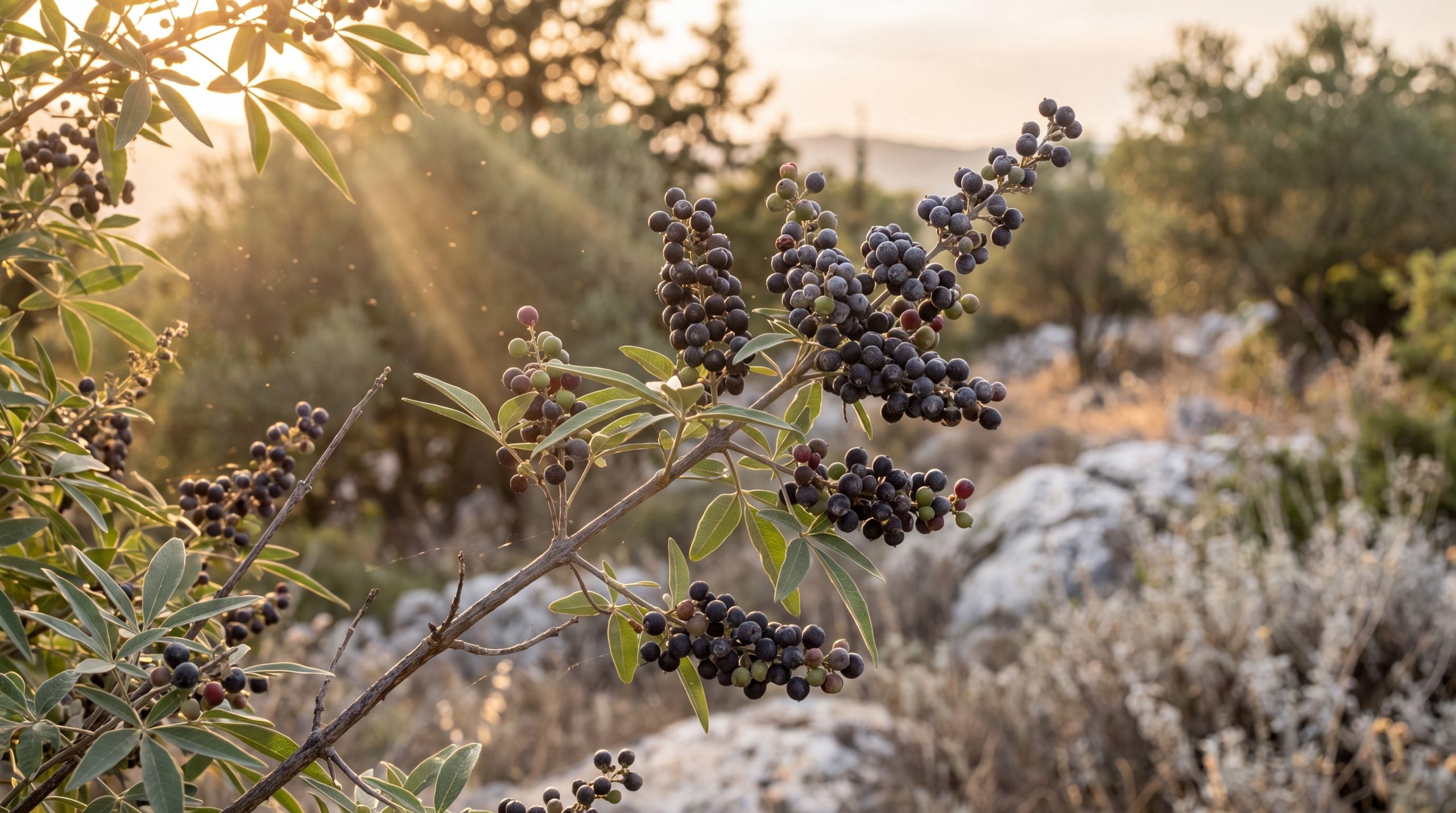
Vitex agnus-castus is a shrub native to the Mediterranean region and Central Asia. It produces small, dark berries, roughly the size of peppercorns, which have been used for centuries in traditional medicine, particularly for addressing female reproductive health concerns.
Historical Use in Women’s Health
Historically, extracts from the chaste tree berry have been employed to help regulate menstrual cycles, alleviate symptoms associated with premenstrual syndrome (PMS), address infertility issues, and manage other gynecological complaints. This long history points to its perceived influence on female hormonal balance.
Key Components
The berries of the Vitex agnus-castus plant contain various compounds believed to contribute to its effects. These include diterpenes (like rotundifuran and vitexilactone), flavonoids (such as casticin), iridoid glycosides (agnuside, aucubin), and essential oils. While research continues, these components are thought to interact with the body’s hormonal regulation systems.
How Might Chasteberry Influence Perimenopausal Symptoms?
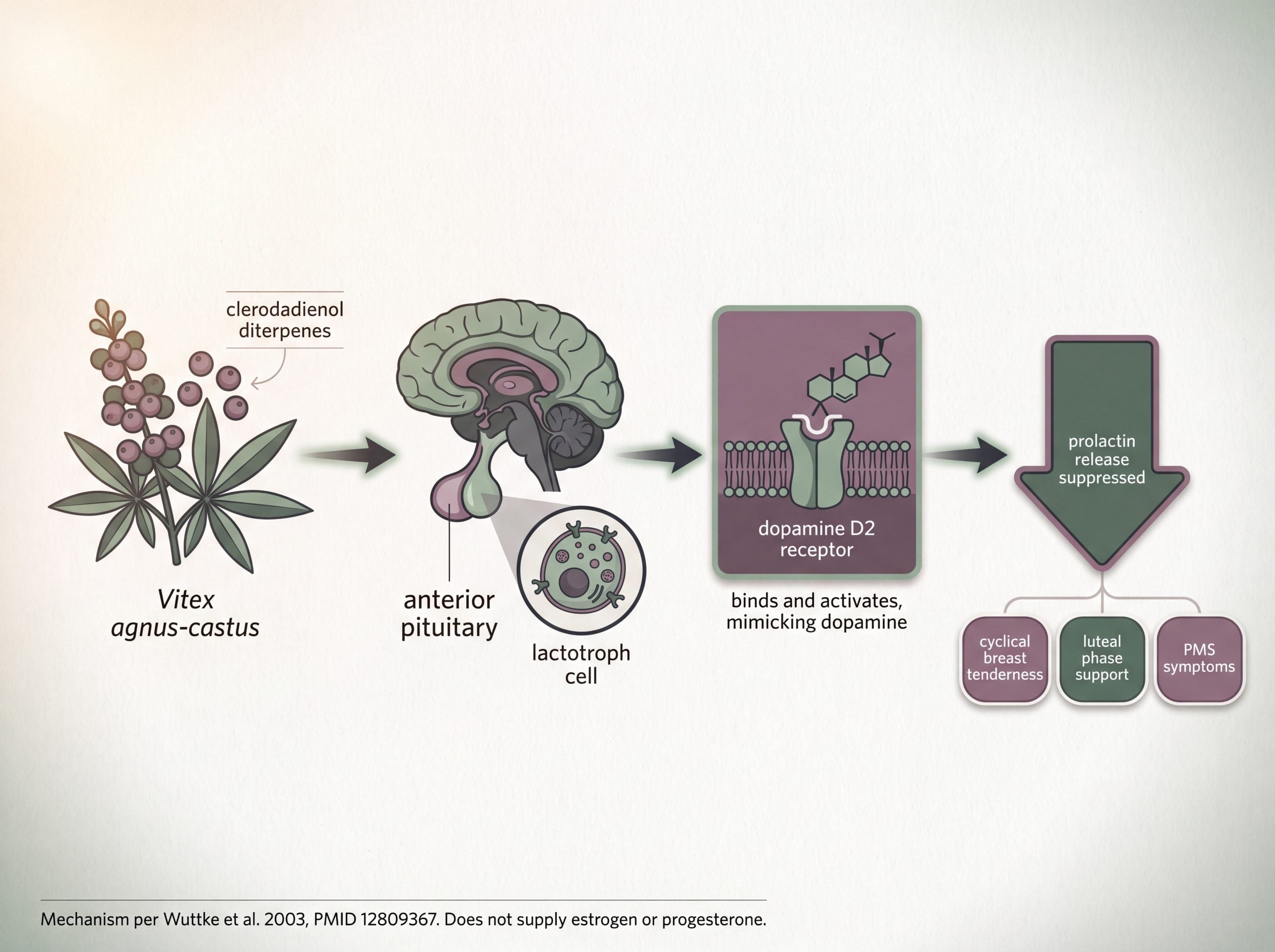
Vitex agnus-castus does not contain hormones itself. Instead, its proposed mechanism centers on its influence on the pituitary gland, a key regulator of hormone production throughout the body.
Impact on Prolactin Levels
One of the most studied actions of chasteberry is its potential ability to modulate prolactin secretion from the pituitary gland. It appears to have a dopaminergic effect, binding to dopamine D2 receptors. This action can inhibit the release of prolactin. Elevated prolactin levels, even subtly, can disrupt the balance of other hormones, including estrogen and progesterone, and are often linked to symptoms like breast tenderness and menstrual irregularities. By potentially normalizing prolactin, Vitex may indirectly help restore a more favorable hormonal equilibrium.
The pharmacology here is more specific than “hormone balancing,” and the specificity is what makes it credible. In our editorial review of the primary literature, the mechanism traces to a class of diterpene compounds in the berry, the clerodadienols, which bind directly to the dopamine D2 receptor. Wuttke and colleagues isolated these compounds and found they suppressed prolactin release from cultured lactotroph cells at potencies approaching dopamine itself, the body’s own prolactin brake (Wuttke et al., 2003, Phytomedicine, PMID: 12809367). This is why Vitex agnus-castus is described as dopaminergic rather than estrogenic. It carries no plant hormone. It acts on the pituitary switch that governs prolactin output.
That distinction matters clinically. A 2023 review in Frontiers in Endocrinology examined chasteberry specifically in mild hyperprolactinaemia, including drug-induced and idiopathic presentations, and concluded the D2-receptor activity gives it a plausible role in selected patients while noting that large randomized trials are still absent (Puglia et al., 2023, PMID: 38075075). Elevated prolactin is not a universal feature of perimenopause. Where it is present, and where it is driving cyclical breast pain or a shortened luteal phase, this is the mechanism that would be doing the work.
Indirect Effects on Estrogen and Progesterone
During perimenopause, the ratio of estrogen to progesterone often becomes erratic. While Vitex doesn’t directly supply these hormones, its action on the pituitary and prolactin may contribute to a better balance. Some research suggests it might support the luteal phase of the menstrual cycle, potentially promoting progesterone production relative to estrogen. However, its precise impact during the fluctuating hormonal environment of perimenopause requires more specific investigation. It is not considered an estrogenic herb; its effects are primarily regulatory via the pituitary gland.
Potential Benefits of Chasteberry During Perimenopause
Based on its traditional use and proposed mechanisms, primarily extrapolated from studies on PMS and menstrual irregularities, chasteberry may offer support for certain perimenopause symptoms.
Supporting Menstrual Cycle Regularity
As cycles become irregular during perimenopause, the potential hormone-balancing effect of Vitex agnus-castus might help promote more predictable cycles for some women. Its historical use strongly supports this application, possibly by helping to stabilize the hormonal fluctuations characteristic of this phase.
Alleviating Breast Tenderness (Mastalgia)
Cyclical breast pain or tenderness is often linked to prolactin levels. Given chasteberry’s potential to lower elevated prolactin, it is frequently recommended for this symptom. This is one area where its benefits for PMS may translate reasonably well to similar symptoms experienced during perimenopause.
Cyclical mastalgia is the indication where chasteberry has been tested most directly against a placebo control. A randomized trial in Tabriz, Iran assigned 159 women to Vitex agnus-castus, flaxseed, or placebo, and measured nominal-day breast pain across two cycles. Both active arms beat placebo, with the Vitex group showing an adjusted mean pain reduction of 6.4 points by the second month (Mirghafourvand et al., 2015, Complementary Therapies in Medicine, PMID: 26860808).
The mechanism and the outcome line up, which is not always the case in herbal research. A systematic review of twelve randomized trials found chasteberry comparable to bromocriptine, a pharmaceutical dopamine agonist, for both lowering serum prolactin and easing cyclical breast pain (van Die et al., 2012, Planta Medica, PMID: 23136064). Germany’s Commission E approved Vitex for mastodynia on this basis. Of everything discussed on this page, breast tenderness has the most direct evidence behind it.
Easing PMS-Like Mood Symptoms
Many women experience heightened irritability, mood swings, and anxiety during perimenopause, similar to severe PMS. Since Vitex has demonstrated benefits for mood symptoms associated with PMS in numerous studies, potentially through hormonal balancing or its dopaminergic effects, it is plausible that it could offer similar support during the perimenopausal transition.
This is where the evidence is strongest, and it is worth being precise about how strong. A 2019 meta-analysis applied CONSORT screening to twenty-one chasteberry trials and admitted only three that characterized their extract properly, covering 520 women. Across those trials, women taking a standardized Vitex extract were 2.57 times more likely to see remission of premenstrual symptoms than women on placebo, with a 95 percent confidence interval of 1.52 to 4.35 (Csupor et al., 2019, Complementary Therapies in Medicine, PMID: 31780016). A confidence interval that sits entirely above 1.0 means the effect held up rather than washing out.
A separate systematic review of eight randomized controlled trials in PMS and premenstrual dysphoric disorder found every one of the eight favored Vitex, with tolerability described as good throughout (Cerqueira et al., 2017, Archives of Women’s Mental Health, PMID: 29063202). One trial in that set found Vitex comparable to fluoxetine for PMDD, while another favored fluoxetine. Perimenopausal mood symptoms are not identical to PMS, and no trial has tested this extrapolation directly. But the PMS evidence base is the deepest one chasteberry has, and mood is where it lives.
Addressing Sleep Disturbances
Some evidence, often from PMS research, suggests Vitex might improve sleep quality. Whether this extends effectively to perimenopause-related sleep issues, which can stem from various factors including night sweats and hormonal shifts, is less clear but remains an area of interest.
Hot Flashes and Night Sweats
This is the area where we will be most direct, because the honest answer runs against what most supplement pages will tell you. Chasteberry is not well supported for hot flashes, and it is not typically used to support moderate to severe vasomotor symptoms. That is not a hedge. It is what the trials found.
Two independent reviews reached the same conclusion. A systematic review of randomized controlled trials in climacteric complaints found that Agnus castus as a standalone treatment performed no better than placebo on vasomotor symptoms (Laakmann et al., 2012, Gynecological Endocrinology, PMID: 22385322). A dedicated review of Vitex in menopause-related complaints concluded that rigorous randomized evidence for this specific use simply does not exist, and that the practice of recommending it for menopause appears to be a relatively recent extrapolation from its PMS record rather than a finding in its own right (van Die et al., 2009, Journal of Alternative and Complementary Medicine, PMID: 19678775).
If hot flashes and night sweats are the symptoms disrupting your life, the better-studied botanicals are elsewhere. Black cohosh and red clover carry the more consistent trial support for vasomotor symptoms (Kenda et al., 2021, Molecules, PMID: 34946512), and we cover both in our guide to black cohosh and dong quai for women’s health. For a wider look at non-hormonal approaches, see our article on relieving hot flashes naturally. Sending you to the right herb is more useful than selling you the wrong one.
It’s valuable to consider the application of chasteberry for perimenopause symptoms, particularly those mirroring PMS or involving cycle irregularity, but understanding the strength of evidence for each specific symptom is key.
Safety, Side Effects, and Important Interactions
While generally regarded as safe for many women when used appropriately, Vitex agnus-castus is not without potential side effects and contraindications.
General Safety Considerations
Chasteberry has a good safety record for short-to-medium-term use (often studied for 3-6 months). Long-term safety data is less abundant.
Potential Side Effects
Most side effects are mild and infrequent. They can include:
- Nausea or mild gastrointestinal upset
- Headache
- Acne or mild skin rash/itching
- Changes in menstrual flow (sometimes heavier initially)
- Dizziness
- Fatigue
Who Should Avoid Chasteberry? (Contraindications)
It is generally recommended to avoid chasteberry in the following situations:
- Pregnancy and Breastfeeding: Due to potential hormonal influences.
- Hormone-Sensitive Conditions: Conditions like estrogen-receptor-positive breast cancer, uterine fibroids, or endometriosis. While not directly estrogenic, its potential to influence hormone balance warrants caution. Consult an oncologist or specialist.
- Use of Hormonal Contraceptives: It might theoretically interfere with their effectiveness.
- Use of Hormone Replacement Therapy (HRT): Potential for interaction; consult your doctor.
- Use of Dopamine Medications: Avoid use with dopamine agonists (e.g., some Parkinson’s drugs) or antagonists (e.g., some antipsychotic medications) due to Vitex’s dopaminergic activity.
- During In Vitro Fertilization (IVF): Avoid due to potential hormonal interference.
Potential Drug Interactions
Reiterating the above, the most significant interactions involve:
- Hormonal medications (birth control pills, HRT)
- Dopamine agonists and antagonists
Always discuss your full medication and supplement list with your healthcare provider before starting any new herbal remedy.
It is worth being accurate about what is documented versus what is theoretical, because the distinction gets flattened on most supplement pages. The only systematic review of chasteberry adverse events pooled data from clinical trials, post-marketing surveillance, the World Health Organization’s spontaneous reporting scheme, national drug-safety bodies, twelve manufacturers, and five herbalist organizations. It found the adverse events mild and reversible, most commonly nausea, headache, gastrointestinal upset, menstrual changes, acne, itching, and rash. It found no confirmed drug interactions reported anywhere in the literature (Daniele et al., 2005, Drug Safety, PMID: 15783241).
The dopamine-medication caution above is therefore a mechanistic inference rather than an observed event. It remains a sound one. A compound that binds D2 receptors has an obvious theoretical reason to interact with dopamine agonists and antagonists, and the same review flags it on exactly that basis while noting no case has been recorded. The pregnancy and lactation avoidance is firmer and is not negotiable. Memorial Sloan Kettering’s About Herbs chasteberry monograph is a reliable independent reference if you are cross-checking any of this against your own medication list.
Dosage and Administration of Chasteberry Extracts
Chasteberry is available in several forms, including capsules, tablets, and liquid tinctures. Standardization can vary between products.
Common Forms and Dosages
- Capsules/Tablets: Often contain dried berry powder or standardized extracts. Doses used in studies frequently range from 20 mg to 40 mg per day of specific extracts (like Ze 440 or BNO 1095), but product recommendations vary. Lower doses of non-standardized powder (e.g., 200-500 mg) are also seen.
- Tinctures: Liquid extracts offer flexible dosing. Follow product instructions, as concentrations differ. A typical dose might be 1-2 mL daily.
One detail is worth more than the milligram number, and almost no consumer page carries it. The trials that produced positive results did not test “chasteberry” in the abstract. They tested two specific standardized preparations: Ze 440 and BNO 1095. When the 2019 meta-analysis screened twenty-one published trials against CONSORT reporting standards for herbal medicines, only three described their extract well enough to be pooled, and those three used Ze 440 or BNO 1095 (Csupor et al., 2019, PMID: 31780016). The other eighteen were excluded on reporting grounds, not because they failed.
The practical consequence, from what we have seen assessing supplier documentation: a chasteberry product is only as meaningful as its extract characterization. A label reading “Vitex agnus-castus fruit, 400 mg” tells you the plant part and the weight. It does not tell you the extraction solvent, the drug-to-extract ratio, or the marker-compound standardization, and those are the variables the trials were actually controlling. Look for a stated drug-to-extract ratio and a named standardization marker such as agnuside or casticin. Ask the supplier for a certificate of analysis. The NIH Office of Dietary Supplements and NCCIH’s chasteberry monograph are both useful starting points for evaluating any botanical supplement claim.
Important Considerations for Use
- Timing: Often recommended to be taken once daily in the morning.
- Duration: Benefits are usually not immediate. It may take 2-3 months or menstrual cycles to observe significant effects.
- Professional Guidance: It is highly recommended to consult with a healthcare professional knowledgeable in herbal medicine (like a naturopathic doctor, qualified herbalist, or integrative physician) before starting Vitex. They can help determine if it’s appropriate for your specific symptoms and health status, and guide you on the right preparation and dosage. Self-treating hormonal changes can be complex.
How Long Does Chasteberry Take to Work?
Plan on three full menstrual cycles before judging whether it is doing anything, and roughly eight to twelve weeks before expecting a clear signal. This is the single most common reason people conclude chasteberry does not work for them. They stop at week three.
The timeline is a direct consequence of the mechanism described earlier on this page. Chasteberry supplies no hormone. It acts on pituitary prolactin output through dopamine D2 receptors, and downstream changes to the luteal phase only become visible over a complete cycle. There is no acute effect to feel on day one, and a product promising one is describing something other than Vitex agnus-castus. The randomized trials reflect this directly. The studies pooled in the 2019 meta-analysis ran across three consecutive cycles before measuring their primary endpoint (Csupor et al., 2019, PMID: 31780016), and the trials in the twelve-study systematic review used comparable durations (van Die et al., 2012, PMID: 23136064).
What we tell people who ask: give it three cycles, take it consistently in the morning, and track one specific symptom rather than a general sense of how you feel. Cyclical breast tenderness and cycle length are the two easiest things to track and the two where the evidence is strongest. If nothing has shifted on either by the end of the third cycle, chasteberry is likely not the right tool for your presentation, and continuing for a fourth and fifth month is unlikely to change that. Knowing when to stop is as useful as knowing when to start.
Where Chasteberry’s Evidence Is Strong, and Where It Isn’t
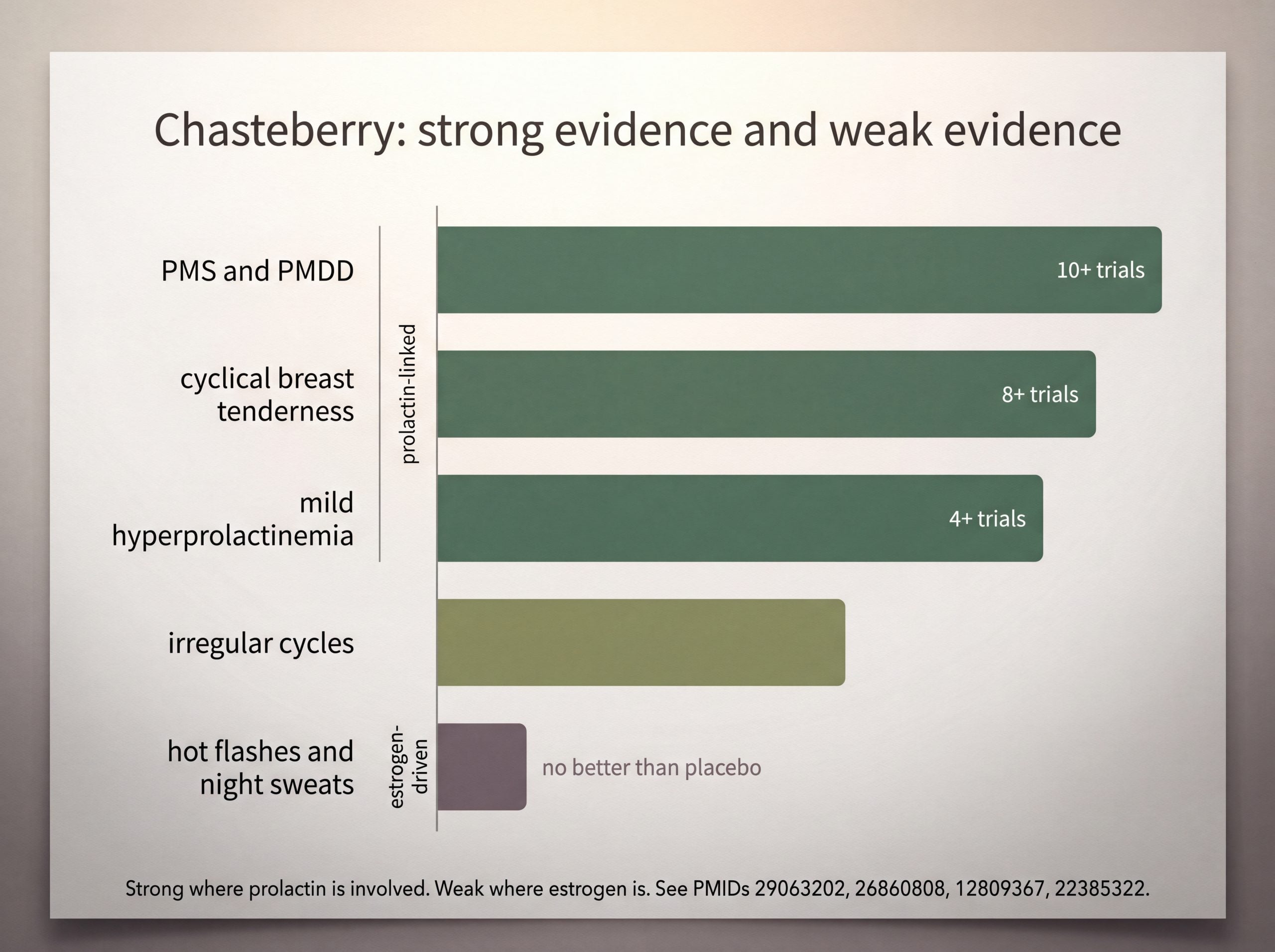
Most pages about chasteberry blur its indications into one vague promise of hormone balance. The literature does not support that framing, and our editorial team’s read of it is that the evidence is sharply asymmetric. Chasteberry has genuinely good trial support for a specific cluster of indications, and genuinely weak support for another. Knowing which is which is the difference between a herb that helps you and a herb that wastes three months of your time.
| Indication | Strength of evidence for chasteberry | What the research shows |
|---|---|---|
| PMS and PMDD | Strong | Eight of eight randomized trials favored Vitex (PMID: 29063202). Meta-analysis: 2.57x more likely to see remission than placebo, 95% CI 1.52 to 4.35 (PMID: 31780016). |
| Cyclical breast tenderness (mastalgia) | Strong | Placebo-controlled trial in 159 women showed clear pain reduction (PMID: 26860808). Comparable to bromocriptine across twelve trials (PMID: 23136064). Approved for this use by German Commission E. |
| Mild or latent hyperprolactinemia | Strong mechanism, limited trials | Clerodadienol diterpenes bind dopamine D2 receptors and suppress prolactin release (PMID: 12809367). Plausible role in selected patients, though large trials are absent (PMID: 38075075). |
| Irregular cycles and luteal-phase support | Moderate | Normalized shortened luteal phase and raised mid-luteal progesterone in latent hyperprolactinemia trials (PMID: 23136064). Not tested directly in perimenopausal cycle irregularity. |
| Hot flashes and night sweats | Weak. No better than placebo. | Agnus castus as monotherapy did not beat placebo for climacteric complaints (PMID: 22385322), and rigorous menopause-specific trials do not exist (PMID: 19678775). The stronger evidence here belongs to black cohosh and red clover (PMID: 34946512). See our guide to black cohosh and dong quai for women. |
| Sources: peer-reviewed systematic reviews, meta-analyses, and randomized controlled trials indexed on PubMed. PMIDs cited inline above. | ||
The pattern in that table is not an accident. Every indication where chasteberry performs well is one where prolactin is plausibly involved, which is exactly what its dopaminergic mechanism would predict. Every indication where it disappoints is one driven by falling estrogen, which chasteberry does not supply and does not meaningfully influence. The herb is not weak. It is specific. A herb that reliably does one thing is more useful than a herb that vaguely claims to do everything, provided you know which thing it does.
If your most disruptive symptoms are cyclical breast pain, unpredictable cycle length, or PMS-type mood shifts in the luteal phase, chasteberry is a reasonable herb to consider. If your most disruptive symptom is hot flashes, it is not, and our article on herbs that support hormonal systems maps the wider field. For an adaptogenic approach to the perimenopausal transition, our team has also examined the evidence on ashwagandha for perimenopause.
Final Thoughts
Vitex agnus-castus, or chasteberry, is a well-established herbal remedy with a long history of use for women’s hormonal health. Its potential to influence pituitary function and normalize prolactin levels provides a plausible mechanism for assisting with certain perimenopause symptoms, especially menstrual irregularities, breast tenderness, and PMS-like mood issues.
However, it is not a panacea. The evidence for its effectiveness specifically for hot flashes commonly associated with menopause is less robust compared to other herbs. As with any natural supplement, especially one influencing hormonal pathways, careful consideration of its safety profile, potential side effects, and interactions is necessary.
Working with a knowledgeable healthcare provider is the recommended approach to determine if this herb is a suitable part of your strategy for navigating the perimenopausal transition. They can help assess your individual needs, rule out contraindications, and integrate it safely with any other treatments you may be using. Natural medicine offers valuable tools, and informed, personalized use is key to achieving the best outcomes for your health and well-being during this significant life stage.
Frequently Asked Questions About Chasteberry and Perimenopause
How long does chasteberry take to work?
Give it three full menstrual cycles, or roughly eight to twelve weeks. Chasteberry supplies no hormone and acts on pituitary prolactin output through dopamine D2 receptors, so its effects only become visible across complete cycles. The randomized trials that found a benefit ran for three consecutive cycles before measuring results (PMID: 31780016). Stopping at three or four weeks is the most common reason people conclude it did not help them.
How effective is chasteberry for perimenopausal mood symptoms?
The evidence is strongest in premenstrual syndrome rather than perimenopause specifically. A meta-analysis found women on standardized Vitex extract were 2.57 times more likely to see symptom remission than women on placebo, with a 95 percent confidence interval of 1.52 to 4.35 (PMID: 31780016), and a systematic review found all eight randomized PMS and PMDD trials favored it (PMID: 29063202). Perimenopausal mood symptoms often resemble PMS, but the extrapolation has not been tested directly in a trial.
Does chasteberry help with hot flashes?
The evidence says no. A systematic review found Agnus castus as a standalone treatment performed no better than placebo for climacteric complaints (PMID: 22385322), and a dedicated review concluded that rigorous menopause-specific trials do not exist (PMID: 19678775). Black cohosh and red clover carry the more consistent trial support for vasomotor symptoms (PMID: 34946512). If hot flashes are your primary symptom, chasteberry is likely the wrong herb.
What is the recommended chasteberry dosage for perimenopausal women?
The extract matters more than the milligram figure. Trials that produced positive results used two specific standardized preparations, Ze 440 and BNO 1095, and a meta-analysis excluded eighteen of twenty-one published trials because they failed to characterize their extract adequately (PMID: 31780016). Look for a stated drug-to-extract ratio and a named standardization marker such as agnuside or casticin, take it once daily in the morning, and give it three cycles.
Are there side effects or drug interactions with chasteberry?
Side effects are typically mild and reversible, most often nausea, headache, gastrointestinal upset, changes in menstrual flow, acne, or mild rash. The only systematic review of chasteberry adverse events found no confirmed drug interactions reported in the literature, though it flags a theoretical interaction with dopamine agonists and antagonists based on the herb’s D2-receptor mechanism (PMID: 15783241). Avoid chasteberry in pregnancy and while breastfeeding, and consult your healthcare provider if you take hormonal contraceptives, hormone replacement therapy, or dopamine-affecting medications.
How does chasteberry compare to other herbs for perimenopause?
Chasteberry is specific rather than general. Its evidence is strong for PMS, cyclical breast tenderness, and mild hyperprolactinemia, all indications where prolactin is plausibly involved, which is what its dopaminergic mechanism predicts. Its evidence is weak for hot flashes and night sweats, which are driven by falling estrogen that chasteberry does not supply. Choose it for cycle and breast symptoms. Choose differently for vasomotor symptoms.