Key Takeaways
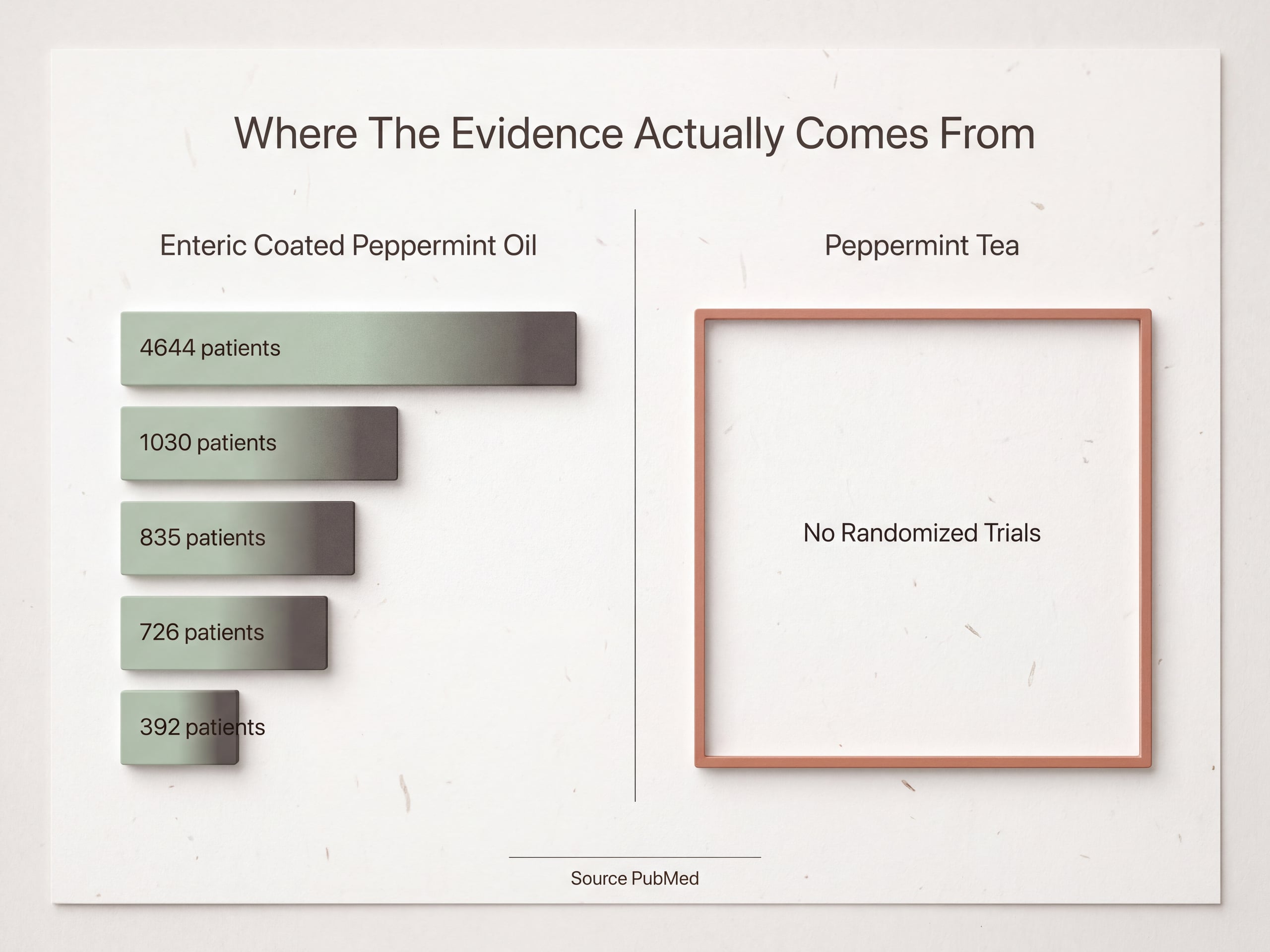
- The clinical trial evidence for peppermint and bloating tested enteric-coated peppermint oil capsules, not peppermint tea. No randomized trial has tested the tea itself.
- Across 12 randomized trials of 835 patients, peppermint oil improved global digestive symptoms with a number needed to treat of three (Alammar et al. 2019, BMC Complement Altern Med, PMID: 30654773).
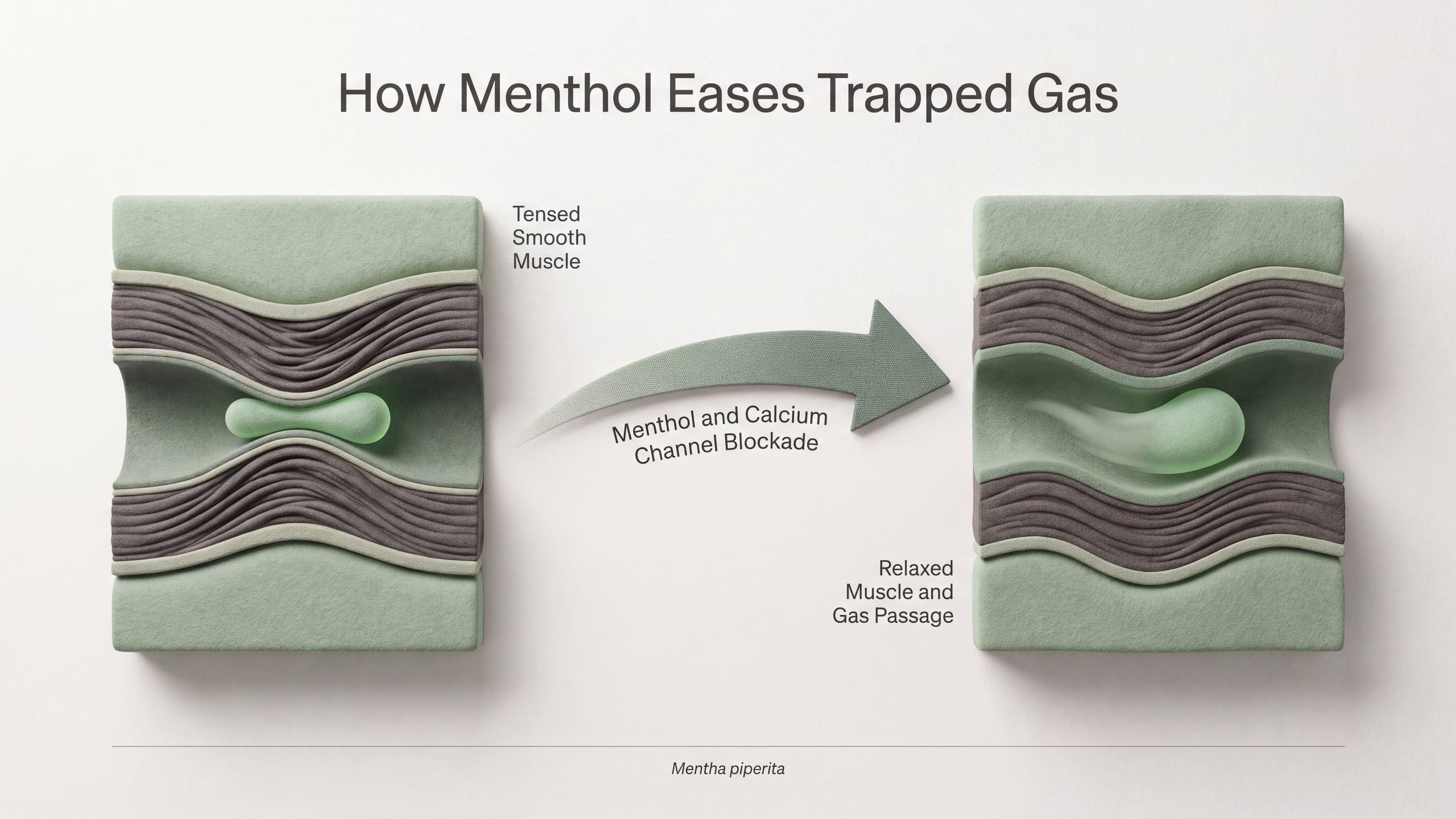
- Menthol relaxes intestinal smooth muscle by blocking calcium channels, which lets trapped gas move through instead of building up (Chumpitazi et al. 2018, Aliment Pharmacol Ther, PMID: 29372567).
- The same muscle-relaxing action loosens the lower esophageal sphincter, which is why peppermint can worsen reflux. Heartburn was the most commonly reported adverse event in the pooled trial data.
- Peppermint tea is a low-risk traditional practice with a shared mechanism and a thinner evidence base than the oil. Both of those things are true at once.
Bloating is one of the most common reasons people reach for an herbal infusion, and peppermint is almost always the first herb suggested. In our editorial team’s review of the current research literature, we found something that most articles on this topic step around: the studies everyone cites tested peppermint oil capsules, not peppermint tea. That distinction changes how the tea should be described, and it is worth being straight about.
This guide covers what causes bloating, how Mentha piperita acts on the digestive tract, what the trial data actually measured, how much tea people typically drink, and the specific situations where peppermint is the wrong choice. We have kept the traditional-use context intact, because a long record of household use is real information even when it is not trial evidence. We have simply stopped letting the oil’s research stand in for the tea’s.
What Causes That Uncomfortable Bloated Feeling?
Bloating is a sensation of abdominal fullness, tightness, or visible distension, usually driven by gas accumulating in the gastrointestinal tract or by slowed transit through it. Before looking at how a Mentha piperita infusion might help, it helps to know which mechanism is producing the discomfort, because the tea addresses some causes and not others.
Defining Bloating and Common Digestive Upsets
Several factors contribute to feeling bloated:
- Gas accumulation. Swallowed air during eating and drinking, plus the gas produced when gut bacteria ferment undigested carbohydrates.
- Indigestion. Difficulty breaking down certain foods, producing discomfort and a sense of fullness.
- Constipation. When stool moves slowly, gas builds behind it.
- Food intolerances. Lactose and gluten are the common ones, though fermentable carbohydrates affect a wider group of people.
- Irritable bowel syndrome. Bloating is among the most frequently reported symptoms in irritable bowel syndrome, and it is the population most of the peppermint research was conducted in.
- Dietary choices. Large volumes of fatty food, carbonated drinks, beans, lentils, and cruciferous vegetables all trigger bloating in some people.
The Cleveland Clinic and Johns Hopkins Medicine both note that persistent or worsening abdominal distension warrants medical assessment rather than self-management, since a small share of cases signal something other than diet.
The Soothing Benefits of Peppermint Infusion for Digestion
Peppermint (Mentha piperita), a sterile hybrid of watermint and spearmint in the Lamiaceae family, eases bloating by relaxing the smooth muscle of the digestive tract so trapped gas can pass. Its principal active compound, menthol, produces that relaxation by blocking calcium channels in intestinal smooth muscle cells. In a pooled analysis of 12 randomized trials covering 835 patients, the concentrated oil form improved global digestive symptoms with a number needed to treat of three (Alammar et al. 2019, BMC Complement Altern Med, PMID: 30654773).
That paragraph carries an important qualifier. The number comes from oil capsules. Peppermint has been used across Western herbalism, Ayurveda, and traditional European household practice for centuries as an after-meal digestive, and that history is what the tea rests on.
How Mentha piperita Tea Eases Bloating
The active compounds in peppermint relax the muscles of the digestive tract. That relaxation allows trapped gas, a major contributor to bloating, to move through and pass more easily, which reduces the sensation of fullness and distension. This is the mechanism behind nearly every traditional use of the plant for digestive complaints.
Calming General Digestive Discomfort
Beyond bloating specifically, peppermint tea is widely used to settle an unsettled stomach. Its calming properties may support comfort during mild indigestion. Many people find a warm cup particularly welcome after a heavy meal, and the warm liquid itself contributes to that effect independently of the herb.
Reducing Excess Gas
Peppermint has carminative properties, meaning it may help reduce the formation of gas in the gastrointestinal tract or assist its passage. This addresses one of the direct causes of bloating rather than only the sensation.
Potential for Easing Mild Abdominal Cramping
The antispasmodic action of peppermint also applies to the mild cramping that often accompanies digestive upset. By relaxing gut muscle, the infusion may lessen the intensity of those spasms. This is a well-documented part of the plant’s traditional profile.
How Peppermint Tea Works: The Science of Digestive Relief
The effect of peppermint on digestion is more than anecdotal. There is a documented pharmacological basis, and it centers on two compounds.
Key Active Compounds in Peppermint: Menthol and Menthone
The primary active components in Mentha piperita responsible for its digestive effects are menthol and menthone.
- Menthol. Best known for its cooling sensation. In the digestive tract, menthol acts as an antispasmodic, relaxing smooth muscle, including the muscle in the intestinal wall. It also carries mild analgesic properties.
- Menthone. A ketone related to menthol. It contributes to the aroma and to the carminative action.
These compounds work together, and both are volatile, which is why brewing technique meaningfully changes how much of them reach the cup.
Mechanisms of Action on Your Digestive System
A 2018 review in Alimentary Pharmacology and Therapeutics catalogued the physiological effects across the whole gastrointestinal tract and identified several distinct mechanisms (Chumpitazi et al. 2018, PMID: 29372567).
Muscle Relaxation in the Gut
When intestinal smooth muscle is tense or spasming, gas gets trapped, and pressure builds. Menthol relaxes that muscle through calcium channel blockade and through direct effects on the enteric nervous system, allowing gas to move and be expelled. The same review documented a second pathway: modulation of visceral sensitivity through transient receptor potential cation channels, which changes how strongly the gut signals discomfort rather than changing the gas volume itself. That two-track action is part of why relief can feel disproportionate to the physical change.
Stimulating Bile Flow for Better Digestion
Peppermint acts as a cholagogue, meaning it stimulates bile flow from the liver and gallbladder, which assists the breakdown of dietary fat and can reduce heaviness after rich meals. The Chumpitazi review confirmed measurable effects on gallbladder physiology alongside effects on the esophagus, stomach, small bowel, and colon (PMID: 29372567). That same gallbladder activity is the reason peppermint is inadvisable for anyone with gallstones or a known bile duct obstruction. The benefit and the caution come from one mechanism, and honest guidance has to state both.
Effectiveness: Traditional Use and What the Research Measured
Peppermint has a long record of use across cultures for upset stomach, nausea, and gas. That history is the foundation of its continued popularity, and it is legitimate evidence of tolerability and of perceived benefit, even though it is not clinical evidence of efficacy.
Modern research has focused almost entirely on peppermint oil, because the oil delivers a standardized and far higher concentration of the active compounds. In our editorial team’s read of the trial literature, that focus is not a small technical detail. It is the single most misreported point in consumer writing about this herb, and the next section addresses it directly.
What Does the Research Actually Show: Peppermint Oil or Peppermint Tea?
Every major clinical trial and meta-analysis of peppermint for digestive symptoms tested peppermint oil, usually in enteric-coated capsules. None of them tested peppermint tea. Anyone quoting a percentage or a success rate for peppermint tea is borrowing a number that was measured on a different preparation.
The Trial Evidence Is for Enteric-Coated Peppermint Oil
Here is what the pooled data shows, and every row of it comes from oil.
| Analysis | Trials and patients | Key finding |
|---|---|---|
| Alammar et al. 2019, BMC Complement Altern Med, PMID: 30654773 | 12 trials, 835 patients | Risk ratio 2.39 for global symptom improvement. Number needed to treat of three. |
| Ingrosso et al. 2022, Aliment Pharmacol Ther, PMID: 35942669 | 10 trials, 1,030 patients | Number needed to treat of four. Adverse events more frequent than placebo. Authors graded the quality of evidence as very low. |
| Black et al. 2019, Lancet Gastroenterol Hepatol, PMID: 31859183 | 51 trials, 4,644 patients | Peppermint oil ranked first among traditional therapies for global symptom improvement. |
| Khanna et al. 2014, J Clin Gastroenterol, PMID: 24100754 | 9 studies, 726 patients | Risk ratio 2.23 for global improvement. Most commonly reported adverse event was heartburn. |
| Ford et al. 2008, BMJ, PMID: 19008265 | 4 trials, 392 patients | Risk ratio 0.43 for persistent symptoms. The original pooled signal. |
| Source: PubMed. All five analyses evaluated peppermint oil preparations. Reviewed by the Back To Your Roots Herbs Editorial Team, August 2026. | ||
Note the honest tension inside that table. Black and colleagues ranked peppermint oil first among traditional irritable bowel therapies. Ingrosso and colleagues, updating their own earlier work, graded the quality of the underlying evidence as very low and called for adequately powered trials. Both findings are real. A source that quotes only the first one is selling something.
Why Enteric Coating Matters
Enteric coating is not a marketing detail. It is the reason the capsules were designed that way. An uncoated dose of menthol is absorbed high in the digestive tract, in the stomach, where it relaxes the lower esophageal sphincter on the way past and does little for the intestinal muscle further down. The coating carries the oil through the stomach intact so it releases in the small intestine, where the spasming muscle actually is. Peppermint tea has no coating. Whatever menthol it delivers is absorbed high, in the stomach, which is both why the tea is gentler and why it is a poor delivery vehicle for the specific effect the trials measured.
What Professional Guidelines Say
The American College of Gastroenterology published its first clinical guideline for the management of irritable bowel syndrome in 2021, assessing sixteen therapeutic questions using GRADE methodology (Lacy et al. 2021, Am J Gastroenterol, PMID: 33315591). Peppermint appears in that guideline as a suggested option for relief of global symptoms, graded as a conditional recommendation on low-quality evidence. Conditional means the panel judged the benefit likely to outweigh the burden for most patients while acknowledging that the underlying trials were not strong. Again, the therapy assessed was peppermint oil.
So Does Peppermint Tea Do Anything?
Most likely yes, and modestly. The tea contains the same active compounds at a lower concentration, delivered without enteric coating. The mechanism is shared. The warm liquid contributes its own settling effect. Centuries of household use across multiple traditions suggest it is well tolerated and that people find it worth repeating.
What cannot be claimed is a trial-measured effect size, because nobody has measured one. From our hands-on assessment of how this topic is written about across the wider web, the responsible framing is this: peppermint tea is a low-risk traditional practice for occasional bloating, and enteric-coated peppermint oil is the studied intervention. Choosing the tea is reasonable. Citing the oil’s numbers for it is not.
Preparing and Using Peppermint Tea for Digestive Support
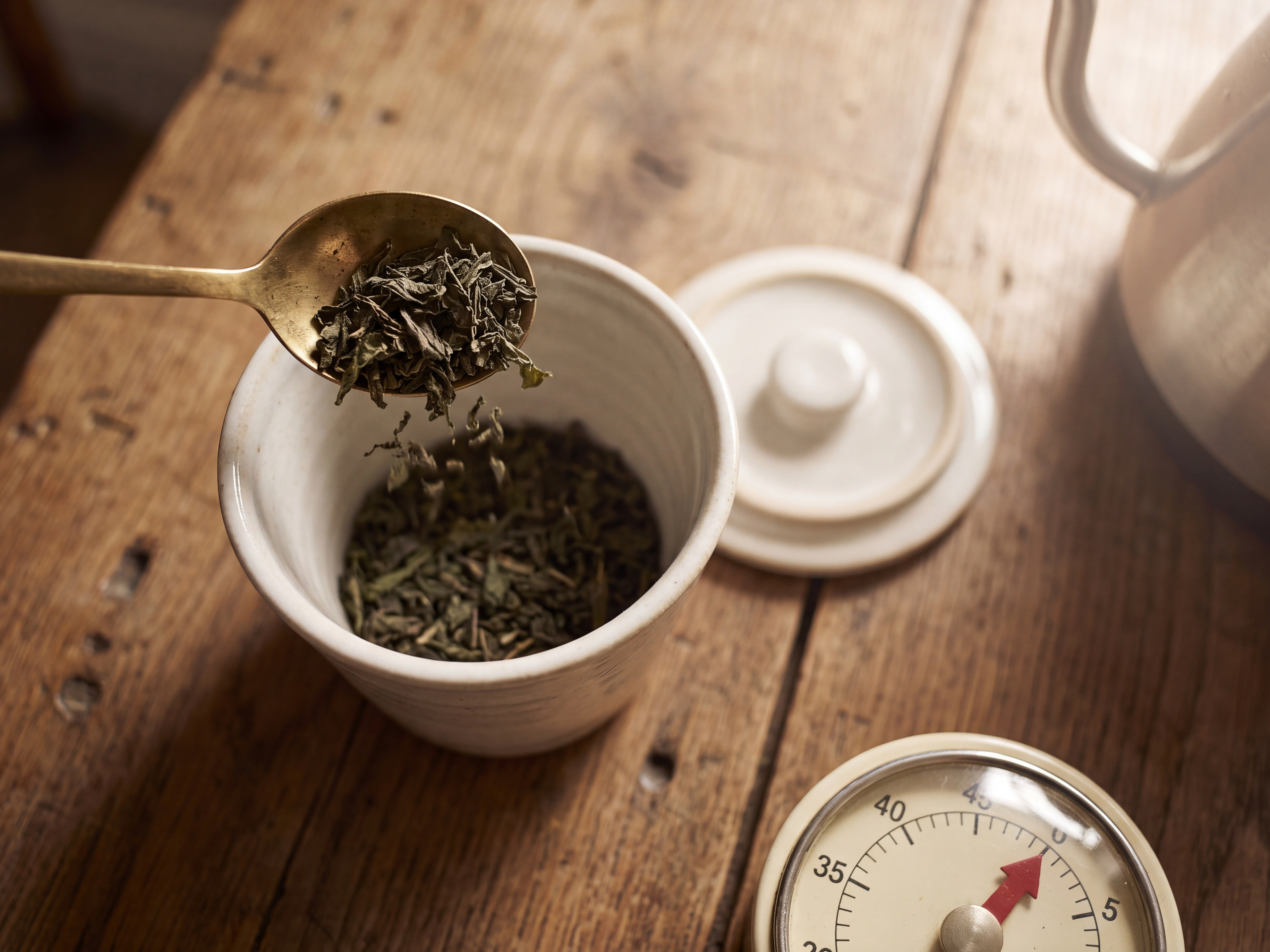
Because menthol and menthone are volatile, preparation changes how much of them survives into the cup. Technique matters more here than it does with most infusions.
Choosing Quality Peppermint for Your Tea
Choose high-quality peppermint leaf, fresh or dried. Certified organic material avoids pesticide residue. Good leaf carries a strong, immediate aroma when you open the container, which indicates a higher remaining concentration of volatile oil. Faint or hay-like smell means the volatiles have already dissipated, and no amount of steeping recovers them. In our sourcing experience, aroma at the point of opening is the single most reliable field test a home buyer has for peppermint leaf quality.
Brewing the Perfect Cup for Digestive Aid
- Water temperature. Use freshly boiled water cooled slightly, around 200 degrees Fahrenheit or 93 degrees Celsius. Fully boiling water can scorch delicate leaf.
- Steeping time. Steep leaf or tea bag for 5 to 10 minutes. Longer steeping extracts more of the active compounds.
- Cover the cup. Covering the vessel while it steeps keeps the volatile oils, menthol included, from leaving with the steam. This is the step most people skip and the one that changes the cup most.
When to Drink Peppermint Tea for Bloating
For digestive purposes, peppermint tea is typically taken:
- After meals. The traditional after-dinner use, aimed at the period when bloating usually develops.
- When symptoms arise. A cup at the point of discomfort.
- Before bed. It contains no caffeine, which makes it workable in the evening. Anyone whose reflux is worse lying down should treat the evening cup with more caution than the after-lunch one.
How Much Peppermint Tea Should You Drink for Bloating?
Most adults who use peppermint tea for occasional bloating drink one to three cups per day. Practical guidance:
- Start with one cup daily and observe how you respond before increasing.
- Take it after meals rather than on an empty stomach if you are prone to any upper digestive irritation.
- Give any single cup 30 to 60 minutes before judging whether it helped.
- If you have gastroesophageal reflux disease, heartburn, or a hiatal hernia, treat any amount as potentially aggravating and speak with your healthcare provider first.
- Stop and consult a professional if bloating is persistent, severe, worsening, or accompanied by weight loss, blood, fever, or vomiting.
This is usage context, not a dose. No therapeutic dose of peppermint tea has been established; for the same reason, there is no efficacy figure for it.
How Fast Does Peppermint Tea Work for Bloating?
People who report relief usually describe it arriving within 30 to 60 minutes of finishing the cup, which is consistent with how quickly warm liquid and volatile compounds reach the upper digestive tract. Response varies widely between individuals and between episodes. If several cups across several days produce nothing, the bloating is likely driven by a mechanism the herb does not address, such as constipation or a specific food intolerance, and the useful next step is identifying that cause rather than increasing the tea.

Important Considerations Before Drinking Peppermint Tea
Peppermint tea is well tolerated by most people. There is a defined set of situations where it is the wrong choice, and they trace back to the same muscle-relaxing action that makes it useful.
GERD and Acid Reflux: A Word of Caution
Peppermint relaxes the lower esophageal sphincter, the ring of muscle separating the esophagus from the stomach. In people with gastroesophageal reflux disease or frequent heartburn, that relaxation permits stomach acid to travel upward and can worsen symptoms. This is not a theoretical concern. In the pooled trial data on peppermint oil, heartburn was the most commonly reported adverse event (Khanna et al. 2014, J Clin Gastroenterol, PMID: 24100754), and adverse events overall were significantly more frequent with peppermint than with placebo (Ingrosso et al. 2022, Aliment Pharmacol Ther, PMID: 35942669). If you have reflux, peppermint is one of the few digestive herbs that can make the problem worse rather than better.
When You Should Not Drink Peppermint Tea
Avoid peppermint tea, or discuss it with a healthcare provider before use, in these situations:
- Gastroesophageal reflux disease, frequent heartburn, or hiatal hernia. The lower esophageal sphincter effect works directly against you.
- Gallstones or known bile duct obstruction. Peppermint stimulates bile flow, which is the opposite of what an obstructed system needs.
- Infants and young children. Menthol should not be applied to or given to infants, and peppermint preparations for young children belong in a pediatrician’s hands rather than a home decision.
- Known mint or Lamiaceae allergy. Uncommon but real.
- Regular prescription medication. See the interaction note below.
- Persistent or unexplained digestive symptoms. Self-managing an undiagnosed problem with tea delays the assessment that would identify it.
Potential Interactions and Allergies
Medication interactions. Peppermint may interact with several medication classes, including acid-reducing drugs, some diabetes medications, and some blood pressure medications. Peppermint constituents also influence hepatic drug-metabolizing enzymes, which means the concern extends past the digestive-specific drugs. If you take any medication regularly, talk with your prescriber before making peppermint tea a daily habit.
Allergies. Allergic reaction to mint is uncommon but possible. Reported presentations include skin rash, flushing, headache, and in sensitive individuals, asthma symptoms. Menthol can also cause mouth irritation or mouth sores in some people.
Guidance for Pregnancy and Breastfeeding
Pregnant and breastfeeding women should consult a healthcare provider before using peppermint tea in any deliberate or therapeutic way. Occasional culinary consumption is generally regarded as acceptable. Large or sustained amounts are not recommended, and the reflux risk is worth noting given how common heartburn is during pregnancy.
Peppermint Tea as a Supportive Remedy, Not a Cure
Peppermint tea supports comfort during mild, occasional bloating and gas. It does not address serious underlying conditions. Persistent, severe, or worsening digestive symptoms need a professional assessment to identify what is actually driving them.
Peppermint Tea vs Ginger, Fennel and Chamomile for Gas and Bloating
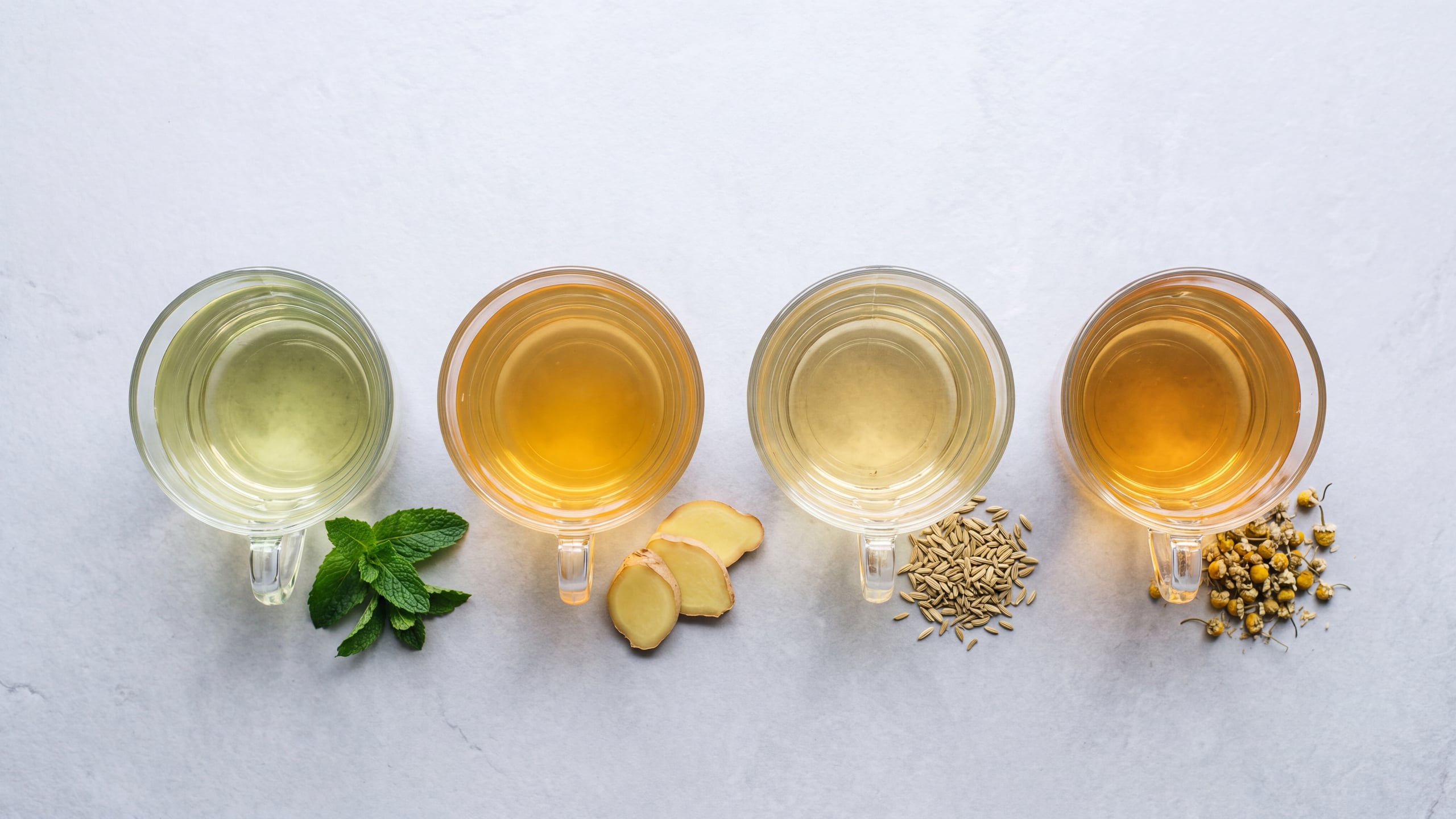
Peppermint is not the only herbal infusion used for digestive complaints, and it is not automatically the best fit. The right choice depends on which symptom dominates and on whether reflux is part of your picture.
| Tea | Primary action | Best suited to | Typical steep | Main caution |
|---|---|---|---|---|
| Peppermint (Mentha piperita) | Antispasmodic, relaxes intestinal smooth muscle via calcium channel blockade | Sharp gas pain, cramping, distension after meals | 5 to 10 minutes, covered | Can worsen reflux and heartburn. Avoid with gallstones. |
| Ginger (Zingiber officinale) | Prokinetic, speeds gastric emptying | Nausea and a sense of food sitting in the stomach | 10 minutes, longer for fresh root | May thin blood at high intake. Can irritate at large doses. |
| Fennel (Foeniculum vulgare) | Carminative, supports expulsion of gas | Flatulence and gas as the dominant symptom | 10 to 15 minutes, seeds crushed | Anethole content warrants caution in pregnancy. |
| Chamomile (Matricaria chamomilla) | Mild antispasmodic and relaxant | Stress-linked digestive upset, evening use | 5 to 10 minutes, covered | Asteraceae family allergy, including ragweed sensitivity. |
| Compiled by the Back To Your Roots Herbs Editorial Team, August 2026. Traditional use categories, not clinical efficacy rankings. | ||||
The practical read: if gas volume is the problem, fennel is the more targeted carminative. If nausea dominates, ginger. If the discomfort is cramping and spasm, peppermint. And if you have reflux, peppermint is the one entry in this table that can work against you, which is why it appears in that row and nowhere else.
Tips from Experts on How to Stop Bloating Naturally
Herbal infusions address the sensation. Diet and habit address the cause, and the two together do more than either alone.
Dietary Adjustments for a Healthier Gut
- Eat slowly and chew thoroughly. This reduces swallowed air and makes food easier to break down.
- Identify trigger foods. A food diary is unglamorous and effective. Common culprits include beans, lentils, broccoli, onions, carbonated drinks, and artificial sweeteners.
- Increase fiber gradually. Fiber supports digestive health, but a sudden jump causes temporary bloating.
- Stay hydrated. Water keeps material moving through the digestive tract.
- Consider fermented foods. Yogurt, kefir, and sauerkraut support the bacterial balance that governs how much gas fermentation produces.
Lifestyle Habits That Impact Digestion
- Regular physical activity. Movement stimulates bowel motility and reduces gas buildup.
- Manage stress. The gut-brain axis is not a metaphor. Stress alters motility and visceral sensitivity directly.
- Skip gum and straws. Both increase swallowed air.
The Mayo Clinic’s guidance on gas and gas pains covers the same ground from a clinical angle and is worth reading alongside this.
Frequently Asked Questions About Peppermint Tea and Digestive Health
How quickly can peppermint tea help with a bloated stomach?
Most people who notice a benefit describe it within 30 to 60 minutes of finishing the cup. Response varies between individuals and between episodes. If repeated cups across several days do nothing, the underlying cause is probably one peppermint does not address, such as constipation or a specific food intolerance.
Is it okay to drink peppermint tea daily for digestive issues?
For most healthy adults, one to three cups daily is generally considered acceptable as part of a routine for mild digestive discomfort. If you have gastroesophageal reflux disease, a hiatal hernia, gallstones, or take regular medication, check with your healthcare provider first. Reduce or stop if you notice heartburn, mouth irritation, or any adverse response.
Can peppermint tea help with IBS symptoms like bloating?
The evidence in irritable bowel syndrome is for enteric-coated peppermint oil, not tea. Across 12 randomized trials of 835 patients, the oil improved global symptoms with a number needed to treat of three (Alammar et al. 2019, PMID: 30654773). No randomized trial has tested peppermint tea in irritable bowel syndrome. Many people with the condition find the tea soothing, and that is a reasonable thing to try, but it should not be presented as the studied intervention.
What is the difference between peppermint tea and peppermint oil for relieving bloat?
Peppermint tea is an infusion of the leaf in hot water. Peppermint oil is a concentrated extract of the plant’s volatile oils, usually supplied in enteric-coated capsules that pass through the stomach intact and release in the small intestine. That coating is the functional difference. Menthol from tea is absorbed high in the digestive tract, where it can loosen the lower esophageal sphincter without reaching the intestinal muscle the trials targeted. The oil is the studied preparation. The tea is the gentler traditional one.
Are there side effects to drinking peppermint tea for digestion?
Peppermint tea is generally well tolerated. Reported effects include heartburn, especially in people with reflux, allergic responses such as rash or flushing, mouth sores from menthol in sensitive individuals, and nausea or loose stool at very high intake. In the pooled peppermint oil trials, adverse events were significantly more frequent than with placebo, with heartburn the most common (PMID: 35942669, PMID: 24100754). Start small and observe your response.
When should you not drink peppermint tea?
Avoid it, or ask a healthcare provider first, if you have gastroesophageal reflux disease, frequent heartburn, or a hiatal hernia, if you have gallstones or a known bile duct obstruction, if you have a mint allergy, or if you take regular prescription medication. Peppermint preparations for infants and young children should be a pediatrician’s call rather than a home decision.
Does peppermint tea help with belly fat?
No. This is worth correcting plainly. Peppermint tea may reduce the sensation of abdominal fullness and visible distension caused by trapped gas, which can make the abdomen feel and briefly look flatter. That is gas, not fat. No herbal infusion reduces adipose tissue, and peppermint tea has no established effect on body weight or body composition. If a product markets it that way, the claim is not supported.
Which tea gets rid of bloating fastest?
There is no head-to-head trial establishing a fastest option, so any ranking is traditional rather than measured. In practice, the fit depends on the dominant symptom: fennel is the more targeted carminative when gas volume is the issue, ginger suits nausea and slow gastric emptying, peppermint suits cramping and spasm, and chamomile suits stress-linked upset and evening use. Peppermint is the only one of the four that can worsen reflux.
Is ginger tea better than peppermint for gas?
They act differently. Ginger (Zingiber officinale) is prokinetic, meaning it speeds gastric emptying, which helps when food feels stuck and when nausea is present. Peppermint is antispasmodic, which helps when muscle tension is trapping gas and producing cramping pain. For gas specifically, fennel (Foeniculum vulgare) is the more traditional carminative choice than either. Anyone with reflux has a clearer reason to choose ginger or fennel over peppermint.
Related Reading
Continue with our related articles on the best herbs for digestive health, natural remedies for acid reflux, and gut health and immunity. Readers dealing with bloating driven by slow transit may also want our guide to senna and constipation.
These statements have not been evaluated by the Food and Drug Administration. This product is not intended to diagnose, treat, cure, or prevent any disease. Peppermint tea is a traditional herbal beverage, not a medical treatment for bloating, irritable bowel syndrome, gastroesophageal reflux disease, or any other condition. Consult your healthcare provider before use, particularly if you are pregnant, breastfeeding, taking prescription medication, or managing a diagnosed digestive condition.