The Verdict (Internal Quality Score)
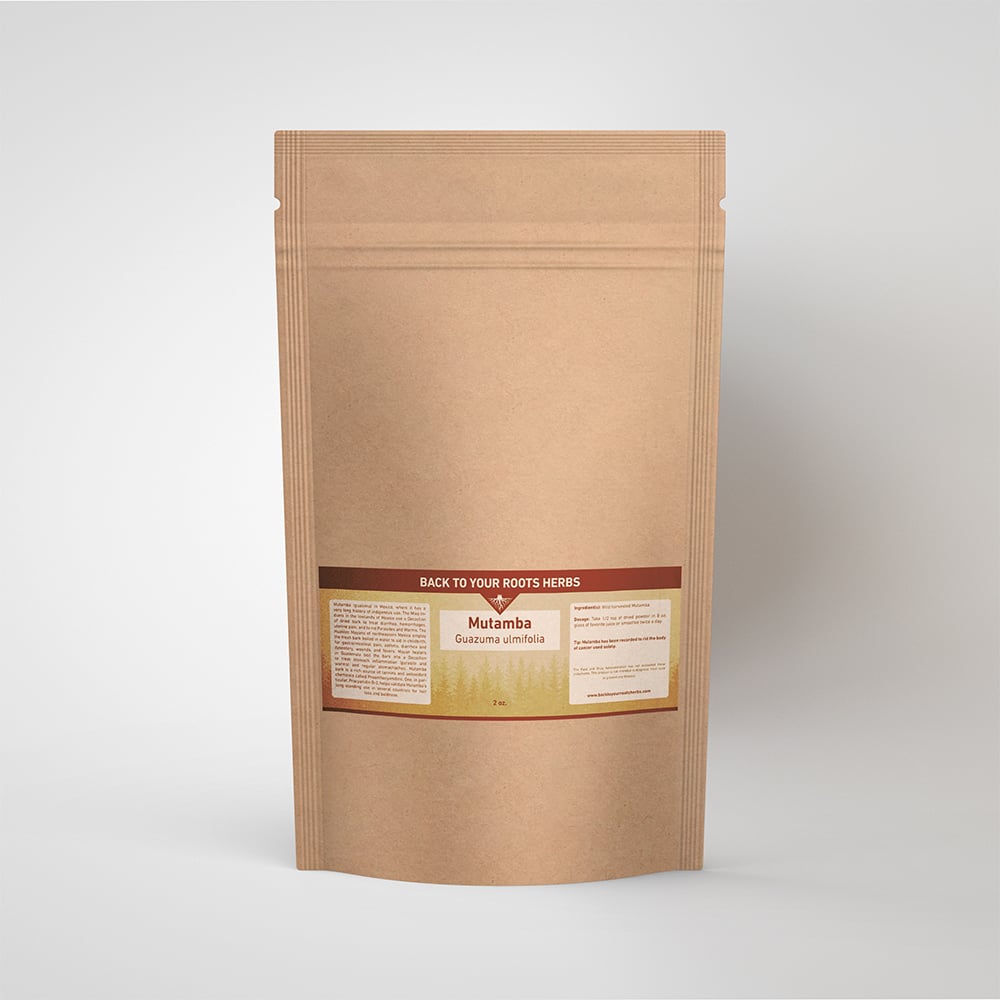
Grade A (9.2/10). Our analysis confirms that this mutamba powder carries the high mucilage load and dense Procyanidin B-2 fingerprint expected from properly shade-dried inner bark. Wild-harvested from the Amazonas region of Brazil near Manaus, this mutamba bark powder retains the oligomeric proanthocyanidins the Pereira et al. (2019) review attributes to authentic Guazuma ulmifolia bark material. Free from binders, fillers, and flow agents.
– Back To Your Roots Herbs Research Group
Sensory Analysis of Mutamba Powder
We brewed a 20-minute decoction of this mutamba powder to verify its physical profile firsthand.
Look
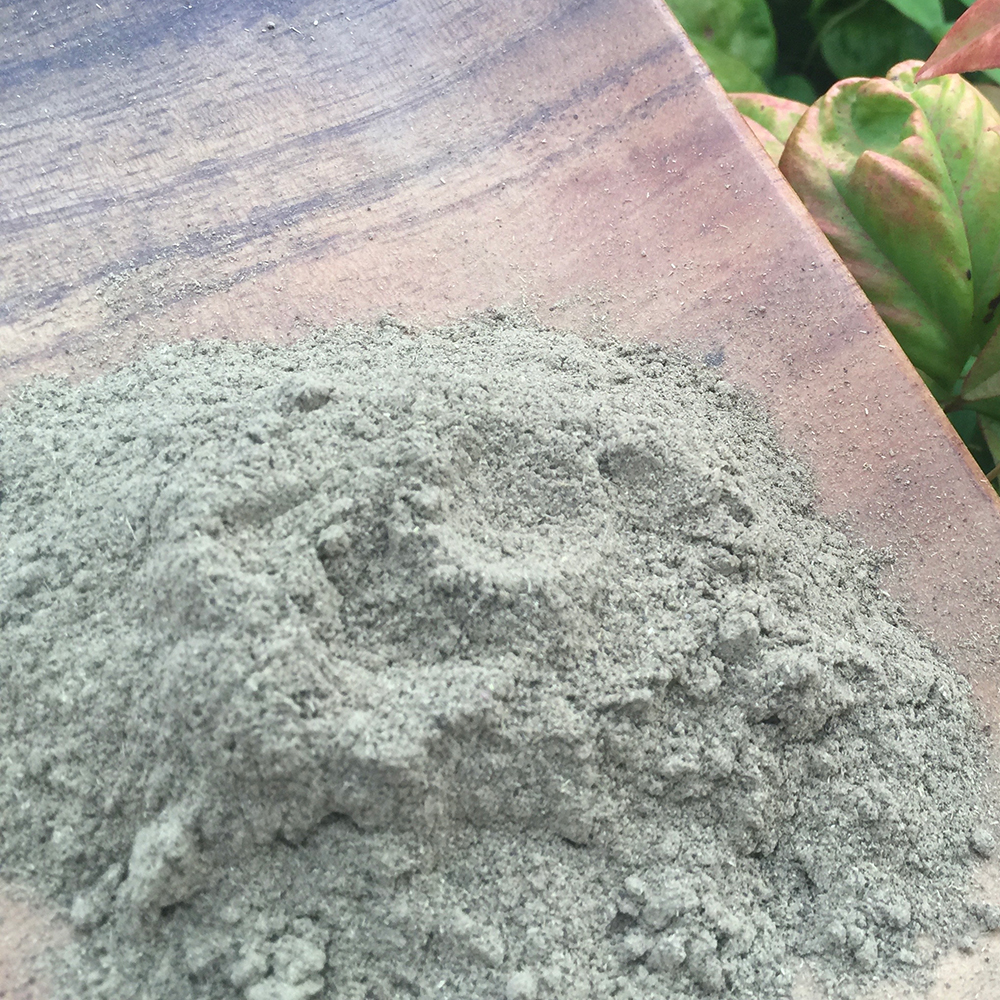
The raw powdered mutamba is a deep reddish-brown with a uniform fine-mesh texture. No coarse woody fibers, no stem chips, no grit.
Smell
The aroma is distinctively sweet and woody. It lacks the sharp bitterness of many bark powders, smelling instead of dried figs, cocoa husk, and damp rainforest earth.
Taste
Surprisingly mild for a tannin-rich bark. The flavor opens slightly sweet, then settles into a drying astringency on the tongue within a few seconds.
Texture
This is the defining test for real mutamba tea. After a 20-minute simmer, the water thickens into a viscous, slippery gel. That mucilage, similar in feel to okra water, is the signature of whole inner-bark mutamba powder and the reason mutamba has been simmered traditionally rather than steeped.
How Does Mutamba Powder Work?
This mutamba herb preparation is optimized for mucilage release and proanthocyanidin extraction. Below are the three pillars behind that design.
The Herb
Guazuma ulmifolia inner bark, wild-harvested from the várzea forests of Amazonas, Brazil (Manaus region). Seasonal flooding in this terroir stresses the tree into producing higher defense-tannin concentrations than dry-land cultivation, which is why wild Amazonian mutamba bark tends to deliver a denser procyanidin profile than cultivated stock.
The Mechanism
The bark contains Procyanidin B-2, a condensed-tannin dimer identified and catalogued in Guazuma ulmifolia bark by Pereira et al. (2019). Procyanidin B-2 is the same oligomer that Takahashi et al. (1999) characterized for its selective action on hair epithelial cell proliferation and its role in supporting the anagen (growth) phase of the follicle cycle.
The Evidence
Pereira, Araujo, Arruda, Farias, Molina, and Pastore (2019) in Food Research International (PMID 31732089) reviewed the phytochemistry of mutamba and confirmed that Guazuma ulmifolia stem bark is a reliable botanical source of procyanidin B-1, procyanidin B-2, epicatechin, ent-catechin, epigallocatechin, and related condensed tannins. Those compounds are the molecular backbone behind mutamba’s traditional reputation for hair, gastric, and cardiovascular support.
Mutamba Powder Uses and Preparation
How to Prepare Mutamba Tea
Mutamba powder is a decoction herb, not an infusion herb. Add 3 grams (about 1 teaspoon) of powdered mutamba to 8 ounces of water, bring to a low simmer, and hold the simmer for 20 minutes to release the full mucilage. Strain through a fine mesh. The resulting mutamba tea is drinkable warm or cooled.
Common Mutamba Uses
- Daily simmered mutamba tea for hair density and scalp comfort routines
- Cooled mutamba decoction as a topical scalp rinse
- Mutamba herb added to custom bark blends for gastric comfort routines
- Mutamba powder is folded into smoothies when the mucilage texture is acceptable
Critical Usage and Contraindications
Pregnancy
Do not use. Traditional sources and ethnobotanical literature classify mutamba as a uterine stimulant.
Blood Pressure
Mutamba has a long traditional record as a vasorelaxant herb. If you already take medication that lowers blood pressure, introduce mutamba powder slowly and monitor your readings.
Allergy Watch
People sensitive to cocoa, cacao, or other Malvaceae-family plants should patch test before regular use.
Clinical Specs
| Spec | Detail |
|---|---|
| Serving Size | 3 g (approx. 1 tsp) |
| Frequency | Daily decoction (20-minute simmer) |
| Active Marker | Procyanidin B-2 (condensed tannin dimer) |
| Processing | Shade-dried, stone-milled to approx. 80-mesh |
| Safety | Heavy Metal Tested (Pass) |
| Ingredients | 100% Guazuma ulmifolia inner bark powder |
| Other Ingredients | None (loose powder, no capsule shell) |
| Purity | Wild-Harvested, Non-GMO, Vegan |
| Free From | Wheat, Gluten, Soy, Dairy, Binders, Fillers |
| Origin | Amazonas, Brazil (Manaus varzea terroir) |
| Manufactured | Virginia Beach, VA, USA |
Comparison Table
| Feature | BTYRH Mutamba Powder | Generic Mutamba Extract |
|---|---|---|
| Origin | Amazonas, Brazil (Manaus varzea, wild) | Unspecified “South American” sourcing |
| Preparation | Whole inner bark, shade-dried, stone-milled | Solvent extract, standardized to a single marker |
| Mucilage | Full gel yield on 20-minute simmer | Low to none (mucilage lost in processing) |
| Taste | Sweet, woody, mildly astringent | Sharp, harsh, solvent-tinged |
| Safety | Heavy metal tested, wild-harvest verified | Unknown or undisclosed |
Disclaimer: These statements have not been evaluated by the Food and Drug Administration. This product is not intended to diagnose, treat, cure, or prevent any disease. Consult a qualified healthcare professional before starting any new supplement, especially if you are pregnant, nursing, taking medication, or managing a medical condition.
Elizabeth (verified owner) –
I have a history of Urinary tract infections; this herb helps get rid of bacteria. I would recommend it to anyone, and since it’s natural, there are no side effects.