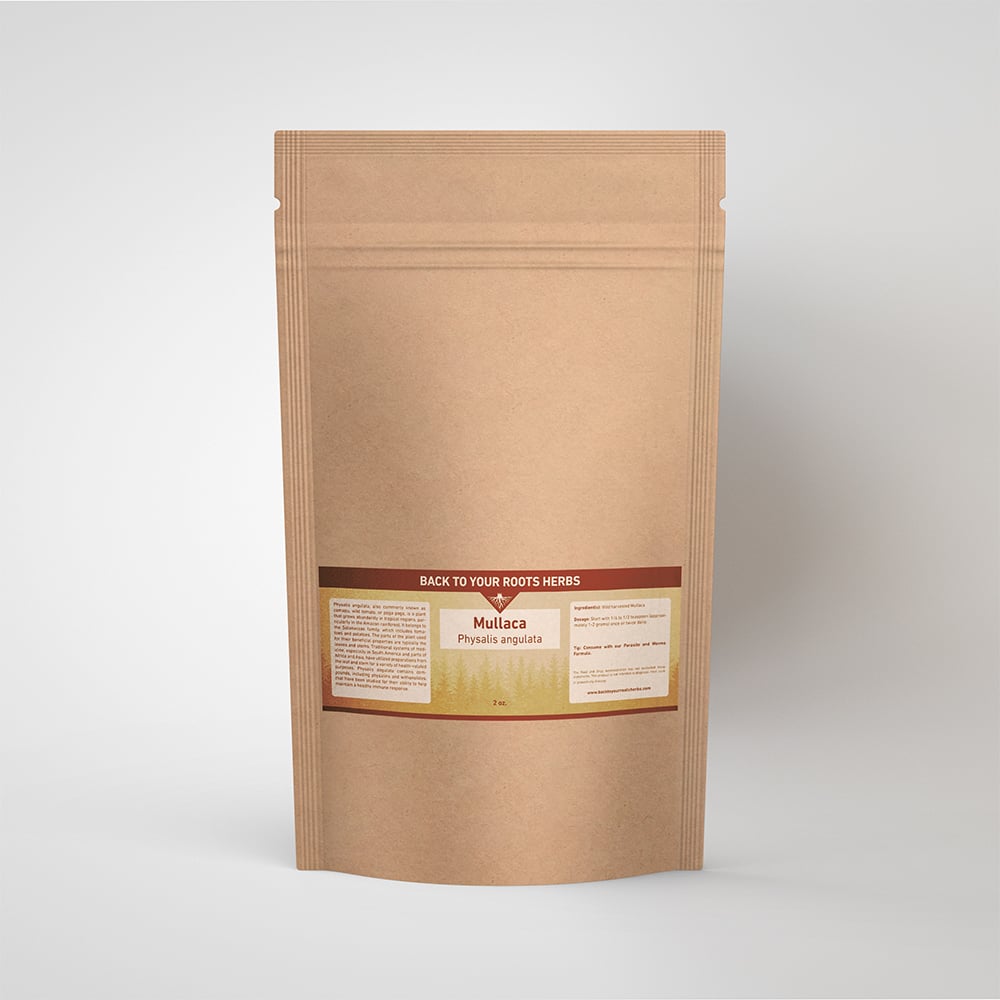
Wild-Harvested Mullaca Powder from the Peruvian Amazon
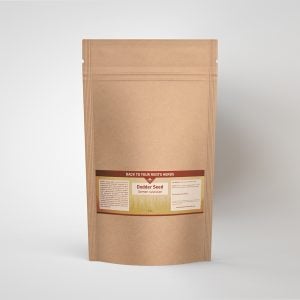
Back To Your Roots Herbs Mullaca Powder is a single-ingredient botanical powder milled from the sun-warmed aerial parts of Physalis angulata, a pioneer herb of the Peruvian Amazon. This is not a standardized extract, and this is not a capsule blend. The pouch contents are the whole herb, air-dried and ground to 80 mesh, preserving the native matrix of physalins, flavonoids, and plant chemicals that distinguish mullaca from every other botanical powder on the shelf. Every 2 oz pouch of mullaca is filled with wild-crafted herb harvested from the alluvial soils of the Loreto Region of Peru, where rainforest humidity and mineral-rich flood plains give each mullaca plant its signature physalin density.
Mullaca has a long ethnobotanical record in the Amazon as a cooling, bitter herb. Peruvian herbal medicine traditions classify mullaca among plants used to temper heat, balance the immune system, and support the liver during seasonal stress. This pouch honors that record by changing nothing: no extraction, no irradiation, no fillers, no flow agents. What arrives in the pouch is mullaca powder, full stop.
What Makes This Mullaca Powder Different
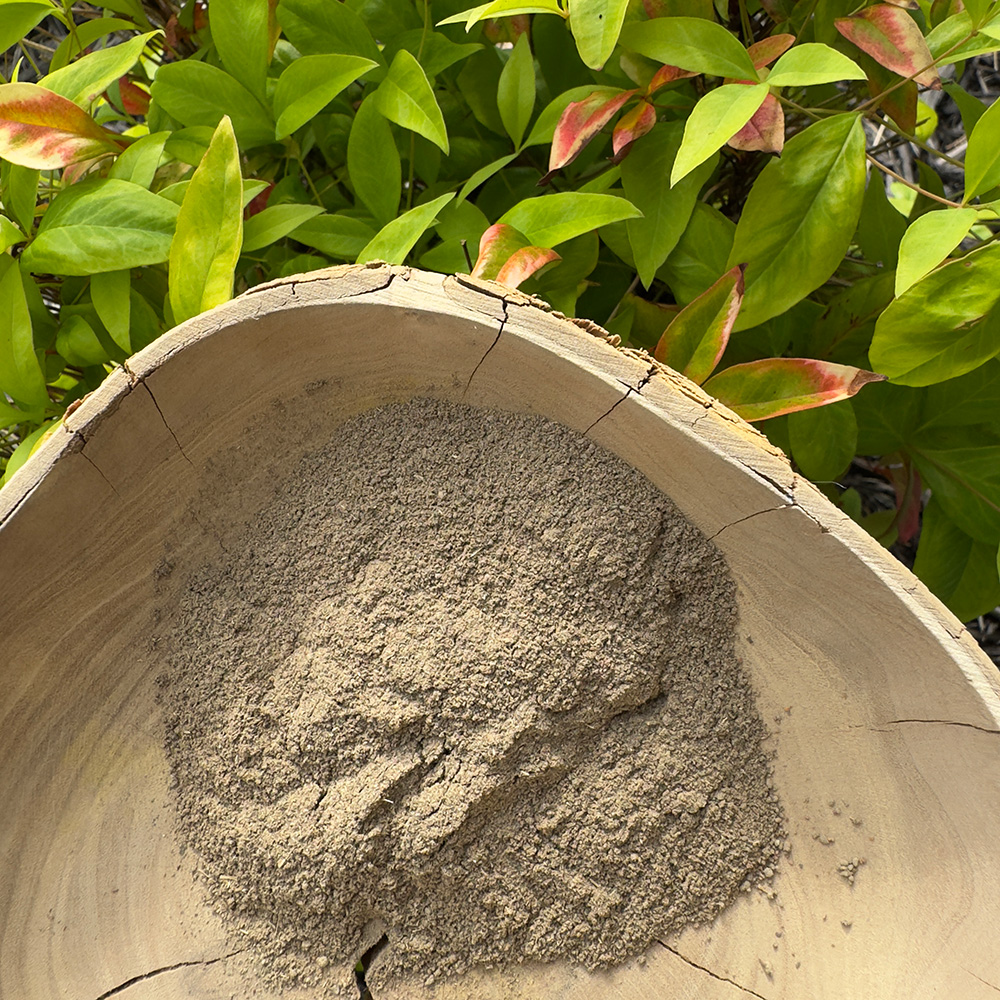
Most mullaca products sold online are either standardized extracts (which concentrate one or two physalins and discard the rest of the plant profile) or blended powders mixed with filler powders. The Back To Your Roots Herbs approach is different. This mullaca powder is 100 percent aerial parts of Physalis angulata, wild-harvested in Peru, shade-dried, then milled in small batches. The resulting powder is olive-green, fine-textured, and aromatic of wet leaf and rainforest floor.
Wild-Crafted Harvest Profile
The mullaca plants that produce this powder grow without cultivation, without pesticides, and without irrigation. They volunteer along forest edges and in disturbed ground near the Amazon River basin. Harvesters collect the aerial parts by hand during the dry window that follows the wet season, which research on Amazonian herbs and ethnobotany associates with peak plant chemical concentration in mullaca leaf and stem tissue.
Loreto Region Terroir Signature
The Loreto Region of Peru sits at roughly 4.37 degrees south latitude and 73.84 degrees west longitude, placing this mullaca harvest squarely inside the Peruvian Amazon rainforest belt. The alluvial soils of this region are enriched by seasonal flooding from the Amazon River and its tributaries, and that mineral profile shows up in the physalin density and chlorophyll saturation of every batch of this herb. A side-by-side visual check between Loreto mullaca and mullaca from drier inland regions will show a noticeably deeper green pigmentation in the Loreto powder. The terroir is the reason.
Soil and Moisture Indicators
Fresh mullaca retains a small amount of ambient moisture from the rainforest. Users sometimes notice that mullaca clumps slightly in humid months. That clumping is not a defect. It is a freshness indicator. Over-dried powder flows like dust and often loses volatile aromatic notes. This powder is dried only to the point where the physalins and flavonoids are stable in storage, and the powder behaves accordingly.
Processing and Grind Standard
After harvest, the mullaca plants are shade-dried on woven racks in open-sided drying structures. Direct sunlight is avoided because it degrades physalins. Once the moisture content is in range, the mullaca is milled through an 80 mesh screen. This grind size is fine enough to brew cleanly in tea and blend into smoothies, but not so fine that the powder drifts or oxidizes rapidly.
80 Mesh Grind Specification
80 mesh is a middle grind. Coarser grinds, such as 40 mesh, leave visible leaf fragments and brew a grassy tea with sediment. Finer grinds, 120 mesh and higher, produce a silky powder that oxidizes faster and loses aromatic compounds during storage. An 80 mesh grind hits the sweet spot: clean in hot water, smooth in smoothies, stable in a sealed pouch.
Air-Dried Preservation
Air-drying takes longer than mechanical or oven drying, but air-drying preserves the heat-sensitive secosteroids that give this herb its signature profile. Physalins are not bulletproof molecules. They tolerate ambient temperature and shade, but they degrade quickly above 45 degrees Celsius. Air-drying keeps the physalin profile intact.
Understanding Mullaca (Physalis angulata)
Mullaca is one of those herbs that sits at the intersection of botany, ethnobotany, and modern plant research. The binomial Physalis angulata places mullaca in the Solanaceae family, the nightshade family, alongside tomato, potato, tomatillo, and ashwagandha. The common English name for mullaca in the United States is cutleaf groundcherry. In Peru, mullaca is sometimes called bolsa mullaca, and in parts of Brazil, the fruit is eaten fresh off the plant. The fruit is enclosed in a papery calyx shaped like a small lantern, which is how the genus Physalis earned its Greek-rooted name meaning bladder.
The Botanical Profile of Physalis angulata
Physalis angulata is an annual herb that reaches about two feet in height, branching freely and producing small yellow flowers followed by the calyx-wrapped fruit. The plant is native to tropical and subtropical regions of the Americas and has naturalized across the Pacific and Asia. The aerial parts, which include the leaf, stem, calyx, and occasionally the fruit, are the portion used in traditional herbal preparations and in this mullaca powder. The roots of the mullaca plant are sometimes used in decoction form in South America, but are not part of this product.
Taxonomically, Physalis angulata is often confused with Physalis peruviana, which is the goldenberry or Peruvian groundcherry. The two are relatives, but the plant chemicals and the traditional uses differ. Physalis peruviana is cultivated primarily for its sweet fruit and has a different physalin and withanolide profile. Physalis angulata, the true mullaca, is wild-harvested for the aerial parts and carries a heavier physalin load.
Family, Species, and Synonyms
Confusion across common names is a real issue when shopping for mullaca online. Mullaca, bolsa mullaca, capulí cimarrón, cutleaf groundcherry, hogweed, camapu, and balloon cherry all refer to Physalis angulata or closely related species. The Latin binomial on the label is the only reliable identifier. This mullaca powder is labeled Physalis angulata because that is the species in the pouch.
Taxonomic Classification
Kingdom Plantae. Order Solanales. Family Solanaceae. Genus Physalis. Species angulata. This classification matters because it tells users that mullaca shares its broad family with tomato, tomatillo, and ashwagandha. The withanolide family of plant chemicals is one thread that runs across Solanaceae, and mullaca carries its own expression of that family in the form of physalins.
Vernacular Names Around the World
Across Peru, Bolivia, Colombia, Ecuador, and Brazil, mullaca goes by mullaca, bolsa mullaca, or camapu. In English-speaking tropical zones, mullaca is usually called cutleaf groundcherry or angled groundcherry. In parts of West Africa, a close relative is called hogweed. In India and Southeast Asia, the same species has picked up local names in every regional language. All of this points to a single species, Physalis angulata, carried around the world by its hardy seed and recognized by traditional practitioners for its bitter leaf.
Traditional Peruvian Uses
In Peruvian herbal medicine, mullaca is brewed as a simple hot-water tea. Practitioners will take roughly one gram of the powder, steep it in near-boiling water for five to eight minutes, and drink the tea plain. The taste is intensely bitter, which in the Peruvian tradition is the signal that mullaca is doing its work. Bitter plants are categorized in Peruvian herbal medicine as cooling, grounding, and supportive of digestion and the liver.
Traditional Peruvian Herbal Medicine Context
Mullaca sits alongside aguaje, Peruvian maca, cat’s claw, and chancapiedra in the wider catalog of Peruvian herbs. Where maca is warming and energizing, mullaca is cooling and modulating. Where cat’s claw is considered an immune stimulant, mullaca is described in Peruvian herbal medicine as an immune modulator. The distinction matters: stimulation raises activity, modulation adjusts activity in either direction based on what the body needs.
Traditional Beverage Preparations (Tea)
The traditional preparation is a simple mullaca tea. One gram of mullaca in eight ounces of near-boiling water, steeped for five to eight minutes, strained if desired, and sipped slowly. Some Peruvian practitioners add a small amount of honey to soften the bitter edge, but many prefer the mullaca tea unsweetened so that the bitter receptors in the mouth and upper digestive tract register the full signal. This mullaca powder was milled with tea use in mind.
Ceremonial and Daily Use
Mullaca shows up in two traditional contexts in Peru. The first is daily or near-daily use as a cooling tea during hot and humid months. The second is cyclical use in herbal programs, where mullaca tea is taken for a set number of weeks, paused, and then resumed. Both patterns are still practiced by contemporary Peruvian herbalists who work with mullaca harvested from Loreto and neighboring Amazonian regions.
How Mullaca Powder Works in the Body
The active compounds in mullaca powder are a family of secosteroids called physalins. The best-studied members are physalin B, physalin D, physalin F, and physalin G. These plant chemicals are unique to the Physalis genus and close relatives, and they are the reason mullaca powder is studied in immune system research contexts rather than grouped with general adaptogenic herbs. The pouch contents are the whole herb, which means all of the naturally occurring physalins are present alongside flavonoids, polyphenols, and other plant chemicals at their natural ratios.
What Mullaca Powder Is Traditionally Used For (Benefits at a Glance)
In Peruvian and broader Amazonian herbal traditions, mullaca powder is most often valued for the structure and function roles below. These are traditional-use benefits, not medical claims, and they reflect how herbalists have worked with Physalis angulata rather than evidence of disease treatment.
- Immune balance. Mullaca is traditionally valued as a cooling immune modulator rather than a stimulant, used to help the body self-regulate during seasonal stress.
- Digestive and liver support. The intense bitter profile is traditionally valued to support healthy digestion and normal liver function.
- Cooling seasonal comfort. Mullaca is taken as a warm tea during hot, humid months as a cooling herb in Peruvian practice.
- Whole-herb physalin intake. The benefit many users want is the naturally occurring physalin B, D, F, and G profile in its native ratio, not an isolated extract.
Each benefit reflects the traditional Peruvian use of mullaca and the whole-herb physalin content detailed below. For the research context behind the immune-modulation role, see the published research summary and peer-reviewed citations later on this page.
Active Compounds and Signaling
Physalins are described in plant chemistry literature as 16,24-cyclo-13,14-secosteroids. That technical description translates to: physalins are plant-made molecules with a backbone reminiscent of steroid chemistry but a different functional behavior. Research on physalins and the NF-kB signaling pathway has explored how these plant chemicals interact with cytokine expression at the cellular level.
Physalins B, D, F, and G
Physalin B is typically the most abundant physalin in Physalis angulata aerial parts, followed by physalin D. Physalins F and G appear at lower but meaningful concentrations in mullaca powder from the Peruvian Amazon. The combined ratio of these four physalins is what plant chemists call the physalin profile of a given mullaca batch, and that profile varies with soil, harvest timing, and processing. Loreto mullaca tends to run high in physalin B and D relative to mullaca from drier inland South American regions.
Secosteroid Signaling Characteristics
Published plant chemistry describes physalins as molecules that can interact with NF-kB signaling and cytokine production. These are not drug claims. They are statements drawn from peer-reviewed plant chemistry and in vitro studies on Physalis angulata extracts and isolated physalins. Users of mullaca powder should understand that in vitro findings do not automatically translate to in vivo outcomes, and that mullaca is a dietary supplement rather than a drug.
Published Research Context
The published research literature on Physalis angulata is meaningful but not enormous. A search of PubMed returns several dozen papers covering traditional uses, plant chemistry, and early immune system research. Among the more widely cited is the work of Daltro and colleagues at the Gonçalo Moniz Institute in Brazil, who published on the immunomodulatory activity of Physalis angulata concentrated ethanolic extract.
Published Research Summary
Daltro SRT, Santos IP, Barros PL, Moreira DRM, Tomassini TCB, Ribeiro IM, dos Santos RR, Meira CS, Soares MBP. In Vitro and In Vivo Immunomodulatory Activity of Physalis angulata Concentrated Ethanolic Extract. Planta Médica 2021. PubMed PMID 32937664. This paper describes how Physalis angulata ethanolic extract affected cytokine production and lymphocyte signaling in the authors’ research models. Readers who want to understand the research basis for mullaca powder in herbal programs can retrieve the abstract and the full text through the PubMed database.
Immunomodulatory Research Findings
The Daltro et al. 2021 paper reported that the Physalis angulata concentrated extract was associated with the modulation of interleukin and TNF markers in the authors’ research model. The word the researchers use is modulation, which means the markers moved up or down depending on the baseline state of the cells. This is different from a stimulant or suppressant profile, and it is consistent with how Peruvian herbalists have traditionally described mullaca powder for centuries.
Additional Research Context
Beyond the Daltro et al. 2021 work, PubMed indexes studies on physalins and lymphocyte behavior, physalins and Trypanosoma research, and the general phytochemical profile of Physalis angulata. Readers can search PubMed for Physalis angulata to review the full research record. This powder is a dietary supplement, not a research chemical, and it is intended for general dietary use rather than for clinical treatment. The research literature is provided as context, not as a claim.
Two open-access papers help round out this picture. A review of Physalis angulata as a medicinal plant summarizes its traditional uses and phytochemistry across regions (PMC10865294), and an untargeted chemical-profile study of Physalis angulata collected in the Peruvian Amazon characterizes the antioxidant and enzyme-inhibition activity of material from the same region this powder is harvested in (PMC11939355). Earlier phytochemical work also described seco-physalins isolated from the species and studied for anti-inflammatory potential in laboratory models (PubMed PMID 28991309). All of this is research context, not a claim about this dietary supplement.
Mullaca in Amazonian Respiratory Traditions
A common question is how mullaca fits into respiratory wellness traditions. In the Peruvian and wider Amazonian record, the aerial parts of Physalis angulata were sometimes prepared as a warm infusion during the damp, rainy-season months when people wanted to support normal respiratory comfort. This is a traditional-use context only. Mullaca powder is a dietary supplement and is not intended to diagnose, treat, cure, or prevent any disease, including any respiratory condition.
On the research side, interest in physalins extends to lung-tissue signaling at the preclinical level. In a laboratory and animal-model study, a physalin pool from Physalis angulata leaves and isolated physalin D were reported to influence P2X7 receptor activity and markers of acute lung injury (PubMed PMID 34392085). This is early preclinical work in cells and animals. It does not demonstrate a benefit in humans, and it is not a basis for using mullaca powder in place of medical care. It is shared as scientific context for why the whole-herb physalin profile is studied at all. For a broader overview of the plant’s traditional and research record, the open-access medicinal-plant review of Physalis angulata is a useful starting point (PMC10865294).
Serving and Preparation Guidance
Mullaca is a potent wild herb, and servings should be modest. The serving size printed on the pouch is one gram, which is roughly one-half teaspoon of this mullaca powder. That serving is intended to be taken once daily during a three-week cycle, followed by a one-week pause. This cycling pattern follows traditional Peruvian practice and gives the body a rhythm rather than continuous input.
How to Prepare a Mullaca Drink (Step by Step)
Two simple methods cover almost every way people drink mullaca. Both use the same one-gram daily serving.
Warm mullaca tea (traditional method):
- Heat 8 ounces of filtered water to just below a rolling boil.
- Add 1 gram (about one-half teaspoon) of mullaca powder.
- Stir briefly, cover, and steep for 5 to 8 minutes.
- Strain through a fine mesh strainer, or drink it as a whole-herb infusion.
- Optional: add a little honey, lemon, or ginger to soften the bitter edge.
Cold mullaca smoothie:
- Add 1 gram of mullaca powder to a standard fruit smoothie or 8 ounces of cold-pressed juice.
- Blend thoroughly for 20 to 30 seconds.
- Pair with pineapple, banana, mango, or coconut water to balance the bitterness.
Keep the serving to once daily on the three-weeks-on, one-week-off cycle described below, whichever method you choose.
Daily Serving Standard
Measure one gram, or approximately one-half teaspoon, of this mullaca powder. Add the powder to eight ounces of hot water to make a traditional mullaca tea. Alternatively, stir the powder into a smoothie, a cold juice, or a small cup of unsweetened almond milk. This powder is bitter, and many users pair it with lemon or ginger to soften the profile without masking the active plant chemicals.
Pregnancy, Medications, and Pressure Considerations
Pregnancy is a firm contraindication for mullaca. Mullaca plants have been used historically in Amazonian herbal medicine in contexts that are not compatible with pregnancy, and mullaca powder should be strictly avoided by pregnant and nursing women. Users taking warfarin or other anticoagulant medications should consult their doctor before adding mullaca to a daily routine, because mullaca has mild anticoagulant activity in research literature. Users who are hypotensive should monitor their blood pressure when first trying mullaca.
Tea Preparation Method
Heat eight ounces of filtered water to just below a rolling boil. Add one gram of mullaca powder. Stir briefly. Cover and steep for five to eight minutes. Strain through a fine mesh strainer if preferred, or drink as a whole-herb infusion. The mullaca tea will settle at the bottom of the cup. Many traditional users swirl the remaining sediment into the last sip rather than discarding it, because the undissolved mullaca carries additional plant chemicals.
Smoothie and Juice Method
Add one gram of mullaca to a standard fruit smoothie or eight ounces of cold-pressed juice. Blend thoroughly. The bitter profile of the powder pairs well with pineapple, banana, mango, and coconut water. For users who find the bitter edge too sharp, a small pinch of cinnamon or a teaspoon of honey will soften the taste without neutralizing the physalins. This is the same mullaca used in the hot tea method, just consumed in a cold format.
Using Mullaca Powder in Food: Cooking and Baking
Can you cook or bake with mullaca powder? The short answer is yes for gentle, low-heat food uses, and no for conventional high-heat baking. Mullaca is the whole aerial herb of Physalis angulata, a bitter traditional Amazonian herb. It is not the sweet, edible fruit of its cousin Physalis peruviana, the goldenberry (aguaymanto) used in jams and desserts. Treat this mullaca powder as a potent green herb, not as a fruit powder or a baking flour.
The most reliable way to use mullaca is still the warm tea or cold smoothie covered in the drink preparation steps above. For solid food, stir the same one-gram daily serving into cool or just-warm dishes, where the bitter, grassy flavor is balanced by other ingredients. Its culinary role is narrow but real.
Cool and warm food uses that work well:
- Blend one gram into a smoothie bowl and top with pineapple, banana, or mango.
- Whisk one gram into plain yogurt or a coconut-milk parfait.
- Stir one gram into oatmeal or chia pudding after it comes off the heat.
- Add one gram to a finished broth or soup once the pot is off the burner.
- Fold one gram into a cold citrus, honey, and olive oil salad dressing.
Why high-heat baking is not recommended. Baking, frying, and long simmering are not traditional ways to prepare mullaca. Prolonged high heat sharpens the bitterness and is not how Amazonian herbalists have used the plant. The traditional preparation is a warm infusion, not an oven recipe. If you want mullaca near a baked dish, dust the powder over the finished food rather than mixing it into the batter.
Across every method, keep mullaca to the one-gram, once-daily serving on the three-weeks-on, one-week-off cycle described above. A recipe is a delivery format, not a reason to use more. The bitterness is the plant itself, so pair it with sweet fruit, citrus, honey, or warming spices rather than trying to hide it.
Clinical Specs
| Spec | Detail |
|---|---|
| Botanical Name | Physalis angulata |
| Common Names | Mullaca, Bolsa Mullaca, Cutleaf Groundcherry |
| Plant Part | 100 percent Aerial Parts (Leaf and Stem) |
| Origin | Loreto Region, Peruvian Amazon (4.37 S, 73.84 W) |
| Harvest Method | Wild-Harvested, No Pesticides, No Irrigation |
| Processing | Shade-Air-Dried, 80 Mesh Grind |
| Active Markers | Physalins B, D, F, G (Whole-Herb Ratio) |
| Serving Size | 1 gram (Approximately 1/2 teaspoon) |
| Frequency | Once Daily, 3 Weeks On / 1 Week Off |
| Net Weight | 2 oz Pouch (also available in 1 kg and 2 kg bulk) |
| Form | Whole-Herb Powder (Not an Extract) |
| Fillers | None (Single Ingredient) |
Comparison Table: Mullaca vs Ashwagandha
| Feature | BTYRH Mullaca Powder | Standard Ashwagandha Powder |
|---|---|---|
| Botanical | Physalis angulata (Solanaceae) | Withania somnifera (Solanaceae) |
| Primary Plant Chemicals | Physalins B, D, F, G (Secosteroids) | Withanolides |
| Traditional Use Pattern | Cooling, Modulating, Cyclical Tea | Warming, Grounding, Daily Root Powder |
| Plant Part Used | Aerial Parts (Leaf and Stem) | Root |
| Taste Profile | Intensely Bitter, Herbal, Green | Bitter, Chalky, Horse-like |
| Origin of This Batch | Peruvian Amazon (Loreto) | India (Dry Regions) |
| Processing | Wild-Harvested, Shade-Dried | Typically Cultivated, Sun-Dried |
Mullaca vs Other Botanical Powders
Shoppers comparing mullaca against other botanical powders often confuse mullaca with ashwagandha, with Peruvian maca, and with Physalis peruviana. Each is a distinct plant with a distinct plant chemical profile.
Mullaca powder is made from the aerial parts of Physalis angulata, wild-harvested in Peru, and is categorized as a cooling bitter herb in Peruvian herbal medicine. The primary plant chemicals are physalins.
Ashwagandha powder is made from the root of Withania somnifera, typically cultivated in the dry regions of India, and is categorized as a warming, grounding root powder. The primary plant chemicals are withanolides. Both mullaca and ashwagandha belong to the Solanaceae family, but they are different plants with different profiles. This mullaca powder is not ashwagandha and is not intended as a substitute for ashwagandha.
Peruvian maca powder comes from the root of Lepidium meyenii, a Brassicaceae family crop grown at high altitude in the Peruvian Andes. Peruvian maca is a starchy, nutty-flavored root powder. Mullaca is a bitter leaf powder. The two Peruvian herbs share a country of origin but nothing else.
Physalis peruviana, the goldenberry, is a fruit-bearing cousin of mullaca. The dried fruit or fruit powder of Physalis peruviana is sometimes sold as a snack or functional food. The mullaca powder in this pouch is Physalis angulata, which is the true mullaca of Peruvian herbal medicine and a separate species from Physalis peruviana. Confirm the Latin binomial on any mullaca or Physalis powder product before purchasing.
Safety, Contraindications, and Storage
Mullaca is a wild herb with a meaningful plant chemical load. Safe use of mullaca starts with a modest serving, continues with awareness of contraindications, and includes proper storage of the pouch between uses.
Side Effects and Tolerability
Mullaca powder is generally well tolerated by healthy adults at the one-gram serving and the three-weeks-on, one-week-off cycle described above. The side effects users report most often relate to its intense bitterness and its cooling, modulating nature rather than to toxicity: occasional mild digestive looseness, a temporary dip in appetite, or lightheadedness in people who already run low on blood pressure. These usually ease when the serving is reduced or taken with food. Discontinue use and consult your healthcare provider if you notice any persistent or unexpected reaction. The contraindications below describe who should avoid mullaca entirely.
Contraindications to Review With Your Doctor
Mullaca powder is not a fit for every user. Review the following list with a qualified healthcare professional before adding mullaca to a daily routine. The points below are not disease claims. They are traditional and research-derived cautions that apply to Physalis angulata and therefore to this product.
Pregnancy and nursing. Strictly avoid mullaca powder during pregnancy and while nursing. Amazonian herbal medicine records mullaca among herbs that are not used during pregnancy, and that tradition is carried forward in modern guidance for mullaca.
Anticoagulant medications. Mullaca has mild anticoagulant activity described in plant chemistry literature. Users taking warfarin, apixaban, rivaroxaban, or similar medications should speak with their prescribing doctor before adding mullaca to any daily routine.
Low blood pressure. Mullaca may lower blood pressure modestly. Users who already run low should monitor blood pressure when first trying mullaca powder and should pause use if they experience lightheadedness.
Nightshade sensitivity. Mullaca is a Solanaceae plant. Users with known sensitivity to nightshades, including tomato, potato, pepper, and eggplant, should introduce mullaca cautiously.
Storage Best Practices
Store mullaca in its original sealed pouch, in a cool and dark cabinet, away from heat and direct sunlight. The pouch is designed to minimize light and oxygen exposure. After opening, squeeze excess air from the pouch before resealing, or transfer the mullaca powder to an airtight glass jar. Properly stored mullaca retains its aroma and physalin profile for roughly twelve months after opening. Sniff the powder before each use. A bright, damp, rainforest-floor aroma means the powder is fresh. A flat or papery aroma means the powder is past its useful window.
Consult a qualified healthcare professional before starting mullaca powder if you are pregnant, nursing, under eighteen years of age, taking prescription medication, or managing any diagnosed condition.
Frequently Asked Questions About Mullaca Powder
Answers to Common Questions
Is mullaca the same as ashwagandha? No. Mullaca powder and ashwagandha are both Solanaceae plants, but they are different species with different plant chemicals. Mullaca is the Physalis angulata aerial parts, rich in physalins. Ashwagandha is Withania somnifera root, rich in withanolides. Mullaca is a cooling, bitter herb. Ashwagandha is a warming, grounding root powder. The two are often compared, but they are not interchangeable.
What does mullaca powder taste like? The powder is sharply bitter with herbaceous green notes. The closest familiar comparison is raw dandelion greens or a concentrated green tea. That bitter profile is the physalins, and in Peruvian herbal medicine, the bitter taste is the functional signal.
Is mullaca powder an extract? No. This is whole-herb mullaca powder. The aerial parts of Physalis angulata are shade-dried and milled to 80 mesh. Nothing is extracted or concentrated. The naturally occurring physalins are present at natural ratios.
How much mullaca should I use? Start with one gram, which is roughly one-half teaspoon of mullaca, once daily. Run the daily serving for three weeks, then pause for one week before resuming. This is the traditional Peruvian cycling pattern for mullaca.
Do I need to brew mullaca powder like tea? Tea is the traditional method, and it is the method we recommend for new users because hot water draws the bitter and aromatic compounds cleanly. This powder also blends into smoothies and cold juices, and that method works well for users who prefer a cold delivery.
Are these powders pure herbs? Yes. This powder is 100 percent Physalis angulata aerial parts, with no fillers, no flow agents, no irradiation, and no synthetic additives. The same single-ingredient standard applies across the Back To Your Roots Herbs botanical powder catalog.
What is the origin of this mullaca powder? Loreto Region, Peruvian Amazon. Approximately 4.37 degrees south, 73.84 degrees west. The mullaca plants grow wild in alluvial soils near the Amazon River basin.
What are the benefits of mullaca powder? In Peruvian and Amazonian herbal tradition, mullaca powder is valued as a cooling immune modulator and a bitter herb used to support healthy digestion and normal liver function, taken as a warm tea for seasonal comfort. These are traditional uses, not medical claims.
Can mullaca powder help with respiratory issues? Amazonian tradition sometimes used a warm Physalis angulata infusion for respiratory comfort during the rainy season. This is traditional use only. Mullaca is a dietary supplement and is not intended to diagnose, treat, cure, or prevent any disease, including respiratory conditions.
Are there side effects of mullaca powder? Mullaca is generally well tolerated by healthy adults at one gram daily. Mild digestive looseness, reduced appetite, or lightheadedness in those with low blood pressure are occasionally reported. Avoid during pregnancy and nursing, and review anticoagulant use with your doctor.
How do you prepare a mullaca drink? Steep one gram, about one-half teaspoon, in eight ounces of near-boiling water for five to eight minutes for a traditional tea, or blend one gram into a fruit smoothie or cold-pressed juice.
Why Back To Your Roots Herbs Mullaca Powder
There are plenty of mullaca products on the market, and most of them are either extracts, blends, or mullaca powder that has been shipped in bulk without clear origin documentation. This mullaca is different for four reasons. The plant is Physalis angulata, confirmed by the Latin binomial on the label. The harvest region is Loreto, Peru, inside the Peruvian Amazon basin, not a drier inland substitute. The processing is shade air-drying and 80 mesh milling, which preserves the physalin profile. And the final product is a single ingredient: mullaca powder, with no fillers and no extraction shortcuts.
Our Sourcing Standard
Back To Your Roots Herbs works with small Peruvian harvest cooperatives that gather mullaca by hand in the dry window after the rainy season. Batches are tested for plant identity, moisture content, and microbial load before release. Anything that does not meet the standard does not make it into the pouch. That is the reason the Loreto mullaca powder pouch on this page looks, smells, and tastes the same from batch to batch, even though every batch is a wild-harvest.
Research, ethnobotany, and modern quality control all point in the same direction for a product like mullaca: the closer the final product sits to the wild-harvested whole herb, the more of the plant’s full chemistry reaches the user. This mullaca is the plant, ground to 80 mesh, sealed in a pouch, and nothing more.
DISCLAIMER: These statements have not been evaluated by the Food and Drug Administration. This product is not intended to diagnose, treat, cure, or prevent any disease.
Reviewed by the Back To Your Roots Herbs Editorial Team. Our editorial team verifies botanical identity (the Latin binomial Physalis angulata), Loreto sourcing, and every research citation on this page against primary literature on PubMed and PMC. Last Reviewed: June 2026.
Reviews
There are no reviews yet.