The gallbladder is a small organ that most people never think about until it starts causing trouble. When it does, the discomfort can be considerable, and many people begin looking for supportive natural options. One plant comes up again and again in that search: Silybum marianum, commonly called milk thistle.
This herb has a long record of use for liver-related complaints, and its connection to gallbladder wellness is an area of growing interest. The connection is real, but it is also more indirect and more qualified than most articles on the subject admit. Our editorial team reviewed the primary literature on silymarin and biliary function, and what the research actually describes is a liver-side mechanism with measurable effects on bile, not a gallbladder treatment.
What follows is a plain reading of how this plant may support gallbladder function, what the science does and does not show, and the safety considerations that matter most. We have kept the cautions prominent rather than buried, because on this particular topic the cautions are the most useful part.
What Does the Gallbladder Actually Do?
The gallbladder is a small, pear-shaped organ sitting beneath the liver on the right side of the abdomen. Its primary responsibility is to store and concentrate bile, a digestive fluid produced by the liver. It is a reservoir, not a factory.
Bile is essential for:
- Fat digestion. It emulsifies dietary fats into smaller droplets, making them easier for digestive enzymes to break down and absorb.
- Absorption of fat-soluble vitamins. Bile aids the absorption of vitamins A, D, E, and K.
- Waste elimination. It helps carry waste products, including bilirubin from red blood cell breakdown, out of the body.
Common issues affecting the gallbladder include:
- Gallstones (cholelithiasis). Hardened deposits that form in the gallbladder. Cholesterol stones are the most prevalent type, forming when bile contains too much cholesterol, too much bilirubin, or not enough bile salts to keep that cholesterol dissolved.
- Inflammation (cholecystitis). Often a complication of gallstones blocking the duct leading out of the gallbladder, causing bile buildup and inflammation.
- Biliary sludge. A mixture of particulate matter and mucus in the bile, which can precede gallstone formation or cause symptoms on its own.
- Biliary dyskinesia. Impaired gallbladder motility, meaning the organ does not empty bile properly.
One detail matters for everything that follows. Nearly every gallbladder problem on that list traces back to the composition or the movement of bile, and bile is made upstream, in the liver.
How Does Liver Health Affect Your Gallbladder?
The liver manufactures bile, and the quality of that bile determines a great deal about gallbladder health. If the liver is not functioning well, bile composition can shift in ways that raise the risk of gallbladder problems, particularly cholesterol stones.
Three pathways connect the two organs:
- Bile composition. The liver produces bile made of water, cholesterol, fats, bile salts, and bilirubin. Bile salts are what keep cholesterol dissolved. When bile becomes supersaturated with cholesterol relative to the available bile salts, cholesterol crystals can begin to form.
- Bile flow. Producing good bile is only half the job. The liver must also move it along into the gallbladder and then into the small intestine. Impeded flow, called cholestasis, lets bile sit and concentrate, which favors sludge and stones.
- Enterohepatic circulation. Bile salts are recycled. They are secreted, travel the length of the small intestine, get reabsorbed in the terminal ileum, and return to the liver. Disruptions anywhere in that loop change the bile salt pool the liver has to work with.
This is why almost every natural approach aimed at the gallbladder ends up being an approach aimed at the liver. It is also the specific point at which Silybum marianum enters the conversation. For a fuller treatment of hepatocyte protection, liver enzyme markers, and fatty liver, our dedicated article on milk thistle for liver support covers that ground in depth. Here we stay on the biliary side.
What Is Silymarin, and How Does It Affect Bile?
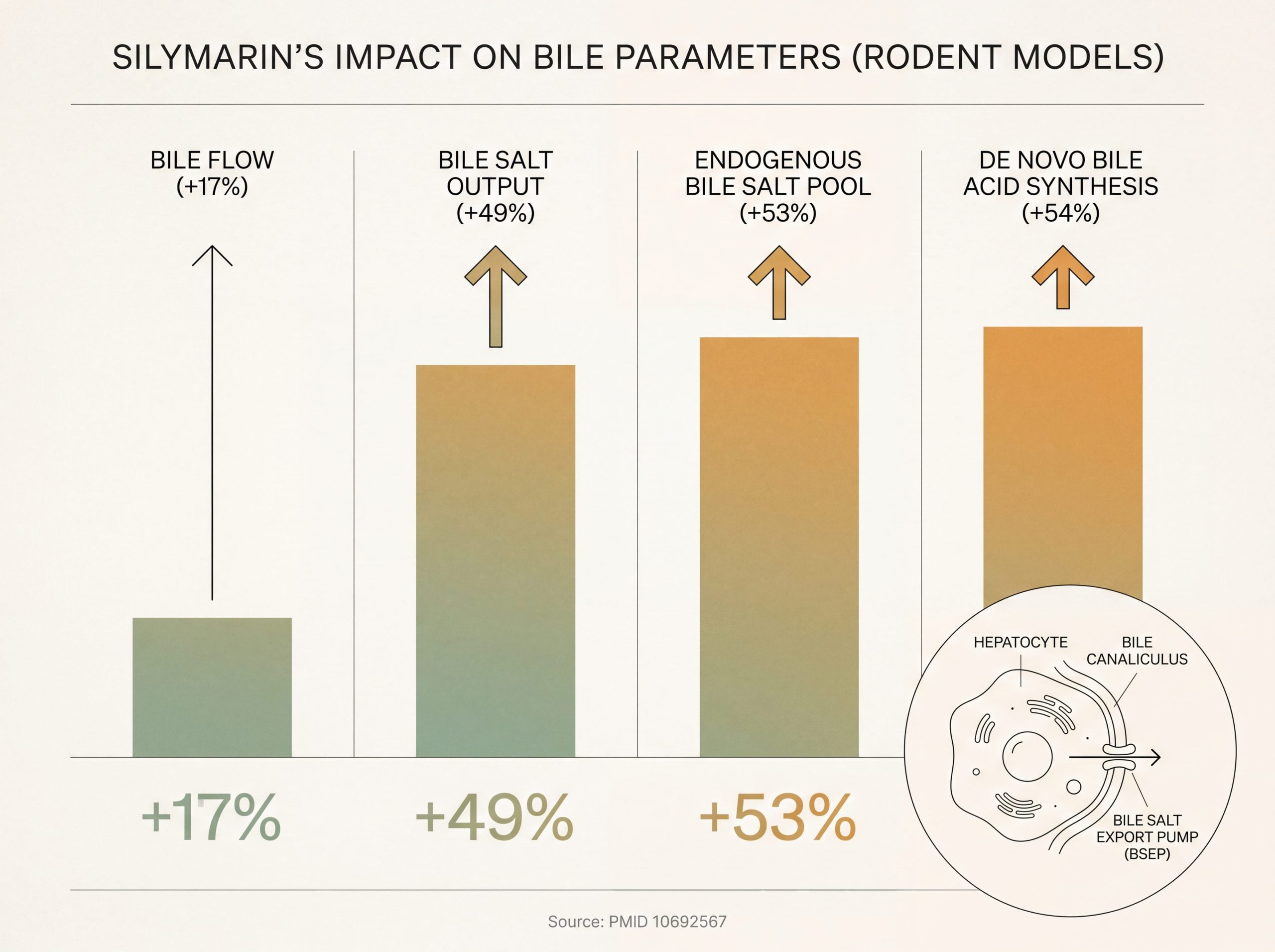
Silymarin is the flavonolignan complex extracted from the seeds of Silybum marianum, composed chiefly of silybin A and silybin B (together called silibinin), isosilybin, silychristin, and silydianin. In rat studies, silymarin at 100 mg/kg daily increased bile flow by 17 percent and bile salt output by 49 percent (Crocenzi et al., 2000, Biochemical Pharmacology, PMID: 10692567). That choleretic action is the documented basis for its traditional biliary use.
Silybin is generally the most studied of the four isomers, and silymarin is absorbed orally and excreted mainly through bile as sulphates and conjugates (Pradhan and Girish, 2006, Indian Journal of Medical Research, PMID: 17213517). The compound travels the same route as the fluid it influences, which is part of why its effects on bile are more direct than its effects on most other systems.
Direct research on milk thistle for gallbladder conditions specifically remains limited. Its better-documented actions on the liver provide the rationale for the interest, and the four mechanisms below are what that rationale rests on.
Does Silymarin Have Choleretic and Cholagogue Activity?
Yes, and this is the best-characterized biliary effect. A choleretic increases bile production. A cholagogue encourages the gallbladder to release stored bile. Silymarin has been described as having both properties.
The Crocenzi work gives the clearest numbers available. Across doses from 25 to 150 mg/kg daily, the response was dose-dependent, peaking at 100 mg/kg. Beyond raising bile flow and bile salt output, silymarin increased the endogenous bile salt pool by 53 percent and raised bile acid excretion after pool depletion by 54 percent, which is a measure of new bile salt synthesis. The increase was accounted for largely by beta-muricholate and, to a lesser degree, alpha-muricholate, chenodeoxycholate, ursodeoxycholate, and deoxycholate (PMID: 10692567).
The ursodeoxycholate finding is worth pausing on. Ursodeoxycholic acid is the same compound sold as the prescription drug ursodiol. A plant compound that nudges the liver toward synthesizing more of it is doing something mechanistically interesting, though a rodent finding is a long way from a human clinical outcome.
How Does Silymarin Interact With Bile Transport Proteins?
At the cellular level, silymarin has been found to modify the function of several transporters embedded in liver cell membranes, including organic anion transporting polypeptides (OATP), ABC transporters such as P-glycoprotein, and the bile salt export pump (Saller et al., 2007, Forschende Komplementarmedizin, PMID: 17464157).
The bile salt export pump is the protein that moves bile salts out of the hepatocyte and into the bile canaliculus. It is the rate-limiting step in bile formation. A compound that influences it is acting at the exact point where bile production is governed, which is a more precise statement than the general antioxidant claims usually made about this herb.
Does Silymarin Affect Cholesterol Saturation in Bile?
This is the mechanism most often cited in connection with cholesterol stone formation, and it deserves careful phrasing.
Cholesterol stones form when bile carries more cholesterol than its bile salt and phospholipid content can hold in solution. Researchers describe that ratio using a cholesterol saturation index. Bile that is supersaturated is bile in which crystals can nucleate.
Because silymarin has been shown to increase bile salt secretion and expand the bile salt pool, the reasoning is that a larger bile salt pool improves the solubilizing capacity of bile. That reasoning is coherent, and it is why the mechanism keeps appearing in discussions of gallstone prevention. What it is not is a demonstrated clinical outcome in humans. Preliminary and animal research suggests silymarin may influence bile composition. Human trials establishing that this translates into fewer stones have not been done.
Does Silymarin Support Gallbladder Tissue Against Oxidative Stress?
Oxidative stress is documented in the pathogenesis of liver and biliary tract disease, and silymarin belongs to the class of compounds studied as free-radical scavengers in that context, with described actions including membrane stabilization and immunomodulation (Feher et al., 1998, Scandinavian Journal of Gastroenterology, PMID: 9867111).
The gallbladder wall is exposed to concentrated bile constantly. Bile acids at high concentration are irritating to epithelial tissue. An antioxidant present in bile is, at minimum, positioned where that stress occurs. We would call this plausible rather than proven, and we think the distinction is worth making plainly.
Can Milk Thistle Trigger a Gallbladder Attack If You Already Have Gallstones?
This is the most important question on the page, and it is the one most articles skip.
- Silymarin’s choleretic and cholagogue activity means it encourages bile production and gallbladder emptying. That is the same activity described as a benefit, viewed from the other side.
- If formed stones are present, stimulating gallbladder contraction can push a stone toward the cystic duct or the common bile duct. A stone lodged in a duct produces biliary colic, the intense right-upper-quadrant pain associated with a gallbladder attack.
- An impacted stone can escalate to acute cholecystitis, cholangitis, or gallstone pancreatitis. These are medical emergencies.
- Silybum marianum belongs to the Asteraceae family alongside ragweed, daisies, chrysanthemums, and marigolds. People sensitive to that family may react to milk thistle.
- Anyone with diagnosed gallstones, biliary sludge, a gallbladder polyp, or a history of gallbladder pain should have this conversation with a healthcare provider before starting milk thistle, not after.
We want to be direct about why this section exists. The mechanism that makes silymarin interesting for bile is the same mechanism that makes it a poor idea to start casually when stones are already present. Those two facts are inseparable, and any source presenting the first without the second is giving an incomplete picture.
This does not mean milk thistle is dangerous for the general population. It has a good safety profile in the literature, and adverse event rates in clinical trials were indistinguishable from placebo (PMID: 12427501). It means the specific population with existing stones is the population that needs professional guidance first.
Does Milk Thistle Dissolve Gallstones?
No. There is no good evidence that milk thistle dissolves formed gallstones, clears blocked ducts, or resolves gallbladder attacks.
What the evidence does describe is narrower:
- Bile composition. Animal work shows measurable changes in bile flow, bile salt output, and bile salt pool size.
- Biliary sludge. Early clinical work on herbal combinations that include milk thistle alongside artichoke and green tea has produced some positive signals in sludge, which is a precursor state rather than a formed stone.
- Upstream liver support. The best-documented territory for this herb remains hepatic, not biliary.
A formed cholesterol stone is a crystalline solid. Dissolving one is a slow pharmacological process that prescription bile acid therapy accomplishes only partially, only in selected small stones, and only over many months. It is not something a botanical supplement accomplishes, and we have seen no data suggesting otherwise.
How Does Milk Thistle Compare With TUDCA and Ursodiol for Bile Support?
These three come up together constantly, and they are not interchangeable. They occupy different regulatory categories and rest on very different evidence bases.
| Agent | Class or binomial | Proposed mechanism | Regulatory status (US) | Evidence tier for biliary use | What it is not |
|---|---|---|---|---|---|
| Milk thistle (silymarin) | Silybum marianum, flavonolignan complex | Choleretic and cholagogue activity, bile salt pool expansion, bile salt export pump and OATP modulation, antioxidant action | Dietary supplement | Animal mechanism data, limited human biliary trials | Not a stone-dissolving agent, not a treatment for gallbladder disease |
| TUDCA | Tauroursodeoxycholic acid, a taurine-conjugated bile acid | Directly alters the bile acid pool, described as reducing bile acid cytotoxicity and endoplasmic reticulum stress | Dietary supplement | Mechanistic and early clinical, thin for gallbladder-specific endpoints | Not a prescription therapy, not equivalent to ursodiol despite structural kinship |
| Ursodiol (UDCA) | Ursodeoxycholic acid, a bile acid | Reduces biliary cholesterol secretion and saturation, enabling gradual dissolution of selected cholesterol stones | FDA-approved prescription drug | Randomized controlled trial evidence for specific indications | Not available over the counter, not effective for pigment or calcified stones |
| Artichoke leaf | Cynara scolymus, cynarin and chlorogenic acids | Documented choleretic activity, studied in combination with silymarin | Dietary supplement | Some human data in dyspepsia, early data in sludge combinations | Not a stone therapy, carries the same contraction caution as milk thistle |
| Sources: Crocenzi et al. 2000 (PMID: 10692567), Saller et al. 2007 (PMID: 17464157), NCCIH milk thistle summary, NCI PDQ milk thistle summary. | |||||
The practical distinction is category. Ursodiol is a drug with an approved indication and trial evidence behind it. TUDCA and milk thistle are supplements. A supplement is not a weaker version of the drug; it is a different category of thing with a different evidentiary standard, and treating the three as points on one spectrum leads people to substitute where they should not.
Which Herbs Are Studied Alongside Milk Thistle for Biliary Endpoints?
A narrow question, deliberately. Plenty of herbs support the liver broadly, and our guide to herbs for liver support covers that wider field. The list here is limited to plants that appear in the biliary literature next to Silybum marianum.
- Artichoke leaf (Cynara scolymus). The most frequent companion. It appears with milk thistle and green tea in the interventional work on biliary sludge, and its own choleretic activity is reasonably well described.
- Green tea (Camellia sinensis). Appears as the third component in those same sludge combination protocols. Its contribution is generally attributed to catechin antioxidant activity rather than to a distinct biliary mechanism.
- Dandelion root (Taraxacum officinale). A traditional bitter with a cholagogue reputation in Western herbalism. The traditional record is long, the clinical record for biliary endpoints is thin.
- Turmeric (Curcuma longa). Here, a caution outweighs the enthusiasm. Curcumin stimulates gallbladder contraction, and consumer testing organizations have flagged that this may increase pain during passage of a stone. For someone with known stones, turmeric warrants the same conversation with a provider that milk thistle does.
The pattern across all four is consistent. Every plant with meaningful bile-moving activity carries the same caveat, because bile-moving activity is exactly what becomes a problem when a stone is in the way.
What Does the Research Actually Say About Milk Thistle and the Gallbladder?
Honest answer: the research on milk thistle is substantial, and almost none of it has the gallbladder as its endpoint.
The best-quality human evidence concerns liver disease, and it is not flattering. A systematic review and meta-analysis of fourteen randomized placebo-controlled trials found no reduction in mortality, no improvement in liver histology, and no meaningful change in biochemical markers, though the herb was safe and well tolerated (Jacobs et al., 2002, American Journal of Medicine, PMID: 12427501).
The Cochrane Hepato-Biliary Group reached a similar conclusion across eighteen trials and 1,088 patients. Methodological quality was low, with only 28.6 percent of trials reporting high-quality characteristics. Milk thistle showed no significant effect on mortality, complications, or histology. Liver-related mortality was reduced across all trials but not within the high-quality subset (Rambaldi et al., 2007, Cochrane Database of Systematic Reviews, PMID: 17943794). An earlier analysis of thirteen trials in 915 patients found the same pattern (Rambaldi et al., 2005, American Journal of Gastroenterology, PMID: 16279916).
The pharmacological picture is more encouraging than the clinical one. A systematic review of more than 700 papers concluded that silymarin acts on multiple transporters and receptors and described it as a natural multi-functional, multi-target compound, while noting that 92 percent of the literature was animal pharmacology (PMID: 17464157).
So the state of the evidence is this. A well-characterized mechanism, a large body of animal work, a modest and largely negative set of high-quality human trials in liver disease, and essentially no controlled human trials with gallbladder endpoints. In our reading, that supports describing milk thistle as traditionally used for biliary support with a plausible mechanism. It does not support presenting it as an established intervention, and we would be uncomfortable with any source that did.
How Is Silybum Marianum Traditionally Used for Biliary Complaints?
The traditional record predates the pharmacology by roughly two thousand years. Greek and Roman writers described the plant for liver complaints. Medieval European herbalists used it for what they called obstructions of the liver and spleen, terminology that maps loosely onto stagnant bile flow.
Nineteenth-century Eclectic physicians in North America used Silybum marianum preparations for jaundice and what they termed torpid liver, a condition described in terms that would today be recognized as sluggish bile production. In Western herbalism, the plant sits in the hepatic and cholagogue categories, prescribed for the digestive complaints that follow poor fat handling: heaviness after rich meals, bloating, and intolerance of fatty foods.
Traditional systems classify by observed effect rather than by isolated compound. Herbalists placed milk thistle in the bile-moving category long before anyone measured bile salt output in a laboratory. That the modern measurements point in the same direction is genuinely notable. It is corroboration of a traditional classification, not proof of a clinical outcome, and those are different claims.

What Forms and Doses of Milk Thistle Are Used?
The form question matters more here than with most herbs, because the research and the marketplace do not always describe the same material.
Whole Seed, Standardized Extract, or Phytosome?
Three preparations dominate:
- Whole seed and whole seed powder. The intact botanical, containing the full flavonolignan profile at its natural concentration plus the seed’s fixed oils and fiber. This is the traditional article of commerce and the form with the longest record of human use.
- Standardized extract. Concentrated and adjusted to a stated silymarin percentage, most commonly 70 to 80 percent. Nearly all clinical research uses standardized extract, and dosing figures in the literature refer to it.
- Silybin phosphatidylcholine complex. A phytosome preparation binding silybin to phosphatidylcholine to address the poor water solubility that limits silymarin absorption. Developed specifically for bioavailability.
In our sourcing work, we have found the whole-seed and standardized-extract distinction is where most consumer confusion lives. A label reading 1,000 mg of milk thistle seed and a label reading 200 mg of extract standardized to 80 percent silymarin are describing different things, and the second delivers more silymarin. Neither is inherently better. They answer different questions. Whole seed offers the complete traditional matrix. Standardized extract offers dose precision matching the research.
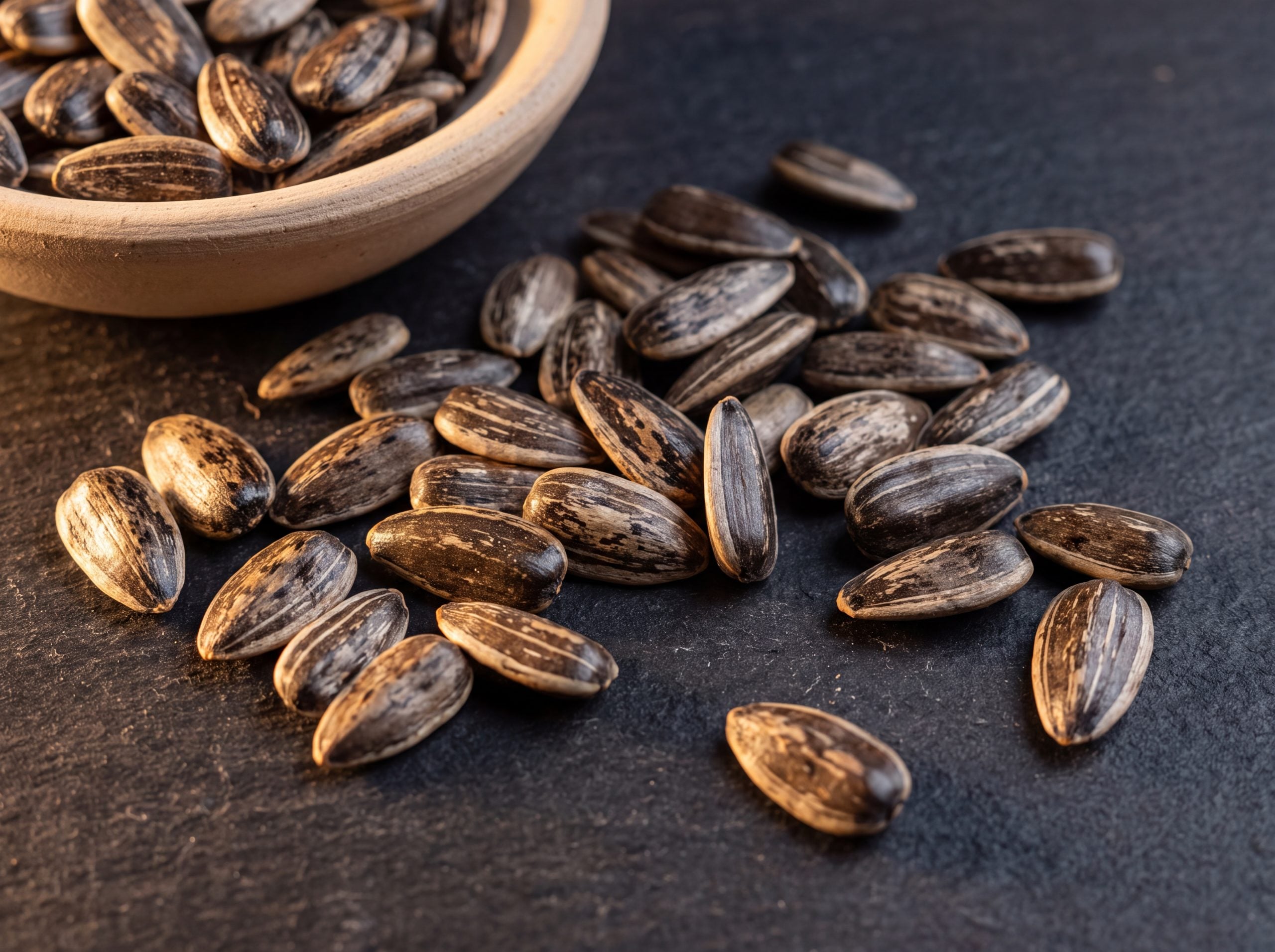
When we assess incoming milk thistle seed, we look at the seed coat, which should show the glossy mottled brown-to-black surface of properly matured and cleaned seed, and we check for the characteristic faint bitterness on the palate. Dull, dusty, or uniformly pale seed generally indicates immature harvest or excessive age. Our organic milk thistle seed powder and our milk thistle capsules are both whole-seed preparations, and we say so on the label rather than implying extract-level silymarin content.
What Dose Is Used in the Literature?
Clinical studies of standardized extract have generally used the range of 140 to 420 mg of silymarin daily, divided across two or three doses. Because silymarin is poorly water soluble, taking it with a meal containing some fat is the conventional recommendation.
Whole seed preparations are dosed by weight of seed rather than by silymarin content, and traditional use ranges considerably. We recommend following the label of the specific product and treating the clinical figures above as context for what was studied, not as a target to reverse-engineer from a whole-seed product.
There is no established dose for gallbladder support specifically, because the trials that would establish one have not been run. Any figure presented as a gallbladder dose is an extrapolation from liver research.
What Are the Side Effects and Drug Interactions of Milk Thistle?
General Tolerability
Milk thistle is generally well tolerated. Reported side effects are mostly mild and gastrointestinal: bloating, gas, nausea, diarrhea, and stomach upset. Because silymarin can have a gentle laxative effect through increased bile flow, loose stools are among the more common complaints, and that particular effect is mechanistically consistent with what the herb does.
Allergic reactions occur in people sensitive to the Asteraceae family. If ragweed, chrysanthemums, marigolds, or daisies cause a reaction, treat milk thistle with caution.
Drug Interactions
Silymarin undergoes phase I and phase II metabolism, particularly phase II conjugation, and can decrease the activity of cytochrome P450 enzymes, UDP-glucuronosyltransferase enzymes, and P-glycoprotein transport, though its measured effect on the pharmacokinetics of most drugs in vivo has been limited (Wu et al., 2008, Journal of Ethnopharmacology, PMID: 19041708).
P-glycoprotein deserves particular attention, because it is an efflux transporter governing how many drugs enter and leave cells. A compound touching it has a broad theoretical interaction surface even when measured effects are modest.
Medications commonly flagged in the milk thistle interaction literature include:
- Warfarin and other anticoagulants
- Tamoxifen and raloxifene
- Sirolimus and other immunosuppressants
- Statins metabolized through CYP3A4
- Ledipasvir and sofosbuvir
- Morphine
- Diabetes medications, since silymarin may affect blood glucose
This list is not exhaustive. Anyone on prescription medication should review milk thistle with a pharmacist or physician, who can check the specific combination.
Who Should Avoid Milk Thistle?
- People with diagnosed gallstones or bile duct obstruction, unless cleared by a healthcare provider, for the contraction reasons described above.
- People with acute gallbladder inflammation. Acute cholecystitis is a medical situation, not a supplement situation.
- Pregnant and breastfeeding women, for whom safety data are insufficient.
- People with Asteraceae allergy.
- Anyone approaching surgery. Discontinue at least two weeks beforehand given the potential for interaction with anesthesia and anticoagulation.
- People with hormone-sensitive conditions, since some sources note weak estrogenic activity for certain milk thistle constituents.
Is Milk Thistle Useful After Gallbladder Removal?
After cholecystectomy, the question changes shape entirely, and it is worth addressing because a large number of people asking about milk thistle and the gallbladder no longer have one.
Without a gallbladder, there is no reservoir to store and concentrate bile. The liver continues producing bile, but it now drips continuously into the small intestine rather than arriving as a concentrated bolus timed to a meal. For most people this works well after an adjustment period. Some find large or fatty meals harder to handle, since the concentrated pulse of bile that used to meet a fatty meal is no longer available.
In this situation, the relevant target is hepatic function and bile production, not gallbladder support, because there is nothing left to support. The interest in silymarin here rests on the same liver-side mechanisms described earlier. The bile salt pool findings are arguably more relevant post-surgery than before it, since total bile salt availability matters more when storage capacity is gone.
One caution reverses after surgery. The contraction risk that dominates the pre-surgical picture no longer applies, because there is no gallbladder to contract and no reservoir to hold a stone. Stones can still form in the bile ducts, which is uncommon but not rare, so persistent post-surgical symptoms still warrant evaluation. As with everything else on this page, the sensible move is a conversation with the surgeon or gastroenterologist who knows the case.
Which Gallbladder Symptoms Mean You Should See a Doctor?
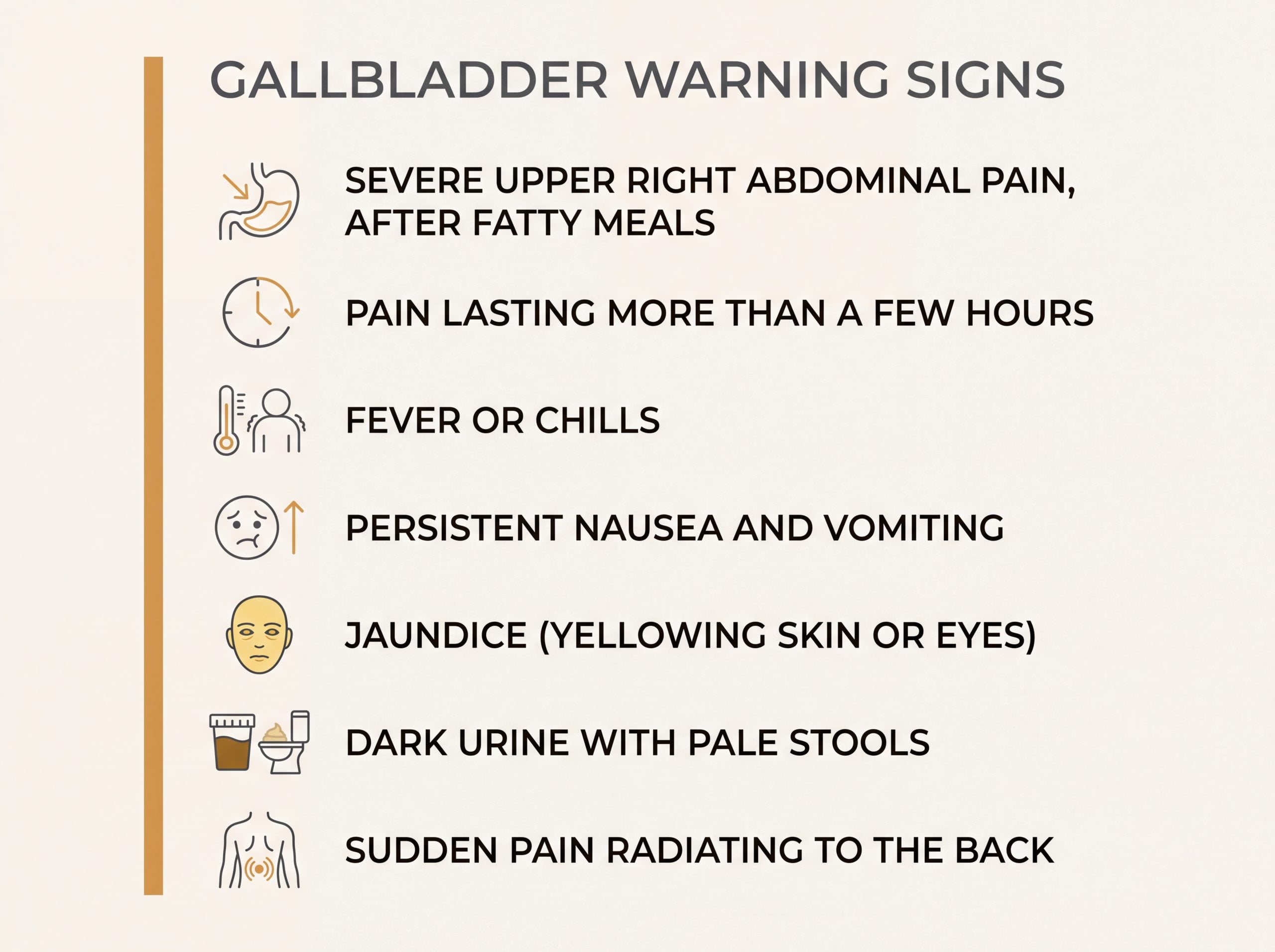
Some symptoms are not supplement territory. If any of the following are present, medical evaluation comes first:
- Severe pain in the upper right abdomen, particularly after a fatty meal, and especially if it radiates to the right shoulder blade.
- Pain lasting more than a few hours without easing.
- Fever or chills alongside abdominal pain, which can indicate infection.
- Persistent nausea and vomiting.
- Jaundice, meaning yellowing of the skin or the whites of the eyes.
- Dark urine or pale, clay-colored stools, which together suggest bile is not reaching the intestine.
- Sudden severe abdominal pain radiating to the back, which can indicate gallstone pancreatitis.
Diagnosis is straightforward. An abdominal ultrasound is non-invasive and identifies most gallstones and sludge readily. Knowing whether stones are present changes every subsequent decision, including whether milk thistle is reasonable at all.
The reason we place this section prominently rather than at the bottom is simple. The most likely harm from an article like this one is not a bad supplement recommendation. It is someone with a genuine biliary obstruction spending three weeks on herbs instead of getting an ultrasound.
What Physiologically Drives Healthy Bile Flow?
Scoped to physiology here, since our guide to natural gallbladder support handles dietary protocols and home approaches in detail. Understanding the mechanics helps make sense of why the herb discussion looks the way it does.
Three physiological levers govern bile movement:
- Cholecystokinin release. When fat and protein reach the duodenum, the intestinal lining releases cholecystokinin, which signals the gallbladder to contract and the sphincter of Oddi to relax. Dietary fat is the primary physiological trigger for gallbladder emptying. This is why very low-fat diets, counterintuitively, can be associated with gallbladder stasis. The organ needs a reason to empty.
- Meal rhythm. The gallbladder fills between meals and empties with them. Extended fasting means extended filling, and bile held longer becomes more concentrated. This is the mechanism behind the observation that rapid weight loss and prolonged fasting are associated with sludge formation.
- Enterohepatic recycling. Bile salts are reabsorbed in the terminal ileum and returned to the liver, cycling several times per meal. Dietary fiber binds a portion of bile salts and carries them out, prompting the liver to synthesize replacements from cholesterol. This is the same mechanism behind fiber’s effect on serum cholesterol.
These three levers explain why bile-moving herbs behave as they do. A choleretic adds to hepatic production. A cholagogue adds to the contraction signal. Neither one changes whether a stone is sitting in the way.
Frequently Asked Questions
Is milk thistle safe if you have gallstones?
Not without medical guidance. Silymarin’s choleretic and cholagogue activity encourages gallbladder contraction, and contraction with stones present can push a stone into a duct, producing biliary colic or worse. Anyone with diagnosed gallstones should have this conversation with a healthcare provider before starting.
Does milk thistle help dissolve gallstones?
No. No evidence supports milk thistle dissolving formed gallstones. The research describes effects on bile composition and flow, which relate to the conditions under which stones form, not to stones that already exist. Dissolution of selected cholesterol stones is a slow prescription bile acid process, not a supplement outcome.
Can milk thistle actually increase bile flow?
In animal research, yes and measurably. Silymarin at 100 mg/kg daily increased bile flow by 17 percent and bile salt output by 49 percent in rats, with a 53 percent increase in the bile salt pool (PMID: 10692567). Human trials measuring bile flow directly are not available, so the finding is mechanistic rather than clinical.
What are the side effects of milk thistle?
Mostly mild and gastrointestinal: bloating, gas, nausea, diarrhea, and stomach upset. A gentle laxative effect is common and consistent with increased bile flow. Allergic reactions can occur in people sensitive to the Asteraceae family, which includes ragweed, daisies, and chrysanthemums. Adverse event rates in clinical trials were indistinguishable from placebo (PMID: 12427501).
Can milk thistle interact with gallbladder or other medications?
Yes. Silymarin can decrease cytochrome P450 activity, UDP-glucuronosyltransferase activity, and P-glycoprotein transport (PMID: 19041708). Medications commonly flagged include warfarin, tamoxifen, raloxifene, sirolimus, statins metabolized through CYP3A4, ledipasvir, sofosbuvir, morphine, and diabetes medications. Review any prescription combination with a pharmacist.
How does milk thistle compare with TUDCA for bile support?
They work differently. Milk thistle acts on the liver’s bile-forming machinery, influencing bile production, bile salt output, and transporters including the bile salt export pump. TUDCA is itself a bile acid and alters the bile acid pool directly. Neither is a substitute for prescription ursodiol, which is the only one of the three with an approved indication and randomized trial evidence.
What dose of silymarin is used for liver and gallbladder support?
Clinical research on standardized extract has generally used 140 to 420 mg of silymarin daily, divided across two or three doses and taken with a meal containing fat. No dose has been established for gallbladder support specifically, since the trials to establish one have not been conducted. Whole seed preparations are dosed by seed weight and are not directly comparable.
Is milk thistle useful after gallbladder removal?
The rationale shifts to liver support rather than gallbladder support, since there is no longer a reservoir to store and concentrate bile. The bile salt pool findings may be more relevant after surgery than before it. The contraction caution no longer applies for the same reason. Post-surgical symptoms that persist still warrant evaluation, since duct stones can occur.
Setting Realistic Expectations
Pulling the threads together:
- Silybum marianum is traditionally used to support liver function and bile production, with a well-characterized mechanism behind that use.
- It will not dissolve formed gallstones and is not a quick fix or an emergency measure for acute gallbladder pain.
- It does not replace medical evaluation, imaging, or surgery when those are indicated.
- Its most defensible role is as long-term support for the hepatic side of bile production, in people who do not have existing stones, ideally with professional guidance.
Our editorial team has reviewed a considerable volume of marketing copy on this subject while researching this piece, and the pattern is consistent. The gap between what the mechanism suggests and what the human evidence demonstrates is where most overstatement happens. We would rather name that gap than paper over it.
Related Reading
Continue with our detailed guides on milk thistle for liver support, natural gallbladder support and bile flow, and the best herbs for liver support.
Disclaimer
These statements have not been evaluated by the Food and Drug Administration. This product is not intended to diagnose, treat, cure, or prevent any disease. Consult your healthcare provider before use.
This article is educational and is not a substitute for professional medical advice. If you have a diagnosed gallbladder condition, are pregnant or breastfeeding, or take prescription medication, speak with a qualified healthcare provider before using milk thistle or any herbal supplement.