Our lungs work tirelessly, filtering the air we breathe and delivering vital oxygen to our bodies. In today’s world, they often face challenges from environmental pollutants, seasonal allergens, smoke, and the aftermath of respiratory illnesses. Many people seek natural ways to support their lung health and enhance the body’s own cleansing mechanisms. This article provides information on herbs traditionally used for respiratory wellness and lifestyle practices that contribute to healthy lung function.
Disclaimer: The information provided in this article is for educational purposes only and does not constitute medical advice. Always consult with a qualified healthcare professional before starting any new herbal supplement or health regimen, especially if you have underlying health conditions, are pregnant or breastfeeding, or are taking medications.
How Your Lungs Keep Themselves Clear
Before looking at external support, it’s helpful to understand the respiratory system’s remarkable built-in methods for staying clean and functional. Your body has natural defenses designed to protect the lungs:
- The Mucociliary Escalator: The airways are lined with mucus-producing cells and tiny hair-like structures called cilia. Mucus traps inhaled particles like dust, pollen, and microbes. The cilia then rhythmically beat, moving this mucus (and trapped debris) upwards, away from the lungs, towards the throat where it can be swallowed or coughed out. Maintaining adequate hydration is key to keeping this mucus thin and mobile.
- The Cough Reflex: This is a vital protective mechanism. When irritants or excessive mucus stimulate nerves in the airways, the body triggers a cough to forcefully expel them.
- Immune Cells: Specialized immune cells, such as macrophages, reside deep within the lungs (in the alveoli). Their job is to engulf and neutralize foreign particles or pathogens that make it past the upper airway defenses.
Factors like smoking, chronic exposure to air pollution, occupational dust, frequent infections, or conditions like COPD can overburden these natural cleansing systems. Supporting these mechanisms is central to maintaining respiratory health.
Herbs Traditionally Used for Respiratory Support
Certain plants have a long history of use in various traditional medicine systems, including Ayurvedic practices, for supporting the respiratory system. They often work by aiding the body’s natural processes, such as clearing mucus or soothing irritation. When considering lung detox herbs, it’s more accurate to think of them as supporting the lungs’ innate ability to cleanse themselves rather than performing a forceful “detox.”
Understanding Herbal Actions for Lung Health
Herbs can support the lungs in several ways:
- Expectorants: Help loosen and thin mucus, making it easier to cough up and clear from the airways. Some stimulate more mucus production (stimulating expectorants), while others help relax airways and thin mucus (relaxing expectorants).
- Demulcents: Contain mucilage, a slippery substance that coats and soothes irritated or inflamed mucous membranes in the throat and airways. This is helpful for dry coughs and soreness.
- Anti-inflammatories: May help reduce inflammation within the airways, potentially easing breathing.
- Antispasmodics: Can help relax the muscles surrounding the airways, which may ease coughing spasms or tightness associated with conditions like bronchitis.
- Antioxidants: Protect lung tissues from damage caused by free radicals generated from pollution, smoke, or inflammation.
- Antimicrobials: Some herbs contain compounds that show activity against certain bacteria or viruses in laboratory settings, though this doesn’t automatically translate to treating infections in humans without proper medical care.
Profiles of Respiratory Herbs
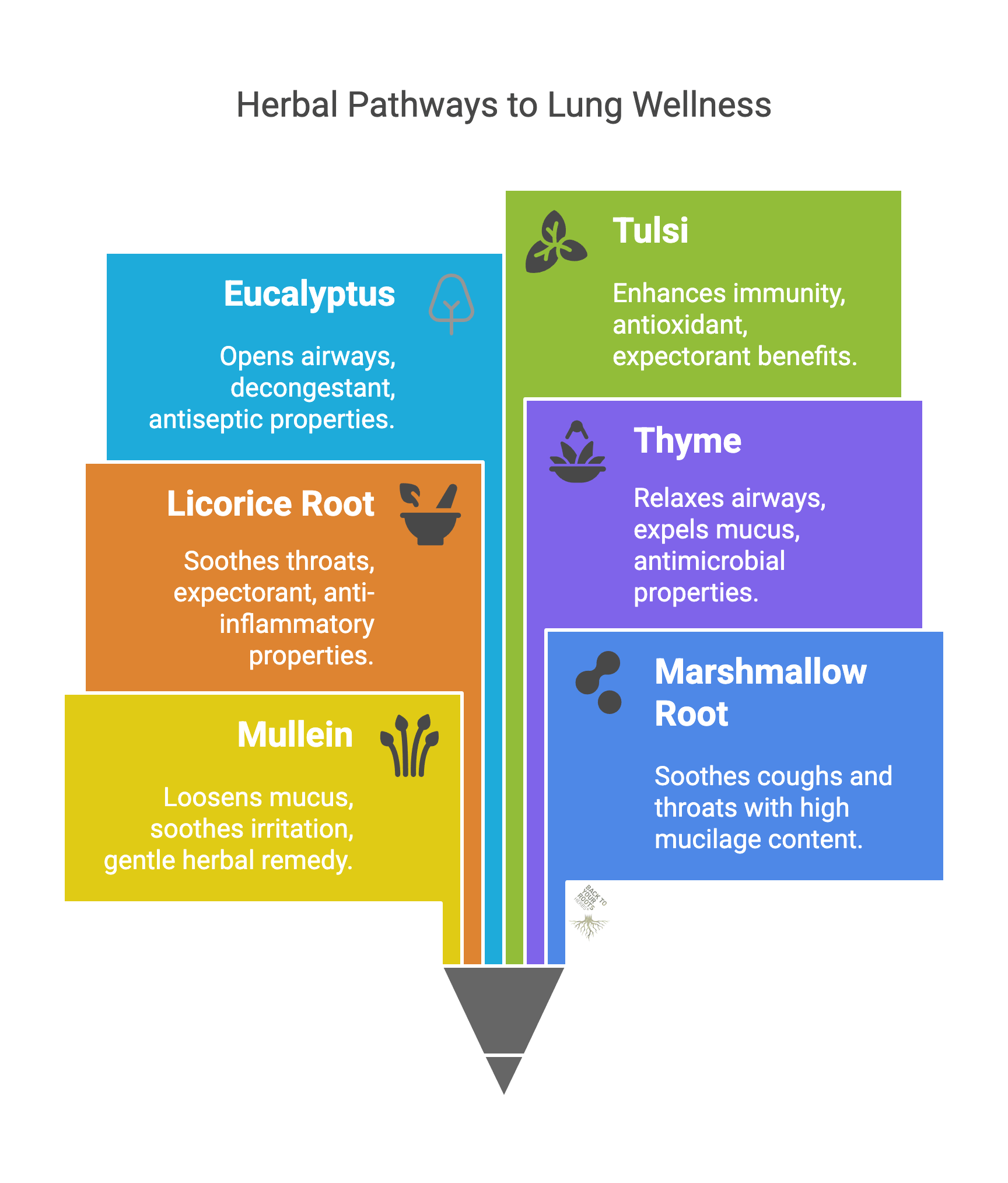
| Herb | Scientific Name | Primary Traditional Uses & Actions | Common Forms | Notes |
|---|---|---|---|---|
| Mullein | Verbascum thapsus | Expectorant (loosens mucus), Demulcent (soothes irritation). Used for coughs, and congestion. | Tea, Tincture, Oil | Strain tea well due to fine hairs. Considered gentle. |
| Marshmallow Root | Althaea officinalis | High mucilage content (Demulcent). Soothes dry coughs, sore throats, and irritated tissues. | Tea (cold infusion), Syrup | Best prepared as a cold infusion to preserve mucilage. |
| Licorice Root | Glycyrrhiza glabra | Demulcent, Expectorant, Anti-inflammatory. Soothes coughs and sore throats. | Tea, Tincture, Chew | Use with caution; can raise blood pressure in some individuals or interact with certain drugs. |
| Thyme | Thymus vulgaris | Expectorant, Antispasmodic, Antimicrobial properties (thymol). Used for coughs, bronchitis, and congestion. | Tea, Steam, Syrup | Aromatic, helps relax airways and expel mucus. Often found in cough preparations. |
| Elecampane Root | Inula helenium | Warming Expectorant, Antimicrobial properties. Traditionally for persistent coughs with thick mucus. | Tea (decoction), Tincture | Potent expectorant action. |
| Plantain Leaf | Plantago major/lanceolata | Demulcent, Astringent (helps dry excess secretions), mild Expectorant. Soothes tissues, used for coughs. | Tea, Poultice | Common “weed” with significant traditional uses. |
| Oregano | Origanum vulgare | Antimicrobial (carvacrol, thymol), Antioxidant properties. Used for respiratory infections, and congestion. | Steam, Oil (diluted), Tea | Often used in steam inhalations. Oregano oil is very potent and must be diluted appropriately. |
| Hyssop | Hyssopus officinalis | Expectorant, Antispasmodic. Traditionally used for coughs, colds, and bronchitis to help clear congestion. | Tea, Syrup, Tincture | Mentioned in historical texts for cleansing rituals; used medicinally for respiratory complaints. |
| Eucalyptus | Eucalyptus globulus | Decongestant, Expectorant, and Antiseptic properties (eucalyptol/cineole). Used for coughs, colds, and sinus congestion. | Steam, Oil (diffused/topical, diluted) | The potent aroma helps open the airways. Never ingest eucalyptus oil. Use caution around children. |
| Tulsi (Holy Basil) | Ocimum sanctum | Adaptogen, Antioxidant, Immunomodulator, Expectorant. Used in Ayurvedic medicine for stress, immunity, coughs, and colds. | Tea, Tincture | Supports overall resilience, including respiratory function. |
This table includes some of the top herbs for lung detox support, focusing on those traditionally used for health-clearing mucus COPD relief, and general respiratory health. Remember that conditions like COPD require professional medical management; herbs may offer complementary support but are not a substitute for prescribed treatments or drugs.
Preparing and Using Respiratory Herbs
How you prepare an herb can influence its effectiveness for respiratory support:
- Herbal Teas (Infusions/Decoctions):
- Infusions: Best for leaves and flowers (like Mullein leaf, Thyme, Plantain, Tulsi, Hyssop). Steep 1-2 teaspoons of dried herb per cup of hot water for 10-20 minutes, covered. Strain well.
- Decoctions: Best for roots and barks (like Marshmallow root, Licorice root, Elecampane root). Simmer 1-2 teaspoons of dried herb per cup of water in a covered pot for 15-30 minutes. Strain. For Marshmallow root, a cold infusion (steeping in cold water for several hours or overnight) best extracts its soothing mucilage.
- Tinctures: These are concentrated liquid extracts, usually alcohol-based. They offer convenience but may be less directly soothing for throat irritation than teas or syrups. Follow dosage instructions carefully.
- Syrups: Often made by combining a strong herbal decoction or infusion with honey or vegetable glycerine. Honey adds its own soothing properties, making syrups excellent for coughs.
- Steam Inhalation: Adding herbs like Thyme, Oregano, or Eucalyptus leaves (or a few drops of essential oil – use caution) to a bowl of hot water and inhaling the steam (with a towel over your head) can directly deliver volatile compounds to the airways, helping to loosen mucus and ease congestion. Be careful to avoid burns.
Sourcing and Safety
Always source herbs from reputable suppliers to ensure correct identification and quality. Look for organic options when possible. If you choose to grow your own herbal remedies, be 100% certain of plant identification before use. Start with small doses to assess tolerance.
Lifestyle Choices for Healthy Lungs
Herbal support works best as part of a broader approach to respiratory wellness. Consider these natural strategies:
- Stay Hydrated: Drinking plenty of water keeps mucosal linings moist and helps thin mucus, making it easier to clear.
- Practice Deep Breathing: Techniques like diaphragmatic (belly) breathing can help improve lung capacity and efficiency, promoting better air exchange. Pursed-lip breathing can help people with conditions like COPD manage shortness of breath.
- Eat an Anti-inflammatory Diet: Focus on whole foods, colorful fruits, and vegetables rich in antioxidant compounds, and omega-3 fatty acids (from fish or flaxseeds), and limit processed foods, sugar, and unhealthy fats that can promote inflammation.
- Avoid Lung Irritants: This is paramount.
- Quit smoking and avoid secondhand smoke.
- Minimize exposure to air pollution (check air quality indexes, and use air purifiers indoors).
- Identify and manage allergies.
- Use protective gear if exposed to occupational dust or fumes.
- Regular Physical Activity: Moderate exercise strengthens respiratory muscles and improves circulation and overall health.
- Prioritize Sleep: Adequate rest is essential for immune function and tissue repair throughout the body, including the respiratory system.
Important Considerations and When to Seek Medical Help
While natural approaches can be beneficial for lung health clearing mucus, they are not replacements for medical care, especially for serious conditions.
- Not a Substitute: Herbs and lifestyle changes support lung function but cannot cure conditions like asthma, COPD, pneumonia, bronchitis, or lung cancer. These require diagnosis and treatment from a healthcare professional.
- Potential Interactions: Some herbs can interact with medications. Licorice root can affect blood pressure and interact with diuretics and heart medications. Others might interact with blood thinners, sedatives, or diabetic drugs. Always discuss herbal use with your doctor or pharmacist if taking any medication.
- Specific Populations: Use caution with herbs during pregnancy and breastfeeding. Dosages for children should be adjusted and discussed with a qualified practitioner. Individuals with pre-existing health conditions should always consult their doctor first.
- Allergies: Allergic reactions to any plant are possible. Stop use if you experience rash, itching, swelling, or difficulty breathing.
- Red Flag Symptoms: Seek immediate medical attention if you experience:
- Severe shortness of breath or difficulty breathing
- Chest pain or tightness
- Coughing up blood or thick, discolored phlegm
- High fever
- Wheezing
- Symptoms that worsen rapidly or don’t improve
Supporting Your Respiratory System
Taking proactive steps to support your lung health involves understanding how your respiratory system works, making conscious lifestyle choices, and using natural remedies like herbal teas or supplements thoughtfully. The best herbs for lung health are often those that aid your body’s natural cleansing and protective processes, helping to manage mucus, soothe irritation, and support clear breathing.
By combining mindful herbal use with healthy habits and avoiding irritants, you can contribute significantly to your long-term respiratory wellness. Always prioritize safety and consult with healthcare providers for diagnosis and guidance on managing any health concerns.