The African continent is home to a vast array of botanicals used for centuries in traditional medicine. Among these is Kigelia africana, commonly known as the sausage tree due to its distinctive, large, sausage-shaped fruit. Held in high regard in many African cultures, this tree is more than just a unique botanical specimen; its various parts, particularly the fruit and bark, have long been employed to address a wide range of health concerns. This article focuses specifically on the traditional applications and potential health benefits of Kigelia africana for women, examining its uses from skin care to reproductive wellness, grounded in both traditional knowledge and emerging scientific interest.
What is Kigelia Africana (The Sausage Tree)?
Kigelia africana is a tree native to tropical regions across sub-Saharan Africa. It thrives in various environments, from riverbanks to open woodlands. Instantly recognizable by its long, pendulous fruit that can weigh several kilograms, the sausage tree holds significant cultural and medicinal importance. Beyond the fruit, the bark, leaves, roots, and flowers have all found places in traditional therapeutic practices.
The medicinal reputation of the sausage tree stems from its rich composition of bioactive compounds. Key constituents include:
- Flavonoids: Such as luteolin and quercetin, are known for their potent antioxidant and anti-inflammatory actions, helping protect cells from damage.
- Steroidal Saponins: Compounds like ruscogenin and kigelin, believed to contribute to skin-firming effects and potentially possess hormone-like activities.
- Phytosterols: Including β-sitosterol, stigmasterol, and even estrone (an estrogen), which may influence skin health and hormonal pathways.
- Naphthoquinones: Like lapachol and kigelinone, exhibiting antimicrobial and anti-inflammatory properties.
- Iridoids: Compounds known for anti-inflammatory effects.
- Fatty Acids: Essential for maintaining skin barrier function and hydration.
- Tannins: Possessing astringent properties that can help tighten tissues.
These compounds work individually and synergistically, underpinning the diverse traditional uses of this remarkable African tree.
Traditional African Ethnomedicine: Focus on Female Health
Throughout Africa, traditional healers have utilized Kigelia africana extensively to support women’s health through various life stages. Its application is deeply woven into cultural practices surrounding femininity, fertility, and healing.
Documented traditional uses specifically for females include:
- Gynecological Issues: Aqueous extracts of the fruit or bark have been traditionally prepared as decoctions or pessaries for the treatment of various gynecological complaints. This includes addressing infections (like Candida, syphilis, and gonorrhea), managing symptoms related to the menstrual cycle, and aiding in postpartum recovery, such as controlling hemorrhage.
- Fertility and Childbirth: The sausage tree is often seen as a symbol of fertility. Different parts, including the fruit, roots, and flowers, have been traditionally used in remedies intended to enhance female fertility or address sterility. It has also been employed during and after childbirth, sometimes traditionally used to promote milk flow (as a galactagogue), although other parts (bark/leaves) have paradoxically been used as abortifacients in some traditions, highlighting the complexity and context-dependent nature of its use.
- Breast Care: Perhaps one of the most widely known traditional uses relates to breast care. Preparations from the fruit or bark were applied topically to promote breast development in young women or to address conditions like mastitis (inflammation of the breast).
These traditional applications form the basis for many of the modern interests in Kigelia africana, particularly in skincare and wellness products marketed towards women.
Potential Benefits for Female Skin Health
The rich phytochemistry of Kigelia africana translates into several potential benefits for female skin, addressing concerns related to aging, hormonal changes, and tissue integrity.
Skin Firming, Elasticity, and Tightening
A primary reason for the inclusion of Kigelia africana extract in modern skincare is its reputed ability to improve skin firmness and elasticity. This is particularly relevant for women experiencing changes due to aging, pregnancy, or weight fluctuations. The presence of steroidal saponins and phytosterols is thought to contribute to these effects. These compounds may help support the skin’s structural components, leading to a tightening sensation and a more toned appearance. Traditional use involved applying fruit pulp or extracts directly to the skin for this purpose.
The firming reputation traces back to how the fruit extract behaves at the level of skin-building cells. In laboratory work on human keratinocytes and dermal fibroblasts, a Kigelia africana extract supported faster closure of test wounds compared with untreated cells, with fibroblasts being the cells that lay down collagen and elastin (Karatay et al. 2023, Journal of Wound Care, PMID: 37300855). In our hands-on assessment of the fruit, its steroidal saponins and phenolic content are the constituents most often linked to that toning, astringent feel on the skin (Bello et al. 2016, Journal of Ethnopharmacology, PMID: 27220655). This is skin-surface support, not a structural change to breast or body tissue.
The Role in Breast and Bust Care
Stemming directly from traditional practices, Kigelia africana extract is frequently found in cosmetic products aimed at improving the appearance of the bust area. Traditional applications involved using fruit preparations to enhance breast development or firmness, especially after childbirth or weight loss. Modern products often claim firming, lifting, or even enlarging effects. While the extract’s skin-toning properties might improve the appearance of the skin on the breast, robust scientific evidence supporting significant, lasting breast enlargement or dramatic lifting from topical application is lacking. The potential effects are more likely related to improving skin texture and tone rather than altering breast tissue volume. Some theories suggest that phytoestrogenic compounds within the extract might play a role in these localized skin effects.
Addressing Stretch Marks (Striae)
Stretch marks, common after pregnancy or significant weight changes, are a frequent concern for women. Kigelia africana’s traditional use for skin repair and its potential to improve skin elasticity suggests it might help diminish the appearance of striae. By supporting skin health and possibly aiding in tissue repair processes, regular application of preparations containing the extract could contribute to smoother-looking skin.
Soothing Inflammatory Skin Conditions
Women may experience inflammatory skin conditions like eczema, psoriasis, or acne, sometimes influenced by hormonal fluctuations. The anti-inflammatory and antimicrobial properties associated with compounds like flavonoids and naphthoquinones in Kigelia africana make its extracts potentially beneficial for soothing irritated skin. Traditional medicine employed it for wounds, sores, and various dermatoses. These properties may help reduce redness, calm irritation, and manage bacteria associated with acne breakouts.
The soothing tradition has a named compound behind it. Verminoside, an iridoid isolated from the fruit, reduced markers of inflammation in cell studies, and neither the crude extract nor the isolated compound irritated a reconstituted human epidermis model in testing (Picerno et al. 2005, Journal of Natural Products, PMID: 16309308). We still recommend a patch test before regular use. Apply a small amount to the inner forearm, wait 24 hours, and stop use if redness or itching appears. People with sensitive skin should start with a lower-strength product such as a diluted oil or gel.
Antioxidant Effects and Skin Aging
Exposure to environmental stressors generates free radicals, which accelerate skin aging, leading to wrinkles and loss of vitality. The antioxidant compounds, particularly flavonoids, found in Kigelia africana help neutralize these damaging molecules. By protecting skin cells from oxidative stress, the use of Kigelia africana extracts in skincare may contribute to maintaining a more youthful appearance and promoting overall skin health.
The antioxidant story rests on the plant’s flavonoids, including luteolin and quercetin, alongside iridoids and phenylethanoid glycosides such as verbascoside. Reviews of the plant’s pharmacology repeatedly document antioxidant and anti-inflammatory activity across different plant parts (Abbas et al. 2023, Natural Product Research, PMID: 37921076 and Bello et al. 2016, Journal of Ethnopharmacology, PMID: 27220655). On the skin, antioxidant compounds help defend against the everyday oxidative stress that contributes to the look of premature aging.
Evening Skin Tone and Dark Spots
A common question we hear is whether the sausage tree can help with the look of dark spots and uneven tone. Traditionally, women across parts of West and Southern Africa have used fruit and bark preparations on the face to support a clearer, more even-looking complexion. The plausible cosmetic rationale sits with the same antioxidant and mild astringent constituents discussed above, which may soften the appearance of blemishes and support surface radiance rather than lightening or bleaching the skin.
From our hands-on assessment, a thin layer of a standardized oil or gel worked into clean skin at night is the gentlest way to try it for tone. Consistency matters more than strength. Give any natural topical several weeks of steady use before judging the appearance of dark spots, and always pair it with daytime sun protection, since unprotected sun exposure is the largest driver of new pigmentation.
Exploring Potential Benefits for Female Reproductive Health
Beyond the skin, traditional medicine points towards potential internal benefits of Kigelia africana for female reproductive wellness, although the scientific investigation is still in the early stages.
Traditional Approaches to Fertility
Various parts of the sausage tree, including the fruit, roots, and flowers, have been incorporated into traditional remedies aimed at enhancing female fertility. While traditional wisdom points towards potential Kigelia africana benefits for female fertility, scientific validation through human trials is still developing. Preliminary research, mostly in animal models, offers intriguing hints. For instance, some studies suggest extracts might positively influence hormonal profiles relevant to fertility or help manage conditions like Polycystic Ovary Syndrome (PCOS) by potentially normalizing hormone levels (LH/FSH) and improving ovarian structure in animal models. However, these findings require much more research before any conclusions can be drawn about efficacy in humans.
Support for Gynecological Wellness
Building on traditional uses, the antimicrobial (antibacterial and antifungal) and anti-inflammatory properties of Kigelia africana extracts suggest a potential role in supporting gynecological health. Traditional preparations, often aqueous extracts of the bark or fruit, were used to address infections, including those caused by bacteria or fungi like Candida albicans. The anti-inflammatory action might also offer relief from menstrual discomfort for some women. Again, clinical research is needed to confirm these effects.
Libido and Aphrodisiac Properties
Kigelia africana is traditionally reputed to possess aphrodisiac properties, used to enhance sexual desire in both men and women. Research in this area is limited, but one study on anemic female rats indicated that administration of the extract improved libido, potentially linked to observed increases in female hormones like estrogen, progesterone, and prolactin. The mechanism and relevance of human female libido require further investigation.
Phytoestrogenic Compounds and Potential Effects
Certain compounds found in Kigelia africana, notably phytosterols like β-sitosterol and estrone, as well as some steroidal saponins, may exhibit weak estrogen-like activity. Phytoestrogens are plant-derived compounds that can interact with estrogen receptors in the body. This potential phytoestrogenic action is sometimes theorized to contribute to the skin-firming effects (as estrogen influences skin collagen and thickness) and possibly the traditional uses related to female reproductive health. However, the actual impact of these compounds from Kigelia africana on a woman’s hormonal balance is highly speculative and not well-established through scientific study.
Forms of Kigelia Africana and How Women Use Them
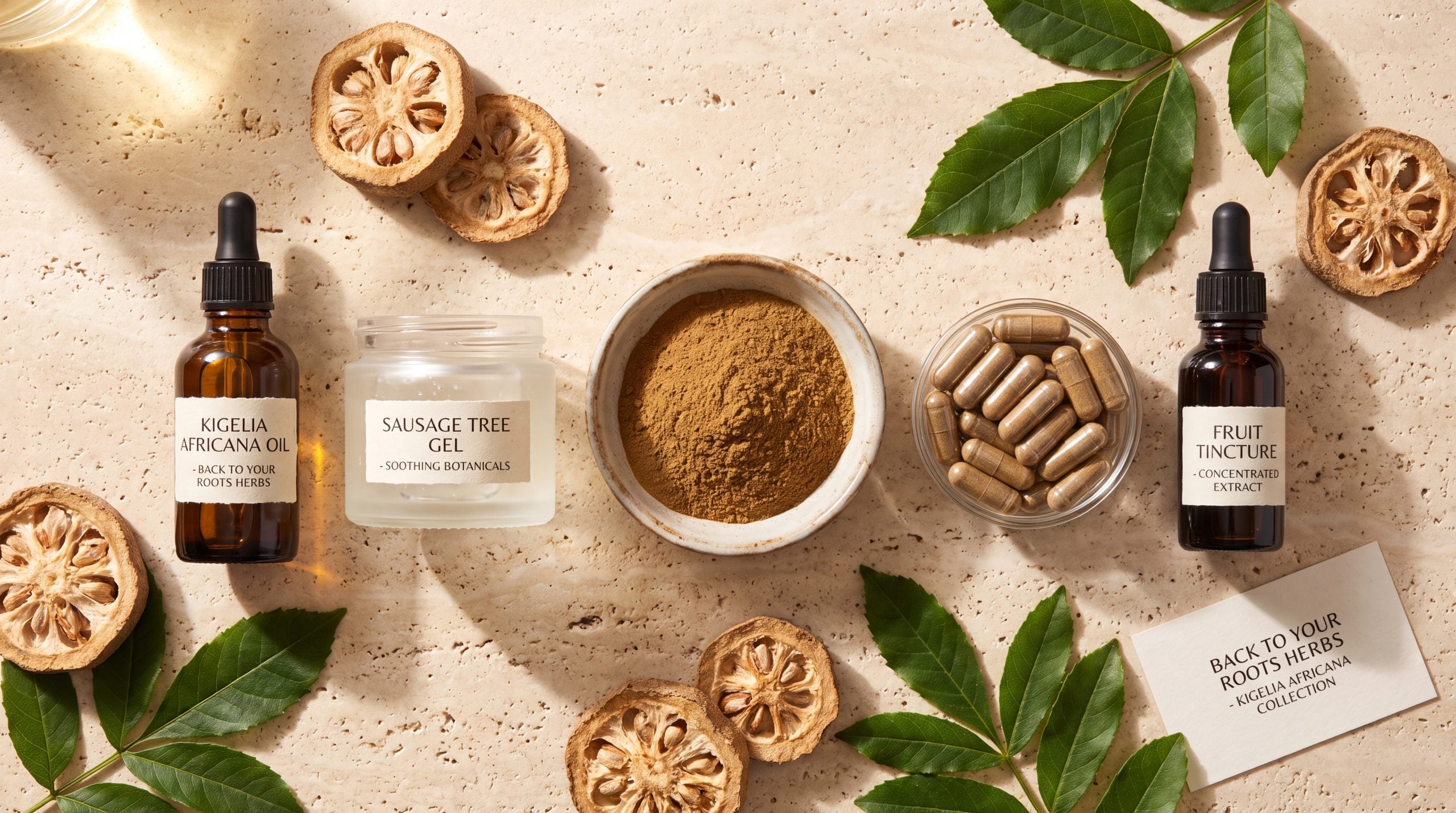
Kigelia africana reaches the shelf in several forms, and the right one depends on whether the goal is topical skin support or internal, tradition-based use. In our sourcing experience, women choosing it for skin tend to reach for the oil or the gel, while those following an internal folk protocol choose the powder, capsules, or tincture. Here is how the forms compare.
| Form | Typical use | Best for |
|---|---|---|
| Kigelia africana oil | Massaged into clean skin, face or body | Firming feel, dry-skin areas, nightly routines |
| Kigelia organic gel | Light layer on the face and neck | Sensitive or oily skin, spot application |
| Sausage tree powder | Blended into homemade masks or preparations | Do-it-yourself topical formulations |
| Sausage tree capsules | Measured internal, tradition-based use | Convenience and consistent portions |
| Sausage tree tincture | Liquid extract, drops in water | Flexible portioning, faster to blend |
For a simple skincare routine, cleanse first, apply a thin layer of the oil or gel, and follow with your usual moisturizer. Patch test any new form on the inner forearm for 24 hours before applying to the face. Internal forms deserve more caution, and the safety notes further down this article apply in full, especially the guidance to avoid internal use during pregnancy and to speak with a qualified healthcare provider first.
Understanding the Science: Active Compounds and Mechanisms
The diverse effects attributed to Kigelia africana arise from its complex mixture of bioactive molecules. Understanding these compounds helps clarify the potential mechanisms behind its traditional uses.
| Compound Class | Key Examples | Potential Actions Relevant to Female Health |
|---|---|---|
| Flavonoids | Luteolin, Quercetin | Antioxidant (fights aging), Anti-inflammatory (soothes skin, potential pain relief) |
| Steroidal Saponins | Kigelin, Ruscogenin | Skin firming/tightening, Potential weak hormone-like activity |
| Phytosterols | β-Sitosterol, Stigmasterol, Estrone | Skin barrier support, Potential weak estrogen-like activity |
| Naphthoquinones | Lapachol, Kigelinone | Antimicrobial (antibacterial, antifungal), Anti-inflammatory |
| Iridoids | Various | Anti-inflammatory |
| Fatty Acids | Oleic, Linoleic, Palmitic | Skin hydration, Barrier function |
| Tannins | Various | Astringent (tissue tightening), Antioxidant |
This table provides a simplified overview; compound actions are complex and often synergistic.
These compounds contribute to the plant’s overall profile, explaining its use for conditions involving inflammation, microbial infection, oxidative stress, and changes in tissue integrity.
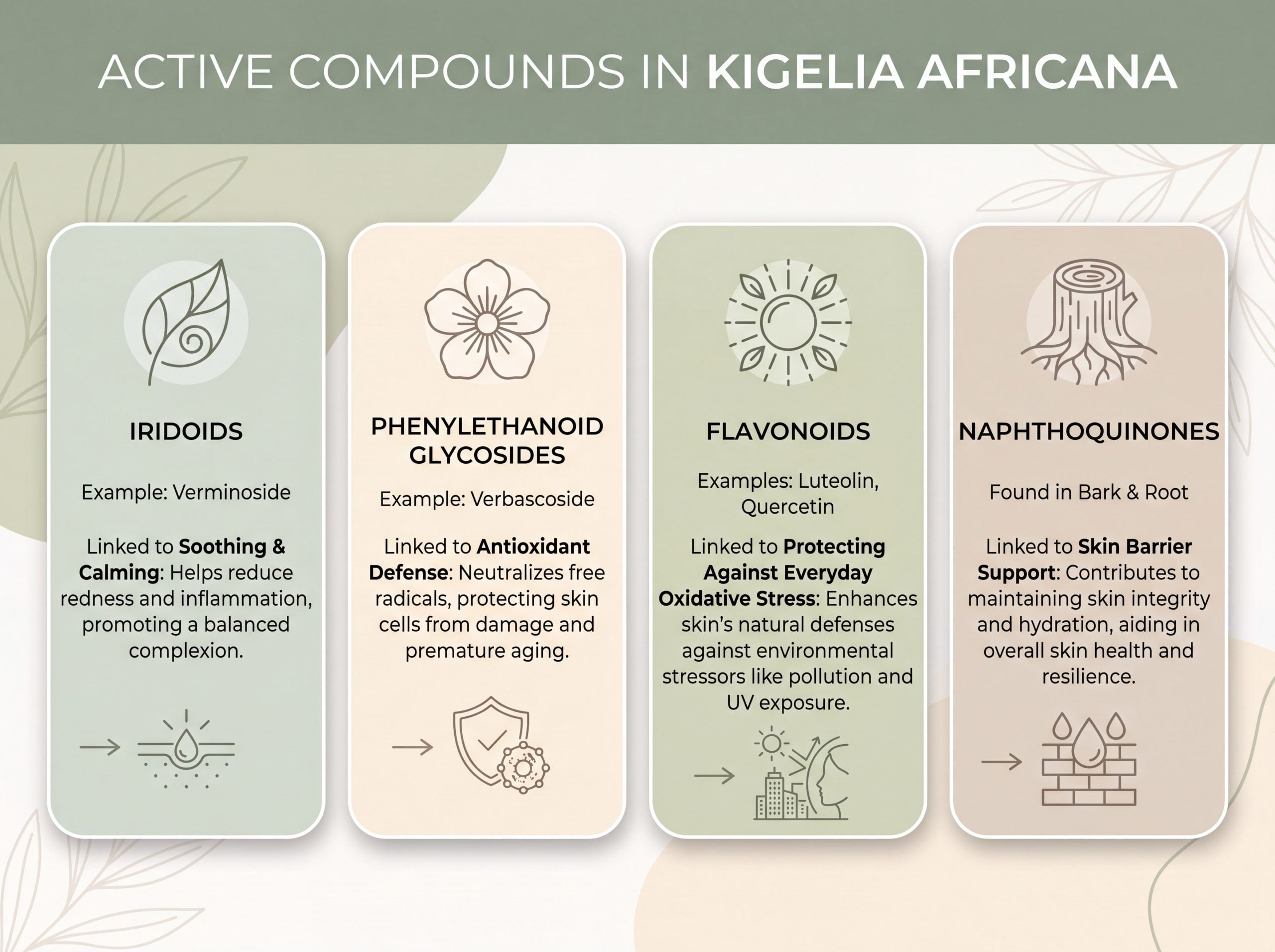
Researchers have characterized roughly 150 compounds across the different parts of Kigelia africana, grouped into a few major classes. The iridoids, led by verminoside, carry much of the anti-inflammatory activity. The phenylethanoid glycosides, such as verbascoside, add antioxidant and antimicrobial action. Flavonoids including luteolin and quercetin round out the antioxidant profile, and naphthoquinones such as lapachol appear in the bark and root (Bello et al. 2016, Journal of Ethnopharmacology, PMID: 27220655 and Nabatanzi et al. 2020, Plants, PMID: 32549404). That chemistry is why one plant shows up in skin-firming, soothing, and antioxidant contexts at the same time.
Scientific Evidence vs. Traditional Knowledge
It is essential to balance the rich heritage of traditional knowledge surrounding Kigelia africana with the current state of scientific investigation. For centuries, African communities have successfully used this plant based on empirical observation and generational knowledge. This traditional use provides valuable leads for scientific research.
Currently, much of the scientific evidence supporting the benefits of Kigelia africana, especially for internal uses related to female reproductive health, comes from phytochemical analysis, in vitro (laboratory) studies, or animal research. While these studies help identify active compounds and potential mechanisms (like demonstrating antibacterial activity or hormonal influence in rats), they don’t always directly translate to effectiveness in humans. There is a need for more well-designed human clinical trials to confirm the benefits and safety of Kigelia africana extracts for specific female health applications, such as fertility enhancement, PCOS management, or quantifiable skin/bust firming. Some studies might report findings like “a highly significant difference” in animal models, but caution is needed when extrapolating these results to human health outcomes.
Honesty about the evidence matters here. The strongest laboratory support sits on the skin side, in wound-healing and anti-inflammatory cell studies. The reproductive research, by contrast, has mostly been done in male animal models looking at androgenic and prostate effects, not in women (Micheli et al. 2019, Natural Product Research, PMID: 30821486). Our editorial team reviewed the available literature and found no published human clinical trials in women for fertility, libido, or hormonal outcomes. That does not erase centuries of traditional female use, but it does mean the reproductive claims rest on tradition and early animal work rather than on confirmed clinical proof in women.
Important Safety Considerations for Females
Use During Pregnancy and Breastfeeding
Information regarding the safety of Kigelia africana during pregnancy and breastfeeding is contradictory and warrants significant caution. Some traditional practices report its use as a galactagogue (to increase milk flow), with lactating mothers consuming leaves. Conversely, decoctions of the bark or leaves have also been traditionally used as abortifacients. A single study in Sprague-Dawley rats suggested the extract was safe during pregnancy in that specific animal model. However, due to the lack of robust human safety data and the conflicting traditional reports, it is strongly recommended that women avoid using Kigelia africana preparations (especially internally) during pregnancy and breastfeeding unless explicitly advised and monitored by a qualified healthcare provider.
Internal Consumption Cautions
The fresh fruit of the sausage tree is widely considered poisonous and strongly purgative if ingested raw. Traditional internal use relies on specific preparation methods like drying, roasting, or fermentation to render the fruit safe for consumption in prescribed ways. Even with properly prepared extracts or powders, some individuals might experience digestive upset. Furthermore, due to the presence of compounds with potential phytoestrogenic activity, there is a theoretical possibility of interaction with hormonal therapies (like birth control or hormone replacement therapy) or hormone-sensitive conditions.
If you take prescription medication or other supplements, talk with your healthcare provider before adding an internal form of the sausage tree. Because the fruit extract has shown hormone-related and anti-inflammatory activity in the laboratory, there is a reasonable theoretical basis for interaction with hormone therapies, anti-inflammatory drugs, or blood-sugar medication, even though direct interaction studies in people are not yet available. Introduce only one new supplement at a time so any reaction is easy to trace, and stop use if anything feels off.
Consulting Healthcare Professionals
Given the complexities and the gaps in scientific understanding, it is advisable for any woman considering using Kigelia africana preparations, particularly for internal use or to address specific health conditions like infertility or gynecological issues, to consult with a knowledgeable healthcare professional (such as a doctor, naturopath, or herbalist familiar with African botanicals) beforehand. This is especially important if you have pre-existing health conditions or are taking other medications. For topical use, performing a patch test on a small area of skin before wider application is always a sensible precaution to check for sensitivity or allergic reactions.
Frequently Asked Questions
How long does it take to see results from Kigelia africana for skin?
Natural topicals work gradually. For the look of firmness or more even tone, most traditional-use routines run for four to eight weeks of steady daily application before the appearance changes are worth judging. Consistency matters more than strength.
Is Kigelia africana safe for sensitive skin?
A reconstituted human epidermis study found the fruit extract did not irritate skin in testing, which is reassuring, though individual reactions vary. Patch test on the inner forearm for 24 hours first, and start with a lower-strength oil or gel if your skin is reactive.
Can I use Kigelia africana with my other skincare or supplements?
Topically, it layers well under a moisturizer after cleansing. For internal forms, speak with your healthcare provider before combining with medications or other supplements, and add only one new product at a time so any reaction is easy to trace.
Which form is best for women: oil, gel, powder, capsules, or tincture?
For skin goals, the oil and the gel are the most convenient topicals. The powder suits do-it-yourself masks, while capsules and tincture are chosen for measured, tradition-based internal use. The comparison table above outlines each.
Is Kigelia africana safe during pregnancy?
No. Traditional practice has used parts of the plant in ways associated with uterine activity, so internal use is not recommended during pregnancy or breastfeeding. Talk with a qualified healthcare provider before use.
Does Kigelia africana help with fertility or hormones?
It is traditionally associated with female reproductive wellness, but the current research is mostly in male animal models and there are no published human trials in women. Treat reproductive uses as tradition-based rather than clinically proven.
Final Thoughts on Kigelia Africana and Women’s Health
Kigelia africana, the sausage tree, stands as a significant element of African traditional medicine, with a particular historical connection to women’s health. From soothing skin conditions and enhancing skin tone to traditional applications in gynecological care and fertility, its potential appears multifaceted, rooted in its rich blend of bioactive compounds.
While modern science is beginning to investigate these traditional claims, confirming antioxidant, anti-inflammatory, and antimicrobial properties, more rigorous human research is needed to fully understand its efficacy and safety for many purported benefits, especially concerning internal use for reproductive health. Women interested in the potential benefits of Kigelia africana should approach its use with respect for both traditional wisdom and scientific caution, prioritizing safety and seeking professional guidance when necessary.
Disclaimer
The information provided in this article is for informational purposes only and does not constitute medical advice. These statements have not been evaluated by the Food and Drug Administration. Products derived from Kigelia africana are not intended to diagnose, treat, cure, or prevent any disease. Always consult with a qualified healthcare provider before making any decisions about your health or treatment.