Understanding Testosterone: The Primary Male Hormone
Testosterone is the principal male sex hormone, though it is present in smaller amounts in women. In men, it’s primarily produced in the testes (specifically by the Leydig cells) and plays a fundamental role in numerous physiological processes throughout life.
Key Functions of Testosterone in Men
Maintaining healthy testosterone levels is integral to various aspects of male health and well-being. Its key functions include:
- Development of Male Characteristics: Responsible for changes during puberty, such as voice deepening, hair growth, and development of reproductive organs.
- Muscle Mass and Strength: Plays a significant anabolic role, promoting muscle protein synthesis essential for building and maintaining muscle tissue.
- Bone Health: Contributes to bone density and strength, helping to prevent osteoporosis later in life.
- Fat Distribution: Influences how fat is stored in the body.
- Red Blood Cell Production: Stimulates the production of red blood cells in the bone marrow.
- Libido and Sexual Function: Directly impacts sex drive (libido) and is involved in achieving and maintaining erections.
- Sperm Production: Essential for spermatogenesis, the process of sperm creation.
- Mood and Energy: Influences energy levels, mood regulation, and cognitive function.
Factors Influencing Testosterone Levels
Testosterone production is not static. It can be influenced by a variety of factors, including:
- Age: Levels naturally tend to decline gradually after age 30.
- Stress: Chronic stress can negatively impact hormone production.
- Sleep: Poor sleep quality or quantity is linked to lower testosterone.
- Diet and Nutrition: Nutritional deficiencies or poor dietary habits can affect hormone balance.
- Body Weight: Obesity is often associated with lower testosterone levels.
- Exercise: Both type and intensity of physical activity play a role.
- Overall Health: Certain medical conditions and medications can impact levels.
Understanding these factors provides context for how natural supplements, particularly adaptogens like Withania somnifera, might offer support.
How Ashwagandha May Influence Testosterone: Potential Mechanisms
The scientific community is investigating several ways Withania somnifera might interact with the body’s systems to potentially influence testosterone levels. These mechanisms are complex and likely interconnected.
1. HPA Axis Regulation and Cortisol Reduction
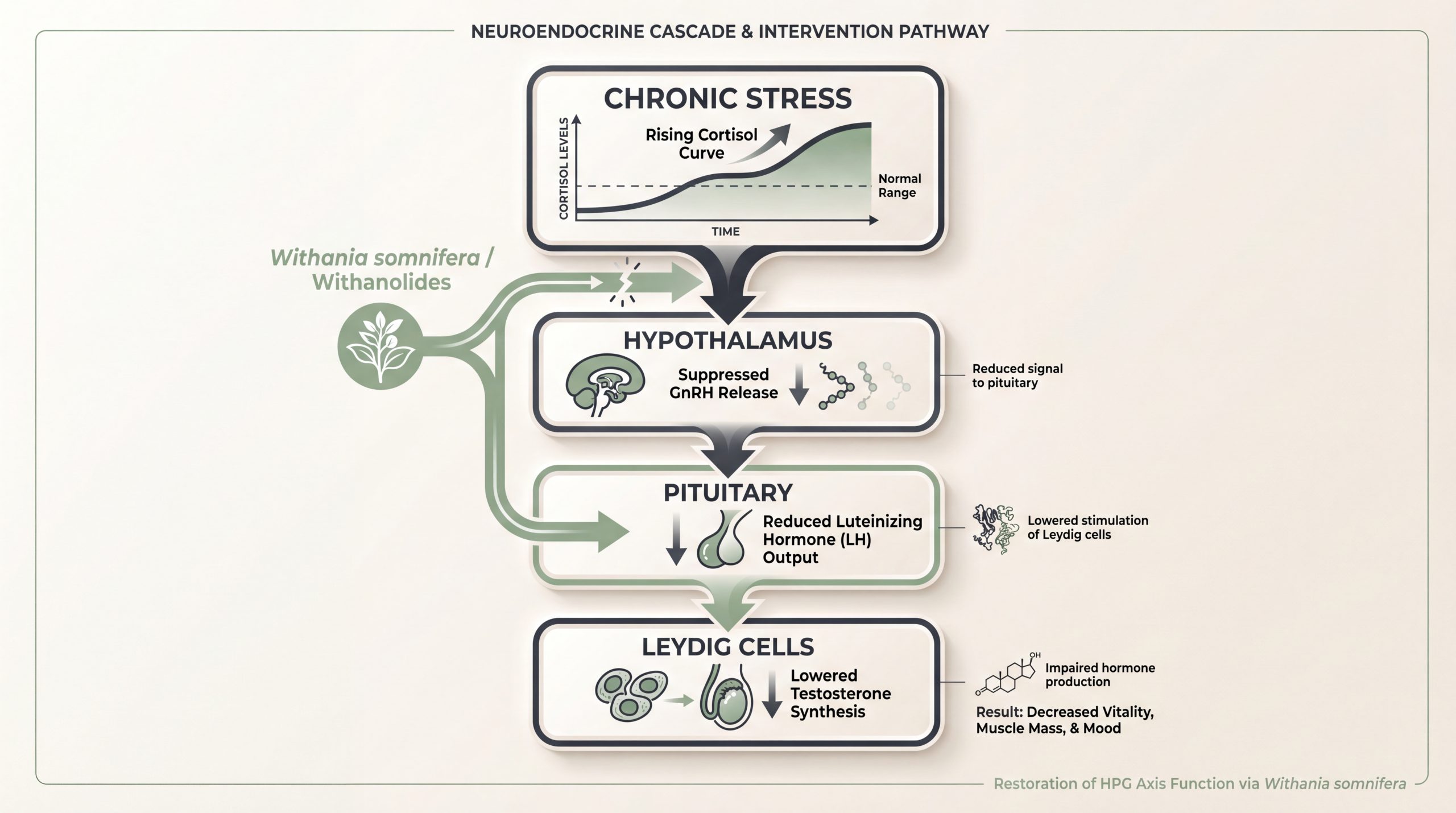
One of the most discussed mechanisms involves the herb’s adaptogenic effect on the hypothalamic-pituitary-adrenal (HPA) axis, the body’s central stress response system. Chronic stress leads to prolonged activation of this axis and elevated levels of cortisol, the primary stress hormone. Research suggests a reciprocal relationship between cortisol and testosterone. High cortisol levels can suppress the production of gonadotropin-releasing hormone (GnRH), which in turn reduces the signal (luteinizing hormone) for the testes to produce testosterone. By helping to modulate the HPA axis and lower elevated cortisol levels, Withania somnifera may create a more favorable physiological environment for natural testosterone synthesis. Several studies have demonstrated its ability to significantly reduce serum cortisol levels in stressed individuals. Chandrasekhar et al. (2012), Indian Journal of Psychological Medicine, PMID: 23439798.
2. Influence on Luteinizing Hormone (LH)
Luteinizing hormone (LH) is produced by the pituitary gland and acts as a crucial signal to the Leydig cells in the testes, prompting them to produce testosterone. Some research indicates that Withania somnifera supplementation may lead to an increase in serum LH levels in men. An increase in this signaling hormone could potentially stimulate greater testosterone production by the testes. This suggests a more direct influence on the hormonal cascade regulating testosterone, beyond just stress reduction.
3. Antioxidant Effects in the Testes
The testes, where testosterone production occurs, are susceptible to oxidative stress, meaning damage caused by an imbalance between free radicals and antioxidants. Oxidative stress can impair the function of Leydig cells and negatively impact sperm quality and hormone production. Withania somnifera possesses significant antioxidant properties, attributed partly to its withanolide content. By combating oxidative stress within the testicular environment, this herb may help protect the integrity and function of Leydig cells, thereby supporting healthy testosterone production.
Scientific Evidence: Studies on Ashwagandha and Testosterone Levels
Traditional use gives a historical basis. Quantified evidence is a separate question, and it is the one that matters here. Our editorial team reviewed the primary literature directly rather than relying on secondary summaries, and the picture is more specific than most articles on this topic suggest.
What the pooled evidence shows
The strongest available answer comes from meta-analysis, not from any single trial. A 2026 systematic review and meta-analysis of 23 randomized controlled trials covering 1,706 participants found that oral Withania somnifera raised testosterone in men by a pooled mean difference of 57.43 ng/dL, and found no comparable effect in women, a statistically significant difference between the sexes. The same analysis confirmed a reduction in cortisol and suggested a dose-response relationship tied to withanolide content. Fornalik et al. (2026), Planta Medica, PMID: 41740946.
A second 2026 meta-analysis, covering 20 studies and 1,249 participants, reached a consistent conclusion using a different method. It reported a significant increase in serum testosterone (standardized mean difference 0.33) and in muscle strength (SMD 0.58), while finding no significant effect on body weight or body fat percentage. Zhu et al. (2026), Frontiers in Pharmacology, PMID: 42199854. We flag that last point because single trials have reported fat-loss effects, and the pooled data does not support treating that as a reliable outcome.
The individual trials behind the pooled numbers
Resistance training in healthy young men. In an 8-week randomized, double-blind, placebo-controlled trial, 57 men with little resistance-training experience took 300 mg of standardized root extract twice daily alongside a training program. The ashwagandha group showed a significantly greater rise in testosterone (96.2 ng/dL versus 18.0 ng/dL in placebo, p = 0.004), greater gains in bench-press and leg-extension strength, greater muscle size increase at the arms and chest, and a greater reduction in exercise-induced muscle damage as measured by serum creatine kinase. Wankhede et al. (2015), Journal of the International Society of Sports Nutrition, PMID: 26609282.
Men with oligospermia. A 90-day pilot study randomized 46 men with low sperm count to 675 mg per day of full-spectrum root extract in three divided doses, or to placebo. The treatment group showed a 167% increase in sperm count, a 53% increase in semen volume, and a 57% increase in sperm motility, with significantly greater improvement in serum hormone levels than placebo. Ambiye et al. (2013), Evidence-Based Complementary and Alternative Medicine, PMID: 24371462.
Aging, overweight men. A 16-week crossover trial gave overweight men aged 40 to 70 a standardized extract delivering 21 mg of withanolide glycosides daily. Ashwagandha was associated with a 14.7% greater increase in testosterone (p = .010) and an 18% greater increase in DHEA-S (p = .005) compared with placebo. Lopresti et al. (2019), American Journal of Men’s Health, PMID: 30854916.
One point of accuracy that most write-ups of this trial get wrong, and that we want to state plainly: although participants reported improvements in fatigue, vigor, and sexual well-being over the study period, those improvements were not statistically different from placebo. The hormonal changes separated from placebo. The felt-experience measures did not. The hormone readings were also salivary rather than serum. Reporting the hormone result without that qualifier overstates what the trial found.
How to read all of this
The honest summary is that the effect is real, measurable, modest, and conditional. It is most consistent in men who are stressed, older, overweight, or training. Baseline testosterone, stress status, age, extract type, dose, and study length all move the result. The 2026 pooled figure of roughly 57 ng/dL is a meaningful shift, and it is not a pharmaceutical-scale one. Anyone promising a transformation is selling something the literature does not support.
Potential Ashwagandha Benefits for Men Linked to Testosterone
The potential increase or support of healthy testosterone levels by Withania somnifera may translate into several tangible benefits for men’s health:
Enhanced Muscle Mass and Strength
As testosterone is a primary driver of muscle protein synthesis, supporting its levels can aid in muscle development. Studies combining Withania somnifera supplementation with resistance training have shown greater gains in muscle size and strength compared to training alone with a placebo. This benefit is directly linked to testosterone’s anabolic properties and potentially reduced cortisol (catabolic hormone).
The strength effect comes with an important qualifier that the pooled data makes clear. The 2026 meta-analysis found that muscle-strength gains were significant in physically active individuals (SMD 1.03) but were not significant in untrained participants or special populations. Zhu et al. (2026), Frontiers in Pharmacology, PMID: 42199854. Ashwagandha appears to improve what training produces. It does not appear to substitute for training.
Recovery is the other half of the picture, and it may matter more than the strength number itself. In the 2015 resistance-training trial, the ashwagandha group showed significantly lower exercise-induced muscle damage as measured by serum creatine kinase. Better recovery between sessions means more quality training volume over time, which compounds. We cover the training-specific evidence in more depth in our guide to ashwagandha for bodybuilding and athletic performance.
Improved Male Sexual Health and Function
Testosterone is intrinsically linked to male sexual function. Withania somnifera may offer support in several ways:
- Libido: Healthy testosterone levels are essential for maintaining a healthy sex drive. Studies and anecdotal reports suggest that men taking the herb may experience improvements in libido, potentially linked to both hormonal support and stress reduction. We look at this evidence in detail in our guide to ashwagandha and libido.
- Sperm Quality: Testosterone is vital for sperm production. Research, particularly in infertile men, indicates that Withania somnifera can significantly improve sperm count, motility (movement), and semen volume, contributing to better fertility outcomes.
- Erectile Function: While not a direct treatment for erectile dysfunction (ED) like prescription medications, healthy testosterone levels are important for erectile capacity. Indirect benefits may arise from stress reduction, improved blood flow (potentially via nitric oxide pathways mentioned in some research), and hormonal balance.
Increased Energy, Vitality, and Mood
Men often report feeling more energetic and experiencing improved mood and overall vitality when their testosterone levels are optimal. Withania somnifera‘s potential to support testosterone, combined with its direct stress-reducing effects, may contribute to combating fatigue and enhancing a sense of well-being. The mechanism behind that stress effect is covered in our guide to how ashwagandha lowers cortisol.
Ashwagandha Dosage for Testosterone Support
Determining the appropriate ashwagandha dosage for testosterone requires looking at the amounts used in studies that showed positive effects on this hormone in men.
- Effective Dosage Range: Most clinical studies demonstrating benefits for testosterone levels in men used dosages ranging from 300 mg to 600 mg of a standardized root extract per day. This is often split into two doses (e.g., 300 mg twice daily).
- Standardized Extracts: Using a standardized extract is highly recommended. This ensures a consistent amount of the active compounds, primarily withanolides. Look for extracts standardized to a specific percentage, commonly between 1.5% and 5% withanolides. Reputable standardized extracts include KSM-66 (root extract), Sensoril (root and leaf extract), and Shoden (higher withanolide concentration). Root extracts are most commonly cited in testosterone-related studies.
- Starting Dose: It is generally advisable to begin with a lower dose within the recommended range (e.g., 250-300 mg per day) to assess individual tolerance before potentially increasing it.
- Consistency is Key: Effects on hormone levels are typically not immediate. Consistent daily intake for at least 8 to 12 weeks (or longer, mirroring study durations) is often necessary to observe potential changes in testosterone levels and related benefits.
- Professional Guidance: Always consult a healthcare provider before starting supplementation to discuss an appropriate dosage based on your individual health status and goals.
How Ashwagandha Differs From Other Testosterone Herbs, and From TRT
Most men researching this topic are not choosing whether to take ashwagandha in isolation. They are choosing between ashwagandha, several other herbs, and in some cases a prescription. The useful distinction is not which herb is strongest. It is which mechanism applies to them.
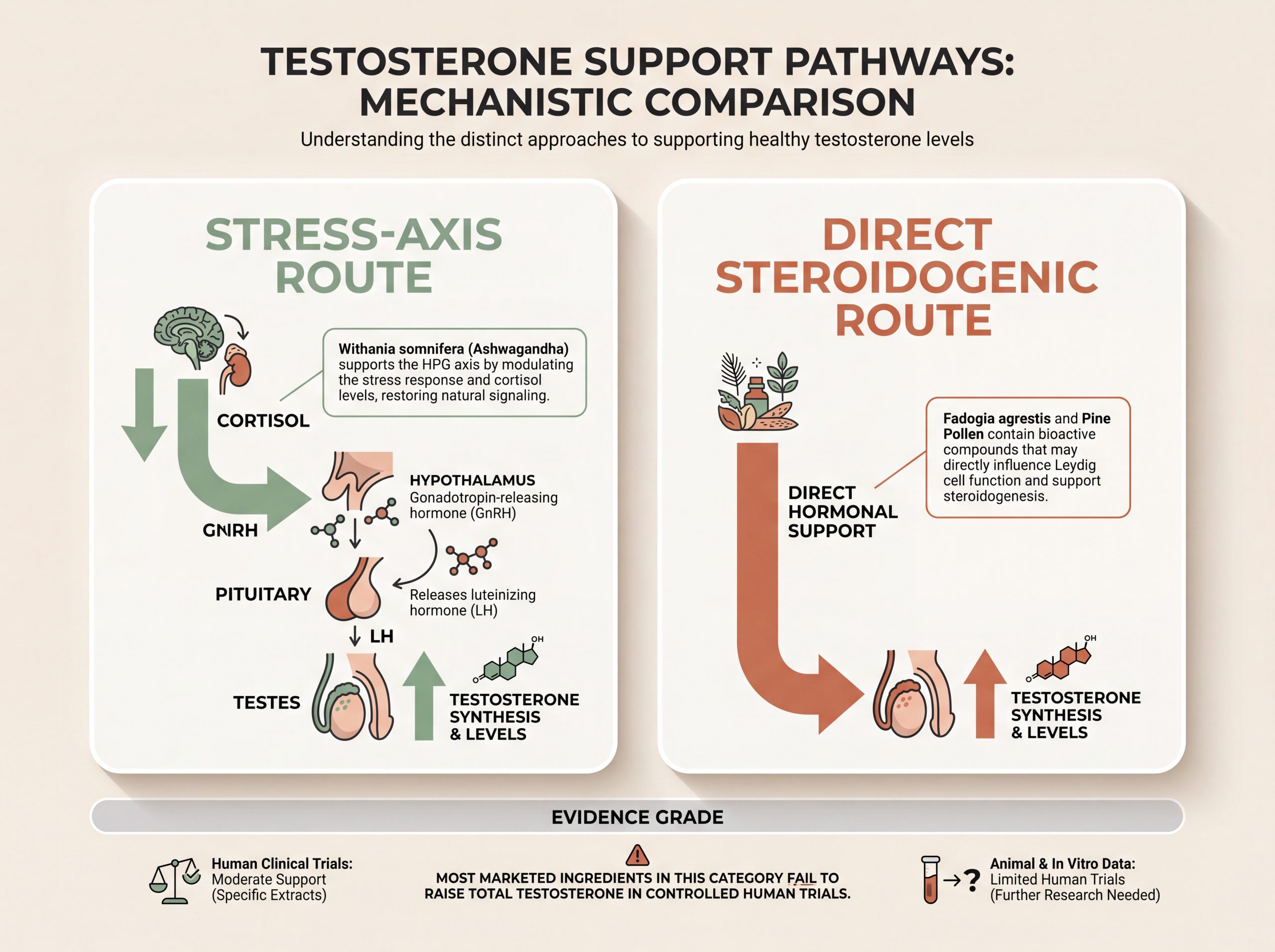
Ashwagandha works on the stress axis, not directly on the testes
Withania somnifera acts primarily by lowering the cortisol brake on the hormonal cascade. Chronic cortisol elevation suppresses gonadotropin-releasing hormone, which reduces luteinizing hormone signalling to the Leydig cells, which lowers testosterone output. Ashwagandha reduces cortisol, and testosterone recovers as a downstream consequence.
That mechanism has a clear practical implication. If your testosterone is suppressed because you are chronically stressed, under-slept, and over-trained, ashwagandha is addressing your actual bottleneck. If your testosterone is low for a reason that has nothing to do with cortisol, it is working on a lever that is not the one holding you back. This is the most likely explanation for why results vary so widely between individuals.
By contrast, herbs such as Fadogia agrestis and pine pollen are positioned as acting more directly on steroidogenesis rather than through the stress response. Tribulus terrestris, despite its long-standing reputation, has repeatedly failed to raise total testosterone in controlled trials. Dodder seed and shilajit occupy different mechanistic territory again.
A 2023 systematic review examined 52 studies covering 27 marketed testosterone-support ingredients and concluded that most fail to raise total testosterone at all. Withania somnifera was among the small group rated as possibly effective in healthy men. Morgado et al. (2023), International Journal of Impotence Research, PMID: 37697053. We think that is the correct frame for this whole category, and it is why we would rather tell you which mechanism fits your situation than sell you a ranking.
For a full side-by-side treatment of which testosterone herbs hold up in trials and which do not, our team maintains a dedicated guide to herbal testosterone supplements and the evidence behind them.
Ashwagandha is not a substitute for testosterone replacement therapy
This needs to be stated without hedging. Testosterone replacement therapy is a prescription medical treatment for diagnosed hypogonadism, administered and monitored by a physician. It delivers exogenous testosterone directly. Ashwagandha does not do this, and it does not approach the magnitude of change TRT produces.
The pooled increase seen across 23 randomized trials was roughly 57 ng/dL in men. That is a meaningful shift within a normal physiological range. It is not clinical replacement, and it will not correct genuine hypogonadism. If you have symptoms of low testosterone, the appropriate first step is a blood test and a conversation with a physician, not a supplement. Ashwagandha is best understood as support for men whose levels are being dragged down by stress and lifestyle load, and as an adjunct within a broader approach, not as an alternative to medical care.
If you are already on TRT or any hormone therapy, talk to your prescribing physician before adding ashwagandha.
Safety, Side Effects, and Interactions
Withania somnifera is generally considered safe for most men when used appropriately for short to medium durations (up to 3-6 months). However, potential side effects, precautions, and interactions exist.
Potential Side Effects
- Gastrointestinal: The most common side effects are mild and may include nausea, stomach upset, or diarrhea. Taking the supplement with food can often help alleviate these issues.
- Drowsiness: Due to its calming effects, some individuals may experience drowsiness. Avoid driving or operating heavy machinery until you know how it affects you.
- Liver: Uncommon but documented cases of liver injury have been reported, typically developing after several weeks of use and usually presenting with jaundice and itching. This is covered in detail in the liver safety section below, including the red-flag symptoms that mean you should stop immediately. Allergic reactions such as rash or itching are also possible but uncommon.
Contraindications and Precautions
Certain individuals should avoid Withania somnifera or use it only under strict medical supervision:
- Pregnancy/Breastfeeding: Not applicable here but generally avoided.
- Autoimmune Diseases: Conditions like rheumatoid arthritis, lupus, Hashimoto’s thyroiditis, or type 1 diabetes may theoretically be worsened, as the herb might stimulate immune activity.
- Thyroid Disorders: Contraindicated in hyperthyroidism (overactive thyroid) as it may increase thyroid hormone levels. Use with caution in hypothyroidism (underactive thyroid) only under a doctor’s guidance, as medication adjustments may be needed.
- Liver Disease: Individuals with cirrhosis or advanced chronic liver disease should avoid Withania somnifera entirely. Anyone with any other liver condition should use it only under a physician’s supervision.
- Surgery: Discontinue use at least two weeks before scheduled surgery due to potential effects on the central nervous system and blood sugar/pressure.
Potential Medication Interactions
Withania somnifera may interact with various medications:
- Sedatives (Benzodiazepines, Barbiturates, CNS Depressants): May enhance sedative effects, leading to excessive drowsiness.
- Immunosuppressants: May decrease the effectiveness of medications designed to suppress the immune system.
- Thyroid Hormones: May increase thyroid hormone levels, potentially requiring dosage adjustments of thyroid medication.
- Diabetes Medications (Antidiabetic Drugs): May lower blood sugar levels, increasing the risk of hypoglycemia. Blood sugar monitoring and potential medication adjustments are necessary.
- Blood Pressure Medications (Antihypertensives): May lower blood pressure, potentially enhancing the effect of these drugs. Monitoring is advised.
- Anti-seizure Medications: Potential for interaction exists.
- Hepatotoxic Drugs: Concurrent use with other drugs known to potentially harm the liver should be approached cautiously.
Can You Drink Alcohol While Taking Ashwagandha?
There are two independent reasons for caution, and they compound.
The first is sedation. Ashwagandha has a calming, mildly sedative action, and alcohol is a central nervous system depressant. Combining them can produce more drowsiness and impairment than either alone. The herb is already flagged for interaction with benzodiazepines, barbiturates, and other CNS depressants for exactly this reason.
The second is the liver. Both alcohol and ashwagandha place a metabolic load on the liver, and the documented ashwagandha injury cases are predominantly cholestatic. Regular or heavy drinking alongside ashwagandha is stacking two hepatic stressors, and it also makes it considerably harder to work out what is responsible if liver enzymes start to move.
An occasional drink is unlikely to be a problem for most healthy adults. Regular or heavy drinking alongside ashwagandha is not something our team would recommend, and if you have any existing liver concern, it is a combination to avoid outright. There is also a practical argument, which is that alcohol degrades sleep quality and raises cortisol, which works directly against the mechanism you are taking ashwagandha for in the first place.
Given these potential interactions and precautions, consulting with a healthcare professional before using Withania somnifera is essential, especially if you have underlying health conditions or take any medications.
Ashwagandha and Liver Safety: What the Case Reports Actually Show
This is the question people most often ask about ashwagandha, and it deserves a direct answer rather than a reassuring one. Liver injury from ashwagandha is uncommon. It is also real, documented, and in a small number of cases serious. Our editorial team treats this as the most important safety section on this page.
What has been reported
A case series drawn from Iceland and the United States Drug-Induced Liver Injury Network described five patients who developed liver injury after taking ashwagandha-containing supplements. Onset came after a latency of 2 to 12 weeks. The injury pattern was cholestatic or mixed. All five developed jaundice. Liver tests normalized within one to five months in the four patients followed to resolution, and none progressed to liver failure. Björnsson et al. (2020), Liver International, PMID: 31991029.
A 2026 scoping review widened that picture considerably. Searching the peer-reviewed literature through December 2025, it identified 13 publications describing 25 patients across multiple regions. The pattern held: injury developing after weeks of use, predominantly cholestatic or mixed, commonly presenting with jaundice and itching, with most patients recovering over weeks to months after stopping the supplement. The review also documented severe outcomes that the earlier series did not contain, including one case of acute liver failure requiring transplantation and three deaths, all in patients with pre-existing cirrhosis who decompensated. Its conclusion is specific: people with advanced chronic liver disease should be counseled to avoid ashwagandha. McIntyre et al. (2026), Cureus, PMID: 42367407.
Red-flag symptoms: stop and seek medical care
Stop taking ashwagandha and contact a healthcare provider promptly if you notice any of the following, particularly in the first three months of use:
- Yellowing of the skin or the whites of the eyes (jaundice). This is the most consistent presenting sign across the reported cases.
- Persistent itching without a rash.
- Dark or tea-colored urine, or unusually pale stools.
- Pain or discomfort in the upper right abdomen, under the ribs.
- Unusual and persistent fatigue or lethargy, nausea, or loss of appetite that does not resolve.
The reported cases were largely self-limited once the supplement was discontinued. Continuing to take it through these symptoms is what turns a recoverable event into a dangerous one.
Who should not take ashwagandha at all
Based on the published safety literature, avoid ashwagandha entirely if you have cirrhosis or advanced chronic liver disease. Use it only under a physician’s supervision if you have any other liver condition, if you drink heavily, or if you take medication known to place a load on the liver. If you are already taking a supplement stack, be aware that several of the reported cases involved multi-ingredient products, which makes attribution harder and monitoring more important.
For a plain-language reference on herbal supplement liver safety, the NIH maintains the LiverTox database of drug and supplement-induced liver injury, and the NIH Office of Dietary Supplements ashwagandha fact sheet summarizes the current safety position for health professionals.
Choosing a Quality Ashwagandha Supplement
The effectiveness and safety of Withania somnifera can depend significantly on the quality of the supplement. Consider these factors when making a choice:
- Standardized Root Extract: Prioritize products using a standardized root extract (like KSM-66) specifying the percentage of withanolides. The root is most commonly studied for testosterone effects.
- Reputable Brands: Select supplements from established brands that adhere to Good Manufacturing Practices (GMP).
- Third-Party Testing: Look for verification from independent third-party labs (like NSF, USP, or ConsumerLab) confirming purity, potency, and freedom from contaminants (heavy metals, pesticides).
- Clear Labeling: Ensure the label clearly states the plant part used (root), the amount per serving, and the standardization details.
Root Powder or Standardized Extract? They Are Not Interchangeable
This distinction causes more dosing errors than any other, and most product pages do not make it clear.
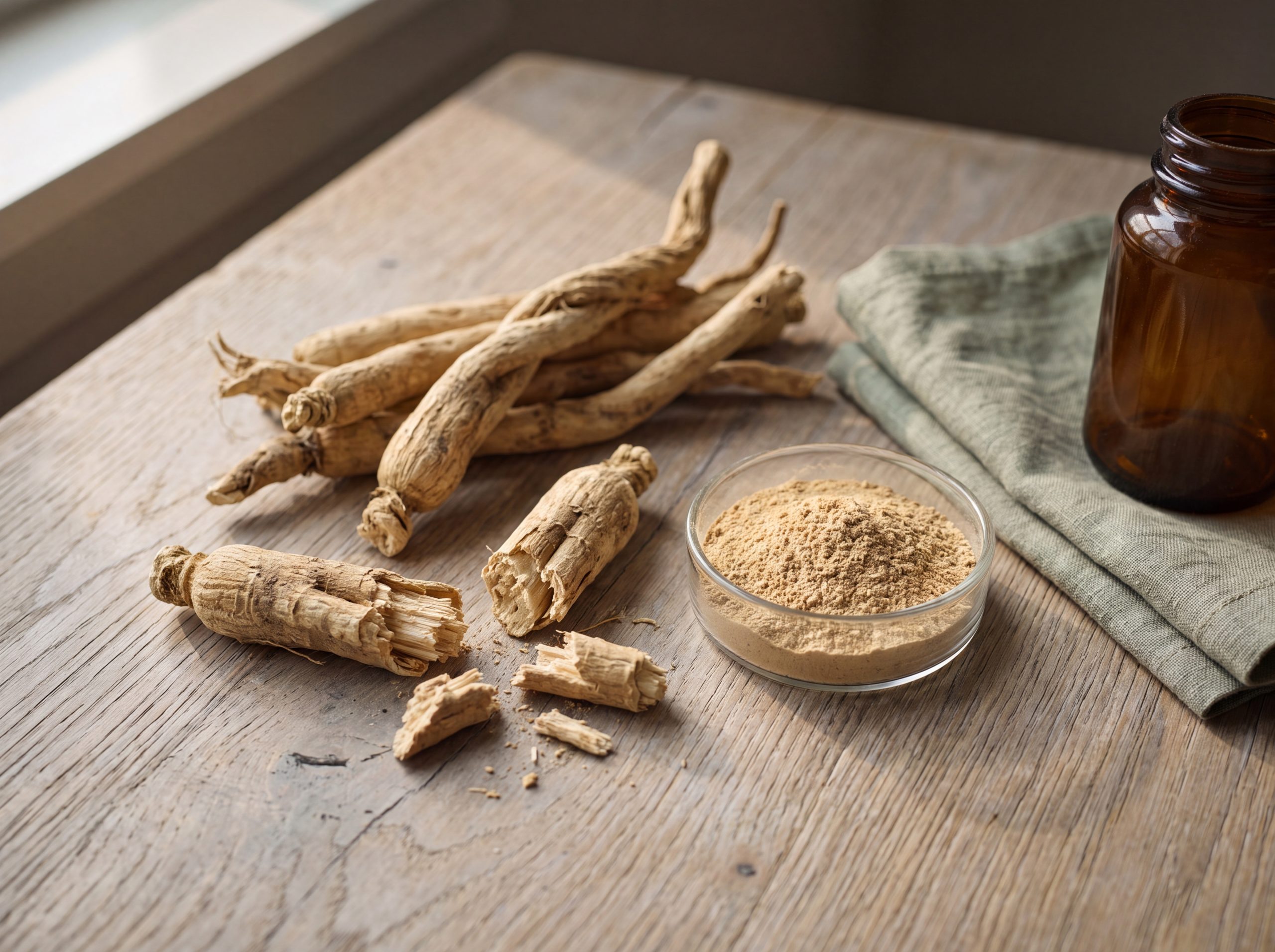
Whole root powder is the dried, milled root. Withanolide content is whatever the plant produced, typically well under 1%, and it varies with growing conditions and terroir. It is the traditional Ayurvedic form; it is what centuries of use are based on, and traditional preparations use it in gram quantities rather than milligrams.
Standardized extract concentrates the withanolides to a declared percentage, commonly 1.5% to 5%. KSM-66, Sensoril, and Shoden are the named extracts you will encounter. Nearly all of the testosterone research uses standardized root extract, which is why the studied doses sit in the 300 to 600 mg range rather than the gram range.
The practical consequence: do not apply extract doses to powder, or powder doses to extract. A 600 mg dose of standardized extract and 600 mg of whole root powder deliver substantially different withanolide loads. If you are following the clinical evidence for testosterone specifically, standardized root extract is the form that evidence was generated with.
In our own sourcing work, we test for withanolide content, heavy metals, and pesticide residue on every lot, and we publish the plant part used rather than leaving it ambiguous. Our organic ashwagandha root powder is the traditional whole-root form for those following Ayurvedic preparation methods, and our ashwagandha root capsules deliver a measured root dose for men who want to follow the studied protocols without weighing powder.
Ashwagandha Within a Holistic Approach to Male Health
While Withania somnifera shows promise as one of the natural supplements for enhancing testosterone support, it is not a magic bullet. Achieving and maintaining optimal hormonal health requires a broad approach. The potential benefits of this herb are best realized when combined with foundational health practices:
- Balanced Nutrition: Consuming a diet rich in whole foods, lean proteins, healthy fats, fruits, and vegetables provides the necessary nutrients for hormone production.
- Regular Exercise: Incorporating both resistance training (weightlifting) and cardiovascular exercise is vital for supporting testosterone levels and overall health.
- Adequate Sleep: Prioritizing 7-9 hours of quality sleep per night is crucial for hormonal regulation and recovery.
- Stress Management: Implementing effective stress-reduction techniques (meditation, yoga, deep breathing, hobbies) complements the adaptogenic action of Withania somnifera.
Think of Withania somnifera as a potential supportive element within a broader strategy focused on a healthy lifestyle for optimal men’s health.
Foods and Daily Habits That Support Healthy Testosterone
Supplementation sits on top of the fundamentals rather than replacing them. A few nutrients have a direct relationship to testosterone production, and deficiency in any of them limits what an adaptogen can do:
- Zinc. Required for testosterone synthesis. Found in oysters, red meat, pumpkin seeds, and legumes. Deficiency is associated with reduced levels.
- Vitamin D. Functions as a steroid hormone precursor. Found in fatty fish and egg yolks, and produced through sunlight exposure.
- Magnesium. Supports free testosterone availability. Found in leafy greens, nuts, and whole grains.
- Dietary fat and cholesterol. Testosterone is synthesized from cholesterol. Very low-fat diets are counterproductive here.
Alongside these, the levers with the most evidence behind them are unglamorous and well established: seven to nine hours of sleep, resistance training, maintaining a healthy body weight, and reducing chronic stress load. For a fuller treatment of the nutrient side, see our guide to herbal testosterone supplements, vitamins, and minerals.
What to Expect in the First Weeks: Onset, Timing, and Early Side Effects
Two very different clocks run on ashwagandha, and conflating them is the most common reason men decide it “did not work” and stop at week three. In our experience fielding questions from customers, this single point resolves more confusion than anything else on this page.
The two timelines
- Stress, sleep, and perceived calm: roughly 1 to 4 weeks. These are the effects people usually notice first, and they track the cortisol response.
- Testosterone and body-composition endpoints: 8 to 12 weeks minimum. Every trial that measured a hormonal change ran for at least eight weeks. There is no published evidence of a meaningful testosterone shift on a shorter horizon. Judging the hormonal effect at four weeks is judging it before the data says it happens.
What may happen early?
Stomach upset. The most common early complaint, and usually mild. Ashwagandha root contains saponins and withanolides that can irritate an empty stomach. Taking it with food resolves this for most people. If nausea or diarrhea persists past the first week or two, that is worth paying attention to rather than pushing through.
Drowsiness. Some people feel noticeably calm or sleepy within an hour or two of the first few doses. This is a plausible extension of the herb’s calming action rather than a warning sign. Do not drive or operate machinery until you know how it affects you. If it is pronounced, moving the dose to the evening usually solves it, and for men whose testosterone is being suppressed by poor sleep, better sleep is part of the mechanism rather than a side effect of it.
How long early effects last. Mild gastrointestinal and drowsiness effects typically settle within the first one to two weeks as tolerance develops. Effects that intensify rather than settle, or that appear after several weeks rather than at the start, follow a different pattern. Delayed onset is characteristic of the liver-injury cases described above, which is why the red-flag symptoms in that section matter most between weeks two and twelve, not on day one.
Starting at the low end of the range, around 250 to 300 mg per day taken with food, and holding there for a week before increasing, reduces the likelihood of early gastrointestinal effects considerably.
Final Considerations on Ashwagandha and Testosterone
Current scientific research suggests that Withania somnifera holds potential for supporting healthy testosterone levels in men. Proposed mechanisms involve modulating the stress response by lowering cortisol, potentially increasing luteinizing hormone, and providing antioxidant protection within the testes. Studies have linked its use, particularly standardized root extracts at doses of 300-600 mg per day, to increased testosterone levels, alongside benefits for muscle strength, sperm quality, and libido in various male populations.
However, individual responses can vary, and consistency over several weeks is typically needed to observe effects. While generally safe for short-to-medium-term use, potential side effects and interactions with medications necessitate careful consideration and professional guidance. Integrating Withania somnifera into a foundation of healthy diet, exercise, sleep, and stress management practices offers the most sensible approach for men seeking natural support for their hormonal health. A conversation with a healthcare provider is the recommended first step to determine if this herb is a suitable option for your specific health needs and circumstances.
Frequently Asked Questions
Does ashwagandha actually increase testosterone?
Yes, modestly, and the effect is best documented in men rather than women. A 2026 meta-analysis of 23 randomized controlled trials covering 1,706 participants found a pooled increase of roughly 57 ng/dL in men, with no comparable effect in women. The change is real and measurable. It is not pharmaceutical in scale, and it will not correct diagnosed hypogonadism.
How long does ashwagandha take to raise testosterone?
Plan on 8 to 12 weeks. Every trial that measured a hormonal change ran for at least eight weeks, and there is no published evidence of a meaningful testosterone shift on a shorter timeline. Stress and sleep effects often appear within one to four weeks, which is a different clock and should not be used to judge the hormonal result.
What dose of ashwagandha is used for testosterone?
Clinical trials showing testosterone effects in men generally used 300 to 600 mg per day of a standardized root extract, often split into two doses. Look for standardization to 1.5% to 5% withanolides. Root extract, not leaf, is what the testosterone research is based on. Start at the low end with food and hold for a week before increasing.
Can ashwagandha damage your liver?
Uncommonly, but yes, and it is well enough documented to take seriously. A 2026 scoping review identified 25 patients across 13 publications, with injury typically developing after several weeks of use and presenting with jaundice and itching. Most recovered after stopping. Severe outcomes occurred, including one liver transplant and three deaths in patients with pre-existing cirrhosis. Anyone with advanced chronic liver disease should avoid ashwagandha entirely.
What are the warning signs I should stop taking ashwagandha?
Stop and contact a healthcare provider if you develop yellowing of the skin or eyes, persistent itching without a rash, dark urine, upper-right abdominal pain, or unusual persistent fatigue and nausea. These signs are most likely to appear between weeks two and twelve rather than on the first dose. The reported cases were largely self-limited once the supplement was stopped.
Can you drink alcohol while taking ashwagandha?
Caution is warranted for two reasons. Ashwagandha is mildly sedative, and alcohol is a CNS depressant, so combining them increases drowsiness. Both also place a load on the liver, and the documented ashwagandha injury cases are predominantly cholestatic. Occasional drinking is unlikely to be a problem for healthy adults. Regular or heavy drinking alongside ashwagandha is not advisable, and alcohol works against the mechanism by degrading sleep and raising cortisol.
Is ashwagandha better than tongkat ali or fadogia for testosterone?
They work through different mechanisms rather than sitting on a single scale. Ashwagandha acts on the stress axis by lowering cortisol, which releases a brake on testosterone production. Others are positioned as acting more directly on steroidogenesis. A 2023 systematic review of 52 studies found that most marketed testosterone-support ingredients do not raise total testosterone at all, with Withania somnifera among the small group rated possibly effective in healthy men. The right choice depends on whether stress is your actual bottleneck.
Can ashwagandha replace testosterone replacement therapy?
No. TRT is a prescription medical treatment that delivers exogenous testosterone under physician monitoring, and it produces changes far larger than any adaptogen. Ashwagandha may support healthy testosterone levels in men whose levels are suppressed by stress and lifestyle load. If you have symptoms of low testosterone, get a blood test and speak with a physician rather than self-treating with a supplement.
Disclaimer
These statements have not been evaluated by the Food and Drug Administration. This product is not intended to diagnose, treat, cure, or prevent any disease. Consult your healthcare provider before use.