Understanding Kanna
Sceletium tortuosum, known locally as “Kougoed” (meaning “something to chew”), is a succulent plant native to South Africa. For centuries, the Khoisan (Khoikhoi and San) people have used this natural herb for its mood-altering and stress-reducing effects. The plant contains alkaloids, which are believed to contribute to its effects. These compounds interact with serotonin receptors in the brain, potentially promoting feelings of well-being and relaxation. Historically, Kanna has been utilized for its therapeutic properties, and modern research is beginning to uncover its benefits.
The History and Traditional Use of Kanna Tea
The use of Sceletium tortuosum dates back centuries. The Khoisan people used kanna for a variety of purposes, including a tea infusion:
- Mood Enhancement: It was traditionally used to elevate mood and reduce anxiety, particularly before social gatherings or stressful events.
- Endurance: Hunters used kanna to suppress appetite and thirst, and to increase stamina during long hunts.
- Spiritual Practices: Kanna was sometimes used in rituals and ceremonies for its mild psychoactive effects, believed to facilitate spiritual experiences.
- Pain Relief: It was traditionally used to relieve minor pains, such as toothaches.
Traditional Preparation Methods
The Khoisan employed several methods to prepare Sceletium tortuosum, including:
- Chewing: The most common method involved chewing the fermented (or sometimes unfermented) roots, stems, and leaves of the plant.
- Smoking: Dried kanna leaves were sometimes smoked, often mixed with other herbs.
- Snuff: Finely ground, dried kanna was used as a snuff.
- Tea: Kanna leaves and stems were brewed into a tea.
The Importance of Fermentation
A key aspect of traditional preparation is fermentation. The plant material would be crushed and placed in animal skin bags (later, in sealed containers) to ferment for several days (typically around 8 days). This process is believed to alter the alkaloid profile and potentially reduce the levels of oxalates (which can cause discomfort). After fermentation, the plant material would be dried in the sun.
How Kanna Works: Composition and Mechanisms
Sceletium tortuosum contains several alkaloids, the primary ones being mesembrine, mesembrenone, and tortuosamine. These molecules are responsible for the plant’s effects. When these alkaloids are consumed, they interact with the brain.
Kanna’s alkaloids act primarily in two ways:
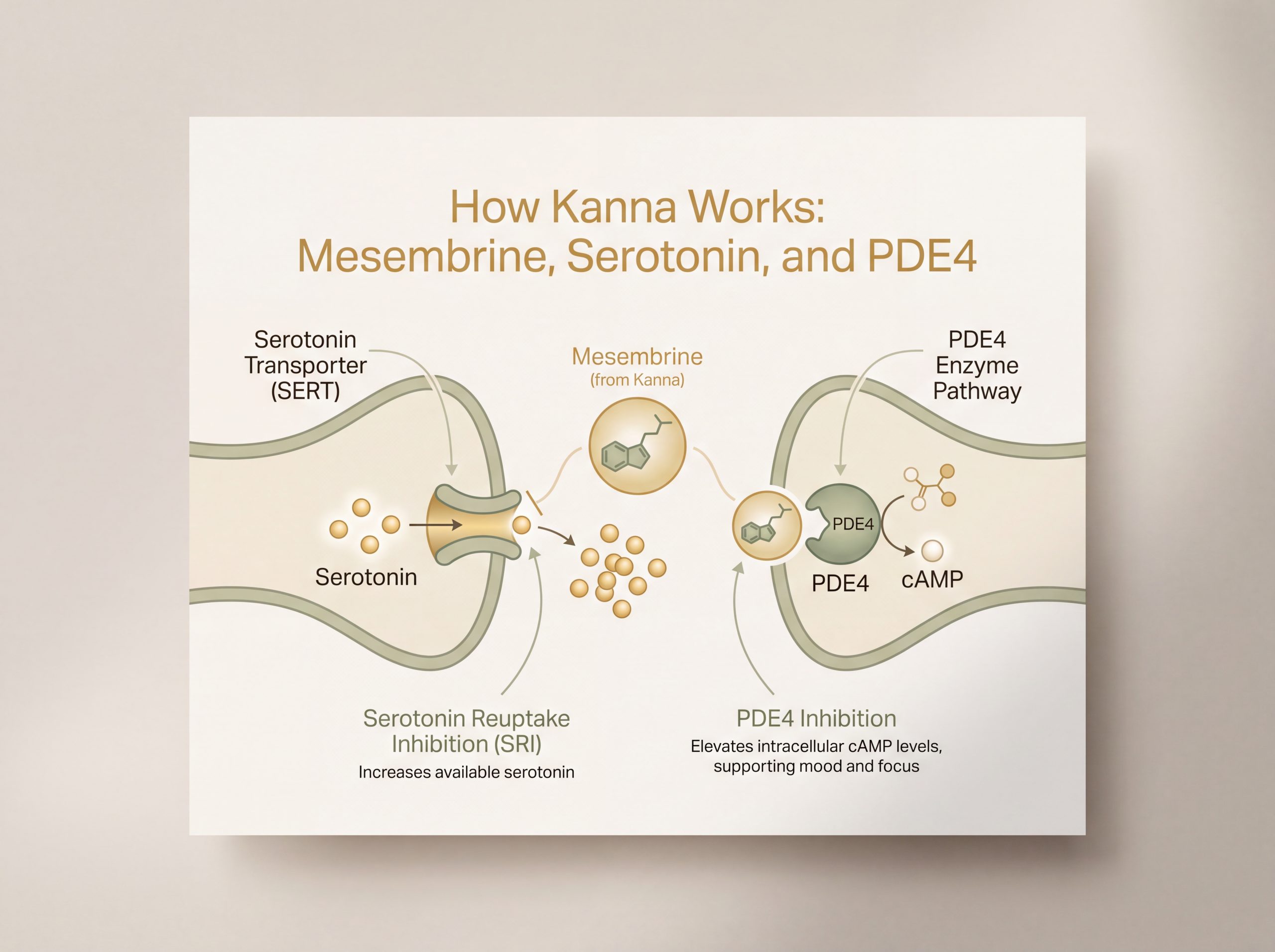
- Serotonin Reuptake Inhibition (SRI): Kanna inhibits the reuptake of serotonin. This means that it reduces the reabsorption of serotonin (serotonin-reuptake inhibition) back into the nerve cells, leaving more serotonin available in the synaptic cleft (the space between nerve cells).
- Phosphodiesterase-4 (PDE4) Inhibition: Some research suggests that kanna’s alkaloids may also inhibit PDE4, an enzyme that breaks down cyclic adenosine monophosphate (cAMP). cAMP plays a role in various cellular processes, including those related to mood and cognition, as well as reducing neuroinflammation.
This dual action (SRI and PDE4 inhibition) is a unique aspect that differentiates Sceletium tortuosum from some other botanicals.
What the research says: the mood-related properties of kanna are most often attributed to two actions working together. Mesembrine and related alkaloids act as a dual serotonin-reuptake inhibitor and a phosphodiesterase-4 (PDE4) inhibitor. In a randomized, double-blind, placebo-controlled imaging study, a single 25 mg dose of a standardized Sceletium tortuosum extract attenuated amygdala reactivity to fearful cues and reduced amygdala-hypothalamus coupling (Terburg et al., 2013, Neuropsychopharmacology, PMID: 23903032). A separate proof-of-concept randomized controlled trial reported that 25 mg daily over three weeks was associated with changes in cognitive set flexibility and executive function in cognitively healthy adults (Chiu et al., 2014, PMID: 25389443). A three-month tolerability trial found daily doses of 8 mg and 25 mg were well tolerated in healthy volunteers (Nell et al., 2013, Journal of Alternative and Complementary Medicine, PMID: 23441963). For general guidance on using botanical supplements thoughtfully, the NIH National Center for Complementary and Integrative Health and the NIH Office of Dietary Supplements both offer reference material on supplement safety and interactions.
Potential Benefits of Kanna Tea
Many enthusiasts highlight the numerous advantages associated with this plant. Here are some of the most notable:
Mood Enhancement and Stress Reduction
Sceletium tortuosum is best known for its potential to improve mood and reduce stress.
- Situational Anxiety: Kanna may be helpful for managing situational anxiety, such as public speaking or social events.
- General Stress: It may also help reduce overall stress levels and promote relaxation.
- Depression: Some preliminary research is investigating kanna’s potential as an aid for those dealing with mild depression. It is crucial to note that it is not a replacement for conventional treatment or a cure for major depressive disorder. Always consult a doctor if you are experiencing symptoms of depression.
Cognitive Function Improvement
Some research suggests that Sceletium tortuosum may have cognitive-enhancing properties.
- Focus and Concentration: Some users report an improvement in focus and concentration.
- Cognitive Flexibility: There is some evidence that kanna may improve cognitive flexibility, the ability to switch between different tasks or thoughts.
- Executive Function: Kanna might play a role in improving executive function, which encompasses planning, decision-making, and working memory.
- Memory: While more research is needed, some studies are exploring potential benefits for memory.
Other Potential Benefits
- Pain Relief: Traditionally, kanna was used for minor pain relief, such as toothaches.
- Appetite Regulation: Some traditional uses suggest that kanna may help suppress appetite.
- Digestive Support: Traditionally, this herb has been used to support digestive health, potentially easing discomfort and promoting gut wellness.
Kanna and Social Ease
One of the most distinctive traditional uses of kanna is its role in social gatherings. Historically, the San and Khoikhoi peoples of Southern Africa shared Sceletium tortuosum in group settings, and the plant is sometimes described in the ethnobotanical literature as an empathogen, meaning a substance traditionally associated with a feeling of openness and connection. From our editorial team’s review of the research, mesembrine and mesembrenone influence serotonin signaling, which may support a relaxed and sociable state rather than sedation. A single 25 mg dose of a standardized extract was observed to reduce amygdala reactivity to threatening cues in a controlled imaging study (Terburg et al., 2013, Neuropsychopharmacology, PMID: 23903032), which offers a plausible mechanism for the settled feeling users describe. It is worth being clear that kanna tea is not a treatment for social anxiety disorder or any diagnosed condition. It is a traditional botanical that some people find supports a calm, at-ease mood in everyday social situations.
How to Prepare Kanna Tea
Making a soothing drink from this plant is a simple process. Here’s a straightforward guide:
Ingredients:
- 1-2 teaspoons of dried Sceletium tortuosum leaves (or a pre-made Kanna tea bag)
- 8-12 ounces of hot (not boiling) water. Aim for around 170-180°F (77-82°C). Using boiling water can degrade some of the beneficial compounds.
- Optional: Honey, lemon, or other herbal additions (chamomile, ginger) to taste. Lemon juice may also help with alkaloid solubility.
Instructions:
- Steeping: Place the dried kanna leaves in a teapot, tea infuser, or French press. Pour the hot water over the leaves.
- Brewing time: Let the tea steep for 5-10 minutes, or even up to 15-20 minutes for a stronger infusion. The longer it steeps, the stronger the flavor and potential effects.
- Strain and Serve: Strain the infusion into a cup, removing the leaves. Add honey, lemon, or other flavorings if desired.
Incorporating Kanna Tea into Your Daily Routine
Integrating Kanna into your lifestyle can be a rewarding experience. Here are some practical tips:
- Morning Boost: Start your day with a cup of Kanna infusion to assist your mood and focus.
- Midday Relaxation: Enjoy a soothing cup during your lunch break to alleviate stress.
- Evening Wind Down: Sip on Kanna tea in the evening to help unwind.
How Quickly Kanna Tea Takes Effect
Onset varies with the person, the strength of the brew, and whether the tea is taken on an empty stomach. From our team’s hands-on assessment, most people notice a gentle shift in mood within about 20 to 60 minutes of finishing a cup, with the effect tapering over the following couple of hours. Tea tends to come on more gradually than a concentrated extract because the compounds are diluted across the full cup of water. If you feel nothing after the first cup, the more measured approach is to wait until the next day and adjust slightly rather than brewing a second strong cup in quick succession.
Kanna Dosage and Frequency
There is no universally established “safe” or “effective” dosage for Sceletium tortuosum tea. Dosage recommendations vary depending on the individual and the desired effects.
General Guidelines:
- Start Low: It’s always recommended to start with a very low dose, especially when trying kanna for the first time.
- Gradual Increase: If needed, gradually increase the dose while monitoring your body’s response.
Dosage Ranges (These are general ranges and should not be taken as medical advice):
- Dried, Unfermented Kanna (Tea): 1-2 teaspoons of dried leaves.
The frequency of use also depends on individual needs and tolerance. Some people use kanna occasionally, while others may use it more regularly. It’s generally recommended to cycle off Kanna periodically.
For tea specifically, a common starting point is roughly 0.25 to 1 gram of dried fermented kanna material steeped per cup, adjusted to individual tolerance. In our team’s experience, the sensible approach is to start at the low end of that range, brew a single cup, and wait to gauge how you respond before considering more. Standardized extract research has used daily doses in the 8 mg to 25 mg range over several weeks with good tolerability in healthy adults (Nell et al., 2013, Journal of Alternative and Complementary Medicine, PMID: 23441963), though loose dried tea material is not standardized the way a capsule is, so exact compound content varies batch to batch. Because kanna interacts with serotonin pathways, keep total daily use modest, avoid combining it with other serotonergic products, and speak with a qualified healthcare provider before use, particularly if you take any prescription medication.
Potential Side Effects and Precautions
Sceletium tortuosum is generally considered safe when used responsibly. However, some potential side effects and precautions should be considered:
Common Side Effects
- Mild Headache
- Nausea
- Drowsiness
- Reduced Appetite
- Gastrointestinal Discomfort
- Dry Mouth
- Dizziness
- Insomnia or sleep disturbances
Serious Side Effects and Interactions
- Serotonin Syndrome: Kanna interacts with the serotonin system. Taking kanna with other medications that increase serotonin levels (such as SSRIs, MAOIs, and some other antidepressants) can increase the risk of serotonin syndrome, a potentially life-threatening condition. Do not combine kanna with these medications without consulting a doctor. Symptoms of serotonin syndrome include agitation, confusion, rapid heart rate, high blood pressure, muscle rigidity, and seizures. Seek immediate medical attention if you experience these symptoms.
- Other Drug Interactions: Sceletium tortuosum may interact with other medications, such as:
- Selective Serotonin Reuptake Inhibitors (SSRIs)
- Monoamine Oxidase Inhibitors (MAOIs)
- Serotonin-Norepinephrine Reuptake Inhibitors (SNRIs)
- Tricyclic Antidepressants
- Triptans (for migraines)
- Certain pain medications (like tramadol)
- Supplements like 5-HTP and St. John’s Wort
- CBD
Always consult a doctor before using kanna if you are taking any prescription or over-the-counter medications or other medicinals.
Contraindications
- Pregnancy and Breastfeeding: Pregnant and breastfeeding women should avoid kanna due to the lack of safety data.
- Liver Disease: Individuals with liver disease should consult a doctor before using kanna.
- Psychiatric Disorders: Individuals with pre-existing psychiatric disorders, especially those involving anxiety or psychosis, should exercise caution and consult a doctor before using kanna.
Long-Term Effects
There is limited research on the long-term effects of Sceletium tortuosum use. It is generally recommended to use kanna in moderation and to take breaks from usage.

The Legal Status of Kanna
The legal status of Sceletium tortuosum varies around the world:
- United States: Kanna is legal at the federal level and is not a controlled substance. However, Louisiana has specific laws regarding certain plants, including Sceletium tortuosum.
- Canada: Kanna is legal in Canada.
- South Africa: Kanna is legal in South Africa, its native country.
- Europe: The legal status of Kanna in Europe varies by country. Some countries may have regulations or restrictions.
- United Kingdom: The legal status in the UK may vary; check local regulations.
- Australia/New Zealand: Check local regulations.
It’s always recommended to check the specific regulations in your region.
Other Forms of Kanna
While this article focuses on Kanna tea, Sceletium tortuosum is available in other forms:
| Form | Onset Time | Notes |
|---|---|---|
| Sublingual | Fastest | Powder held under the tongue |
| Tinctures/Extracts | Fast | Absorbed quickly |
| Capsules | Slower | Must pass through the digestive system |
| Tea | Moderate | Gentler, more gradual onset |
| Smoking | Very Fast | Can cause respiratory irritation |
| Snuff | Very Fast | Higher risk of rapid absorption & side effects |
Zembrin
Zembrin is a standardized extract of Sceletium tortuosum. Mentioning its existence adds to the article’s informational completeness.
Kanna Tea vs. Other Calming Herbal Teas
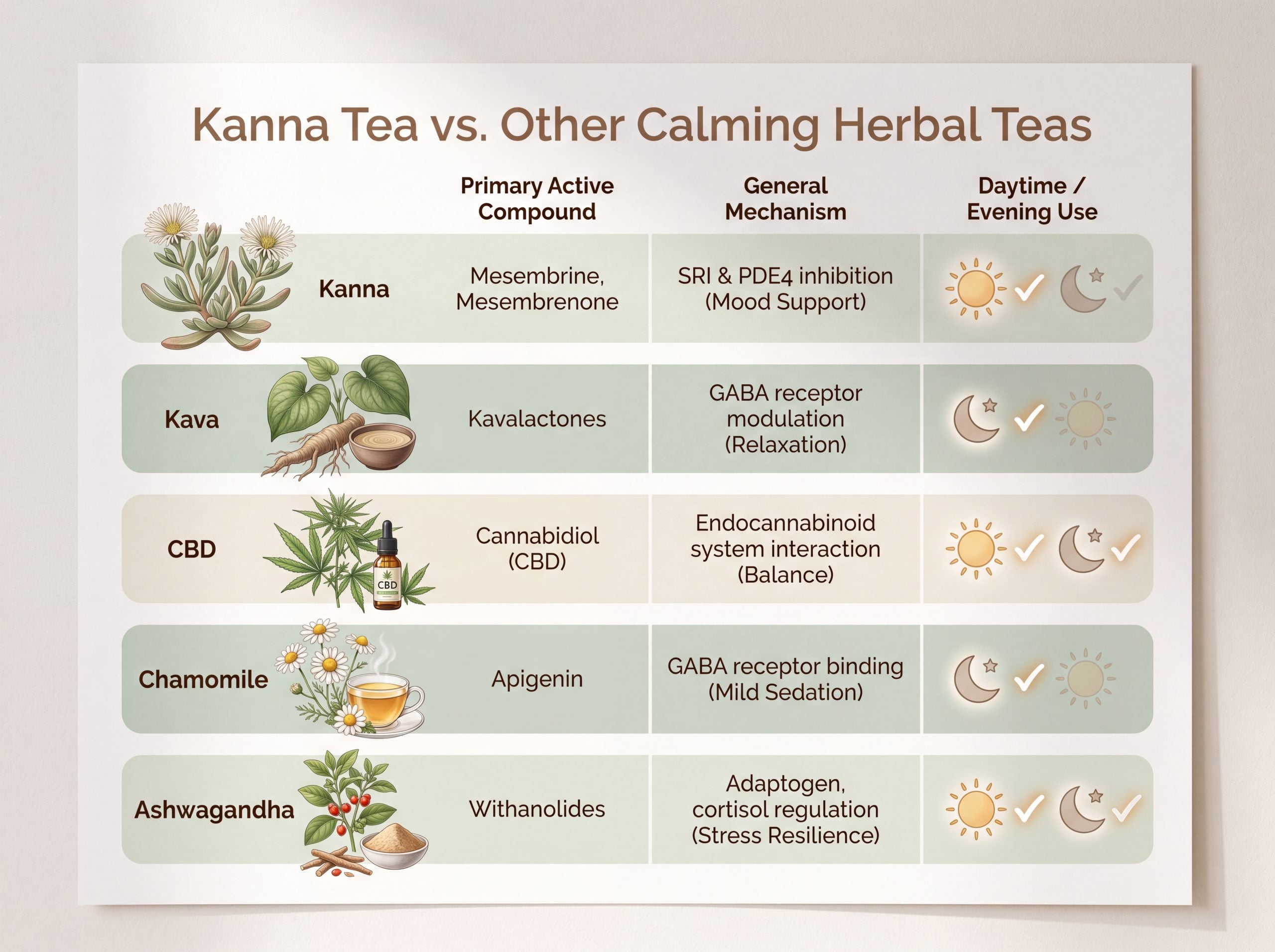
People who reach for kanna tea are often comparing it against other botanicals they already keep in the cupboard. Each of these plants works through a different biological pathway, so they are not interchangeable. In our sourcing experience, the most common question we hear is how Sceletium tortuosum sits next to kava, CBD, chamomile, and ashwagandha. The table below frames the differences by active compound, traditional use, and typical time of day, all in structure and function terms rather than medical ones.
| Botanical | Primary active compounds | General mechanism | Traditional framing | Typical use window |
|---|---|---|---|---|
| Kanna (Sceletium tortuosum) | Mesembrine, mesembrenone | Dual serotonin-reuptake inhibition and PDE4 inhibition | Used by the San and Khoikhoi peoples to support a settled, sociable mood | Daytime, light and clear-headed |
| Kava (Piper methysticum) | Kavalactones | Acts on GABA pathways for a body-centered calm | Pacific Island ceremonial and social tradition | Evening, more sedating |
| CBD (Cannabis sativa) | Cannabidiol | Interacts with the endocannabinoid system | Modern wellness use | Flexible, dose-dependent |
| Chamomile (Matricaria chamomilla) | Apigenin | Binds benzodiazepine-type receptor sites gently | European folk tradition for winding down | Evening, before rest |
| Ashwagandha (Withania somnifera) | Withanolides | Adaptogen that supports a healthy stress response | Ayurvedic rasayana tradition | Daily, cumulative |
| Comparison is for educational context. Each botanical works differently and none is a substitute for professional care. | ||||
The practical takeaway from our team’s hands-on assessment is that kanna tea tends to feel bright and daytime-friendly, while kava and chamomile lean toward evening calm. CBD sits apart because it works on an entirely separate receptor system. Kanna is unusual among calming teas because its mesembrine content supports a clear, socially at-ease feeling rather than drowsiness, which is why it has historically been shared in group settings rather than taken as a nightcap.
Key Points to Consider
Before incorporating Kanna into your wellness routine, here are some essential points to keep in mind:
- Consult a Healthcare Professional: Always consult with a healthcare provider before starting any new herbal remedy.
- Quality Matters: Ensure you source Kanna from reputable suppliers.
- Start Slow: If you’re new to Kanna, begin with a small dose.
- Stay informed: Keep up with the latest research.
- Do not take Kanna if you are taking an SSRI or MAOI, or have any concerns that it may affect your health.
Frequently Asked Questions (FAQ) about Kanna
Q: Is Kanna similar to MDMA?
A: No. While Kanna affects the serotonin system, it does so in a much milder and different way than MDMA. Kanna is not a recreational drug.
Q: Can Kanna cure anxiety or depression?
A: Kanna is not a cure for anxiety or depression. It may offer some relief from symptoms, but it should not be used as a replacement for professional medical treatment.
Q: How long does it take for Kanna to work?
A: The onset of effects varies depending on the form of Kanna used. Sublingual powder and tinctures tend to work faster than capsules or tea.
Q: Can I take Kanna every day?
A: While some people use Kanna regularly, long-term safety data is limited. It’s generally recommended to take breaks from usage.
Q: What is the difference between Kanna and CBD? Kanna and CBD are two different plants, that offer different medicinal benefits.
Q: Where does Kanna come from?
A: Kanna comes from South Africa.
Q: Can Kanna be used with cannabis? A: Combining it with substances like cannabis or alcohol can be dangerous.
How does kanna tea compare to kava?
Kanna and kava are both traditional calming botanicals, but they work through different pathways and feel different. Kanna (Sceletium tortuosum) acts on serotonin and PDE4 signaling and tends to feel bright and daytime-friendly, which is why it was traditionally shared in social settings. Kava (Piper methysticum) works on GABA pathways and leans toward a heavier, more body-centered evening calm. Neither is a treatment for any condition, and they should not be combined without guidance from a healthcare provider.
Is kanna an empathogen?
Kanna is sometimes described in ethnobotanical literature as an empathogen, meaning a plant traditionally associated with a feeling of openness and social connection rather than intoxication. Historically the San and Khoikhoi peoples used it in group settings. This is a traditional-use framing, not a medical claim, and kanna tea is not intended to treat social anxiety or any diagnosed condition.
How much kanna should I use per cup of tea?
A common starting point is roughly 0.25 to 1 gram of dried fermented kanna material per cup, beginning at the low end and adjusting to tolerance. Because loose tea material is not standardized the way a capsule is, exact compound content varies from batch to batch. Keep daily use modest, avoid combining kanna with other serotonergic products, and speak with a healthcare provider before use if you take any medication.
Conclusion
Kanna tea offers a unique blend of traditional wisdom and modern wellness benefits. With its potential to assist with mood, relieve stress, and support digestive health, it is a valuable addition to the herbal remedy options. By understanding its benefits, preparation methods, and how to incorporate it into your daily routine, you can make informed choices about this intriguing plant. Prioritize safety and consult with a healthcare professional to ensure that Kanna is right for you.
Important: This article is for educational and informational purposes. The statements have not been evaluated by the Food and Drug Administration. The herbs and herbal products discussed are not intended to diagnose, treat, cure, or prevent any disease, including anxiety or depression. Information presented here is not a substitute for professional medical advice, diagnosis, or treatment. Always consult a qualified healthcare provider for guidance specific to your circumstances, especially if you are pregnant, nursing, taking medication (particularly antidepressants or other serotonergic drugs), or managing a health condition.